Category: Artificial intelligence

  • Developer Gets $80,000 Hardware for a Fraction of the Cost

    Developer Gets $80,000 Hardware for a Fraction of the Cost

    Key Takeaways

    1. A gamer purchased a $3,000 high-end gaming PC for only $600, highlighting significant price drops in certain hardware due to a DRAM supply crunch.
    2. An AI developer found a second-hand AI server with dual Nvidia GH200 superchips for $8,000, a massive savings compared to its potential $80,000 retail value.
    3. The low price of the server was due to its poor condition, stemming from a shift from liquid cooling to air cooling and installation challenges.
    4. The buyer, David Noel Ng, successfully repaired and cleaned the server, overcoming challenges like a malfunctioning temperature sensor.
    5. For those not wanting to invest heavily in setup, a more affordable AI solution is the Strix Halo-powered GMKtec Evo-X2, available for $1,529.99.


    Less than a week ago, a story from Reddit caught our attention, where a gamer snagged a high-end gaming PC valued at about $3,000 for only $600. The amusing part is that the 64 GB of DDR5 memory in the setup is priced at $880 right now, due to a DRAM supply crunch causing memory prices to soar.

    A Remarkable Find

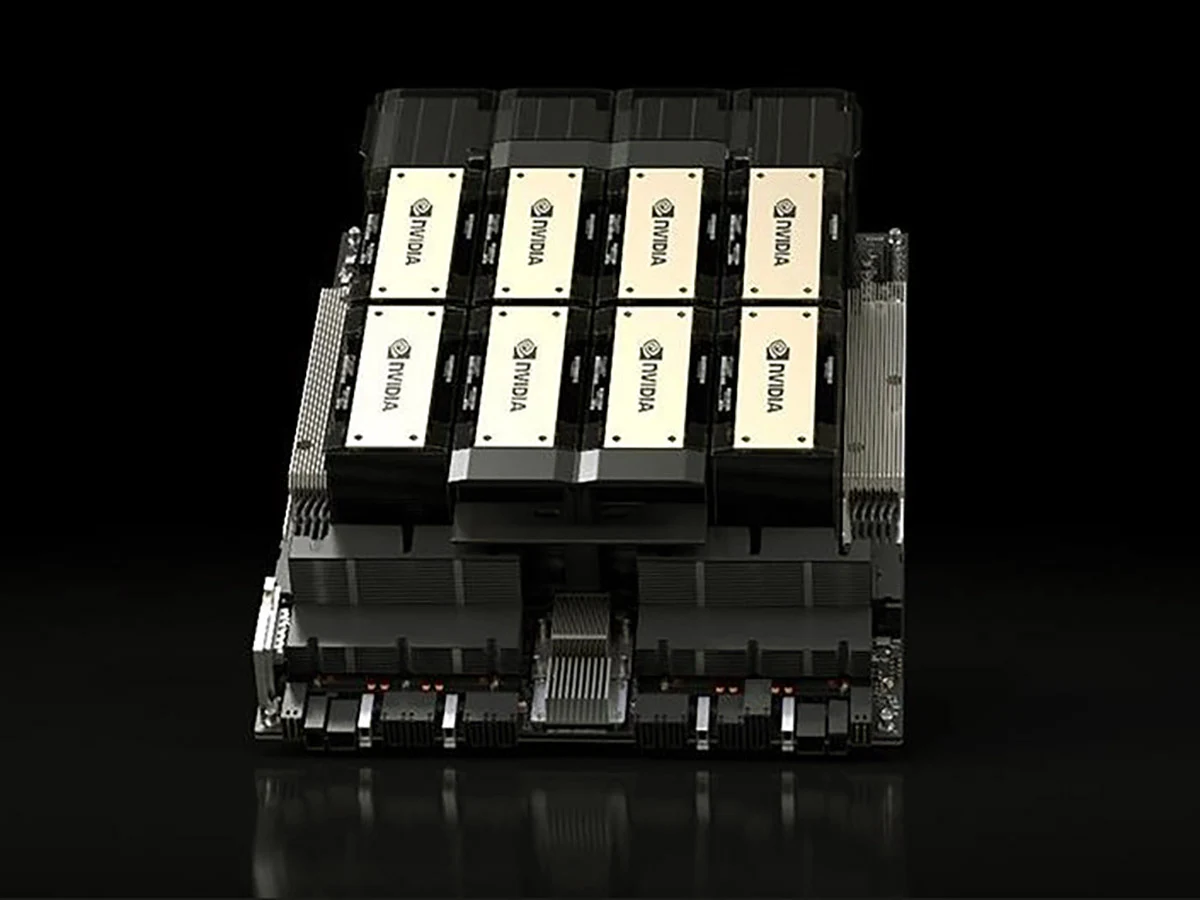
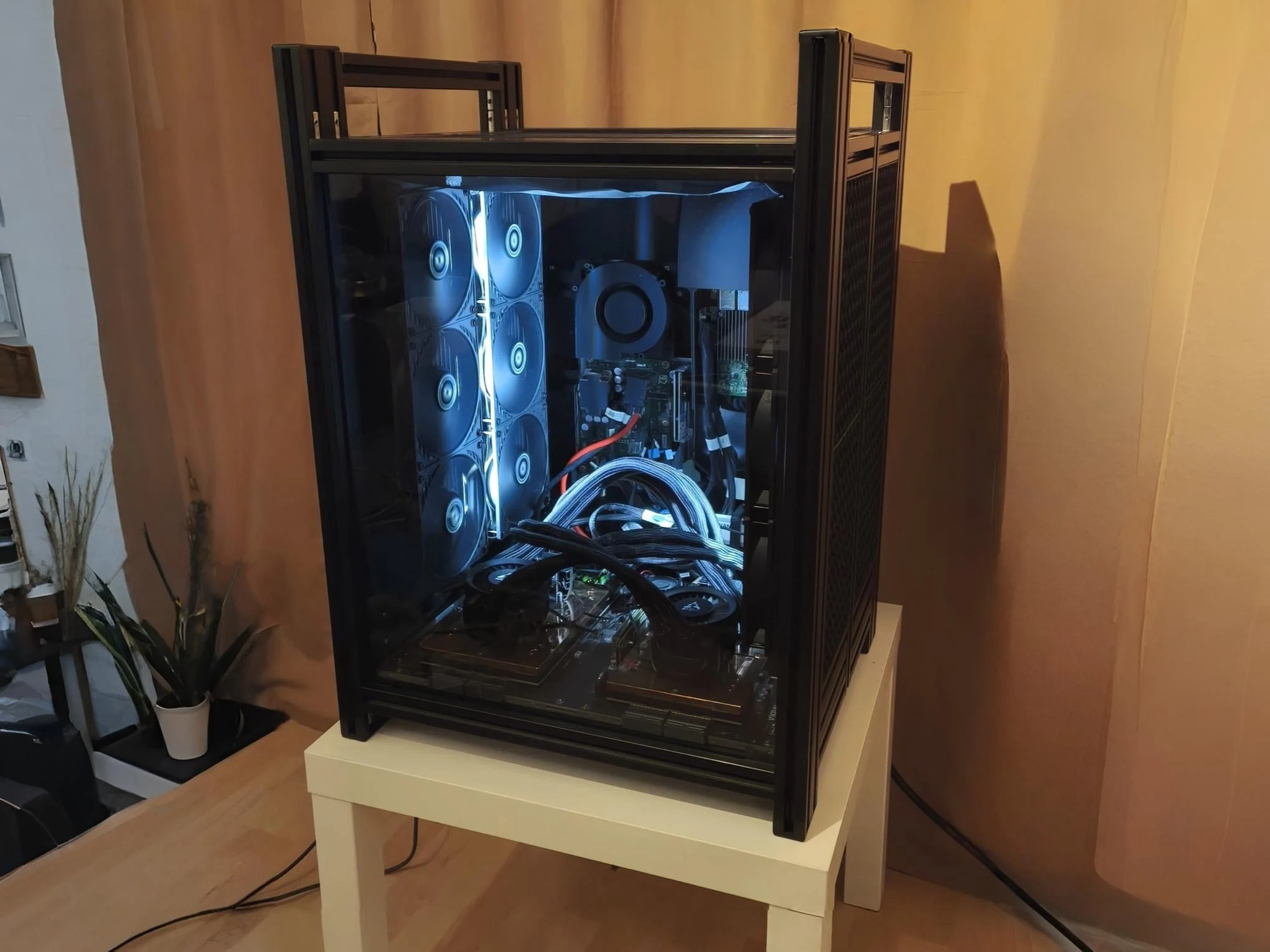
    In an interesting twist, an AI developer also shared a deal on Reddit. They found a second-hand AI server featuring dual Nvidia GH200 superchips for just $8,000. If purchased new, this system could cost around $80,000, or maybe even more, since the Nvidia H100 chip alone is valued at approximately $40,000, as pointed out by the author. Plus, the server boasts an impressive 960 GB of LPDDR5X memory. The buyer, David Noel Ng, provided the specifics below:

    The seller disclosed in another reply that the reason for the low price was the server’s poor condition, which resulted from a shift from liquid cooling to air cooling. They also mentioned that it couldn’t be installed on a standard server rack, which is usually necessary.

    Overcoming Challenges

    Despite these issues, David didn’t let that deter him. He personally visited the seller to inspect the server. Fortunately, he found that the seller had a good reputation and was located about two hours from his home.

    Once David brought the server home, he prepped a vacuum cleaner and a few liters of cleaning solution before diving into the cleaning process. After tidying up the server, he installed a new water-cooling system and made a few repairs. The toughest part was resolving a malfunctioning temperature sensor that kept causing server crashes, but in the end, he managed to fix it.

    A Satisfying Outcome

    David seems very pleased with his acquisition and his newly found capability to run large language models (235B) right at home. The entire process took a lot of effort, which might be challenging for someone new to enterprise-level hardware. However, considering that the 960 GB of DDR5 memory is now worth more than what he paid for the whole system, it turned out to be a happy ending.

    For those interested in running smaller AI models at home without spending $8,000 and investing many hours in setup, the Strix Halo-powered GMKtec Evo-X2, available for $1,529.99 on Amazon, could be a more appealing option.

    Source:
    Link



  • Fortnite Meets Hunger Games: No Humans in This YouTube Show

    Fortnite Meets Hunger Games: No Humans in This YouTube Show

    Key Takeaways

    1. AI-Created Reality Show: “Non Player Combat” features fully autonomous AI characters without a script, relying on their developed psychology to create the narrative.

    2. Production Efficiency: The show was produced by a small team of five people in under two months, with a budget of approximately $28,000.

    3. Content and Themes: The series combines elements of survival and competition, reminiscent of “The Hunger Games” and “Fortnite,” as AI characters face challenges on a dangerous island.

    4. Audience Reception: The first episode received negative feedback, with 550 dislikes compared to 130 likes, highlighting concerns about the characters’ dialogue and overall emotional impact.

    5. Concerns About AI in Entertainment: Viewers expressed worries that AI-generated content could overshadow genuine creativity, resulting in entertainment that feels emotionally hollow.


    Reality shows depend on real feelings and surprising conflicts. But can they still engage viewers if the participants are not real people but fully created by AI? This is the challenge that Tom Paton and his crew at AiMation Studios faced while making Non Player Combat – a reality show entirely crafted by AI. The whole project was completed by only five individuals in less than two months, with a budget of about $28,000.

    The Unique Idea

    The show features six completely autonomous AI characters fighting to survive on a perilous island. There is no script; the narrative develops completely on its own. Each character is formed through AiMation’s special engine, Omnigen-01, which provides them with distinct psychological profiles, histories, traumas, and drives. Once the simulation starts, the characters behave on their own. As Tom Paton explains, “We developed their psychology, not the storyline.” Even the creators are unsure of how each episode will conclude.

    Episode Release and Themes

    The initial episode has already been released, showcasing the characters and their backgrounds. Episode two is set to come out on YouTube on December 15, but it can already be accessed through the AiMation app – which is currently limited to iOS users – where episodes debut a week in advance. In terms of content, the series is likened to a mix of The Hunger Games and Fortnite: AI characters must endure on a hazardous island, confront wild creatures, and choose whether to collaborate or go solo.

    Audience Reception

    Reflecting back on the initial question: thus far, reality shows featuring non-human participants haven’t resonated well with viewers. As of this writing, the first episode garnered about 130 likes against 550 dislikes. Numerous viewers have criticized the dialogue for being stiff, the scenes for appearing unnatural, and the overall idea as “soulless.” Some even worry about a future where AI-made content might take over genuine creativity, delivering only flawlessly calculated but emotionally empty entertainment. Anyone with opinions on this matter is welcome to share their thoughts in the comments.

    AiMation Studios via YouTube

    Source:
    Link


  • Sony Patent May Bring AI Censorship to Gaming Consoles

    Sony Patent May Bring AI Censorship to Gaming Consoles

    Key Takeaways

    1. Sony’s patent for generative AI aims to help players filter or change inappropriate content in gaming.
    2. The patent describes a system that detects unwanted scenes and modifies or removes them based on user-defined rules.
    3. AI tools could help adjust content to fit modern audience standards, benefiting parents with varying views on explicit material.
    4. Users will have control over what the AI filters, receiving alerts about objectionable material and options to alter content.
    5. Concerns include the potential misuse of the technology, particularly with deepfakes, and uncertainty about its reliability for protecting children.


    The conversation around the function of generative AI in gaming development is ongoing. Sony suggests that AI could help players filter or change inappropriate content easily. A recent patent found by Clawseomegamer outlines a customizable way to censor content. Critics might claim that, since the tech isn’t just for PS5 consoles, it might be misused.

    Details of the Patent

    The patent, titled “Automatic Bespoke Edits of Video Content Using AI,” was published on December 4th. It describes a process where one processor detects scenes a user wants to avoid, while another processor modifies or removes parts of the video or audio based on specific rules. The document mentions “video game content” as a possible use case.

    Changing Standards

    The patent explains how the way we rate games, films, or music has changed over time. AI tools could help modern audiences adjust content to fit new standards. This could be particularly helpful for parents, as different guardians might view explicit content differently. However, the patent does not mention that this could also lead to censorship influenced by political views.

    Inside the document, there’s mention of Nintendo and Microsoft, who are rivals to PlayStation. While the tech is meant for “computer ecosystems,” it can be adapted to all types of consumer electronics.

    User Control and Concerns

    The Sony Patent makes it clear that users would control what the AI technology filters out. As content plays, viewers could receive alerts about potentially objectionable material. They would have choices like altering the audio or video or even adding “deepfake replacement content.” This would result in a new, censored version of the original material.

    Of course, with any AI technology, there’s always a risk of misuse. The biggest worry is that deepfakes can make it hard to spot altered content. It’s also uncertain if machine learning is advanced enough for parents to depend on it to protect children. Regardless, similar to Sony’s recent plan to improve haptic feedback, it could take years before gamers experience this kind of adaptive censorship on their consoles.

    Clawsomegamer, Wipo Patent database.

    Source:
    Link


  • AI Increases Workplace Productivity by One Hour Daily

    AI Increases Workplace Productivity by One Hour Daily

    Key Takeaways

    1. Actual impact of AI on office jobs has been modest, with only 40 to 60 minutes of time saved daily.
    2. 75% of employees report improved work speed or quality due to AI adoption in companies.
    3. Future job loss predictions remain concerning, with potential for 50% of entry-level jobs to be eliminated in certain sectors.
    4. 95% of AI pilot projects fail to achieve profitability or performance targets, indicating challenges in successful integration.
    5. While AI has made measurable workplace impacts, significant advancements toward job replacement are still difficult to achieve.


    For all the big talk about AI making millions of office jobs useless or bringing in huge economic gains and efficiency, the actual impact in workplaces has been pretty underwhelming so far. This is what OpenAI’s latest report on enterprise AI usage suggests, showing that while AI does save workers some time and effort, it’s not a game changer, with only 40 to 60 minutes gained each day.

    Survey Insights

    OpenAI gathered information from 9,000 employees across over 100 companies and looked at real usage data from businesses. The main point is that companies are quickly adopting AI and seeing noticeable improvements in productivity and business outcomes. Around 75% of employees from various departments said their work speed or quality got better thanks to AI. Those who use AI the most could save even more time, up to 10 hours a week. The report highlights that AI not only makes current workflows faster but also helps with tasks that workers couldn’t do before.

    Future Expectations

    Saving an hour a day on average is definitely a good thing. But it doesn’t quite match the bright future we were led to expect when ChatGPT first arrived three years ago. Back in May 2025, Dario Amodei, the CEO of Anthropic, cautioned that AI is an unstoppable force and could potentially eliminate over 50% of entry-level white-collar jobs in fields like finance, tech, law, and consulting, leading to up to 20% unemployment in the next one to five years.

    Profitability Concerns

    Still, companies that are hurrying to integrate AI tools haven’t had much luck making the most of this technology. An MIT study that looked into 350 employees, interviewed 150 leaders, and analyzed 350 public AI deployments found that 95% of AI pilot projects fail to make a profit or hit performance targets, while only 5% of these programs see quick revenue growth or have a noticeable effect on profits and losses.

    Of course, it’s possible that a major economic shift, where entire industries and positions become fully automated, could still happen, and it would be shortsighted to dismiss the vast potential AI has at this early stage. There’s no doubt that AI has made a significant and measurable impact in workplaces, but for it to progress from just a tool that helps you work faster to something that can truly replace jobs will be a much tougher challenge than the initial excitement led us to believe.

    Source:
    Link


  • H3C MegaCube Mini-PC: 10 Gbps Ethernet & 128 GB RAM

    H3C MegaCube Mini-PC: 10 Gbps Ethernet & 128 GB RAM

    Key Takeaways

    1. H3C has launched the MegaCube, a compact AI-centric mini-PC competing in the market, similar to the Microsoft Surface Pro.
    2. The MegaCube features ten ARM Cortex-X925 cores, ten Cortex-A725 cores, and a Blackwell-based GPU with 6,144 CUDA cores, offering up to 1 petaflop of theoretical Tensor core performance.
    3. It has dimensions of 150 × 150 × 50.5 mm and includes 128 GB of LPDDR5x RAM, 10 Gbps Ethernet, WiFi 7, USB Type-C, and HDMI 2.1a.
    4. The MegaCube can be paired with another unit for enhanced performance and comes pre-installed with Nvidia’s Ubuntu-based DGX OS.
    5. The pricing for the MegaCube is set at CNY 36,999 (~$5,240) on JD.com.


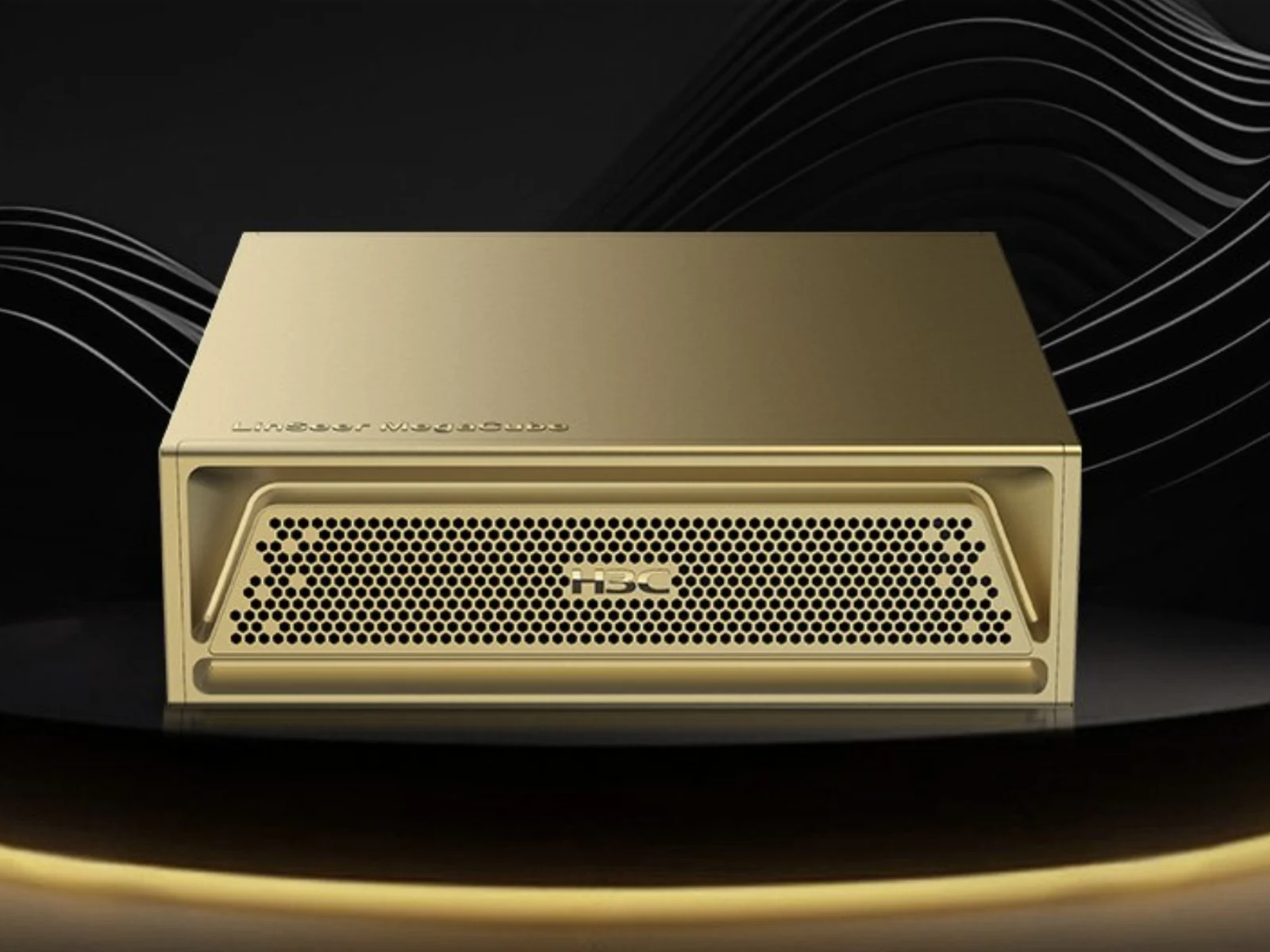
    A few months back, H3C launched the MegaBook, aiming to compete with the Microsoft Surface Pro by featuring a 120 Hz OLED display. Now, the company has stepped into the realm of compact AI-centric mini-PCs with the MegaCube, which is already available in China. This device is constructed around Nvidia’s new Grace Blackwell architecture and bears a resemblance to the DGX Spark (currently priced at $3,999 on Amazon), which serves as its backbone.

    MegaCube Features

    The MegaCube integrates ten ARM Cortex-X925 cores and ten Cortex-A725 cores, along with a Blackwell-based GPU that boasts 6,144 CUDA cores. Hence, H3C estimates the mini-PC can provide up to 1 petaflop of Tensor core performance (FP4). However, it’s crucial to point out that these figures are theoretical. Additionally, this GB10 chipset can also be found in other mini-PCs like the MSI EdgeXpert AI.

    Connectivity and Compatibility

    On another note, H3C enables the pairing of two MegaCube units. Despite its compact dimensions of 150 × 150 × 50.5 mm, each MegaCube is equipped with 128 GB of LPDDR5x RAM, 10 Gbps Ethernet, and WiFi 7, alongside USB Type-C and HDMI 2.1a among several other ports. Moreover, the MegaCube comes pre-installed with Nvidia’s Ubuntu-based DGX OS. However, the pricing is quite high, currently set at CNY 36,999 (~$5,240) on JD.com. For further details, you can check H3C’s website.

    H3C & JD.com via ITHome

    Source:
    Link


  • Nvidia Powers China’s AI Growth While Profiting from the Boom

    Nvidia Powers China’s AI Growth While Profiting from the Boom

    Key Takeaways

    1. Nvidia received approval to sell advanced H200 AI chips to China, enhancing the country’s AI development capabilities.
    2. The export will incur a 25% fee to the U.S. government, potentially generating around $5 billion in monthly revenue for Nvidia.
    3. The H200 chips outperform Chinese alternatives like the Huawei Ascend 910C, allowing China to enhance its AI technology.
    4. Concerns about national security exist, but Nvidia argues that revenue from China will support future chip development.
    5. China is making progress in its own chip industry and may seek to reduce reliance on foreign imports, affecting potential revenue for Nvidia.


    The administration under Trump has given the green light for Nvidia to sell advanced chips to China, allowing the country to proceed with its AI development without interruption, using hardware that is far superior to what it can achieve alone.

    Export Details

    Nvidia will need to pay a 25% fee to the U.S. government for the right to export H200 AI chips. This fee shouldn’t pose any issues, especially considering that the permission could generate around $5 billion in monthly revenue.

    Chip Performance

    The H200 series comes before Nvidia’s newest Blackwell architecture, yet it remains a powerful AI chip that surpasses any Chinese-made alternatives, like the Huawei Ascend 910C. With limited AI hardware options, China has had to settle for open-sourcing and optimizing tokens instead of focusing on raw LLM capabilities. By utilizing the H200, they could match what major players in Silicon Valley achieve with Nvidia’s Blackwell.

    Notably, China’s popular Doubao chatbot is closely competing with Google Gemini in terms of daily tokens, depending on a greater number of less powerful AI chip clusters. Huawei also discovered a software solution that greatly enhances cluster efficiency. Furthermore, domestic AI models like DeepSeek can now analyze and process up to 200,000 pages daily using just one Nvidia A100 card.

    Industry Reactions

    Despite some experts and lawmakers expressing concerns regarding national security about the H200 export permit, Nvidia successfully lobbied Trump, arguing that the financial support from China would aid in developing the next-generation AI chips, which would only be available after the current ones age.

    On the flip side, China has noticed encouraging developments within its own chip industry led by Huawei and others, and is exploring methods to limit foreign chip imports. Therefore, it remains uncertain how much revenue the H200 export permit will actually yield for Nvidia and the U.S. government.

    Source:
    Link


  • xAI Hackathon Winners Create App for AI-Driven Product Placement

    xAI Hackathon Winners Create App for AI-Driven Product Placement

    Key Takeaways

    1. Innovative Tool: Halftime is an AI-driven advertising tool created during xAI’s hackathon by University of Waterloo students, aimed at integrating branded elements into video content.

    2. Seamless Integration: The tool uses Grok, xAI’s large language model, to analyze videos and generate suitable advertisement placements that blend naturally with the scene.

    3. User Experience: Halftime aims to enhance viewer experience by embedding ads like product packaging and billboards into videos, avoiding traditional disruptive ad formats.

    4. Demonstration Highlights: The tool effectively showcases product placement during character interactions and overlays brand logos, making ads feel part of the storyline.

    5. Mixed Feedback: Public reactions to Halftime have been varied, with some praising its potential for revenue while others express concerns about AI-generated advertising in entertainment content.


    xAI recently held a 24-hour hackathon where students from the University of Waterloo created an innovative advertising tool called Halftime. This experimental AI-driven tool is designed to seamlessly integrate branded elements into video content. Pravin Lohani, Yuvraj Dwivedi, and Krish Garg were the brains behind this project, which xAI recognized as one of the most impressive entries at the event.

    How It Works

    Halftime utilizes Grok, xAI’s large language model, to analyze various aspects of a video, including its narrative, lighting, setting, and objects. By doing so, it attempts to generate suitable advertisement placements that align with the visual and contextual style of the scene. Rather than interrupting the viewing experience with traditional pre-roll ads or pop-ups, Halftime cleverly incorporates items like product packaging, billboards in the background, or branded objects that seem to naturally fit within the environment.

    Demonstration and Features

    In a demonstration shared on X, the tool showcased how it can place items like soft-drink cans during character interactions and overlay brand logos on buildings in urban scenes. The goal of this technology is to provide instant product placement that feels less disruptive compared to conventional ad breaks. It’s designed to blend the advertising into the storyline, making it part of the viewing experience rather than a distraction.

    xAI highlighted this project in their hackathon thread, referring to it as a system that “dynamically weaves AI-generated ads into the scenes you’re watching, so breaks feel like part of the story instead of interruptions.” During the hackathon, over 150 projects were presented, covering a variety of categories such as safety tools, AI-assisted creation, and monetizing technologies.

    Public Feedback

    The response to Halftime on X has been a mixed bag. While some users have praised the technical aspects and potential for increased revenue for video platforms, others have expressed unease about the rise of AI-generated advertising. Several comments voiced concerns regarding the concept of embedding advertisements more deeply into entertainment content.

    Source:
    Link


  • EngineAI CEO Demonstrates T800 Robot’s Jackie Chan-Like Kicks

    EngineAI CEO Demonstrates T800 Robot’s Jackie Chan-Like Kicks

    Key Takeaways

    1. EngineAI’s CEO demonstrated the T800 robot’s capabilities by enduring kicks to counter skepticism about its authenticity.
    2. The T800 robot is 1.73 m tall, weighs 75 kg, and has 29 degrees of freedom in its joints, with advanced tactile sensors in its hands.
    3. It features a 360-degree omnidirectional LIDAR sensor for navigation and is powered by an Intel N97 CPU and Nvidia AGX Orin AI module.
    4. The T800 is available in multiple models, with prices ranging from approximately $25,000 to $50,000, and pre-orders can be made with a $700 deposit.
    5. EngineAI has recently secured additional funding, raising over 1 billion yuan (~$140 million) to support its growing team of over 150 engineers.


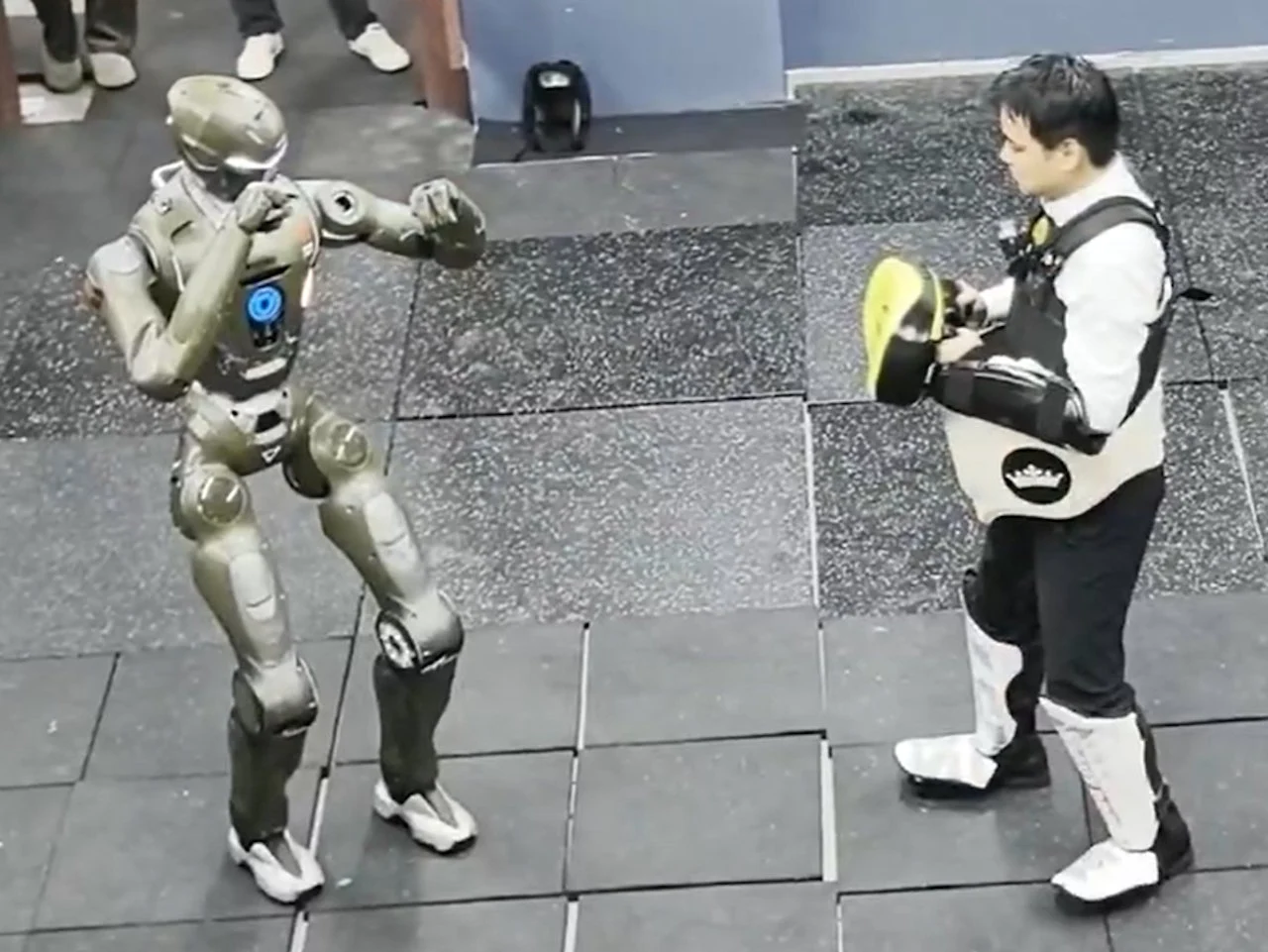
    EngineAI has shared a new video on X to address social media concerns about the authenticity of its clip featuring the recently revealed T800 general-purpose robot. To combat skepticism, CEO Zhao Tongyang donned protective gear to endure kicks from the humanoid in a tweet that was just posted.

    Specifications of the T800

    The T800 was unveiled on December 2, 2025, standing at 1.73 m (5 ft. 8 in.) tall, and constructed with a body made of magnesium-aluminum alloy. It boasts a remarkable 29 degrees of freedom in its major joints, plus 7 degrees of freedom in each hand.

    Weighing in at 75 kg (165 lbs.), the robot is powered by a modular solid-state lithium battery that can last for about 4 hours, as stated by the company. Each leg motor achieves a maximum torque of 450 N⋅m (332 lb⋅ft) due to a peak joint power of 14 kW. Each hand is capable of lifting up to 5 kg (11 lbs.) and is equipped with tactile sensors.

    Advanced Features

    The T800 features a 360-degree omnidirectional LIDAR sensor, allowing it to navigate around people and objects while moving at speeds of up to 3 m/s (9.8 ft/s). The humanoid is driven by an Intel N97 CPU, along with an Nvidia AGX Orin 64GB AI module, enabling it to perform martial arts kicks or operate in industrial environments like warehouses.

    The EngineAI T800 starts at a price of 180,000 yuan (~$25k) for the Base model. The Ecosystem model, which is open-source, is available for $33k, while the Pro model with an upgraded processor is priced at $38.5k, and the premium Max model retails for $50k. A $700 deposit can be made on the pre-order page on JD.com to ensure delivery by June 2026.

    Funding and Growth

    In addition, the company has recently completed additional Series A1+ and A2 funding rounds, following its initial raise of one billion yuan (~$140 million) to support its team, which consists of over 150 project engineers.

    Source:
    Link


  • Nvidia SBC Outshines Raspberry Pi 5 but Comes at a Higher Price

    Nvidia SBC Outshines Raspberry Pi 5 but Comes at a Higher Price

    Key Takeaways

    1. High Performance: The Radxa C200 runs on the Nvidia Jetson Orin NX, offering 117 TOPS for executing AI models directly on the device.

    2. Active Cooling System: Unlike many single-board computers that use passive cooling, the Radxa C200 features an active cooling system to support its performance.

    3. Expandable Storage: It includes multiple M.2 slots allowing users to connect several SSDs and supports up to four PCIe 4.0 lanes.

    4. Robust Connectivity Options: The device has four USB 3.2 Gen 2 Type-A ports, one USB 3.2 Gen 2 Type-C port, Gigabit Ethernet, and options for WiFi, along with unique features like MIPI CSI.

    5. Availability: The Radxa C200 is available for purchase at Arace for $499, targeted at developers interested in its advanced capabilities.


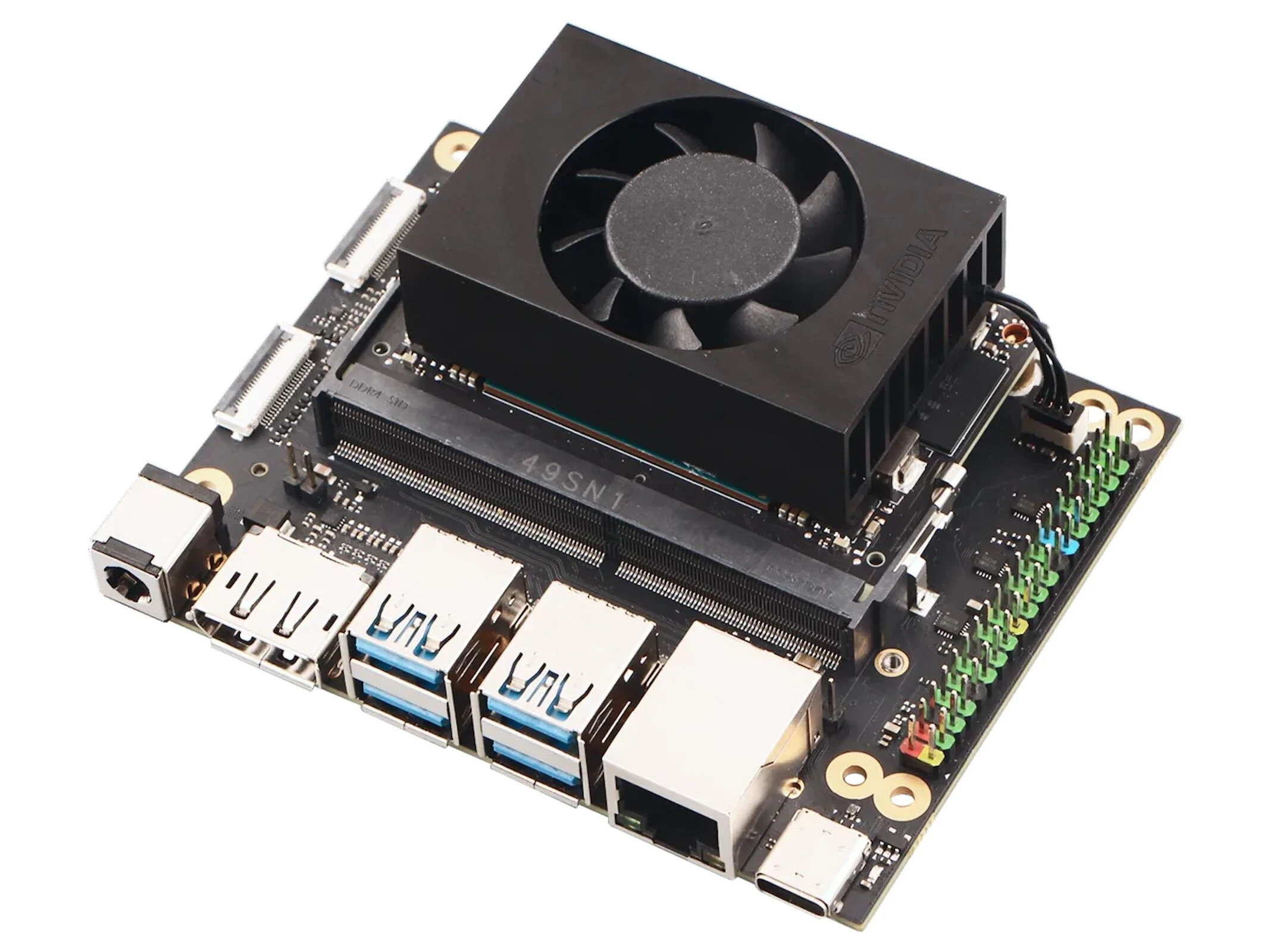
    The Radxa C200 is a developer kit that resembles a single-board computer, but it has a unique focus. It runs on the Nvidia Jetson Orin NX with 8GB and features six ARM Cortex-A78AE cores, along with 1,024 CUDA cores and 32 Tensor cores. This configuration makes the SBC ideal for executing AI models directly on the device.

    High Performance for Specific Applications

    One of the practical uses for this device could be local image recognition in various industrial settings. It boasts a maximum performance of 117 TOPS, a notable figure that highlights its capabilities. The performance is further supported by an active cooling system, which is a contrast to many single-board computers like the Raspberry Pi 5 that often use passive cooling methods, depending on their applications. Additionally, the Radxa C200 is outfitted with 8GB of LPDDR5 RAM.

    Expandable Storage and Connectivity

    The device offers several M.2 slots, including one in the M.2 2280 format and two in M.2 2230, enabling users to connect multiple SSDs at the same time. Depending on the M.2 slot utilized, it can support up to four PCIe 4.0 lanes. Typical connectivity options for SBCs are also present, featuring four USB 3.2 Gen 2 Type-A ports and one USB 3.2 Gen 2 Type-C port.

    For network connectivity, Gigabit Ethernet is available, but users can alternatively install a WiFi card. DisplayPort 1.2 is supported as well, along with some features that are not common in consumer-grade devices. These include MIPI CSI, a 40 pin GPIO, and headers for PoE and CAN. The latest Nvidia-powered SBC from Radxa is currently available at Arace for a price of $499.

    Availability

    Arace, the retailer, is offering the Radxa C200, making it accessible for developers looking to leverage its advanced features.

    Source:
    Link


  • Optimus Robot Faints While Serving Drinks for Tesla Event

    Optimus Robot Faints While Serving Drinks for Tesla Event

    Key Takeaways

    1. Tesla’s Optimus robot collapsed while serving drinks at an event, mirroring a previous incident with a Russian humanoid robot.
    2. The Optimus robot was likely operated remotely, a common practice for Tesla in similar situations.
    3. The fall occurred when the robot mimicked taking off a nonexistent virtual reality headset, causing it to lose balance.
    4. Unlike the Russian robot’s fall, which was due to a demonstration, the Optimus incident seems linked to a distracted human operator.
    5. Tesla is developing an Optimus 3.0 version aimed at improving movement capabilities with advanced AI technology.


    While the first humanoid robot from Russia that tumbled during its presentation led to many drunken jokes, Tesla’s Optimus has now revealed its own human-like moment by collapsing while serving drinks at an event.

    Operator Control

    The Optimus robot was likely being operated remotely, a tactic Tesla has used before, especially when robots were mixing drinks for guests at last year’s Cybercab launch.

    The Incident

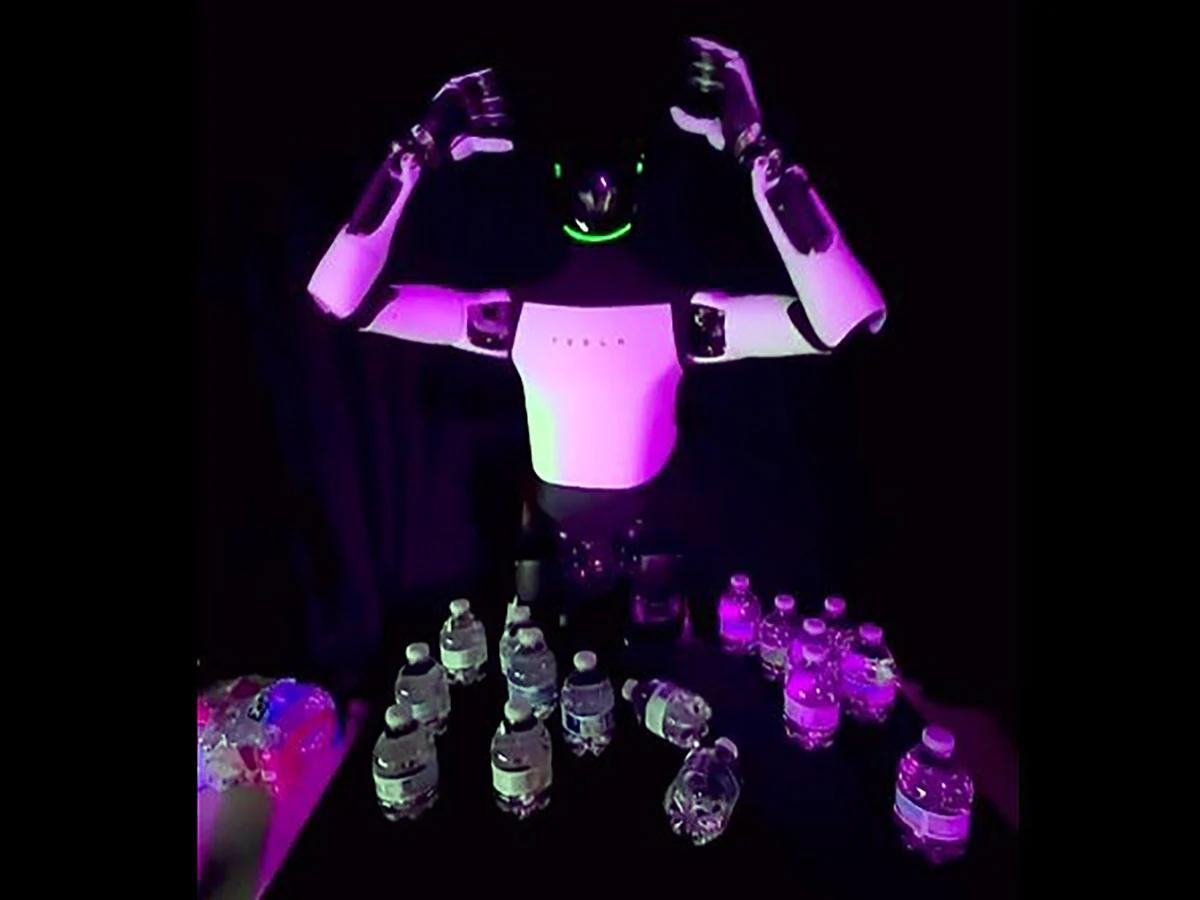
    At Tesla’s “Future of Autonomy Visualized” exhibition in the Miami Design District over the weekend, the humanoid butler was positioned behind a tray filled with water bottles. Suddenly, it mimicked the action of taking off a nonexistent virtual reality headset, causing some bottles to topple over before it lost its balance and fell flat on its back in a truly amusing way.

    Some observers suggested that the fall was merely a malfunction, but the gesture seemed to suggest that a distracted operator had momentarily gotten up and made an unusual move, causing the robot’s weight to shift too quickly and leading to its fall.

    Robot Stability

    In contrast, the Russian robot fell when its handlers were demonstrating its balancing skills by nudging it gently forward, while the Optimus incident likely stemmed from the actions of its human operator.

    Most modern humanoid robots are quite nimble and can easily maintain their balance, even on uneven surfaces or during martial arts demonstrations. Tesla is currently developing an Optimus 3.0 version, which will reportedly offer enhanced movement capabilities and be powered by its advanced AI5 and AI6 chips.

    Source:
    Link