Category: Artificial intelligence

  • Hawaii Distributes 1,000 AI Dashcams to Improve Road Safety

    Hawaii Distributes 1,000 AI Dashcams to Improve Road Safety

    Key Takeaways

    1. The “Eyes on the Road” initiative uses AI technology to analyze dashcam footage for road issues like potholes and vegetation overgrowth.
    2. Dashcams have been distributed across Hawaii, with varying numbers allocated to each island: Big Island (390), Maui (245), Oahu (250), and Kauai (115).
    3. Dashcams connect to vehicle OBD ports and allow drivers to upload footage for analysis through the NextBase app.
    4. The project includes oversight measures to ensure data accuracy, with the DOT planning regular inspections and maintenance checks.
    5. The program allows drivers to report dangerous behaviors, enabling them to share footage with law enforcement for follow-up.


    The “Eyes on the Road” initiative was created with help from the University of Hawaii and Blyncsy. This program will gather still images from dashcam footage and analyze them using AI technology to identify issues like potholes, damage to guardrails, problems with paint lines, and overgrown vegetation.

    Distribution of Dashcams

    Dashcams have been distributed throughout Hawaii’s islands. The Big Island received 390 cameras, while Maui and nearby islands got 245. Oahu was given 250 units, and Kauai received the last 115 cameras.

    How Dashcams Work

    These dashcams are set to record video in their designated areas and function by connecting to the vehicle’s OBD port. Drivers can access the footage through the NextBase app on their smartphones via Bluetooth, allowing them to upload it for AI analysis.

    Blyncsy takes the videos and turns them into still images, and machine learning models generate reports for the Department of Transportation (DOT).

    Ensuring Safety and Oversight

    As AI may misinterpret data, the project is implementing oversight measures. Nevertheless, the DOT believes that this monitoring will improve safety on Hawaii’s roadways.

    Hawaii has stated that the dashcam system will help with inspections of guardrail defects every 12 hours. It will also provide information for checking vegetation encroachment and debris on a weekly basis. Other regular maintenance tasks include annual inventory of signs and assessments of stripe visibility.

    Community Reporting Features

    The “Eyes on the Road” program isn’t just about monitoring infrastructure. Drivers involved can also use the system to report dangerous behaviors, like reckless driving and road rage. They can view the footage and share relevant clips with law enforcement for the necessary follow-up.

    Source:
    Link



  • Slackbot Upgrade: New AI Features Tested in Major Slack Update

    Slackbot Upgrade: New AI Features Tested in Major Slack Update

    Key Takeaways

    1. Slack is enhancing its traditional bot into a full AI assistant, expanding its functionality beyond reminders and alerts.
    2. The new Slack AI assistant provides personalized plans, insights, and simplified searches within the workspace.
    3. It utilizes natural language processing for contextual responses and integrates with Microsoft Outlook and Google Calendar for scheduling.
    4. Traditional Slackbot features like custom commands and reminders will still be available alongside the new AI capabilities.
    5. The AI assistant operates within AWS’ virtual private cloud, ensuring data security and addressing concerns about data use in AI training.


    Slack is testing a significant upgrade that evolves its traditional bot into a full-fledged AI assistant, broadening its functions beyond just reminders and alerts. The enhanced Slackbot now has the ability to create personalized plans, gather insights from discussions and documents, and simplify intricate searches throughout the entire workspace.

    Major Changes Ahead

    Rob Seaman, the chief product officer at Slack, which is part of Salesforce, noted that this overhaul is essentially a total reconstruction. In an interview during the Salesforce Dreamforce 2025 event, he remarked, “The Slackbot we have today is quite basic.” He added, “We’ve really redesigned it as a unique AI partner.”

    As part of this pilot program, the Slack AI assistant is represented by an icon next to the search bar in the workspace. Clicking on it reveals a panel where users can ask Slackbot questions, like “What are my top tasks today?” or “Get the latest info on a project.”

    Contextual Responses

    The assistant utilizes conversations, documents, and threads within the workspace to offer contextualized answers that are personalized for each user.

    A standout feature of this upgrade is the natural language search. Rather than needing exact keywords, users can phrase their requests more freely. Slackbot is also capable of integrating with Microsoft Outlook and Google Calendar for meeting scheduling and checking availability.

    The update builds on Slack’s earlier AI features, which include automatic summarization and jargon interpretation. Seaman mentions that more nuanced AI enhancements will keep coming into play to “reduce user clicks.”

    Core Functions Remain

    It’s important to note that traditional Slackbot features—such as custom commands, automated messages, and basic reminders—will continue to be available.

    Slack stresses that the AI assistant operates within AWS’ virtual private cloud. Seaman assures, “no data leaves the firewall,” and none is utilized for training AI models, which addresses growing concerns regarding generative AI in business settings.

    While organizations can choose to forgo the AI Slackbot completely, individual users within a workspace do not have the option to disable it independently.

    The upgraded Slackbot has already been rolled out to 70,000 Salesforce employees internally. Slack is currently expanding its pilot to select customers, with plans for a wider release by year’s end.

    Source:
    Link


  • OpenAI and Google Limit Free AI Access Due to GPU Overload

    OpenAI and Google Limit Free AI Access Due to GPU Overload

    Key Takeaways

    1. OpenAI has limited free accounts on Sora to generating six videos per day due to high demand and resource management issues.
    2. Users can purchase additional video generations on Sora, reflecting OpenAI’s focus on scalable monetization.
    3. Google has also reduced free access to its Nano Banana Pro image generator from three images to two.
    4. Both companies have experienced heavy usage of their latest models, prompting these restrictions as they prepare for increased traffic during the holiday season.
    5. Paid users remain unaffected by these changes, but future adjustments to policies may occur based on evolving demand.


    OpenAI has recently tightened the limits on AI generation for Sora, allowing free accounts to only generate six videos per day. Bill Peebles, who is in charge of Sora at the company, mentioned on X that the platform is facing “overwhelming demand” and humorously noted that “our GPUs are melting.”

    New Purchase Options

    Although OpenAI has set temporary caps before, Peebles did not indicate if this new limit would be lifted anytime soon. He pointed out that users now have the option to buy additional video generations, which is part of OpenAI’s growing emphasis on scalable monetization. The restrictions for ChatGPT Plus and Pro subscribers remain the same, but OpenAI has not publicly shared the specifics of those limits.

    Changes from Google

    In a similar move, Google has decreased free access to its new Nano Banana Pro image generator, cutting daily limits from three images down to two. This change was first noted by 9to5Google and later confirmed within the tool’s settings, which alerts users that usage limits “may change frequently and without notice.”

    It seems the company is also limiting free users’ access to Gemini 3 Pro, continuing a pattern of restricting availability after high-demand launches.

    Patterns of Heavy Usage

    Both OpenAI and Google have seen significant usage since their latest models were launched, leading to resource management actions across their platforms. With the holiday weekend and festive season approaching, a surge in traffic is anticipated, making AI generation limits more noticeable for casual users who depend on the free tiers of each platform.

    Currently, paid users on both platforms are not affected by these changes, but the companies are hinting that the evolving demand might lead to changes in policies down the line.

    Source:
    Link


  • Studie zeigt häufigste Anwendungen von ChatGPT und KI-Tools

    Studie zeigt häufigste Anwendungen von ChatGPT und KI-Tools

    Key Takeaways

    1. High Adoption Rates: 65% of individuals frequently use generative AI, with 91% among those aged 16 to 29.

    2. ChatGPT Dominance: 85% of AI users prefer ChatGPT over other tools like Google Gemini (33%) and Microsoft Copilot (26%).

    3. Primary Usage: The main uses of AI include research (72%), writing/editing (43%), and brainstorming (38%).

    4. Concerns About AI: 50% of people worry about data misuse, and 91% think distinguishing real content from AI-generated content will become harder.

    5. Deepfake Awareness: 50% of respondents have encountered AI-altered videos, highlighting the growing issue of deepfakes.


    Three years since ChatGPT was introduced, a significant 65% of individuals frequently use generative AI, notably among younger demographics. Among those aged 16 to 29, the adoption rate soars to 91%, while 80% of individuals aged 30 to 49 also make use of these technologies. This information comes from a survey of 1,005 people carried out by the research organization Forsa from October 20 to 26, 2025. The findings were shared (in German) by the TÜV Association on November 26 in Berlin.

    Dominance of ChatGPT

    ChatGPT continues to be the most popular tool, with 85% of AI users opting for OpenAI’s application, significantly outpacing competitors like Google Gemini (33%), Microsoft Copilot (26%), DeepL (20%), and Meta AI (18%). Almost half of all users interact with AI on a daily basis or multiple times a week. As anticipated, the primary usage is for research and gathering information, reported by 72% of participants. This is succeeded by writing and editing tasks at 43%, and creative endeavors such as brainstorming at 38%. Notably, image and video editing are less common, only mentioned by 16% of users.

    Concerns About AI Usage

    Despite the prevalent use of AI and its integration into everyday life, there are still significant worries. Half of the surveyed individuals express concerns about data misuse or hacking, and 51% think that AI-generated content is frequently confused with authentic material. Even more alarming, 91% believe it will become progressively harder to tell apart real content from AI-generated works. This understandably raises serious worries about misinformation, with 83% perceiving it as a substantial threat to society.

    The Rise of Deepfakes

    Half of those surveyed report having encountered videos altered by AI. The TÜV Association notes that deepfakes have become a widespread problem. These remarkably convincing videos often depict real individuals but are entirely fabricated by AI. If you’ve experienced AI-generated content or deepfakes, please share your stories in the comments.

    Source:
    Link


  • Company Tests Brain-Implanted Remote-Controlled Pigeons Successfully

    Company Tests Brain-Implanted Remote-Controlled Pigeons Successfully

    Key Takeaways

    1. Neiry has developed “biodrones” that transform pigeons into controllable flying units using electronics and neural implants.
    2. The control system uses electrodes placed in the bird’s brain, allowing guidance through electrical pulses and GPS navigation.
    3. The PJN-1 pigeons can fly up to 310 miles daily, offering greater range and endurance than traditional drones.
    4. Future developments include adapting the technology for ravens and albatrosses to carry heavier loads.
    5. Potential applications for these biodrones include monitoring power lines, environmental assessments, and supporting search-and-rescue operations.


    While companies like Neuralink are putting in a lot of effort into creating brain-computer interfaces (BCI), a Russian firm called Neiry is venturing into an area that seems right out of a sci-fi movie — controlling pigeons from afar.

    Remote-Controlled Birds

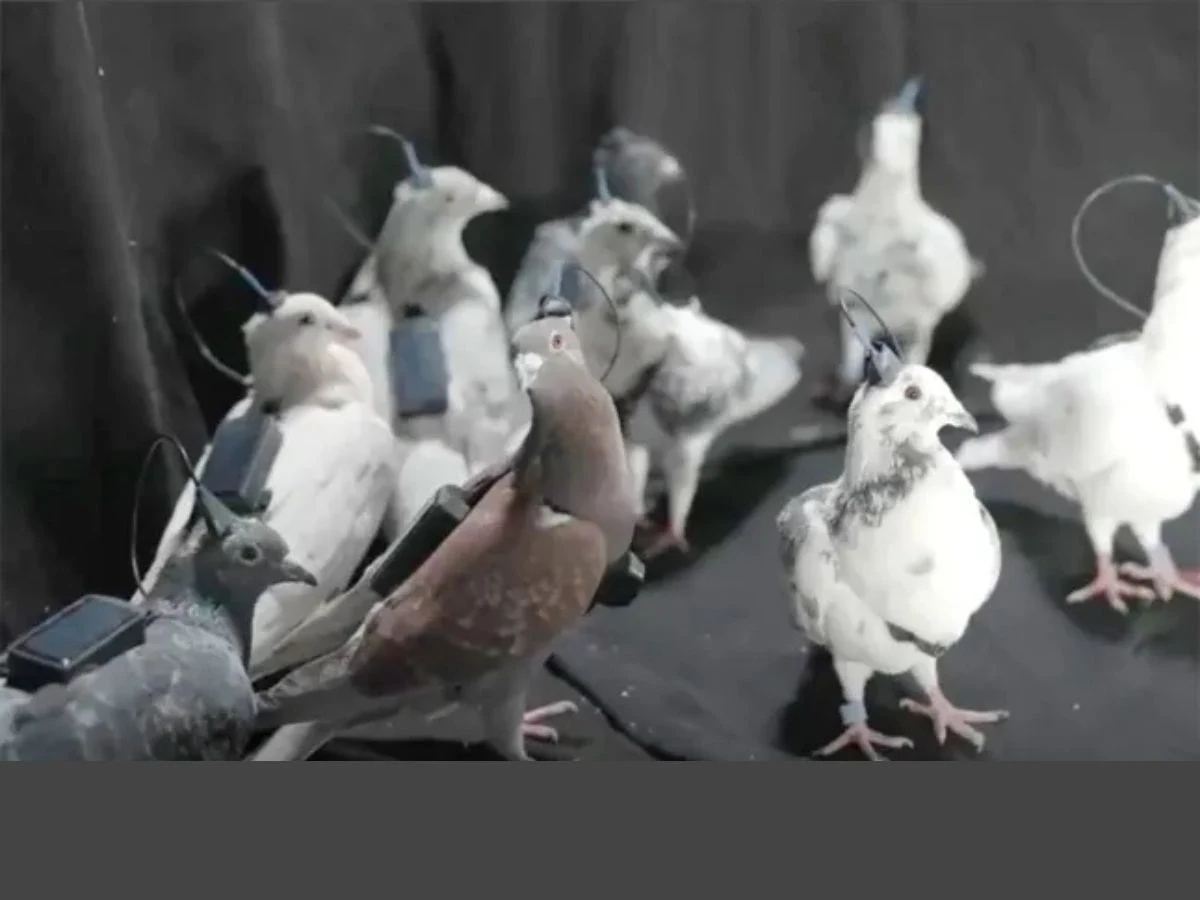
    In a fresh announcement, Neiry shared that it has carried out successful flight tests of its so-called “biodrones” in Moscow. This technology transforms regular birds into controllable flying units by using tiny electronics attached to backpacks and neural implants.

    Innovative Control System

    This method eliminates the need for typical animal training. Instead, surgeons use a stereotactic setup to place electrodes in specific areas of the bird’s brain. These electrodes connect to a solar-powered stimulation device located on the bird’s back. To guide the bird, the system emits electrical pulses that affect the bird’s brain, making it think it wants to fly in the desired direction. The navigation is managed through GPS installed on the bird.

    Neiry asserts that this technique provides a huge advantage compared to mechanical alternatives. The firm claims that the PJN-1 pigeons can travel 310 miles daily, offering range and endurance that far exceeds traditional electric drones.

    Future Developments

    Currently, the developers are examining flight features and are planning to modify the technology for use with ravens and albatrosses to carry heavier loads. The planned uses include monitoring power lines, performing environmental assessments, and supporting search-and-rescue operations, with onboard cameras equipped with AI to anonymize faces for privacy reasons.

    Source:
    Link


  • Director of The Witcher 3: AI Games Lack Soul and Depth

    Director of The Witcher 3: AI Games Lack Soul and Depth

    Key Takeaways

    1. AI is becoming an important part of the gaming industry, enhancing various game features.
    2. Konrad Tomaszkiewicz believes AI should assist creators rather than replace them.
    3. He used AI for initial character voice testing in his project, The Blood of Dawnwalker.
    4. Tomaszkiewicz emphasizes that creativity and emotional expression in games cannot be replicated by AI.
    5. While AI can be a useful support tool, games created solely by AI may lack emotional depth.


    Artificial intelligence is rapidly advancing and increasingly becoming a significant part of the gaming industry. Many games are now incorporating this technology to enhance various features. Nevertheless, a number of gamers are not fond of AI, and recently, Konrad Tomaszkiewicz, the director of The Witcher 3, shared his thoughts on this matter with Eurogamer.

    AI in Game Development

    To start, he discussed The Blood of Dawnwalker, where he utilized AI during the character voice testing phase before bringing on actual actors. This allowed him to gain an initial perspective. He then expressed a clear stance regarding this technology:

    “But regarding this matter, I think AI should assist people and not take their place. If we can utilize AI to simplify life for people… I’m not completely against AI, but it needs to develop into a tool that supports us, like Google Translate, rather than something that infringes on authors’ rights and generates graphics or animations by learning from human creations.”

    The Role of Creativity

    Additionally, he emphasized that creative individuals will always have a place that AI cannot fill. He believes that every game should express emotions, something this technology is incapable of achieving. In conclusion, while he thinks that games made by AI will lack soul, he acknowledges that this technology could be beneficial as a support tool. It remains to be seen how AI will reshape the industry in the future and what the implications may be.

    Source:
    Link


  • AI Models and Poetry: Why They Struggle with Poetic Prompts

    AI Models and Poetry: Why They Struggle with Poetic Prompts

    Key Takeaways

    1. Safety systems in AI models are intended to prevent harmful or unethical content, but a study shows these protections can be easily bypassed.
    2. Researchers found that hand-crafted poetic prompts evaded safety protocols about 62% of the time, while automatically generated poems succeeded around 43% of the time.
    3. The vulnerability in language models arises because safety filters are primarily trained on direct, factual language, struggling with metaphorical and creative expressions.
    4. The study highlights a stylistic flaw in large language models, revealing a new aspect of AI safety.
    5. The findings have sparked widespread discussion online, with mixed reactions about the implications for AI safety.


    OpenAI and other similar firms dedicate a lot of effort and resources into creating safety systems to stop their AI models from producing harmful or unethical content. However, a study released on November 19, 2025, indicates that these protections can be easily evaded. The research reveals that just a few cleverly crafted poetic prompts can bypass these defenses.

    Research Insights

    Researchers from DEXAI, Sapienza University of Rome, and the Sant’Anna School of Advanced Studies examined 25 language models from nine different providers, utilizing both hand-crafted and automatically generated poetry. On average, the hand-crafted poems with harmful directives managed to circumvent safety protocols about 62% of the time, while poems created automatically had a success rate of around 43%. In some instances, the models’ defenses were compromised more than 90% of the time.

    Understanding the Vulnerability

    The researchers noted that this vulnerability arises because safety filters in language models are mainly trained on direct, factual language. When faced with poetic inputs, which are full of metaphor, rhythm, and rhyme, the models often perceive them as creative expressions instead of potential threats. The Adversarial Poetry study uncovers a new aspect of AI safety, pointing out a stylistic flaw in large language models. This topic has also been discussed extensively on Reddit, where many users find it “pretty interesting” or “cool,” while others share genuine worries about what this means for AI safety.


    Source:
    Link


  • Whistleblower Lawsuit: Figure AI Robots Can Fracture Skulls

    Whistleblower Lawsuit: Figure AI Robots Can Fracture Skulls

    Key Takeaways

    1. Robert Gruendel, former product safety chief at Figure AI, claims wrongful termination after raising safety concerns about the company’s robots.
    2. Gruendel alleges that his safety warnings were dismissed by leadership, and he was let go shortly after filing formal complaints.
    3. He accuses Figure AI of fraudulent misrepresentation concerning a safety roadmap for investors, which was altered after funding was secured.
    4. Figure AI is valued at $39 billion, with major investors including Jeff Bezos, Nvidia, and Microsoft, while Gruendel seeks damages and a jury trial.
    5. The lawsuit occurs as Figure AI plans to deploy 200,000 robots by 2029, aiming for over $9 billion in revenue amid a rapidly growing robotics market.


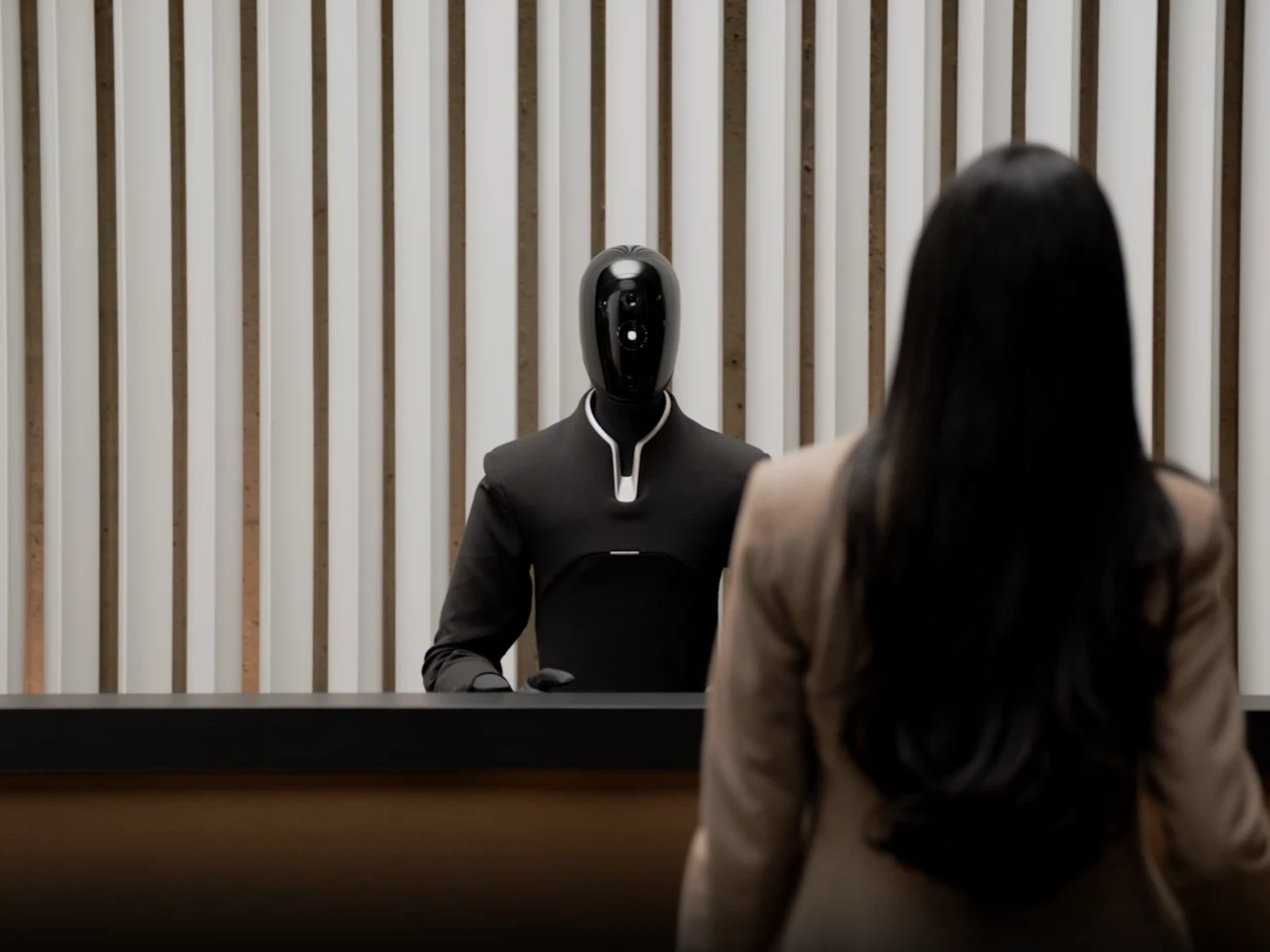
    Figure AI, a robotics company that has backing from Nvidia, is facing a lawsuit from its former product safety chief, Robert Gruendel. Gruendel is claiming wrongful termination after he voiced concerns regarding the safety of the company’s robots, stating these machines are powerful enough to break human skulls.

    Safety Warnings Ignored

    Gruendel is said to have alerted CEO Brett Adcock and Chief Engineer Kyle Edelberg about the deadly nature of the robots, mentioning an incident where a robot made a ¼-inch cut in a steel refrigerator door. His worries were reportedly brushed off as mere “obstacles” rather than legitimate safety concerns. He was let go in September, just days after he filed formal safety complaints. His legal representatives refer to him as a whistleblower.

    Allegations of Fraud

    Gruendel asserts that he was requested to create a safety roadmap for potential investors, but he claims that this safety plan was “gutted” during the same month that funding was secured. He suggests this could be seen as fraudulent misrepresentation. Recently, the company has been valued at $39 billion, which is an astonishing 15-fold increase from early 2024. Significant investors in Figure AI include Jeff Bezos, Nvidia, and Microsoft.

    Gruendel is pursuing economic, compensatory, and punitive damages and is asking for a jury trial. A spokesperson for Figure AI, however, claims that Gruendel was terminated due to “poor performance” and asserts that the company will “thoroughly discredit” the allegations in a court of law. The attorney indicated that this case might be one of the first whistleblower cases concerning the safety of humanoid robots.

    Ambitious Future Plans

    This lawsuit emerges as the company aims to deploy 200,000 robots by 2029, with expectations to generate over $9 billion in revenue. Morgan Stanley forecasts significant market growth extending into the 2030s, with the market potentially hitting $5 trillion by 2050.

    Source:
    Link


  • Unexpected Language Outperforms English and Chinese in LLM Study

    Unexpected Language Outperforms English and Chinese in LLM Study

    Key Takeaways

    1. Polish language outperforms English and Chinese in accuracy for long-context tasks, achieving 88% accuracy at 64,000 tokens or more.
    2. Model performance varies significantly with context length, highlighting a drop in English’s ranking as sequence lengths increase.
    3. Language structure, particularly tokenization efficiency and writing systems, plays a crucial role in performance differences among languages.
    4. The performance gap between the best and worst languages widens as context length increases, from 11% at 8,000 tokens to 34% at 128,000 tokens.
    5. Evaluating long-context models solely based on English can be misleading, as linguistic differences become more significant with longer sequences.


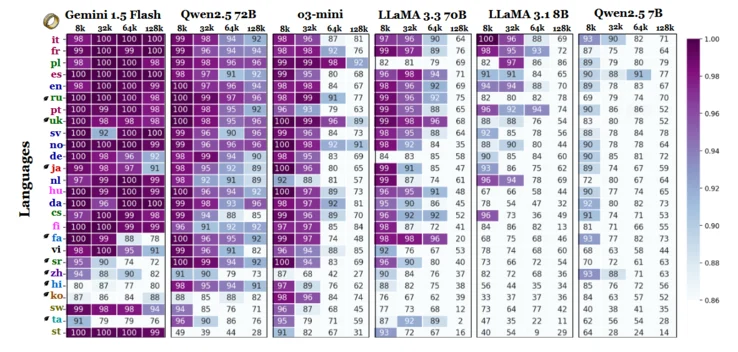
    A recent multilingual study examining how large language models manage long documents has revealed an unexpected finding: Polish outperforms both English and Chinese in accuracy when context windows extend to 64,000 tokens or more. This information comes from the OneRuler benchmark introduced in a paper at COLM 2025, which assessed 26 languages in retrieval and aggregation tasks.

    Shifting Accuracy with Length

    The researchers analyzed model accuracy across various context lengths and discovered a significant change as the sequences grew longer. The results indicated that Polish achieved the highest average accuracy of 88% in long-context scenarios, while English fell to sixth place, and Chinese ranked among the lowest four languages.

    Language Structure Matters

    The study suggests that the differences in performance might be linked to tokenization efficiency and variations in writing systems, rather than just the amount of training data. Languages that use Latin-based scripts, like Polish, French, and Spanish, consistently outperformed those with logographic or abugida systems. For instance, languages such as Chinese, Korean, and Tamil showed only moderate accuracy even in shorter contexts, and their performance worsened as the sequences lengthened. This complete turnaround in expected rankings is intriguing, especially since most widely used LLMs are predominantly trained on datasets rich in English. However, the paper’s findings indicate that when models need to search, recall, or summarize information buried deep in lengthy documents, the structural properties of the language take precedence over the frequency of dataset representation.

    Additional Insights from the Benchmark

    Other insights from the benchmark reinforce this perspective. The performance gap between the best and worst-performing languages widens significantly as context increases—from 11% at 8,000 tokens to 34% at 128,000 tokens. Another noteworthy detail from the study highlights the sensitivity of these evaluations to minor changes in instructions. For instance, allowing the model to respond with “none” if a target string is missing led to a 32% drop in accuracy for English at 128,000 tokens, as seen on page 2.

    While the benchmark also evaluates different model families, the results indicate that long-context assessments cannot rely exclusively on English testing. Performance generalizations across languages may be misleading if the effects of script and tokenization are overlooked. As context windows expand, linguistic differences become increasingly significant, challenging the notion that English’s dominance in LLM benchmarks remains valid when sequence lengths reach tens of thousands.


    Source:
    Link


  • Man Faces Copyright Infringement for AI-Generated Image

    Man Faces Copyright Infringement for AI-Generated Image

    Key Takeaways

    1. A 27-year-old man in Japan faces severe punishment for allegedly violating copyright laws by using AI to replicate a well-known image.
    2. This case marks the first prosecution of a citizen for using an AI-generated image in Japan.
    3. Prosecutors may struggle to win the case, as legal actions against AI developers have often failed in other countries.
    4. The individual reportedly made 20,000 requests to the AI model, using one output commercially, raising questions about intent in copyright infringement.
    5. A ruling against the man could set a significant legal precedent regarding the use of AI in creating images.


    Courtrooms globally have been wrestling with the legality surrounding works created by AI. Up until now, copyright infringement discussions have mainly focused on the owners of generative AI technologies. However, in Japan, a citizen faces the threat of “severe punishment” after instructing Stable Diffusion to replicate a well-known image.

    Legal Troubles in Japan

    An article by Automaton highlights the challenges faced by a 27-year-old man in Chiba Prefecture. Local police have suggested that he be charged for violating copyright laws. The Yomiuri Shimbun reports this as the first instance where a citizen has been prosecuted for utilizing an AI-generated image.

    Challenges for Prosecutors

    Even if this case goes to court, it might prove tough for the prosecutors to win. Usually, plaintiffs go after the developers of these applications, who have the money to settle large claims. Different countries hold varying perspectives on the fair use of images produced by generative AI tools. Still, other legal actions against Stable Diffusion have not achieved the desired outcomes.

    In the U.K., Getty Images failed in its copyright infringement claims against the open-source platform. Similarly, in the U.S., judges have consistently decided that artwork generated by machines does not qualify for copyright protection. However, one legal analyst, Kensaku Fukui, believes that the situation surrounding the potential charges in Japan is unique.

    Specific Circumstances

    Fukui points out that the individual made 20,000 requests to the Stable Diffusion AI model. Allegedly, he used one output as a book cover and then sold it at a retail store. Fukui contends that the man provided specific commands to generate a copyrighted image. If this case goes to trial, lawyers will debate whether intent should play a role in determining any criminal charges.

    It remains unclear if a copyright owner alerted the police, or what specific AI artwork the unnamed man is accused of copying. Regardless, a ruling against him could create a significant legal precedent.


    Source:
    Link