Author: GizNews

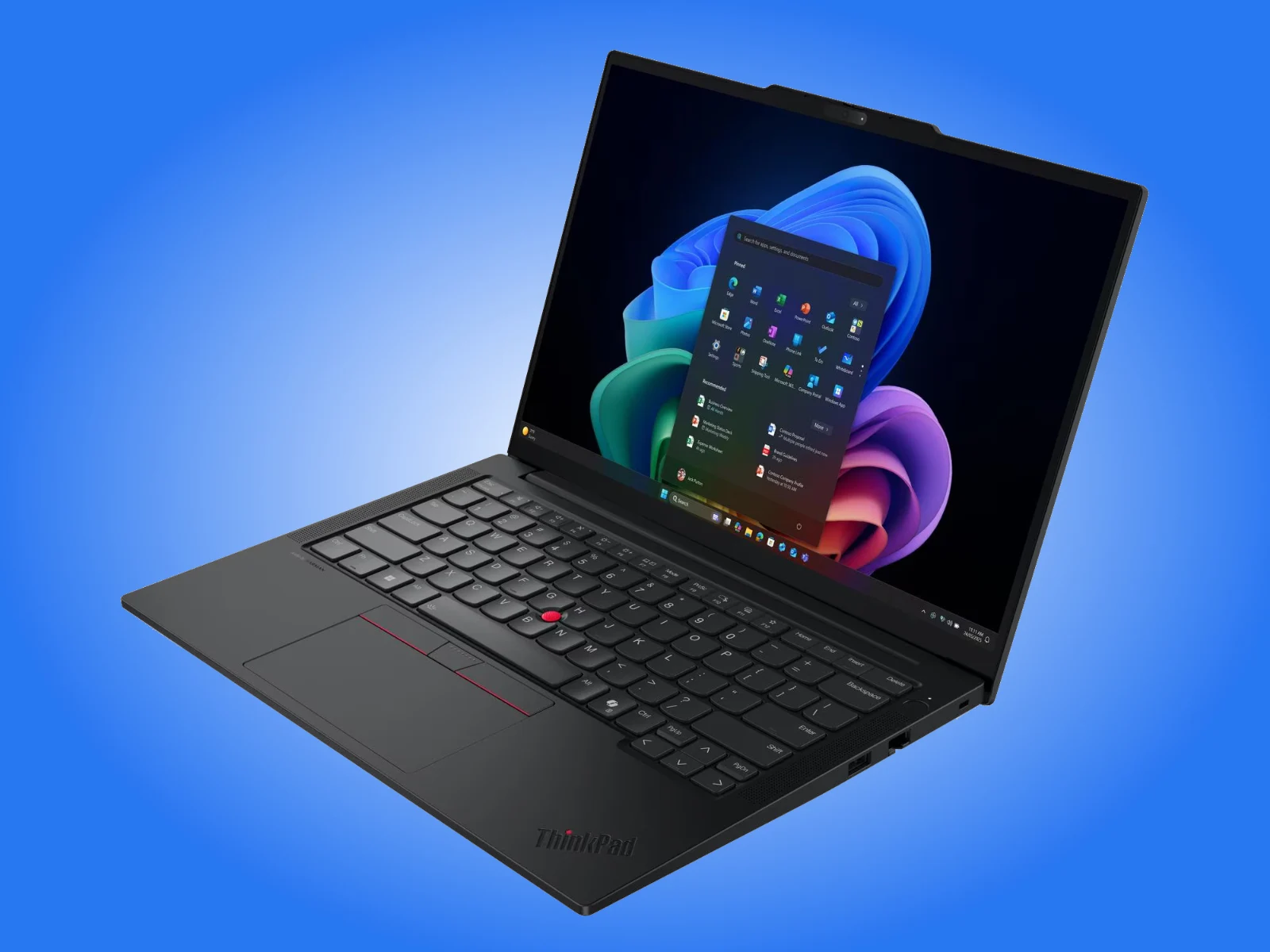
  • Lenovo ThinkPad 14″ Laptop Global Launch: 120 Hz VRR, Intel Panther Lake

    Lenovo ThinkPad 14″ Laptop Global Launch: 120 Hz VRR, Intel Panther Lake

    Key Takeaway

    – ThinkPad E14 Gen 8 upgrades to Intel Panther Lake processors (Gen 7 used Lunar Lake).
    – Entry-level CPU (Core Ultra 5 322) is slower than last gen’s Core Ultra 5 228V, but stronger options like Core Ultra 7 355 are available.
    – Supports up to 32 GB user-upgradeable RAM, dual SSD slots, and choice of 48 Wh or 64 Wh batteries.
    – Default display is 1200p/60 Hz/400 nits at 45% NTSC; optional upgrade to 1800p/120 Hz/500 nits with 100% sRGB.
    – Pricing starts at $1,399 in the US, £1,500 in the UK, and €1,419–€1,789 in the Eurozone.


    Lenovo ThinkPad E14 Gen 8 Goes Global with Intel

    Lenovo has finally released the ThinkPad E14 Gen 8 globally featuring Intel processors. For context, Lenovo launched Gen 7 models last year with Lunar Lake processors. Incidentally, these surpassed their AMD Hawk Point-based counterparts in several areas. By contrast, the ThinkPad E14 Gen 8 jumps to Intel’s newer Panther Lake platform.

    Processors, Memory and Storage Options

    Currently, the 14-inch laptop starts with the Core Ultra 5 322, a 6-core processor that trails the Core Ultra 5 228V in our ThinkPad E14 Gen 7 review unit. However, the ThinkPad E14 Gen 8 can be configured with the more powerful Core Ultra 5 325, Core Ultra 5 336H, Core Ultra 7 355 and Core Ultra 7 356H. Moreover, 32 GB of RAM and 512 GB or 1 TB of storage is available, rather than the 16 GB of RAM and 256 GB of storage that feature in entry-level SKUs.

    Please note that the ThinkPad E14 Gen 8 supports user-upgradeable RAM and has two SSD slots. Also, the laptop can be configured with 48 Wh or 64 Wh batteries and plastic or aluminium base covers. All versions will ship in an Eclipse Black finish, though.

    Display Configurations and Pricing Details

    Setting that aside, Lenovo equips the ThinkPad E14 Gen 8 with a 1200p and 60 Hz IPS display by default that peaks at 400 nits with 45% NTSC colour space coverage. Alternatively, Lenovo sells a 1800p IPS panel with a 120 Hz variable refresh rate, 500 nits peak brightness and 100% sRGB colour space coverage.

    Regional Pricing Breakdown

    Pricing starts at £1,500 in the UK and €1,419-€1,789 in the Eurozone. Meanwhile, the ThinkPad E14 Gen 8 costs at least $1,399 in the US. Lenovo France, Germany, Ireland & UK

    • Core Ultra 5 322 processor (6-core)
    • Up to 32 GB user-upgradeable RAM
    • 512 GB or 1 TB storage options
    • 48 Wh or 64 Wh battery choices
    • 1200p 60 Hz or 1800p 120 Hz displays
    • Eclipse Black finish only


  • Ocarina of Time Remake More Likely Than 3D Mario: Leaker

    Ocarina of Time Remake More Likely Than 3D Mario: Leaker

    Key Takeaway

    – Ocarina of Time remake will likely be revealed at the June 9 Nintendo Direct.
    – No new 3D Mario game is expected to debut during this broadcast.
    – The Ocarina of Time remake is projected for a holiday 2026 release.
    – Duskbloods and Fire Emblem: Fortune’s Weave are also expected to appear.


    Nintendo Direct Finally Gets a Date After All That Waiting

    After endless rumors, the Nintendo Direct will air on June 9th, at 10AM EDT/4PM CEST. An insider who previously shared the event’s timing has now predicted which Switch 2 games will appear. NateTheHate expects The Legend of Zelda: Ocarina of Time remake to be a focus. Unfortunately, a new 3D Mario title is unlikely to debut during the broadcast.

    Leaker’s Track Record and Ocarina Hype

    In March, NateTheHate controversially exposed Nintendo’s schedule for the remainder of 2026 into 2027. Some of those prognostications have already materialized, like the modernized Star Fox. Drawing the most attention, he also suggested that an Ocarina of Time remake could have a holiday 2026 release date. His latest podcast addressed when the classic Zelda adventure might reemerge. According to the leaker, the June Nintendo Direct is the “right time for them to reveal the game.” Even so, marketing for the latest console has become less predictable.

    Why This Remake Might Be Too Big to Skip

    Fans have seen more broadcasts devoted to a single Switch 2 game. Social media and the Today! app are now alternative ways to spread news. Nevertheless, NateTheHate thinks that as a potential console seller, the Ocarina of Time remake is too critical for a general Nintendo Direct to ignore. Otherwise, the company would be making an “error” and a “marketing mistake”. How the developers will reimagine the N64 Zelda title is a mystery. However, the insider anticipates that, along with Duskbloods and Fire Emblem: Fortune’s Weave, it will have enough airtime to answer some questions. Gamers desperate for a new 3D Mario instead are more likely to be disappointed.

    Bad News for Mario Fans According to the Insider

    Also in March, NateTheHate leaked that a long-awaited follow-up to Super Mario Odyssey was in the works. As far as a June 9th premiere, he dashed hopes by saying, “I don’t think we get a 3D Mario trailer at this Direct.” If his 2027 release date estimate is correct, Nintendo wouldn’t need to rush the next open-world experience. The insider also downplayed the chances of Mario Kart World DLC or a Mario Maker Switch 2 game surfacing.

    Sources
  • Apple iOS 27: Faster iPhones, Liquid Glass & Siri Upgrade

    Apple iOS 27: Faster iPhones, Liquid Glass & Siri Upgrade

    Key Takeaway

    – iOS 27 supports all iPhones from iPhone 11 to iPhone 17, with a revised CPU scheduler improving fluidity on older models.
    – Apps launch up to 30% faster due to RAM preloading, AirDrop is 80% faster, and iCloud photo uploads are accelerated.
    – New AI features include “Siri AI” with conversational ability, screen and app access, and a dedicated app for reviewing chats.
    – Enhanced parental controls allow blocking apps/websites/contacts and automatic blocking of violent content in Messages.
    – The camera app adds panoramic depth data for 3D viewing on Apple Vision Pro and a “Siri mode” for AI interactions.


    Together with macOS 27 Golden Gate, Apple also unveiled iOS 27 today. The next major operating system update for Apple’s smartphones will be released for every iPhone that also runs iOS 26, meanin that the operating system is compatible with all models from the iPhone 11 to the iPhone 17. Older smartphones should benefit particularly strongly from the new operating system, as Apple has revised the CPU scheduler, which should make the system feel more fluid.

    Performance and Speed Upgrades

    As important app data is preloaded into the RAM, apps should start up to 30 percent faster – and this also applies to third-party apps. AirDrop file transfers should be completed 80 percent faster, and uploading photos to iCloud should also be faster than ever before. Apple revises the “Liquid Glass” design introduced last year, and not only introduces revised app icons and extra-large home screen widgets, but above all a setting that allows users to choose how transparent Apple’s “glass” actually is.

    Revamped Search and Camera Tools

    The system-wide Spotlight search is designed to index the content of various file types more reliably and find this data more quickly. The camera app has been given the option to record panoramas with depth data so that they can be viewed in 3D with Apple Vision Pro. Another new feature is the ability to adjust the sound of AirPods to your own preferences using an equalizer.

    Parental Controls and Safety

    Improved parental control options make it possible to set which apps, websites and contacts children are allowed to use. If the child wants to use a new app or website, a parent can be asked for permission at the touch of a button. Violent photos or videos should be automatically blocked in Apple Messages.

    Advancements in Apple Intelligence

    As befits tech giants in 2027, Apple has also announced new AI features. Apple Intelligence will offer more features than ever before in iOS 27 and will be able to access both the screen content and the features of the currently open app to simplify interactions. Apple combines an improved Large Language Model that runs locally on the iPhone with Google Gemini, but still wants to protect users’ data.

    Introducing Siri AI

    The highlight of these new AI features is “Siri AI”, a fundamentally revised version of the voice assistant. Siri AI is more reminiscent of ChatGPT than older versions of Siri, as the assistant can hold conversations and has its own app in which previous conversations can be read up on. As Siri can access the screen content and apps, it can, for example, ask questions about a website or an open photo or enter a route in Google Maps. The camera app gets a “Siri mode” to use these features through the iPhone’s camera. Siri also has a much more natural voice on newer iPhones.


    Sources

  • Lenovo 17-Inch Laptop Gets Global Launch: 32GB RAM, Intel Wildcat Lake

    Lenovo 17-Inch Laptop Gets Global Launch: 32GB RAM, Intel Wildcat Lake

    Key Takeaway

    – Intel Wildcat Lake chips are powering new Windows laptops, many initially exclusive to China.
    – Lenovo’s IdeaPad Slim 3i 17IWC11 (17-inch, 2.03 kg) has expanded to Europe from £799/€799.
    – Base model includes 8 GB RAM, 256 GB storage, and a Core 3 304 processor (5-core).
    – Configurable up to Core 7 350, 32 GB RAM, 1 TB SSD, and 60 Wh battery (max £1,669).
    – All variants feature a 1080p, 300-nit IPS display with 72% NTSC color coverage.


    Windows OEMs Adopt Intel’s Wildcat Lake

    In recent weeks, various Windows OEMs have been putting Intel’s Wildcat Lake platform to use inside MacBook Neo competitors. As it stands, many of these are exclusive to China, such as the HP StarBook Plus 14 that debuted in late May. The same is the case with Lenovo, which updated its Lecoo Air range in May with multiple Wildcat Lake-powered options.

    Lenovo IdeaPad Slim 3i 17IWC11 Launch

    Additionally, the company created the IdeaPad Slim 3i 17IWC11, a 2.03 kg laptop that is now available in more countries. Previously, Lenovo sold the laptop in East Asia and Southeast Asia. However, the company has now expanded availability to Europe with £799 and €799 starting prices.

    Currently, these prices include 8 GB of RAM, 256 GB of storage and the Core 3 304, a 5-core processor that should perform about as well as quad-core Zen 4 processors like the Ryzen 3 210. Lenovo offers the IdeaPad Slim 3i 17IWC11 with the more powerful Core 5 315, Core 5 320 and Core 7 350, though. Also, 16 GB or 32 GB of DDR5-5600 RAM is available from the factory, as is 512 GB or 1 TB of M.2 2242 storage.

    Configuration and Display Details

    Moreover, Lenovo’s new 17-inch laptop can be configured with 50 Wh or 60 Wh batteries and in Cosmic Blue or Luna Grey finishes. All SKUs ship with a 300 nit and 60 Hz IPS display though, which resolves at 1,920 x 1,080 pixels with 72% NTSC colour space coverage. Please note that pricing rises to £1,669 for a fully configured unit with a Core 7 350 processor, 32 GB of RAM, a 1 TB SSD, a 60 Wh battery and other optional extras.

    • Core 3 304: 8GB RAM, 256GB storage, £799/€799
    • Optional processors: Core 5 315, Core 5 320, Core 7 350
    • RAM options: 16GB or 32GB DDR5-5600
    • Storage options: 512GB or 1TB M.2 2242
    • Battery options: 50Wh or 60Wh
    • Colours: Cosmic Blue, Luna Grey
    • Display: 300 nit, 60 Hz, 1920×1080, 72% NTSC
    • Max price: £1,669 for fully configured unit


  • The Large Magellanic Cloud Warps Its Galactic Neighbor

    The Large Magellanic Cloud Warps Its Galactic Neighbor

    Key Takeaway

    – The Large Magellanic Cloud distorts the Small Magellanic Cloud through gravitational pull.
    – Infrared observation by the Vista telescope over 11 years enabled detailed study of stellar motions.
    – Stars in the Small Magellanic Cloud’s center move away at 17 km/s due to this gravitational force.
    – The Small Magellanic Cloud was likely more compact in the past than its current shape.


    The Large Magellanic Cloud is a satellite galaxy of the Milky Way, located about 163,000 light-years away. Although it is frequently observed by astronomers, a new study has revealed its effect on the Small Magellanic Cloud.

    Observations with the Vista Telescope

    This dwarf galaxy, located 200,000 light-years from Earth, was observed during eleven years with the Vista telescope (Visible and Infrared Survey Telescope for Astronomy) in Chile. According to astronomers, this celestial object is distorted not only by the Milky Way but also by the Large Magellanic Cloud. The infared vision of this telescope was key for seeing through interstellar dust, allowing researchers to study the motion of stars within the Small Magellanic Cloud.

    Researchers Reaction to the Results

    Thus, it was thanks to the infrared vision of this telescope that this observation was possible. Researchers were able to see through interstellar dust and study the motion of stars within the Small Magellanic Cloud, providing interesting results, as Florian Niederhofer explains in a statement: “When I saw the results for the first time, I was amazed by the quality of the measured stellar motions. By combining observations that have been taken over a time baseline of more than a decade, we were able to map the internal kinematics of the Small Magellanic Cloud with a level of detail that is outstanding for observations from the ground.”

    Key Phenomenon and Speed Data

    While results had been revealed in previous years, this new study highlights a specific phenomenon. Indeed, the stars located at the heart of this dwarf galaxy are moving away from its center at a speed of 10.6 miles (17 kilometers) per second. This specific speed measurement is critical for understanding the gravitational dynamics between the two galaxies.

    Gravitational Pull and Past Structure

    Therefore, these results highlight the gravitational pull exerted by the Large Magellanic Cloud on its companion. And that’s not all, because according to astronomers, the Small Magellanic Cloud would have had a more compact structure in the past, very different from its current shape. The study provides evidence that the smaller galaxy once looked nothing like it does today.

    Astronomy & Astrophysics


    Sources

  • Lenovo unveils 16-inch laptop: 1100-nit OLED, 105W GPU

    Lenovo unveils 16-inch laptop: 1100-nit OLED, 105W GPU

    Key Takeaway

    – Global release of IdeaPad Pro 5i 16IPH11 is now live in UK and Eurozone after delays.
    – Only available with Core Ultra 7 356H in Europe; US also gets the more powerful Core Ultra 9 386H.
    – Fixed specs: 32GB RAM, 1TB SSD, 84Wh battery, RTX 5050 (105W TGP), and 1800p 120Hz OLED display.
    – Pricing starts at £2,500 in UK and €2,569–€2,900 in Eurozone.
    – Connectivity options vary: Wi-Fi 6/BT 5.3 or Wi-Fi 7/BT 5.4 depending on configuration.


    The IdeaPad Pro 5i 16IPH11 has finally received a global release

    Replacing the older IdeaPad Pro 5i 16IAH10 in the process. To recap, Lenovo announced its new 16-inch laptop in January during CES 2026. Then in March, Lenovo began selling the laptop in certain markets, despite claiming there would be no availability before April.

    Fast forward to June and the IdeaPad Pro 5i 16IPH11 has finally reached the UK and the Eurozone

    Configuration options are rather limited for the time being, though. Currently, the laptop is only available with the Core Ultra 7 356H, a 16-core processor featuring a 4-core Xe3 iGPU from Intel’s Panther Lake family. By contrast, the US and other markets have also received the more powerful Core Ultra 9 386H.

    Likewise, the IdeaPad Pro 5i 16IPH11 is only available in Europe with 32 GB of LPDDR5X-8533 RAM

    A 1 TB M.2 2242 SSD and an 84 Wh battery. Moreover, the 16-inch laptop comes with an Nvidia GeForce RTX 5050 laptop GPU with a 105 W TGP at its disposal. Also, Lenovo includes a 1800p and 120 Hz VRR OLED display with 500 nits SDR and 1,100 nits HDR peak brightness values.

    As it stands, Lenovo offers the IdeaPad Pro 5i 16IPH11 with a choice between Wi-Fi 6 and Bluetooth 5.3 or Wi-Fi 7 and Bluetooth 5.4 connectivity in Europe

    Pricing starts at £2,500 in the UK with a Windows 11 Home licence. Meanwhile, the 16-inch laptop starts at €2,569-€2,900 in the Eurozone, depending on from where you order it.


  • AMD RDNA 5 Gaming GPUs Launch Possibly Delayed to 2028

    AMD RDNA 5 Gaming GPUs Launch Possibly Delayed to 2028

    Key Takeaway

    – AMD Radeon RX 9070 and 9070 XT launched spring 2025, followed by a DRAM crisis.
    – No RDNA 5 gaming GPUs expected until 2027–2028, a three-year gap from the RX 9070 XT.
    – Traditional two-year GPU launch cycle is obsolete.
    – High demand from AI companies (OpenAI) prioritizes profitable server chips over gaming GPUs.
    – Global chip production overload delays new gaming hardware.


    Next-Gen AMD Gaming GPUs Delayed to 2027

    The AMD Radeon RX 9070 and Radeon RX 9070 XT were launched in spring 2025, only shortly after Nvidia GeForce RTX 5000. In the second half of 2025, the DRAM crisis hit and not only drove up the prices of RAM, SSDs and graphics cards, but also caused the cancellation of Nvidia GeForce RTX 5000 Super. It seems that gaming enthusiasts will also have to wait a while longer for the next generation of AMD graphics cards.

    Board Partners Speak at Computex

    Tweakers spoke to several board partners who sell AMD Radeon desktop graphics cards at Computex in Taiwan. Some board partners expect the first gaming graphics cards based on the AMD RDNA 5 architecture to ship in the second or third quarter of 2027, while others said they are more likely to ship in late 2027 or early 2028. This means that there could be three years between the launch of the Radeon RX 9070 XT and its successor.

    Traditional Launch Cycles Are Over

    The usual launch cycle, in which graphics cards are first launched on the market, followed by a refresh a year later and a successor two years later, is therefore a thing of the past. The reason for the delays is the extremely high demand for chips and DRAM from AI giants such as OpenAI – selling expensive server processors and GPUs brings more profit, and as global production capacities for computer chips are currently overloaded, it hardly makes sense for companies such as Nvidia and AMD to bring “cheap” gaming products onto the market and no longer produce as many expensive server chips.


    Sources
  • Nvidia RTX 50 Super Series Launch Tipped for Later Date

    Nvidia RTX 50 Super Series Launch Tipped for Later Date

    Key Takeaway

    – RTX 50 Super series now rumored for CES 2027 unveiling, despite earlier expectations of a 2026 or even 2025 launch.
    – Recent reports have been contradictory, with some claiming a Q3 2026 release and others denying a 2026 arrival.
    – Leaked models include RTX 5060 Super (12 GB), 5070 Super (18 GB), 5070 Ti Super (24 GB), and 5080 Super (24 GB).
    – The Super lineup will use new 3 GB GDDR7 memory chips, already seen in laptop RTX 5070 and RTX 5090.
    – Nvidia prioritized AI and datacenter products over gaming GPUs, delaying the Super series release.


    Nvidia’s RTX 50 Super Series: New CES 2027 Rumour Emerges

    There has been a lot of back and forth about when Nvidia’s ‘Super’ version of the RTX 50 GPU’s will come out, with different sources giving conflicting release windows. A fresh report from a Chinese publication called Benchlife is now claming these graphics cards will be unveiled at CES 2027, even though previous stories were still saying we might see them as early as late 2026. The information seams to come from industry insiders, but Benchlife hasn’t stated who exactly their source is.

    According to the report, the RTX 50 Super series is set to be announced during the CES 2027 event, which usualy takes place in early January. This is a big shift from earlier expectations, where many thought Nvidia would reveal the cards at CES this year, but that never materialized. Instead, the company decided to focus their efforts on AI and datacenter products, leaving gamers waiting for a proper update to their high-end lineup.

    Contradictory Timelines and Launch Dates

    Back in February of this year, a different report suggested that the RTX 50 Super cards wouldn’t be arriving at all in 2026. Then just a few days later, another story cited a Q3 2026 launch date for at least one model in the Super lineup. Because there has been so much contradictory information floating around about the launch window, scepticism about the latest Benchlife rumor is completly justified. It’s hard to know what to belive at this point.

    For now, leaks and rumors about the RTX 50 Super cards are sugesting that there will be several new models. These includes an RTX 5060 Super with 12 GB VRAM, an RTX 5070 Super with 18 GB, an RTX 5070 Ti Super with a full 24 GB, and an RTX 5080 Super also with 24 GB of memory. All of these cards are expected to be based on the new 3 GB GDDR7 memory chips, which are already present in the current laptop RTX 5070 with 12 GB VRAM and the laptop RTX 5090 with 24 GB VRAM.

    Memory and Specification Details

    All these upcoming Super GPUs will leverage the 3 GB GDDR7 memory modules, which is a key upgrade over the standard 2 GB chips used in earlier generations, and this allows for higher VRAM capacities without needing more physical memory slots on the board. This is similar to the technology Nvidia already used in their mobile RTX 5070 and RTX 5090 laptop chips. It means that even the mid-range RTX 5060 Super will get a decent memory boost, making it more suitable for modern games and higher resolutions.

    Sources
  • Dell launches 14-inch laptop globally with 120Hz VRR and AMD Zen 5

    Dell launches 14-inch laptop globally with 120Hz VRR and AMD Zen 5

    Key Takeaway

    – Dell Pro 3 Series 14 (P314265) uses AMD Ryzen AI 400, outperforming Intel alternatives.
    – Configurable with Ryzen AI 5/7 Pro processors, up to 64 GB DDR5-5600 RAM.
    – Storage and connectivity options: PCIe Gen 4/5 SSDs, Wi-Fi 6E or Wi-Fi 7.
    – Battery choices: 45 Wh, 57 Wh, or 70 Wh, with Long Life Cycle options.
    – Display limited to 1200p IPS (no touchscreen); only one panel reaches 500 nits with 120 Hz VRR.


    Dell Has Rounded Off Its Pro 3 Series

    Dell has rounded off its Pro 3 Series with a new 14-inch model. To recap, the company introduced an Intel alternative in May alongside multiple other Wildcat Lake-powered Pro laptops. By contrast, the Pro 3 Series 14 (P314265) adopts AMD’s more powerful Ryzen AI 400 platform, which should help it outshine the Pro 14 Plus PB14255 we reviewed in January.

    Specific Configuration Options

    Specifically, the P314265 can be configured with the Ryzen AI 5 Pro 435, Ryzen AI 7 450 or the Ryzen AI 7 Pro 450. According to our benchmarks, even the entry-level Ryzen AI 5 Pro 435 surpasses the performance of Dell’s Intel-powered alternatives. Additionally, these AMD processors can be complemented with 16 GB, 32 GB or 64 GB of DDR5-5600 RAM running in dual-channel mode.

    Moreover, Dell offers its new 14-inch laptop with PCIe Gen 4 or PCIe Gen 5 SSDs and Wi-Fi 6E or Wi-Fi 7 modems. On top of that, one can equip 45 Wh, 57 Wh or 70 Wh batteries with dedicated Long Life Cycle options. Currently, the P314265 only comes with 1200p IPS display options. All lacking a touchscreen layer too, only one panel reaches 500 nits and supports a 120 Hz variable refresh rate. In comparison, Dell’s other three options peak at 400 nits with a 60 Hz refresh rate.

    Pricing and Availablity

    The P314265 starts at £1,472 in the UK and €1,654-€1,728 in the Eurozone before delving into Dell’s configurator. Meanwhile, Dell requires those in Australia to call to place an order. Currently, the P314265 is unavailable in North America, although pricing should start at $1,799 in the US and CAD 2,299 in Canada. Please see Dell’s website for more details.

    Global Market Details

    Dell Australia, France, Germany, Ireland & UK

    • Ryzen AI 5 Pro 435, Ryzen AI 7 450, or Ryzen AI 7 Pro 450
    • 16 GB, 32 GB, or 64 GB DDR5-5600 RAM
    • PCIe Gen 4 or Gen 5 SSDs
    • Wi-Fi 6E or Wi-Fi 7
    • 45 Wh, 57 Wh, or 70 Wh batteries
    • 1200p IPS display (one 500-nit 120 Hz; others 400-nit 60 Hz)
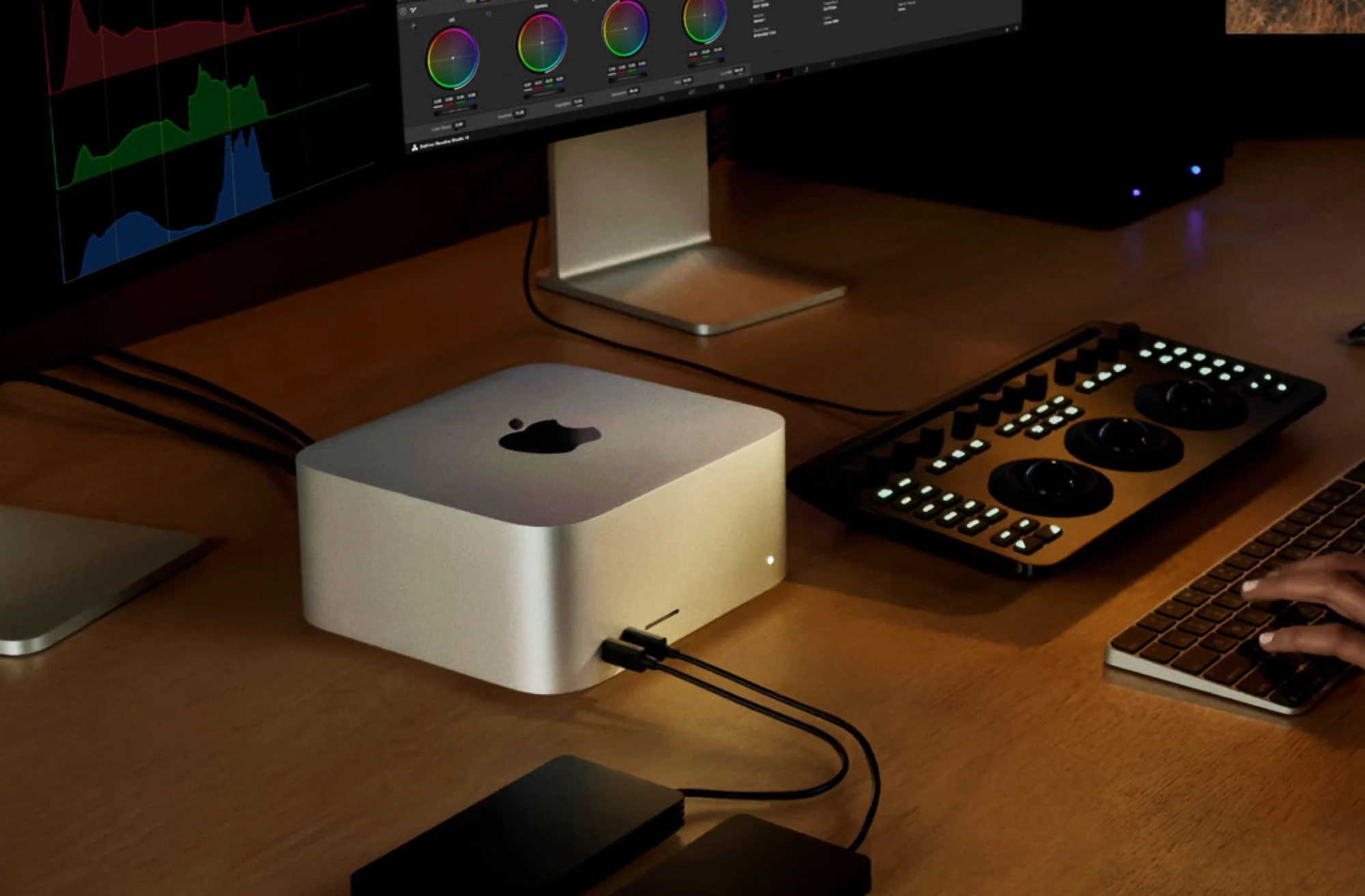
  • Mac Studio with M5 Ultra set for WWDC debut

    Mac Studio with M5 Ultra set for WWDC debut

    Key Takeaway

    – iOS 27, iPadOS 27, macOS 27, and watchOS 27 are expected to be announced at WWDC 2026.
    – A new Mac Studio with an Apple M5 Ultra chip is likely to be revealed.
    – The M5 Ultra is rumored to have 36 processor cores and 84 GPU cores (though GPU specs may be inaccurate).
    – It may support up to 512 GB of RAM with over 1,000 GB/s memory bandwidth, making it ideal for AI applications.


    The opening event of the World Wide Developers Conference (WWDC) 2026 begins shortly. Apple traditionally uses WWDC to announce major operating system updates, so iOS 27, iPadOS 27, macOS 27 and watchOS 27 are likely to be revealed. Although the updates are not usually released until September, the announcement in June gives developers some time to optimize their apps for the new operating systems.

    New Hardware Rumours and Chip Details

    According to a report by Commercial Times Taiwan, Apple could also announce new hardware, namely a new Mac Studio. The compact desktop computer was previously available either with the Apple M4 Max, or with the older but more powerful Apple M3 Ultra. The top model therefore offers 32 processor cores and a graphics chip with 80 cores.

    Apple M5 Ultra Specifications

    The Apple M5 Ultra, on the other hand, is said to fuse two Apple M5 Max and thus offer 36 processor cores. The Commercial Times reports that the GPU offers 84 cores, but the M5 Max has a maximum of 40 GPU cores, so this information should be viewed with caution.

    The chip is to be offered with up to 512 GB of RAM, which can be accessed by both the processor and the graphics chip, and which is to achieve a memory bandwidth of over 1,000 GB/s. This would make the Apple M5 Ultra perfect for AI applications, offering significantly more RAM than AMD Ryzen Strix Halo or Nvidia DGX Spark or RTX Spark.

    Sources