Tag: amd

  • New Ryzen Pro X3D Chip Coming Soon as Flagship Processor

    New Ryzen Pro X3D Chip Coming Soon as Flagship Processor

    Key Takeaways

    1. AMD launched four new Ryzen Pro desktop processors in September, including three from the Ryzen Pro 9000 series, focused on productivity for professionals.
    2. A new processor, the Ryzen 9 Pro 9965X3D, has been discovered but not officially announced by AMD.
    3. The rumored Ryzen 9 Pro 9965X3D is expected to have 16 cores and a power consumption of 170W, higher than previous models.
    4. Cache specifications for the 9965X3D are unclear, but the X3D branding suggests a larger L3 cache than the Ryzen 9 Pro 9945.
    5. AMD has not confirmed the details or release date for the Ryzen 9 Pro 9965X3D, with potential updates expected soon.


    AMD has introduced four new Ryzen Pro desktop processors to their lineup in September of last year. Among these, three belong to the Ryzen Pro 9000 series. These processors are designed primarily for productivity and aimed at professionals, lacking the higher core counts and extensive cache that AMD’s gaming-oriented chips feature. Currently, it seems that the first Ryzen Pro chip with X3D branding is in the works, though specifics remain limited.

    New Ryzen Pro CPU Discovery

    Well-known leaker Olrak29_ has once again explored the NBD shipping manifest and uncovered a new Ryzen Pro CPU that AMD hasn’t disclosed any details about. This CPU is labeled as the Ryzen 9 Pro 9965X3D, and based on the scant specifications available, it appears to be at the forefront of the Ryzen Pro 9000 series lineup.

    Core Count and Power Draw

    While the three previously launched Ryzen Pro 9000 series chips max out with 12 cores, the rumored Ryzen 9 Pro 9965X3D is reported to feature 16 cores. It also has a notably higher power consumption of 170W, in contrast to the 65W of the other models. Cache specifications are still a mystery, but the X3D branding hints at a substantially larger L3 cache compared to the current top-of-the-line Ryzen 9 Pro 9945, which has a total cache of 76MB. Furthermore, it is uncertain if AMD will implement its latest 3D V-cache design, similar to what is rumored for the Ryzen 9 9950X3D2.

    Awaiting Official Confirmation

    Importantly, AMD has yet to provide any official confirmation regarding the Ryzen 9 Pro 9965X3D, meaning there is also no release date available at this time. If the details from the shipping manifest are indeed correct, further information should be anticipated in the upcoming weeks.

    Source:
    Link


  • AMD and Nvidia Shift CES Focus to AI, Leaving Consumers Behind

    AMD and Nvidia Shift CES Focus to AI, Leaving Consumers Behind

    Key Takeaways

    1. AMD and Nvidia had limited offerings for gamers at CES 2026, with no new GPUs announced.
    2. Both companies heavily focused on artificial intelligence during their keynotes, with AMD mentioning “AI” 214 times and Nvidia 136 times.
    3. The term “gaming” was absent from Nvidia’s keynote and mentioned only three times by AMD and Intel, indicating a shift away from consumer interests.
    4. The emphasis on AI is negatively affecting the consumer market, leading to rising prices for memory, storage, and potential GPU price increases.
    5. The outlook for consumers in 2026 appears bleak, with concerns about potential market pullbacks from companies like SK Hynix in the DRAM and NAND sectors.


    While CES 2026 showcased a variety of innovative tech, especially in gaming and multimedia laptops, it was disappointing to see that AMD and Nvidia had little to offer gamers. Nvidia, for example, only introduced DLSS 4.5 and didn’t present any new GPUs, not even any minor updates like the RTX 50 Super cards. AMD, on the other hand, launched the Ryzen AI 400 APUs, additional Ryzen AI Max+ chips, and the Ryzen 7 9850X3D, but these processors didn’t bring any new architectures or integrated graphics options.

    AI Takes Center Stage

    At CES 2026, both AMD and Nvidia primarily focused on artificial intelligence. According to 3DCenter, AMD mentioned “AI” a whopping 214 times during its 114:2-minute keynote, averaging 1.87 mentions per minute. Nvidia was not far behind, with “AI” appearing 136 times in its 85:04-minute presentation, which averages to 1.6 per minute. In contrast, Intel performed better, only using the term 55 times at a rate of 1.33 times per minute.

    The Absence of Gaming

    Interestingly, the term “gaming” was missing entirely from Nvidia’s keynote, while it only surfaced three times in the presentations from AMD and Intel. This shows a clear shift in focus from consumer interests to AI, which is unfortunate for companies that built their reputations on catering to everyday consumers, gamers, and DIY enthusiasts.

    Even though AMD, Nvidia, and Intel are companies that must prioritize profits for their stakeholders, the heavy emphasis on AI is negatively impacting the consumer market. This focus has resulted in skyrocketing prices for memory and storage, potential increases in GPU prices, and more.

    A Gloomy Outlook

    Sadly, it doesn’t seem like conditions will get better anytime soon. In fact, 2026 might turn out to be worse for consumers, especially with rumors circulating that SK Hynix might pull out of the consumer DRAM and NAND sectors.

    Source:
    Link


  • Next Xbox Console May Be a Windows PC, New Hardware in 2026

    Next Xbox Console May Be a Windows PC, New Hardware in 2026

    Key Takeaways

    1. Microsoft and AMD are collaborating on a new Xbox console, potentially launching in 2027, with a chance of hardware appearing in 2026.
    2. The next Xbox will run on full Windows, but critics question its appeal compared to PS5 and Xbox Series X.
    3. Microsoft aims to improve backward compatibility, addressing challenges for console gamers and exploring hardware and emulation solutions.
    4. A new accessory, likely the Elite Series 3, is expected to focus on reducing latency during streaming, possibly launching before the end of 2026.
    5. There are unverified claims of a new Xbox-branded PC in development, alongside improvements for full-screen functionality on desktops and laptops.


    Microsoft has joined forces with AMD to launch a new Xbox console, which could debut as soon as 2027. However, it remains uncertain whether this will resemble a PC or a more traditional gaming setup. In a recent article from Windows Central, Jez Corden shared some insights on what gamers might anticipate. Although the upcoming console might be some time away, there’s a chance that new Xbox hardware could make an appearance in 2026.

    Future Console Functionality

    Some critics doubt that Microsoft’s operating system can match the living room-friendly vibe of the PS5 or Xbox Series X. Despite this, Corden asserts that the “next Xbox will operate on full Windows.”

    The company has already rolled out the Xbox Full Screen Experience for gaming handhelds, like the ROG Ally. Nevertheless, the insider mentions that Microsoft is aware there’s more to be done. The shift from the Windows desktop needs to be more seamless, which is why they’re “working on significant updates to the Xbox PC app.”

    Compatibility Challenges

    Whether Microsoft can make the necessary enhancements to attract console gamers is a topic of debate. Another challenge lies in backward compatibility with games exclusive to consoles. PC gamers often struggle to play many of these titles without using cloud gaming. Corden states that addressing this issue is a top priority ahead of the next Xbox console’s launch. Emulation could be one solution, but tackling it from a hardware perspective is also an option.

    Accessories and New Devices

    The new hybrid device might not be revealed for several years. In spite of some difficulties with current Microsoft hardware, the company is still working on other products. The article mentions a new accessory, likely named the Elite Series 3, which is expected to focus on minimizing latency during streaming and may be released before the end of 2026.

    Corden also suggests that another original equipment manufacturer (OEM) device with Xbox branding could be on its way. He has heard unverified claims of an Xbox PC in the works, featuring a typical design. Even now, insiders can experience the full-screen functionality on custom or prebuilt desktops and laptops.

    Source:
    Link


  • AMD Launches Zen 5 Strix Halo APUs to Compete with Nvidia and Apple

    AMD Launches Zen 5 Strix Halo APUs to Compete with Nvidia and Apple

    Key Takeaways

    1. AMD launched the Ryzen AI Max+ Strix Halo series to improve high-performance tasks in slim devices, featuring a unified memory and graphics solution.
    2. New models, the Ryzen AI Max+ 392 and 388, were introduced at CES 2026, designed specifically for AI developers with enhanced GPU power.
    3. AMD claims significant performance improvements with the Ryzen AI Max+ processors, including better value in AI tasks and enhanced multitasking and gaming capabilities.
    4. Extensive ecosystem support for Ryzen AI Max+ processors will come from major brands like Acer, Asus, HP, and Lenovo, along with various mini PC manufacturers.
    5. The GMKtec EVO-X2 mini PC with Ryzen AI Max+ 395 is available for purchase on Amazon.


    Last year, AMD launched the Ryzen AI Max+ Strix Halo series, aiming to enhance high-performance tasks in slim and lightweight devices.

    Unified Memory and Graphics

    The Strix Halo provided a combined memory solution along with a specialized XDNA 2 NPU and a robust Radeon 8060S GPU, which eliminated the necessity for a separate graphics card. The lineup initially included the 16C/32T Ryzen AI Max+ 395, the 12C/24T Ryzen AI Max 390, and the 8C/16T Ryzen AI Max 385. These models appeared in various high-end laptops like the HP ZBook Ultra G1a and the Asus ROG Flow Z13, as well as mini PCs such as the HP Z2 Mini G1a, Bosgame M5, and Minisforum MS-S1 Max, among others.

    New Additions at CES 2026

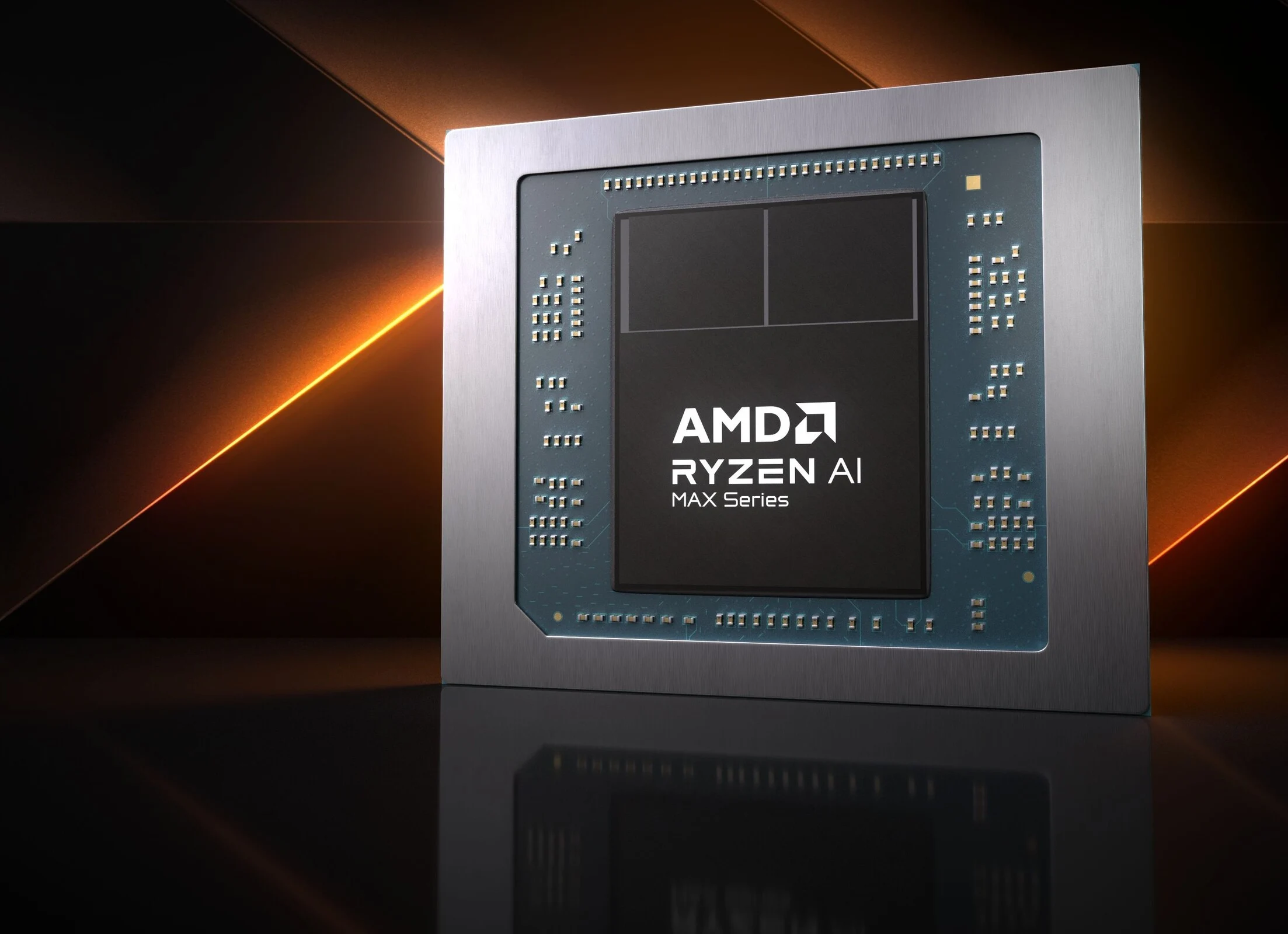
    At CES 2026, AMD is rolling out two fresh SKUs in the Ryzen AI Max+ family — the Ryzen AI Max+ 392 and Ryzen AI Max+ 388, specifically designed for AI developers. AMD has labeled both APUs with the Max+ title, since they now feature 40 RDNA 3.5 compute units (CUs), producing up to 60 TFLOPs of GPU compute power.

    The Ryzen AI Max+ 392 has a slight spec improvement over the Ryzen AI Max 390, maintaining the same 12C/24T setup with a 5 GHz boost and up to 50 TOPS NPU. The RDNA 3.5 GPU now comes with 40 CUs. Likewise, the Ryzen AI Max+ 388 is an enhanced version of the Ryzen AI Max 385, retaining the same core and clock settings but sporting a 40 CU GPU.

    Performance Claims

    In terms of performance, AMD asserts that the Ryzen AI Max+ delivers 1.5x and 1.7x more tokens per second per dollar in LM Studio when utilizing the GPT-OSS 20B and GPT-OSS 120B models, respectively, with a $2,500 HP Z2 Mini G1a utilizing the Ryzen AI Max+ 395 compared to the $4,000 Nvidia DGX Spark, both equipped with 128 GB unified memory.

    AMD also suggested a 1.4x improvement in AI performance, 1.8x enhancement in multitasking and content creation, and 1.6x faster gaming when comparing an Asus ROG Flow Z13 powered by the Ryzen AI Max+ 395 at 55 W (Silent profile) against the Apple MacBook Pro 14 with its 10-core M5 chip (Balanced profile) and 24 GB RAM.

    Broad Ecosystem Support

    AMD mentioned that there is extensive ecosystem support for the Ryzen AI Max+ processors from various device manufacturers and ISVs. New laptop designs utilizing Ryzen AI Max+ APUs will come from brands like Acer, Asus, Framework, HP, and Lenovo. We have also observed gaming handhelds like the GPD Win 5, which runs both Windows 11 and SteamOS, powered by Strix Halo.

    Companies such as Geekom, Minisforum, GMKtec, Beelink, Corsair, Colorful, and more will also be providing a range of Ryzen AI Max+ desktops and mini PCs.

    Source:
    Link


  • AMD Ryzen AI 400 Gorgon Point APUs: 29% Faster Multitasking

    AMD Ryzen AI 400 Gorgon Point APUs: 29% Faster Multitasking

    Key Takeaways

    1. AMD launched the Ryzen AI 400 APUs at CES 2026, featuring seven models from the 4-core Ryzen AI 5 430 to the 12-core Ryzen AI 9 HX 475.
    2. Each APU in the Ryzen AI 400 series includes Zen 5/5c cores, XDNA 2 NPUs, and RDNA 3.5 integrated GPUs, with the Ryzen AI 9 HX 475 having a powerful 16-CU Radeon 890M iGPU.
    3. The APUs have a base clock speed of 2.0 GHz and boost speeds ranging from 4.5 GHz (Ryzen AI 5 430) to 5.2 GHz (Ryzen AI 9 HX 475), supporting up to 36 MB of combined cache and memory speeds of up to 8,533 MT/s.
    4. The Ryzen AI 400 series operates efficiently between 15 W and 54 W, making them suitable for various devices, including lightweight laptops and gaming handhelds.
    5. The Ryzen AI 9 HX 475 outperforms the Core Ultra 9 288V in multitasking and content creation, offering 12% better average FPS at 1080p/low settings and up to 24 hours of video playback.


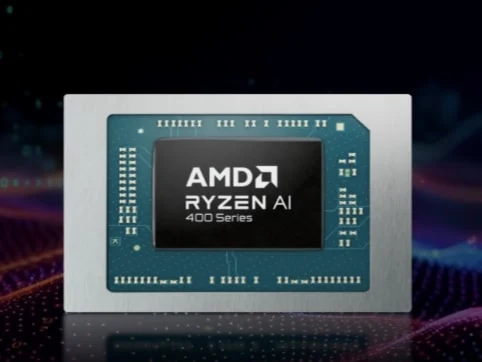
    After a lot of leaks and chatter, the Ryzen AI 400 APUs, previously called the “Gorgon Point” chips, are finally here. AMD revealed these processors at CES 2026. The lineup has seven APUs, starting with the 4-core Ryzen AI 5 430 and going up to the 12-core Ryzen AI 9 HX 475. Additionally, AMD introduced the Ryzen AI 400 Pro series APUs for desktops, which are nearly identical to these APUs but designed for business use.

    Ryzen AI 400 Series Breakdown

    The Ryzen AI 400 series is made up of seven different APUs. Each of these models comes equipped with a combination of Zen 5/5c cores, XDNA 2 NPUs, and RDNA 3.5 integrated GPUs (iGPUs). For example, the top model, the Ryzen AI 9 HX 475, boasts 4 Zen 5 cores and 8 Zen 5c cores, a 60 TOP NPU, and a Radeon 890M iGPU that has 16 Compute Units.

    Performance and Specifications

    All the APUs in the Ryzen AI 400 series have a base clock speed of 2.0 GHz, with various boost clock speeds. The entry-level Ryzen AI 5 430 can boost up to 4.5 GHz, while the Ryzen AI 9 HX 475 reaches a maximum boost of 5.2 GHz.

    For memory and cache, these APUs support up to 36 MB of combined L2 and L3 cache, plus they can handle memory speeds of up to 8,533 MT/s.

    AMD continues to use the Radeon 800M series iGPUs for this line. The Ryzen AI 9 HX 475/470 has a powerful 16-CU Radeon 890M iGPU, while the other models feature a 12-CU Radeon 880M, an 8-CU Radeon 860M, and a 4-CU Radeon 840M, respectively.

    Power and Efficiency

    The Ryzen AI 400 series can be configured to use between 15 W and 54 W of power. This means that the Gorgon Point APUs are capable of running on lightweight laptops, high-speed multimedia notebooks, and even gaming handhelds.

    According to AMD, the flagship Ryzen AI 9 HX 475 is said to be 29% quicker than the Core Ultra 9 288V when multitasking in programs like Microsoft Office, and it is 71% faster in content creation tasks.

    Moreover, Team Red claims that the Ryzen AI 9 HX 475 achieves 12% better average FPS at 1080p/low settings compared to the Core Ultra 9 288V paired with the Arc 140v iGPU. We’ve gone in-depth analyzing the RDNA 3.5-powered Radeon 890M and Intel Arc 140V, so make sure to take a look at our performance reviews for both GPUs.

    Lastly, AMD asserts that the Ryzen AI 400 APUs, including the Ryzen AI 7 445, can provide up to 24 hours of video playback. We will definitely put these claims to the test when laptops featuring the Ryzen AI 400 processors are released in the next few months.

    Source:
    Link


  • AMD Zen 5 X3D CPUs Show DDR5-9800, Ryzen 9950X3D Confirmed

    AMD Zen 5 X3D CPUs Show DDR5-9800, Ryzen 9950X3D Confirmed

    Key Takeaways

    1. AMD is likely to announce the new Zen 5 X3D CPUs, named 9950X3D2 and 9850X3D, at CES 2026, confirming earlier leaks.
    2. The new CPUs are expected to support higher memory speeds, with potential official figures between DDR5-6400 and DDR5-7200, compared to the current Ryzen 9 9950X3D’s DDR5-5600.
    3. The performance boost comes from a new CCD stepping and improved memory controllers, leading to modest gains in certain workloads, particularly in gaming and multi-threaded tasks.
    4. AMD’s broader strategy for CES 2026 may include a new OEM approach and a stronger promotion of Strix Halo, reflecting increased interest from manufacturers.
    5. Speculation includes potential RAM shortages, leaks about RTX 5090 supply, and a possible delay for PS5, indicating ongoing industry challenges.


    For a while, there have been many talks about AMD working on new Zen 5 X3D gaming CPUs. Recently, hardware insider Tom from the YouTube channel Moore’s Law Is Dead stated that the names 9950X3D2 and 9850X3D have been confirmed through internal AMD documents that his sources have seen, rather than just being rumors.

    Official Announcement Expected

    Tom mentions that both CPUs will likely be officially revealed during CES 2026. While he downplays this news as not a “bombshell,” it does provide solid backing to previous leaks.

    Memory Performance Insights

    A significant technical detail involves how the memory functions. Tom claims that AMD showed Zen 5 X3D CPUs internally in late December using DDR5-9800 kits without problems. Although AMD has not yet finalized or made official memory support figures public, his sources indicate that AMD will announce a higher official JEDEC memory standard than the current Ryzen 9 9950X3D, which is priced at $469 on Amazon and is rated for DDR5-5600. While the precise number is not set, he anticipates it to be between DDR5-6400 and DDR5-7200. He points out that these X3D chips should manage significantly faster memory than the current Zen 5 models, even if not every retail CPU will achieve DDR5-9800 speeds.

    This leak is distinct and should not be mixed up with a recent post from the account @9550pro on X, formerly Twitter, which shared an image of an AMD Ryzen 7 9850X3D using 32 GB of DDR5-9600 memory.

    New Architecture Insights

    Tom also sheds light on why this performance boost is occurring. He states that these CPUs utilize a new CCD stepping, indicating it’s not simply a binning of older chips. Furthermore, AMD is said to be using specially selected “golden sample” memory controllers, improved by better yields from both Zen 5 and late Zen 4 production. This combination allows AMD to deliver X3D parts with more robust memory controllers than standard models.

    Regarding performance, the YouTuber refrains from providing specific benchmarks but has been informed to expect modest single-digit performance improvements in certain workloads. He emphasizes that this gain is dependent on the workload: not all games or applications will see an 8–9% boost, but some games and multi-threaded tasks likely will. The suggestion is that increased memory speeds and enhanced silicon quality will lead to real gains, though they may not be revolutionary.

    AMD’s Broader Strategy

    In addition to the CPUs, Tom offers new context about AMD’s larger CES 2026 strategy. He suggests AMD will announce a “new OEM strategy,” which he interprets as a significant effort for Gorgon Point, similar to how Hawk Point followed Phoenix. Though performance increases here are speculative, he hints that modest improvements are probable, stressing that independent benchmarks will be more significant than AMD’s own presentations.

    Tom also speculates, clearly labeling it as his own opinion, that AMD may promote Strix Halo more vigorously soon. He connects this to heightened OEM interest compared to last year, better sales feedback from companies like HP and Asus, and the chance that AMD manufactured Strix Halo units with bundled RAM before supply issues escalated. He reinforces this idea with rumors of future Strix Halo SKUs featuring higher core and compute unit counts, suggesting that AMD would likely not expand the lineup if the platform were underperforming.

    Source:
    Link


  • AMD RDNA 5 GPUs Taped Out on TSMC N3P, Launch in Mid-2027

    AMD RDNA 5 GPUs Taped Out on TSMC N3P, Launch in Mid-2027

    Key Takeaways

    1. AMD’s next Radeon chips are reportedly taped out on TSMC’s N3P node, dismissing rumors of Samsung Foundry involvement.
    2. A tentative release window for the RDNA 5 architecture is suggested to be mid-2027, allowing time for validation and production.
    3. AMD has not confirmed new desktop Radeon products or the “RDNA 5” title, focusing instead on general next-gen gaming GPU discussions.
    4. AMD is collaborating with Sony on “Project Amethyst,” developing advanced graphics technologies for future GPUs and consoles.
    5. Speculation about the internal “GFX13” graphics lineup and HDMI 2.2 support continues, but no official specifications have been released.


    Rumors about AMD’s upcoming Radeon graphics architecture gained attention this week, sparked by suggestions that the company might produce its next Radeon chips at Samsung Foundry, potentially using a 2 nm or 4 nm process. However, prominent hardware leaker Kepler_L2 quickly dismissed these claims, labeling them as nonsense and stating that the chips have already been taped out by another manufacturer.

    Details on Manufacturing

    Kepler_L2, who has a solid reputation for AMD-related revelations and early talks about the PlayStation 5 Pro, indicated that the next-gen Radeon chips are already taped out on TSMC’s N3P node. If this information is correct, it would eliminate Samsung Foundry from the equation for this generation and strongly imply that AMD is continuing its partnership with TSMC for these premium GPUs.

    Expected Release Timeline

    Additionally, Kepler_L2 mentioned a tentative release window in mid-2027 for what many are calling RDNA 5. This timeline aligns well with the idea of a completed tape-out, as cutting-edge GPUs usually need a significant validation period and production ramp-up before they hit the market. For now, AMD hasn’t commented on any branding or launch strategies related to this.

    Current Product Landscape

    As of now, AMD has not disclosed any new desktop Radeon offerings, nor has it verified the “RDNA 5” title. The company has only talked generally about “next-generation gaming GPUs” while emphasizing AI capabilities and ray tracing, but without any specific timelines or branding. In contrast, AMD is more forthcoming regarding its CPU plans, frequently discussing future EPYC generations and even mentioning early work on 2 nm wafers. Radeon, however, remains intentionally vague.

    Collaboration with Sony

    One of the few definite pointers about future graphics is AMD’s partnership with Sony, referred to as “Project Amethyst.” Both firms have shared information about developing new Radiance Cores for ray tracing and path tracing, along with Neural Arrays for AI-driven graphics tasks and enhanced compression methods to alleviate memory bandwidth bottlenecks. It is anticipated that these advancements will be incorporated into both future desktop Radeon GPUs and next-gen console SoCs, suggesting a unified graphics strategy.

    Speculation and Leaks

    Apart from that, most information relies on leaks and educated guessing. Mentions of an internal “GFX13” graphics lineup continue to emerge, along with rumors of various desktop dies labeled AT0, AT2, AT3, and AT4 — each with different compute unit counts and memory setups. HDMI 2.2 support has also been a recurring topic, yet no official specifications have been released to confirm this.

    Market Dynamics for 2027

    If the mid-2027 target is accurate, 2026 may end up being relatively uneventful, particularly since Radeon marketing has already been subdued for most of the year. AMD even removed its RDNA 4 announcement from its CES 2026 presentation, leading to low expectations for the event. This quietness could be a strategic choice: if mid-2027 is indeed the aim, generating buzz too soon wouldn’t be practical. There are also real-world factors at play, as memory shortages and increasing costs could complicate the launch of a desktop GPU in 2026, making it hard to price and position effectively.

    Kepler_L2 shared this information on X via VideoCardz.

    Source:
    Link


  • Intel Raptor Lake, Titan Lake, and Hammer Lake Leak IPC Gains

    Intel Raptor Lake, Titan Lake, and Hammer Lake Leak IPC Gains

    Key Takeaways

    1. Major CPU Updates in 2026: AMD and Intel are preparing to launch their next-generation CPU architectures, Zen 6 and Nova Lake, in late 2026.

    2. Future CPU Designs Revealed: Leaks indicate new designs beyond Zen 6 and Nova Lake, including Intel’s Razer Lake, Titan Lake, and Hammer Lake, as well as AMD’s Zen 8 and Zen 9.

    3. Razer Lake Expectations: Intel’s Razer Lake CPUs, expected in 2027, will build on Nova Lake’s core setup but with new P-core and E-core designs that may significantly improve performance.

    4. Unified Core Strategy: Intel is shifting towards a “Unified Core” approach with Hammer Lake, moving away from separate P and E-core designs to streamline architecture, influenced by AMD’s core organization.

    5. Titan Lake for Laptops: Intel’s Titan Lake architecture will focus on laptops, refining the core framework of Razer Lake and introducing a new XE3P Refresh iGPU for enhanced graphics performance.


    2026 is predicted to be a significant year for desktop CPU updates. Both AMD and Intel are said to be preparing their next-generation Zen 6 and Nova Lake desktop CPUs for a late 2026 launch. However, leaks are hinting at even more future Intel and AMD CPU designs beyond just Zen 6 and Nova Lake.

    New CPU Architectures

    A recent leak from Moore’s Law Is Dead has revealed the Zen 8 and Zen 9 core designs, while RedGamingTech has shared an extensive report about Intel’s upcoming Razer Lake, Titan Lake, and Hammer Lake desktop and mobile CPU architectures. They also mention intriguing information about Intel’s Serpent Lake, which is reportedly being developed in collaboration with Nvidia. We have explored the Intel Serpent Lake architecture in a separate piece.

    Razer Lake Expectations

    Previously, it was mentioned that Intel’s Razer Lake desktop CPUs will succeed the Nova Lake-S chips in 2027. The Razer Lake processors are expected to maintain the same core setup as their Nova Lake counterparts, featuring a maximum of 16 P-cores, 32 E-cores, and possibly 4x LP E-cores. Nonetheless, the P and E-core designs will be new, incorporating the Griffin Cove P-cores and Golden Eagle E-cores.

    RGT claims that the Griffin Cove P-cores might offer a “healthy double-digit IPC increase” compared to the Nova Lake versions. Interestingly, Intel is reportedly putting more emphasis on the Golden Eagle E-cores, which are expected to deliver even greater IPC gains than the Griffin Cove P-cores.

    Unified Core Approach

    So, why is Intel concentrating more on E-cores in the Razer Lake design? According to RGT, this is due to the “Unified Core” strategy that might be introduced with Intel’s Hammer Lake in mid-2029 or beyond.

    RGT posits that Intel is shifting away from separate P and E-core designs with Hammer Lake. This new “Unified Core” approach would resemble the way AMD currently organizes its large and small cores, such as Zen 5 and Zen 5c. The Hammer Lake architecture is reportedly being developed by teams focused on E-cores, which connects Intel’s focus on Golden Eagle E-cores in Razer Lake to the future Unified Core architecture.

    Unfortunately, RGT does not provide any hardware specifications or performance metrics for the Hammer Lake CPUs. Previous insights from Moore’s Law Is Dead suggest that Hammer Lake could be the first product of Intel and Nvidia’s collaboration and could feature a significant Nvidia iGPU.

    Titan Lake Insights

    Set to launch as a laptop-exclusive architecture, Intel Titan Lake is rumored to retain the same core framework as Razer Lake. Thus, Titan Lake mobile CPUs are expected to utilize Griffin Cove P-cores and Golden Eagle E-cores as well. However, this architecture is said to be more refined compared to Razer Lake, featuring “tweaks across the overall platform”.

    RGT draws an analogy between Titan Lake processors and the 11th-gen Intel Tiger Lake CPUs, stating that the latter were simply evolutions of the previous 10th-gen chips without major changes.

    That being said, Intel Titan Lake CPUs are expected to introduce a new XE3P Refresh iGPU with over 12 Xe cores in high-end configurations, potentially offering impressive graphics performance.

    In conclusion, Intel’s future CPU architectures, as detailed by RGT, seem quite ambitious. If Team Blue can successfully launch Nova Lake in late 2026, they may finally start to close the gap with AMD in the consumer desktop arena.

    Source:
    Link


  • AMD Zen 9 and Zen 8 Core Architecture Codenames and Socket Leaks

    AMD Zen 9 and Zen 8 Core Architecture Codenames and Socket Leaks

    Key Takeaways

    1. AMD’s Zen 6 architecture is the focus as users anticipate its release, while Zen 5 processors near the end of their lifecycle.
    2. Leaks suggest future architectures, Zen 8 (codenamed “Penelope”) and Zen 9 (codenamed “Nemesis”), may debut in the 2030s.
    3. Zen 8 and Zen 9 desktop CPUs are expected to use the new AM6 socket, while the current AM5 platform is likely compatible with Zen 7.
    4. Zen 7 will feature a new Matrix Engine and expanded AI data formats, but further details remain limited until Zen 6 is released.
    5. The information from leaks should be taken with skepticism due to a lack of concrete details on core counts and performance for Zen 8 and Zen 9.


    As AMD’s Zen 5 Ryzen 9000 desktop processors move into the latter part of their life, many users are starting to think about Zen 6, which is the upcoming architecture from Team Red. However, Moore’s Law Is Dead is looking even further into the future, sharing some intriguing details about the Zen 8 and Zen 9 core designs.

    Future CPU Architectures

    Indeed, you read that correctly. MLID has disclosed information regarding AMD’s CPU architectures that are expected to come out in the 2030s. While these leaks about Zen 8 and Zen 9 might have some truth to them, it’s wise to approach the information from MLID with a huge dose of skepticism.

    Details of the Leak

    According to MLID, the core architectures for Zen 8 and Zen 9 are codenamed “Penelope” and “Nemesis,” respectively. The leaker also mentions that desktop CPUs featuring these new architectures will use the AM6 socket, as the existing AM5 platform is likely to be compatible with Zen 7 CPUs. Given the long lifespan of the AM4 platform, it wouldn’t be shocking for AM5 to continue on for Zen 7.

    Insights on Zen 7

    Regarding Zen 7, AMD has only confirmed that these CPUs will be manufactured on an unnamed “Future node,” will include a new Matrix Engine, and will expand AI data formats. This is probably all the information available until Zen 6 processors come to market in late 2026 or early 2027.

    Unfortunately, MLID has not provided any additional details about the Zen 8 and Zen 9 architectures. Therefore, we lack any information on core counts, process nodes, expected performance, and so on.

    Source:
    Link


  • AMD Radeon RX 9060 XT LP: New Low-Power Desktop Graphics Card

    AMD Radeon RX 9060 XT LP: New Low-Power Desktop Graphics Card

    Key Takeaways

    1. AMD has introduced a new variant of the Radeon RX 9060 XT called the Radeon RX 9060 XT LP (Low Power), completing its RX 9000 series lineup.
    2. The RX 9060 XT LP features 16 GB of GDDR6 VRAM and maintains a memory bandwidth of 320 GB/s, similar to the existing 16 GB version.
    3. Both the RX 9060 XT LP and the original 16 GB variant have the same GPU architecture with 2,048 cores and 32 Compute Units.
    4. The Typical Board Power (TBP) of the RX 9060 XT LP is 140 W, reduced from 160 W for the original version, with a lower Boost Clock of 3,050 MHz.
    5. Currently, the Radeon RX 9060 XT LP is expected to be available only in China.


    AMD has stealthily introduced a new variant of the Radeon RX 9060 XT, completing its lineup of Radeon RX 9000 series cards from earlier this year. To summarize, the company already provides the RX 9060 XT in two versions: one with 8 GB and another with 16 GB of VRAM (currently priced at $379 on Amazon).

    New Addition to the Lineup

    Now, AMD has unveiled a third variant that fits in between the two existing options. This new model is called the Radeon RX 9060 XT LP, where “LP” denotes Low Power. At first glance, there seem to be minimal differences between this new card and the original 16 GB version. For example, the Radeon RX 9060 XT LP still comes with 16 GB of GDDR6 VRAM running at 20 Gbps on a 128-bit bus.

    Technical Specs

    As a result, the new card aligns with the original 16 GB version, boasting a memory bandwidth of 320 GB/s. It also keeps the same 2,048 cores and 32 Compute Units, consistent with it being equipped with a Navi 44 XT GPU. Nonetheless, AMD differentiates the two cards based on their Typical Board Powers (TBP).

    Moreover, known as TDP or TGP, AMD rates the existing 16 GB variant at 160 W and advises a 450 W power supply. While this recommendation stays the same, the TBP has decreased by 20 W to 140 W, which corresponds with a reduction in Boost Clock from approximately 3,130 MHz to 3,050 MHz. At this moment, the performance differences between the two cards are yet to be determined. Presently, the Radeon RX 9060 XT LP is anticipated to be available only in China.

    AMD via ITHome

    Source:
    Link