Tag: Radeon 8060S

  • Lenovo Launches 15-Inch Laptop with 1100 Nit OLED & 96GB VRAM

    Lenovo Launches 15-Inch Laptop with 1100 Nit OLED & 96GB VRAM

    Key Takeaway

    – Lenovo has expanded the Yoga Pro 7 series globally with the AMD Strix Halo-based 15ASH11 model.
    – It features a Ryzen AI Max+ 388 processor and Radeon 8060S graphics (capable of up to 96 GB VRAM).
    – Includes a 2,560 x 1,600-pixel OLED display with 165 Hz refresh and 1,100 nits peak HDR brightness.
    – Supports up to 128 GB of LPDDR5X-8000 RAM and dual SSD slots.
    – Pricing and availability in Europe/North America are not yet announced.


    AMD Strix Halo Hits Lenovo Legion and Yoga Pro

    Lenovo dipped its toes into the world of AMD’s Strix Halo platform earlier this year with the Legion 7a 15ASH11. Currently, the company has only started selling its 15-inch gaming laptop in selected markets. However, recent store listings indicate that the Legion 7a 15ASH11 will be available in Europe and North America soon.

    Yoga Pro 7 15ASH11 Dimensions and Battery

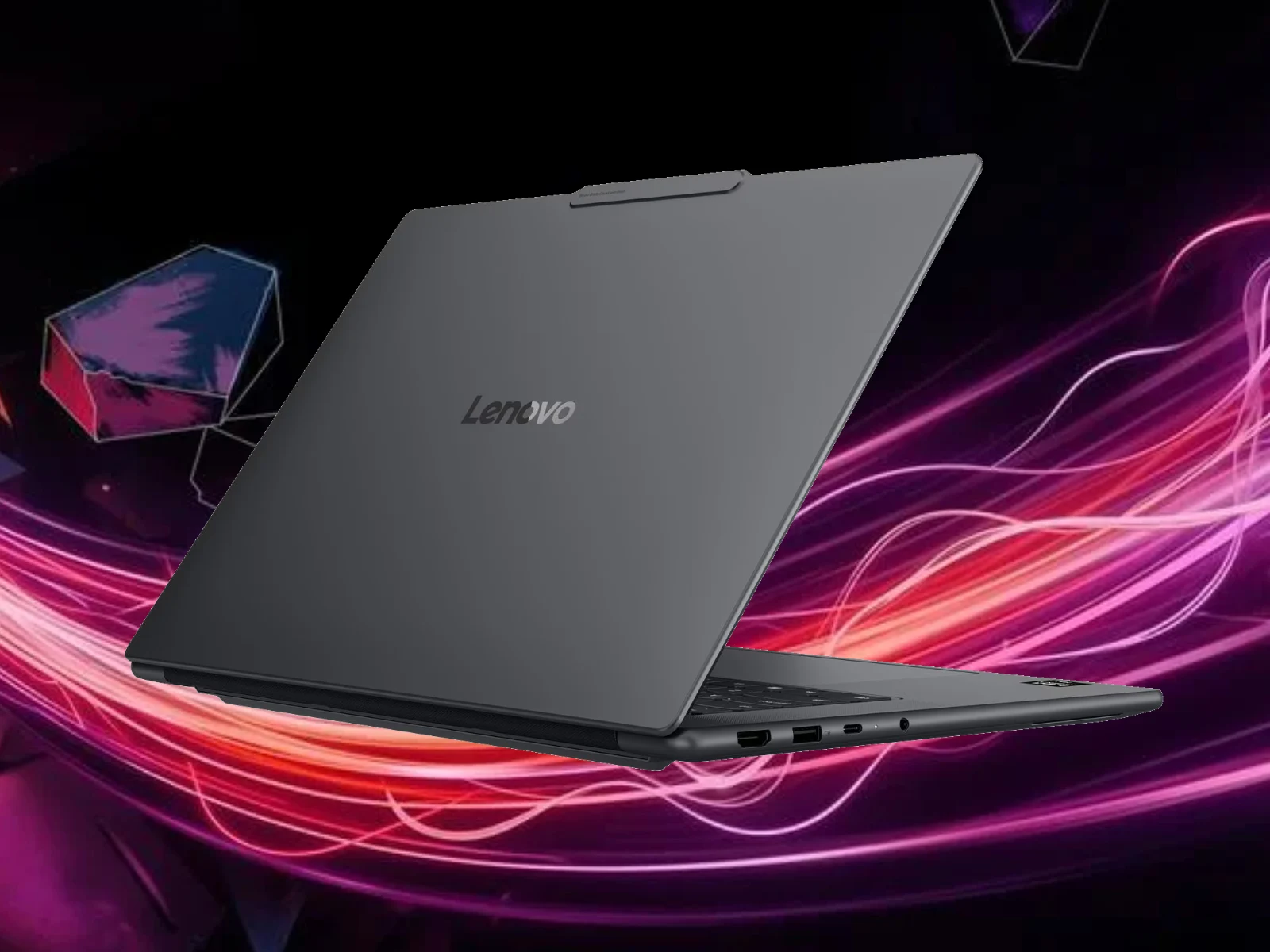
    In the meantime, Lenovo has quietly expanded the Yoga Pro 7 series globally with the 15ASH11 too. According to the company’s PSREF website, the Yoga Pro 7 15ASH11 measures 347 x 242 x 16.7 mm, just like the Yoga Pro 7 15IPH11 that we reviewed earlier this month. Likewise, Lenovo includes an 84 Wh battery with support for 140 W charging via USB Type-C.

    Processor and Graphics Configuration

    For context, the Yoga Pro 7 15IPH11 leverages the Nvidia GeForce RTX 5060 as well as Intel’s Panther Lake platform. By contrast, the Yoga Pro 7 15ASH11 adopts the Radeon 8060S in conjunction with the Ryzen AI Max+ 388 processor. A 2,560 x 1,600-pixel OLED display with a 165 Hz refresh rate and 1,100 nits peak brightness in HDR mode.

    Memory and Storage Features

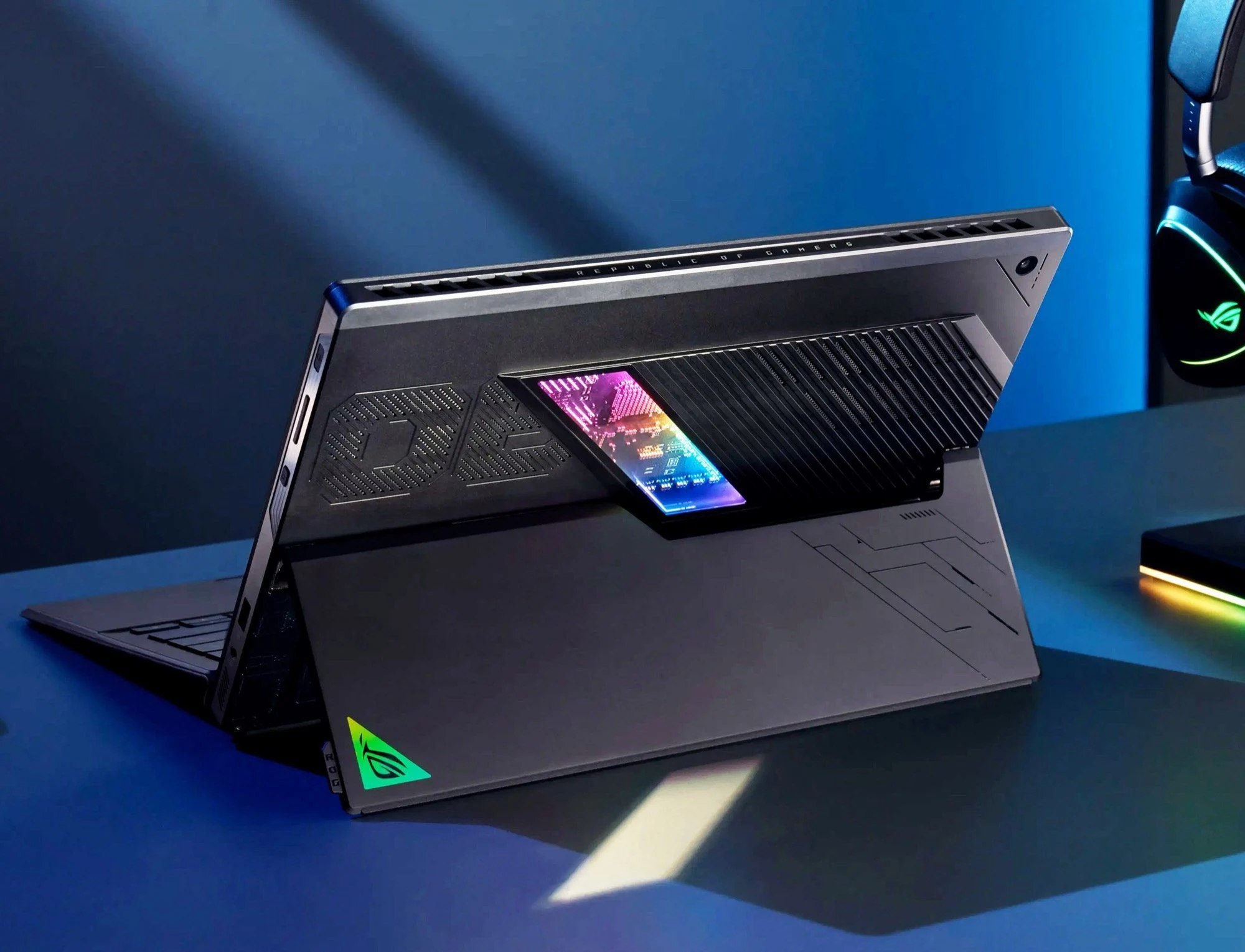
    Moreover, Lenovo equips its new 15ASH11 variant with dual SSD slots and up to 128 GB of LPDDR5X-8000 RAM. As a result, the 15-inch laptop can assign up to 96 GB of VRAM to its Radeon 8060S graphics, a feature it shares with the ROG Flow Z13 (curr. $3,262 on Amazon). Unfortunately, pricing and availability remain unknown for now. More details can be found on Lenovo’s website, as can more about the Yoga Pro 7 Gen 11 more generall in our recent review.
    Sources

  • New Peladn Mini-PC: AMD Strix Halo, 96GB VRAM

    New Peladn Mini-PC: AMD Strix Halo, 96GB VRAM

    Key Takeaway

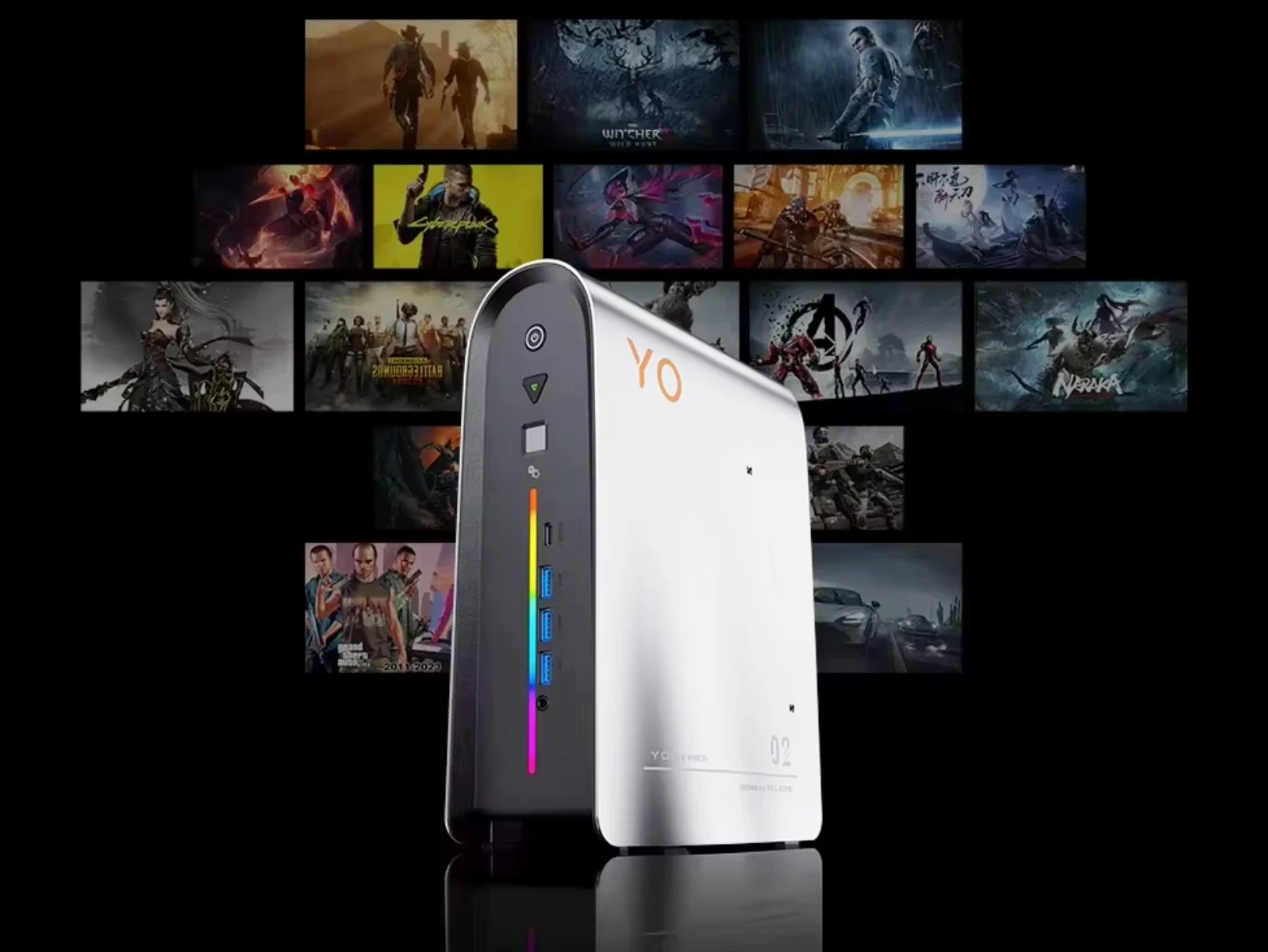
    – Peladn YO2 is a new high-end mini-PC powered by the AMD Ryzen AI Max+ 395 (Strix Halo) APU.
    – It can push the APU to 160W in performance mode using a triple-fan and three-heatpipe cooling system.
    – The YO2 includes 128GB of LPDDR5X RAM, with up to 96GB assignable as VRAM for its Radeon 8060S iGPU.
    – Current pricing starts at roughly $3,249 in China; global availability is unconfirmed but possible.
    – The mini-PC weighs 1.85 kg, measures 246 x 193 x 92 mm, and offers three M.2 2280 slots plus extensive ports.


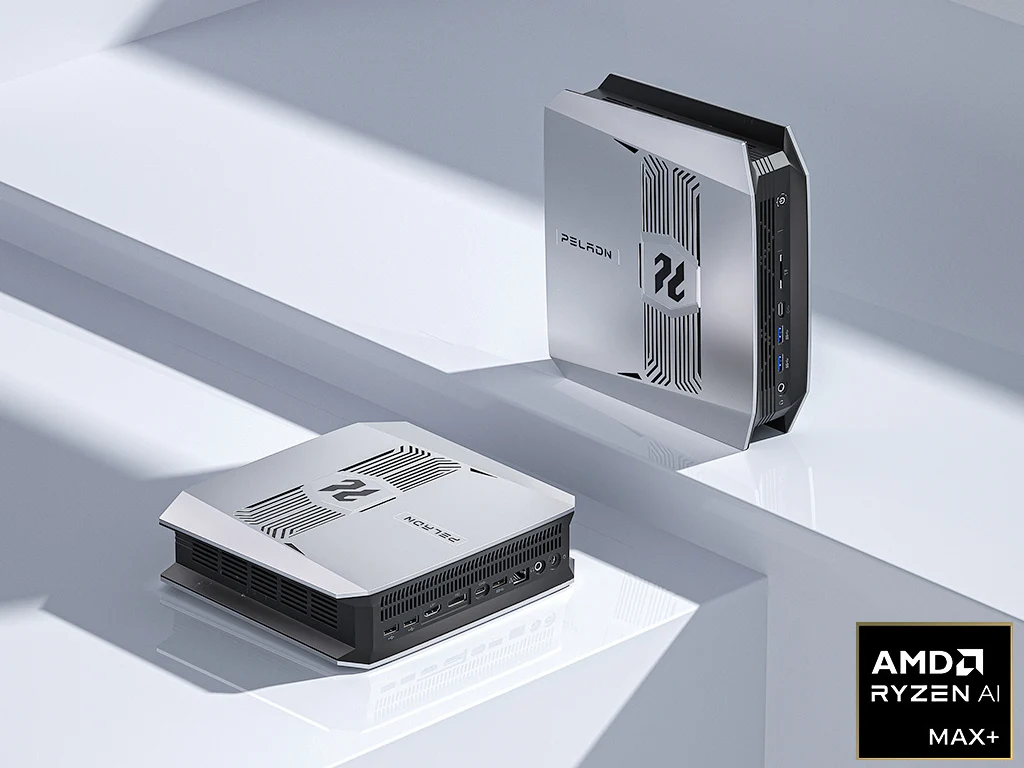
    New Mini-PC From Peladn

    Earlier this year, we reviewed the Peladn HO5 mini-PC powered by AMD’s Strix Point platform (curr. $999 on Amazon). In the months befor that, Peladn released the WO-4 with a slower AMD Ryzen APU. Additonally, the company launched the Link S-3 eGPU dock with Thunderbolt 5 connectivity.

    Availibility and Power

    Now, it has returned with a new mini-PC called the YO2. For the time being, the Peladn YO2 is only available in China. However, the company tends to offer its mini-PCs globally at some stage. Wheather that will occur with the YO2 remains unconfirmed for now. Unofficially, the mini-PC can be picked up on AliExpress for over $3,200.

    Setting that aside, the YO2 is far more powerful than the HO5 we reviewed in February, thanks to its Ryzen AI Max+ 395 APU. While this Strix Halo processor is found in many other high-end mini-PCs, Peladn claims that the YO2 can push the Ryzen AI Max+ 395 to 160 W in performance mode.

    Design and Specifications

    To that end, the company has included a triple-fan setup and three heatpipes, which contribute to the YO2’s 1.85 kg overall weight. Moreover, the mini-PC measures 246 x 193 x 92 mm and contains three M.2 2280 slots, as well as multiple ports. Pricing starts at CNY 21,999 (~$3,249) in China with 2 TB of storage and 128 GB of LPDDR5X RAM running at 8,000 MT/s, 96 GB of which should be assignable as VRAM to its Radeon 8060S iGPU.


  • Intel Razor Lake-AX vs AMD Strix Halo with 32 Xe3 cores

    Intel Razor Lake-AX vs AMD Strix Halo with 32 Xe3 cores

    Key Takeaway

    – Razor Lake is expected to launch in 2027.
    – Razor Lake-HX is rumored to have integrated RAM, increasing memory bandwidth but raising cost.
    – The iGPU is said to use 16 or 32 Xe3 cores, with the top model boasting roughly 3x more compute units than the Arc B390.
    – Benchmarks allegedly show Razor Lake-HX beating the RTX 5060 laptop GPU with RT on and more than doubling the performance of the Radeon 8060S; Medusa Halo is expected to be available by launch.
    – The chips are projected to run most games smoothly at 1080p with high to max details without a discrete GPU.

    Intel Razor Lake is expected to come onto the market in 2027. Over the past few days, there have already been rumors circulating that Intel Razor Lake-HX will have integrated RAM, similar to Lunar Lake. Although this makes the chips more expensive, it also enables a higher memory bandwidth, which benefits not least the GPU integrated into the chip.

    Razor Lake-HX memory and cores

    For this reason, high-performance APUs such as the Apple M5 Max or the AMD Ryzen AI Max+ 395 also rely on integrated RAM. The usually extremely reliable leaker @jaykihn0 has now provided further information on the features of Razor Lake-HX. According to this, the chips will be equipped with a GPU with either 16 or 32 Xe3 cores. Compared to the fastest iGPU from Intel Panther Lake, the Arc B390, the top model has has exactly three times as many compute units. While no details on the clock rates or TDP are yet known, GPU cores generally scale relatively linearly, meaning that the performance can already be estimated based on benchmarks of the Arc B390.

    Benchmarks and comparisons

    Our GPU benchmarks indicate that the Intel Razor Lake-HX iGPU can outperform the Nvidia GeForce RTX 5060 laptop GPU even with ray tracing enabled. Compared to the Radeon 8060S from AMD Strix Halo, Intel’s next-generation flagship iGPU should achieve more than double the performance, although AMD’s next flagship APU, Medusa Halo, should already be available by the time this chip is launched. The performance of Intel Razor Lake-HX should therefore be sufficient to run most games smoothly in 1,080p resolution with high to maximum level of detail, without the need for a dedicated graphics chip.


    Sources
  • Asus 14-inch Gaming Laptop with AMD Strix Halo Launches in US

    Asus 14-inch Gaming Laptop with AMD Strix Halo Launches in US

    Key Takeaways

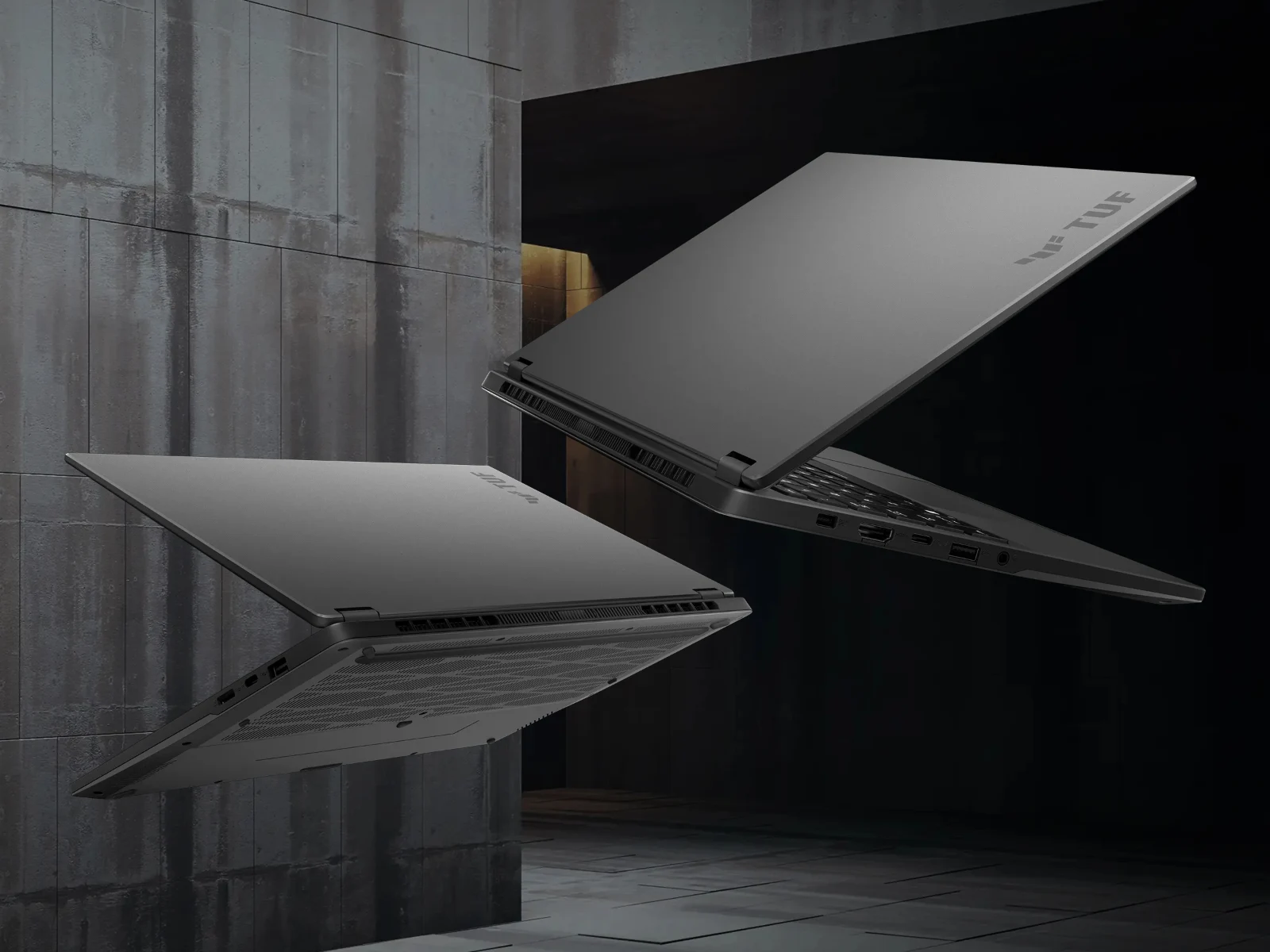
    1. Asus has launched the TUF Gaming A14 FA401EA in North America, featuring AMD’s Strix Halo platform and the Ryzen AI Max+ 392 APU.
    2. The Ryzen AI Max+ 392 has 12 of the 16 Zen 5 CPU cores found in the Max+ 395, with adjusted clock speeds and a reduced L2 cache from 16 MB to 12 MB.
    3. The FA401EA shows about a 25% performance drop in multi-core benchmarks compared to the Max+ 395, but smaller differences in 3DMark TimeSpy scores.
    4. The laptop achieves around 80 FPS in modern AAA games at native resolution in Turbo mode, maintaining a thermal capacity of roughly 80° under load.
    5. The FA401EA offers a GPU improvement over the older FA401WV model and can deliver solid performance while charging at 100 W through USB-C.


    Asus has launched its first gaming laptop with AMD’s Strix Halo platform in North America. The TUF Gaming A14 FA401EA has already been available in other regions for a while. With the North American launch, ETA Prime has tested this laptop along with its new Ryzen AI Max+ 392 APU.

    Ryzen AI Max+ 392 Details

    The Ryzen AI Max+ 392 has 12 out of the 16 Zen 5 CPU cores that are in the Ryzen AI Max+ 395. AMD has made some changes to the CPU clock speeds and reduced the L2 cache from 16 MB to 12 MB. However, the Radeon 8060S remains the same, featuring 40 Compute Units (CUs) and a maximum boost clock of 2,900 MHz.

    Performance Analysis

    It’s not surprising that the Ryzen AI Max+ 392 shows about a 25% performance drop compared to its Max+ 395 counterpart in multi-core benchmarks, such as Cinebench 2024. Yet, ETA Prime noted a smaller difference in scores when using 3DMark TimeSpy. Aside from synthetic benchmarks, the FA401EA maintains around a 100 W TDP while under load in its Turbo mode, with a 115 W FPPT when switched to Manual mode.

    Gaming Experience

    The GPU performance aligns with what users generally expect from the Radeon 8060S. According to the video shared, the FA401EA achieves around 80 FPS in modern AAA games at its native resolution while in Turbo mode. Even with pulling 100 W from its APU, the laptop still has thermal capacity, reaching roughly 80° using Asus’ default fan settings.

    In conclusion, the FA401EA offers a noticeable GPU improvement over the older FA401WV model (currently priced at $1,455 on Amazon) despite having 16 GB VRAM dedicated to its Radeon 8060S iGPU. The FA401EA might even deliver solid performance while charging at 100 W through USB-C, unlike its Nvidia-based competitors. For more details, check out ETA Prime’s video below.

    Source:
    Link


  • Arc B390 vs Radeon 8060S: Comparing GPUs for 14-Inch Screens

    Arc B390 vs Radeon 8060S: Comparing GPUs for 14-Inch Screens

    Key Takeaways

    1. The AMD Radeon 8060S outperforms Intel’s Arc B390, especially in games utilizing advanced DirectX 12 features.
    2. Benchmarks show a performance boost of 55 to 90 percent for the Radeon 8060S over the Arc B390, depending on the game and settings.
    3. The HP ZBook Ultra G1a consumes about twice the power (110 W) compared to the Asus ExpertBook Ultra (56 W) while delivering superior performance.
    4. The Asus ExpertBook Ultra is more portable, being nearly half a kilogram lighter than the HP ZBook Ultra G1a.
    5. Future AMD GPUs may challenge the efficiency and performance of Intel’s Panther Lake iGPU series, especially compared to older models like the Radeon 890M.


    The Arc B390 is Intel’s latest and fastest integrated GPU, but the AMD Radeon 8060S surpasses it with even faster performance while consuming more power. The following benchmarks provide a comparison of the graphics capabilities between the 14-inch Asus ExpertBook Ultra and the 14-inch HP ZBook Ultra G1a, which feature the Core Ultra X7 358H and Ryzen AI Max 395+ processors, respectively.

    Performance Comparison

    When it comes to performance, the AMD GPU clearly outshines the Arc B390, which isn’t surprising given that it works within higher power constraints. Benchmarks from 3DMark reveal a performance boost of 55 to 65 percent in older DirectX 11 (Fire Strike) or DirectX 12 (Time Spy) games. The gap widens to nearly 90 percent when utilizing more advanced DX12 features, such as ray tracing and mesh shaders (Speed Way). For those seeking raw performance, the ZBook Ultra G1a is definitely the better choice compared to the Asus model.

    Power Consumption Insights

    On the flip side, when stress-testing the iGPU at full capacity using FurMark, the power consumption is about 56 W for the Asus and 110 W for the HP. This means that the HP system literally consumes twice as much power compared to the Asus to achieve the previously mentioned performance advantages of 55 to 90 percent. Thus, the performance-per-watt metric tends to favor the Panther Lake CPU in many situations.

    Design and Portability

    The distinct power consumption differences between the two CPUs result in noticeable variations between the ExpertBook Ultra and ZBook Ultra G1a, even though both laptops are aimed at business users and have a 14-inch size. The Asus laptop is nearly half a kilogram lighter and has slightly reduced dimensions, making it a more portable option. The older Radeon 890M has performance limits and cooling needs more in line with the Arc B390 than with the Radeon 8060S, but it performs significantly worse than Intel’s GPU. It will be interesting to see how AMD’s future replacement for the Radeon 890M stacks up against the highly efficient Panther Lake iGPU series.

  • New AMD Ryzen AI Max 400 APUs Details Ahead of Gorgon Halo Refresh

    New AMD Ryzen AI Max 400 APUs Details Ahead of Gorgon Halo Refresh

    Key Takeaways

    1. AMD introduced two new APUs, Ryzen AI Max+ 388 and Ryzen AI Max+ 392, allowing access to the Radeon 8060S iGPU without needing the higher-end Ryzen AI Max+ 395.
    2. Rumors suggest a second refresh of APUs, codenamed Gorgon Halo, with five new models: Ryzen AI Max 485, 488, 490, and Max+ 492, 495.
    3. The new Ryzen AI Max 400 APUs are expected to have better performance with increased CPU and iGPU clock speeds over the previous generation.
    4. Only the Ryzen AI Max+ 495 model has reportedly achieved a 100 MHz boost in clock speeds for its cores.
    5. The Ryzen AI Max 400 series is anticipated to be released between October and December 2026, but caution is advised regarding the accuracy of current reports.


    Less than a month ago, AMD updated its Strix Halo architecture by introducing two new APUs. Known as the Ryzen AI Max+ 388 and the Ryzen AI Max+ 392, this update allows users to access AMD’s robust Radeon 8060S iGPU without needing the 16 CPU cores and 32 threads that come with the Ryzen AI Max+ 395, which is used in devices such as the ROG Flow Z13 and the GMKtec EVO-X2 (currently priced at $1,659.99 on Amazon), among others.

    Rumors of a Second Refresh

    Even though the refresh took place at CES 2026, some reports have surfaced about a potential second refresh. Initially, VideoCardz mentioned that AMD is working on Ryzen AI Max 400 APUs, codenamed Gorgon Halo. Following that, HKEPC reported that AMD plans to introduce five Ryzen AI Max 400 APUs, named Ryzen AI Max 485, Ryzen AI Max+ 488, Ryzen AI Max 490, Ryzen AI Max+ 492, and Ryzen AI Max+ 495:

    – AMD Ryzen AI Max+ 495
    – AMD Ryzen AI Max+ 492
    – AMD Ryzen AI Max 490
    – AMD Ryzen AI Max+ 488
    – AMD Ryzen AI Max 485

    Performance Enhancements Anticipated

    Similar to the Ryzen AI 400 ‘Gorgon Point’ APUs, the new Ryzen AI Max 400 APUs are expected to outperform their Ryzen AI Max 300 predecessors due to increased CPU and iGPU clock speeds. If the Ryzen AI 400 series is indicative, then the Ryzen AI Max 400 processors might support faster RAM compared to the LPDDR5X-8000 limit of the Ryzen AI Max 300 series.

    Among these five models, only the Ryzen AI Max+ 495 seems to have achieved a 100 MHz increase in boost clock speeds for its Zen 5 CPU cores and Radeon 8060S iGPU cores. AMD is reportedly planning to release the Ryzen AI Max 400 series sometime between October and December 2026. However, there are doubts about the image displayed on HKEPC’s site, which appears to have ‘2127’ overlaid on a different part number, leading to some skepticism regarding the accuracy of their report at this time.

    Conclusion

    In conclusion, while AMD’s new APUs show promise, the information surrounding the second refresh should be taken with a grain of caution. It’s essential to keep an eye on further developments and official announcements for the most accurate updates.

    Source:
    Link


  • Thunderobot Introduces Mini PC with AMD Strix Halo APU

    Thunderobot Introduces Mini PC with AMD Strix Halo APU

    Key Takeaways

    1. The Thunderobot Station is a mini PC powered by the Ryzen AI Max+ 395 and features an RDNA 3.5 iGPU, the Radeon 8060S.
    2. Performance tests show the Radeon iGPU nearly matches the Nvidia RTX 4070 Laptop GPU, indicating strong performance for a mini PC.
    3. The device includes multiple ports, such as a DisplayPort, two HDMI ports, and an SD card reader.
    4. A robust cooling system is hinted at, with the device designed for AI tasks, suggesting ample RAM and storage options.
    5. Launch details are unclear, with potential availability in China but uncertainty about global release.


    Thunderobot showed off several new gadgets at CES 2026, and one highlight was the Station. This device resembles a Steam Machine, acting as a Strix Halo mini PC powered by the Ryzen AI Max+ 395. It boasts a capable RDNA 3.5 iGPU, the Radeon 8060S.

    Performance Insights

    In our tests, the Radeon iGPU nearly matches the Nvidia RTX 4070 Laptop GPU in performance. This suggests that, at least on paper, the mini PC outperforms the Steam Machine. During the CES 2026 presentation, Thunderobot showcased a solid array of ports, including a DisplayPort and two HDMI ports. Additionally, like the Steam Machine, it will also have an SD card reader (SanDisk 256GB Ultra currently priced at $29.99 on Amazon).

    Cooling and Specifications

    While the company didn’t provide much additional information about this Steam Machine-like mini PC, the demo unit at CES 2026 hinted at a robust cooling system. Thunderobot did note that the device is intended for AI tasks, indicating it might come with ample RAM and storage options.

    As for the pricing and when it might be available, there’s no specific info yet. The Thunderobot Station could be launching in China soon. However, it’s uncertain if this mini PC will be available globally, considering most of Thunderobot’s products generally aren’t sold in international markets.

    Thunderobot via: VideoCardz

    Source:
    Link


  • Acer Mini PC Launches with Radeon 8060S iGPU and 128GB RAM

    Acer Mini PC Launches with Radeon 8060S iGPU and 128GB RAM

    Key Takeaways

    1. The Acer Veriton RA100 features the high-performance Ryzen AI Max+ 395 APU with 16 Zen 5 cores and a neural processing unit (NPU) capable of 50 TOPS in AI performance.
    2. It includes the Radeon 8060S integrated GPU, performing similarly to the RTX 4070 Laptop GPU, making it suitable for gaming at 1080p and 1440p resolutions.
    3. The mini PC supports up to 128 GB of LPDDR5X RAM and up to 4 TB of storage, with multiple impressive port options.
    4. It offers WiFi 7 and Bluetooth 5.4 for reliable wireless connections and features a cooling design with three TDP modes for different workloads.
    5. The device will launch in Q1 2026, with additional features like a stylish chassis and integrated Copilot+ functionality, though pricing has not been disclosed.


    Acer has rolled out several new devices at CES 2026, and one of the standout products is the Veriton RA100. This mini PC features the Ryzen AI Max+ 395, which is among the highest-performance APUs from the Strix Halo series. It boasts 16 Zen 5 cores and a neural processing unit (NPU) that can reach an impressive 50 TOPS in AI performance.

    Impressive Graphics Capabilities

    Included in the APU is the Radeon 8060S, AMD’s leading integrated GPU. Our tests show that this integrated graphics unit performs on par with the RTX 4070 Laptop GPU, making the Acer mini PC a solid choice for gaming at both 1080p and 1440p resolutions.

    Power and Storage Options

    The APU is capable of being paired with up to 128 GB of LPDDR5X RAM running in quad-channel configuration, enabling it to manage AI models containing as many as 120 billion parameters. Furthermore, it supports storage options of up to 4 TB, and the variety of ports is quite impressive, featuring the following:

    For dependable wireless connections, the Acer Veriton RA100 is equipped with WiFi 7 and Bluetooth 5.4. The company also emphasizes the mini PC’s cooling design, noting that it has three different TDP modes to accommodate various workloads.

    Additional Features

    Other highlights from the CES 2026 event include a stylish chassis, integrated Copilot+ functionality, and a Kensington lock slot suitable for communal environments. Although Acer has not disclosed the pricing for this AMD Strix Halo mini PC, they did mention that it would launch in Q1 2026. For those interested, there’s also the GMKtec EVO-X2 available, which has a similar configuration (with 96 GB RAM and 2 TB storage priced at $1,839.99 on Amazon).

    Source:
    Link


  • FEVM Launches 1-Liter Mini PC with AMD Strix Halo APU

    FEVM Launches 1-Liter Mini PC with AMD Strix Halo APU

    Key Takeaways

    1. The AMD Strix Halo (FAEX1) features a compact design and is powered by the Ryzen AI Max+ 395 and Radeon 8060S integrated GPU.
    2. Gaming performance of the integrated GPU is comparable to the Nvidia RTX 4070 Laptop, with options for eGPU support through OCuLink and USB4 ports.
    3. The mini PC supports WiFi 7 and Bluetooth 5.4 and includes a 160 W cooling solution with active fans and a vapor chamber for optimal performance.
    4. It has a 1-liter chassis, three M.2 slots for PCIe 4.0 SSDs, and supports up to 128 GB of LPDDR5X RAM.
    5. The starting price in China is CNY 1,0999 (approximately $1,557), with limited availability outside of China.


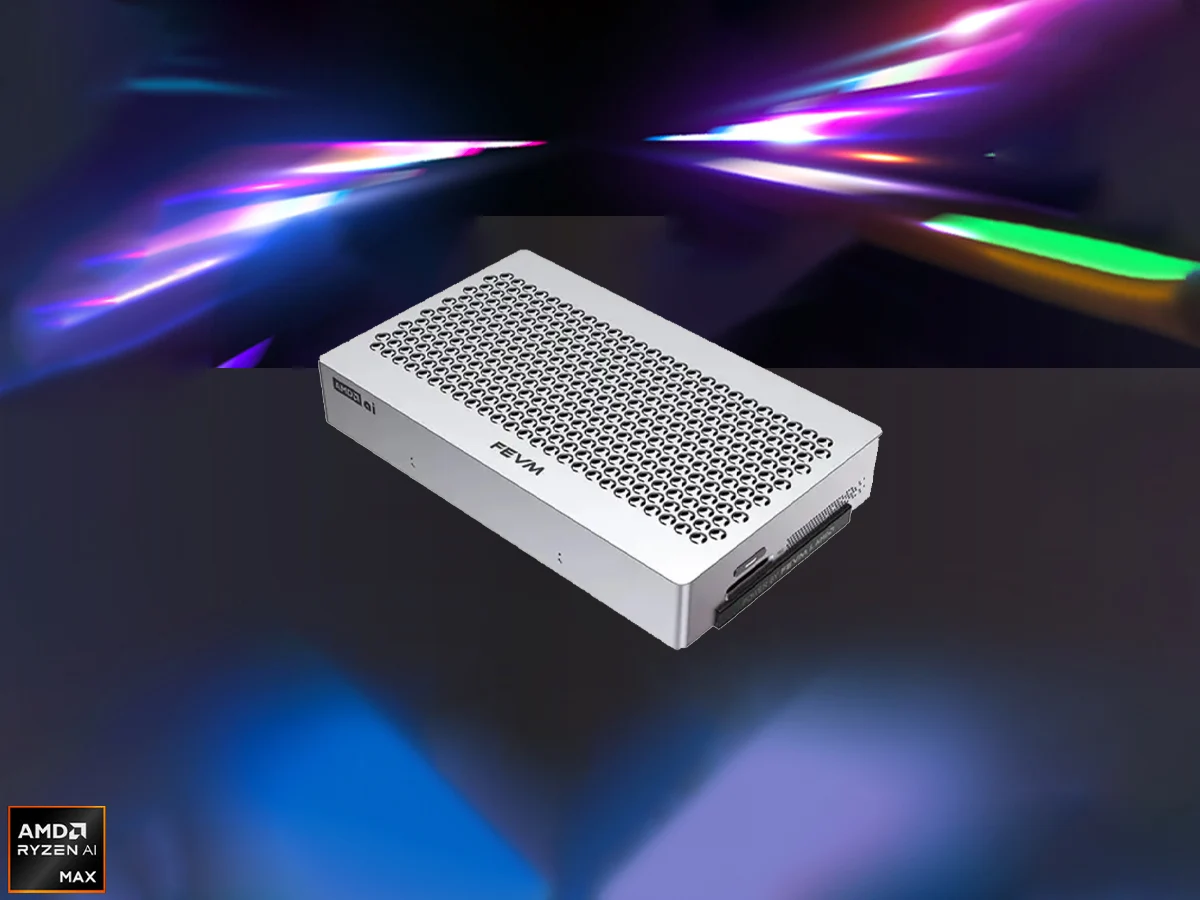
    FEVM has unveiled a new mini PC called the AMD Strix Halo, known as the FAEX1. This compact system boasts a grill-like design reminiscent of the Apple Mac Pro. Inside, it houses the top-tier Ryzen AI Max+ 395, along with the Radeon 8060S integrated GPU.

    Gaming Performance

    According to our benchmarks, this integrated GPU provides gaming performance comparable to the Nvidia RTX 4070 Laptop. For users wishing to add a discrete GPU, the mini PC features an OCuLink port and two USB4 ports, enabling eGPU functionality. These ports are supplemented by the following specifications:

    Connectivity and Cooling

    For wireless connections, the FEVM FAEX1 supports WiFi 7 and Bluetooth 5.4. The APU is complemented by what the manufacturer describes as a 160 W cooling solution, which includes two active fans and a sizable vapor chamber. FEVM states that this cooling system allows the PC to maintain “peak performance” even under heavy workloads.

    Specs and Pricing

    Other key features of the mini PC comprise a compact 1-liter chassis, three M.2 slots for PCIe 4.0 SSDs (such as the 2 TB Samsung 990 Pro priced at $209.99 on Amazon), and support for up to 128 GB of LPDDR5X RAM. The starting cost in China is CNY 1,0999, which roughs out to about $1,557. FEVM is not likely to officially release this Strix Halo model outside of China, as it typically refrains from selling most products globally. However, it may be found on marketplaces like AliExpress.

    Source:
    Link


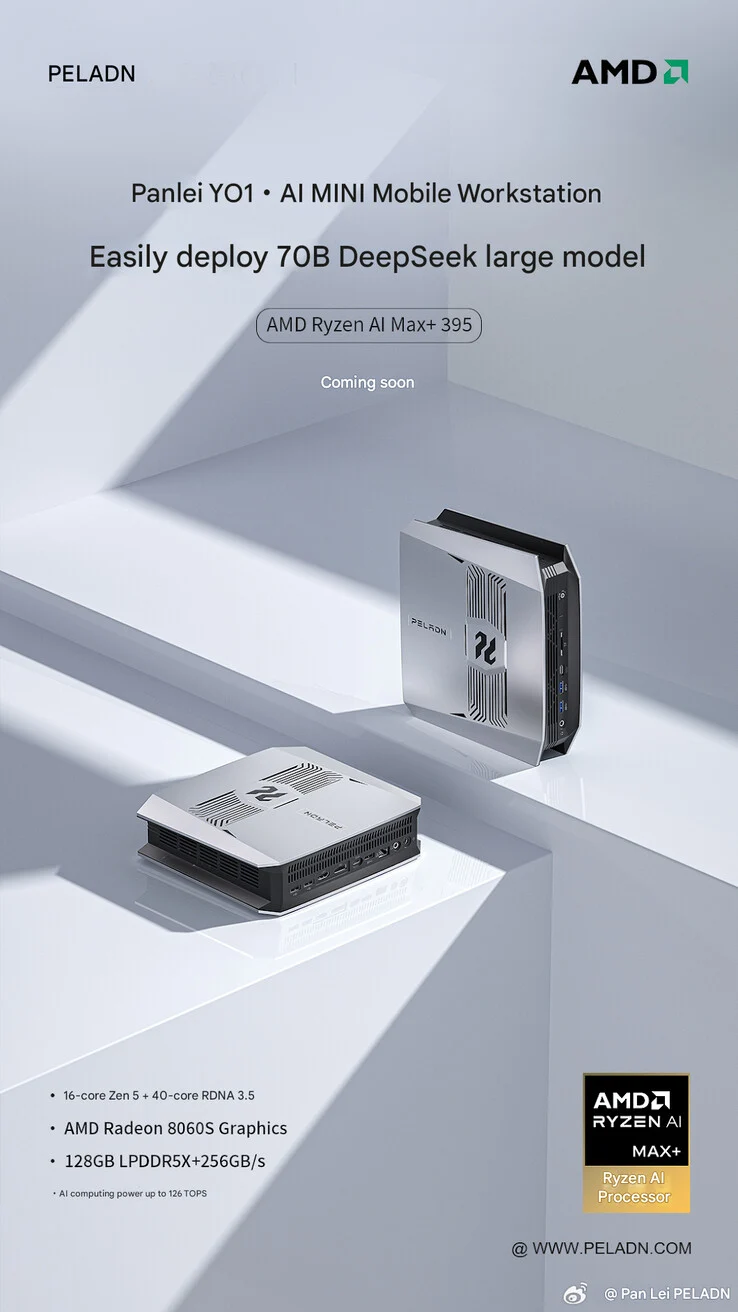
  • Peladn Y01 Launches: New Gaming Mini PC with Ryzen AI Max+ 395

    Peladn Y01 Launches: New Gaming Mini PC with Ryzen AI Max+ 395

    Key Takeaways

    1. Peladn’s Y01 mini PC features the AMD Ryzen AI Max+ 395 APU with 16 Zen 5 cores.
    2. It includes the Radeon 8060S integrated GPU, offering performance similar to the RTX 4070 Laptop for 1080p to 1440p gaming.
    3. The Y01 will have 128 GB of LPDDR5X memory and a variety of ports, though the inclusion of an OCuLink port is uncertain.
    4. The size of the Y01 may be larger than other mini PCs, comparable to the GMK EVO-X2.
    5. Pricing details are not released, but it is expected to be high, potentially starting around $14,999 based on previous models.


    Peladn has unveiled their latest gaming mini PC, the Y01. This new Strix Halo system doesn’t have a set release date yet, but the company hinted that it will be coming soon. Inside, it boasts the AMD Ryzen AI Max+ 395, the highest-end APU in its series, which includes 16 Zen 5 cores.

    Powerful Graphics

    Additionally, it features the Radeon 8060S, the most powerful integrated GPU available today. According to our research, this new RDNA 3.5 iGPU with 40 compute units can provide performance similar to the RTX 4070 Laptop, making mini PCs with this GPU a great option for gaming at 1080p to 1440p resolutions.

    Specs and Design

    While Peladn didn’t provide extensive details about the mini PC, they did mention that the Y01 will come equipped with 128 GB of LPDDR5X memory. The teaser also offers a sneak peek of the system’s design, indicating that it will include a good variety of ports, such as multiple USB-A and USB-C options. However, it remains uncertain if an OCuLink port will be included, which is absent from the GMK EVO-X2 but is available on the FEVM FA-EX9.

    Size and Pricing Thoughts

    The teaser image suggests that the mini PC may not be as compact as some other models on the market. In fact, its size could be comparable to the GMK EVO-X2, which is notably larger than the EVO-X1.

    Price details are also not disclosed yet. However, considering that the EVO-X2 launched at a starting price of $14,999, it is anticipated that the Peladn Y01 will be quite pricey in comparison to previous mini PC generations.

    Source:
    Link