Tag: Arc B390

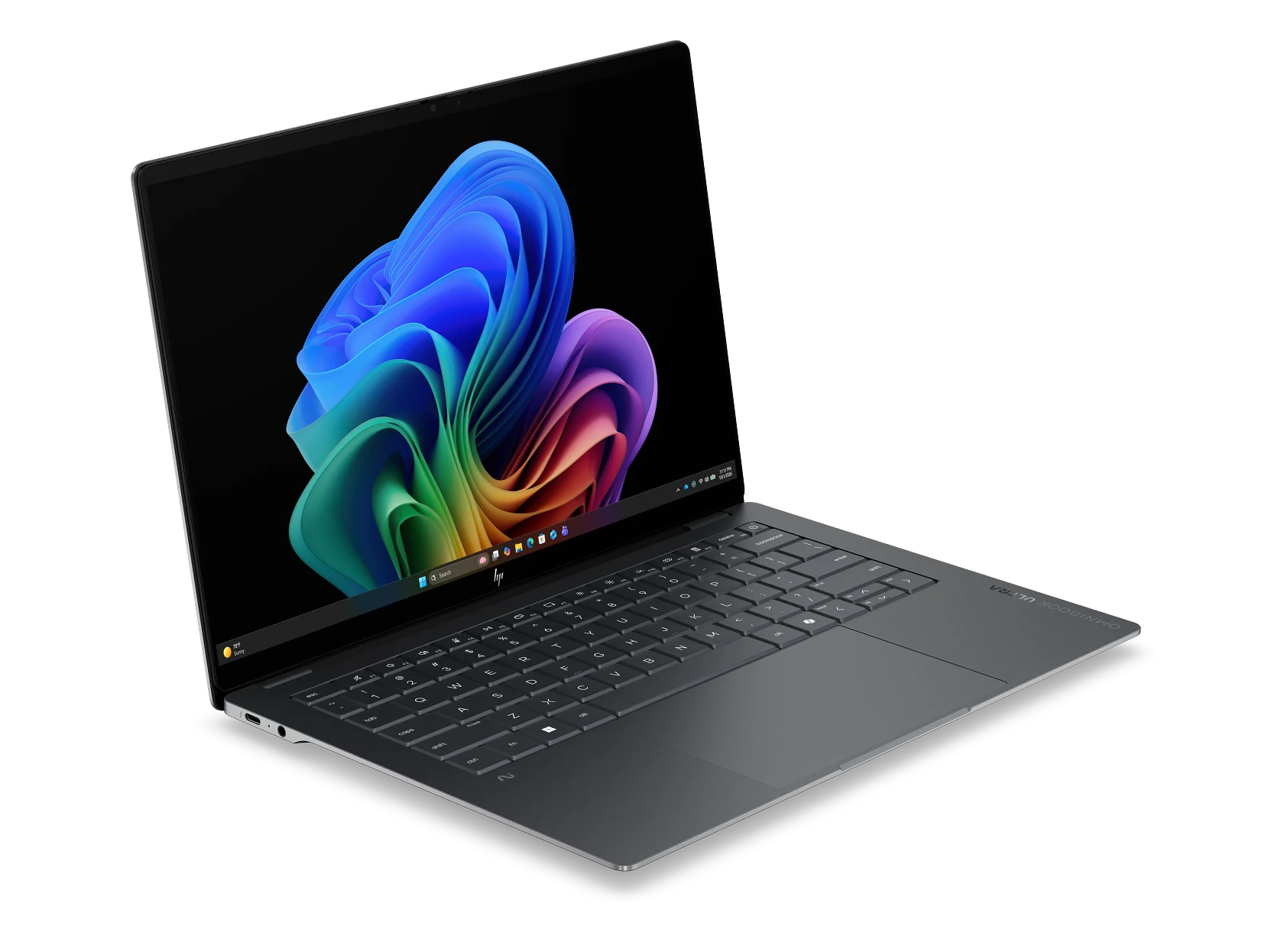
  • HP OmniBook Ultra 14: Surprising Gaming Powerhouse

    HP OmniBook Ultra 14: Surprising Gaming Powerhouse

    Key Takeaway

    – 2026 OmniBook Ultra 14 offers 40-50% faster GPU performance than previous-gen integrated graphics.
    – Runs demanding titles like Cyberpunk 2077 at smooth 45 FPS on Ultra 1080p settings.
    – Despite being marketed for creative professionals, it is one of the fastest gaming subnotebooks under 3 pounds.
    – Outperforms popular 14-inch alternatives such as Lenovo Yoga Pro 7 14 and Asus ExpertBook Ultra.
    – Native 3K OLED display is demanding, but 1080p gaming is highly playable on this lightweight form factor.


    The HP Omnibook Ultra 14 is primarily marketed towards creative and technical professionals or small business users. What the manufacturer isn’t telling you, however, is that it’s also one of the fastest gaming laptops when considering its size and category.

    GPU Performance Compared to Rivals

    Our GPU benchmarks below compare the new HP subnotebook running on Intel Panther Lake X9 to some popular 14-inch alternatives like the Lenovo Yoga Pro 7 14, Asus ExpertBook Ultra, and even HP’s own 2025 OmniBook Ultra 14 to show that the 2026 model can handily outperform any solution out there running on last generation or older hardware. The delta is quite significant as well at 40 to 50 percent faster than the previous Intel iGPU champion the Arc 140T.

    Real-World Gaming Capabilities

    In more applicable terms, the 2026 OmniBook Ultra 14 is powerful enough to run demanding titles like Cyberpunk 2077 on Ultra 1080p settings at an average 45 FPS before applying any XeSS upscaling compared to only 31 FPS on the 2025 OmniBook Ultra 14. Granted, the 3K native resolution of the OLED display is more than what the integrated Arc B390 can handle, but smooth 1080p gameplay on a 14-inch subnotebook weighing less than 3 pounds is an impressive feat in any book.

    • 2026 model achieves 45 FPS on Cyberpunk 2077 (Ultra 1080p, no upscaling)
    • 2025 model only reaches 31 FPS under same conditions
    • Weight under 3 pounds for portability

    Additional Testing Insights

    More benchmarks, temperature measurements, and comparisons can be found on our review of the 2026 OmniBook Ultra 14. The unit we tested maintained reasonable thermals under load, with fan noise staying below 40 dB during extended gaming sessions, thought some users might notice slight chassis warmth near the hinge area after prolonged use. Battery life also took a noticable but acceptable hit when gaming, dropping from 12 hours of office work to about 3.5 hours of intensive gameplay.

    Specifications and Pricing Overview

    The reviewed configuration includes the Intel Panther Lake X9 processor, integrated Arc B390 graphics, 32GB of LPDDR5X RAM, and a 1TB PCIe Gen 4 SSD. Base price start’s at $1,499 for the 16GB/512GB model, with our test unit costing $1,899. The OLED display features a 2880×1800 resolution at 120Hz with 100% DCI-P3 coverage—a strong combination for both creative work and gaming visuals. Connectivity includes two Thunderbolt 5 ports, one USB-A, HDMI 2.1, and a 3.5mm audio jack, though there is no SD card slot unfortunatly.

    Sources
    • MSI Claw 8 AI+ Impresses, But High Price May Worry AMD

      MSI Claw 8 AI+ Impresses, But High Price May Worry AMD

      Key Takeaway

      – Intel Arc G3 and G3 Extreme SoCs, based on Panther Lake architecture, mark Intel’s serious entry into Windows handheld gaming.
      – The MSI Claw 8 EX AI+ is a next-gen handheld featuring an 8-inch FHD+ 120Hz display, 32GB RAM, 1TB storage, and an 80Wh battery.
      – Design improvements include more comfortable, Xbox-like controls and a standard M.2 2280 SSD for easier upgrades.
      – The Arc G3 Extreme iGPU is the main selling point, with potential to challenge AMD’s dominance in handheld consoles.
      – Price is a major concern, as the powerful components are expected to make the device expensive, potentially “crazy” costly.


      Intel’s Serious Move into Handheld Gaming

      Intel has finnaly decided to take the Windows handheld gaming console space seriously with the launch of the new Intel Arc G3 and Arc G3 Extreme SoCs. Built specifically for handheld consoles, both Arc G3 and Arc G3 Extreme are based on the latest Intel Panther Lake architecture and feature Arc B370 and Arc B390 iGPUs. respectively. The MSI Claw 8 EX AI+ will be one of the first handheld consoles to be powered by the Arc G3 Extreme, and we had a chance to check out the machine at Computex 2026.

      MSI Claw 8 EX AI+ Specifications and Design

      The Claw 8 EX AI+ is MSI’s next-gen follow-up to the Intel Lunar Lake-based Claw 8 AI+. The handheld brings a large 8-inch FHD+ display with a 120 Hz refresh rate, 500 nits of brightness, and VRR. There is also 32 GB of LPDDR5x memory, 1 TB of storage, and a large 80 Wh battery on the inside.

      While MSI may have kept the screen practically unchanged, the company did refine the design of the MSI Claw 8 EX AI+. The portable console is more comfortable to hold than last-gen. The curves of the controller area remind us of Xbox controllers, which is a very good thing.

      Thoughtful Upgrades and Performance Potential

      MSI also, thankfully, decided to use the more common M.2 2280 SSD in the Claw 8 EX AI+, which will make it much easier for users to find a suitable replacement drive in the future. So, there are thoughtful upgrades aside from the Arc G3 Extreme. That said, the Intel Arc G3 Extreme is the main selling point of the MSI Claw 8 EX AI+, and it has the potential to snatch the Windows handheld consoles away from AMD.

      Potential Pricing Concerns

      If there is one thing that can ruin the MSI Claw 8 EX AI+, it is the price. As we know from laptops, Intel Panther Lake chips with the Arc B390 iGPU are not cheap. Add in the cost of 32 GB LPDDR5x and a 1 TB SSD, both of which have gone up considerably from last year, and you can see why we are worried about the price of the Claw 8 EX AI+.

      Sadly, we don’t have any concrete numbers to share at this point. But all things point to the Claw 8 EX AI+ being an expensive machine. Even Intel expects the price to be “crazy”.

      Sources
    • HP Launches 14-Inch Laptop: Up to 64GB RAM, Arc B390 & 5G

      HP Launches 14-Inch Laptop: Up to 64GB RAM, Arc B390 & 5G

      Key Takeaway

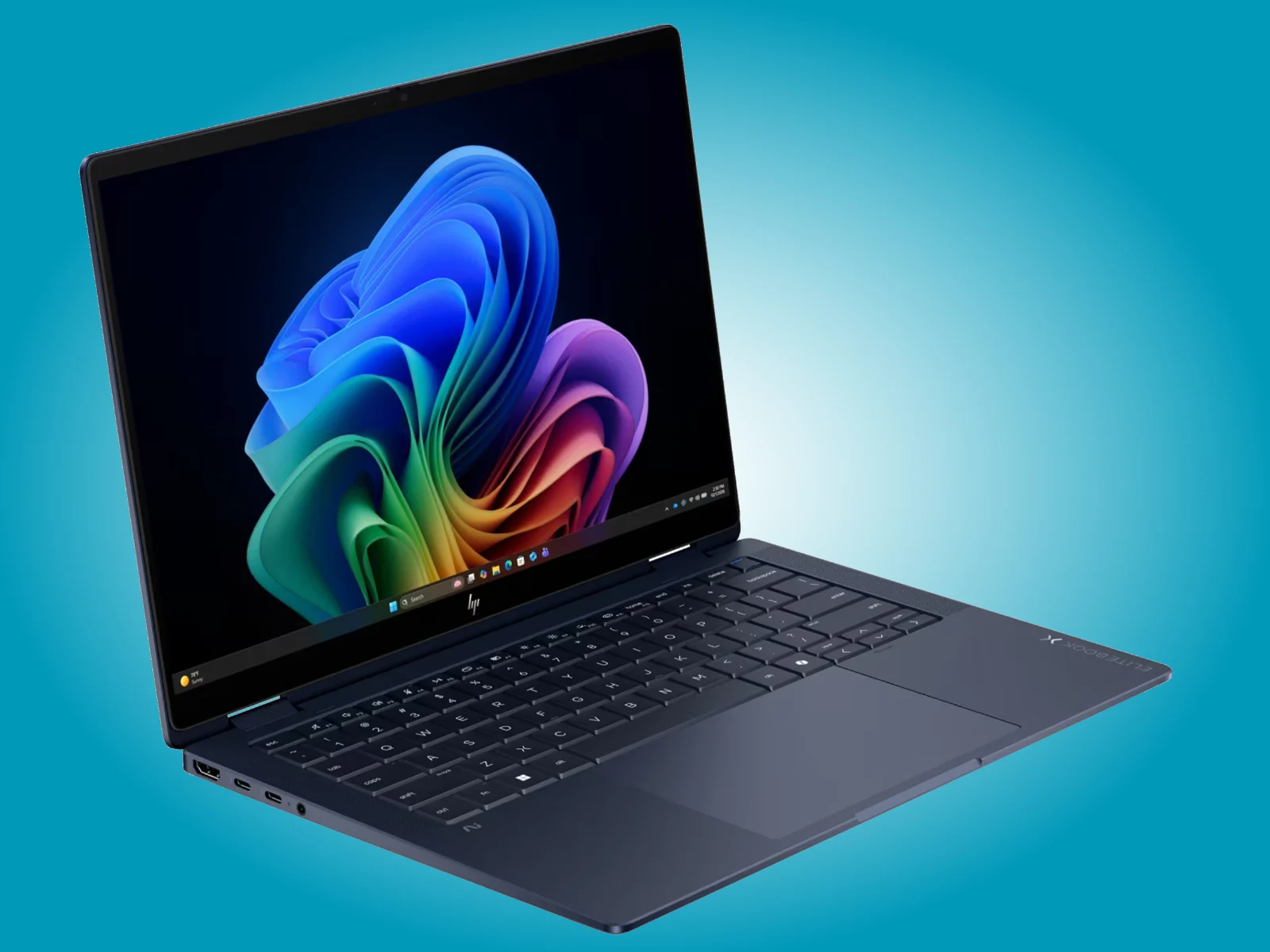
      – HP EliteBook X Flip G2i is a new 14-inch convertible with Intel Panther Lake processors.
      – Starts at $2,692 in the US (Core Ultra 5 325, 24GB RAM, 512GB SSD, 1200p OLED).
      – Top configuration reaches $5,766 (Core Ultra X7 358H, 64GB RAM, 1TB SSD, 700-nit Tandem OLED).
      – Offers optional features like NFC, 5G, and Arc B390 graphics.
      – Pricing and availability vary by region (e.g., Europe starts with higher-end SKUs).


      New HP EliteBook X Flip G2i Goes Global

      HP has updated its compact EliteBook range with a new model. For context, the company already sells the EliteBook X G2i 14 with Intel Panther Lake processors. Likewise, the EliteBook X G2q and EliteBook X G2a are now available with Snapdragon X2 and AMD Ryzen AI 400 processors, respectively.

      Global Launch and Pricing Details

      Now, HP has started selling the EliteBook X Flip G2i globally. Announced in January during CES 2026, the new 14-inch convertible directly replaces the EliteBook X Flip G1i we reviewed in 2025 with Intel Lunar Lake processors. By contrast, the EliteBook X Flip G2i adopts Intel’s Panther Lake platform with optional Arc B390 graphics.

      The EliteBook X Flip G2i starts at $2,692 in the US with a Core Ultra 5 325 processor, a 68 Wh battery, 24 GB of RAM, a 512 GB SSD, and a 1200p OLED touchscreen display that peaks at a mere 300 nits. Allegedly, this SKU carries a $3,847 MSRP. However, switching from a Windows 11 Pro licence to FreeDOS will save $227 in all cases.

      European and UK Configurations

      Currently, availability is more limited elsewhere. For instance, HP is only selling Core Ultra X7 358H SKUs in Europe. At the time of writing, the company has priced a 32 GB RAM and 1 TB SSD variant with a 1800p and 500-nit OLED display for €3,254 in the Eurozone and for £2,543.99 in the UK. For reference, an equivalent configuration runs to $3,887 in the US and carries a $5,553 MSRP.

      Maximum Specifications and Upgrades

      At the time of publication, the EliteBook X Flip G2i can be configured with up to a Core Ultra X7 358H processor, 64 GB of RAM and a 1 TB PCIe Gen 5 x4 SSD, as well as NFC and 5G cellular connectivity. A 700-nit and 1800p Tandem OLED is available too, which retains 100% DCI-P3 colour space coverage and a 120 Hz VRR refresh rate. All these options pushes the EliteBook X Flip G2i to $5,766 though with an $8,238 MSRP. Please see the company’s website for more information.


    • Intel Razor Lake-AX vs AMD Strix Halo with 32 Xe3 cores

      Intel Razor Lake-AX vs AMD Strix Halo with 32 Xe3 cores

      Key Takeaway

      – Razor Lake is expected to launch in 2027.
      – Razor Lake-HX is rumored to have integrated RAM, increasing memory bandwidth but raising cost.
      – The iGPU is said to use 16 or 32 Xe3 cores, with the top model boasting roughly 3x more compute units than the Arc B390.
      – Benchmarks allegedly show Razor Lake-HX beating the RTX 5060 laptop GPU with RT on and more than doubling the performance of the Radeon 8060S; Medusa Halo is expected to be available by launch.
      – The chips are projected to run most games smoothly at 1080p with high to max details without a discrete GPU.

      Intel Razor Lake is expected to come onto the market in 2027. Over the past few days, there have already been rumors circulating that Intel Razor Lake-HX will have integrated RAM, similar to Lunar Lake. Although this makes the chips more expensive, it also enables a higher memory bandwidth, which benefits not least the GPU integrated into the chip.

      Razor Lake-HX memory and cores

      For this reason, high-performance APUs such as the Apple M5 Max or the AMD Ryzen AI Max+ 395 also rely on integrated RAM. The usually extremely reliable leaker @jaykihn0 has now provided further information on the features of Razor Lake-HX. According to this, the chips will be equipped with a GPU with either 16 or 32 Xe3 cores. Compared to the fastest iGPU from Intel Panther Lake, the Arc B390, the top model has has exactly three times as many compute units. While no details on the clock rates or TDP are yet known, GPU cores generally scale relatively linearly, meaning that the performance can already be estimated based on benchmarks of the Arc B390.

      Benchmarks and comparisons

      Our GPU benchmarks indicate that the Intel Razor Lake-HX iGPU can outperform the Nvidia GeForce RTX 5060 laptop GPU even with ray tracing enabled. Compared to the Radeon 8060S from AMD Strix Halo, Intel’s next-generation flagship iGPU should achieve more than double the performance, although AMD’s next flagship APU, Medusa Halo, should already be available by the time this chip is launched. The performance of Intel Razor Lake-HX should therefore be sufficient to run most games smoothly in 1,080p resolution with high to maximum level of detail, without the need for a dedicated graphics chip.


      Sources
    • High-End Intel Panther Lake Laptops Priced Up to $2,400

      High-End Intel Panther Lake Laptops Priced Up to $2,400

      Key Takeaways

      1. Intel’s Panther Lake laptops feature the Core Ultra 300 series APUs, which offer strong graphics performance and energy efficiency.
      2. The price range for these laptops is between $1,400 and $2,400, with an average cost of around $2,100.
      3. High memory costs are significantly impacting the pricing of Panther Lake laptops, leading to recommendations to wait for the upcoming Lunar Lake models.
      4. Panther Lake’s high costs were anticipated due to advanced manufacturing processes used for the CPU and GPU components.
      5. Consumers should expect to invest around $2,000 for laptops featuring the Core Ultra X9/X7 APUs and Arc B390 GPU.


      With the reviews for Intel’s Panther Lake laptops now available, it’s clear that the company has made significant advancements with the Core Ultra 300 series APUs. The Core Ultra X9/X7 APUs, equipped with the Arc B390 integrated GPU, stand out for their remarkable energy efficiency and strong graphics performance. Nevertheless, the laptops that utilize these Panther Lake Core Ultra X9 and X7 chips are expected to come with a hefty price tag.

      Pricing Insights

      According to insights shared by Moore’s Law Is Dead, based on information from various retail and OEM channels, the price range for Intel Panther Lake laptops is between $1,400 and $2,400. The average cost hovers around $2,100. Furthermore, a major OEM indicated to MLID that the pricing for the top-tier Panther Lake models is comparable to AMD’s Strix Halo machines. This suggests that even though Intel claims its Core Ultra 300 series and AMD’s Ryzen AI Max+ Strix Halo APUs are not in direct competition, these leaked prices are likely to create a rivalry between Team Blue and Team Red.

      Factors Affecting Costs

      The same OEM source also pointed out that the high costs of memory are playing a significant role in the pricing of Panther Lake laptops. As a result, they recommended that consumers looking to save money should consider waiting for Lunar Lake laptops, which are expected to be released in 2026. Intel’s Lunar Lake APUs are expected to rival Panther Lake in terms of efficiency and single-core performance. Thus, if advanced graphics and multi-core performance offered by the Core Ultra X9/X7 APUs are not essential to you, laptops based on the Core Ultra 200 series might be sufficient (you can find one on amazon.com).

      Expectations vs. Reality

      While the pricing details from MLID may not be what some enthusiasts hoped for, the high cost of the Core Ultra 300 APUs was anticipated. The CPU components of the Intel Panther Lake APUs are manufactured using Intel’s cutting-edge 18A process node, which is costly. Additionally, Intel has opted for the TSMC N3E 3 nm node for the Arc B390 integrated GPU, which has also seen rising prices due to ongoing increases.

      So, if you’re interested in acquiring an Intel Panther Lake laptop, particularly one featuring the Arc B390, be ready to invest around $2,000.

      Source:
      Link


    • Arc B390 vs Radeon 8060S: Comparing GPUs for 14-Inch Screens

      Arc B390 vs Radeon 8060S: Comparing GPUs for 14-Inch Screens

      Key Takeaways

      1. The AMD Radeon 8060S outperforms Intel’s Arc B390, especially in games utilizing advanced DirectX 12 features.
      2. Benchmarks show a performance boost of 55 to 90 percent for the Radeon 8060S over the Arc B390, depending on the game and settings.
      3. The HP ZBook Ultra G1a consumes about twice the power (110 W) compared to the Asus ExpertBook Ultra (56 W) while delivering superior performance.
      4. The Asus ExpertBook Ultra is more portable, being nearly half a kilogram lighter than the HP ZBook Ultra G1a.
      5. Future AMD GPUs may challenge the efficiency and performance of Intel’s Panther Lake iGPU series, especially compared to older models like the Radeon 890M.


      The Arc B390 is Intel’s latest and fastest integrated GPU, but the AMD Radeon 8060S surpasses it with even faster performance while consuming more power. The following benchmarks provide a comparison of the graphics capabilities between the 14-inch Asus ExpertBook Ultra and the 14-inch HP ZBook Ultra G1a, which feature the Core Ultra X7 358H and Ryzen AI Max 395+ processors, respectively.

      Performance Comparison

      When it comes to performance, the AMD GPU clearly outshines the Arc B390, which isn’t surprising given that it works within higher power constraints. Benchmarks from 3DMark reveal a performance boost of 55 to 65 percent in older DirectX 11 (Fire Strike) or DirectX 12 (Time Spy) games. The gap widens to nearly 90 percent when utilizing more advanced DX12 features, such as ray tracing and mesh shaders (Speed Way). For those seeking raw performance, the ZBook Ultra G1a is definitely the better choice compared to the Asus model.

      Power Consumption Insights

      On the flip side, when stress-testing the iGPU at full capacity using FurMark, the power consumption is about 56 W for the Asus and 110 W for the HP. This means that the HP system literally consumes twice as much power compared to the Asus to achieve the previously mentioned performance advantages of 55 to 90 percent. Thus, the performance-per-watt metric tends to favor the Panther Lake CPU in many situations.

      Design and Portability

      The distinct power consumption differences between the two CPUs result in noticeable variations between the ExpertBook Ultra and ZBook Ultra G1a, even though both laptops are aimed at business users and have a 14-inch size. The Asus laptop is nearly half a kilogram lighter and has slightly reduced dimensions, making it a more portable option. The older Radeon 890M has performance limits and cooling needs more in line with the Arc B390 than with the Radeon 8060S, but it performs significantly worse than Intel’s GPU. It will be interesting to see how AMD’s future replacement for the Radeon 890M stacks up against the highly efficient Panther Lake iGPU series.

    • Intel Panther Lake Core Ultra X9 Beats AMD Strix Halo in 2026

      Intel Panther Lake Core Ultra X9 Beats AMD Strix Halo in 2026

      Key Takeaways

      1. The Intel Core Ultra X9 388H shows significant improvements in multi-core performance and power efficiency.
      2. The 12-core Arc B390 integrated GPU (iGPU) demonstrates exceptional performance, achieving over 30 FPS in Cyberpunk 2077 at 1080p on ultra settings with low power consumption.
      3. Intel’s Panther Lake APUs are set to dominate the handheld gaming market by 2026, outperforming competitors like AMD’s Radeon 8060S at lower power levels.
      4. At 15 and 20 watts, the Core Ultra X9 388H consistently outperforms the AMD Ryzen AI Max+ 395, achieving higher frame rates in games like Black Myth Wukong.
      5. The Intel Panther Lake APUs fully support XeSS 3 with Multi-Frame Generation, enhancing gaming performance compared to the AMD Strix Halo.


      First impressions of the Intel Panther Lake Core Ultra X9 388H APU have been released, and it looks like Intel has really outdone themselves. After thoroughly examining the Core Ultra X9 388H, we discovered that Intel has significantly improved both the multi-core performance and power efficiency of this new model.

      Impressive iGPU Performance

      One of the most remarkable features of the Core Ultra X9 388H is its 12-core Arc B390 integrated GPU (iGPU). This new iGPU shows exceptional performance improvements compared to the previous Arc 140V and AMD Radeon 890M. It performs especially well at low thermal design power (TDP) levels, up to 30 watts. For example, during our tests, the Arc B390 achieved over 30 FPS in Cyberpunk 2077 at 1080p on ultra settings without utilizing Frame Generation, and it was limited to just 20 watts. Reports indicate that the Arc B390 can compete effectively with the Radeon 8060S found in the Strix Halo at these lower TDP levels.

      Dominating Handheld Gaming

      Looking at The Phawx’s benchmarks for the Core Ultra X9 388H under lower power constraints, it’s evident that Intel’s Panther Lake APUs are poised to take over the handheld gaming market by 2026. In the game Black Myth Wukong, the Arc B390 in the Core Ultra X9 388H ran the game at 30 FPS at 720p on low settings while consuming only 10 watts.

      When we raised the TDP to 15 watts, the average frame rate increased to 46.6 FPS, with 1% lows sitting at 37 FPS. The Radeon 8060S could only reach an average of 39 FPS and 1% lows of 31.8 FPS at the same power level. Moreover, the Core Ultra X9 388H slightly outperformed the AMD Strix Halo at 20 watts.

      Performance Comparison in 1080p

      The results at 1080p for Black Myth Wukong followed a similar trend. The Core Ultra X9 388H clearly outperformed the Ryzen AI Max+ 395 at both 15 watts and 20 watts. At 15 watts, the Core Ultra X9 388H averaged 29.3 FPS, while the AMD Strix Halo was at 22.6 FPS. As we increased the power to 20 watts, both APUs saw significant performance boosts, but the Intel Panther Lake APU had a notable lead of 23%, achieving an average of 37.8 FPS compared to 30.7 FPS for the Ryzen.

      A comparable performance was observed in Cyberpunk 2077 using the Steam Deck preset, as well as in Deus Ex: Mankind Divided and Doom: The Dark Ages.

      In conclusion, at lower power limits, the Core Ultra X9 388H paired with the Arc B390 easily surpasses the AMD Ryzen AI Max+ 395 Strix Halo APU, which only starts to lead when power exceeds 30 watts. As things look right now, the Intel Panther Lake APUs with the Arc B390 seem to be excellent options for handheld gaming devices.

      This becomes even more apparent when considering that, unlike the Strix Halo, the Intel Panther Lake APUs fully support the latest XeSS 3 with Multi-Frame Generation, which greatly enhances average FPS, as we highlighted in our analysis of the Arc B390.

      Source:
      Link


    • Intel’s 18A Recovery: 7% Monthly Yield Gains Boost Panther Lake

      Intel’s 18A Recovery: 7% Monthly Yield Gains Boost Panther Lake

      Key Takeaways

      1. Intel is improving its mass production yields for the Panther Lake laptop platform, now aligning with the industry’s standard of a 7% monthly increase.
      2. Leadership changes, particularly with CEO Lip-Bu Tan, are positively impacting Intel’s outlook for launching Panther Lake before the end of 2025.
      3. Panther Lake’s CPUs will feature new Cougar Cove P-cores and Darkmont E-cores, promising a 50% performance increase in combined CPU and GPU compared to Lunar Lake.
      4. The platform may include up to 16 CPU cores and 12 Xe3 Arc iGPU cores, with initial models like the Arc B390 and B370 showcasing competitive clock speeds.
      5. The 14A process node, which succeeds the 18A node, is performing better due to customer feedback and an improved process development kit (PDK).


      Intel is getting closer to mass-producing its next-gen laptop platform, Panther Lake. An executive from the company shared in an interview at the RBC Capital Markets Global TMT that they are now seeing a monthly increase in yields at a rate that aligns with the industry’s standard, which is about 7 percent. This marks an improvement compared to the inconsistent progress they faced earlier in the year.

      A New Leadership Impact

      VP John Pitzer mentioned that a significant change happened when Lip-Bu Tan became Intel’s CEO back in March. Pitzer seems optimistic that Intel is in a good position to launch Panther Lake before the year 2025 wraps up. He also indicated that more details about Panther Lake will be disclosed at CES in January.

      Specifications and Performance

      Previously, we mentioned that Panther Lake’s laptop CPUs will introduce the new Cougar Cove P-cores alongside Darkmont E-cores. Both types are utilizing 18A’s RibbonFET transistors and the second-gen backside power delivery, known as PowerVia. Intel claims that Panther Lake will deliver a 50 percent increase in combined CPU and GPU performance compared to Lunar Lake.

      Rumors suggest that Panther Lake could feature up to 16 CPU cores and 12 Xe3 Arc iGPU cores. Initial leaks have hinted at models like the Arc B390, which boasts 12 iGPU cores running at 2.5 GHz, and the B370, with 10 cores clocked at 2.4 GHz. Moreover, Intel is bringing back modular LPDDR5X memory, allowing for up to 96 GB at an impressive speed of 9600 MT/s for the highest-tier SKU.

      Updates on 14A Node

      Pitzer also shared some information regarding the 14A process node. The successor to the 18A node is achieving better performance at similar stages, despite undergoing major modifications, all thanks to earlier customer feedback and a more developed PDK.

      Source:
      Link


    • Intel Panther Lake iGPU Specs and Model Numbers Leaked

      Intel Panther Lake iGPU Specs and Model Numbers Leaked

      Key Takeaways

      1. Intel’s Panther Lake iGPUs include the Arc B390 and Arc B370, with the former in Core Ultra 9 and 7 models, and the latter in Core Ultra 5 variants.
      2. New iGPUs, Arc B380 and Arc B360, will also be introduced, potentially in models outside the Panther Lake series.
      3. An upcoming Arrow Lake desktop refresh will launch under the Plus branding, likely using the same Arc Xe-LPG iGPU.
      4. There is currently no information on Intel’s high-end HX-branded laptop processors.
      5. The Panther Lake series may not introduce new chips, possibly reusing Arrow Lake laptop processors from the previous year.


      Earlier Geekbench listings provided us a sneak peek at two of Intel’s Panther Lake integrated graphics processing units (iGPUs): the Arc B390 and Arc B370. The Arc B390 is expected to be featured in the Core Ultra 9 and Core Ultra 7 models, while the Arc B370 will likely be utilized in the Core Ultra 5 variants. Recently, leaker @OneRaichu disclosed additional details about the entire lineup, which includes:

      New Additions to the Lineup

      The 10 EU Arc B380 and Arc B360 are also set to appear in other models, suggesting they might be used outside the Panther Lake series. An additional Geekbench listing has verified that the Arrow Lake desktop refresh will be launching soon, bearing the Plus branding; however, it is probable that it will continue using the same Arc Xe-LPG iGPU.

      Intel’s High-End CPUs Remain Uncertain

      As of now, there hasn’t been any information regarding Intel’s high-end HX-branded laptop processors. The Panther Lake series, intended to succeed Lunar Lake, is not expected to introduce any new chips, which implies they might be repurposed Arrow Lake laptop processors from the previous year. The Arc B380 and Arc B360 appear to be strong contenders for their integrated graphics solutions.

      According to @OneRaichu on X.

      Source:
      Link