Tag: amd

  • AMD Ryzen 9 9950X3D2 Release Date and Features Revealed

    AMD Ryzen 9 9950X3D2 Release Date and Features Revealed

    Key Takeaways

    1. AMD is expected to enhance the Ryzen 9 9950X3D2 with boosted 3D V-Cache and increase clock speed for the Ryzen 7 9850X3D.
    2. The Ryzen 9 9950X3D2 may not launch until December at the earliest, with a possible availability delay until Q1 2026.
    3. Retailers have not received updates about the Ryzen 9 9950X3D2 or Ryzen 7 9850X3D, supporting speculation of a 2026 release.
    4. AMD’s release strategy may coincide with Intel’s Arrow Lake Refresh launch to maintain competitive advantage in the CPU market.
    5. The upcoming Ryzen CPUs could strengthen AMD’s position as the leading gaming CPU manufacturer, building on the success of the Ryzen 7 9800X3D.


    A few days back, a leaker known as Chi11eddog shared some details on the specs for the Ryzen 9 9950X3D2 and Ryzen 7 9850X3D. It appears that AMD is set to boost the 3D V-Cache for the Ryzen 9 9950X3D2, while the Ryzen 7 9850X3D will have an increase in clock speed. Recently, Moore’s Law Is Dead has updated us with crucial information about when we might see the Ryzen 9 9950X3D2 hit the market.

    Release Timeline Insights

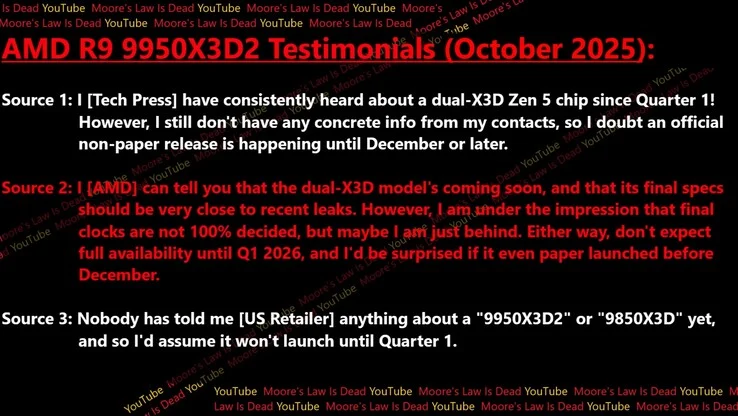
    According to information from various retail, AMD, and “Tech Press” sources, MLID has reported that the actual launch of the Ryzen 9 9950X3D2 is not anticipated until December at the earliest. An insider from AMD mentioned that the Ryzen 9 9950X3D2 is “coming soon,” but it’s believed that it won’t be available in stores until the first quarter of 2026. This insider also stated that the specifications that were leaked before are likely to be “close to the final spec.” However, there may be modifications to the clock speeds that AMD has previously reported.

    Retailer Silence and Implications

    In addition, a source from a “US Retailer” allegedly informed MLID that there has been no word concerning the Ryzen 9 9950X3D2 or the Ryzen 7 9850X3D. This adds weight to the expectation of a 2026 launch, as retailers would normally be briefed ahead of time if AMD were planning to introduce the Ryzen 9 9950X3D2 this year.

    Competitive Landscape

    Considering that Intel is rumored to launch the Arrow Lake Refresh desktop CPUs early next year, a Q1 2026 release for both the Ryzen 9 9950X3D2 and Ryzen 7 9850X3D seems probable. AMD might strategically time the release of these new X3D CPUs to divert attention from Intel’s new offerings.

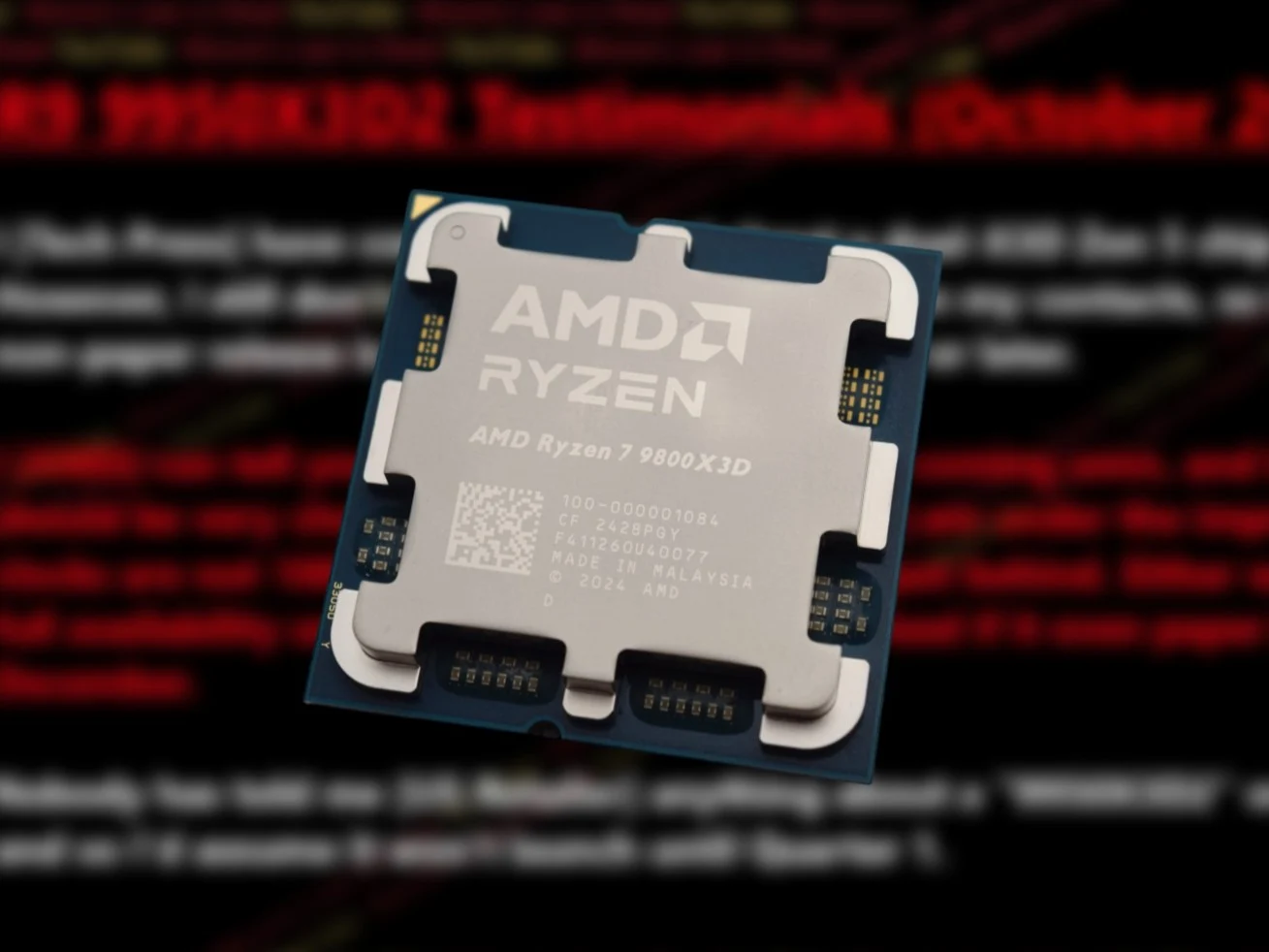
    Currently, AMD holds the title for the fastest gaming CPU with the Ryzen 7 9800X3D (Available on Amazon). Our tests indicate that the Ryzen 7 9800X3D outperforms the Core Ultra 9 285K in gaming by over 30%. The launch of the dual-3D V-Cache Ryzen 9 9950X3D2 and the higher-clocked Ryzen 7 9850X3D could give AMD an even bigger advantage in the gaming sector.

    Regrettably, it seems unlikely that the forthcoming Arrow Lake Refresh CPUs will bridge this performance gap. Thus, we won’t see significant competition in the desktop market until the arrival of Intel Nova Lake.

    Source:
    Link


  • Phil Spencer: Next Xbox Console to be True First-Party Hardware

    Phil Spencer: Next Xbox Console to be True First-Party Hardware

    Key Takeaways

    1. Xbox President Sarah Bond describes the upcoming hardware as “very premium” and “very high-end,” but its exact nature remains uncertain.
    2. Phil Spencer clarified that the ROG Xbox Ally is an “Asus product,” and the next Xbox console will be a first-party Microsoft product.
    3. Spencer envisions a unified Xbox ecosystem connecting console, PC, and cloud, without unique games to attract customers.
    4. There are rumors of a collaboration between Microsoft and AMD on a gaming system using the Magnus APU, potentially resembling a gaming PC.
    5. Spencer reassured that Microsoft is not withdrawing from hardware, but a PC-like Xbox with no exclusive titles could challenge traditional console definitions.


    Xbox President Sarah Bond has recently referred to the upcoming hardware as “very premium” and “very high-end.” However, there remains some uncertainty about whether this system will be similar to the Xbox Series X|S or if it might take the shape of an OEM device. In an interview with Famitsu, Phil Spencer, the CEO of Microsoft Gaming, clarified the differences between the forthcoming Xbox console and the ROG Xbox Ally handheld device.

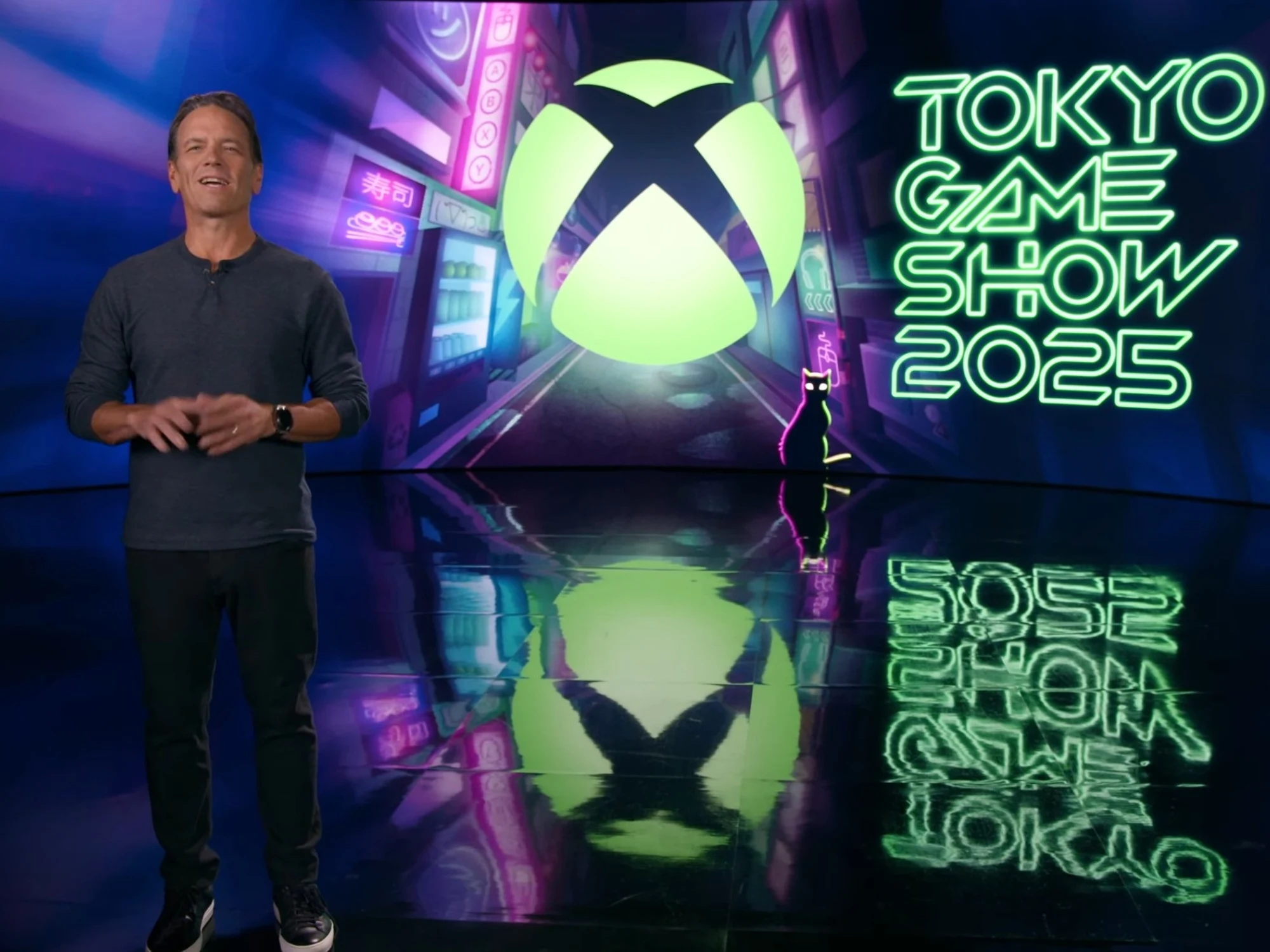
    Spencer’s Insights at the Tokyo Game Show

    During the Tokyo Game Show, Spencer talked about the initiatives to boost Xbox’s visibility in Japan. According to social media reports from Genki, the topic of the next generation of hardware was also discussed. Spencer made it clear that the ROG Xbox Ally is an “Asus product.” He emphasized, “I think the hardware that we, Microsoft, announce as a first-party company will be the next console.” However, he did not provide a specific timeline for when the system will be released.

    The Future of Xbox

    Despite differences from the gaming handheld, Spencer envisions the next-gen Xbox console taking a similar path. He mentioned that the “Xbox software platform will evolve, connecting console, PC, and cloud into one ecosystem.” The ROG Xbox Ally and Xbox Ally X are powered by Windows 11, allowing them to work with Game Pass and platforms like Steam. On the flip side, there won’t be unique games to lure customers into buying the console over its competitors.

    There are whispers that Microsoft and AMD are collaborating on a gaming system that utilizes the Magnus APU. However, insiders like Moore’s Law is Dead report that AMD engineers are carrying most of the weight in this endeavor. Critics speculate that the new Xbox console might resemble a gaming PC, merely dressed in Xbox branding. It could also be significantly pricier than both the Series X and the upcoming PS6.

    Reassurances from Spencer

    Spencer made efforts to calm concerns that Microsoft might be withdrawing from the hardware sector. Yet, if the next Xbox designed by AMD resembles a Windows PC and lacks exclusive titles, it could challenge the traditional understanding of what a first-party system is.


  • Win 5 Monster Hunter Wilds Radeon RX 9070XT GPUs in AMD Giveaway

    Win 5 Monster Hunter Wilds Radeon RX 9070XT GPUs in AMD Giveaway

    Key Takeaways

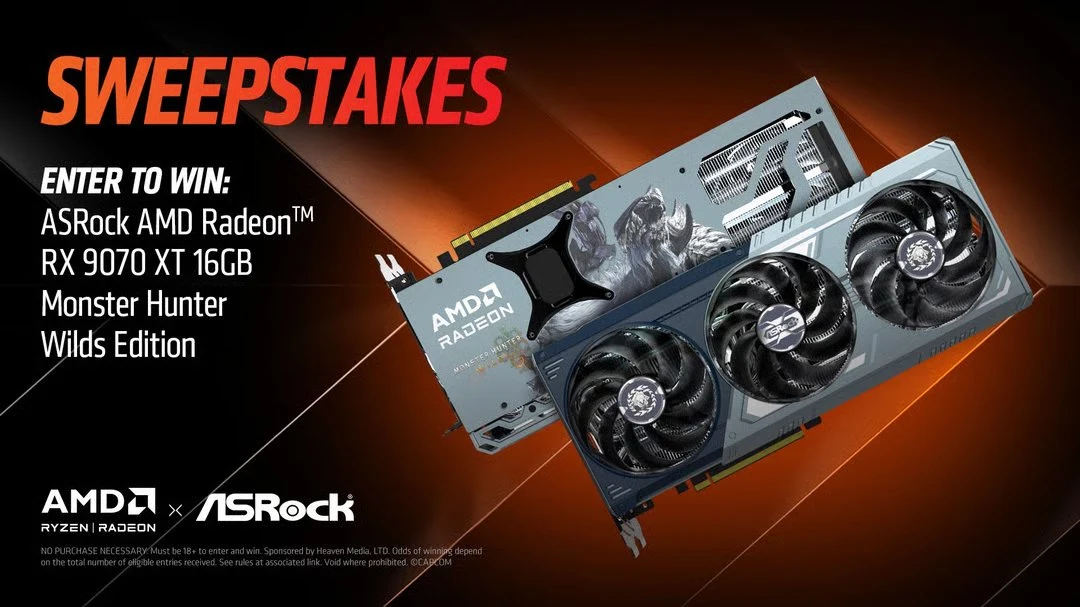
    1. AMD is hosting the ‘AMD x Monster Hunter Wilds Sweepstakes’ giveaway, offering a chance to win one of 5 limited edition ASRock Radeon RX 9070 XT GPUs.
    2. The giveaway is open to participants from multiple countries, including North America, Europe, and Asia, and has about 14 days remaining.
    3. The RX 9070 XT GPU features 16GB of GDDR6 RAM and competes well against Nvidia’s RTX 5070 and RTX 5070Ti.
    4. Participants can earn up to 1200 entries by following AMD, ASRock, and Monster Hunter on social media.
    5. Winners will be contacted within 7 days and must claim their prizes within 5 days, with any import taxes being the winner’s responsibility.


    Gamers who want to get a new GPU without spending a fortune, especially when it comes to the mid to high-range options, might find a glimmer of hope with the latest giveaway from AMD.

    AMD’s Exciting Giveaway

    The giveaway, named ‘AMD x Monster Hunter Wilds Sweepstakes’, is available in multiple countries. It’s open to people living in North America, Europe, the UK, Japan, South Korea, Australia, New Zealand, India, and Indonesia. Participants have a chance to win one of 5 limited edition ASRock Radeon RX 9070 XT Monster Hunter Wilds Edition 16GB GPUs.

    Previous Promotions

    This isn’t the first time AMD has done something related to Monster Hunter: World. Earlier this year, the Santa Clara-based chip maker offered a free copy of the game with certain CPUs, GPUs, and AMD laptops.

    The RX 9070 XT GPU from AMD is often seen as a great value in the graphics card market. It stands out with its 16GB of GDDR6 RAM, impressive performance, and a design that only requires 2 8-pin power connectors.

    Competing in the Market

    Competing directly with Nvidia’s RTX 5070 and RTX 5070Ti, the AMD RX 9070 XT sits nicely in the middle, outperforming the former while matching the latter in VRAM. It is also the fastest RDNA 4 GPU from AMD available at this moment. AMD hasn’t launched a direct competitor to Nvidia’s RTX 5080 or RTX 5090 GPUs with an RDNA 4 solution yet.

    The giveaway has about 14 days remaining as of now and is expected to reach 1.5 million entries. Users can earn up to 1200 entries by following AMD, ASRock, and Monster Hunter on social media.

    Important Details for Winners

    Winners will be contacted within 7 days and must claim their prizes within 5 days. AMD has mentioned that any VAT/GST/Import tax will be the winner’s responsibility, which could be an issue for those in the US due to the ongoing trade tensions with China.

  • Xbox Magnus Specs Leak: AMD 3nm Chip May Outperform PS6

    Xbox Magnus Specs Leak: AMD 3nm Chip May Outperform PS6

    Key Takeaways

    1. Dual-Chiplet Design: The Xbox Magnus APU features a dual-chiplet architecture with a 144 mm² SoC die for CPU and an advanced 264 mm² GPU die, making it the largest console APU to date.

    2. Modular Approach: AMD’s modular strategy allows for shared GPU chiplets between desktop and console, streamlining development and reducing engineering redundancy.

    3. Enhanced Features: The APU includes 70 RDNA 5 compute units, a significant increase in L2 cache, and a hybrid CPU design with high-performance and efficiency cores, optimizing it for gaming.

    4. Power and Performance Expectations: Estimated power consumption ranges from 250 to 350 W, with potential performance exceeding Sony’s console by 15-30%, targeting 4K 144 Hz gaming.

    5. Success Criteria: For Magnus to succeed, it must support backward compatibility, deliver competitive Windows gaming performance, and feature at least 48 GB of GDDR7 memory.


    YouTube channel Moore’s Law Is Dead has released a new episode of Broken Silicon that summarizes everything known about AMD’s Magnus APU, which is widely considered to be the chip for Microsoft’s upcoming Xbox. Earlier videos shared bits of information, but the recent episode combines those leaks with new technical insights.

    Dual-Chiplet Design

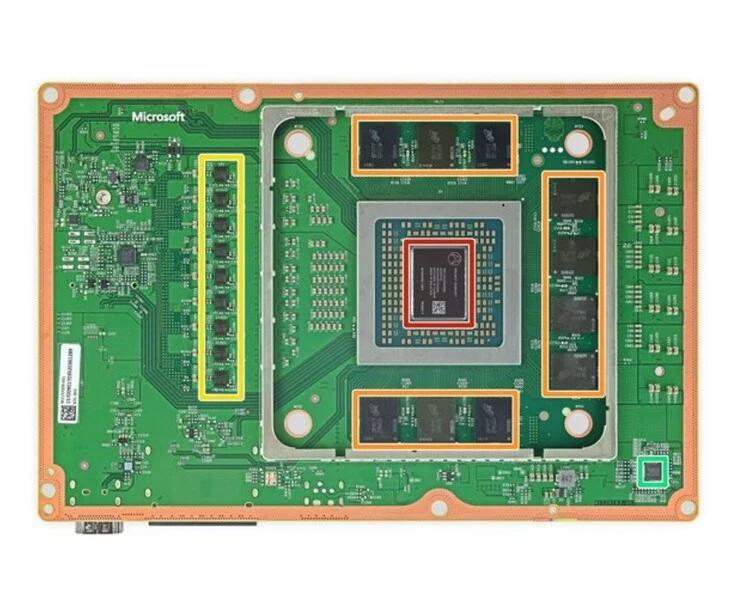
    In the update, podcast host Tom describes the Xbox Magnus APU as a dual-chiplet design that connects two dies using advanced bridge packaging. The first die is a 144 mm² SoC die that contains the CPU cores, NPU, and key I/O components, built using TSMC’s N3P process. The second is a larger 264 mm² GPU die, likely manufactured on TSMC’s N3C or N3P node, which includes the GPU logic and another memory controller. Together, they make up 408 mm² of 3 nm silicon, making the Magnus the largest console APU ever made.

    Modular Approach

    Tom points out that the design reflects AMD’s latest modular strategy, where GPU chiplets are shared between desktop RDNA 5 graphics cards and console platforms. This hardware similarity, he says, should help streamline the development process for both PC and Xbox, while also decreasing AMD’s engineering redundancy.

    The GPU section includes 70 RDNA 5 compute units, with 68 enabled in the final retail version. These are spread across four shader engines, three of which have nine workgroups (18 CUs each) and one smaller engine with eight workgroups (16 CUs), resulting in a deliberately uneven layout. During Hot Chips, AMD allegedly discussed this asymmetric design, confirming that RDNA 4 and newer can effectively share memory across uneven shader clusters without hurting performance. The Magnus APU seems to be one of the first real-world examples of this idea.

    Enhanced Features

    Every shader engine has two arrays, and the GPU is equipped with 24 MB of L2 cache, which is about five times more than what the Xbox Series X has. Although it doesn’t include Infinity Cache, Tom mentions that the larger L2 cache essentially serves a similar role by maintaining bandwidth and enhancing frame stability and ray-tracing performance when paired with the efficient GDDR7.

    On the CPU side, Magnus includes three high-performance Zen 6 cores, each expected to reach close to 6 GHz, along with eight Zen 6C efficiency cores. They share 12 MB of L3 cache. While this cache may appear small for an 11-core setup, Tom argues that this hybrid layout is specifically optimized for gaming: a few strong cores take care of the main game threads, while the efficiency cores handle background tasks. This uneven CPU structure reflects current trends in modern PC architectures too.

    The APU connects through a 192-bit GDDR7 memory interface, allowing for a configuration of up to 48 GB of unified memory. Of this, 16 GB can be allocated as VRAM and 32 GB as system memory, he explains. This combined pool dynamically shares bandwidth between the CPU and GPU, with Tom emphasizing that anything under 40 GB could limit future game development cycles. The integrated NPU is rated for up to 110 TOPS of compute at 6 W, enabling support for Windows Copilot and AI acceleration features.

    Power and Performance Expectations

    Power consumption is estimated to be between 250 and 350 W, depending on clock settings, which might require a three-prong power connector like the one used by the PlayStation 3. Tom speculates that Magnus could start production in 2027, coinciding with the anticipated launch of the PlayStation 6 Orion.

    Tom claims that based on the specifications, Magnus could outperform Sony’s console by about 15–30 percent, or even up to 35 percent if it ships with higher clock speeds and faster GDDR7 memory. He adds that the Xbox is aimed for 4K 144 Hz gaming, while Sony targets 4K 120 Hz, highlighting Microsoft’s goal of providing a more PC-like gaming experience. However, Tom cautions that this enhanced performance could come with a higher price tag. The use of multiple chiplets, increased power consumption, and advanced packaging might push retail prices into the $1,000–$1,500 range, which is significantly above traditional consoles but still competitive with high-end prebuilt gaming PCs.

    Tom concludes that for Magnus to be successful, three criteria need to be met: it must support backwards compatibility across all Xbox generations, provide Windows gaming performance close to SteamOS efficiency, and include at least 48 GB of GDDR7 memory. If these conditions are fulfilled, he believes it could represent a “bridge generation,” a hybrid PC-console that redefines the Xbox experience.

    During the episode, viewer inquiries led to further discussion. One viewer asked if RDNA 5 could exceed Nvidia’s Blackwell GPUs in ray-tracing tasks if raster performance was similar. Tom confirmed: “Yes, of course … RDNA 5 should surpass Blackwell that launches in 2025. My AMD sources have been saying since 2022 that RDNA 5 is where AMD focuses on ray tracing. RDNA 4 wasn’t even the real try; they were just trying to catch up.”

    A different viewer questioned the potential for 3D V-Cache in consoles. Tom dismissed it, saying that well-optimized console games “don’t require as much cache,” and that RDNA 5 already increases L2 capacity five times over current designs to compensate for bandwidth limitations.

    Another viewer inquired if Magnus would include features from PlayStation 6, like Sony’s rumored universal compression tool. Tom suggested that feature equality is highly likely: “I’d expect most features in the PS6 will also be in Magnus, just as most PS5 features were in the Series X. The difference is that Mark Cerny built a better house with the same Lego blocks.” He acknowledged Sony’s hardware team for paying more attention to specialized components like its SSD and I/O controller but argued that both companies fundamentally work from similar AMD building blocks.

    Source:
    Link



  • Criticism of Microsoft Engineers Over AMD’s New Xbox Console Design

    Criticism of Microsoft Engineers Over AMD’s New Xbox Console Design

    Key Takeaways

    1. Microsoft emphasizes its commitment to developing new Xbox hardware, reassuring fans about ongoing console projects despite concerns of a potential cancellation.
    2. AMD is expected to take on most development responsibilities for the new Xbox consoles, with reports suggesting Microsoft’s engineering team may not meet industry standards.
    3. An AMD insider has criticized Microsoft’s engineers, indicating that they may lack the qualifications seen in teams from top tech firms like Nvidia.
    4. The collaboration between AMD and Microsoft differs from Sony’s partnership, where Sony’s lead architect actively works closely with AMD, leading to advancements in AI technology and graphics.
    5. The design and functionality of future Xbox consoles remain uncertain, with potential implications for their performance and integration with AMD’s technology.


    Microsoft has recently reiterated its goal to develop new Xbox hardware in collaboration with AMD. However, according to sources within the chip-making company, AMD will take on most of the development responsibilities. A report from Moore’s Law is Dead shared insights from an insider who holds a negative view of Microsoft’s engineering team.

    Microsoft’s Reassurance to Fans

    In response to speculation about a possibly canceled Xbox console, Microsoft has sought to calm worried fans regarding potential price hikes. The company guarantees that it will introduce “first-party consoles and devices designed, engineered and built by Xbox.” Nevertheless, Moore’s Law is Dead implies that AMD is primarily accountable for the design of these consoles.

    Surprising Insights from AMD Insiders

    Some comments from an AMD insider featured in the report may catch gamers off guard. While the aim is to launch Xbox-branded hardware, the source claims that Microsoft sets expectations for AMD to “carry the workload.” They criticize Microsoft engineers, suggesting that they lack the qualifications to work at leading tech firms like Nvidia. In fact, another employee from AMD questions the presence of Microsoft’s engineers entirely.

    Comparing Microsoft and Sony’s Collaboration with AMD

    Moore’s Law is Dead highlights how the partnership between AMD and Microsoft contrasts with that of Sony. Mark Cerny, who is the lead architect for past and future PlayStation consoles, recently discussed a new agreement with AMD. This collaboration, known as Project Amethyst, aims to enhance AI technology for the PS6 and Radeon GPUs.

    Unlike Microsoft, Cerny and the Sony engineering team work more closely with their AMD counterparts. This cooperation has led to improvements in upscalers such as PSSR and FSR 4, benefiting both PlayStation consoles and graphics cards.

    Future of Xbox Consoles

    At this point, it’s uncertain what the new Xbox consoles will resemble. They might operate more like Windows PCs than the Series X. Regardless, the AMD Magnus APU will play a crucial role in the forthcoming gaming systems. If there are issues between the two companies, it could create obstacles in the development process of these products.

    Source:
    Link


  • PS6 Boosts Ray Tracing Efficiency with AMD’s New GPU Core

    PS6 Boosts Ray Tracing Efficiency with AMD’s New GPU Core

    Key Takeaways

    1. Sony and AMD are collaborating on hardware for upcoming PlayStation consoles, with significant performance improvements expected for the PS6.
    2. Leaks suggest the PS6 may offer up to three times the rasterization performance and twelve times the ray tracing performance of the PS5.
    3. AMD’s new ‘Radiance Cores’ will enhance ray tracing capabilities by offloading tasks from the CPU and GPU, leading to improved performance.
    4. The introduction of Radiance Cores aims to refine the ray tracing pipeline and provide a significant speed boost for graphics processing.
    5. Universal Compression technology will enhance data management for memory bandwidth, potentially benefiting various gaming platforms with AMD System on a Chip (SoC) solutions.


    Sony and AMD are teaming up to create the hardware for the upcoming PlayStation consoles. There have been many leaks about the PS6’s specifications, predicting it could offer up to three times the rasterization performance and twelve times the ray tracing performance compared to the PS5. Recently, Sony and AMD disclosed details about their collaboration, shedding light on the anticipated performance enhancements.

    Insights from AMD

    AMD released a video on its YouTube channel that outlined its collaboration with Sony and what we can expect in the future. In the video, Jack Huynh, AMD’s SVP and GM of the Computing and Graphics Group, was joined by Mark Cerny, the lead architect of the PS5 and PS5 Pro, to discuss the innovative technology set to debut in “a future console.” A major highlight was the introduction of ‘Radiance Cores,’ which are specialized cores designed specifically for ray traversal tasks.

    Advancements in Ray Tracing

    The new Radiance Cores build on the Neural Radiance Caching system for FSR Redstone, acting as a dedicated hardware unit that performs ray tracing and path tracing calculations in real-time. This innovation reduces the workload typically managed by the CPU and GPU shader cores. With Radiance Cores, the CPU can focus more on geometry and simulation tasks, while the GPU can dedicate additional resources to shading and lighting effects.

    Cerny noted that refining the ray tracing pipeline and implementing traversal logic in hardware would result in a “significant speed boost,” along with an extra advantage from having this hardware function independently from the shader cores.

    Universal Compression Technology

    Additionally, Huynh introduced another technological advancement called Universal Compression, which effectively compresses data being sent to memory. This development aims to address GPU memory bandwidth issues that currently affect systems like the PS5 and PS5 Pro. While these consoles utilize Delta Color Compression (DCC) to compress data, it primarily impacts textures and render targets. Universal Compression, however, will conduct a more comprehensive analysis of all data types.

    Although Cerny didn’t specifically confirm that this technology will be integrated into the PS6, he did mention that it will appear in a future console within a few years. This technology won’t be limited to Sony’s consoles; it will be accessible across various gaming platforms that feature an AMD SoC.


  • Intel Foundry to Manufacture Future AMD Chips for Enhanced Performance

    Intel Foundry to Manufacture Future AMD Chips for Enhanced Performance

    Key Takeaways

    1. Intel’s upcoming 14A process is expected to signal a resurgence for the company despite challenges with its 18A technology.
    2. Qualcomm is stepping back from Intel Foundry, while Apple and Nvidia show interest in the 14A development.
    3. AMD is monitoring Intel’s progress, which may help maintain a favorable relationship with the current administration and avoid potential tariffs.
    4. Any partnership between Intel and AMD is unlikely to impact AMD’s reliance on TSMC for its advanced products.
    5. Intel’s 14A technology may offer new opportunities, but its competitiveness against TSMC’s offerings remains uncertain.


    Despite facing challenges with its 18A technology, Intel Foundry’s upcoming 14A process is expected to signal a resurgence for the emerging chip manufacturer. Although Qualcomm has chosen to step back, both Apple and Nvidia reportedly show interest in this development. Additionally, if a report from Semafor is to be believed, Intel’s major competitor, AMD, has also taken notice. This move could potentially help AMD maintain a favorable relationship with the current administration and possibly avoid some upcoming tariffs from President Trump.

    Collaboration Possibilities

    Even if a partnership between Intel and AMD comes to fruition, it is improbable that Team Red will rely on Intel Foundry for its most advanced products. AMD’s Epyc Venice CPUs have already been designed using TSMC’s N2 process, with Zen 6 projected to follow next year. Furthermore, Intel’s 14A technology is not expected to begin risk production until 2027, and if Intel continues to experience difficulties, it is likely that this timeline will be delayed. As a result, AMD will probably keep sourcing its main components, like CPU and GPU tiles, from TSMC, while possibly using Intel Foundry for ancillary parts such as Infinity Fabric and I/O dies.

    Future Implications

    In conclusion, while AMD’s interest in Intel Foundry might indicate a strategic move, the practical use of this collaboration appears limited. The ongoing reliance on TSMC for primary hardware components ensures that AMD’s cutting-edge advancements will remain on their current path. Intel’s 14A node may offer new opportunities, but whether it can compete with TSMC’s offerings remains to be seen. Overall, the landscape of chip manufacturing continues to evolve, with various players making moves in a complex arena.

    Source:
    Link


  • AMD Radeon RX 7700 Launched with 16 GB VRAM Features

    AMD Radeon RX 7700 Launched with 16 GB VRAM Features

    Key Takeaways

    1. AMD has released the Radeon RX 7700 non-XT desktop graphics card, part of the RDNA 3 series.
    2. The RX 7700 features 40 compute units, 18 GB of GDDR6 RAM, and a total board power consumption of 263 watts.
    3. It is designed for 1440p gaming, capable of delivering 60 frames per second in popular titles.
    4. The RX 7700 requires a 700 watt power supply and two 8-pin power connectors, higher than the RX 7700 XT’s requirements.
    5. Pricing and release date for the RX 7700 are not yet disclosed, with initial availability expected in pre-built systems.


    A day after unveiling Ryzen Pro CPUs aimed at businesses, AMD has quietly released another component for desktops. This time, it’s a desktop graphics card, and as expected, it is part of the RDNA 3 series. The graphics card in focus is the Radeon RX 7700 non-XT, which, as the name implies, is a less powerful version of the 7600 XT.

    Specifications Overview

    This GPU features 40 compute units (CUs), 40 Ray Accelerators, 80 AI accelerators, 96 render output processors (ROPs), and a total of 2,560 stream processors. It is equipped with 18 GB of GDDR6 RAM running at 19.5 Gbps (with a memory bandwidth of 624 GB/s) and supported by 40 GB of Infinity Cache. The total board power consumption is rated at 263 watts, and AMD suggests using a 700 watt power supply unit (PSU) along with two 8-pin power connectors. Interestingly, this power requirement is slightly higher than that of the RX 7700 XT, which is listed at 245 watts, even though the RX 7700 is meant to be a less capable option.

    Performance Insights

    AMD advertises the RX 7700 as a 1440p graphics card, capable of delivering a smooth 60 frames per second in popular games like Hogwarts Legacy, Call of Duty: Black Ops 6, Red Dead Redemption 2, Dying Light 2, and Ghost of Tsushima. However, the company has yet to disclose the price for the RX 7700 or its release date. It is expected that this card will first be available in pre-built systems before making its way to the DIY market later on.

    AMD’s latest addition to the graphics card lineup showcases their commitment to providing powerful options for gamers and creative professionals alike.

    Source:
    Link


  • AMD RDNA 5 Desktop GPUs Expected to Have Up to 96 CUs

    AMD RDNA 5 Desktop GPUs Expected to Have Up to 96 CUs

    Key Takeaways

    1. AMD is developing new graphics cards called Alpha Trion 0 (AT0), Alpha Trion 2 (AT2), Alpha Trion 3 (AT3), and Alpha Trion 4 (AT4).
    2. AT2 is expected to outperform AT3 with 4 Shader Arrays (SA), 8 Shader Engines (SE), and 40 Compute Units (CUs).
    3. AT0 may achieve 96 CUs with 16 SEs and 4 SAs, potentially rivaling Nvidia’s top GeForce RTX cards.
    4. An upgraded Radeon RX 9070 GRE is anticipated to be unveiled this fall.
    5. Nvidia is expected to launch the GeForce RTX 50 Super series around the same time, but details on pricing and release dates are unclear.


    A few days ago, Moore’s Law is Dead revealed some information about new RDNA 5 or UDNA-based desktop graphic cards. To summarize, the well-known YouTube channel talked about the Alpha Trion 3 and Alpha Trion 4, which are typically referred to as AT3 and AT4.

    New Developments in AMD’s Graphics Cards

    Now, Kepler_L2 has mentioned that AMD is also developing Alpha Trion 0 (AT0) and Alpha Trion 2 (AT2) to provide more advanced options. Reports suggest that AT2 will outshine AT3 with its configuration of 4 Shader Arrays (SA), 8 Shader Engines (SE), and 40 Compute Units (CUs). In comparison, the current Radeon RX 9060 XT and Radeon RX 9070 XT (currently priced at $719.99 on Amazon) come with 32 CUs and 64 CUs, respectively.

    Performance Expectations

    On the other hand, AT0 is anticipated to achieve 96 CUs with 16 SEs and 4 SAs. If these specifications are accurate, then AMD’s next series might get much closer to the performance level of Nvidia’s top GeForce RTX desktop graphics cards. Furthermore, it’s expected that AMD will unveil an upgraded Radeon RX 9070 GRE this fall. It seems that Nvidia will also be launching the GeForce RTX 50 Super series around the same time. However, details about pricing, release dates, and even the actual names of the products are still unclear at this moment.

    Source:
    Link


  • AMD RDNA 5 Desktop GPU Leak: Mid-Range AT3 with 48 CUs

    AMD RDNA 5 Desktop GPU Leak: Mid-Range AT3 with 48 CUs

    Key Takeaways

    1. AMD’s upcoming high-end mobile APUs, the Zen 6 Medusa Halo and Medusa Halo Mini, will use new iGPU dies, AT3 and AT4, which are also part of the RDNA 5 desktop graphics cards.

    2. The AT4 RDNA 5 GPU will feature 24 Compute Units, a potential 10 MB L2 cache, and a 128-bit LPDDR5X memory controller, with expected VRAM between 12-24 GB.

    3. Performance of the AT4 GPU is anticipated to be between the RTX 3060 and RTX 4060, making it a budget-friendly option by 2027.

    4. The AT3 RDNA 5 GPU will have 48 Compute Units and increased memory bandwidth, with potential VRAM support up to 512 GB, but realistically expected between 16-32 GB.

    5. The AT3’s performance is predicted to be comparable to the RTX 4070 and RX 9070, with significantly improved ray tracing capabilities, making it a strong contender in the market.


    According to the well-known leaker Moore’s Law Is Dead, AMD is set to alter its design approach for the integrated graphics (iGPU) in its upcoming high-end mobile APUs, the Zen 6 Medusa Halo and Medusa Halo Mini. Unlike the existing Strix Halo APUs, the new Medusa models are expected to incorporate the “AT3” and “AT4” iGPU dies, which will also be featured in AMD’s upcoming discrete RDNA 5 desktop graphics cards.

    Specifications of the New GPUs

    The AT4 RDNA 5 GPU is said to include 24 Compute Units, along with a potential 10 MB L2 cache and 8x PCIe Gen 5 lanes. This is particularly interesting for the more affordable card that will utilize this GPU, as the leaker mentions a 128-bit LPDDR5X memory controller instead of the standard GDDR memory commonly found in desktop configurations.

    MLID suggests that the RDNA 5 card equipped with AT4 might use laptop memory and could theoretically support up to 128 GB of VRAM. However, the leaker realistically estimates the VRAM to be between 12-24 GB.

    Performance Expectations

    In terms of performance, MLID believes that the RDNA 5 desktop card with the AT4 will likely perform “roughly” between the RTX 3060 and the RTX 4060. This suggests that by 2027, this desktop board could be very budget-friendly, similar to the current RX 6500 XT.

    On the other hand, the AT3 RDNA 5 GPU is reportedly much stronger than AT4, featuring double the Compute Units and increased memory bandwidth. It is said to come with 48 CUs and a memory controller that could be either 384-bit LPDDR6 or 256-bit LPDDR5X. Like AT4, the AT3-based RDNA 5 desktop card is also expected to leverage laptop LPDDR memory in place of GDDR.

    Future of RDNA 5 GPUs

    Theoretically, the AT3 RDNA 5 board could support up to 512 GB of VRAM, while MLID predicts the actual range for a desktop gaming card will be around 16-32 GB. For performance, MLID anticipates that the AT3 GPU will offer rasterization performance between the RTX 4070 and the RX 9070, along with significantly improved ray tracing capabilities. This range is quite broad, as the RX 9070 is approximately 37% faster than the RTX 4070 based on testing.

    In summary, MLID’s leaked information regarding the cost-effective RDNA 5 GPUs is quite intriguing and ambitious, especially the use of laptop memory over GDDR and the sharing of GPU chiplets with the Medusa Halo APUs. Until further reports validate these claims, it’s wise to approach them with a healthy degree of skepticism.

    Source:
    Link