Tag: Ryzen 9800X3D

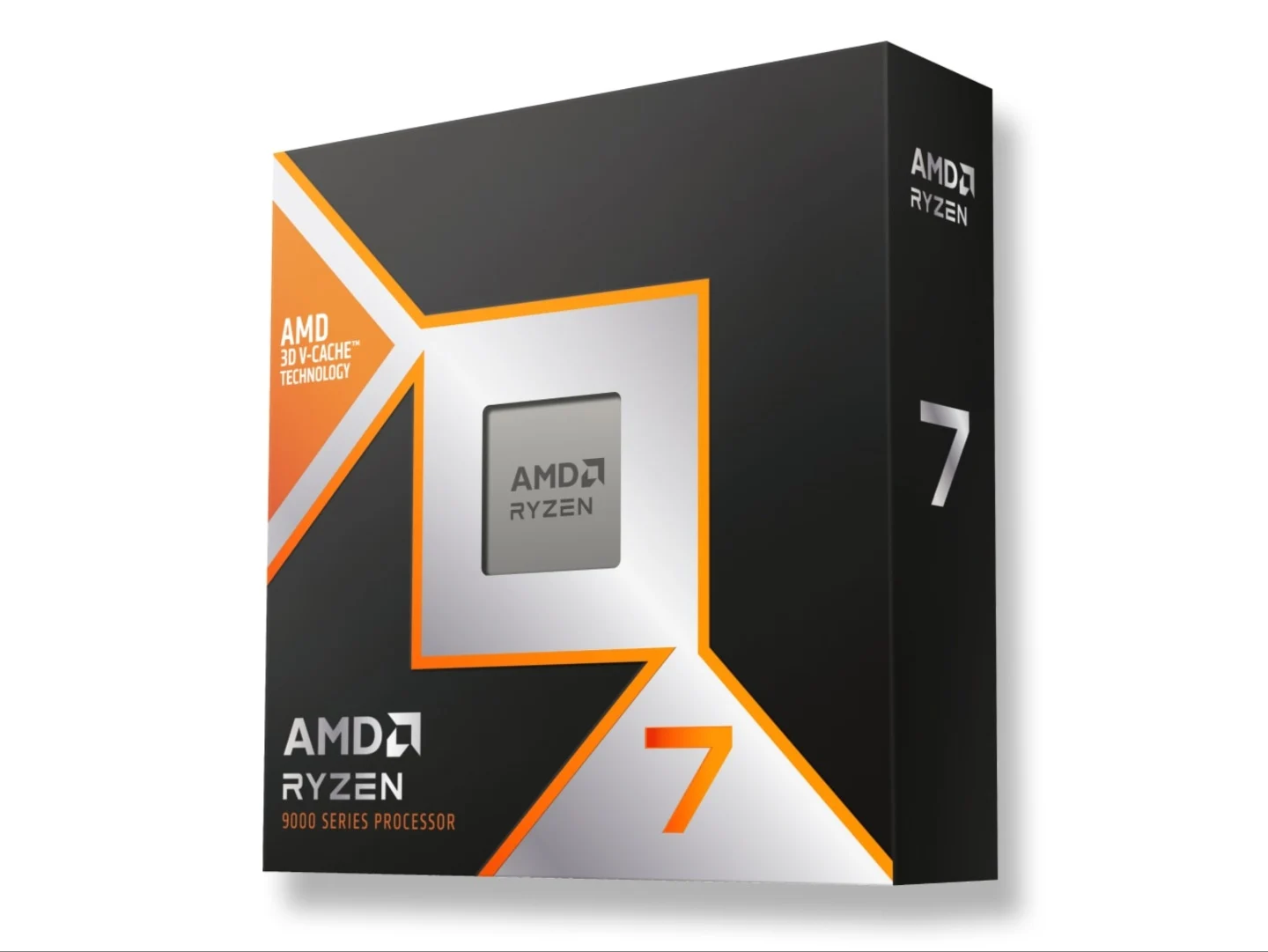
  • AMD Ryzen X3D CPUs Outsell Intel on Amazon in October

    AMD Ryzen X3D CPUs Outsell Intel on Amazon in October

    Key Takeaways

    1. AMD outperformed Intel in the US retail CPU market on Amazon, selling nearly 16,000 units of Ryzen 9800X3D and 7800X3D in October.
    2. AMD captured 83.8% of the market share, while Intel held under 20%.
    3. The Ryzen 5 5500 was the top-selling budget CPU, with about 5,000 units sold; Intel’s best was the Core Ultra 7 265K.
    4. AMD’s average selling price was $272.05, lower than Intel’s average of $308.62, appealing to both performance and budget buyers.
    5. AMD is successfully attracting customers with its range of CPUs, while Intel needs new strategies to improve sales.


    AMD has once again outperformed Intel in the US retail CPU market on Amazon. Data from market analyst TechEpiphanyYT reveals that AMD sold nearly 16,000 units of the Ryzen 9800X3D and 7800X3D during October. These two processors alone surpassed the total sales of Intel’s entire lineup, which managed to sell fewer than 10,000 units.

    Market Share Insights

    In total, AMD secured a commanding 83.8 percent of the market share, leaving Intel with a meager portion of under 20 percent. AMD’s X3D chips were particularly popular, with consumers willing to pay their higher prices. In the budget category, the Ryzen 5 5500 emerged as the top choice, with approximately 5,000 units sold. Intel’s standout performer was the Core Ultra 7 265K, which experienced a sales increase after its price fell below $300.

    Pricing Comparison

    Throughout the month, AMD maintained an average selling price of $272.05, which is significantly lower than Intel’s average of $308.62. These sales figures highlight AMD’s strategy of targeting both performance enthusiasts and budget-conscious buyers. On the other hand, Intel continues to face challenges with its chips from the 12th to 14th generation due to rising production costs.

    Future Outlook

    Sales data from October indicate that AMD is effectively drawing in customers for both its high-performance and more affordable CPUs. In contrast, Intel must find strategies to attract buyers as it seeks to balance efficiency and costs, while AMD’s pricing remains steady.

    Source:
    Link


  • ASRock Addresses AMD Ryzen 9000X3D Issues, Questions Remain

    ASRock Addresses AMD Ryzen 9000X3D Issues, Questions Remain

    Key Takeaways

    1. ASRock faced increasing reports of CPU malfunctions linked to their AM5 motherboards, prompting an official response during Computex 2025.
    2. The company initially denied that BIOS issues caused motherboard failures, but later removed an earlier BIOS version without explanation and released a new version with limited transparency.
    3. ASRock acknowledged three potential causes for failures: user mishandling, memory compatibility problems, and incorrect Precision Boost Overdrive settings.
    4. The warranty policy requires customers to handle CPU replacements through AMD, while ASRock’s motherboards may still be sold with outdated firmware.
    5. Despite the official statement, many concerns remain unresolved, including reports of failures with default settings and the company’s limited investigation into other potential causes.


    Following several months of increasing reports from the community about CPU malfunctions tied to ASRock AM5 motherboards, Gamers Nexus took the initiative to question the company during Computex 2025. Their unexpected discussion with Chris Lee, ASRock’s VP of the motherboard division, provided the first official response from the company, which had previously given only ambiguous and unconvincing statements.

    Issues with BIOS Updates

    In March, ASRock stated that the returned boards with burn damage on Ryzen 9800X3D and 9950X3D CPUs did not show any fault from their end. The firm claimed that a simple cleaning of the socket could restore functionality and denied that the BIOS versions were responsible for the issues. However, shortly after this claim, BIOS version 3.20 was removed from various product pages without any explanation. A new version (3.25) was released during Computex, but again, the transparency was quite limited.

    Acknowledging the Causes

    During the interview, Lee recognized three potential reasons for the failures: user mishandling (like thermal paste contamination), memory compatibility problems that they say have now been fixed with BIOS 3.20, and incorrect Precision Boost Overdrive (PBO) settings within ASRock’s firmware. He mentioned that the 3.25 update reduces the thermal and electrical current thresholds (TDC/EDC) for PBO, which he believes should help to avoid further failures.

    Nonetheless, ASRock’s position is still troubling. The company insists that not one motherboard has been identified as defective, claiming that all failures stem from CPU issues, user mistakes, or BIOS configurations. For those customers who faced shutdowns or noticeable CPU pad damage even without activating PBO, this rationale feels unconvincing. When asked, Lee acknowledged that ASRock has not looked into other possible causes like VSOC misbehavior, nor did he offer any specific details on changes to current values for any particular board.

    Warranty and Customer Responsibility

    Lee stated that ASRock’s warranty policy includes round-trip shipping for motherboards but directs customers to AMD for CPU replacements. He also confirmed that boards currently available in retail may still have outdated firmware, which places the responsibility of performing BIOS updates on the customers themselves.

    While it is a step forward that ASRock finally provided an official statement, many crucial concerns still remain unresolved. The communication from the company up to this point has been quite lacking, and the root causes of the failures might go beyond just aggressive PBO tuning. Reports of failures occurring even with default settings, lightly scorched sockets, and inconsistencies in CPU performance all imply that ASRock’s explanations are, at best, incomplete.

    Source:
    Link

  • ASRock BIOS Update Fixes Ryzen 9000 Series Boot Problems

    ASRock BIOS Update Fixes Ryzen 9000 Series Boot Problems

    Key Takeaways

    1. ASRock has released a BIOS update (3.20) to address boot issues with Ryzen 9000 series CPUs, especially the Ryzen 9800X3D, on various motherboards.
    2. Users have reported similar boot problems with motherboards from other brands like Gigabyte, MSI, and Asus, but most complaints are from ASRock users.
    3. Severe cases of CPU failures during boot with the 9800X3D on ASRock motherboards have been acknowledged, prompting users to report their experiences.
    4. ASRock Japan linked the boot issues to memory compatibility problems, with at least 40 reported incidents across multiple motherboard models.
    5. The BIOS update aims to improve boot stability for AMD 9000 Series CPUs, specifically targeting the issues mentioned by users.


    Several users have shared their troubles with booting their ASRock motherboards alongside Ryzen 9000 series CPUs on the ASRock subreddit. In response, the company has launched a BIOS update aimed at fixing these problems. The 3.20 update has been rolled out for various X870, B850, B650, and A620 motherboards, specifically targeting the Ryzen 9000 series, focusing on the Ryzen 9800X3D, which was frequently mentioned in complaints.

    Reports on Other Brands

    Users have also reported similar boot issues with motherboards from Gigabyte, MSI, and Asus, but most of the complaints have come from ASRock board owners. The ASRock subreddit hosts a dedicated thread called “9800X3D Failures/Deaths Megathread,” where moderators have been addressing the concerns of the users. The problems related to instability and failures involving the Ryzen 9800X3D have been recognized, and the initial recommendation was to revert to an earlier BIOS version.

    Severe Cases Noted

    Some users faced severe issues, with their 9800X3D CPUs supposedly failing during the boot process when used with an ASRock motherboard. The moderators at ASRock acknowledged these serious cases and provided a form for users to report their experiences for further examination.

    Now, the company has introduced the 3.20 Beta update for AM5 series motherboards, which is anticipated to resolve these concerns. While ASRock global hasn’t disclosed the specific reasons behind these boot problems, ASRock Japan has attributed them to memory compatibility issues, mentioning that there have been at least 40 reported incidents. The motherboards affected include two models of B650M Pro, three A620M, eleven B850, and seven X870 models. The release note simply states, “Improve minority proportion of AMD 9000 Series CPU boot issues.”

    Source:
    Link