Tag: ASRock

  • ASRock Launches AI BOX-A395 Mini Workstation with Ryzen AI Max+ 395

    ASRock Launches AI BOX-A395 Mini Workstation with Ryzen AI Max+ 395

    Key Takeaways

    1. ASRock’s new AI BOX-A395 marks a renewed collaboration with AMD, featuring the Ryzen AI Max+ 395 on the Strix Halo platform for AI inference tasks.
    2. The AI BOX-A395 includes 16 Zen 5 cores, 32 threads, and an advanced XDNA 2 NPU, providing 50 TOPS for inference and performance comparable to an Nvidia RTX 4070 for rendering and gaming.
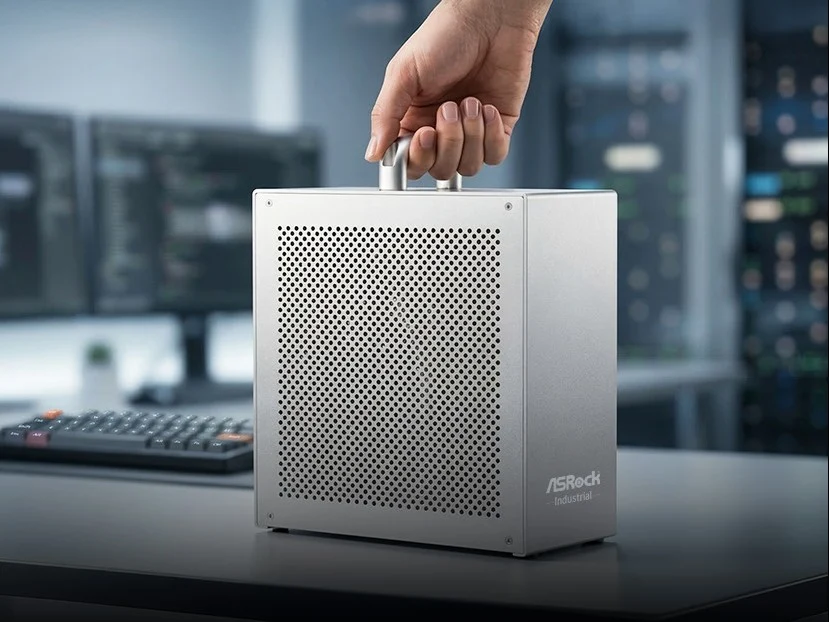
    3. Its unique design features a sleek aluminum body with a handle for portability and a six-heatpipe cooling system for optimal airflow, along with a dual BIOS setup for enhanced security.
    4. The device offers extensive connectivity options, including multiple USB ports, HDMI, DisplayPort outputs, and advanced networking capabilities with 2.5 Gbps and 10 Gbps NICs.
    5. The expected price for the AI BOX-A395 configuration with up to 128 GB LPDDR5X RAM and 2 to 4 TB NVMe SSD storage is around $4,000, though ASRock has not confirmed pricing or availability.


    ASRock has been one of the few mini PC manufacturers that didn’t reveal any small form-factor (SFF) models with AMD’s Ryzen AI Max+ 395 last year. This can be attributed to their strong partnership with Intel. However, this year marks a new beginning as ASRock’s Industrial division is re-establishing its collaboration with AMD, announcing a new product called the AI BOX-A395.

    Compact Workstation for AI Tasks

    The AI BOX-A395 is promoted as a portable workstation-class small form-factor PC which is built on AMD’s Strix Halo platform, specifically aimed at AI inference applications. It boasts 16 Zen 5 cores along with 32 threads, and the advanced XDNA 2 NPU that provides an impressive 50 TOPS for inference tasks. Additionally, the Ryzen AI Max+ 395 is equipped with a Radeon 8060S integrated GPU, which matches the performance of an Nvidia RTX 4070 laptop GPU, proving to be an excellent option for rendering and can also serve as a dependable GPU for 1080p gaming.

    Unique Design and Features

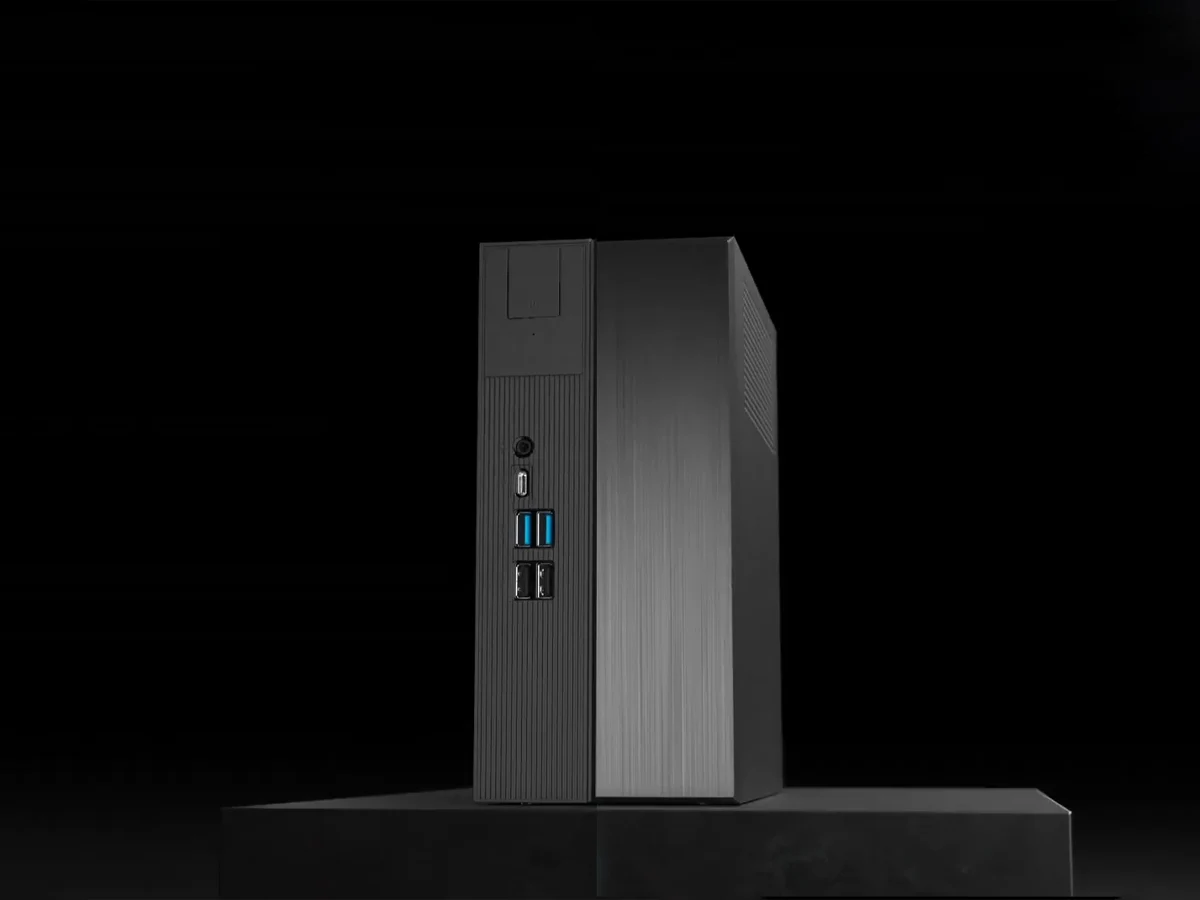
    What makes the AI BOX-A395 unique compared to other Strix Halo mini PCs is its sleek aluminum body, which includes a convenient handle for easy portability. The aluminum casing dimensions are 200 x 100 x 232 mm (7.87 x 3.94 x 9.13 inches). Inside, it features a six-heatpipe cooling system with a copper foundation, designed for optimal airflow. ASRock has also included an internal power supply. A standout feature usually seen in business and enterprise systems is the dual BIOS setup, which adds an extra layer of security and stability with a backup BIOS.

    Connectivity Options and Pricing Estimates

    The connectivity options offered are comparable to other similar devices, featuring 2x USB4, 1x USB-C 3.2 Gen 2, 2x USB-A 3.2 Gen 2, and 2x USB 2.0 ports. It also has 2x HDMI 2.1 and 3x DP 2.1 video outputs, along with mic-in and audio-out jacks. Networking capabilities are supported by 2.5 Gbps and 10 Gbps NICs, plus a Wi-Fi 7 + BT 5.4 M.2 card.

    Given the ongoing RAM and storage shortages, the expected price for this model is around $4,000. This is for the configuration that comes with a maximum of 128 GB LPDDR5X-8000 RAM and between 2 to 4 TB of PCIe 4.0 NVMe SSD storage arranged in a RAID 0/1 setup, even though ASRock hasn’t shared details about pricing or availability yet.

    Source:
    Link


  • ASRock Responds to AMD Ryzen 9000 CPU Damage Concerns

    ASRock Responds to AMD Ryzen 9000 CPU Damage Concerns

    Key Takeaways

    1. ASRock has acknowledged ongoing issues with Ryzen 9000 CPUs, which can heat up excessively and cause visible damage.
    2. Despite BIOS updates, the heating problems persist, and ASRock is investigating the situation without providing detailed technical explanations.
    3. User feedback is crucial for ASRock, and the company encourages customers to report technical issues to their support team.
    4. There have been over 260 reports of Ryzen 9000 chips failing on ASRock motherboards, indicating a significant concern for users.
    5. ASRock is collaborating with AMD to improve system performance and stability while reviewing the situation closely.


    It’s rare for big tech firms to really take note of what users are saying, unless the complaints become super loud. After two weeks of not saying much since Asus talked about AM5 CPU problems, ASRock has finally shared its thoughts on the situation as well. To put it in perspective, the company had earlier blamed the issues on wrong settings and had rolled out BIOS updates.

    Known Issue with Ryzen 9000 CPUs

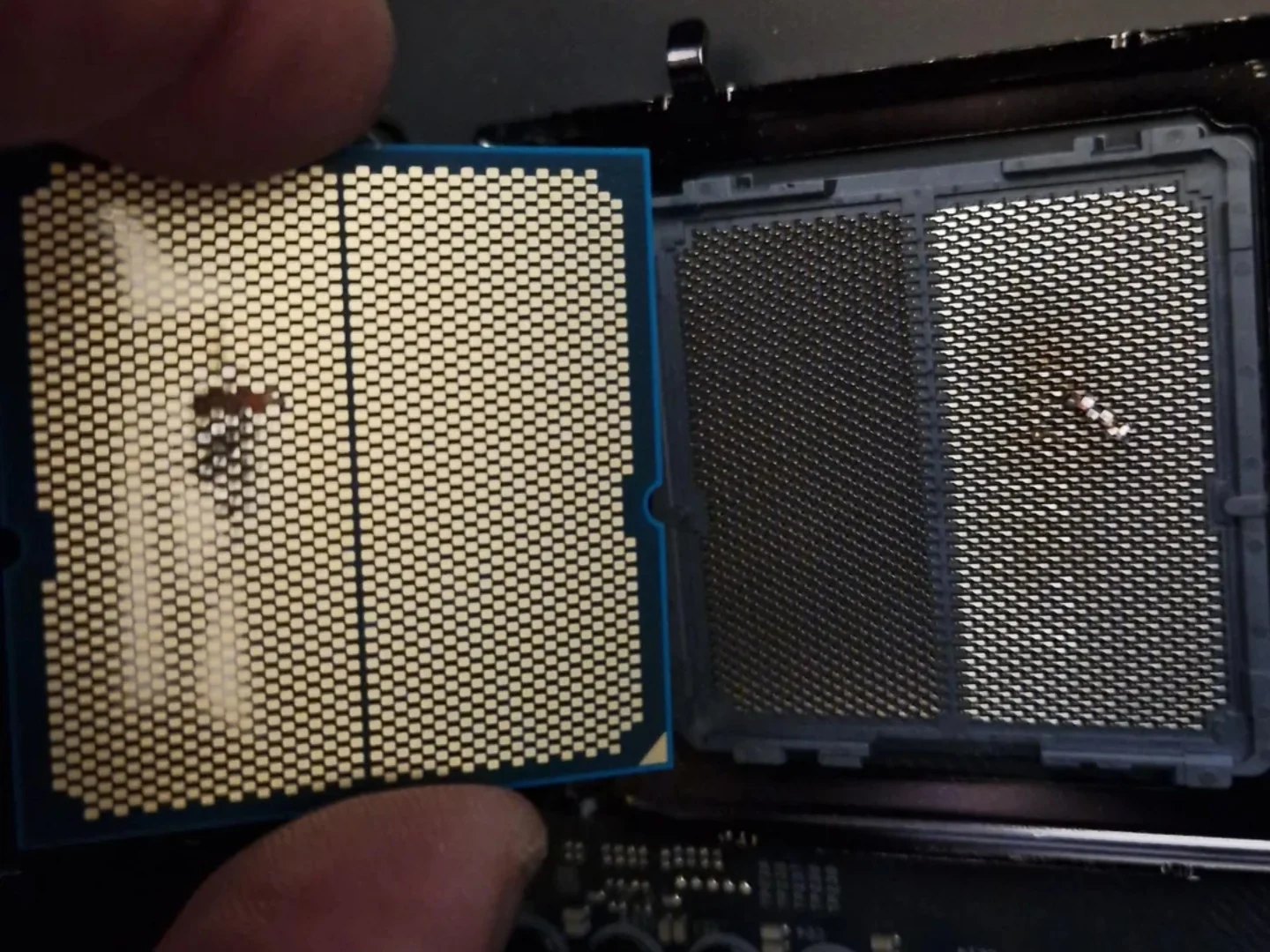
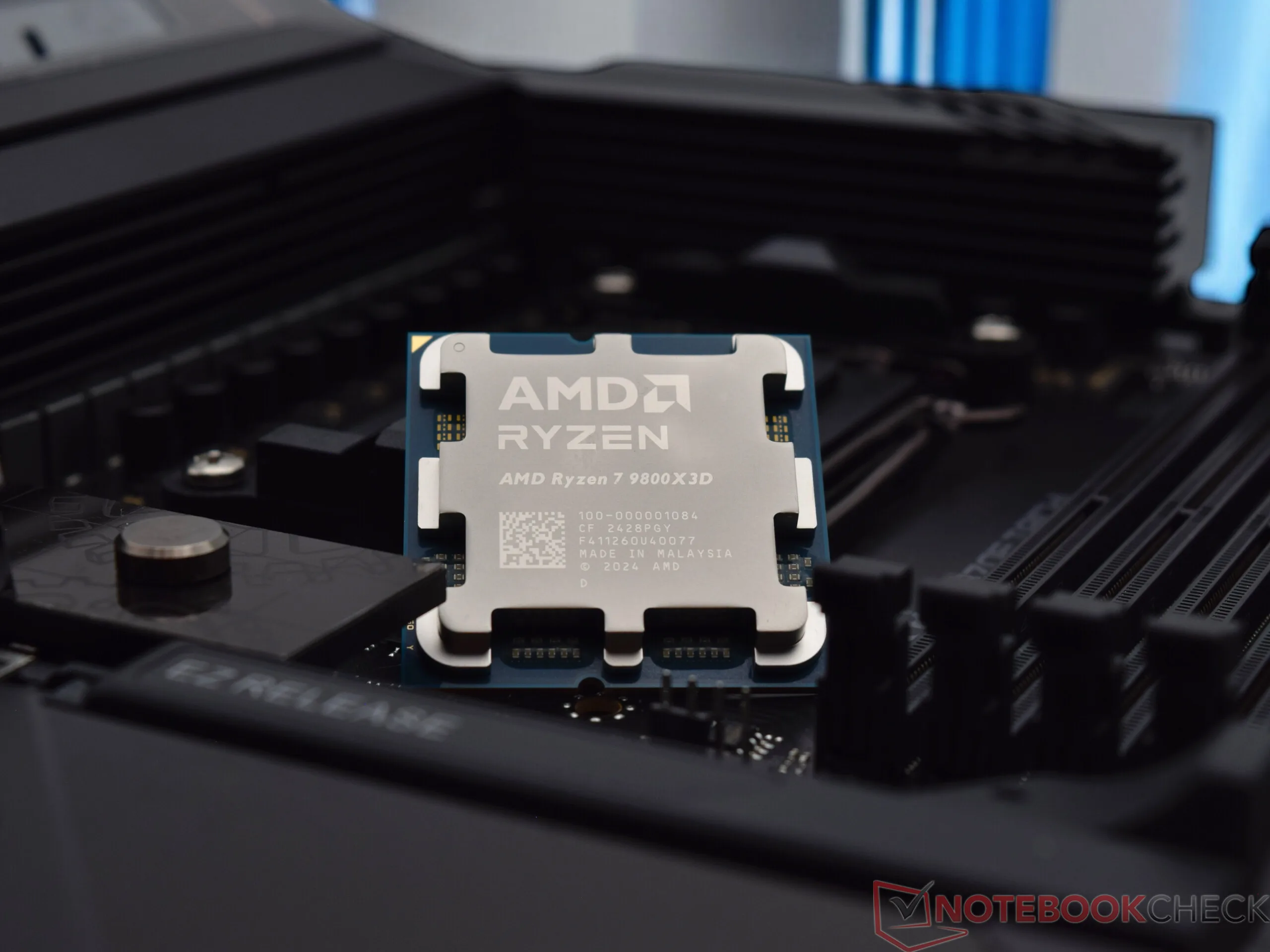
    This problem is well-known and has been mentioned many times on various forums. Basically, it seems that some Ryzen 9000 CPUs heat up so much that they leave visible heat damage on both the socket and the delicate side of the CPU. However, this doesn’t mean that the Ryzen 9000 chips are bad in any way — Puget Systems’ yearly report praised the Ryzen 9000 series for having one of the lowest failure rates in the market.

    Ongoing Concerns Despite BIOS Updates

    Even after the BIOS updates were released, the issue still pops up from time to time. Like Asus, ASRock didn’t give any detailed technical reasons for the problems and only mentioned that they’re looking into it and checking different options. They also encouraged users who are affected to get in touch with their support team. The company’s official statement is shown below:

    ASRock is keeping a close watch on the latest talks about the performance and behavior of AMD Ryzen™ 9000 series processors on ASRock AMD platforms. In response to these claims, we have started extensive internal reviews and strict verification processes. We are continuously collaborating with AMD to validate system performance across a wide range of hardware setups, while also optimizing BIOS and boosting overall system stability.

    User Feedback is Important to ASRock

    ASRock really values what users say as a key part of our ongoing improvements. Customers facing technical issues or looking for more help are encouraged to reach out to the ASRock Technical Support Department. We are dedicated to providing high-performance products that uphold the highest quality and performance standards.

    As noted by VideoCardz, there have been over 260 reports of expensive Ryzen 9000 chips — including X3D models — failing in ASRock motherboards. While it might seem like a small percentage of the total number of these systems out there, the number is still significant enough to be seen as a serious problem affecting the platform.

    Source:
    Link


  • New ASRock Mini PC with AMD Ryzen CPU and dGPU Support

    New ASRock Mini PC with AMD Ryzen CPU and dGPU Support

    Key Takeaways

    1. The ASRock DeskSlim X600 mini PC will support AMD’s AM5 desktop processors, including the Ryzen 7000 to 9000 series, but has a maximum TDP of 65W.
    2. It allows for a low-profile, dual-slot discrete GPU, making it suitable for compact gaming setups.
    3. The pre-configured systems have a maximum PSU of 330W, important for users planning to add a discrete GPU.
    4. The mini PC features four DDR5 slots, supporting up to 256 GB of RAM.
    5. It includes two M.2 2280 slots for PCIe Gen 5×4 and Gen 4×4 SSDs, along with two SATA ports for enhanced storage options.


    ASRock is preparing to introduce a new line of mini PCs, which includes the AMD-powered DeskSlim X600. A leaked specification sheet reveals that this compact computer will support AM5 desktop processors, ranging from the Ryzen 7000 series up to the 9000 series.

    CPU Compatibility

    According to the spec sheet, the mini PC can accommodate CPUs with a maximum TDP of 65W, which means high-end models like the Ryzen 7 9800X3D won’t be compatible. It also supports a low-profile, dual-slot discrete GPU, making the DeskSlim X600 an attractive option for those looking to create a compact gaming PC similar to a Steam Machine.

    PSU and RAM Support

    It’s important to note that ASRock specifies a maximum of 330W for the PSU in pre-configured systems, which is something to consider before adding a discrete GPU (like the ASUS RTX 5060 LP BRK currently priced at $345.15 on Amazon). Additionally, the spec sheet lists four DDR5 slots, allowing for a total of up to 256 GB of RAM.

    Storage and Connectivity

    For storage, the mini PC includes two M.2 2280 slots—one supporting PCIe Gen 5×4 and the other compatible with Gen 4×4 SSDs. There are also two SATA ports running at 6 Gb/s. The DeskSlim X600 will offer a well-rounded array of ports, enhancing its functionality.

    Based on these specifications, it appears the DeskSlim X600 will be a slightly modified version of the DeskMini X600 that was released in July 2025. However, the actual size of the mini PC remains uncertain, and that detail will be revealed upon its official launch.

    Source:
    Link


  • ASRock Motherboard Achieves 3 CPU Killstreak with Ryzen 9700X

    ASRock Motherboard Achieves 3 CPU Killstreak with Ryzen 9700X

    Key Takeaways

    1. An ASRock B850 Pro RS motherboard has been linked to the failure of three Ryzen CPUs, raising concerns among users.
    2. The first two CPUs were bought without warranties, leaving the user unable to return them after failure.
    3. ASRock inspected the motherboard after the first two incidents and deemed it fine, attributing the issues to potentially faulty CPUs from AliExpress.
    4. This incident is not isolated; there have been previous reports of ASRock motherboards damaging Ryzen CPUs, prompting BIOS updates from the company.
    5. The situation highlights the need for ASRock to address the reliability issues to maintain consumer trust and avoid negative perceptions.


    Unfortunately, an ASRock motherboard has been linked to three damaged Ryzen CPUs, as reported by a frustrated user on a Korean forum. What’s intriguing is that ASRock had inspected the motherboard and deemed it fine after the first two CPUs were affected.

    User’s Experience

    The user, known as ‘OnOr’, shared on the Quasar Zone forum that their ASRock B850 Pro RS motherboard has now taken a third Ryzen 9700X CPU. The first two CPUs were bought from AliExpress in February without any warranty, which meant the user couldn’t return or exchange them. The third CPU, however, was purchased from a local store called Compuzone in August.

    After the failure of the third CPU, the user managed to get it serviced but is now left questioning whether they should have replaced the motherboard after the first two incidents. After the initial two CPUs stopped working, the user had sent the motherboard to ASRock for a check-up. At that time, the company stated that the board was fine and that many faulty CPUs could be found on AliExpress. The user also claimed they kept their BIOS updated, ran the CPU with stock settings, and didn’t enable XMP.

    Previous Incidents

    This isn’t the first time an ASRock motherboard has been reported to damage Ryzen CPUs. Earlier in February, ASRock released a BIOS update for its X870, B850, B650, and A620 motherboards to address complaints from users about Ryzen 7 9800X3D CPUs failing. In March, another Ryzen 7 9800X3D was reported to have been damaged by an MSI X870E Tomahawk WiFi motherboard, indicating that this issue isn’t exclusive to ASRock. Furthermore, in April, a Ryzen 9 9950X3D was lost due to an ASRock X870 motherboard.

    Conclusion

    This new incident highlights the ASRock B850 Pro RS as responsible for three CPU failures, a matter that ASRock needs to take very seriously if they wish to counter the growing narrative of ‘stay away from ASRock motherboards.’

    Source:
    Link


  • ASRock L-Shaped PCIe 12V-2×6 Cable with NTC Sensor Prevents Melting

    ASRock L-Shaped PCIe 12V-2×6 Cable with NTC Sensor Prevents Melting

    Key Takeaways

    1. Incidents of damage to Nvidia’s RTX 50 series GPUs are linked to the new 12VHPWR power cable design.
    2. ASRock has introduced a new 12V-2×6 power cable with an L-shaped connector and built-in NTC sensor for better protection.
    3. AMD continues to use the traditional 8-pin connector for its reference model, while some partners have adopted the newer 12VHPWR design.
    4. The new ASRock cable can handle up to 600W and is designed to prevent sharp bends at the GPU end.
    5. The NTC sensor in the cable only works with ASRock power supply units, limiting its functionality with other brands.


    There have been a number of incidents involving damage to Nvidia’s RTX 50 series GPUs, often linked to either the PSU or the GPU itself, with the new 12VHPWR design being blamed. After the power cable for the Radeon RX 9070 XT GPU melted, ASRock took action and introduced a new cable designed to enhance protection against such issues. This new 12V-2×6 cable features an L-shaped connector along with a built-in NTC sensor.

    AMD’s Design Choices

    AMD has opted not to adopt this new design, sticking to the traditional 8-pin connector for its reference model. However, some partners, like ASRock, have embraced the newer 12VHPWR connector. While this connector simplifies the setup by combining three cables into one, it has also faced similar issues, affecting certain Nvidia RTX 50 series GPUs. Recently, a Reddit user reported that the power cable connector for their ASRock Radeon RX 9070 XT Taichi OC card melted at the GPU end, but thankfully, the connector on the card itself remained intact.

    ASRock’s New Solution

    It seems ASRock was already preparing for this situation, as they have launched the 12V-2×6 power cable featuring a NTC sensor and an L-shaped design. The NTC sensor tracks the temperature and relays information to the PSU for safe functioning. However, this feature is exclusively compatible with ASRock Taichi and Phantom Gaming PSUs. The new cable is also compatible with 12VHPWR connectors and can handle up to 600W.

    The L-shaped design helps prevent the cable from bending at sharp angles at the GPU end, while also lending a neater appearance to the overall build. The connectors are colored green and utilize 16 AWG (American Wire Gauge) size, along with HCS (High-Current System) terminals made from 94V-0 plastic. ASRock provides a 2-year limited warranty, assuming there are no user mistakes, such as inserting the connector incorrectly. The green pins should aid in visibility, helping to ensure they are fully inserted.

    Compatibility and Limitations

    Though the cable is compatible with all PSUs, the interaction between the NTC sensor and the PSU is restricted to ASRock models only.

    Source:
    Link


  • Radeon 9060 XT GPUs Available Online Near MSRP Prices

    Radeon 9060 XT GPUs Available Online Near MSRP Prices

    Key Takeaways

    1. Performance Leaks: The Radeon RX 9060 XT has seen leaks indicating its performance is comparable to the RX 7700 XT.

    2. Confirmed Pricing: AMD’s suggested prices are $299 for the 8 GB model and $349 for the 16 GB model, with some retailer listings slightly higher.

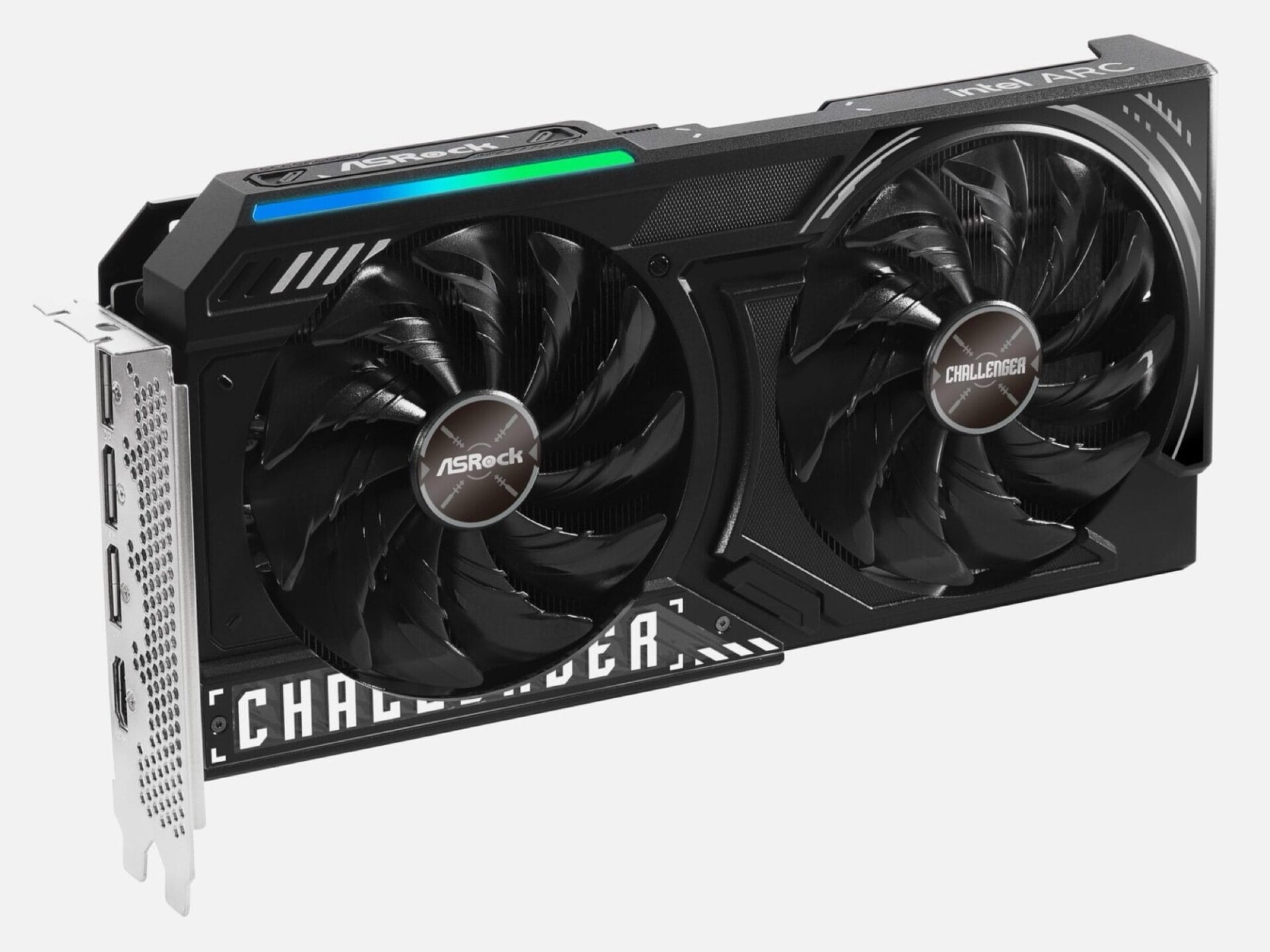
    3. Retailer Listings: Central Computers in California has listed ASRock Radeon RX 9060 XT models, showing prices of $320 for the 8 GB Challenger and $370 for the 16 GB version.

    4. Series Variants: The Challenger series features dual-fan cooling, while the Steel Legend series has triple-fan solutions and higher boost clocks.

    5. Launch Date: The official launch is set for June 5, with potential updates on pricing expected around that time from various retailers.


    With the release date approaching, the Radeon RX 9060 XT has seen several leaks about its performance. Specifications for the board partner cards are mostly confirmed, and a retailer in the US has revealed the actual prices for these cards. AMD has set the prices at $299 for the 8 GB model and $349 for the 16 GB model, and the new retailer listings align closely with these figures.

    Retail Listings

    A California retailer, Central Computers, has put up three models of the ASRock Radeon RX 9060 XT for sale: two Challenger models and one Steel Legend model. The board partner has disclosed that both the Challenger and Steel Legend series will come in 8 GB and 16 GB versions, complete with specifications. According to the listings, the 8 GB Challenger is priced at $320, while the 16 GB version is listed at $370, which is $20 above AMD’s suggested retail price.

    Pricing Variants

    In contrast, the 16 GB Steel Legend variant is marked at $390, indicating that the price for the 8 GB Steel Legend could be around $350.

    Interestingly, there are no images associated with these listings, which might imply that this is not the final product detail page. As a result, prices could vary. Listings on platforms like Amazon, Newegg, and MicroCenter will likely provide a more accurate picture of the RX 9060 XT’s retail price, with updates expected either right before or on the launch date, June 5.

    Specifications Breakdown

    In terms of specs, the Challenger series features black GPUs equipped with dual-fan cooling systems, while the Steel Legend series comes in white with triple-fan solutions. The Steel Legend cards offer a slightly higher boost clock, reaching up to 3,320 MHz, compared to 3,290 MHz for the Challenger models.

    Recently, some gaming and synthetic benchmarks for the XFX Swift Pro Gaming RX 9060 XT surfaced online, showing performance comparable to the pricier, older RX 7700 XT.

    Source:
    Link

  • ASRock Addresses AMD Ryzen 9000X3D Issues, Questions Remain

    ASRock Addresses AMD Ryzen 9000X3D Issues, Questions Remain

    Key Takeaways

    1. ASRock faced increasing reports of CPU malfunctions linked to their AM5 motherboards, prompting an official response during Computex 2025.
    2. The company initially denied that BIOS issues caused motherboard failures, but later removed an earlier BIOS version without explanation and released a new version with limited transparency.
    3. ASRock acknowledged three potential causes for failures: user mishandling, memory compatibility problems, and incorrect Precision Boost Overdrive settings.
    4. The warranty policy requires customers to handle CPU replacements through AMD, while ASRock’s motherboards may still be sold with outdated firmware.
    5. Despite the official statement, many concerns remain unresolved, including reports of failures with default settings and the company’s limited investigation into other potential causes.


    Following several months of increasing reports from the community about CPU malfunctions tied to ASRock AM5 motherboards, Gamers Nexus took the initiative to question the company during Computex 2025. Their unexpected discussion with Chris Lee, ASRock’s VP of the motherboard division, provided the first official response from the company, which had previously given only ambiguous and unconvincing statements.

    Issues with BIOS Updates

    In March, ASRock stated that the returned boards with burn damage on Ryzen 9800X3D and 9950X3D CPUs did not show any fault from their end. The firm claimed that a simple cleaning of the socket could restore functionality and denied that the BIOS versions were responsible for the issues. However, shortly after this claim, BIOS version 3.20 was removed from various product pages without any explanation. A new version (3.25) was released during Computex, but again, the transparency was quite limited.

    Acknowledging the Causes

    During the interview, Lee recognized three potential reasons for the failures: user mishandling (like thermal paste contamination), memory compatibility problems that they say have now been fixed with BIOS 3.20, and incorrect Precision Boost Overdrive (PBO) settings within ASRock’s firmware. He mentioned that the 3.25 update reduces the thermal and electrical current thresholds (TDC/EDC) for PBO, which he believes should help to avoid further failures.

    Nonetheless, ASRock’s position is still troubling. The company insists that not one motherboard has been identified as defective, claiming that all failures stem from CPU issues, user mistakes, or BIOS configurations. For those customers who faced shutdowns or noticeable CPU pad damage even without activating PBO, this rationale feels unconvincing. When asked, Lee acknowledged that ASRock has not looked into other possible causes like VSOC misbehavior, nor did he offer any specific details on changes to current values for any particular board.

    Warranty and Customer Responsibility

    Lee stated that ASRock’s warranty policy includes round-trip shipping for motherboards but directs customers to AMD for CPU replacements. He also confirmed that boards currently available in retail may still have outdated firmware, which places the responsibility of performing BIOS updates on the customers themselves.

    While it is a step forward that ASRock finally provided an official statement, many crucial concerns still remain unresolved. The communication from the company up to this point has been quite lacking, and the root causes of the failures might go beyond just aggressive PBO tuning. Reports of failures occurring even with default settings, lightly scorched sockets, and inconsistencies in CPU performance all imply that ASRock’s explanations are, at best, incomplete.

    Source:
    Link

  • ASRock DeskMini Q870: Compact Mini PC with Intel Core Ultra 9 285

    ASRock DeskMini Q870: Compact Mini PC with Intel Core Ultra 9 285

    Key Takeaways

    1. ASRock is expanding its DeskMini lineup with new Mini-STX systems that use compact motherboards, smaller than Mini-ITX.
    2. The new Q870M-STX motherboards support powerful Intel Arrow Lake processors, like the Core Ultra 9 285.
    3. The Mini-STX systems are compact, measuring 155 x 155 x 80 mm and having a case capacity of 1.92 liters.
    4. Connectivity options likely include Thunderbolt 4, USB-C, USB-A, DisplayPort, HDMI 2.1, and a 2.5 GbE LAN port.
    5. Memory support includes up to 128 GB DDR5 RAM, and the system features RGB lighting for visual appeal.


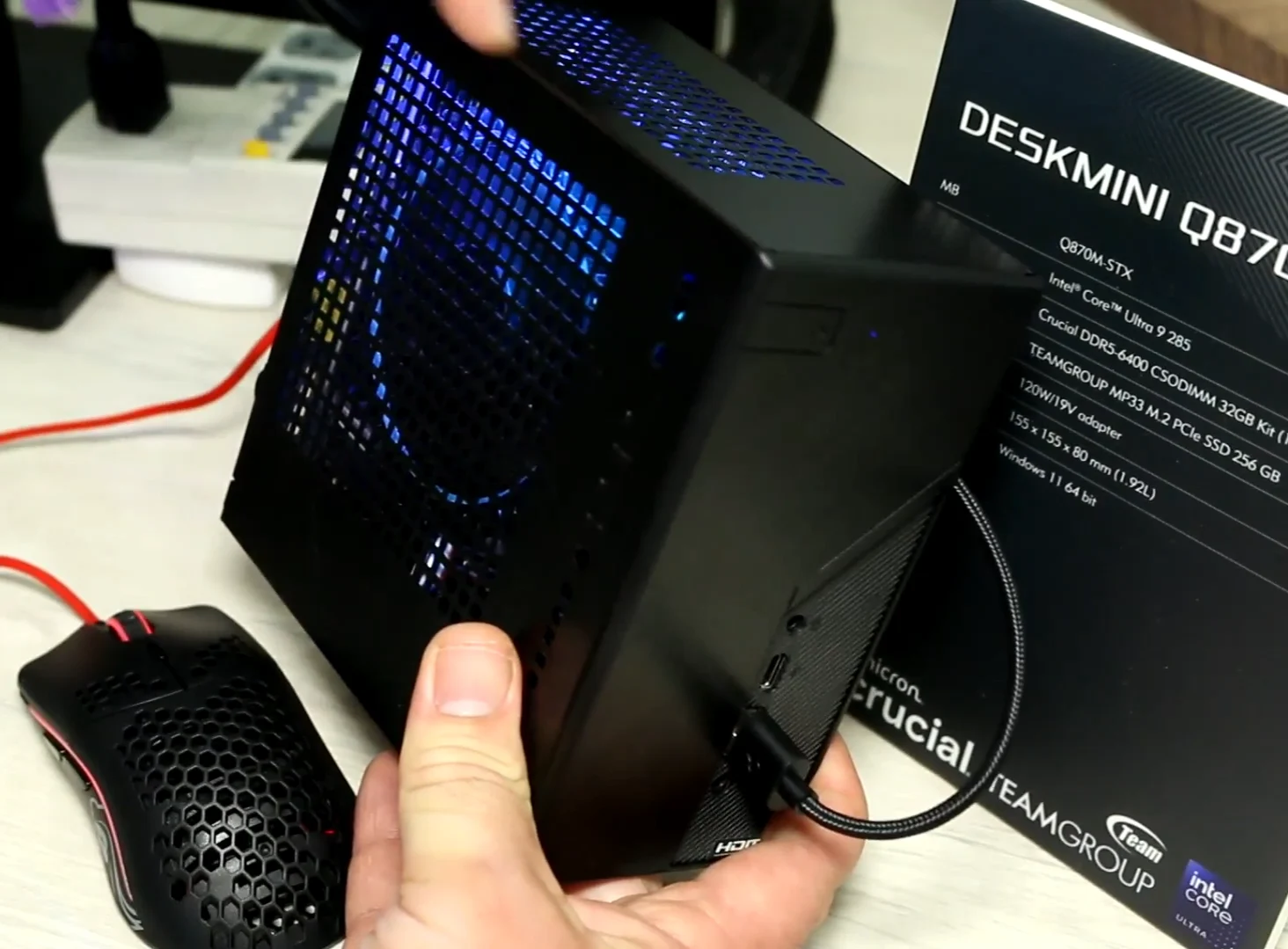
    ASRock is broadening its DeskMini lineup with new systems that feature Mini-STX motherboards. This Mini-STX standard is even smaller than Mini-ITX, and with ASRock’s newly designed Q870M-STX motherboards, it now accommodates robust desktop-grade processors from the Intel Arrow Lake series.

    Impressions from Computex

    The newest Mini-STX systems were highlighted at ASRock’s booth during Computex this week, and Winfuture.de was on the scene to capture some images and provide an initial look. From their photos, we see that the Q870 system is about the size of an ATX power supply, measuring 155 x 155 x 80 mm, while the overall case has a capacity of 1.92 liters. The demo version was equipped with a Core Ultra 9 285 desktop CPU that has 8 Performance cores and 16 Efficiency cores, totaling 24 threads with a peak boost of 5.6 GHz. This processor typically has a TDP of 65 W, with a maximum reaching 182 W, but the Mini-STX system can’t maintain this peak TDP since its external power adapter is limited to 120 W. The average power consumption appears to be around 43.9 W.

    Connectivity and Features

    While the official information on port selection hasn’t been released, it’s possible to determine some of the ports from the available photos. Since the Arrow Lake processor only includes an Intel Graphics GPU with 4 Xe cores, it’s likely that the Q870 mini PC features Thunderbolt 4 ports for eGPU support. In fact, we can spot two USB-C ports (one on the front and one on the back), with at least one supporting TB4 specifications. Other available ports consist of 3x USB-A 3.2, 2x DisplayPort, HDMI 2.1, microphone and headphone jacks, and a LAN port (most likely 2.5 GbE).

    Memory and Storage Options

    The specifications sheet also indicates compatibility with advanced CSODIMM RAM modules. The demo unit showcased 32 GB DDR5-6400 RAM, but it can support up to 128 GB with two slots available. Interestingly, the storage was managed by an older MP33 PCIe 3.0 256 GB SSD from TeamGroup, although the motherboard likely includes at least one PCIe 4.0 X4 M.2 slot. As a visual enhancement, both the motherboard and the CPU cooler come with support for RGB lighting.

    Currently, there is no price information available, nor any details regarding an AMD Mini-STX model.

    Source:
    Link


  • ASRock BIOS Update Fixes Ryzen 9000 Series Boot Problems

    ASRock BIOS Update Fixes Ryzen 9000 Series Boot Problems

    Key Takeaways

    1. ASRock has released a BIOS update (3.20) to address boot issues with Ryzen 9000 series CPUs, especially the Ryzen 9800X3D, on various motherboards.
    2. Users have reported similar boot problems with motherboards from other brands like Gigabyte, MSI, and Asus, but most complaints are from ASRock users.
    3. Severe cases of CPU failures during boot with the 9800X3D on ASRock motherboards have been acknowledged, prompting users to report their experiences.
    4. ASRock Japan linked the boot issues to memory compatibility problems, with at least 40 reported incidents across multiple motherboard models.
    5. The BIOS update aims to improve boot stability for AMD 9000 Series CPUs, specifically targeting the issues mentioned by users.


    Several users have shared their troubles with booting their ASRock motherboards alongside Ryzen 9000 series CPUs on the ASRock subreddit. In response, the company has launched a BIOS update aimed at fixing these problems. The 3.20 update has been rolled out for various X870, B850, B650, and A620 motherboards, specifically targeting the Ryzen 9000 series, focusing on the Ryzen 9800X3D, which was frequently mentioned in complaints.

    Reports on Other Brands

    Users have also reported similar boot issues with motherboards from Gigabyte, MSI, and Asus, but most of the complaints have come from ASRock board owners. The ASRock subreddit hosts a dedicated thread called “9800X3D Failures/Deaths Megathread,” where moderators have been addressing the concerns of the users. The problems related to instability and failures involving the Ryzen 9800X3D have been recognized, and the initial recommendation was to revert to an earlier BIOS version.

    Severe Cases Noted

    Some users faced severe issues, with their 9800X3D CPUs supposedly failing during the boot process when used with an ASRock motherboard. The moderators at ASRock acknowledged these serious cases and provided a form for users to report their experiences for further examination.

    Now, the company has introduced the 3.20 Beta update for AM5 series motherboards, which is anticipated to resolve these concerns. While ASRock global hasn’t disclosed the specific reasons behind these boot problems, ASRock Japan has attributed them to memory compatibility issues, mentioning that there have been at least 40 reported incidents. The motherboards affected include two models of B650M Pro, three A620M, eleven B850, and seven X870 models. The release note simply states, “Improve minority proportion of AMD 9000 Series CPU boot issues.”

    Source:
    Link

  • Intel Arc B580 GPU Leak: 45% Premium for 12GB VRAM

    Intel Arc B580 GPU Leak: 45% Premium for 12GB VRAM

    Following a new leak regarding the key specifications of the Intel Arc B580, and the appearance of two ASRock models on Amazon, insiders @momomo_us and VideoCardz have discovered the first online retailer showcasing the price for the upcoming GPU. The Intel Arc B580 Limited Edition, which will be sold directly by Intel rather than through a partner, is set to have a starting price of $259.

    Price Comparison

    This new price reflects an increase of about 45%, as the Intel Arc A580 was initially launched at a suggested retail price of $179.99. This places the graphics card in a similar price range as the Nvidia GeForce RTX 4060. However, with the increase in price, consumers will benefit from 12 GB of VRAM compared to the 8 GB offered by the Arc A580, although Intel has cut down the number of Xe cores from 24 to 20.

    Performance Expectations

    Only through thorough testing will we find out if the Arc B580 can truly compete against the Nvidia GeForce RTX 4060, given its new Xe2 architecture and significantly higher boost clock speeds reaching up to 2,850 MHz. The first Xe2-based graphics card is scheduled to release in December, and it’s anticipated that detailed benchmarks will soon follow to show how well the Intel Arc Battlemage performs in a fiercely competitive gaming GPU landscape. With Nvidia’s GeForce RTX 5000 also likely launching in January, an exciting few months are coming up.

    Source: Link,Link