Tag: 12VHPWR

  • 12VHPWR Connector Issues Continue: RX 9070 XT Reports Burnout

    12VHPWR Connector Issues Continue: RX 9070 XT Reports Burnout

    Key Takeaways

    1. The 12VHPWR power connector, introduced with the RTX 40 series, has been criticized for being unreliable and prone to melting issues, earning it a negative reputation.
    2. Nvidia attempted to address these problems with a new version in the RTX 50 series, but failures with the 12V-2×6 cables continue to be reported.
    3. AMD avoided the 12VHPWR connector, which helped it avoid similar public relation issues, although some AIB Radeon models still use it.
    4. Reliability concerns are significant, as incidents like the burned-out 12VHPWR connector on the RX 9070 XT occurred even under normal usage conditions.
    5. Potential buyers of the Radeon RX 9070 XT should consider choosing models with traditional 8-pin connectors to avoid reliability issues associated with the 12VHPWR.


    Ever since the 12VHPWR power connector was introduced with the RTX 40 series, it has gained a bad reputation for being unreliable and even unsafe. This new connector was designed to replace the old 6-pin and 8-pin connectors, offering up to 600 W through one cable. Unfortunately, Nvidia’s attempt turned into a mess, as the 12VHPWR connector was melting all over the place. Gamers Nexus called it a “Dumpster Fire,” and it’s easy to see why.

    Revised Connector Issues

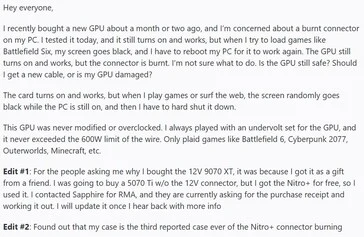
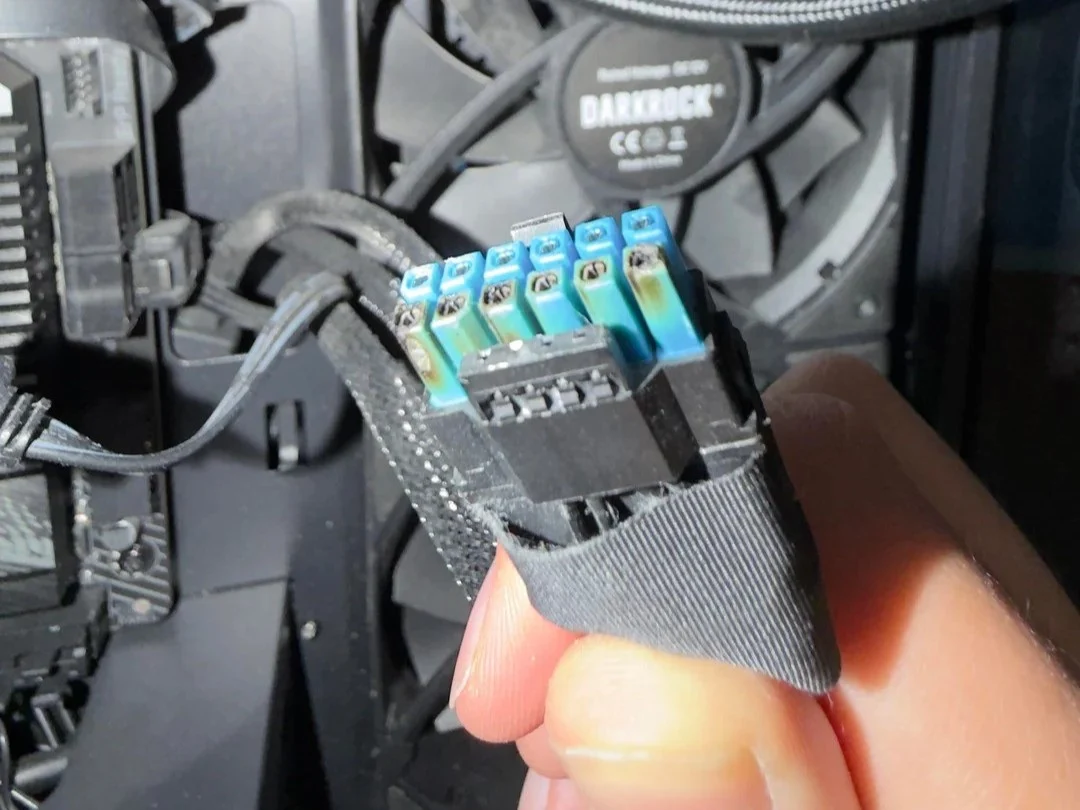
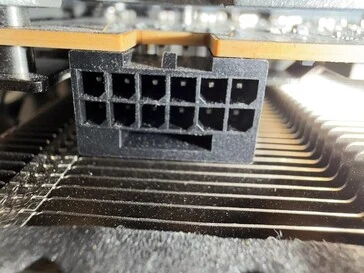
    Nvidia tried to fix the problem by using a new version of the connector in the RTX 50 series, but reports of the new 12V-2×6 cables failing still surfaced. On the other hand, AMD’s choice to avoid the 12VHPWR and the 12V-2×6 connectors spared the company from public relation troubles. That said, some AIB Radeon models do rely on the 12VHPWR/12V-2×6 connectors. One such example is the Sapphire Nitro+ RX 9070 XT, which, according to a post on r/pcmasterrace, has suffered from a burned-out 12VHPWR connector.

    Concerns About Reliability

    What’s alarming is that the affected RX 9070 XT had been in use for only about two months and was under the 600 W power limit. The GPU was also undervolted, which should have lessened the strain on the cable even further.

    Fortunately, Sapphire appears to have accepted an RMA request from the user and will either repair or replace the damaged RX 9070 XT.

    Choosing Wisely

    Though there are only a handful of Radeon RX 9070 XT AIB models equipped with a 12VHPWR power connector, this recent incident highlights the ongoing reliability issues with the 12VHPWR. Of course, several other factors could contribute to these failures, such as improper cable connection. However, the fact that the 12VHPWR connector has been linked to numerous problems with both Radeon and GeForce GPUs should definitely make users think twice before purchasing a GPU that uses this connector.

    So, if you’re considering a Radeon RX 9070 XT, it may be wise to opt for a version that uses the traditional 8-pin connector instead.

    Source:
    Link


  • ASRock L-Shaped PCIe 12V-2×6 Cable with NTC Sensor Prevents Melting

    ASRock L-Shaped PCIe 12V-2×6 Cable with NTC Sensor Prevents Melting

    Key Takeaways

    1. Incidents of damage to Nvidia’s RTX 50 series GPUs are linked to the new 12VHPWR power cable design.
    2. ASRock has introduced a new 12V-2×6 power cable with an L-shaped connector and built-in NTC sensor for better protection.
    3. AMD continues to use the traditional 8-pin connector for its reference model, while some partners have adopted the newer 12VHPWR design.
    4. The new ASRock cable can handle up to 600W and is designed to prevent sharp bends at the GPU end.
    5. The NTC sensor in the cable only works with ASRock power supply units, limiting its functionality with other brands.


    There have been a number of incidents involving damage to Nvidia’s RTX 50 series GPUs, often linked to either the PSU or the GPU itself, with the new 12VHPWR design being blamed. After the power cable for the Radeon RX 9070 XT GPU melted, ASRock took action and introduced a new cable designed to enhance protection against such issues. This new 12V-2×6 cable features an L-shaped connector along with a built-in NTC sensor.

    AMD’s Design Choices

    AMD has opted not to adopt this new design, sticking to the traditional 8-pin connector for its reference model. However, some partners, like ASRock, have embraced the newer 12VHPWR connector. While this connector simplifies the setup by combining three cables into one, it has also faced similar issues, affecting certain Nvidia RTX 50 series GPUs. Recently, a Reddit user reported that the power cable connector for their ASRock Radeon RX 9070 XT Taichi OC card melted at the GPU end, but thankfully, the connector on the card itself remained intact.

    ASRock’s New Solution

    It seems ASRock was already preparing for this situation, as they have launched the 12V-2×6 power cable featuring a NTC sensor and an L-shaped design. The NTC sensor tracks the temperature and relays information to the PSU for safe functioning. However, this feature is exclusively compatible with ASRock Taichi and Phantom Gaming PSUs. The new cable is also compatible with 12VHPWR connectors and can handle up to 600W.

    The L-shaped design helps prevent the cable from bending at sharp angles at the GPU end, while also lending a neater appearance to the overall build. The connectors are colored green and utilize 16 AWG (American Wire Gauge) size, along with HCS (High-Current System) terminals made from 94V-0 plastic. ASRock provides a 2-year limited warranty, assuming there are no user mistakes, such as inserting the connector incorrectly. The green pins should aid in visibility, helping to ensure they are fully inserted.

    Compatibility and Limitations

    Though the cable is compatible with all PSUs, the interaction between the NTC sensor and the PSU is restricted to ASRock models only.

    Source:
    Link


  • RTX 4090 Connector Melting Issues: Ongoing Problems Explained

    RTX 4090 Connector Melting Issues: Ongoing Problems Explained

    Key Takeaways

    1. Connector Melting Issue: RTX 4090 users are experiencing melting 12VHPWR connectors, leading to burnt plastic odors and fusing to graphics cards and power supply units (PSUs).

    2. Thermal Imbalance: The lack of current monitoring across the 12V lines results in uneven current distribution, causing thermal hotspots and connector degradation.

    3. Resistance Variability: Significant inconsistencies in resistance values among the power pins can lead to localized heating, generating enough heat to compromise connector integrity.

    4. Vendor Accountability: Inno3D has denied responsibility for connector issues under warranty, while other vendors like ModDIY have shown willingness to assist, highlighting inconsistent vendor responses.

    5. Design Criticism: Der8auer criticizes Nvidia’s power connector design and calls for better protection and support for consumers, emphasizing the need for a redesign to prevent future failures.


    The ongoing issue of melting 12VHPWR connectors has come back into the spotlight, this time impacting a user of the RTX 4090 who reached out to overclocker and YouTuber Der8auer. While enjoying some gaming, the user detected a familiar burnt plastic odor and found that the high-power connector had fused to both the graphics card and PSU ends. The graphics card in question was an Inno3D model that had since been modified with water cooling, operating with an undervolt and connected via a ModDIY cable that used 16 AWG ultra-soft wires. Even with careful assembly and a PSU (SilverStone Extreme 850R) considered suitable for a 4090, the plug became stuck, indicating a thermal issue within the connector. Inno3D’s customer service, however, declined to provide assistance, claiming that the damage was on the cable and PSU sides—an argument that Der8auer finds technically flawed.

    Current Monitoring Issues

    Der8auer elaborates that the main problem focuses on the absence of current monitoring across the individual 12V lines in the 12VHPWR interface. It seems that RTX 40 and 50 series graphics cards are unable to identify uneven current distribution among their six power pins. This imbalance, often caused by varying contact resistances in the wires or pins, can create thermal hotspots. In this particular instance, Der8auer managed to take apart and replace the damaged connector on the GPU side himself, using an H++ version of the 12VHPWR plug. His measurements showed significant inconsistencies in resistance values—one pin was as low as 12 milliohms, while another reached 43 milliohms, and one had no connection whatsoever. These differences directly lead to uneven current flow, which results in localized heating and ultimately causes connector melting and degradation. Even with a modest power draw, this can generate up to 4.6 watts of heat concentrated in a small area—sufficient to compromise the connector’s integrity over time.

    Vendor Responses

    Adding to the frustration is the inconsistent response from vendors. ModDIY displayed some readiness to assist, including an offer to pay for repair costs, but Inno3D consistently denied any responsibility, even though the card was still under warranty. Der8auer emphasizes that only the GPU-side design can effectively reduce these risks, as neither the cable nor the PSU can monitor load distribution. He notes that while high resistance can effectively “cut off” a wire, it causes more current to flow through the remaining wires, which leads to a cycle of overheating. Ultimately, Der8auer criticizes Nvidia’s poor power connector design and the lack of accountability from its partners. With high-end graphics cards priced over 2,000 euros, consumers deserve better protection—and quicker support—when failures happen. Until Nvidia revisits this design, users face ongoing risks, regardless of how meticulously they assemble or undervolt their systems.

    Source:
    Link