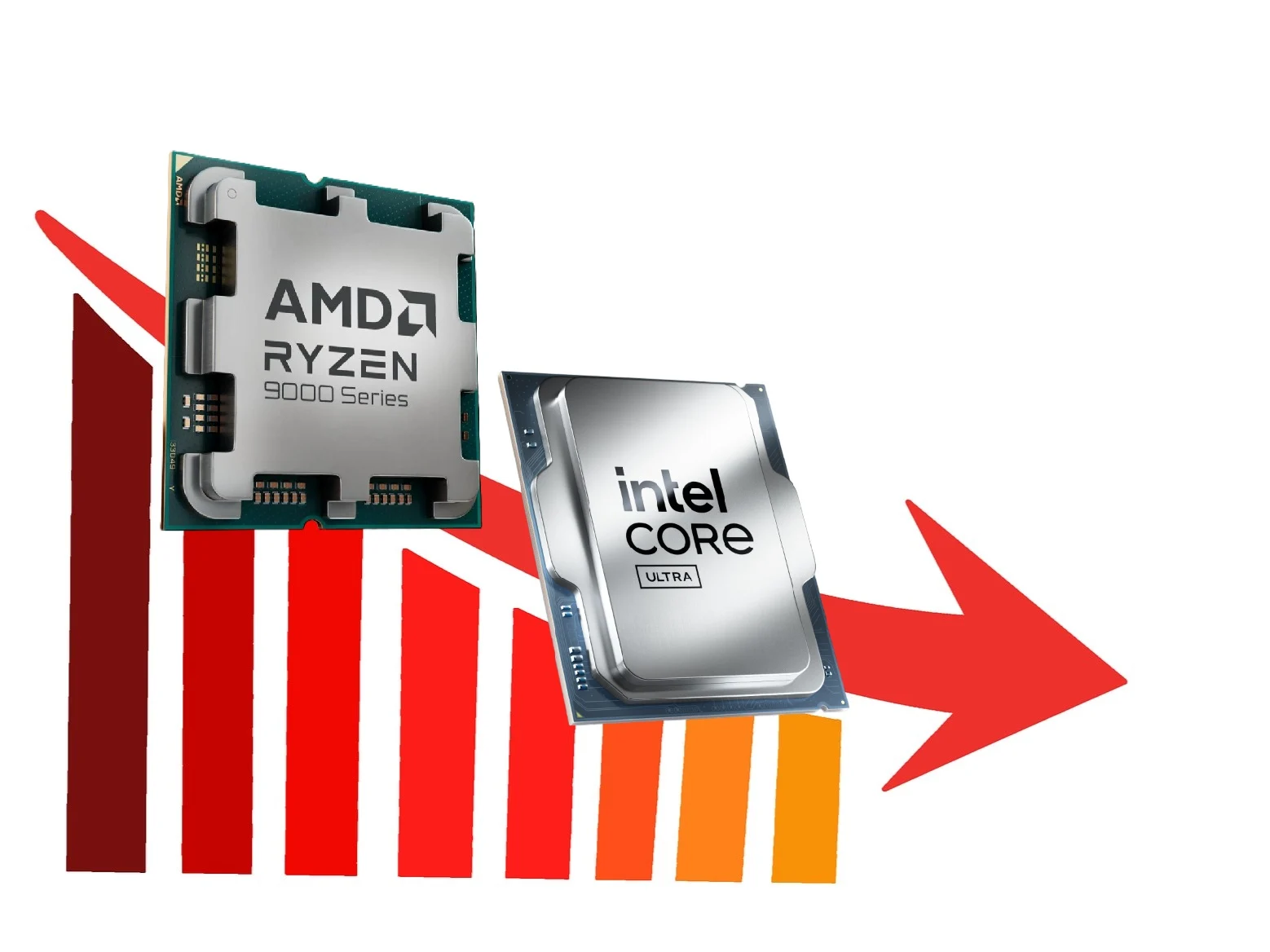
Tag: Ryzen 9000

  • PC Upgrades Decline: January 2026 CPU Sales Down 51% on Amazon US

    PC Upgrades Decline: January 2026 CPU Sales Down 51% on Amazon US

    Key Takeaways

    1. AMD dominates the CPU market in January 2026, with 88.32% of sales and $7.2 million in revenue, while Intel lags behind at 11.68% and $929,583.
    2. There was a significant 51% drop in CPU sales from January 2025 to January 2026, indicating gamers are not upgrading their systems.
    3. The Average Selling Price (ASP) of CPUs rose by 34.4%, increasing from $227 in January 2025 to $305 in January 2026.
    4. Rising costs of RAM, SSDs, and GPUs have contributed to the decline in CPU sales, making upgrades less affordable for consumers.
    5. Future CPU sales could improve with Intel’s upcoming Nova Lake CPUs, depending on market conditions and potential price reductions for other components.


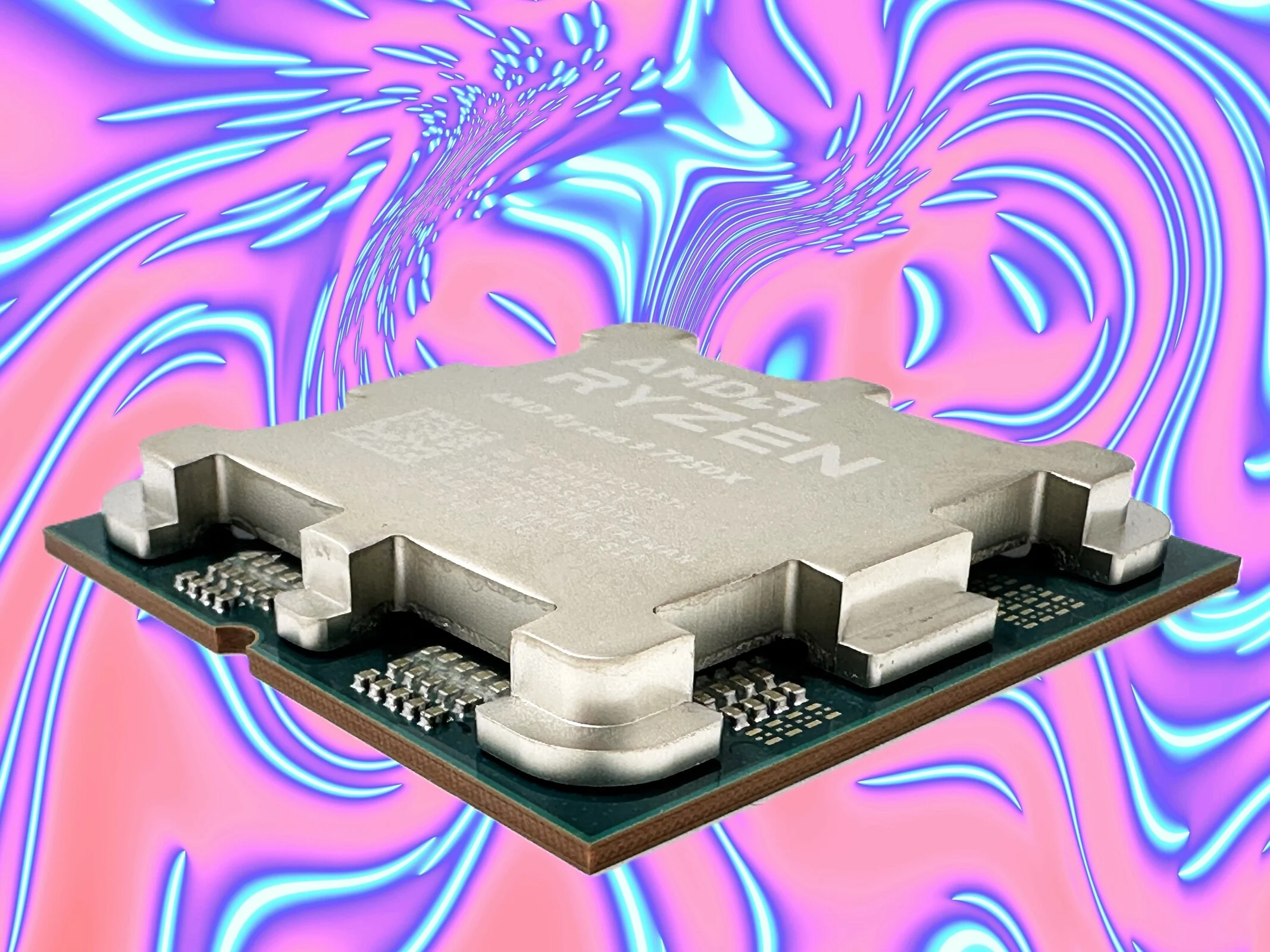
    TechEpiphany has shared the CPU sales figures from Amazon US for January 2026. The report indicates that AMD continues to lead the market in both the number of CPUs sold and the revenue generated. Intel holds a far-off second place, which aligns with expectations since the Arrow Lake CPUs did not meet consumer hopes, and the upcoming Nova Lake CPUs are not available yet.

    Sales Data Insights

    In terms of sales, AMD moved 23,050 Ryzen CPUs, which makes up 88.32% of all CPUs sold on Amazon in January 2026. In contrast, Intel managed to sell only 3,050 units, capturing a mere 11.68% of the market. Revenue reflected these numbers, with AMD raking in $7,196,106.50 (88.57%) while Intel earned only $929,583.00 (11.43%). The best-selling CPUs included the AMD Zen 5 Ryzen 9000, followed by the Zen 4 Ryzen 7000, and the older Zen 3 Ryzen 5000 models.

    Comparisons to Previous Years

    While the total of 26,100 CPUs sold in January 2026 might seem impressive at first glance, a comparison with January 2025 reveals a troubling trend: many gamers are not upgrading their systems.

    According to TechEpiphany, 3DCenter has compiled a detailed table tracking CPU sales data on Amazon from December 2024 through January 2026. There was a shocking 51% drop in CPU sales from January 2025 to January 2026. During this same period, the Average Selling Price (ASP) surged by 34.4%, climbing from $227 in January 2025 to $305 in January 2026.

    Rising Component Costs

    Furthermore, prices for consumer DDR5 and DDR4 RAM have skyrocketed in recent months, and there’s no sign of this trend reversing. SSDs and GPUs have also seen significant price increases. For example, the 1 TB Kingston NV3 was priced at just $53 in May 2025 on Amazon, according to camelcamelcamel, but it is now listed at $170. Similarly, the RTX 5060 Ti 16 GB has also experienced a sharp uptick in price.

    In essence, the 51% drop in CPU sales in January 2026 on Amazon can be directly attributed to the rising costs of RAM, SSDs, and GPUs. After all, what good is a powerful new CPU if you can’t afford other essential parts at fair prices?

    Future Outlook

    It’s uncertain how much longer this challenging market will persist. Intel is expected to launch its next-gen Nova Lake CPUs, reportedly with extreme power limits, by the end of 2026. If this happens, CPU sales might rebound, especially if prices for memory, storage, and GPUs also decrease.

    TechEpiphany on X, 3DCenter on X, camelcamel, Teaser image source: Intel, AMD, PabitraKaity on Pixabay, edited.

    Source:
    Link
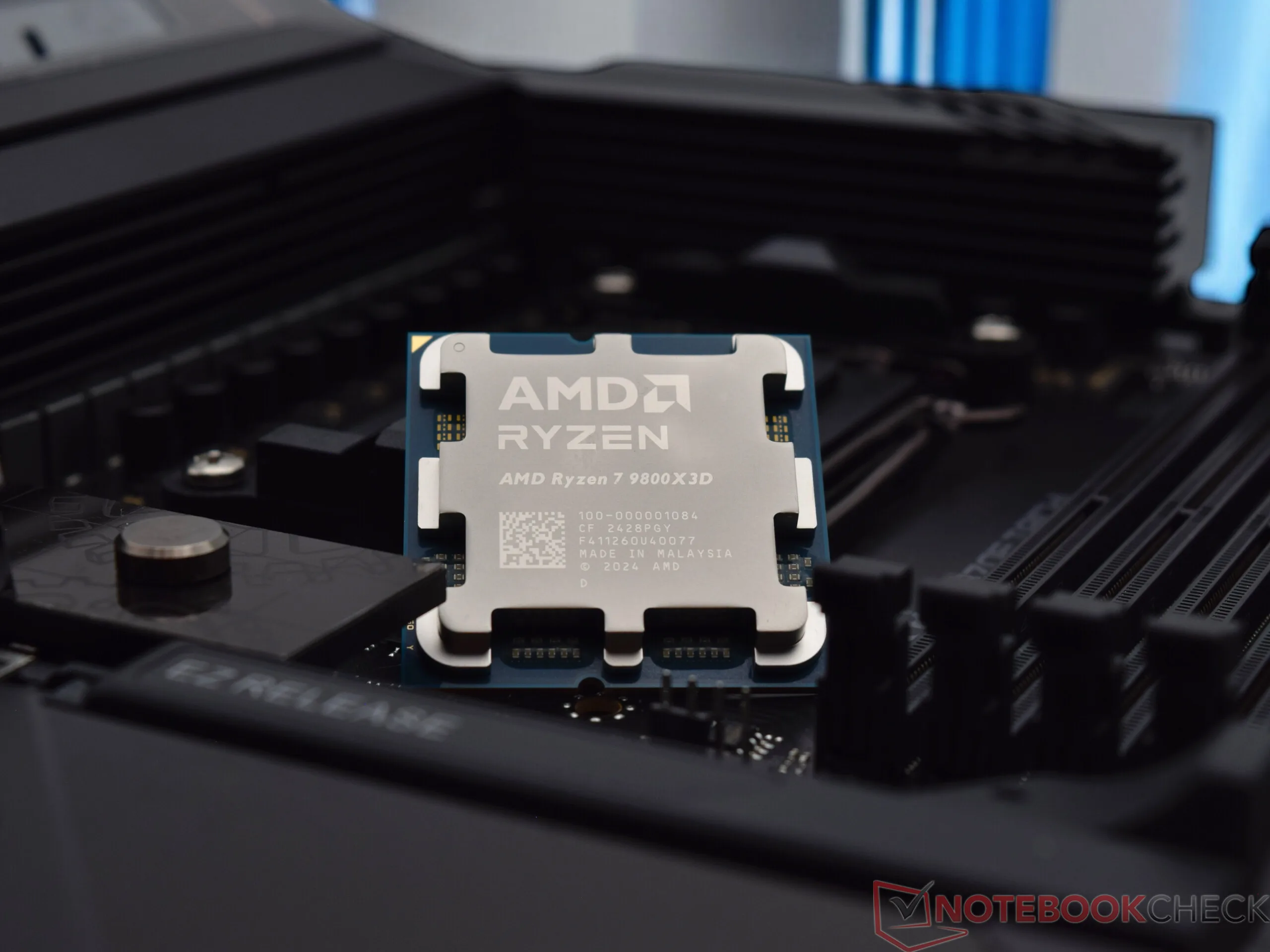


  • ASRock Responds to AMD Ryzen 9000 CPU Damage Concerns

    ASRock Responds to AMD Ryzen 9000 CPU Damage Concerns

    Key Takeaways

    1. ASRock has acknowledged ongoing issues with Ryzen 9000 CPUs, which can heat up excessively and cause visible damage.
    2. Despite BIOS updates, the heating problems persist, and ASRock is investigating the situation without providing detailed technical explanations.
    3. User feedback is crucial for ASRock, and the company encourages customers to report technical issues to their support team.
    4. There have been over 260 reports of Ryzen 9000 chips failing on ASRock motherboards, indicating a significant concern for users.
    5. ASRock is collaborating with AMD to improve system performance and stability while reviewing the situation closely.


    It’s rare for big tech firms to really take note of what users are saying, unless the complaints become super loud. After two weeks of not saying much since Asus talked about AM5 CPU problems, ASRock has finally shared its thoughts on the situation as well. To put it in perspective, the company had earlier blamed the issues on wrong settings and had rolled out BIOS updates.

    Known Issue with Ryzen 9000 CPUs

    This problem is well-known and has been mentioned many times on various forums. Basically, it seems that some Ryzen 9000 CPUs heat up so much that they leave visible heat damage on both the socket and the delicate side of the CPU. However, this doesn’t mean that the Ryzen 9000 chips are bad in any way — Puget Systems’ yearly report praised the Ryzen 9000 series for having one of the lowest failure rates in the market.

    Ongoing Concerns Despite BIOS Updates

    Even after the BIOS updates were released, the issue still pops up from time to time. Like Asus, ASRock didn’t give any detailed technical reasons for the problems and only mentioned that they’re looking into it and checking different options. They also encouraged users who are affected to get in touch with their support team. The company’s official statement is shown below:

    ASRock is keeping a close watch on the latest talks about the performance and behavior of AMD Ryzen™ 9000 series processors on ASRock AMD platforms. In response to these claims, we have started extensive internal reviews and strict verification processes. We are continuously collaborating with AMD to validate system performance across a wide range of hardware setups, while also optimizing BIOS and boosting overall system stability.

    User Feedback is Important to ASRock

    ASRock really values what users say as a key part of our ongoing improvements. Customers facing technical issues or looking for more help are encouraged to reach out to the ASRock Technical Support Department. We are dedicated to providing high-performance products that uphold the highest quality and performance standards.

    As noted by VideoCardz, there have been over 260 reports of expensive Ryzen 9000 chips — including X3D models — failing in ASRock motherboards. While it might seem like a small percentage of the total number of these systems out there, the number is still significant enough to be seen as a serious problem affecting the platform.

    Source:
    Link


  • AMD Zen 9 and Zen 8 Core Architecture Codenames and Socket Leaks

    AMD Zen 9 and Zen 8 Core Architecture Codenames and Socket Leaks

    Key Takeaways

    1. AMD’s Zen 6 architecture is the focus as users anticipate its release, while Zen 5 processors near the end of their lifecycle.
    2. Leaks suggest future architectures, Zen 8 (codenamed “Penelope”) and Zen 9 (codenamed “Nemesis”), may debut in the 2030s.
    3. Zen 8 and Zen 9 desktop CPUs are expected to use the new AM6 socket, while the current AM5 platform is likely compatible with Zen 7.
    4. Zen 7 will feature a new Matrix Engine and expanded AI data formats, but further details remain limited until Zen 6 is released.
    5. The information from leaks should be taken with skepticism due to a lack of concrete details on core counts and performance for Zen 8 and Zen 9.


    As AMD’s Zen 5 Ryzen 9000 desktop processors move into the latter part of their life, many users are starting to think about Zen 6, which is the upcoming architecture from Team Red. However, Moore’s Law Is Dead is looking even further into the future, sharing some intriguing details about the Zen 8 and Zen 9 core designs.

    Future CPU Architectures

    Indeed, you read that correctly. MLID has disclosed information regarding AMD’s CPU architectures that are expected to come out in the 2030s. While these leaks about Zen 8 and Zen 9 might have some truth to them, it’s wise to approach the information from MLID with a huge dose of skepticism.

    Details of the Leak

    According to MLID, the core architectures for Zen 8 and Zen 9 are codenamed “Penelope” and “Nemesis,” respectively. The leaker also mentions that desktop CPUs featuring these new architectures will use the AM6 socket, as the existing AM5 platform is likely to be compatible with Zen 7 CPUs. Given the long lifespan of the AM4 platform, it wouldn’t be shocking for AM5 to continue on for Zen 7.

    Insights on Zen 7

    Regarding Zen 7, AMD has only confirmed that these CPUs will be manufactured on an unnamed “Future node,” will include a new Matrix Engine, and will expand AI data formats. This is probably all the information available until Zen 6 processors come to market in late 2026 or early 2027.

    Unfortunately, MLID has not provided any additional details about the Zen 8 and Zen 9 architectures. Therefore, we lack any information on core counts, process nodes, expected performance, and so on.

    Source:
    Link


  • AMD Ryzen 9000 CPU Leak: Dual 3D V-Cache Features Revealed

    AMD Ryzen 9000 CPU Leak: Dual 3D V-Cache Features Revealed

    Key Takeaways

    1. AMD is releasing new CPUs on the AM5 platform, shifting focus from AM4.
    2. The first upcoming CPU features 8 cores, 16 threads, a TDP of 120 Watts, and 96 MB of L3 cache.
    3. The second CPU boasts 16 cores, 32 threads, a TDP of 200 Watts, and an impressive 192 MB of L3 cache.
    4. The 192 MB cache indicates the use of 64 MB of 3D V-Cache per CCD, a first for this segment.
    5. Speculation surrounds the naming of these CPUs, with possibilities like Ryzen 7 9700X3D and Ryzen 9 9990X3D.


    While AMD keeps putting out AM4 CPUs even now, the newer AM5 platform hasn’t been getting the same spotlight. However, this could shift soon. It seems like Team Red has two new CPUs in the pipeline, both featuring a large amount of L3 cache.

    Exciting New Specs

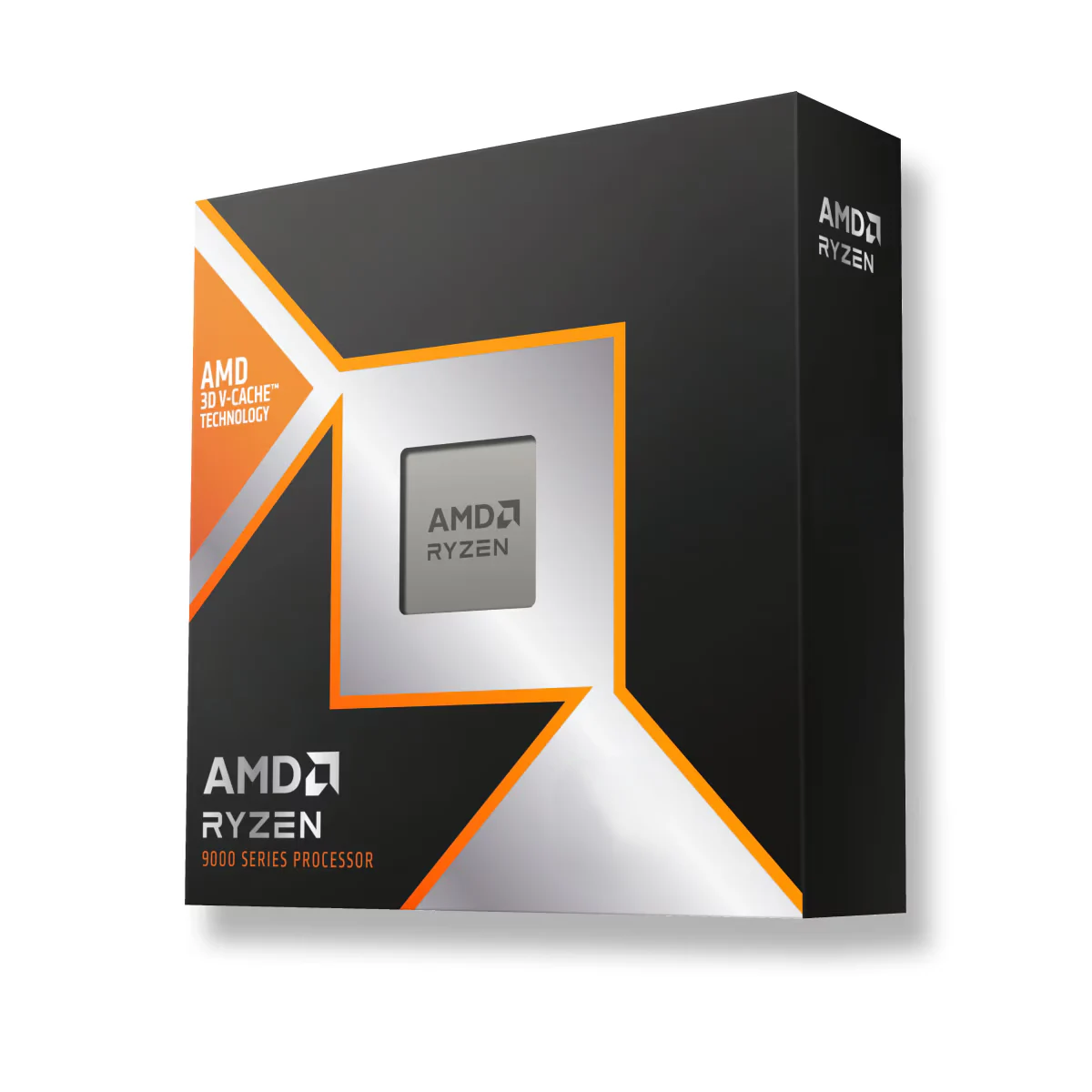
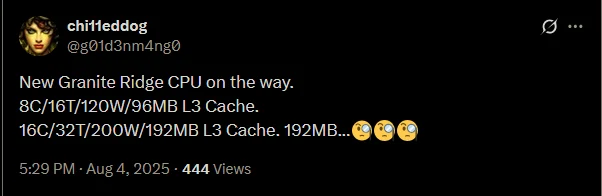
    According to leaker @g01d3nm4ng0, one of AMD’s forthcoming Granite Ridge (Ryzen 9000 series) CPUs is set to have 8 cores, 16 threads, a TDP of 120 Watts, and an impressive 96 MB of L3 cache. In terms of specifications, this matches the Ryzen 7 9800X3D, making it intriguing to see how they will vary. It’s likely to be released as the Ryzen 7 9700X3D, possibly with slightly lower clock speeds.

    A Promising Second CPU

    The second CPU appears to be even more exciting: it features 16 cores, 32 threads, a TDP of 200 Watts, and a staggering 192 MB of L3 cache. This is significantly more powerful than the Ryzen 9 9950X3D, which has a lower TDP of 170 Watts and less cache. The 192 MB of cache indicates that each CCD will include 64 MB of 3D V-Cache, a first for this segment.

    Speculation on Naming

    There were whispers about a Ryzen 9000 X3D CPU that would use two 3D V-cache tiles before these CPUs were officially revealed, but those rumors were quickly dismissed. It’s still too soon to say what the name will be since such a product has never been seen before. Could it be the Ryzen 9 9990X3D? The connection to Granite Ridge further assures us that it is meant for consumers, not just for enterprise applications.

    Source:
    Link


  • AMD Addresses Key Vulnerability in Ryzen 7000 and 9000 Series

    AMD Addresses Key Vulnerability in Ryzen 7000 and 9000 Series

    Key Takeaways

    1. Security Vulnerability: AMD CPUs have a significant security flaw (CVE-2025-2884) in the Trusted Platform Module (TPM) that allows attackers with basic user access to access sensitive data or disrupt the TPM.

    2. Coding Error: The flaw stems from a mistake in the TPM 2.0 software’s CryptHmacSign() function, which can expose up to 65,535 bytes of sensitive information.

    3. Affected Models: A wide range of Ryzen processors, including desktop, mobile, and Threadripper CPUs, are impacted by this vulnerability, though older generations have received fixes.

    4. Permanent BIOS Updates: New BIOS updates from motherboard makers like Asus and MSI are permanent on certain models, preventing users from reverting to earlier firmware versions.

    5. Additional Benefits: The BIOS updates not only fix the security issue but also improve compatibility and performance for high-capacity memory configurations and prepare motherboards for future Ryzen processors.


    Motherboard makers like Asus and MSI are releasing new BIOS updates that address a significant security vulnerability found in AMD’s CPUs. This problem is connected to the Trusted Platform Module (TPM) and has been officially designated as CVE-2025-2884. The flaw allows attackers with basic user access to possibly reach sensitive data or interfere with the TPM itself. Even though this vulnerability is viewed as medium risk, it stands out because it can be exploited more easily than many similar issues.

    Details of the Vulnerability

    The root of this security weakness lies in a coding mistake in the TPM 2.0 software, particularly in the CryptHmacSign() function. This flaw permits standard user applications to read more data than they should, which could expose as much as 65,535 bytes of sensitive information. As a result, attackers might take advantage of this issue to either access private data stored in the TPM or cause the module to fail, leading to a denial-of-service situation. The vulnerability is rated as medium severity (CVSS score of 6.6), but its risk is noteworthy due to how easy it is to exploit; it doesn’t need elevated kernel-level permissions, just regular user access.

    Affected Processor Models

    This flaw impacts a wide range of Ryzen processors, from desktop CPUs like Athlon 3000 “Dali” and Ryzen 3000 “Matisse” to Ryzen 9000 “Granite Ridge.” Mobile chips, including Ryzen 3000 Mobile “Picasso” up through Ryzen AI 300 “Strix Point,” as well as Threadripper workstation CPUs from Threadripper 3000 “Castle Peak” to Threadripper 7000 “Storm Peak,” are also affected. Older AMD CPU generations have already seen fixes for this vulnerability, but the AGESA 1.2.0.3e firmware is specifically aimed at AM5-based platforms.

    It’s vital to point out that these BIOS updates are permanent on some motherboards, particularly those from Asus, meaning users cannot revert to earlier firmware versions after installation.

    Additional Update Benefits

    In addition to addressing the security flaw, the update also prepares motherboards for the upcoming Ryzen processors, expected to be part of the Ryzen 9000F series. Moreover, this update enhances compatibility and performance for high-capacity memory configurations, especially those utilizing 4×64 GB DRAM modules with speeds ranging from 6000 to 6400 MT/s.

    AMD encourages users to check their motherboard manufacturer’s support page for the BIOS update and to install it promptly.

    Source:
    Link

  • AMD Achieves 28.7% Share of Desktop CPU Market

    AMD Achieves 28.7% Share of Desktop CPU Market

    AMD has recently achieved its largest quarterly increase in desktop CPU market share since 2016, capturing 28.7 percent of the market in Q3 2024, as reported by Mercury Research. This marks a notable increase of 5.7 percent from the previous quarter and a 9.6 percent rise compared to the same time last year.

    Desktop Revenue Growth

    The chip manufacturer also saw its portion of desktop revenue rise to 27.3 percent, which is 7.7 percent higher than the previous year. This growth indicates strong demand for their premium processors, particularly the 3D V-Cache models and the newly launched Ryzen 9000 series.

    Mobile Market Gains

    In the mobile CPU sector, AMD captured 22.3 percent of the market, up from 20.3 percent in Q2 2024. Their revenue share in this area also improved, reaching 19.2 percent, a rise from 17.7 percent in the last quarter. Much of this success can be attributed to their Ryzen AI 300-series APUs.

    Server Market Success

    The server market brought further positive news, with AMD’s share reaching 24.2 percent in Q3 2024, an increase from 23.3 percent year-over-year. Even more noteworthy, their server revenue share climbed to 33.9 percent, up from 31.2 percent in Q3 2023. For the first time, AMD’s data center business surpassed Intel’s data center and AI division, generating $3.549 billion, compared to Intel’s $3.3 billion.

    Despite this progress, Intel continues to dominate, holding 71.3 percent of the desktop market and 77.7 percent of the mobile segment. Mercury Research noted that Intel attributed its decline in desktop market share to some adjustments in inventory at a client’s location, suggesting a potential recovery in Q4 2024.

  • AMD Ryzen AI 300 Notebooks Release July 15; Ryzen 9000 on July 31

    AMD Ryzen AI 300 Notebooks Release July 15; Ryzen 9000 on July 31

    Some online retail platforms have shared details regarding the AMD Ryzen AI 300 notebooks and Ryzen 9000 desktop processors. These listings suggest that the Ryzen AI 300 will be available for purchase starting July 15, while the Ryzen 9000 is set to hit the market on July 31.

    Upcoming Release Dates

    Although AMD has not yet confirmed the release dates for these new CPUs, retail platforms have provided specific timelines. According to B&H, the Ryzen 9000 series will be available for pre-order beginning July 31. Meanwhile, BestBuy has announced that an ASUS laptop equipped with the Ryzen AI 300 processor will be released on July 15.

    Product Details and Availability

    AMD has mentioned that up to 100 models will incorporate the Ryzen AI processors, with the ASUS model being one of them. During Computex 2024, only a few designs were showcased, and the additional ones might include mini PCs and handhelds. Both AMD Zen5 series are expected to launch before the new client-series featuring Lion Cove/Skymont CPU setups, which are anticipated to be available in Q3 for mobile and Q4 2024 for desktop.

    Pricing Information

    The official prices for the new AMD mobile and desktop processors have not been disclosed yet. However, some models featuring these processors have had their prices announced. For instance, the Ryzen AI 9 365, which comes with 24GB of RAM and 1TB of storage, is priced at $1,399 at BestBuy.


    AMD Ryzen AI 300 Notebooks Release July 15; Ryzen 9000 on July 31