Tag: amd

  • PS6 Boosts Ray Tracing Efficiency with AMD’s New GPU Core

    PS6 Boosts Ray Tracing Efficiency with AMD’s New GPU Core

    Key Takeaways

    1. Sony and AMD are collaborating on hardware for upcoming PlayStation consoles, with significant performance improvements expected for the PS6.
    2. Leaks suggest the PS6 may offer up to three times the rasterization performance and twelve times the ray tracing performance of the PS5.
    3. AMD’s new ‘Radiance Cores’ will enhance ray tracing capabilities by offloading tasks from the CPU and GPU, leading to improved performance.
    4. The introduction of Radiance Cores aims to refine the ray tracing pipeline and provide a significant speed boost for graphics processing.
    5. Universal Compression technology will enhance data management for memory bandwidth, potentially benefiting various gaming platforms with AMD System on a Chip (SoC) solutions.


    Sony and AMD are teaming up to create the hardware for the upcoming PlayStation consoles. There have been many leaks about the PS6’s specifications, predicting it could offer up to three times the rasterization performance and twelve times the ray tracing performance compared to the PS5. Recently, Sony and AMD disclosed details about their collaboration, shedding light on the anticipated performance enhancements.

    Insights from AMD

    AMD released a video on its YouTube channel that outlined its collaboration with Sony and what we can expect in the future. In the video, Jack Huynh, AMD’s SVP and GM of the Computing and Graphics Group, was joined by Mark Cerny, the lead architect of the PS5 and PS5 Pro, to discuss the innovative technology set to debut in “a future console.” A major highlight was the introduction of ‘Radiance Cores,’ which are specialized cores designed specifically for ray traversal tasks.

    Advancements in Ray Tracing

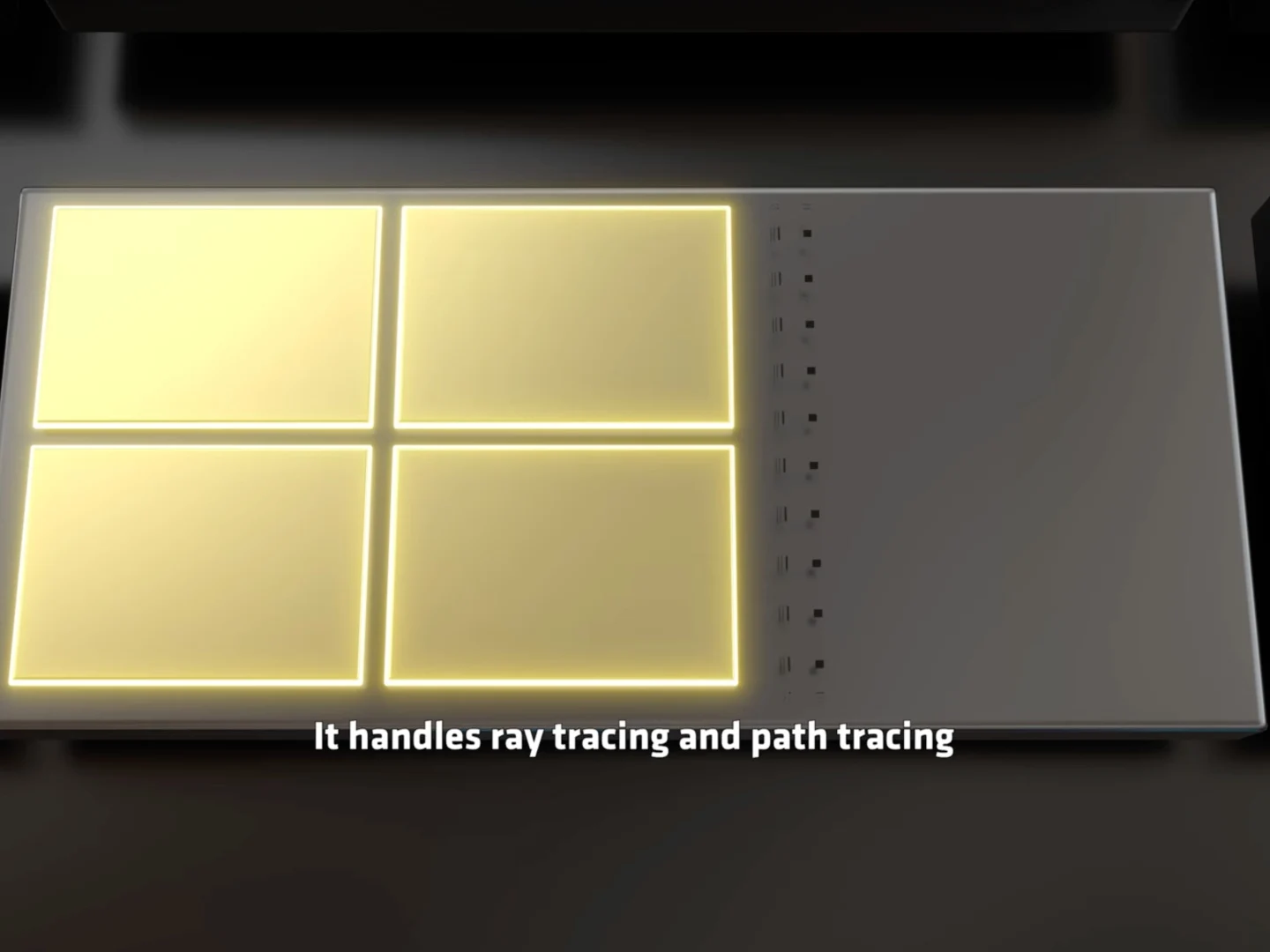
    The new Radiance Cores build on the Neural Radiance Caching system for FSR Redstone, acting as a dedicated hardware unit that performs ray tracing and path tracing calculations in real-time. This innovation reduces the workload typically managed by the CPU and GPU shader cores. With Radiance Cores, the CPU can focus more on geometry and simulation tasks, while the GPU can dedicate additional resources to shading and lighting effects.

    Cerny noted that refining the ray tracing pipeline and implementing traversal logic in hardware would result in a “significant speed boost,” along with an extra advantage from having this hardware function independently from the shader cores.

    Universal Compression Technology

    Additionally, Huynh introduced another technological advancement called Universal Compression, which effectively compresses data being sent to memory. This development aims to address GPU memory bandwidth issues that currently affect systems like the PS5 and PS5 Pro. While these consoles utilize Delta Color Compression (DCC) to compress data, it primarily impacts textures and render targets. Universal Compression, however, will conduct a more comprehensive analysis of all data types.

    Although Cerny didn’t specifically confirm that this technology will be integrated into the PS6, he did mention that it will appear in a future console within a few years. This technology won’t be limited to Sony’s consoles; it will be accessible across various gaming platforms that feature an AMD SoC.
     

  • Intel Foundry to Manufacture Future AMD Chips for Enhanced Performance

    Intel Foundry to Manufacture Future AMD Chips for Enhanced Performance

    Key Takeaways

    1. Intel’s upcoming 14A process is expected to signal a resurgence for the company despite challenges with its 18A technology.
    2. Qualcomm is stepping back from Intel Foundry, while Apple and Nvidia show interest in the 14A development.
    3. AMD is monitoring Intel’s progress, which may help maintain a favorable relationship with the current administration and avoid potential tariffs.
    4. Any partnership between Intel and AMD is unlikely to impact AMD’s reliance on TSMC for its advanced products.
    5. Intel’s 14A technology may offer new opportunities, but its competitiveness against TSMC’s offerings remains uncertain.


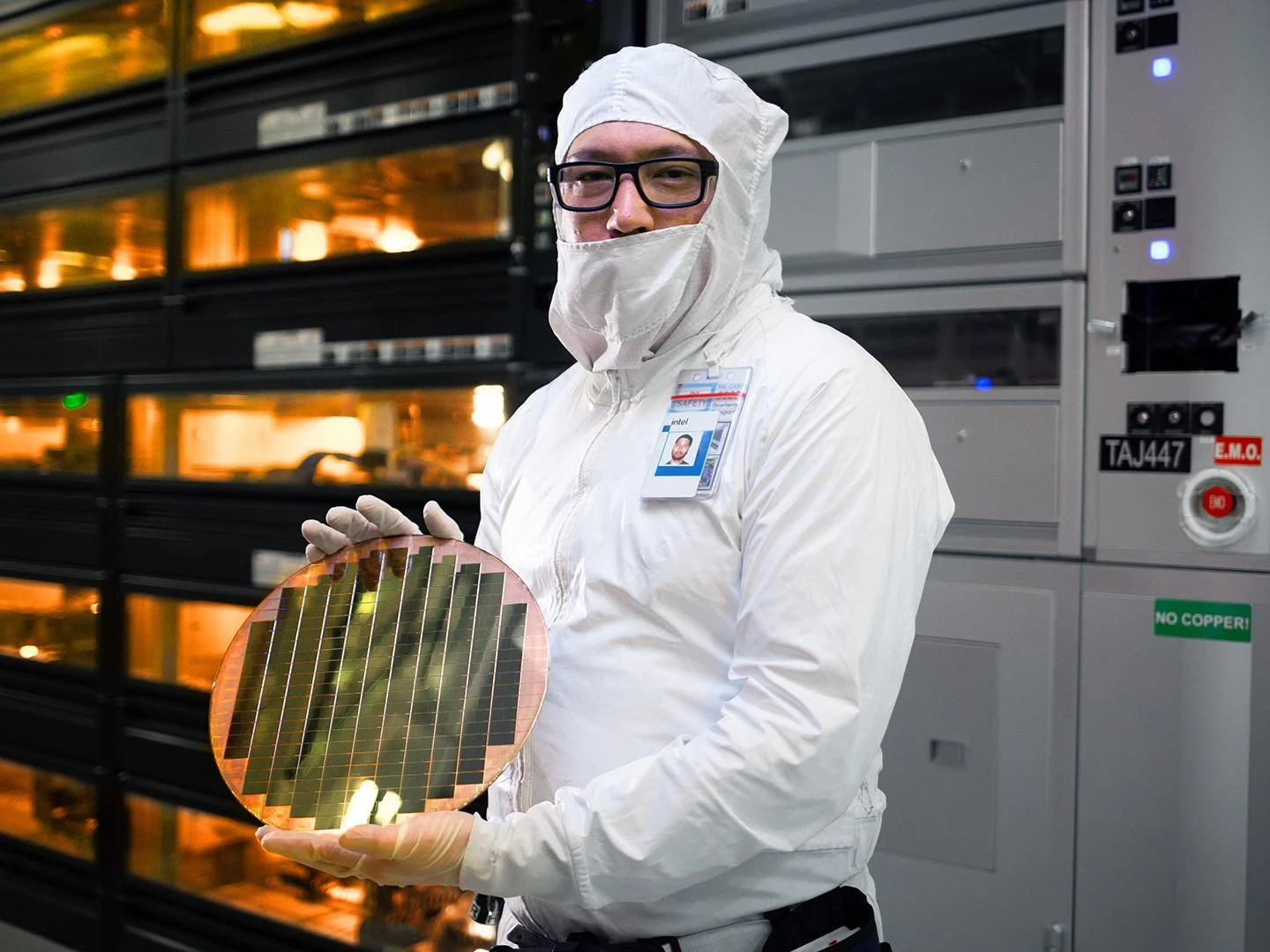
    Despite facing challenges with its 18A technology, Intel Foundry’s upcoming 14A process is expected to signal a resurgence for the emerging chip manufacturer. Although Qualcomm has chosen to step back, both Apple and Nvidia reportedly show interest in this development. Additionally, if a report from Semafor is to be believed, Intel’s major competitor, AMD, has also taken notice. This move could potentially help AMD maintain a favorable relationship with the current administration and possibly avoid some upcoming tariffs from President Trump.

    Collaboration Possibilities

    Even if a partnership between Intel and AMD comes to fruition, it is improbable that Team Red will rely on Intel Foundry for its most advanced products. AMD’s Epyc Venice CPUs have already been designed using TSMC’s N2 process, with Zen 6 projected to follow next year. Furthermore, Intel’s 14A technology is not expected to begin risk production until 2027, and if Intel continues to experience difficulties, it is likely that this timeline will be delayed. As a result, AMD will probably keep sourcing its main components, like CPU and GPU tiles, from TSMC, while possibly using Intel Foundry for ancillary parts such as Infinity Fabric and I/O dies.

    Future Implications

    In conclusion, while AMD’s interest in Intel Foundry might indicate a strategic move, the practical use of this collaboration appears limited. The ongoing reliance on TSMC for primary hardware components ensures that AMD’s cutting-edge advancements will remain on their current path. Intel’s 14A node may offer new opportunities, but whether it can compete with TSMC’s offerings remains to be seen. Overall, the landscape of chip manufacturing continues to evolve, with various players making moves in a complex arena.

    Source:
    Link


  • AMD Radeon RX 7700 Launched with 16 GB VRAM Features

    AMD Radeon RX 7700 Launched with 16 GB VRAM Features

    Key Takeaways

    1. AMD has released the Radeon RX 7700 non-XT desktop graphics card, part of the RDNA 3 series.
    2. The RX 7700 features 40 compute units, 18 GB of GDDR6 RAM, and a total board power consumption of 263 watts.
    3. It is designed for 1440p gaming, capable of delivering 60 frames per second in popular titles.
    4. The RX 7700 requires a 700 watt power supply and two 8-pin power connectors, higher than the RX 7700 XT’s requirements.
    5. Pricing and release date for the RX 7700 are not yet disclosed, with initial availability expected in pre-built systems.


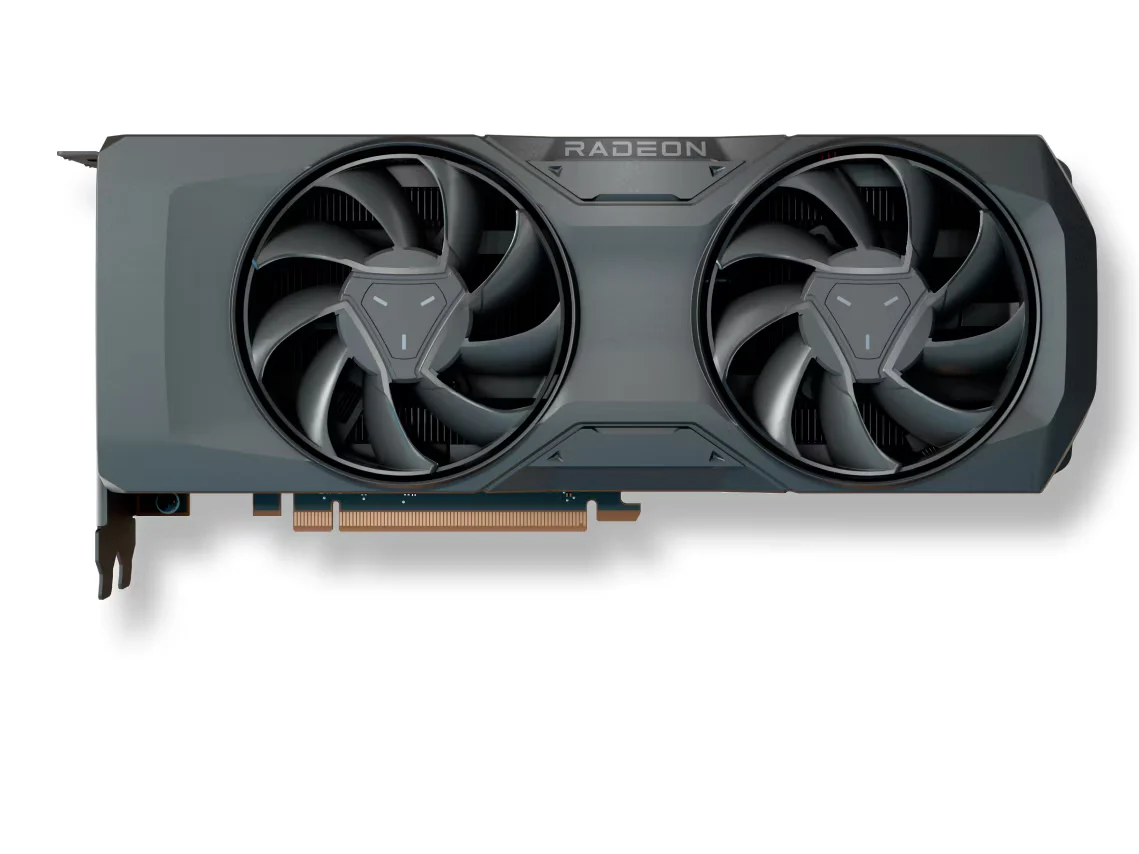
    A day after unveiling Ryzen Pro CPUs aimed at businesses, AMD has quietly released another component for desktops. This time, it’s a desktop graphics card, and as expected, it is part of the RDNA 3 series. The graphics card in focus is the Radeon RX 7700 non-XT, which, as the name implies, is a less powerful version of the 7600 XT.

    Specifications Overview

    This GPU features 40 compute units (CUs), 40 Ray Accelerators, 80 AI accelerators, 96 render output processors (ROPs), and a total of 2,560 stream processors. It is equipped with 18 GB of GDDR6 RAM running at 19.5 Gbps (with a memory bandwidth of 624 GB/s) and supported by 40 GB of Infinity Cache. The total board power consumption is rated at 263 watts, and AMD suggests using a 700 watt power supply unit (PSU) along with two 8-pin power connectors. Interestingly, this power requirement is slightly higher than that of the RX 7700 XT, which is listed at 245 watts, even though the RX 7700 is meant to be a less capable option.

    Performance Insights

    AMD advertises the RX 7700 as a 1440p graphics card, capable of delivering a smooth 60 frames per second in popular games like Hogwarts Legacy, Call of Duty: Black Ops 6, Red Dead Redemption 2, Dying Light 2, and Ghost of Tsushima. However, the company has yet to disclose the price for the RX 7700 or its release date. It is expected that this card will first be available in pre-built systems before making its way to the DIY market later on.

    AMD’s latest addition to the graphics card lineup showcases their commitment to providing powerful options for gamers and creative professionals alike.

    Source:
    Link


  • AMD RDNA 5 Desktop GPUs Expected to Have Up to 96 CUs

    AMD RDNA 5 Desktop GPUs Expected to Have Up to 96 CUs

    Key Takeaways

    1. AMD is developing new graphics cards called Alpha Trion 0 (AT0), Alpha Trion 2 (AT2), Alpha Trion 3 (AT3), and Alpha Trion 4 (AT4).
    2. AT2 is expected to outperform AT3 with 4 Shader Arrays (SA), 8 Shader Engines (SE), and 40 Compute Units (CUs).
    3. AT0 may achieve 96 CUs with 16 SEs and 4 SAs, potentially rivaling Nvidia’s top GeForce RTX cards.
    4. An upgraded Radeon RX 9070 GRE is anticipated to be unveiled this fall.
    5. Nvidia is expected to launch the GeForce RTX 50 Super series around the same time, but details on pricing and release dates are unclear.


    A few days ago, Moore’s Law is Dead revealed some information about new RDNA 5 or UDNA-based desktop graphic cards. To summarize, the well-known YouTube channel talked about the Alpha Trion 3 and Alpha Trion 4, which are typically referred to as AT3 and AT4.

    New Developments in AMD’s Graphics Cards

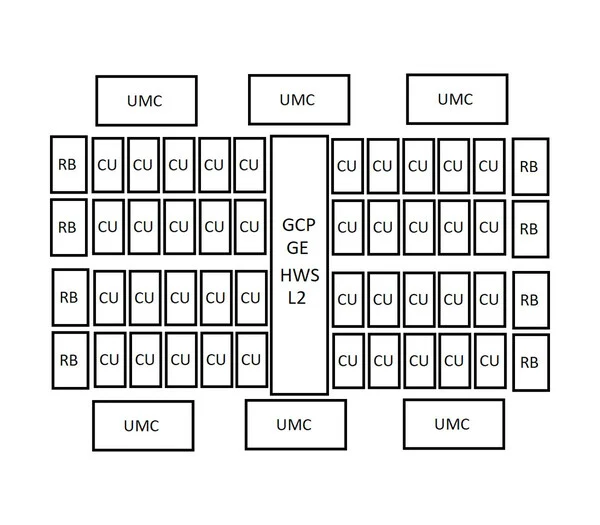
    Now, Kepler_L2 has mentioned that AMD is also developing Alpha Trion 0 (AT0) and Alpha Trion 2 (AT2) to provide more advanced options. Reports suggest that AT2 will outshine AT3 with its configuration of 4 Shader Arrays (SA), 8 Shader Engines (SE), and 40 Compute Units (CUs). In comparison, the current Radeon RX 9060 XT and Radeon RX 9070 XT (currently priced at $719.99 on Amazon) come with 32 CUs and 64 CUs, respectively.

    Performance Expectations

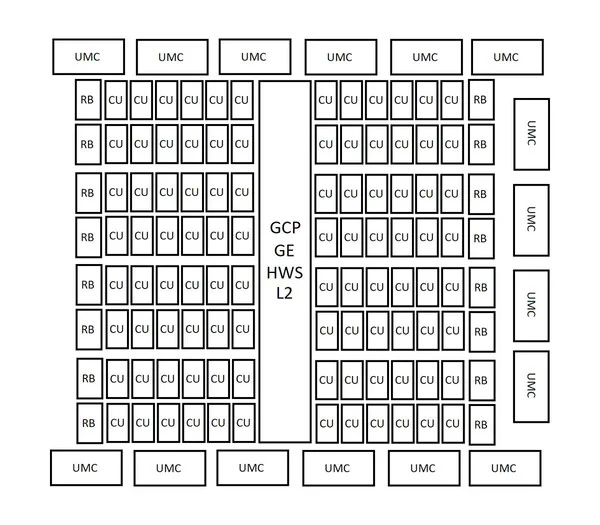
    On the other hand, AT0 is anticipated to achieve 96 CUs with 16 SEs and 4 SAs. If these specifications are accurate, then AMD’s next series might get much closer to the performance level of Nvidia’s top GeForce RTX desktop graphics cards. Furthermore, it’s expected that AMD will unveil an upgraded Radeon RX 9070 GRE this fall. It seems that Nvidia will also be launching the GeForce RTX 50 Super series around the same time. However, details about pricing, release dates, and even the actual names of the products are still unclear at this moment.

    Source:
    Link


  • AMD RDNA 5 Desktop GPU Leak: Mid-Range AT3 with 48 CUs

    AMD RDNA 5 Desktop GPU Leak: Mid-Range AT3 with 48 CUs

    Key Takeaways

    1. AMD’s upcoming high-end mobile APUs, the Zen 6 Medusa Halo and Medusa Halo Mini, will use new iGPU dies, AT3 and AT4, which are also part of the RDNA 5 desktop graphics cards.

    2. The AT4 RDNA 5 GPU will feature 24 Compute Units, a potential 10 MB L2 cache, and a 128-bit LPDDR5X memory controller, with expected VRAM between 12-24 GB.

    3. Performance of the AT4 GPU is anticipated to be between the RTX 3060 and RTX 4060, making it a budget-friendly option by 2027.

    4. The AT3 RDNA 5 GPU will have 48 Compute Units and increased memory bandwidth, with potential VRAM support up to 512 GB, but realistically expected between 16-32 GB.

    5. The AT3’s performance is predicted to be comparable to the RTX 4070 and RX 9070, with significantly improved ray tracing capabilities, making it a strong contender in the market.


    According to the well-known leaker Moore’s Law Is Dead, AMD is set to alter its design approach for the integrated graphics (iGPU) in its upcoming high-end mobile APUs, the Zen 6 Medusa Halo and Medusa Halo Mini. Unlike the existing Strix Halo APUs, the new Medusa models are expected to incorporate the “AT3” and “AT4” iGPU dies, which will also be featured in AMD’s upcoming discrete RDNA 5 desktop graphics cards.

    Specifications of the New GPUs

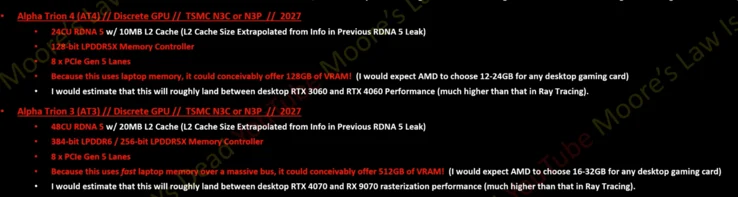
    The AT4 RDNA 5 GPU is said to include 24 Compute Units, along with a potential 10 MB L2 cache and 8x PCIe Gen 5 lanes. This is particularly interesting for the more affordable card that will utilize this GPU, as the leaker mentions a 128-bit LPDDR5X memory controller instead of the standard GDDR memory commonly found in desktop configurations.

    MLID suggests that the RDNA 5 card equipped with AT4 might use laptop memory and could theoretically support up to 128 GB of VRAM. However, the leaker realistically estimates the VRAM to be between 12-24 GB.

    Performance Expectations

    In terms of performance, MLID believes that the RDNA 5 desktop card with the AT4 will likely perform “roughly” between the RTX 3060 and the RTX 4060. This suggests that by 2027, this desktop board could be very budget-friendly, similar to the current RX 6500 XT.

    On the other hand, the AT3 RDNA 5 GPU is reportedly much stronger than AT4, featuring double the Compute Units and increased memory bandwidth. It is said to come with 48 CUs and a memory controller that could be either 384-bit LPDDR6 or 256-bit LPDDR5X. Like AT4, the AT3-based RDNA 5 desktop card is also expected to leverage laptop LPDDR memory in place of GDDR.

    Future of RDNA 5 GPUs

    Theoretically, the AT3 RDNA 5 board could support up to 512 GB of VRAM, while MLID predicts the actual range for a desktop gaming card will be around 16-32 GB. For performance, MLID anticipates that the AT3 GPU will offer rasterization performance between the RTX 4070 and the RX 9070, along with significantly improved ray tracing capabilities. This range is quite broad, as the RX 9070 is approximately 37% faster than the RTX 4070 based on testing.

    In summary, MLID’s leaked information regarding the cost-effective RDNA 5 GPUs is quite intriguing and ambitious, especially the use of laptop memory over GDDR and the sharing of GPU chiplets with the Medusa Halo APUs. Until further reports validate these claims, it’s wise to approach them with a healthy degree of skepticism.

    Source:
    Link


  • New Eufy Robot Vacuum S2: Powerful Model Coming Soon

    New Eufy Robot Vacuum S2: Powerful Model Coming Soon

    Key Takeaways

    1. The eufy Robot Vacuum S2 (model T2081) is expected to have up to 30,000 Pa suction power and HydroJet mopping technology with an 11.4-inch roller mop.
    2. Features include the 12-in-1 UniClean Station for cleaning and charging, as well as compatibility with the Matter smart home protocol.
    3. Beta testing suggests it utilizes cyclonic vacuum technology with 25,000 Pa suction power and advanced recognition for spilled liquids and pet waste.
    4. It may offer features like hot water cleaning at the docking station, 12N pressure for mopping, and a maximum run time of 40 minutes in high suction mode.
    5. The anticipated retail price is around $1,799 in the US and €1,599 in Europe, with a possible release in late 2025.


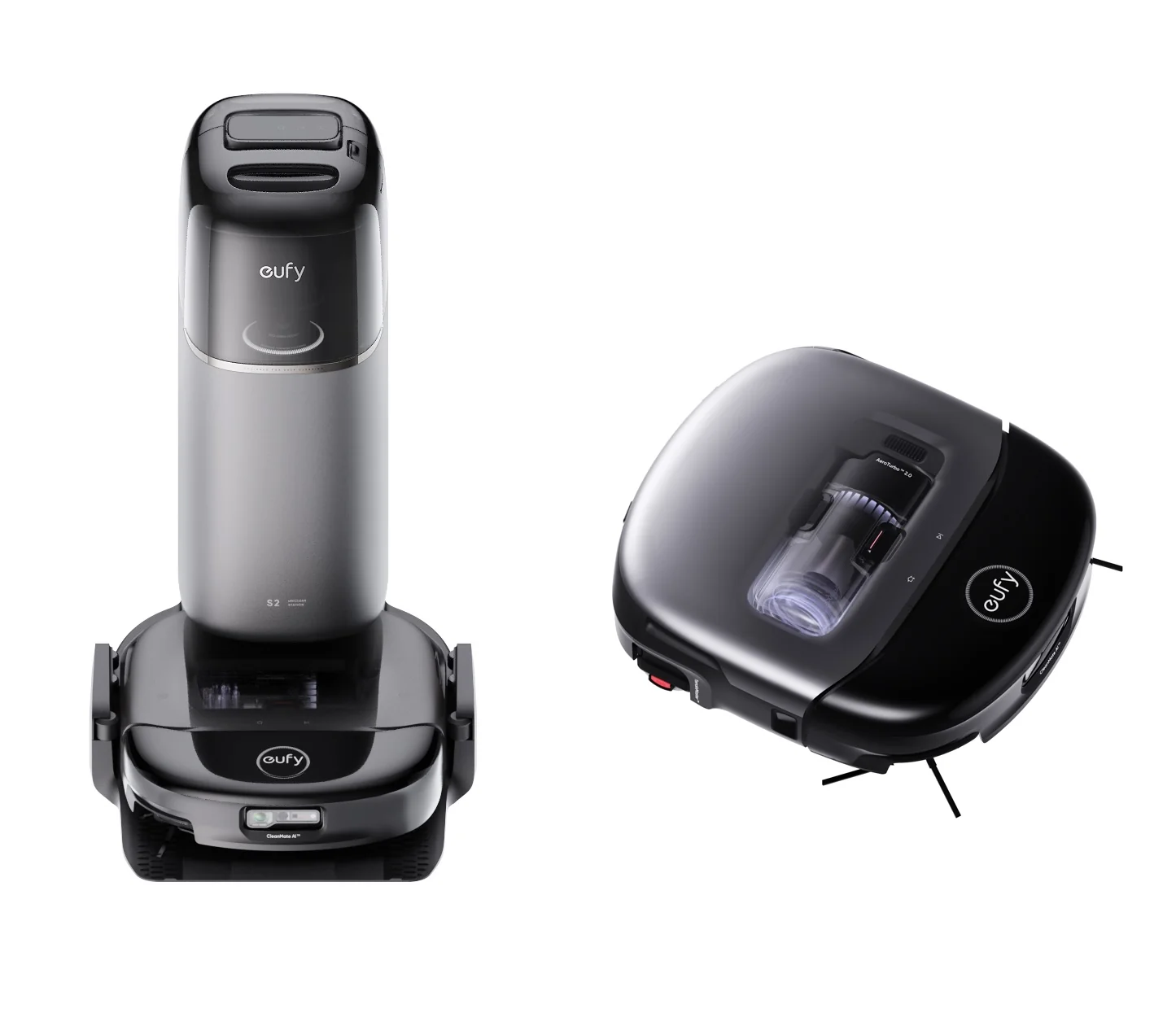
    The eufy Robot Vacuum S2 with HydroJet is coming soon. This smart home gadget, known as model T2081, looks similar to the eufy Robot Vacuum Omni S1 Pro, which is currently priced at $949.99 on Amazon.

    Powerful Suction and Features

    A recent update from the trusted source AnkerInsider indicates that the Robot Vacuum S2 may provide up to 30,000 Pa suction power, positioning it as one of the strongest vacuums available. Additionally, it is anticipated to include eufy’s HydroJet mopping technology, likely featuring an 11.4-inch (~290 mm) roller mop. Among its other expected features is the 12-in-1 UniClean Station, designed to combine cleaning and charging functions, along with compatibility for the Matter smart home protocol.

    Insights from Testing

    More information has surfaced on Reddit after beta testing and a customer feedback survey. According to these insights, the Robot Vacuum S2 is said to utilize cyclonic vacuum technology, achieving suction power of up to 25,000 Pa, supported by an image (shown below). The D Matrix Eye 2.0/ClearView 2.0 is reported to outperform other technologies in recognizing spilled liquids and pet waste. When it comes to mopping, there are mentions of 12N pressure and a retractable roller mop, including hot water cleaning at the docking station. There could also be lighting effects from its clear dust bin, and it may offer a maximum run time of up to 40 minutes in high suction mode.

    Pricing and Release Date

    Eufy, which is part of Anker, has not yet confirmed the release date or pricing for the Robot Vacuum S2. It is speculated that the retail price might be around $1,799 in the US and €1,599 in Europe, with a possible launch in late 2025.

    Source:
    Link


  • AMD Halts Ryzen 7 5700X3D Shipments, Ending AM4 Gaming Upgrades

    AMD Halts Ryzen 7 5700X3D Shipments, Ending AM4 Gaming Upgrades

    Key Takeaways

    1. AMD’s AM4 platform, including the Ryzen 5 5500X3D, is being phased out, especially in the gaming sector.
    2. The Ryzen 7 5700X3D, launched in January 2024 at $249.99, experienced significant price fluctuations, dropping to $187.83 before stabilizing.
    3. Current availability of the Ryzen 5700X3D is limited, with sources indicating no future restocks and existing stock running out on Amazon.
    4. AMD has already phased out the Ryzen 5 5600X3D and Ryzen 7 5800X3D, shifting focus to newer Zen 4 and Zen 5 architectures.
    5. Gamers needing a similar core count to the Ryzen 7 5700X3D must now consider the Ryzen 7 7800X3D, priced at $376.16.


    AMD’s AM4 platform has built a strong reputation over the years, with its latest update arriving as recently as June 2025, specifically the Ryzen 5 5500X3D. However, it seems that the company is finally ready to let this older platform phase out. This is particularly true in the gaming sector, as a new report from Tweakers indicates that AMD intends to move the popular Ryzen 7 5700X3D to an end-of-life status.

    Launch and Pricing History

    The Ryzen 5700X3D made its debut at CES 2024 in January of that year, offering a good value for gamers since its release. Interestingly, the launch price for the 5700X3D was set at $249.99, but it quickly saw a price drop later in the same year, hitting a record low of $187.83 on Amazon. In the time that followed, prices surged, exceeding the $249 MSRP in May 2025, before finally stabilizing back to that original MSRP.

    Current Availability

    While AMD has not officially announced the status of the 5700X3D, sources from Tweakers suggest that the CPU will not be restocked in the future. This implies that only the remaining stock is available, which seems to have already run out on Amazon. Currently, searches yield no results for this processor, and when you do come across the product page, the prices are excessively high.

    Transition to Newer Models

    This decision comes after AMD phased out both the Ryzen 5 5600X3D and Ryzen 7 5800X3D late last year, with new Zen 4 and Zen 5 architectures stepping in as replacements for what is now clearly outdated technology. To achieve the same core count in a more current AMD CPU, gamers will need to look towards the Ryzen 7 7800X3D, which is available for $376.16 on Amazon.

    Source:
    Link


  • AMD Radeon RX 7400 Graphics Card Launches in Dell Tower Desktops

    AMD Radeon RX 7400 Graphics Card Launches in Dell Tower Desktops

    Key Takeaways

    1. AMD has launched the Radeon RX 7400 graphics card, positioned below the RX 7600, with a focus on 1080p gaming.
    2. The RX 7400 features 28 Compute Units, 1,792 shaders, and 13.3 billion transistors, likely using the RDNA 3-based Navi 33 GPU.
    3. It comes with 32 MB of AMD Infinity Cache, 8 GB of GDDR6 VRAM, and offers a memory bandwidth of 173 GB/s.
    4. The card is a single-slot design, measuring 167 mm in length, and requires a minimum PSU of 450 W.
    5. Availability may be limited to pre-built OEM systems, with no official release date announced yet.


    AMD has quietly launched a new Radeon RX 7000 desktop graphics card after revealing the Radeon Pro W7400 earlier this week. The Radeon RX 7400 is now available for examination on AMD’s site and is positioned below the Radeon RX 7600, which currently retails for $279.99 on Amazon. It seems the previously rumored Radeon RX 7300 and Radeon RX 7500 have been cancelled.

    Specifications Overview

    The Radeon RX 7400 is marketed as a 1080p graphics card on AMD’s platform. It boasts 28 Compute Units, likely using the same RDNA 3-based Navi 33 GPU variant seen in the Radeon Pro W7400. This model is equipped with 1,792 shaders, 64 ROPs, and 112 Texture Units (TMUs), totaling 13.3 billion transistors available for use.

    Memory and Connectivity

    In terms of memory, the Radeon RX 7400 comes with 32 MB of AMD Infinity Cache and 8 GB of GDDR6 VRAM, running at a speed of 10.8 Gbps on a 128-bit bus. AMD claims this configuration allows for a memory bandwidth of 173 GB/s. Furthermore, the card includes DisplayPort 2.1 and HDMI 2.1 ports, but lacks any USB Type-C ports.

    Design and Availability

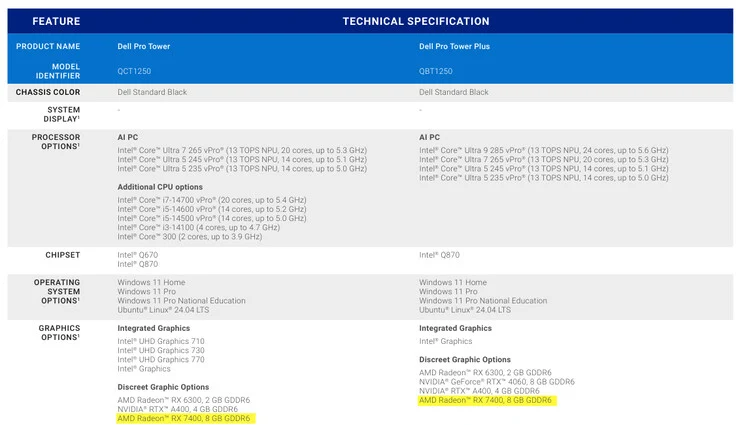
    This graphics card is designed to be a single-slot unit, measuring 167 mm in length, and requires a minimum PSU of 450 W. AMD has yet to announce the release date for the Radeon RX 7400. It is possible that the card will primarily be available through pre-built OEM systems, such as Dell’s Pro Tower QCT1250 and Pro Tower Plus QBT1250, both of which list the Radeon RX 7400 as an option for discrete graphics. For further technical specifics on the Radeon RX 7400, you can check AMD’s website.

    Source:
    Link


  • AMD Launches Radeon RX 9060: Great 1080p Performance & FSR 4

    AMD Launches Radeon RX 9060: Great 1080p Performance & FSR 4

    Key Takeaways

    1. AMD has launched the budget-friendly Radeon RX 9060, which is cheaper than the RX 9060 XT.
    2. The Radeon RX 9060 features a reduced number of Compute Units (CUs) and AI Accelerators compared to the RX 9060 XT.
    3. The boost clock of the RX 9060 is 4.4% lower than that of the RX 9060 XT.
    4. AMD has not released benchmark comparisons but provided average FPS data for popular AAA games.
    5. The Radeon RX 9060 is expected to be available only in pre-built systems, not for individual purchase.


    AMD has recently added the Radeon RX 9060 to its Radeon RX 9000 lineup, following several leaks about the desktop graphics card. As anticipated, the Radeon RX 9060 is a more budget-friendly option compared to the 8 GB version of the Radeon RX 9060 XT, which is currently priced at $269.99 on Amazon. Both models utilize the Navi 44 GPU, but AMD has made some cuts in features for the Radeon RX 9060.

    Specifications Changes

    For example, the number of Compute Units (CUs) has been decreased from 32 to 28, marking a reduction of 12.5%. Similarly, the new card has 12.5% fewer AI Accelerators, totaling 56. Although AMD hasn’t disclosed the gaming frequency of the Radeon RX 9060 yet, its boost clock is 4.4% lower compared to the Radeon RX 9060 XT 8 GB, sitting at 2.99 GHz. Additionally, VRAM speeds have dropped by 10% to 18 Gbps. Consequently, the Radeon RX 9060 achieves a memory bandwidth of 288 GB/s with its 8 GB of GDDR6 VRAM over a 128-bit memory bus.

    Performance Insights

    Sadly, AMD hasn’t shared any benchmark comparisons at this time. Instead, they have revealed average FPS data from several popular AAA games, which we have included below. The FSR 4-capable card is currently anticipated to be available only in pre-built systems, rather than for individual purchase like the rest of the Radeon RX 9000 series. Interestingly, the same situation applies to the Radeon RX 7400, which has also been officially launched.

    Source:
    Link


  • Radeon Pro W7400: 55W AMD GPU Needs No Power Connector

    Radeon Pro W7400: 55W AMD GPU Needs No Power Connector

    Key Takeaways

    1. The Radeon Pro W7400 is an entry-level GPU with 28 RDNA 3 compute units and a boost clock speed of 1.1 GHz, delivering 7.9 TFLOPS of performance.
    2. It has a low power requirement of only 55 watts, allowing it to draw power through PCIe without needing an additional power cable.
    3. The graphics card features 8GB of GDDR6 memory with a bandwidth of 172.8 GB/s over a 128-bit interface.
    4. Measuring 16.8 cm and occupying a single slot, the W7400 is designed for compact cases and can be used alongside a more powerful GPU.
    5. It includes four mini-DisplayPort 2.1 outputs, supporting up to four 4K displays or two 8K displays simultaneously.


    AMD is launching a new entry-level model that sits below the Radeon Pro W7500 (available from $425 on Amazon). This new model makes some trade-offs in memory bandwidth and clock speeds. Specifically, the Radeon Pro W7400 features 28 RDNA 3 compute units and can reach boost clock speeds of 1.1 GHz, resulting in a performance output of 7.9 TFLOPS.

    Power Efficiency

    Thanks to its lower clock speeds, this GPU has a reduced power requirement, using only 55 watts. This means that the Radeon Pro W7400 can receive sufficient power through PCIe, eliminating the need for an additional power cable that connects directly to the PSU. AMD has equipped it with 8GB of GDDR6 memory, which has a bandwidth of 172.8 GB/s over a 128-bit interface. The GPU connects to the motherboard via PCIe 4.0 x8.

    Size and Compatibility

    Measuring 16.8 cm in length and occupying just a single slot, this graphics card is designed to fit comfortably in compact cases. In larger desktop setups, the Radeon Pro W7400 can also be installed alongside a more powerful GPU, depending on the motherboard configuration. This setup could be useful, as the Radeon Pro W7400 allows for connection to multiple monitors. Additionally, this graphics card comes with four mini-DisplayPort 2.1 outputs, capable of supporting up to four 4K displays or two 8K displays at the same time.

    AMD has yet to announce a release date or an official pricing for the Radeon Pro W7400. For more information about its specifications and capabilities, users can visit AMD’s official website.

    Source:
    Link