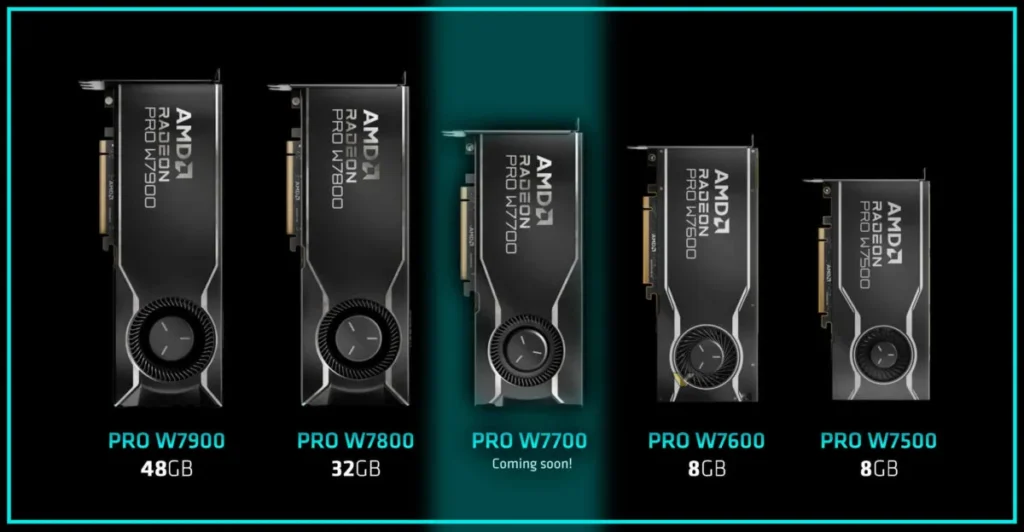
The tech landscape is brimming with excitement as AMD unveils a teaser of its upcoming professional graphics card, the Radeon PRO W7700, enriched with 16GB of VRAM. This addition to AMD’s Radeon PRO W7000 series is believed to bring a fresh cooler design, albeit retaining the recognizable blower design inherent to the series.
Spotlight on Radeon PRO W7700
The Radeon PRO W7700 emerges as a promising contender in the professional graphics domain, positioned between the higher-end W7800 and the more affordable W7600 models. Rumors swirling around the tech sphere hint at a possible launch on November 21, propelling enthusiasts and professionals into a state of eager anticipation.
PRO W7700
Unique Design Features
The cooler design of the W7700 is touted to be distinct, veering away from the traditional design seen in its series counterparts. This innovative design, coupled with the familiar blower style, is expected to offer efficient cooling solutions, vital for maintaining optimal performance during intensive graphical tasks.
Pricing and Performance
Pricing is a critical aspect that could determine the W7700’s appeal among its target audience. The W7800 and W7600 are priced at $2,499 and $599 respectively, paving the way for the W7700 to occupy the middle ground. This pricing strategy could potentially cater to a wider range of professionals, offering a harmonious blend of cost and performance.
PRO W7700
Final Thoughts
The Radeon PRO W7700 is a testament to AMD’s continuous endeavor to bridge the gap between high-end performance and affordability. As the tech community waits with bated breath for its official release, the W7700 is poised to carve a niche for itself in the professional graphics card market.
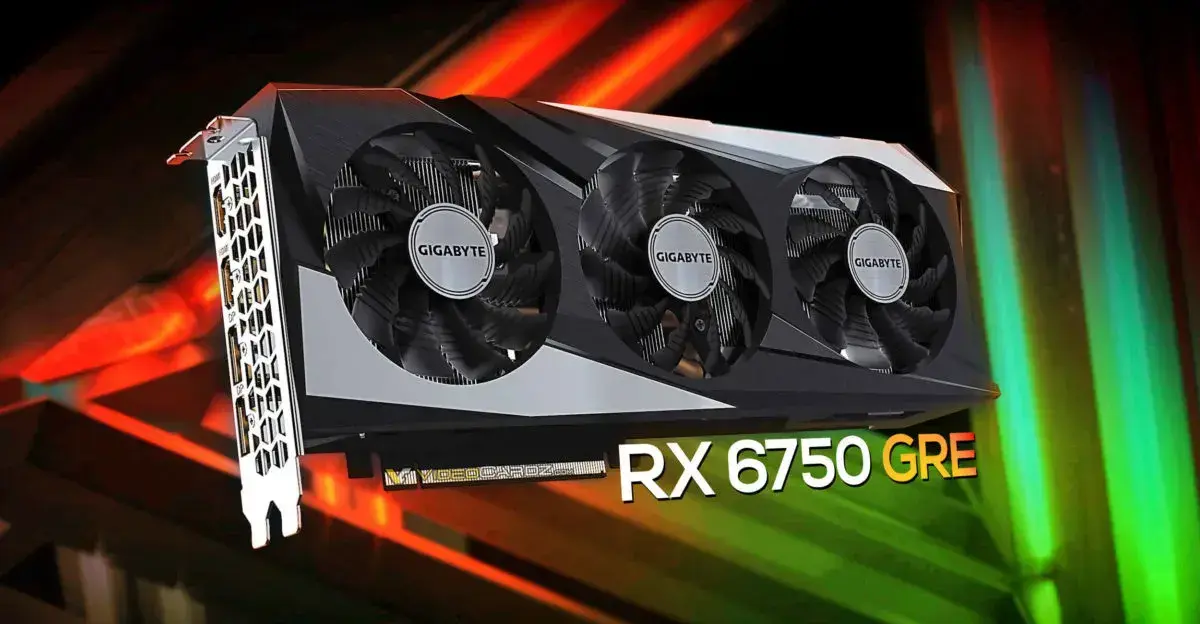
The world of graphics cards is about to witness a significant evolution with the introduction of AMD’s Radeon RX 6750 GRE 12GB Graphics Card, set to launch on October 18th. This highly anticipated release showcases AMD’s continuous efforts to provide groundbreaking graphics solutions for both dedicated gamers and professionals.
Stellar Specifications
One of the key highlights of the Radeon RX 6750 GRE is its robust 12GB GDDR6 memory, ensuring smoother performance even in the most graphics-intensive scenarios. This feature is particularly beneficial for individuals who enjoy high-end gaming or engage in professional graphic design and video editing tasks. The improved memory bandwidth will significantly enhance the user experience by reducing potential lag and rendering issues.
Moreover, the RX 6750 GRE is expected to come with a set of cutting-edge features that will push the boundaries of what gamers can expect from a mid-range graphics card. The launch is particularly timely, given the current high demand for more advanced graphics solutions capable of supporting the latest gaming titles and professional applications.
A Competitive Edge
AMD has been in a stiff competition with other industry giants like NVIDIA. The launch of Radeon RX 6750 GRE is a clear indication of AMD’s commitment to keeping up with, if not surpassing, the competition. The upcoming graphics card is not only about superior performance but also about providing a more cost-effective solution to gamers and professionals alike.
The Radeon RX 6750 GRE is expected to provide a better price-to-performance ratio, making it an attractive option for those who are looking to upgrade their graphics solution without breaking the bank. While the exact pricing details have not been disclosed yet, the buzz surrounding the release suggests that AMD is aiming to provide a competitively priced product while not compromising on performance.
Launch and Availability
The Radeon RX 6750 GRE is set to launch on October 18th, with a primary release in China. The graphics card will also be available for DIY enthusiasts, as confirmed by Gigabyte. This opens up a new avenue for those who prefer building their own PCs to tailor the specifications to their individual needs.
As the launch date approaches, the excitement within the gaming and professional communities continues to build. The AMD Radeon RX 6750 GRE 12GB Graphics Card is not just a new product; it’s a statement by AMD, showcasing its dedication to delivering high-quality, performance-oriented graphics solutions.
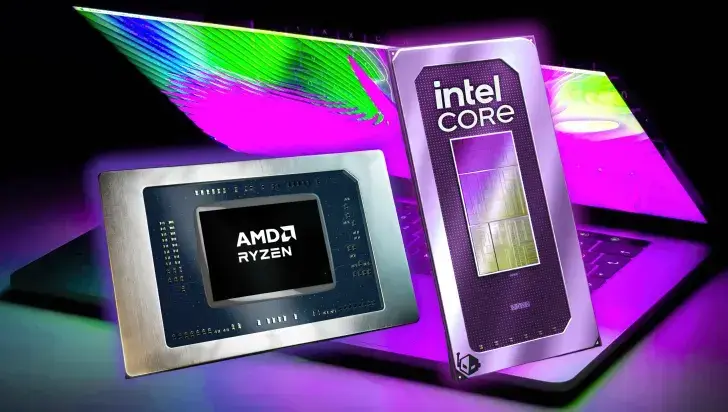
When it comes to processor technology, the battle lines between AMD and Intel have always been distinctly drawn. Both tech giants are in a constant scramble to outdo each other, and the upcoming AMD Ryzen 8000 series and Intel’s future CPUs—particularly the Arrow Lake-H/HX and Lunar Lake-M—indicate that the race is nowhere near slowing down. Leaks and revelations about these future chipsets provide a peek into what might be the next big things in the laptop CPU arena.
AMD Steps Up with Ryzen 8000 Series
AMD’s progression in the CPU landscape has been remarkable, and the expected arrival of the Ryzen 8000 series (codenamed Strix Point) in 2024 heralds the next chapter in their evolution. While details about clock speeds, core counts, and TDP are still under wraps, the Ryzen 8000 series is anticipated to be based on the 3nm Zen 5 architecture. This leap forwards could potentially deliver significant improvements in performance and energy efficiency compared to its predecessors.
Developers and gaming enthusiasts are eagerly awaiting more details about the Ryzen 8000 series, as it promises to uphold AMD’s legacy of providing robust performance for various computing needs.
CPU FAMILY NAME
AMD KRACKAN POINT
AMD FIRE RANGE
AMD STRIX POINT HALO
AMD STRIX POINT
AMD HAWK POINT
AMD DRAGON RANGE
AMD PHOENIX
AMD REMBRANDT
AMD CEZANNE
AMD RENOIR
AMD PICASSO
AMD RAVEN RIDGE
Family Branding
AMD Ryzen 9040 (H/U-Series)
AMD Ryzen 8055 (HX-Series)
AMD Ryzen 8050 (H-Series)
AMD Ryzen 8050 (H/U-Series)
AMD Ryzen 8040 (H/U-Series)
AMD Ryzen 7045 (HX-Series)
AMD Ryzen 7040 (H/U-Series)
AMD Ryzen 6000 AMD Ryzen 7035
AMD Ryzen 5000 (H/U-Series)
AMD Ryzen 4000 (H/U-Series)
AMD Ryzen 3000 (H/U-Series)
AMD Ryzen 2000 (H/U-Series)
Process Node
4nm
5nm
4nm
4nm
4nm
5nm
4nm
6nm
7nm
7nm
12nm
14nm
CPU Core Architecture
Zen 5
Zen 5D
Zen 5C
Zen 5D + Zen 5C
Zen 4
Zen 4
Zen 4
Zen 3+
Zen 3
Zen 2
Zen +
Zen 1
CPU Cores/Threads (Max)
TBD
16/32
16/32
12/24
8/16
16/32
8/16
8/16
8/16
8/16
4/8
4/8
L2 Cache (Max)
TBD
TBD
TBD
TBD
4 MB
16 MB
4 MB
4 MB
4 MB
4 MB
2 MB
2 MB
L3 Cache (Max)
TBD
TBD
64 MB
32 MB
16 MB
32 MB
16 MB
16 MB
16 MB
8 MB
4 MB
4 MB
Max CPU Clocks
TBD
TBD
TBD
TBD
TBD
5.4 GHz
5.2 GHz
5.0 GHz (Ryzen 9 6980HX)
4.80 GHz (Ryzen 9 5980HX)
4.3 GHz (Ryzen 9 4900HS)
4.0 GHz (Ryzen 7 3750H)
3.8 GHz (Ryzen 7 2800H)
GPU Core Architecture
TBD
RDNA 3+ 4nm iGPU
RDNA 3+ 4nm iGPU
RDNA 3+ 4nm iGPU
RDNA 3 4nm iGPU
RDNA 2 6nm iGPU
RDNA 3 4nm iGPU
RDNA 2 6nm iGPU
Vega Enhanced 7nm
Vega Enhanced 7nm
Vega 14nm
Vega 14nm
Max GPU Cores
TBD
2 CUs (128 cores)
40 CUs (2560 Cores)
16 CUs (1024 Cores)
12 CUs (786 cores)
2 CUs (128 cores)
12 CUs (786 cores)
12 CUs (786 cores)
8 CUs (512 cores)
8 CUs (512 cores)
10 CUs (640 Cores)
11 CUs (704 cores)
Max GPU Clocks
TBD
TBD
TBD
TBD
TBD
2200 MHz
2800 MHz
2400 MHz
2100 MHz
1750 MHz
1400 MHz
1300 MHz
TDP (cTDP Down/Up)
15W-45W (65W cTDP)
55W-75W (65W cTDP)
25-1250W
15W-45W (65W cTDP)
15W-45W (65W cTDP)
55W-75W (65W cTDP)
15W-45W (65W cTDP)
15W-55W (65W cTDP)
15W -54W(54W cTDP)
15W-45W (65W cTDP)
12-35W (35W cTDP)
35W-45W (65W cTDP)
Launch
2025?
2H 2024?
2H 2024?
2H 2024?
Q1 2024?
Q1 2023
Q2 2023
Q1 2022
Q1 2021
Q2 2020
Q1 2019
Q4 2018
Intel Fights Back with Arrow Lake and Lunar Lake
Not to be outdone, Intel is gearing up to counter with its own set of innovations. The Intel Arrow Lake-H/HX CPUs, expected to drop in the 2024 timeframe, signal Intel’s efforts to sustain their competitive edge in the high-performance computing market. Although the nitty-gritty specifications remain elusive, it’s apparent that Intel is focusing on enhancing multi-thread performance and graphical capabilities with these chips.
Looking further ahead, Intel’s Lunar Lake-M, anticipated in 2025, showcases the company’s commitment to pushing the boundaries of mobile computing. Although specific details about this chipset are sparse, the innovation is expected to continue Intel’s pursuit of superior performance and energy efficiency in the laptop domain.
CPU FAMILY
LUNAR LAKE
ARROW LAKE
METEOR LAKE
RAPTOR LAKE
ALDER LAKE
Process Node (CPU Tile)
Intel 20A?
Intel 20A ‘5nm EUV”
Intel 4 ‘7nm EUV’
Intel 7 ’10nm ESF’
Intel 7 ’10nm ESF’
Process Node (GPU Tile)
TSMC 3nm?
TSMC 3nm
TSMC 5nm
Intel 7 ’10nm ESF’
Intel 7 ’10nm ESF’
CPU Architecture
Hybrid
Hybrid (Four-Core)
Hybrid (Triple-Core)
Hybrid (Dual-Core)
Hybrid (Dual-Core)
P-Core Architecture
Lion Cove?
Lion Cove
Redwood Cove
Raptor Cove
Golden Cove
E-Core Architecture
Skymont?
Skymont
Crestmont
Gracemont
Gracemont
LP E-Core Architecture (SOC)
Skymont?
Crestmont?
Crestmont?
N/A
N/A
Top Configuration
TBD
TBD
6+8 (H-Series)
6+8 (H-Series) 8+16 (HX-Series)
6+8 (H-Series) 8+8 (HX-Series)
Max Cores / Threads
TBD
TBD
14/20
14/20
14/20
Planned Lineup
U Series?
H/P/U Series
H/P/U Series
H/P/U Series
H/P/U Series
GPU Architecture
Xe2-LPG (Battlemage)
Xe-LPG (Alchemist)
Xe-LPG (Alchemist)
Iris Xe (Gen 12)
Iris Xe (Gen 12)
GPU Execution Units
64 EUs
192 EUs
128 EUs (1024 Cores)
96 EUs (768 Cores)
96 EUs (768 Cores)
Memory Support
TBD
TBD
DDR5-5600 LPDDR5-7400 LPDDR5X – 7400+
DDR5-5200 LPDDR5-5200 LPDDR5-6400
DDR5-4800 LPDDR5-5200 LPDDR5X-4267
Memory Capacity (Max)
TBD
TBD
96 GB
64 GB
64 GB
Thunderbolt 4 Ports
TBD
TBD
4
4
4
WiFi Capability
TBD
TBD
WiFi 6E
WiFi 6E
WiFi 6E
TDP
TBD
TBD
7W-45W
15-55W
15-55W
Launch
~2025
2H 2024
2H 2023
1H 2023
1H 2022
What This Means for Consumers and the Tech Industry
The coming years in the CPU industry are poised to be incredibly exciting with these impending releases. AMD and Intel, through their upcoming offerings, are not only striving to outshine each other but are also aiming to redefine what users can expect from laptop performance.
For consumers, this signifies not just an improvement in raw computing capabilities, but also potential enhancements in areas like gaming, content creation, and multitasking. As these processors adopt more advanced architectures, users can anticipate laptops that deliver more power, longer battery life, and superior performance across various applications and uses.
The pricing details for these future processors are still undisclosed, leaving tech enthusiasts and experts speculating about the cost versus performance ratio these chips will bring to the table. However, if history is any indication, both AMD and Intel will likely aim to balance premium performance with competitive pricing to capture the attention and wallets of consumers.
As more details unfold, it will be fascinating to see how the rivalry between AMD and Intel shapes the future of processor technology and, by extension, the devices that become integral to our digital lives.
In a decisive stride to bolster its AI (Artificial Intelligence) stature against rivals like Nvidia, Advanced Micro Devices (AMD) has acquired the AI software startup Nod.AI. This acquisition, inked on October 10, 2023, signifies AMD‘s intensified focus on augmenting its open-source AI software capabilities, a critical facet in the modern-day tech rivalry.
A Focused Strategy
With this acquisition, AMD aims to optimize compiler-based automation software for a broad spectrum including startups, enterprises, and hyperscalers, heralding a new era of AI-driven solutions that are primed for AMD’s hardware ecosystem1. The move follows AMD’s strategy to build a unified collection of software to fuel the varied chips the company manufactures. This approach is seen as a bid to catch up with Nvidia, which has, over a decade, built a robust advantage in the AI chip market through its software prowess2.
Technological Synergy
Nod.AI’s technology is expected to be a linchpin in enhancing AMD’s products, particularly its Instinct data-center accelerators, Ryzen processors, and Radeon GPUs. The integration will streamline the optimizing time before deploying AI models on AMD processors, thus accelerating the deployment of optimized AI solutions across AMD’s high-performance platforms13.
The collaboration with Nod.AI is anticipated to significantly augment AMD’s ability to furnish AI customers with open software, facilitating the deployment of highly performant AI models tuned for AMD hardware. This is likely to advance open-source compiler technology, thus enabling portable, high-performance AI solutions across the AMD product portfolio.
Nod.AI: A Cog in AMD’s AI Wheel
Founded in 2013 by Enush Elangovan, a former Google employee, Nod.AI has been a notable player in developing AI solutions. With a backing from venture capital firms like Menlo Ventures, 8Square Capital, Atlantic Bridge, Pointguard Ventures, and Walden International, Nod.AI had carved a niche for itself in the AI realm. Its journey has led it to become a primary maintainer and major contributor to crucial AI repositories including SHARK, Torch-MLIR, and OpenXLA/IREE code generation technology13.
AMD’s acquisition of Nod.AI is not just a solitary move, but part of a broader strategy to shore up its AI capabilities. Earlier in the year, AMD had created an AI group, and this acquisition will be housed within that group. With about 1,500 engineers, mostly software-related, the group is on a growth trajectory with plans to expand the team by 300 additional hires in 2023, and more in the following year2.
The AMD-Nod.AI alliance is poised to foster a conducive ecosystem for AI advancements, paving the way for robust, optimized solutions that cater to the evolving demands of the digital age.