Tag: intel Arrow Lake

  • HP Omen Max 45L Gaming Desktop Upgraded with Intel Arrow Lake CPUs

    HP Omen Max 45L Gaming Desktop Upgraded with Intel Arrow Lake CPUs

    Key Takeaways

    1. Intel’s updated Arrow Lake CPUs are now included in HP’s Omen Max 45L pre-built gaming systems.
    2. Graphics card options for the Omen Max 45L include the RTX 5090D V2, RTX 5080, RTX 5070 Ti, RTX 5070, RTX 5060 Ti, RTX 5060, and the Radeon RX 9070 XT for AMD users.
    3. The Omen Max 45L can be customized with up to 128 GB of DDR5-4800 RAM or 64 GB of DDR5-6000 RAM, along with various storage options including multiple NVMe SSDs and a SATA HDD.
    4. Connectivity features include two 10 Gbps USB-C ports, four 5 Gbps USB-A ports, Thunderbolt 4.0, and wireless options like Wi-Fi 7 and Bluetooth 6.0.
    5. The Omen Max 45L is set to go on sale in May, with pricing details to be announced closer to the launch date.


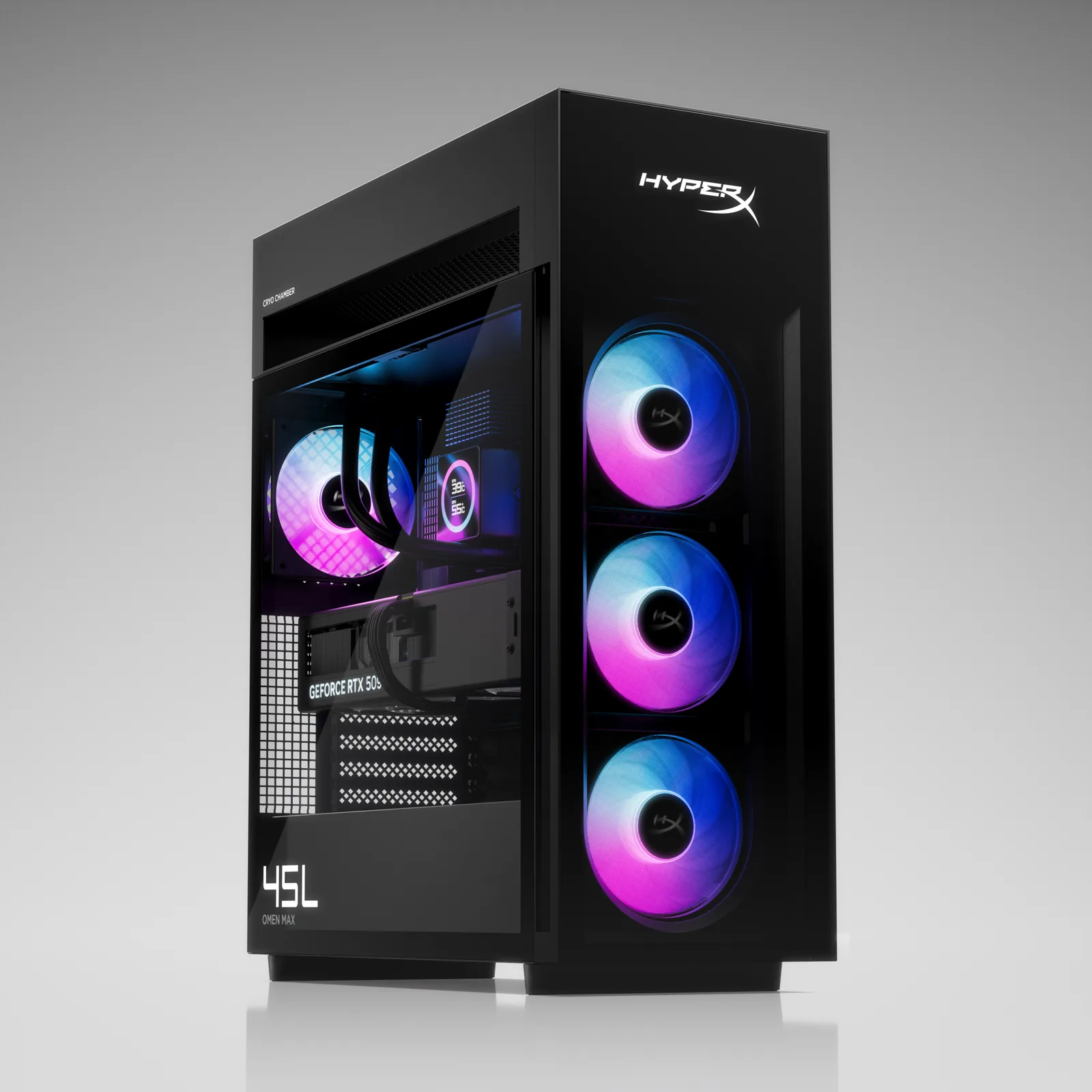
    Shortly after Intel quietly introduced the updated Arrow Lake CPUs for desktop computers, manufacturers like HP have begun to include them in their pre-built gaming systems. The high-end model, the Omen Max 45L, can now be set up with the Core Ultra 7 270K Plus. The graphics card options remain largely unchanged, as neither Nvidia nor AMD has launched any new products in recent months.

    Graphics Options

    The Omen Max 45L does allow users to select the smaller RTX 5090D V2, which comes with 24 GB of GDDR7 VRAM but has fewer CUDA cores than the standard RTX 5090. Other graphics choices include the RTX 5080, RTX 5070 Ti, RTX 5070, RTX 5060 Ti, and RTX 5060. For AMD fans, the only option available is the Radeon RX 9070 XT.

    Memory and Storage

    HP enables you to customize the Omen Max 45L with as much as 128 GB of DDR5-4800 RAM. If you desire faster memory, you will need to go with a maximum of 64 GB of DDR5-6000. Storage configurations can include a mix of a 2 TB SATA HDD, a 4 or 2 TB PCIe Gen5 NVMe SSD, and a 2 or 1 TB PCIe Gen4 SSD. The system can be fitted with a powerful 1,200-watt Platinum PSU, though 1,000-Watt 80 Plus Gold and 850 Watt Gold options are also provided for those looking for less expensive choices.

    Connectivity and Availability

    The Omen Max 45L is equipped with a good amount of I/O, featuring two 10 Gbps USB-C ports, four 5 Gbps USB-A ports, four USB 2.0 ports, and a Thunderbolt 4.0 port. For wireless connectivity, you’ll find 2.5 Gbps Ethernet, Wi-Fi 7, and Bluetooth 6.0. Disassembling the unit is completely tool-free, requiring just the press of a button to open the side panel.

    HP has announced that the Omen Max 45L will go on sale in May. Pricing details will be disclosed as the launch date draws near.
  • Acer Unveils 16-Inch Gaming Laptops with Intel Arrow Lake-HX CPUs

    Acer Unveils 16-Inch Gaming Laptops with Intel Arrow Lake-HX CPUs

    Key Takeaways

    1. Intel launched new Arrow Lake Plus processors, prompting Acer to update its Predator Helios Neo 16 and 16S AI gaming laptops.
    2. The Helios Neo 16S AI features up to a Core Ultra 9 386H processor and Nvidia GeForce RTX 5070 GPU, replacing older models and priced at $1,459.
    3. Upgrades include Core Ultra 7 270HX Plus and Core Ultra 9 290HX Plus processors, with configurations supporting up to a GeForce RTX 5080 and 64 GB of DDR5-6400 RAM.
    4. The Helios Neo 16 AI has a 165 Hz display while the 16S AI offers a 240 Hz display, both with OLED screens and high resolutions.
    5. Availability in Africa, Europe, and the Middle East starts in June 2026, with Australia seeing the Helios Neo 16 AI, while North America will have both models in July.


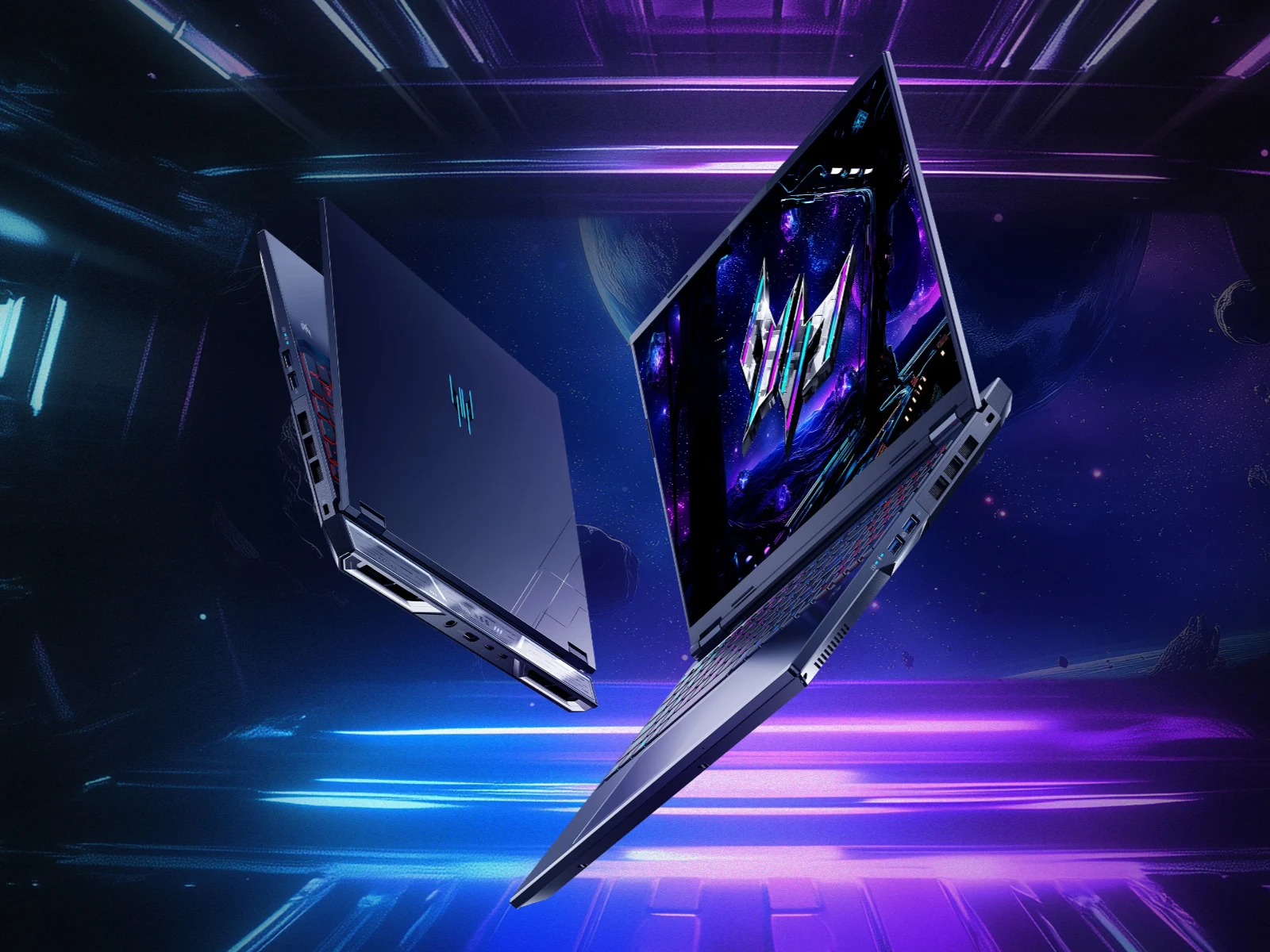
    Earlier today, Intel unveiled a new line of Plus-branded Arrow Lake processors. In reaction to this, Acer has updated its Predator Helios Neo 16 AI and Predator Helios Neo 16S AI gaming laptops. Interestingly, the same updates apply to the larger Predator Helios Neo 18 AI, which we have discussed in a different article.

    Processor and Availability

    To give some background, the Helios Neo 16S AI was first introduced at CES 2026 in January, featuring options up to a Core Ultra 9 386H processor along with an Nvidia GeForce RTX 5070 laptop GPU. This model replaces the previous Arrow Lake HX versions (currently priced at $1,459 on Amazon) and was expected to be available between April and June 2026. Meanwhile, Acer has included Arrow Lake-HX Plus options for both the Helios Neo 16S AI and the larger Helios Neo 16 AI.

    Upgrades and Features

    Acer has specifically enhanced these laptops with the Core Ultra 7 270HX Plus and Core Ultra 9 290HX Plus processors. Both models can also be configured with up to a GeForce RTX 5080, which is an improvement over the Panther Lake-powered Helios Neo 16S AI. Additionally, Acer has outfitted its new 16-inch gaming laptops with 92 Wh batteries and can support up to 64 GB of DDR5-6400 RAM.

    Display and Release Dates

    However, the Helios Neo 16 AI comes with a 165 Hz display, while the Helios Neo 16S AI boasts a 240 Hz variant. Both laptops feature OLED screens that provide 2,560 x 1,600-pixel resolutions and cover 100% of the DCI-P3 color space, as well as include Nvidia Advanced Optimus and Nvidia G-Sync technology. Acer has announced that the Predator Helios Neo 16 AI (PHN16-I71) and Predator Helios Neo 16S AI (PHN16S-I71) will be available in Africa, Europe, and the Middle East starting in June. Australia will also get the Helios Neo 16 AI that month, while the 16S AI is set to arrive in July. However, neither laptop will be available in North America until July.

    Source:
    Link


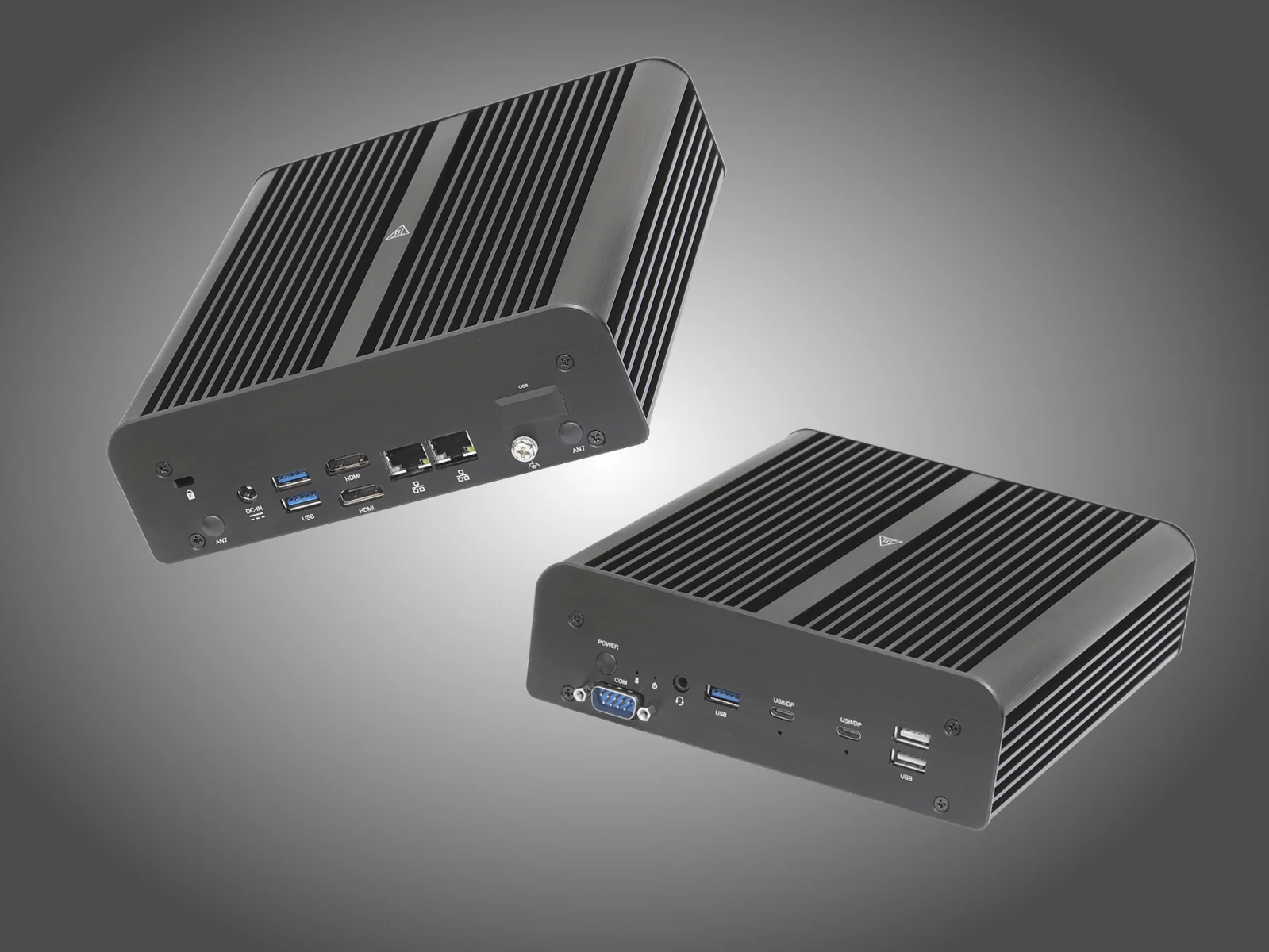
  • ASRock Launches Fanless iBOX Mini-PCs with Intel Arrow Lake Chips

    ASRock Launches Fanless iBOX Mini-PCs with Intel Arrow Lake Chips

    Key Takeaways

    1. ASRock has updated its mini-PC lineup with new models, including the iBOX-225H and iBOX-255H, which feature Intel’s Arrow Lake architecture.
    2. The iBOX-225H is powered by the Intel Core Ultra 5 225H processor, while the iBOX-255H uses the Core Ultra 7 255H processor, which includes two additional performance cores.
    3. The integrated Arc 140T in the iBOX-255H offers significantly better performance compared to the Arc 130T in the iBOX-225H.
    4. Both new mini-PC models are fanless, using metal casings for heat dissipation, and support up to 96 GB of DDR5 RAM at 6,400 MT/s.
    5. The iBOX series models include Thunderbolt 4 and 2.5 Gigabit LAN connectivity, but pricing and availability details are not yet available.


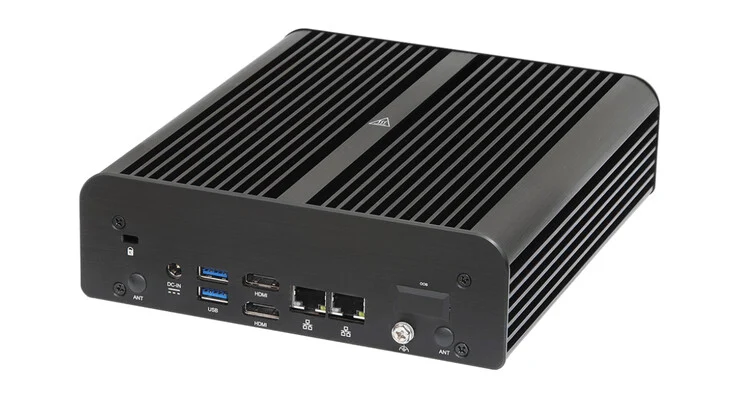
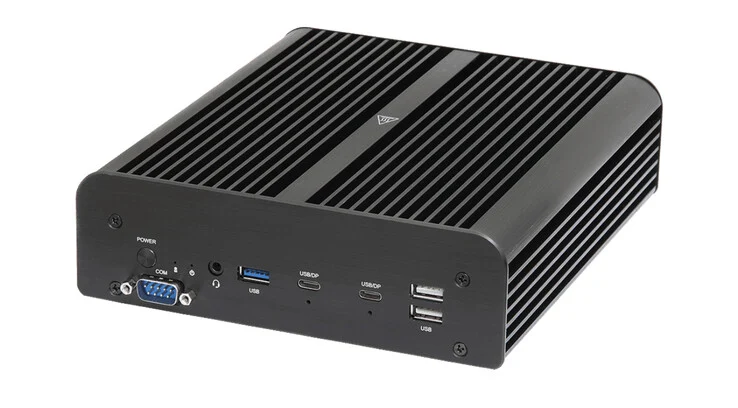
    ASRock has made some quiet updates to its mini-PC lineup, introducing new models after the release of the DeskMini X600, which boasts USB4 connectivity and is currently priced at $172.79 on Amazon. This time, the company is embracing Intel’s Arrow Lake architecture, which is already being utilized in various mini-PCs like the ASUS NUC 15 Pro and Khadas Mind 2s, just to name a few.

    New Additions to the iBOX Series

    The latest additions to ASRock’s lineup are the BOX-225H and iBOX-255H, now listed on their website as expansions to the iBOX series. As indicated by their names, these models are powered by Intel’s Core Ultra 5 225H and Core Ultra 7 255H processors, respectively. According to our tests, the extra two performance cores in the Core Ultra 7 255H do not seem to provide significant performance improvements.

    Performance Insights

    In contrast, the Arc 140T integrated within the Core Ultra 7 255H shows a much more substantial performance increase compared to the Arc 130T found in the Core Ultra 5 225H. Both the iBOX-225H and iBOX-255H are designed as fanless systems, utilizing their metal casings for heat dissipation. Additionally, both models are equipped with a variety of ports on their front and back panels.

    Furthermore, ASRock claims that both mini-PCs can support up to 96 GB of DDR5 RAM running at 6,400 MT/s, along with Thunderbolt 4 and 2.5 Gigabit LAN connectivity. Unfortunately, details on pricing and availability have not yet been disclosed. For further information on the iBOX-225H and iBOX-255H, please refer to ASRock’s product listings.

    Source:
    Link


  • Core Ultra 9 285K vs Ryzen 7 9800X3D: Intel’s Gaming Struggles

    Core Ultra 9 285K vs Ryzen 7 9800X3D: Intel’s Gaming Struggles

    Key Takeaways

    1. Intel’s Arrow Lake Core Ultra 200S processors prioritize power efficiency over maximum performance.
    2. The gaming performance of the Core Ultra 200S chips has declined, significantly lagging behind AMD’s Zen 5 CPUs.
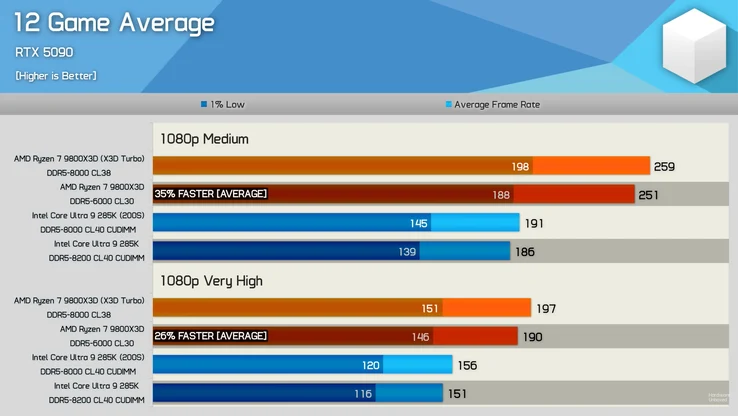
    3. The Ryzen 7 9800X3D outperformed the Core Ultra 9 285K by an average of 35% in gaming tests at 1080/Medium settings.
    4. Intel’s updates and the new 200S Boost overclocking tool provided only a slight 3% performance increase for the Core Ultra 9 285K.
    5. The Ryzen 7 9800X3D remains the top choice for gamers, while Intel faces challenges in regaining their former gaming performance dominance.


    With the launch of the Arrow Lake Core Ultra 200S desktop processors, Intel seems to have shifted its strategy. The focus moved from aiming for the highest performance to seeking better power efficiency. To some degree, Intel succeeded in cutting down the power usage of the Arrow Lake desktop chips while still maintaining solid single-core and multi-core performance. Nevertheless, the gaming capabilities of the Core Ultra 200S desktop processors saw a significant decline, falling short when compared to AMD’s Zen 5 CPUs.

    Performance Comparisons

    For example, in our review of the Zen5X3D chip, it was found that the Ryzen 7 9800X3D was an astonishing 40% quicker in gaming. Even though the Core Ultra 200S Arrow Lake chips debuted with some issues, Intel has since rolled out updates and fixes to help close the gaming performance gap. Moreover, they introduced a one-click overclocking tool named the 200S Boost, aimed at maximizing the performance of the Core Ultra 200S processors.

    Gaming Tests

    Hardware Unboxed conducted a comparison of the gaming performance between the Ryzen 7 9800X3D and the Core Ultra 9 285K, testing both with and without the 200S Boost to evaluate how much progress the Intel Arrow Lake flagship has made since its debut. Unfortunately, even with performance-enhancing updates and the 200S Boost, the Core Ultra 9 285K still could not compete with the Ryzen 7 9800X3D in gaming scenarios. According to Hardware Unboxed’s testing of 12 games at 1080/Medium settings, the Ryzen 7 9800X3D was about 35% faster on average. The margin narrowed when switching to 1080p/High settings, but it remained a noteworthy 26% ahead of the Core Ultra 9 285K. This is significant, especially given that the Core Ultra 9 285K utilized faster DDR5-8200 memory in comparison to the Ryzen’s DDR5-6000.

    Conclusion

    The gaming performance of the Core Ultra 9 285K reportedly saw a slight boost with the 200S Boost, but it was only around 3%. As a result, the Ryzen 7 9800X3D continues to be much swifter than the Core Ultra 9 285K, whether the chip is overclocked using the 200S Boost or not. In simple terms, if you are a gamer in search of the very best CPU, the Ryzen 7 9800X3D is the clear choice. This is a disappointing reality for Intel, as their CPUs were once the top performers in gaming. The outlook doesn’t seem to get any better with the forthcoming Intel Arrow Lake Refresh. However, Intel might have a shot at competing against AMD with Nova Lake, though that architecture is still a few years off.


  • Ryzen 9 9950X3D2 and Ryzen 7 9850X3D Specs Leaked

    Ryzen 9 9950X3D2 and Ryzen 7 9850X3D Specs Leaked

    Key Takeaways

    1. AMD is currently leading the desktop gaming processor market while Intel faces challenges with its new CEO and restructuring efforts.
    2. Upcoming Intel processors, Arrow Lake Refresh and Nova Lake-S, could reignite competition, prompting AMD to consider a Ryzen 9000 refresh.
    3. AMD plans to enhance its processors by increasing the 3D V-Cache per chip, with leaks revealing details about new models.
    4. The Ryzen 9 9950X3D2 features an increased L3 cache but a slight decrease in boost clock speed, raising its TDP to 200 W.
    5. The Ryzen 7 9850X3D upgrade retains the same L3 cache size but boosts clock speeds and is expected to require only a BIOS update for compatibility with existing AM5 motherboards.


    AMD is currently enjoying a strong position in the desktop gaming processor market, as Intel’s Arrow Lake Core Ultra 200K-series CPUs have not met expectations. Intel is indeed facing challenges with its recent restructuring, a new CEO, and a shift in its overall vision. However, Team Blue is not completely out of the race. The anticipated Arrow Lake Refresh and potentially the Nova Lake-S desktop processors, which are expected to debut next year with most components manufactured at TSMC’s N2P nodes, could stir things up. AMD seems to recognize this potential competition, leading to rumors about a Granite Ridge Ryzen 9000 refresh. Recent leaks suggest that AMD is aiming to counter Intel by increasing the 3D V-Cache per processor. A user named Chi11edog on X shared specifications for two new AMD desktop processors that seem to be enhanced versions of the existing X3D models.

    Ryzen 9 9950X3D2 Details

    The first processor is the Ryzen 9 9950X3D2, which is a refined version of the Ryzen 9 9950X3D, offering a notable increase in L3 cache from 128 MB to 192 MB. However, the maximum boost clock speed has slightly decreased from 5.7 GHz to 5.6 GHz, while the base clock remains steady at 4.3 GHz. The core count is still at 16, with 32 threads, and it features two core chiplet dies, each equipped with its own 3D V-Cache chiplet. This additional L3 cache raises the TDP from 170 W to 200 W, potentially enhancing performance in some content creation applications. Nevertheless, the two separate 3D V-Cache chiplets might create some latency issues in gaming contexts.

    Ryzen 7 9850X3D Upgrade

    To cater to users who need gaming performance, AMD is set to release an upgrade for the well-liked Ryzen 7 9800X3D. The new model is called the Ryzen 7 9850X3D, which keeps the 96 MB L3 cache and a single 3D V-Cache chiplet for its 8-core and 16-thread design. This successor will also boost clock speeds from 5.3 GHz to 5.6 GHz. This change isn’t overly significant, so the TDP remains at 120 W, as AMD likely employs slightly improved binning techniques using the N4 nodes from TSMC.

    If these specifications are correct, the upcoming refresh of desktop processors should not necessitate major hardware upgrades for AMD’s motherboard partners. Owners of AM5-compatible motherboards will probably just need to install a BIOS update to support the new chips.

    Source:
    Link


  • Kubuntu Focus NX Gen 3 Mini PCs with Intel Arrow Lake-H Launched

    Kubuntu Focus NX Gen 3 Mini PCs with Intel Arrow Lake-H Launched

    Key Takeaways

    1. Processor Upgrade: The Kubuntu Focus NX Gen 3 models are now equipped with the latest Intel Arrow Lake mobile processors, offering significant performance enhancements over the previous Alder Lake generation.

    2. Rebranding and Custom Tools: The Gen 3 models are rebranded Asus NUC 15 Pro Slim devices, featuring Kubuntu pre-installed along with custom tools like System Rollback and a one-click app installer for easier transitions from Windows.

    3. Performance Improvements: The Arrow Lake processors provide a 22% increase in single-core performance and up to 50% in multi-core performance, along with integrated Arc GPUs that enhance graphics capabilities significantly.

    4. Specifications and Connectivity: The mini PCs support up to 96 GB of DDR5 RAM and have two M.2 slots for storage, with extensive connectivity options including Thunderbolt 4 ports, USB ports, and HDMI 2.1 outputs.

    5. Pricing Comparison: The Kubuntu Focus NX Gen 3 is priced higher than comparable Asus models, with costs starting at $895 for the entry-level version and reaching $1,090 for a model with enhanced specifications.


    The mini PC and desktop sector of Kubuntu is updating the Focus NX series with the newest Intel Arrow Lake mobile processors. The earlier generation utilized Alder Lake chips, but the fresh Gen 3 models are equipped with either the Core Ultra 5 225H or the Core Ultra 7 255H SoCs.

    Rebranding and Features

    It appears that the Gen 3 models are actually rebranded Asus NUC 15 Pro Slim devices that come with Kubuntu pre-installed and several customized tools. These include an integrated System Rollback to mitigate compatibility problems, power and fan management tools, a one-click app installer, and a user-friendly interface aimed at making the transition smoother for Windows users.

    Performance Improvements

    Internal evaluations by the Kubuntu team indicate that the new Arrow Lake processors offer a 22% boost in single-core performance, with multi-core performance improvements potentially reaching 50%. The most significant upgrade from the previous generation is the inclusion of integrated Arc GPUs, which can provide up to 3x the frames per second (FPS) and support advanced features such as XeSS. Additionally, the SoC is equipped with a 13 TOPS NPU for applications powered by AI.

    Specifications and Connectivity

    The design includes two SO-DIMM slots, allowing users to expand memory up to 96 GB DDR5-5600 RAM. For storage, there are two M.2 slots—one supporting PCie 5.0 and the other limited to PCie 4.0—offering a total capacity of up to 6 TB.

    The unit, measuring 117 x 112 x 37 mm (4.6 x 4.4 x 1.5 inches), provides a generous port selection. It includes 2x Thunderbolt 4 ports, 1x USB-C 3.2 Gen2X2, 3x USB-A 3.2 Gen 2, 1x USB 2.0, 2x HDMI 2.1 video outputs, and a 2.5 GbE jack, although it lacks an audio jack. Wireless connections are facilitated by a Wi-Fi 7 + BT 5.4 card.

    Pricing Considerations

    In terms of pricing, the Kubuntu Focus NX Gen 3 is somewhat pricier compared to the Asus models that come with Windows pre-installed. For context, the Asus NUC 15 Pro Slim barebones with the Core Ultra 7 255H is listed at $684, whereas the Kubuntu mini PC version with the same CPU, 16 GB RAM, and 512 GB SSD retails for $1,090. The entry-level Core Ultra 5 225H option starts at $895.

    Source:
    Link


  • Beelink Launches GTi15 Ultra Mini-PC with Intel Core Ultra 9

    Beelink Launches GTi15 Ultra Mini-PC with Intel Core Ultra 9

    Key Takeaways

    1. Beelink has introduced the GTi15 Ultra mini-PC, its first model using the Intel Arrow Lake architecture.
    2. The GTi15 Ultra features a Core Ultra 9 285H processor, delivering an 11% performance boost over the previous GTi14 model.
    3. Significant improvements include a new Arc Graphics 140T integrated GPU, enhancing graphics performance compared to the GTi14.
    4. Key features of the GTi15 Ultra include a vapour chamber cooling system, dual 10 Gigabit Ethernet ports, DDR5 RAM, and various port options.
    5. The GTi15 Ultra is currently available in China, starting at CNY 4,699 (~$655), with potential global availability later this year.


    Beelink has refreshed its GTi mini-PC lineup by introducing its first model based on the Intel Arrow Lake architecture. Last year, the company launched the GTi14, which featured a Core Ultra 9 185H processor priced at around $839 on Amazon. Now, they have transitioned to the new GTi15 generation, kicking things off with the GTi15 Ultra.

    Boosted Performance

    Currently, the GTi15 Ultra is only available in China and boasts a Core Ultra 9 285H processor, offering a slight 11% performance increase in CPU capabilities compared to the GTi14, as revealed through our testing. However, when we look at the integrated graphics, there is a significant difference between the Arc Graphics 140T in the GTi15 Ultra and the 8-core iGPU from the Core Ultra 9 185H. Additionally, the GTi15 Ultra supports Beelink’s EX graphics card expansion dock, which is a key feature highlighted in the company’s marketing efforts.

    Advanced Features

    The GTi15 Ultra comes equipped with an advanced vapour chamber cooling system, dual 10 Gigabit Ethernet ports, DDR5 RAM, and an integrated 145 W power supply unit. As shown in the accompanying image, Beelink has added various other ports as well. The base price of the GTi15 Ultra starts at CNY 4,699 (approximately $655) without any memory pre-installed. For those looking for more options, Beelink also offers configurations with 1 TB of storage and either 32 GB or 64 GB of RAM, priced at CNY 5,699 (~$794) and CNY 6,299 (~$878), respectively. While there is no information on when it will be available globally, we believe that Beelink will likely launch the GTi15 Ultra in other markets later this year.

    Source:
    link


  • Lenovo ThinkStation P3 Tiny: Gen 2 Workstation with Intel and Nvidia

    Lenovo ThinkStation P3 Tiny: Gen 2 Workstation with Intel and Nvidia

    Key Takeaways

    1. The ThinkStation P3 Tiny Gen 2 features upgraded hardware with Intel’s new Arrow Lake processors, offering nearly twelve processor options.
    2. Customization includes Nvidia RTX A400 or RTX A1000 GPUs, with the A1000 providing double the VRAM (8 GB) compared to the A400.
    3. Enhanced storage capabilities include two CSODIMM slots and multiple M.2 slots for PCIe SSDs.
    4. Connectivity options feature HDMI 2.1, USB Type-A, USB Type-C (20 Gbps), and Gigabit Ethernet, with several Type-A ports supporting up to 10 Gbps speeds.
    5. The desktop is compatible with multiple operating systems and is expected to be released in select markets later this month; pricing is still pending.


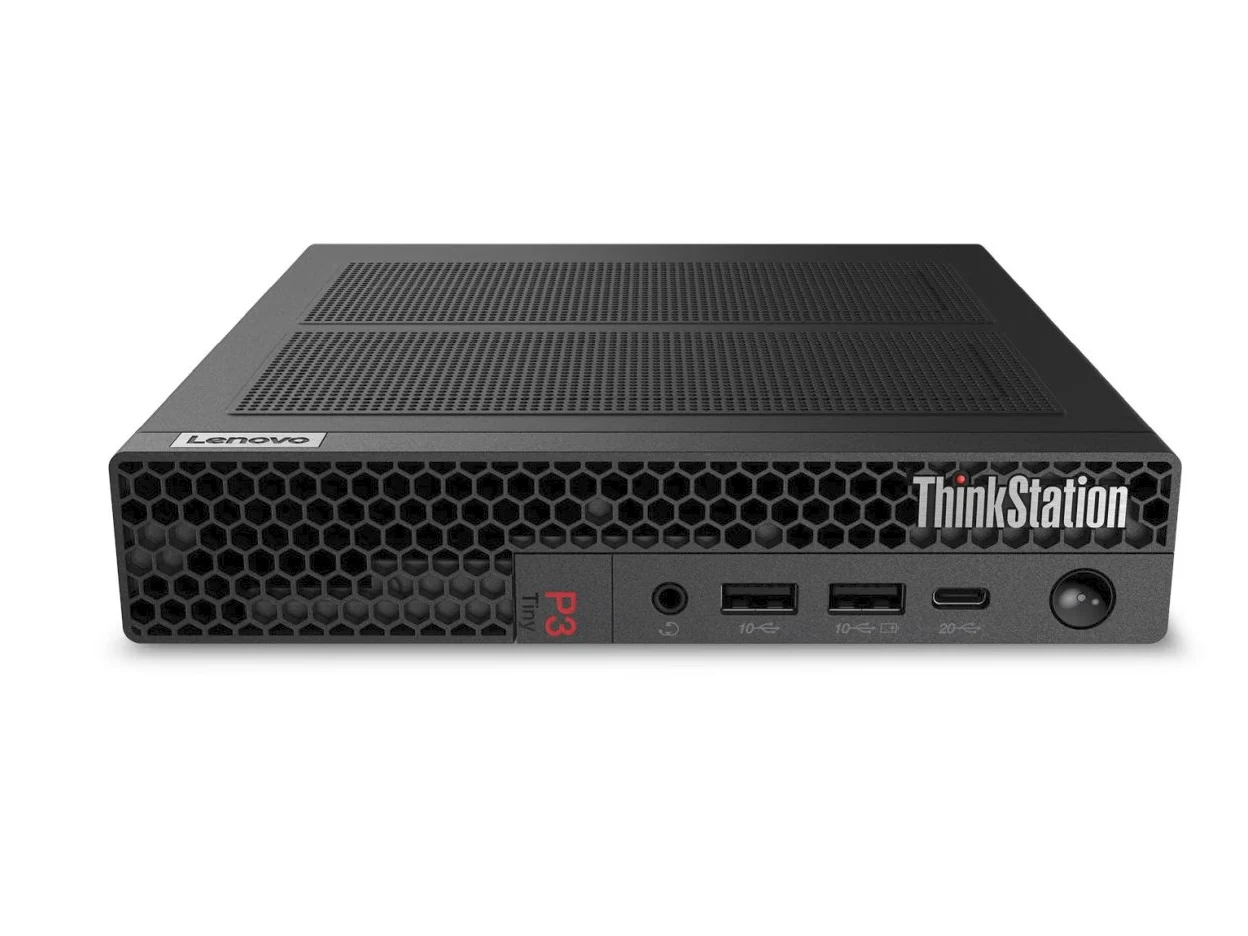
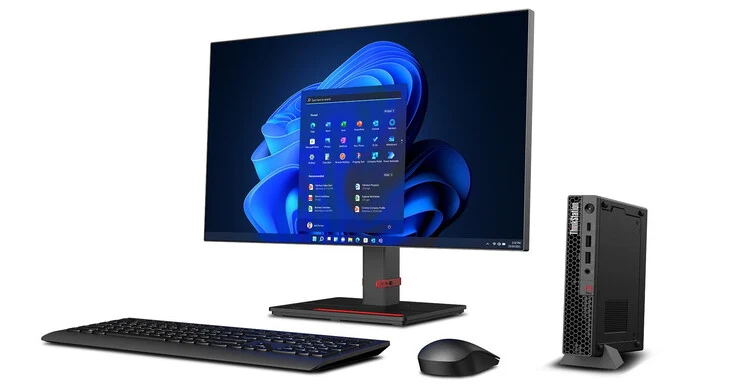
    Lenovo has made a subtle upgrade to its ThinkStation P3 Tiny desktop by introducing a second-generation model. Just to remind you, the first generation was launched in May 2023 and is currently priced at $949.99 on Amazon. Although it was considered quite powerful back then, with its Intel Core i9-13900 processor and Nvidia T1000 graphics card, these components have now been outperformed by newer and stronger options.

    Enhanced Performance Options

    Notably, the ThinkStation P3 Tiny Gen 2 offers configurations with much more robust hardware compared to the original model. Lenovo has transitioned from Intel’s Raptor Lake processors to the new Arrow Lake series, providing nearly twelve processor choices. According to Lenovo’s PSREF site, you can select from the Core Ultra 5 225 up to the Core Ultra 9 285, all utilizing Intel’s LGA 1851 socket and compatible with LPDDR5-6400 RAM.

    Graphics and Storage Improvements

    In addition, the Gen 2 version can be customized with Nvidia’s RTX A400 or RTX A1000 laptop GPUs. Both graphics cards come equipped with four miniDP 1.4a connectors, a single slot design, and a 50 W TGP. However, the RTX A1000 boasts double the GDDR6 VRAM of the A400, totaling 8 GB. Furthermore, Lenovo has indicated that the desktop includes two CSODIMM slots, a PCIe 5.0 M.2 slot, and two more M.2 slots that can handle PCIe 4.0 SSDs.

    Connectivity and Availability

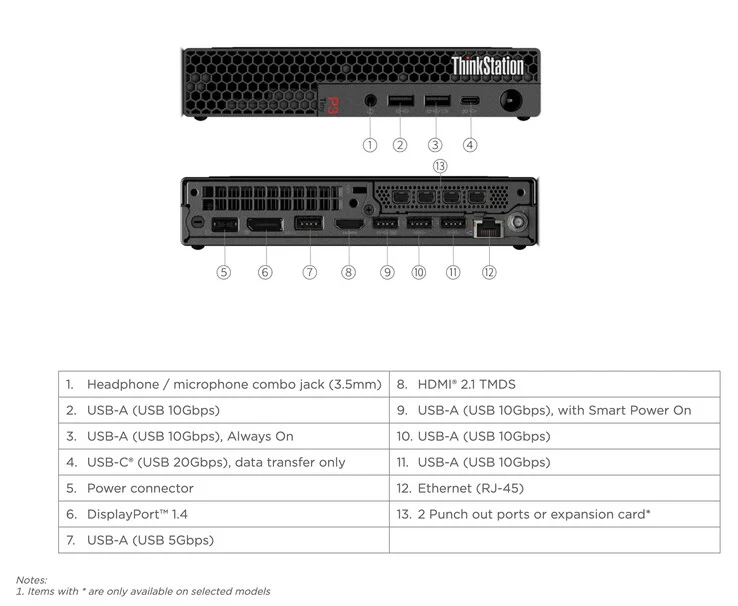
    The ThinkStation P3 Tiny Gen 2 is also equipped with various ports, including HDMI 2.1, USB Type-A, USB Type-C (20 Gbps), and Gigabit Ethernet. Out of the six Type-A ports available, five can achieve transfer speeds of up to 10 Gbps. Additionally, the new desktop is compatible with operating systems like Ubuntu, Red Hat Enterprise Linux 9.6, and both Home and Pro editions of Windows 11. Lenovo hints that the ThinkStation P3 Tiny Gen 2 might be released later this month in select markets. While pricing details are not yet available, you can find more information about the ThinkStation P3 Tiny Gen 2 on Lenovo’s website.

    Source:
    Link


  • Aurora 16X: Alienware’s Mid-Range Comeback with RTX 5070 GPU

    Aurora 16X: Alienware’s Mid-Range Comeback with RTX 5070 GPU

    Key Takeaways

    1. Alienware introduced the Aurora 16X, which offers more powerful hardware options than the Aurora 16, making it thicker and heavier.
    2. The Aurora 16X features Intel’s Arrow Lake processors, ranging from Core Ultra 5 235HX to Core Ultra 9 275HX, and Nvidia GeForce RTX 5060 or 5070 graphics cards.
    3. The device includes a 16-inch IPS display with a resolution of 2,560 x 1,600 pixels, 500 nits brightness, and a 240 Hz refresh rate.
    4. It comes with a 90 Wh battery, two M.2 SSD slots, and an RGB backlit keyboard, which are not available in the Aurora 16.
    5. The Aurora 16X will be available in the Eurozone starting May 27, with a base price of €1,699 (about $1,923).


    Alienware has unveiled the Aurora 16X today along with the Aurora 16, which we have discussed in a different article. Although both models appear alike, the Aurora 16X offers a chance to configure much more powerful components compared to the Aurora 16. As a result, the Aurora 16X is both thicker and heavier than its counterpart, measuring 23.4 mm in thickness and weighing 2.66 kg.

    Powerful Hardware Options

    Alienware highlights that the Aurora 16X can come with Intel’s Arrow Lake processors, ranging from the Core Ultra 5 235HX to the Core Ultra 9 275HX. It also starts with an Nvidia GeForce RTX 5060, but users have the option to upgrade to a GeForce RTX 5070. In this way, the Aurora 16X can be seen as a replacement for last year’s Alienware X16 R2 in terms of performance, which is currently priced at $1,834.99 on Amazon. Both graphics card options feature a 115 W TGP, with an additional 15 W available through Dynamic Boost.

    Display and Battery Features

    The Aurora 16X comes equipped with a 16-inch IPS display that boasts a resolution of 2,560 x 1,600 pixels and covers the full DCI-P3 colour space. It also achieves a peak brightness of 500 nits and has a refresh rate of 240 Hz. Additionally, there is a 90 Wh battery included, alongside two M.2 SSD slots and an RGB backlit keyboard, which the less expensive Aurora 16 does not have. As of now, Dell plans to start selling the Aurora 16X in the Eurozone from May 27, with a base price set at €1,699 (approximately $1,923).

    Source:
    Link


  • OpenBSD 7.7 Enhances Hibernation and Introduces New Features

    OpenBSD 7.7 Enhances Hibernation and Introduces New Features

    Key Takeaways

    1. OpenBSD 7.7 is the 58th release of the operating system, continuing support for older hardware while adding compatibility for new AMD and Intel chips.
    2. New features include support for GNOME 47 and KDE Plasma 6.3.3, catering to users with different desktop environment preferences.
    3. The release can operate with just 32 MB of memory using a command line interface, making it suitable for minimal setups.
    4. The Gefs filesystem introduces a timed snapshots feature, enhancing data management capabilities.
    5. Various improvements include better power management, bug fixes, and the ability to download OpenBSD 7.7 as a floppy disk image.


    Remaining one of the most simple and secure Unix-like operating systems available, OpenBSD has released its version 7.7. This marks its 58th edition in a lengthy history. While it continues to support older or less common hardware like HP’s PA-RISC boxes and Omron workstations using Motorola 88000 RISC processors, OpenBSD 7.7 also adds support for AMD Ryzen AI 300 and Intel Arrow Lake chips.

    New Features and Updates

    In addition to supporting the mentioned hardware, OpenBSD 7.7 now includes GNOME 47 and KDE Plasma 6.3.3. Users who prefer a minimal setup without a GUI will be happy to know that this release can run with just 32 MB of memory when utilizing the command line interface (CLI). The Gefs filesystem now introduces a timed snapshots feature. Furthermore, users benefit from enhanced power management controls, along with various minor bugs that have been fixed. For instance, the issue of false positives when changing time zones has been resolved, and the xmm/ymm registers in lldb now support read/write functionality, among other improvements.

    Notable Changes

    Reflecting on version 7.6, OpenBSD 7.7 brings a notable array of changes that are worth mentioning, as is customary. A complete list of these modifications is available on the official page. It’s also important to note that OpenBSD 7.7 can be downloaded even as a floppy disk image, providing yet another way for users to access the software.

    Source:
    Link