Tag: amd

  • AMD Ryzen 7 9800X3D Full Specs Leaked Online

    AMD Ryzen 7 9800X3D Full Specs Leaked Online

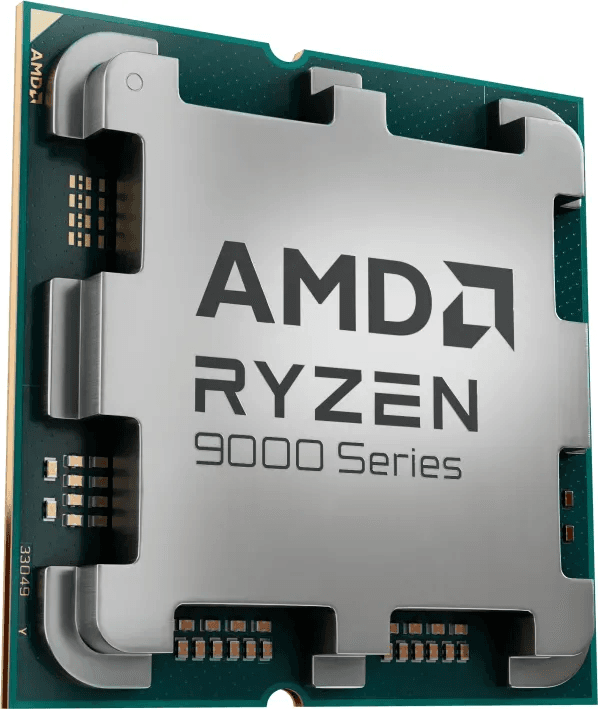
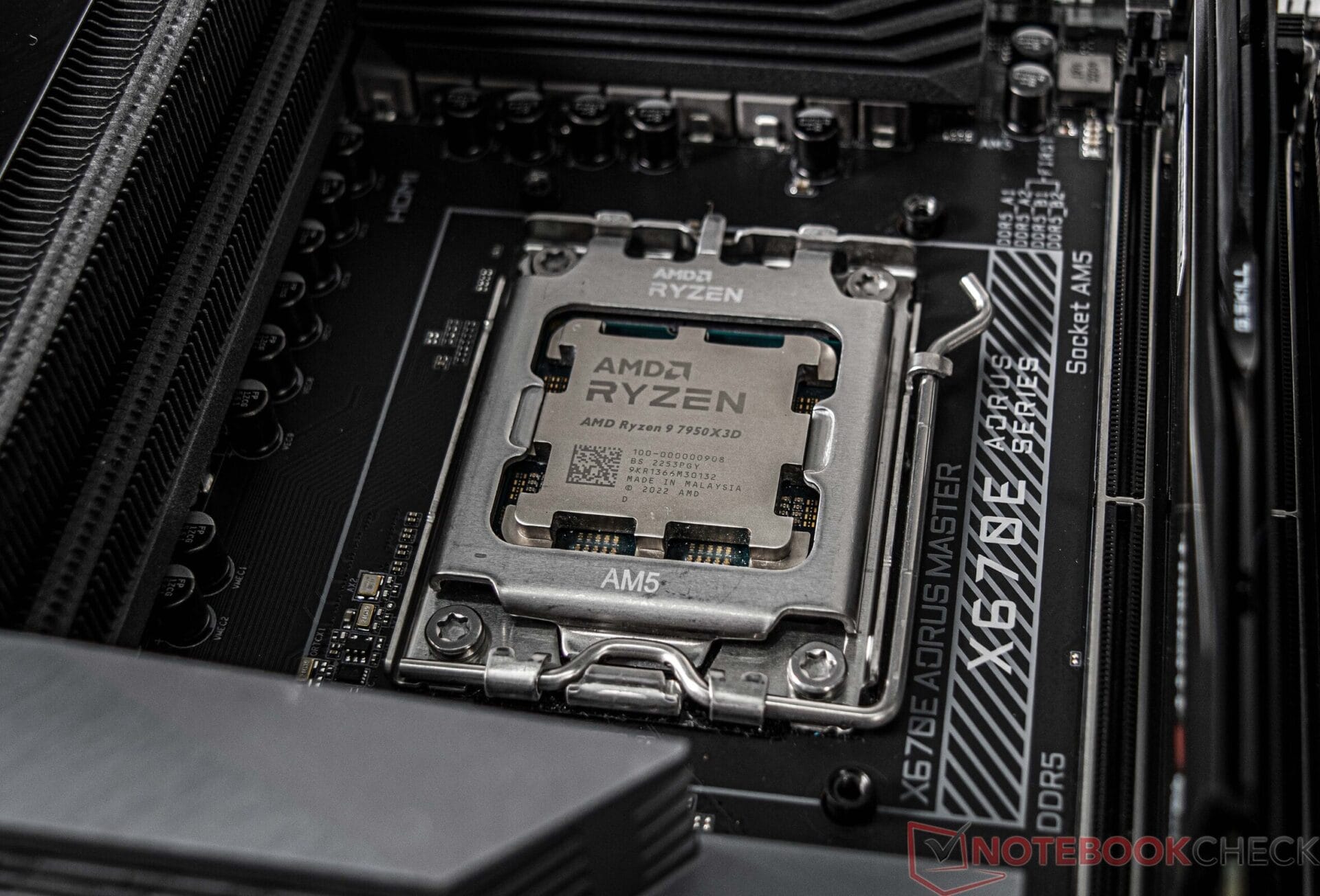
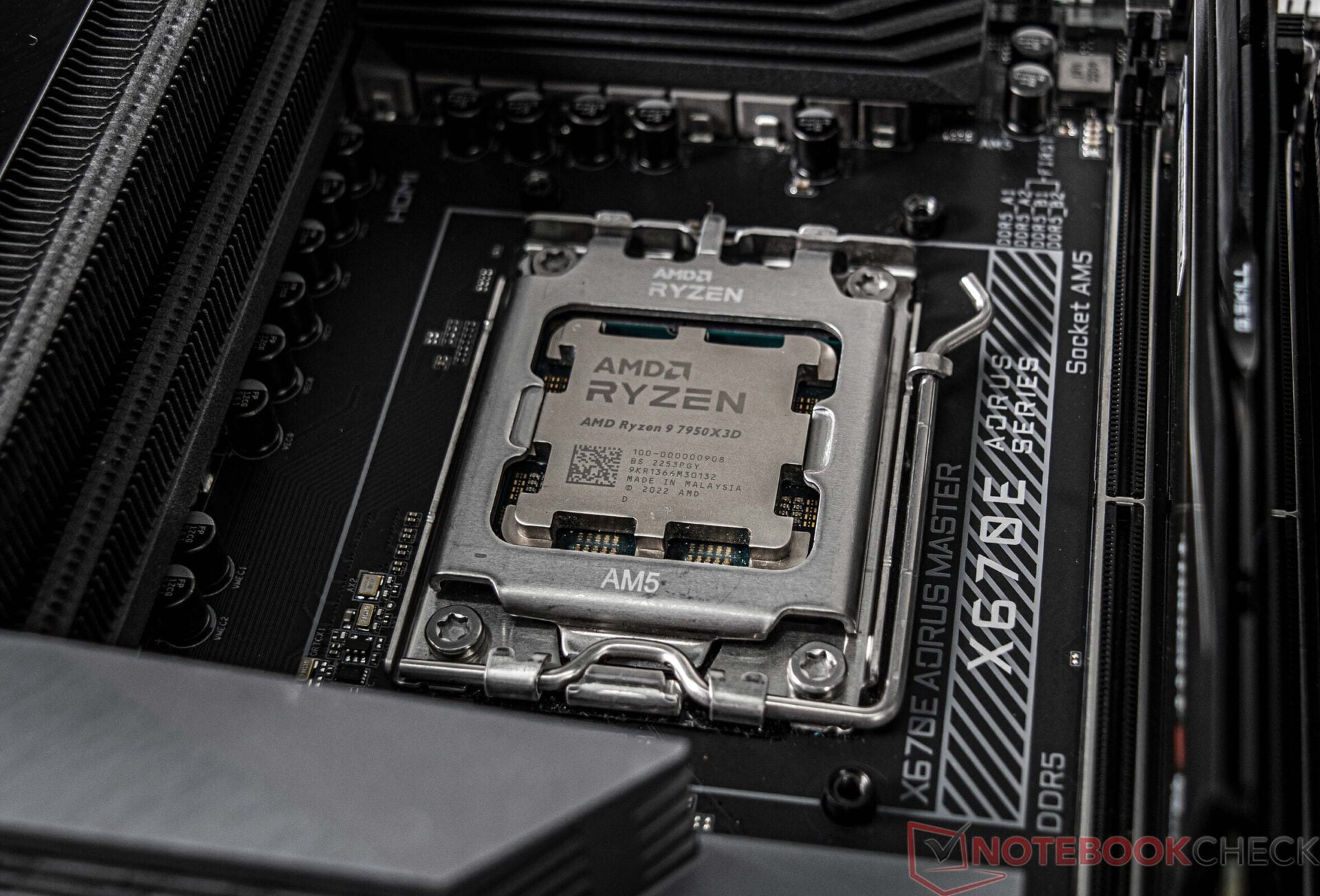
    Recently, numerous leaks have surfaced, revealing details about AMD’s upcoming Ryzen 7 9800X3D. Although the expected launch date of October 25 did not materialize as hoped, the volume of information suggests it is on the way. Videocardz has now identified the complete spec sheet for the CPU on Geizhals.

    Key Specifications Unveiled

    The spec sheet confirms much of what was already suspected. The Ryzen 7 9800X3D features 1 CCD with 8 Zen 5 cores, a TDP of 120 Watts, and 96 MB of L3 cache, with 64 MB allocated to 3D V-cache. It operates at a base clock speed of 4.7 GHz and can boost up to 5.2 GHz. It is capable of supporting up to 192 GB of DDR5 RAM according to JEDEC standards, and with a suitable kit or motherboard, it can reach speeds of 8,000 MT/s.

    Overclocking Capabilities and Thermal Management

    This chip will also be the first of its kind to allow for significant overclocking due to its unique structure, which places the Cache tile above the CCD. The maximum junction temperature (TJMax) is 95 degrees Celsius, so if you intend to overclock the Ryzen 7 9800X3D, you’ll probably need a strong cooler. It’s important to note that AMD does not include a cooler with the retail package.

    Additional Features and Availability

    Among other features, the Ryzen 7 9800X3D includes a 2 CU RDNA2 integrated GPU running at 2.2 GHz and provides 24 PCIe Gen5 lanes. This CPU is compatible with all previous-generation AM5 motherboards, such as the A620, B650, and X670 series. Furthermore, the listing hints at a potential sale date of November 7, accompanied by what seems to be a placeholder price.

    Source: Geizhals via Videocardz


    Image 1
  • AMD Ryzen 5 5600T and 5600XT Launches Under $200 for AM4 Upgrade

    AMD Ryzen 5 5600T and 5600XT Launches Under $200 for AM4 Upgrade

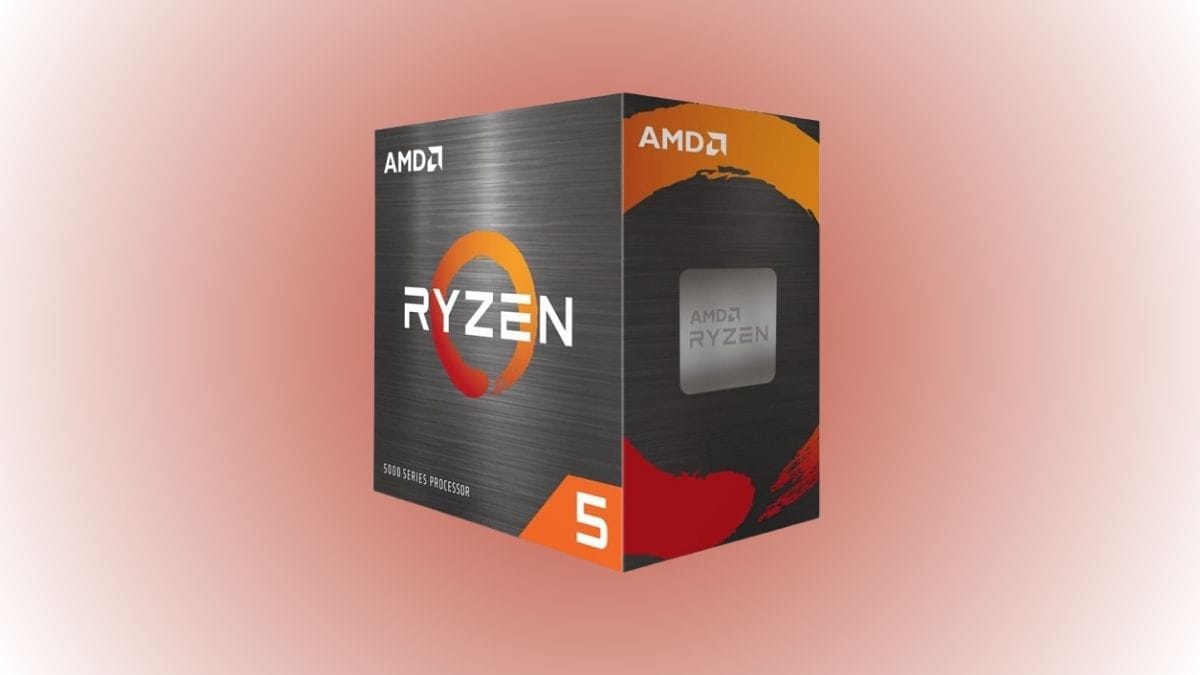
    Much like the rumors swirling around suggested, AMD has been quietly developing two new chips for its AM4 platform. They have officially released the Zen 3 processors – Ryzen 5 5600T and 5600XT – and these are now available for purchase on Amazon Japan.

    Ryzen 5 5600T Details

    The Ryzen 5 5600T is packed with 6 cores and 12 threads, offering base and boost clock speeds of 3.7 GHz and 4.5 GHz, respectively. When compared to the Ryzen 5600 CPU, which has the same core count, this new chip provides a slightly better clock speed. You can find the Ryzen 5 5600T on Amazon listed for $186.58.

    About Ryzen 5 5600XT

    Moving on, there’s the Ryzen 5 5600XT, which also boasts 6 cores and 12 threads. This processor can reach base and boost clock speeds of 3.8 GHz and 4.7 GHz, which is a bit higher than the Ryzen 5 5600X. Right now, the price for the 5600XT on Amazon is $194.02. Both chips have a TDP of 65W and come with a 32MB L3 cache.

    Recent AMD Developments

    If you haven’t heard, AMD launched the Ryzen 9000 series desktop processors back in August this year. In addition to the Zen 5 processors, the company also introduced the X870 and X870E motherboards featuring the new AM5 socket. Moreover, Team Red is preparing to unveil the 9000X3D CPUs, which will be the latest in the X3D lineup.


    Image 1
  • AMD Ryzen 7 9800X3D Debuts on Geekbench with Strong Performance

    AMD Ryzen 7 9800X3D Debuts on Geekbench with Strong Performance

    Supposed marketing material from AMD suggests that the Ryzen 9 9800X3D will provide only a small 8% performance increase over the Ryzen 7 7800X3D, especially in gaming scenarios. In synthetic benchmarks, the X3D version will likely fall short when compared to its regular counterpart, the Ryzen 7 9700X, due to lower boost clock speeds. This information is supported by two separate Geekbench listings for the Ryzen 9 9800X3D.

    Geekbench Performance

    In its first test, the CPU achieved scores of 3,295 and 18,560 in Geekbench 6.2’s single-core and multi-core assessments. During its second test, it recorded 3,305 and 18,221 points. Although these scores are close enough to be within the margin of error, they were obtained from different platforms. The first test was conducted on a Biostar X870E motherboard with 48 GB of DDR5-8000 RAM, while the second utilized an Asus ROG Crosshair X870E motherboard with the same memory configuration.

    Boost and Comparisons

    For the second test, the Ryzen 9 9800X3D reached a boost speed of 5.3 GHz. It’s unclear if these results were achieved at stock settings, but it probably represents the maximum performance one could expect right out of the box. Not surprisingly, it lags behind the Ryzen 7 9700X, which scores around 3,400 in single-core performance, but performs slightly better in multi-core tests. When compared to the Ryzen 7 7800X3D, which has scores of about 2,700 for single-core and 14,000 for multi-core, the Zen 5 model displays a notable 22% improvement in single-core and a 30% boost in multi-core performance. Naturally, X3D chips may not excel in synthetic benchmarks, so it would be wise to wait for more gaming benchmarks to make a fair evaluation.

    via @Olrak29_ on X’


    Image 1
    Image 1
  • AMD Ryzen 7 9800X3D Offers Slight Gaming Boost Over 7800X3D

    AMD Ryzen 7 9800X3D Offers Slight Gaming Boost Over 7800X3D

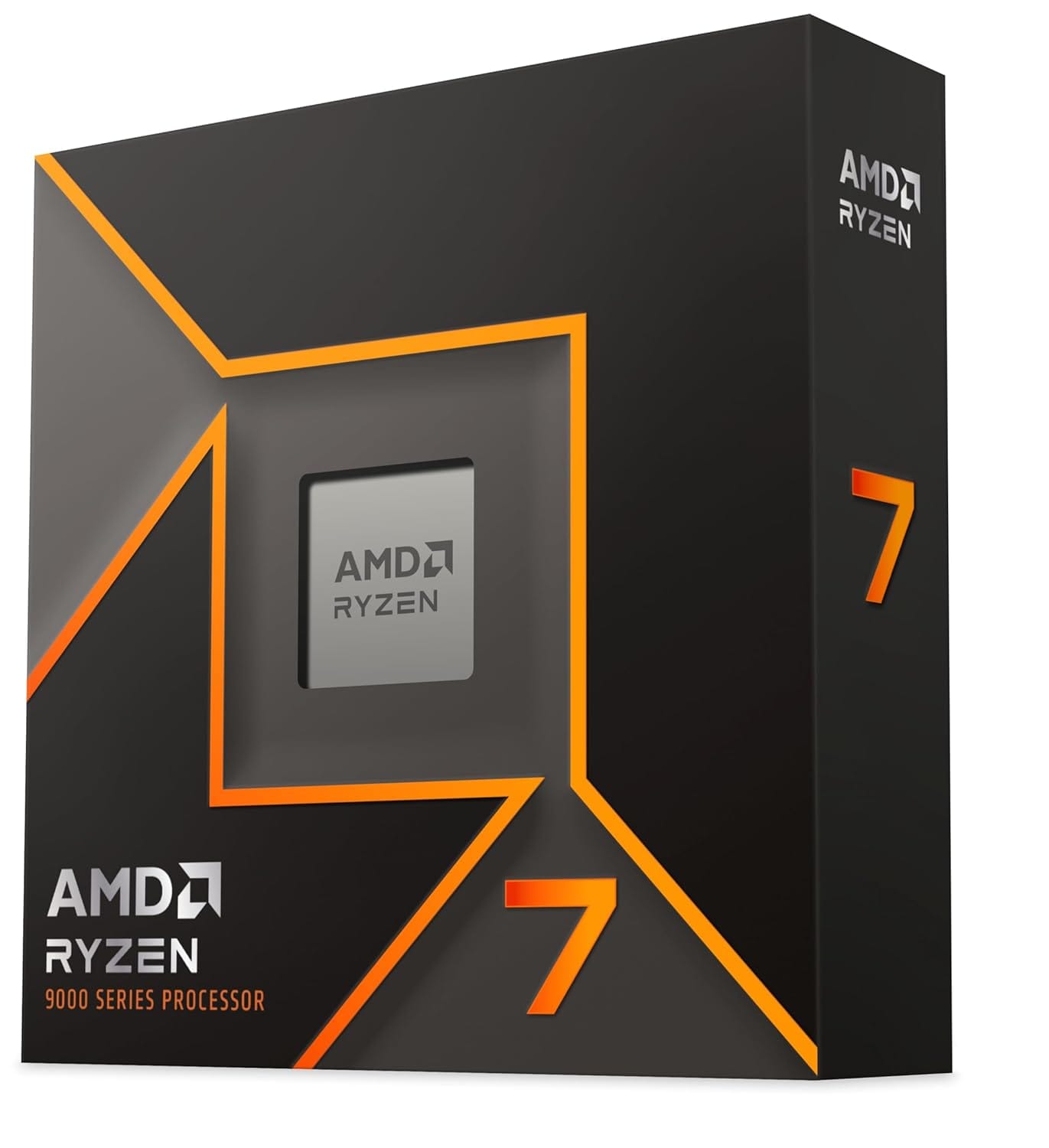
    AMD has announced that the Ryzen 7 9800X3D will be released in early November. While the exact price remains undisclosed, it is rumored to be between $500 and $550. In terms of specifications, this new processor is essentially a Ryzen 7 7800X3D, featuring 8 Zen 5 CPU cores, 96 MB of L3 cache, and a TDP of 120 Watts. However, it does come with an improved base clock speed of 4.7 GHz, compared to the 4.2 GHz of its predecessor. Those expecting significant performance enhancements may feel let down.

    Performance Gains

    Videocardz discovered some marketing information from AMD, indicating that the Ryzen 7 9800X3D is roughly 8% faster in gaming than the previous model. For multi-threaded tasks, AMD asserts that the performance increase could reach up to 15%. Additionally, users can combine this CPU with DDR5-8000 RAM. It’s important to note that older B/X/A series motherboards will need a BIOS update to support the Ryzen 7 9800X3D.

    Caution on Claims

    It’s wise to approach first-party claims with some doubt. The 8% performance increase might be accurate for certain games, but it may not apply universally. Even so, this figure is rather unimpressive, which could be partly due to the 5.2 GHz boost clock. AMD seems to be targeting users of the Ryzen 7 5800X3D with this new release. Meanwhile, those who own the Ryzen 7 7800X3D may want to consider waiting for the upcoming Ryzen 9 9900X3D or Ryzen 9 9950X3D if they are in search of a more substantial performance upgrade.


    Image 1
  • Intel and AMD Join Forces to Compete with ARM for x86 Dominance

    Intel and AMD Join Forces to Compete with ARM for x86 Dominance

    Think of it like Marvel heroes teaming up in real life. Intel and AMD have revealed that they and several other partners are joining forces to create an x86 Ecosystem Advisory Group (EAG). Intel’s CEO Pat Gelsinger and AMD’s Dr. Lisa Su shared the stage at the Lenovo Tech World 2024 event in Bellevue, Washington to announce this exciting news.

    The x86 Ecosystem Advisory Group

    The establishment of this EAG is significant for the "most widely used computing architecture" as it responds to the growing competition from ARM and architectures like RISC-V. The group also includes notable companies such as Broadcom, Dell, Google, HP Enterprise, HP Inc., Lenovo, Meta, Microsoft, Oracle, and Red Hat, along with key figures like Tim Sweeney and Linus Torvalds.

    "We are proud to stand with AMD," Gelsinger stated, emphasizing the evolution of the x86 architecture over the years. Dr. Su remarked that the EAG aims to "ensure that x86 keeps evolving as the preferred computing platform for developers and customers" and to "guide" future innovations concerning x86. A joint press release outlined some goals for the EAG:

    A Timely Collaboration

    This partnership comes at a crucial moment. ARM IP can be licensed by any chip manufacturer, while RISC-V has no loyalty requirements. Since only Intel and AMD can utilize x86, it’s essential for these semiconductor leaders to collaborate in promoting this instruction set architecture (ISA).

    Intel has been exploring the concept of x86S, a streamlined version of x86 that is purely 64-bit and excludes any legacy 16-bit components. Shouldn’t it be named x64 instead? The terminology can be a bit misleading, much like the recent naming conventions for Intel and AMD CPUs, if you know what I mean.

    The term 64-bit is essentially an extension or a part of the x86 architecture, which AMD refers to as AMD64 or x86_64 in Linux. AMD64 is the dominant 64-bit code today, which is why you’ll see many drivers and operating system files labeled with "amd64." Intel has its own Intel 64 (distinct from Itanium or IA-64), while Microsoft clearly separates x86 code from x64.

    Standardizing the Nomenclature

    Maybe the EAG could kick off by standardizing this confusing naming system and the various implementations of x86_64. We might also witness AMD and its partners enhancing x86S in the future.

    While ARM-based chips like Apple’s M series and Qualcomm’s new Snapdragon X Elite series have demonstrated impressive performance-per-Watt efficiency and responsiveness similar to smartphones, x86 remains deeply embedded in global computing and is unlikely to fade away soon.

    Despite the efficiency of Apple’s M series chips, both Intel and AMD have shown that x86 can deliver solid performance at lower power levels with their Lunar Lake and Ryzen Strix Point products, respectively. Intel even mentioned in a recent interview that it’s not the ISA that controls power consumption, but rather the transistors that increase with core counts.

    From being each other’s second-source providers of x86 in the 1980s to engaging in legal battles and counterclaims for market dominance, to collaborating on the unsuccessful Kaby Lake-G CPUs in 2017, Intel and AMD’s competition has profoundly influenced the PC industry as we know it today.

    It has taken a third entity to bring these semiconductor giants to collaborate. Exciting times are surely ahead.

    Intel Press Release

  • AMD Ryzen 7 9800X3D Launch Date Set for October 25

    AMD Ryzen 7 9800X3D Launch Date Set for October 25

    Previous rumors suggested that AMD’s next-gen Ryzen 9000 X3D CPUs, based on Zen 5, would launch in October. This time around, the Ryzen 7 9800X3D is expected to be the first to hit the market, while the Ryzen 9 9900X3D and Ryzen 9 9950X3D are projected for a 2025 release. A reliable leaker from Chiphell has now shared an exact date for this launch.

    Launch Details

    AMD is anticipated to officially introduce the Ryzen 7 9800X3D on October 25, with sales beginning in early November. The processor’s clock speed is said to be "quite high," but it remains unclear if it will surpass the speeds of the Ryzen 7 7800X3D or Ryzen 7 9700X. A previous benchmark suggested that the all-core boost could reach 5.2 GHz, and a single core might even hit 5.5 GHz.

    Pricing and Performance

    The Ryzen 7 9800X3D is expected to carry a hefty price tag, although this might be influenced by local taxes. There are mixed signals regarding the performance enhancements offered by the new Zen 5 X3D models. Some leaked slides from MSI’s testing indicate a modest 13% performance increase in Far Cry 6, but they do not clarify which specific model this applies to. Still, it won’t be long before we discover the truth regarding these performance claims.

    via @harukaze5719 on X

  • Ryzen 9000X3D Benchmarks: 9800X3D Outperforms 7800X3D

    Ryzen 9000X3D Benchmarks: 9800X3D Outperforms 7800X3D

    The AMD Ryzen 9000X3D CPUs appear to be on the verge of their launch, as recent leaks and speculations strongly suggest that an announcement for the Ryzen 7 9800X3D and Ryzen 9 9950X3D will take place in October. New information shared by @CodeCommando_ on X indicates that the upcoming X3D CPUs are set to deliver an impressive increase in performance compared to the Ryzen 7000 series.

    Performance Gains

    If the multi-core Cinebench R23 results are to be believed, the Ryzen 9 9950X3D could be 18.4% quicker than the Ryzen 9 7950X3D (currently priced at $618 on Amazon), which averaged 35794 points during our testing. However, it’s worth mentioning that Cinebench R23 is becoming somewhat outdated, with Cinebench 2024 taking its place due to better accuracy and higher CPU loads, making it more fitting for today’s powerful processors. This improvement in performance aligns well with what we’ve come to expect from the Ryzen 9000 series.

    Gaming Relevance

    The eight-core Ryzen 7 9800X3D, which is typically more important for gamers, shows particularly exciting developments, with both single-core and multi-core performance metrics experiencing a notable uplift in comparison to the Ryzen 7 7800X3D.

    When we examine the performance results of the Ryzen 7 7800X3D from our thorough testing, the Ryzen 7 9800X3D seems to boast about a 35.6% advantage in multi-core tests. The single-core benchmark is just as striking, with the Ryzen 7 9800X3D achieving a 24.3% enhancement over the 7800X3D.

    Reasons Behind the Boost

    These substantial performance gains are likely attributed to the efficiency improvements brought by the Ryzen 9000 series. Additionally, there are whispers of significantly larger V-Cache chips, with one dedicated chip assigned to each CCD, which may help resolve some scheduling problems that affected prior X3D models.

    According to @CodeCommando_ on X, these developments could signal an exciting new chapter for AMD’s CPU lineup.


  • AMD Ryzen 7 9800X3D Launching in October; Ryzen 9 Models Next Year

    AMD Ryzen 7 9800X3D Launching in October; Ryzen 9 Models Next Year

    Last year, AMD introduced the Ryzen 9 7950X3D and Ryzen 9 7900X3D, followed shortly by the Ryzen 7 7800X3D. Since that time, several new 3D V-cache models have been released, including the Ryzen 5 5600X3D, Ryzen 7 5700X3D, and Ryzen 5 7600X3D, appearing at various times. However, AMD seems to be planning a different approach for the upcoming Zen 5 X3D models, according to a recent rumor from Chiphell.

    Upcoming Launch

    The AMD Ryzen 7 9800X3D is expected to debut alone in late October, accompanied by new X870 motherboards. There is a possibility that AMD could unveil the Ryzen 9 9900X3D and Ryzen 9 9950X3D at the same time, although these processors are likely to be released next year, presumably after CES 2025. These new CPUs are rumored to feature ‘special attributes’ that distinguish them from previous generations.

    Performance Expectations

    Moore’s Law is Dead has speculated that the Ryzen 9 9950X3D may feature a doubled amount of 3D V-cache. It can be assumed that the Ryzen 9 9900X3D will receive similar enhancements, along with a potential price increase. If these speculations hold true, both CPUs are expected to perform exceptionally well in benchmarks, maintaining their top positions until the arrival of Zen 6. Neither of these models will support overclocking, which has been the norm since the Ryzen 7 5800X3D period.

  • AMD Radeon 890M Offers Nearly 2x Higher FPS with AFMF 2

    AMD Radeon 890M Offers Nearly 2x Higher FPS with AFMF 2

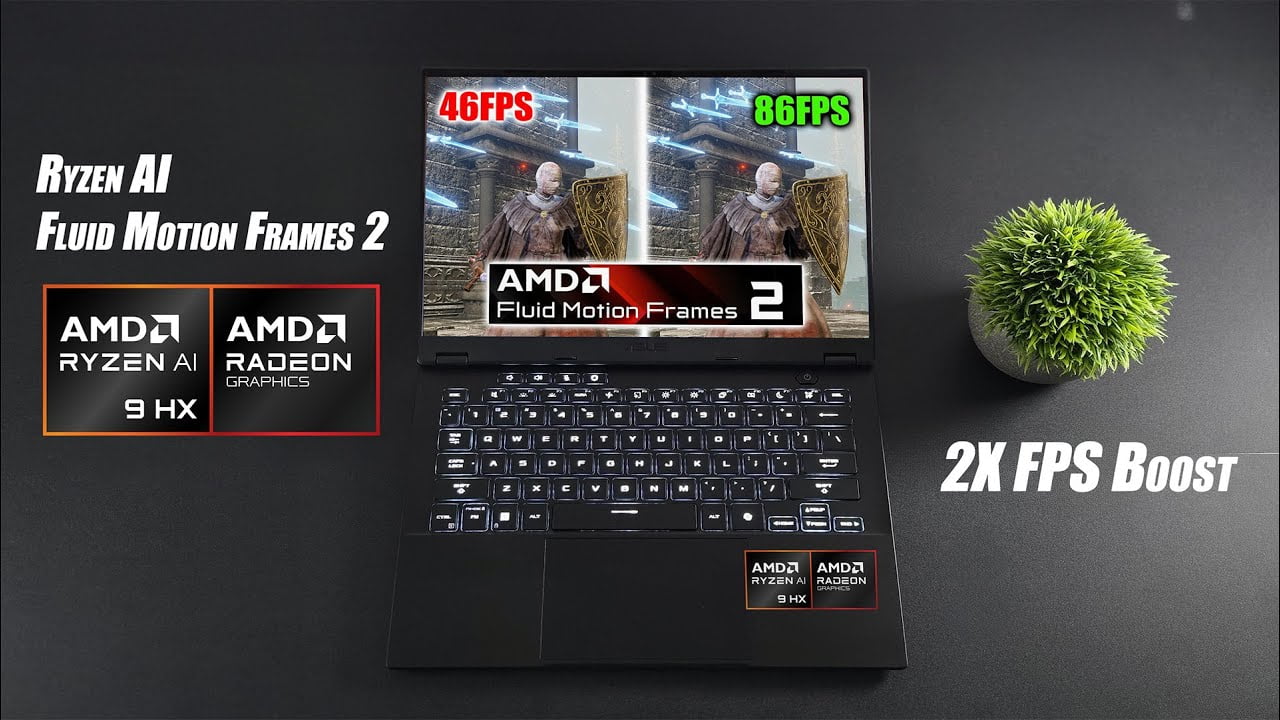
    AMD has recently released the technical preview of AFMF 2 for its Strix Point series. This update brings support for the latest frame generation technology to the new Zen 5 processors, complemented by the company’s innovative VGM technology. In their announcement, AMD claimed that Fluid Motion Frames 2 would significantly enhance the gaming experience, a statement that ETA Prime has put to the test.

    Testing Setup

    For the tests, ETA Prime utilized the latest Asus ProArt P16 laptop, which is equipped with the Ryzen AI 9 HX 370 processor. This model features the high-performance RDNA 3.5 integrated GPU, the Radeon 890M. ETA Prime dedicated 4 GB of memory to the integrated graphics, and the new Fluid Motion Frames technology also incorporates Variable Graphics Memory (VGM).

    Game Performance Results

    According to AMD, VGM automatically allocates memory to the iGPU based on the selected mode. During testing, ETA Prime set the Search Mode to "Standard" and the Performance Mode to "Performance." Initially, they ran Forza Horizon 5 at 1200p with medium graphics settings. Before enabling AFMF 2, the game averaged 86 FPS, but this improved to an average of 136 FPS after turning on the technology.

    Next, ETA Prime tested Elden Ring at 1080p with medium graphics settings. Without frame generation, the game ran at about 45 FPS, but with AFMF 2 enabled, the average increased to around 85 FPS. Additionally, they conducted a test on Fallout 4 at 1600p and ultra settings. With AFMF 2 active, the game averaged approximately 84 FPS, a notable rise from the previous average of 54 FPS. ETA Prime pointed out that all tests were conducted at a TDP of 45W, suggesting that the Radeon 890M could achieve even better performance at a higher TDP.

    Compatibility with Previous Generations

    It’s also important to mention that AFMF 2 is compatible with previous-generation RDNA 3 integrated GPUs, including the Radeon 780M, which is used in handheld devices like the Legion Go and ROG Ally Z1 Extreme (currently priced at $549.99 on Best Buy).

  • AMD Must Strengthen Laptop Partnerships and Accelerate Growth

    AMD Must Strengthen Laptop Partnerships and Accelerate Growth

    It is widely known that AMD has historically been behind Intel and Nvidia in the laptop market, particularly in the variety of available designs. Sasa Marinkovic from AMD addressed some of these worries in our conversation a few years back, but the situation has not seen significant improvement since then.

    OEM Concerns

    An AC Analysis report indicates that AMD’s increased focus on datacenter products is causing friction with its notebook OEM partners. The report describes the current relationship as a "cold war ice age," which is worrying as interest grows in Qualcomm’s Snapdragon X Series and Intel’s new Lunar Lake offerings. Additionally, AMD’s ongoing "startup culture" and compromises in the consumer market are negatively impacting its future, unlike Intel and Nvidia, which seem to balance their datacenter and consumer lines more effectively.

    OEMs are reportedly frustrated with the insufficient supply of AMD notebook chips for their designs in Q4 2023 and beyond. The analyst notes that partners have raised issues regarding miscommunication, unmet promises, and generally poor treatment, drawing parallels to Intel’s past behavior during its dominant years.

    Supply Issues

    ComputerBase supports this by highlighting that AMD has struggled to meet OEM chip demands. This is evidenced by the lack of Ryzen AI 300-powered laptops showcased at IFA 2024. Reports from discussions at the trade fair reveal that AMD’s failure to supply adequate and timely chips led manufacturers to reduce their portfolios of Strix Point laptops. One OEM remarked that AMD has "left billions of US dollars lying around" with its partners over the years.

    Currently, AMD offers only two Strix Point APUs: the Ryzen AI 9 365 and the Ryzen AI 9 HX 370. The Ryzen AI 9 HX 370 has shown impressive performance in the three Asus laptops we tested. Recently, Asus’s exclusivity with AMD for these APUs ended, which is why other OEMs are finally starting to launch Ryzen AI 300-powered models.

    New Launches and Future Prospects

    HP is set to release an OmniBook Ultra that features the Ryzen AI 9 HX 370, while MSI has announced the Summit 16 AI+, Prestige A16 AI+, and Creator A16 AI+ at IFA 2024, all powered by Ryzen AI 9 HX 370 and Ryzen AI 9 365 options. Acer mentioned back at Computex 2024 that they are working on a Swift 14 with Ryzen AI 300, but no details were provided during the IFA event.

    AMD has also quietly launched the Ryzen AI 9 HX 375 APU, which boasts a slightly faster 55 TOPS NPU, but no laptops utilizing this APU have been revealed yet. Silent paper launches are not new for AMD in the notebook sector, as laptops featuring the Ryzen 9 7840HX are still absent, and very few Ryzen 7 8840U-powered mainstream laptops have reached reviewers, aside from a GPD Win Mini handheld and the Minisforum V3 tablet.

    AMD Advantage Program

    Do you recall the AMD Advantage program? It was AMD’s response to Intel Evo. Currently, AMD officially lists just three — yes, THREE — AMD Advantage laptops available in the US. However, on a global scale, models like the Asus TUF Gaming A16, Asus ROG Zephyrus G14, Framework 16, MSI Alpha 17, and MSI Alpha 15 are part of the Advantage program, though the Alpha 17 has now shifted to using an RTX 4070 Laptop GPU.

    When discussing AMD’s mobile GPUs, the situation is similarly concerning. To date, only about five or six devices featuring RDNA 3 mobile GPUs have been reviewed. In contrast, we have tested 20 laptops with the RTX 4080 Laptop GPU and only one with the RX 7900M. This situation reminds us of the times when AMD Ryzen Renoir laptops were released with no GPUs exceeding an RTX 2060 Laptop GPU, while Intel laptops had much higher specifications.

    Despite the challenges, AMD is expected to launch more budget-friendly Copilot+ laptops featuring Kraken Point in early 2025, likely at CES 2025. Kraken Point is a simplified version of the Strix Point APU with 4x Zen 5 + 4x Zen 5c cores, 8 CU RDNA 3.5 graphics, and a 50 TOPS XDNA 2 NPU. Upcoming flagship laptops will include Strix Halo and Fire Range APUs.

    Market Share Growth

    Interestingly, despite Intel’s aggressive marketing for Meteor Lake, AMD has managed to grow its mobile CPU market share from 16.2% in Q1 2023 to 19.3% in Q1 2024, accompanied by a notable 16.3% revenue increase. The full impact of AMD’s renewed focus on datacenter products on the consumer mobile segment will only be evident later in 2025.

    Nevertheless, AMD needs to act quickly in the mobile space, especially with Qualcomm and Intel, which has introduced a staggering 80 new Lunar Lake designs, closing in on AMD’s market. Reports suggest that the company must address OEM needs promptly to prevent further reductions in designs due to a lack of mobile CPUs and GPUs.

    Moreover, AMD and OEMs need to resolve feature inconsistencies between Intel and AMD laptop SKUs to make the selection process clear and appealing for consumers, rather than forcing them to choose between features. An example of this disparity can be seen in the Alienware m18 R1 Intel and m18 R1 AMD versions we reviewed last year.

    The AMD m18 R1 lacks USB4, supports only three M.2 NVMe drives compared to four in the Intel version, has a less efficient GPU, and offers significantly lower battery life despite having a more efficient CPU. Additionally, the m18 R1 AMD experienced initial performance issues that were only resolved by reverting to an older Radeon driver.

    Here’s hoping that 2025 brings better outcomes for both AMD and its customers.