Multiple speculations have focused on a CES 2025 launch for AMD’s Ryzen 9 9950X3D and Ryzen 9 9900X3D, which would complete the introduction of high-end Zen 5 desktop processors. Earlier, there was a suggestion that both models would feature a 3D V-cache tile on each CCD. However, it appears this may not be true.
Cache Details
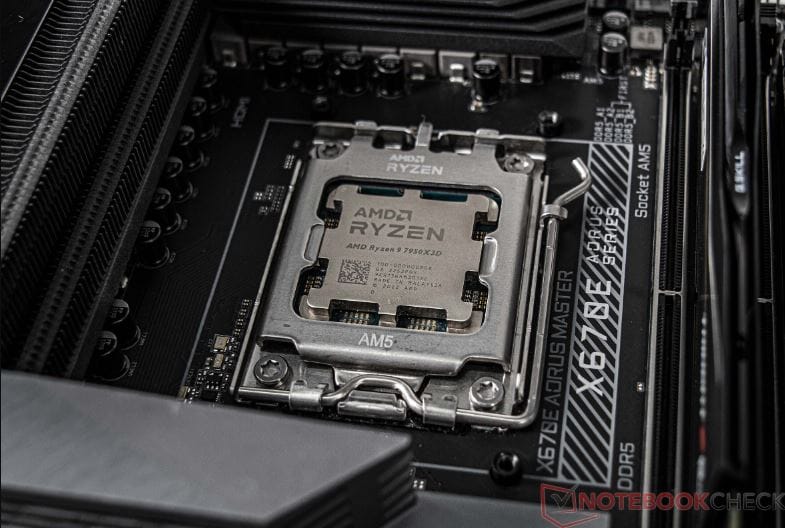
Well-known leaker @AnhPhuH has mentioned that the Ryzen 9 9950X3D and Ryzen 9 9900X3D will inherit the same L3 cache as seen in the previous generation (Ryzen 7000) models. While it’s a letdown that there won’t be additional cache, these CPUs will likely have a reversed cache tile layout. This design should enable you to overclock your CPU effectively. Typically, Ryzen 9 models are more amenable to overclocking than Ryzen 7 ones, and this should hopefully also apply to the X3D versions.
Release Timeline
The leaker further states that both CPUs are expected to be available by the end of January 2025. In the past, the Ryzen 7 7800X3D outperformed the Ryzen 9 series, leading to questions about whether AMD has made changes to ensure better performance with the Ryzen 9 9950X3D and Ryzen 9 9900X3D. Only time will give us the answers. On a different note, Intel’s not-so-great Arrow Lake-S launch means that AMD is really just competing with itself this time around.
A recent leak of a shipping manifest has shed light on AMD’s upcoming Threadripper 9000 series processors, codenamed Shimada Peak. Among the revelations is the unexpected introduction of a 16-core version, which will join the previously disclosed 96-core flagship model. The documents suggest that this new high-performance desktop lineup will keep the same power consumption levels as the previous generation, even as AMD has been shifting towards more power-efficient designs in its mainstream desktop offerings.
Confirmed Specs and Performance
The Threadripper 9000 series, which is anticipated to incorporate Zen 5 architecture, looks ready to keep AMD at the forefront of the high-performance CPU market. Notably, the leaked manifest confirms a flagship processor boasting 96 cores and 192 threads, likely to be named the Threadripper 9980X. This model is set to have a thermal design power (TDP) of 350 watts, identical to that of its predecessor, the Threadripper 7980X. Even with the higher core count, it appears that AMD is prioritizing performance over power efficiency by maintaining this TDP, particularly in contrast to the lower TDPs observed in the Ryzen 9000 series chips.
The 16-Core Model
Remarkably, the manifest also refers to a 16-core processor with a TDP of 350 watts. While this might seem excessive for a chip with fewer cores, it aligns with the previous Threadripper 7000 series, all of which operated under the same thermal design. This 16-core model likely won’t be included in the standard Threadripper lineup since AMD’s Threadripper 7000 series kicked off with a 24-core variant and the last 16-core version dates back to the 2000 series in 2018. It’s probable that this 16-core option will be a PRO model, following the trend of earlier Threadripper PRO series, which also offered a 16-core choice.
Clock Speeds and Expectations
Details regarding clock speeds are still unclear, but AMD’s Zen 5 architecture should deliver faster frequencies compared to Zen 4. The Ryzen 9 9950X, for instance, can boost up to 5.7 GHz. The Threadripper 7000 series already reaches speeds of up to 5.3 GHz, so a slight increase can be expected. However, significant improvements in clock speeds might be limited due to thermal and architectural restrictions.
Another fascinating aspect of the leaks is the absence of any reference to a model exceeding 96 cores. This could imply that the Threadripper 9000 series won’t feature Zen 5c-based processors. These cores, made for cloud servers, focus on increasing core counts rather than enhancing per-core performance. Their exclusion from the Threadripper lineup is consistent with earlier patterns, as Zen 4c cores were also missing from the Threadripper 7000 series.
Anticipated Launch
The Threadripper 9000 series is expected to hit the market soon, solidifying AMD’s leadership in the high-end desktop (HEDT) segment and equipping power users with tools necessary for intensive tasks like 3D rendering, video editing, and scientific simulations. With Shimada Peak setting new standards, the HEDT arena is about to become significantly more competitive.
AMD’s new Ryzen 7 9800X3D has been met with a very positive response from reviewers, with one calling its performance “a big slap in the face for the new Intel processors.” This praise from the media has been echoed by consumers who are reportedly purchasing the Ryzen 7 9800X3D in large numbers.
High Demand and Quick Sales
For instance, when we first began writing about the Ryzen 7 9800X3D, it was available on Amazon, but it sold out in less than thirty minutes. Currently, the CPU can again be found on Amazon, but it is likely to run out of stock rapidly once more.
The impressive sales of the Ryzen 7 9800X3D has led some to suggest that it might be a “paper launch,” implying that there isn’t much real stock available. However, claims from Moore’s Law Is Dead suggest that the Ryzen 7 9800X3D had a genuine launch with a good supply of stock.
Retailer Insights
An unnamed source from MLID, who claims to be associated with a “Major US Retailer,” stated that the retailer “can’t keep up” with the demand for the Ryzen 7 9800X3D. The level of interest has been so intense that even after “TON of supply at launch” and continuous restocks, the retailer struggled to meet all incoming orders.
Other sources from MLID in retail echoed this view, with one noting that the Ryzen 7 9800X3D is “flying off the shelves,” while another mentioned that their considerable stock “wasn’t remotely enough” to satisfy customers.
Panic Buying Concerns
One source from MLID identified as a “Major Distributor” cautioned that “many US companies are panic buying more supply of the Ryzen 7 9800X3D (and other PC parts) than they actually need” to protect themselves from potential price hikes due to future tariffs.
For those unaware, US President-elect Donald Trump has hinted at potential tariffs of 20% on all imports, with Chinese imports facing even steeper tariffs of up to 60%. If these tariffs are implemented, prices for PC components like CPUs and GPUs are likely to rise. The source further explained that the fear of tariffs is a significant reason for the increased supply in the US market.
While MLID’s observations about the rapid sales of the Ryzen 7 9800X3D appear to be accurate, the actual availability of the CPU and its connection to any potential import tariffs remains uncertain. So, it’s wise to approach this information with caution.
AMD has made the decision to cut its workforce by 1,000 employees globally. This semiconductor firm, often viewed as a key competitor to Nvidia, shared an earnings report for Q3 in September that showed mixed results.
Financial Performance Insights
According to a report from Reuters, AMD saw its revenue in the data center sector, which includes AI chips, increase more than double in the last quarter. Additionally, the personal computer segment experienced a growth of 29%. However, the gaming division faced a significant drop, with sales falling by 69%.
Future Projections
The London Stock Exchange Group (LSEG) has predicted that AMD’s data center segment will grow by 98% in 2024, which greatly surpasses the expected 13%. Even with this growth, AMD still trails behind its rivals Nvidia and Intel in the AI chip market. In the first quarter of 2024, Nvidia maintained a 65% market share, while Intel held 22%, and AMD was at 11%.
An AMD representative commented to Reuters, "In order to align our resources with our biggest growth opportunities, we are implementing several targeted measures." They also mentioned that the company is "dedicated to treating affected employees with dignity and assisting them during this transition."
Conclusion
In summary, while AMD is showing signs of growth in certain areas, it faces significant challenges in the competitive landscape of AI chips and has had to make tough decisions regarding its workforce. The company’s commitment to supporting its employees through these changes is notable.
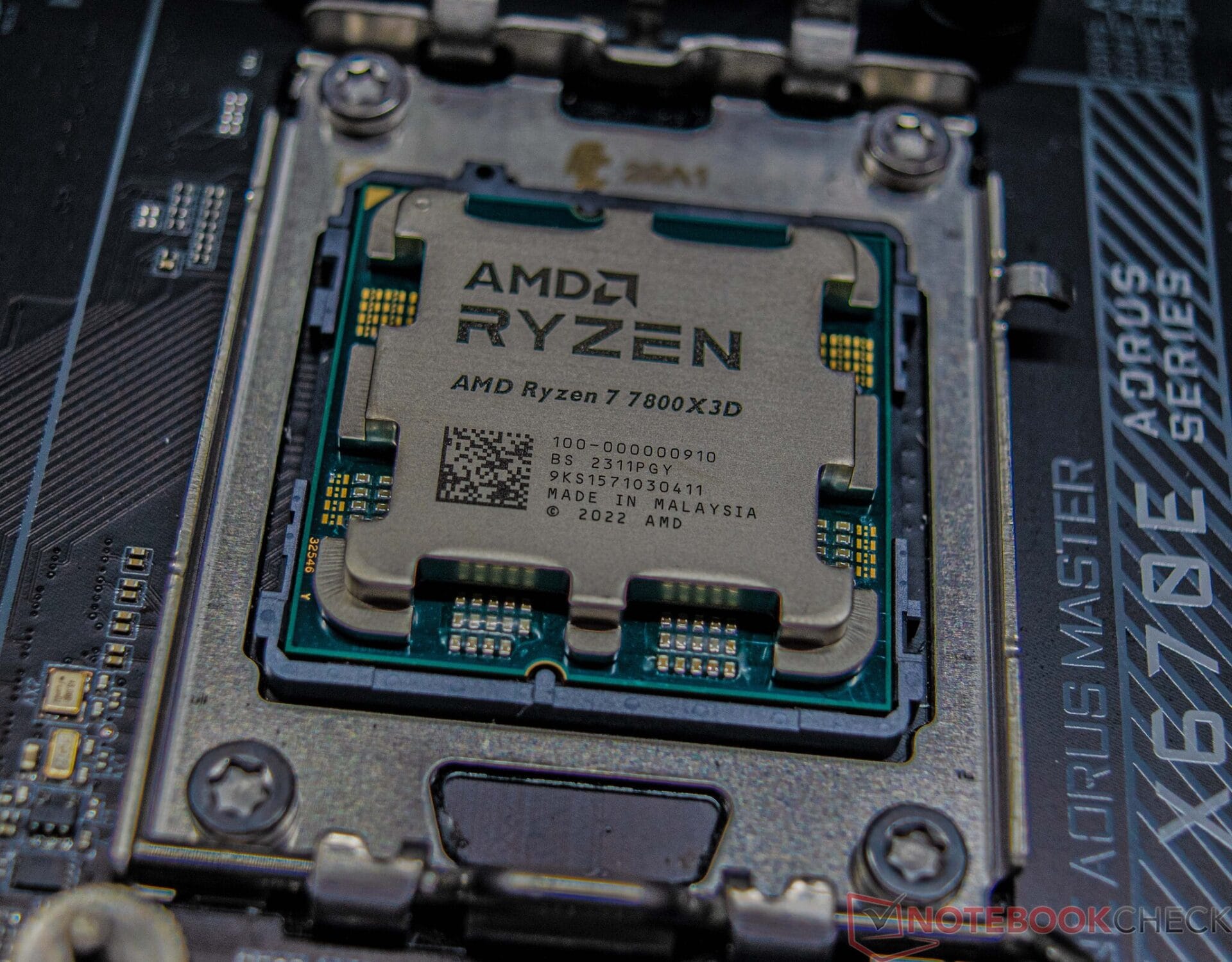
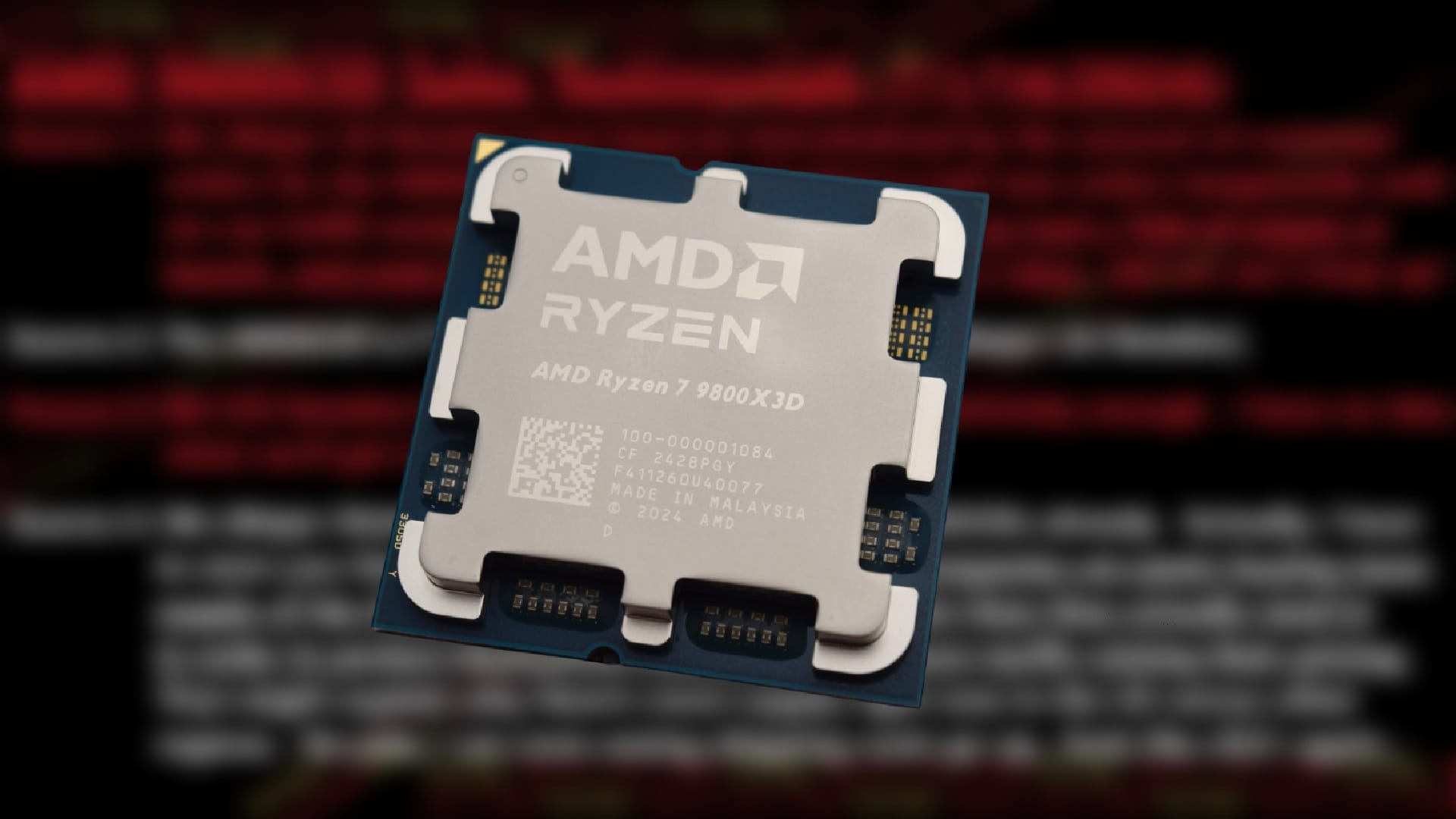
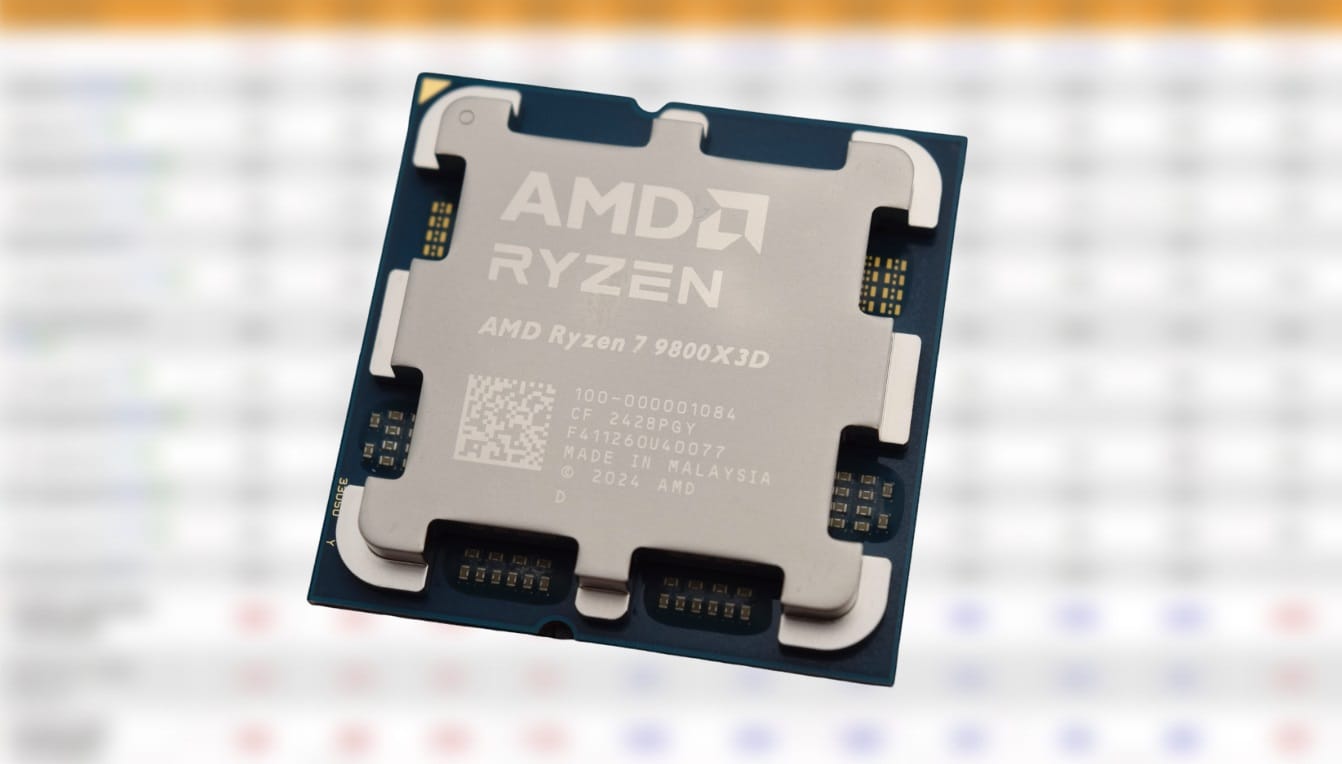
Keeping in line with the legacy of the Ryzen 7 5800X3D, AMD has introduced a new Zen 5 processor featuring 3D V-Cache. The processor is named “Ryzen 7 9800X3D,” and it boasts 8 cores. This latest chip not only aims to reclaim the gaming performance throne once occupied by the Ryzen 7 7800X3D but also intends to extend its lead over Intel. The Ryzen 7 9800X3D has successfully achieved this goal.
Performance Overview
According to our evaluation of the Ryzen 7 9800X3D (linked below), this X3D processor ranks as the top gaming CPU available today, showing an average performance boost of 14% compared to Intel’s Core i9-14900K, and an impressive 40% over the Core Ultra 9 285K.
Nonetheless, like with all CPU launches, reviews can vary widely. Therefore, it is beneficial to consider a thorough analysis of launch reviews. Fortunately, 3DCenter has provided a detailed roundup of the Ryzen 7 9800X3D reviews following the Arrow Lake launch. The overall findings portray the Ryzen 7 9800X3D as a very strong option for gamers.
Comparative Analysis
From the 14 launch reviews compiled by 3DCenter, the Ryzen 9800X3D is, on average, 9% quicker than the Ryzen 7 9700X and about 7% faster than the Core i5-14600K in various applications. This is a noteworthy achievement from a technical perspective, especially since previous X3D models typically lagged behind in productivity when compared to their non-X3D siblings due to lower TDP and clock speeds.
However, the Ryzen 7 9800X3D struggles against the Core i7-14700K, Core Ultra 7 265K, and Ryzen 9 9900X, as it falls short by as much as 20%.
Gaming Highlights
The gaming capabilities of the Ryzen 7 9800X3D are where it truly excels. The analysis by 3DCenter indicates that this processor provides around an 11% performance increase over the Ryzen 7 7800X3D and a 23% improvement over the Ryzen 9 9950X. Unfortunately for Intel, their best gaming processor, the Core i9-14900K, is approximately 19% slower, while the Core Ultra 9 285K lags behind by 23%.
For those still using the Ryzen 7 5800X3D, upgrading could be worthwhile, as the newer Ryzen 7 9800X3D delivers an average performance boost of 32%.
Efficiency Considerations
Ryzen X3D processors are recognized for their excellent efficiency. This time, though, AMD has chosen to prioritize higher clock speeds over efficiency, leading to the Ryzen 7 9800X3D not meeting or surpassing the benchmarks set by the Ryzen 7 7800X3D (available on Amazon).
Despite this, the Ryzen 7 9800X3D still presents a solid argument for its performance with an average consumption of around 107 W in tested applications and just 73 W while gaming. In contrast, the Ryzen 7 7800X3D shows consumption figures of roughly 65 W and 53 W for applications and gaming, respectively.
Moreover, the Core Ultra 5 245K and Ryzen 7 9700X showcase lower average application consumption at 95 W and 81 W compared to the Ryzen 7 9700X. However, in gaming, the Ryzen 7 9700X consumes a bit more at 86 W, while the Core Ultra 5 245K uses 67 W, which is 6 W less than the Zen5 X3D chip.
Conclusion
In summary, the Ryzen 7 9800X3D is a remarkable launch by AMD, bringing fresh excitement after a series of less impressive releases. Sadly, Intel does not have a competitive response, and it may be some time before they do with future CPU designs.
AMD has recently achieved its largest quarterly increase in desktop CPU market share since 2016, capturing 28.7 percent of the market in Q3 2024, as reported by Mercury Research. This marks a notable increase of 5.7 percent from the previous quarter and a 9.6 percent rise compared to the same time last year.
Desktop Revenue Growth
The chip manufacturer also saw its portion of desktop revenue rise to 27.3 percent, which is 7.7 percent higher than the previous year. This growth indicates strong demand for their premium processors, particularly the 3D V-Cache models and the newly launched Ryzen 9000 series.
Mobile Market Gains
In the mobile CPU sector, AMD captured 22.3 percent of the market, up from 20.3 percent in Q2 2024. Their revenue share in this area also improved, reaching 19.2 percent, a rise from 17.7 percent in the last quarter. Much of this success can be attributed to their Ryzen AI 300-series APUs.
Server Market Success
The server market brought further positive news, with AMD’s share reaching 24.2 percent in Q3 2024, an increase from 23.3 percent year-over-year. Even more noteworthy, their server revenue share climbed to 33.9 percent, up from 31.2 percent in Q3 2023. For the first time, AMD’s data center business surpassed Intel’s data center and AI division, generating $3.549 billion, compared to Intel’s $3.3 billion.
Despite this progress, Intel continues to dominate, holding 71.3 percent of the desktop market and 77.7 percent of the mobile segment. Mercury Research noted that Intel attributed its decline in desktop market share to some adjustments in inventory at a client’s location, suggesting a potential recovery in Q4 2024.
With the introduction of the Ryzen 7 9800X3D, AMD has once again strengthened its position in gaming against Intel. The latest Intel Core Ultra Arrow Lake processors fall short in comparison, failing to match even the standard Zen 5 CPU, let alone the Ryzen 7 7800X3D, which puts them in a less favorable light as gaming CPUs.
Performance and Efficiency
In our analysis, we found that the Ryzen 7 9800X3D not only outperforms the Ryzen 7 7800X3D but also does this without increasing energy consumption. This boost in gaming performance is paired with a reduced operating temperature and an increase of 200 MHz in boost frequency. Recently, Tony Yu from Asus China has managed to push the Ryzen 7 9800X3D beyond its usual clock speed limits using Liquid Nitrogen (LN2), yielding some remarkable results.
Record-Breaking Benchmarks
During Tony Yu’s testing, the Ryzen 7 9800X3D achieved a staggering boost clock of 6.9 GHz in Counter-Strike 2, which translated to an impressive frame rate of 1,200 FPS. In the Cinebench R23 Multi-Core benchmark, the overclocked Ryzen 7 9800X3D achieved a score of 30,513, representing a 31% improvement compared to our review sample.
It’s important to note that these benchmarks were conducted under LN2 cooling conditions, which isn’t something many users will experience. Nevertheless, the CPU’s capabilities showcased here are awe-inspiring, especially considering how Ryzen X3D CPUs have historically lagged in clock speeds against their non-X3D versions.
A Shift in Trends
Since the debut of the first Ryzen processors featuring 3D V-Cache, starting with the Ryzen 7 5800X3D, X3D models have consistently had lower clock frequencies than their non-X3D alternatives. For example, the Ryzen 7 5800X3D experienced a 400 MHz and 200 MHz reduction in base and boost clocks when compared to the Ryzen 7 5800X. Similarly, the Ryzen 5 7600X3D had a 600 MHz disadvantage in both base and boost clocks against the Ryzen 5 7600X (Available on Amazon). Other CPUs in the Zen4X3D line, like the Ryzen 9 7900X3D, Ryzen 9 7950X3D, and Ryzen 7 7800X3D, follow the same pattern.
In contrast, the Zen 5 Ryzen 7 9800X3D breaks this pattern slightly, offering a base clock that is 900 MHz higher and a boost clock that is 200 MHz slower compared to the 8-core Ryzen 7 9700X. With the architectural advancements AMD has integrated into the Ryzen 7 9800X3D, we hope to see the clock speed gap narrow even further in the future.
Asus China/Tony Yu, VideoCardz, Teaser image: Sandro Katalina on Unsplash
AMD’s research team has introduced a new step forward in real-time path tracing, launching a fresh neural network method that merges both denoising and upscaling. This initiative is directly aimed at competing with Nvidia’s dominance in AI-based graphics technology.
Tackling Challenges in Path Tracing
The innovative technology addresses one of the main challenges faced in real-time path tracing: achieving high-quality images with only a few ray samples per pixel. Typically, path tracing requires thousands of rays per pixel to produce those intricate frames, explaining why rendering a single frame in films can take hours. AMD’s approach emphasizes reconstructing detailed scenes from limited samples using neural network processing.
A Unified Process
The neural network developed by AMD effectively combines denoising and upscaling into a singular process. In most rendering systems, these steps are usually separate, but AMD has streamlined the workflow. By processing low-resolution renders with merely one sample per pixel and utilizing temporal accumulation and guidance buffers, their system can recreate sharp, high-resolution visuals.
Comparing with Nvidia’s Technology
This technique is not quite the same as Nvidia’s DLSS, which divides upscaling, frame generation, and ray reconstruction into distinct phases. DLSS also relies on specialized AI hardware found in RTX GPUs, but it remains uncertain whether AMD’s solution will function on existing RDNA GPUs or if new hardware will be necessary for support.
AMD’s team has outlined several key objectives they hope to achieve with this new technology:
This breakthrough may serve as the foundation for the upcoming next-gen FidelityFX Super Resolution (FSR) from AMD. Nevertheless, considering how demanding modern path-traced games are, we will probably require more powerful hardware to fully utilize the capabilities this technology offers.
AMD is all set to launch its new Ryzen 7 9800X3D on November 7, expanding the Granite Ridge lineup. There have been a number of benchmarks surfacing online, with the latest focusing on how well this CPU performs in Blender.
Performance Insights
According to HXL, the Ryzen 7 9800X3D achieved approximately 325 points in the Blender benchmark, showing a significant 25% increase compared to the 7800X3D, which scored around 276 points in the same test. That’s quite impressive for a new generation. Additionally, when stacked up against the Ryzen 7 9700X, the 9800X3D appears to be about 10% faster, adding to its appeal.
Comparison with Intel
However, when it comes to competition with Intel’s latest processors, the results are less encouraging. The Ryzen 7 9800X3D is just slightly quicker than the newly released Core Ultra 5 245 ‘Arrow Lake-S’ CPU. In contrast, it lags behind the Core Ultra 7 265K, which scored an admirable 422 points. This isn’t surprising, given that the Intel chip has the same number of performance cores but comes with an extra 12 efficiency-focused ‘Skymont’ cores.
Gaming Potential
It’s important to note that the Ryzen 7 9800X3D is geared towards gaming, and it should shine in that area, especially when considering the perceived lackluster gaming performance of Arrow Lake. For those who may have overlooked the recently leaked specifications, here’s a brief summary: it features a single CCD with 8 Zen 5 cores, a 120 W TDP, and operates at 4.7 GHz base with a boost of 5.2 GHz.
CES 2025 is looking to be an exciting event for those who love hardware. We can expect to see new CPUs from Intel like the Arrow Lake for desktops and laptops, along with Battlemage GPUs and Nvidia’s GeForce RTX 50 series graphics cards. Nevertheless, the AMD presentation is what many are eagerly awaiting, especially if a recent leak from a Chinese forum turns out to be correct. AMD is set to reveal a wide range of products at the event, including:
Product Availability
It’s important to note that not every item showcased will be ready for sale right away. The Ryzen 9 9900 and 9950X3D, specifically, may not be on store shelves for a while. Releasing them too soon could hurt sales of the Ryzen 7 9800X3D, which is set to launch just weeks before. Still, AMD isn’t rushing to release their top-tier X3D chips, since Intel’s Arrow Lake doesn’t seem to pose any real threat to AMD in the gaming sector.
AMD vs. Nvidia
The Radeon RX 8000 RDNA 4 GPUs are expected to come out around the same time as Nvidia’s offerings. Even though AMD won’t have something like an RTX 5090 or RTX 5080 this time, the mid-range market will still be competitive with options like the Radeon RX 8700 XT and Nvidia GeForce RTX 5070. Interestingly, there’s no mention of RDNA 4 laptops, which suggests that AMD plans to introduce them later in 2025.
Future Launches
AMD is also preparing business-oriented SKUs such as Kraken Point and Strix Halo. While there’s proof of at least one Asus tablet utilizing Kraken Point, it’s likely intended for high-end workstations. Fire Range is AMD’s response to Arrow Lake-HX, which is expected to launch around the same time. Both of these will likely support gaming laptops in 2025, but a recent rumor suggests we may not see many of them in action.
This brings us to the Ryzen Z2 Extreme, Ryzen Z2, and a puzzling product called Ryzen Z2G. The exact nature of the third SKU is uncertain; it could be a mistranslation or a lower-spec version of the Ryzen Z2. Regardless, these processors are set to power handheld gaming consoles coming out in 2025 and maybe even in 2026. Unfortunately, it seems the Steam Deck 2 might not be part of this lineup, as Valve does not intend to rush its release.