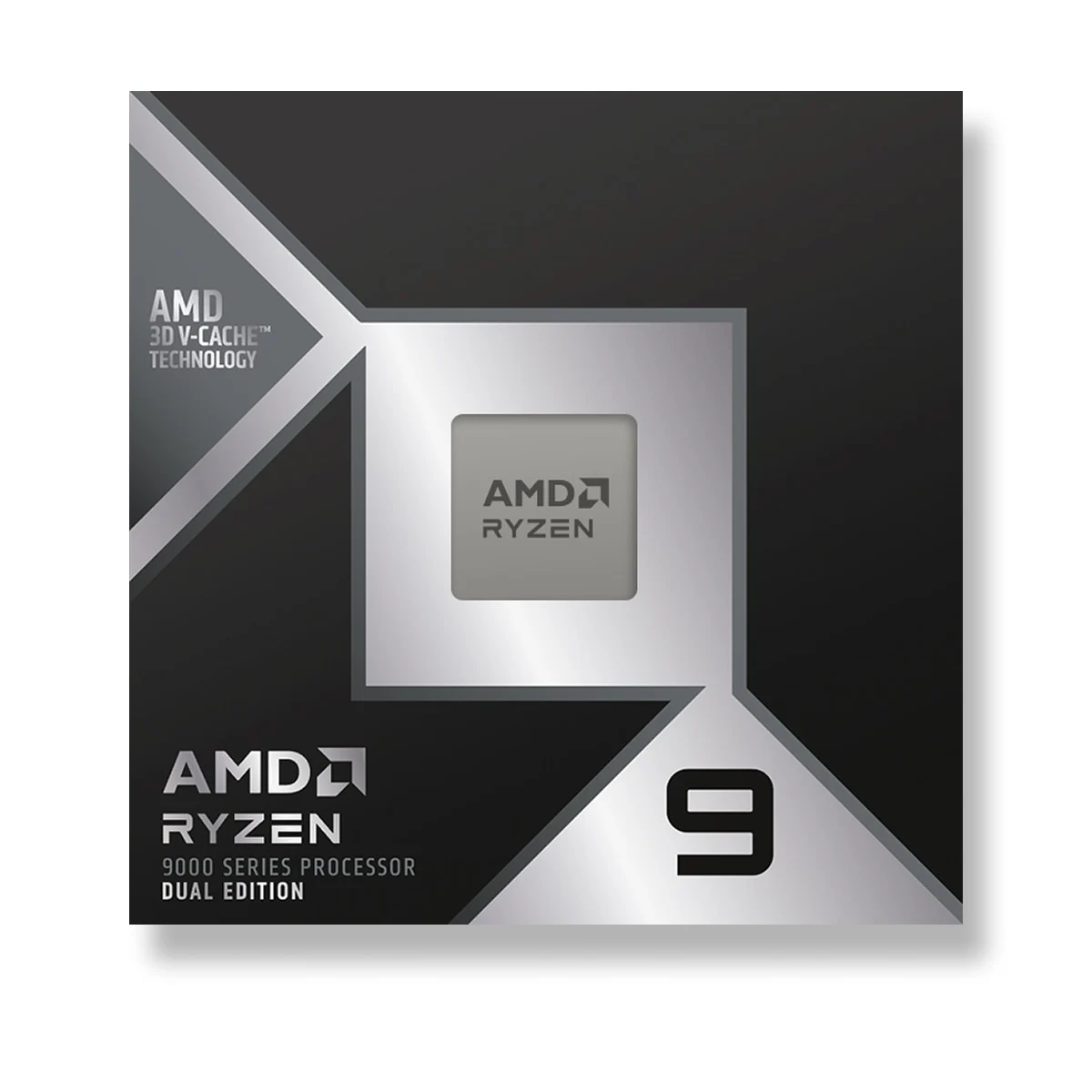
Tag: amd

  • AMD Ryzen AI 400 Gorgon Point Set for Upcoming Desktop Launch

    AMD Ryzen AI 400 Gorgon Point Set for Upcoming Desktop Launch

    Key Takeaways

    1. AMD’s Gorgon Point series of laptop APUs will also be introduced for desktops by 2026.
    2. Specific Gorgon Point models for desktops remain uncertain, but ‘Pro’ branded chips are likely candidates.
    3. Ryzen AI Pro 400 series chips for laptops have not yet launched, and desktops may see these chips first.
    4. Gorgon Point desktop SKUs could be released in Q1 2026, with possible announcements in Q2.
    5. Social media buzz around AMD’s upcoming products has been fueled by insights from Moore’s Law is Dead.


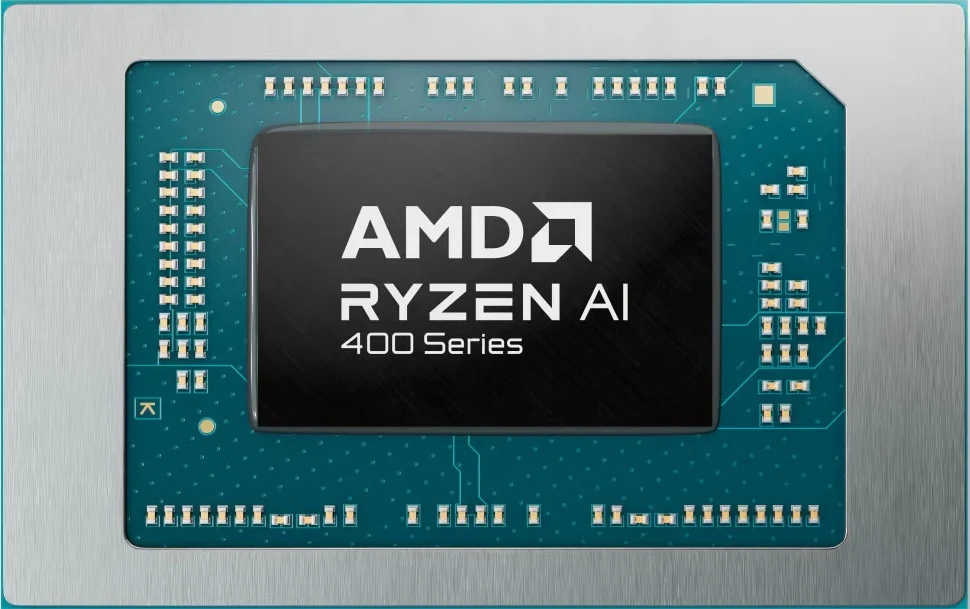
    AMD’s Gorgon Point series of laptop APUs is not just going to be used in laptops by 2026. It seems that AMD is also planning to introduce it for desktops. This information comes from Videocardz and Moore’s Law is Dead, both of whom shared their findings independently within three days. A video clip shows what looks like a Ryzen AI Pro chip on a desktop motherboard, clearly labeled as a Gorgon Point SKU.

    Future Models

    Which specific Gorgon Point models will transition to desktop formats is still uncertain. The use of the ‘Pro’ label suggests that only those chips with this branding are likely to be available for desktops. It’s also important to mention that AMD has not yet launched Ryzen AI Pro 400 series chips for laptops. Typically, these chips come out a few months after their non-Pro versions, and this time around, AMD might even introduce them for desktops before making them available for laptops.

    Expected Release

    Moore’s Law is Dead indicates that Gorgon Point desktop SKUs could potentially be released as soon as Q1 2026, meaning AMD might showcase them as early as the next month. Meanwhile, Videocardz believes that an announcement is not expected until Q2. Regardless, a variety of low-power AMD chips are set to enter the market in 2026, which is expected to be a rather uneventful year for the AM5 platform.

    Social Media Insights

    Moore’s Law is Dead has shared this information on X, contributing to the buzz around AMD’s upcoming products.

    Source:
    Link


  • Xbox Console Delay Impacts Call of Duty Release Against GTA 6

    Xbox Console Delay Impacts Call of Duty Release Against GTA 6

    Key Takeaways

    1. AMD has indicated that the new Xbox console will launch in 2027, delaying previous plans for a 2026 release.
    2. The delay in the Xbox launch may affect the release timing of Call of Duty: Modern Warfare 4, which was expected to debut alongside the console.
    3. Activision is reportedly changing its strategy, with plans for a multiplayer Call of Duty game and a standalone zombie experience.
    4. Activision aims to move away from an annual release schedule for Call of Duty games due to poor sales of Black Ops 7.
    5. Xbox is experiencing leadership changes, with CEO Phil Spencer leaving, and there are concerns about storage and memory shortages affecting the new console’s launch.


    AMD has recently indicated that the upcoming Xbox console is set to launch in 2027. A trustworthy leaker known for Call of Duty information previously stated that Microsoft aimed for a release at the end of 2026. TheGhostOfHope now thinks that this delay has altered the timing for the launch of Call of Duty: Modern Warfare 4.

    Expectations for Modern Warfare 4

    In a post on social media, this insider mentioned that Modern Warfare 4 was supposed to come out alongside Microsoft’s next gaming system. Competing against GTA 6 in November is a significant challenge, but the combination of a new shooter and hardware might have attracted some buyers. With these plans now changed, several Call of Duty games could potentially launch together with the console.

    Activision’s New Strategy

    Recent rumors suggest that Activision is revising its plans to support the new Xbox console. Gamers might see a multiplayer Call of Duty game and a standalone zombie experience, likely crafted by Treyarch. Typically paired with games like Black Ops 7, fans have long desired a project that focuses solely on co-op survival gameplay.

    In response to poor sales of Black Ops 7, the publisher revealed in December that it was changing the frequency of new releases. Reports suggest that Microsoft also wants the company to step away from an annual release schedule. Launching a DMZ option sooner could have taken advantage of the demand for an extraction shooter.

    The Future of Xbox Gaming

    TheGhostOfHope first referred to the new gaming unit as “Xbox Prime” back in 2024. At that time, the leaker expected a Call of Duty game to be ready for release in 2026. Jez Corden from Windows Central later dismissed this claim and the projected release timeline. Nevertheless, there have been very few sources as dependable when it comes to news about Activision’s franchise.

    Currently, Xbox is undergoing another shift, with Phil Spencer, the CEO of Microsoft Gaming, departing from the company. Shortly after Asha Sharma took charge, she emphasized the importance of hardware for the brand. However, issues related to storage and memory shortages could postpone the anticipated Magnus Xbox console/PC hybrid, possibly until after 2027.

    Source:
    Link


  • AMD Ryzen 11,000 Zen 6 CPUs Expected to Launch in 2027

    AMD Ryzen 11,000 Zen 6 CPUs Expected to Launch in 2027

    Key Takeaways

    1. The release of AMD’s Zen 6 desktop CPUs is now expected in 2027, delayed from the initial 2026 plan.
    2. Zen 6-based laptop models, known as Medusa Point, are also likely to face delays.
    3. AMD’s Epyc ‘Venice’ processors, featuring Zen 6, are still set for a 2026 release.
    4. The delays may be due to limited availability of TSMC N2 for Zen 6 cores and high costs of memory and storage.
    5. Intel’s Nova Lake series has also been delayed until 2027, with only the Arrow Lake refresh launching this year.


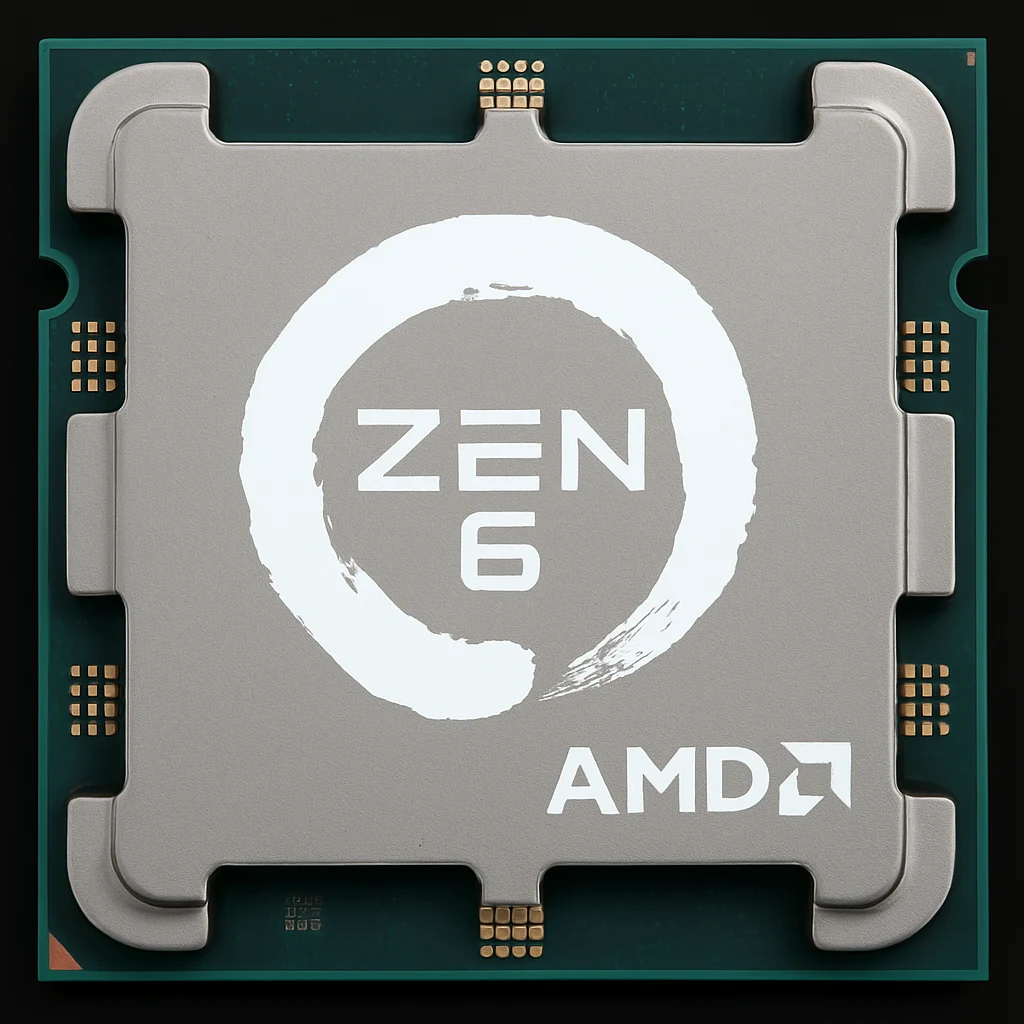
    An earlier plan from AMD hinted that the Zen 6 desktop CPUs would make their debut in 2026. This seemed reasonable since the Zen 5 desktop was released in 2025, and AMD typically unveils new CPUs every two years. However, a recent article from Benchlife indicates that we may have to wait a little longer. It appears that the Zen 6 will not arrive until 2027.

    Delay for Laptop Models

    On the laptop front, the Zen 6-based Medusa Point was also expected to launch in 2027, and it seems likely that this too will face some delays. Nevertheless, we can still expect to see Zen 6 in AMD’s Epyc ‘Venice’ processors, which are set to be released in 2026. No specific reasons have been given for the postponement, but it may be linked to limited TSMC N2 availability for Zen 6 CPU cores and the high costs of memory and storage for DIY PC enthusiasts.

    Speculation on Intel’s Plans

    A well-known leaker, HXL, recently mentioned that the high-end Ryzen 11,000 Zen 6 CPU is anticipated to feature 24 cores. They also pointed out that even Intel’s Nova Lake series has been delayed until 2027. Essentially, the rumored Arrow Lake refresh will be the only Intel desktop CPU lineup launching this year. Based on AMD’s history, there’s a chance we might unexpectedly see an AM5 or even an AM4 CPU pop up in 2026.

    Source:
    Link


  • PC Upgrades Decline: January 2026 CPU Sales Down 51% on Amazon US

    PC Upgrades Decline: January 2026 CPU Sales Down 51% on Amazon US

    Key Takeaways

    1. AMD dominates the CPU market in January 2026, with 88.32% of sales and $7.2 million in revenue, while Intel lags behind at 11.68% and $929,583.
    2. There was a significant 51% drop in CPU sales from January 2025 to January 2026, indicating gamers are not upgrading their systems.
    3. The Average Selling Price (ASP) of CPUs rose by 34.4%, increasing from $227 in January 2025 to $305 in January 2026.
    4. Rising costs of RAM, SSDs, and GPUs have contributed to the decline in CPU sales, making upgrades less affordable for consumers.
    5. Future CPU sales could improve with Intel’s upcoming Nova Lake CPUs, depending on market conditions and potential price reductions for other components.


    TechEpiphany has shared the CPU sales figures from Amazon US for January 2026. The report indicates that AMD continues to lead the market in both the number of CPUs sold and the revenue generated. Intel holds a far-off second place, which aligns with expectations since the Arrow Lake CPUs did not meet consumer hopes, and the upcoming Nova Lake CPUs are not available yet.

    Sales Data Insights

    In terms of sales, AMD moved 23,050 Ryzen CPUs, which makes up 88.32% of all CPUs sold on Amazon in January 2026. In contrast, Intel managed to sell only 3,050 units, capturing a mere 11.68% of the market. Revenue reflected these numbers, with AMD raking in $7,196,106.50 (88.57%) while Intel earned only $929,583.00 (11.43%). The best-selling CPUs included the AMD Zen 5 Ryzen 9000, followed by the Zen 4 Ryzen 7000, and the older Zen 3 Ryzen 5000 models.

    Comparisons to Previous Years

    While the total of 26,100 CPUs sold in January 2026 might seem impressive at first glance, a comparison with January 2025 reveals a troubling trend: many gamers are not upgrading their systems.

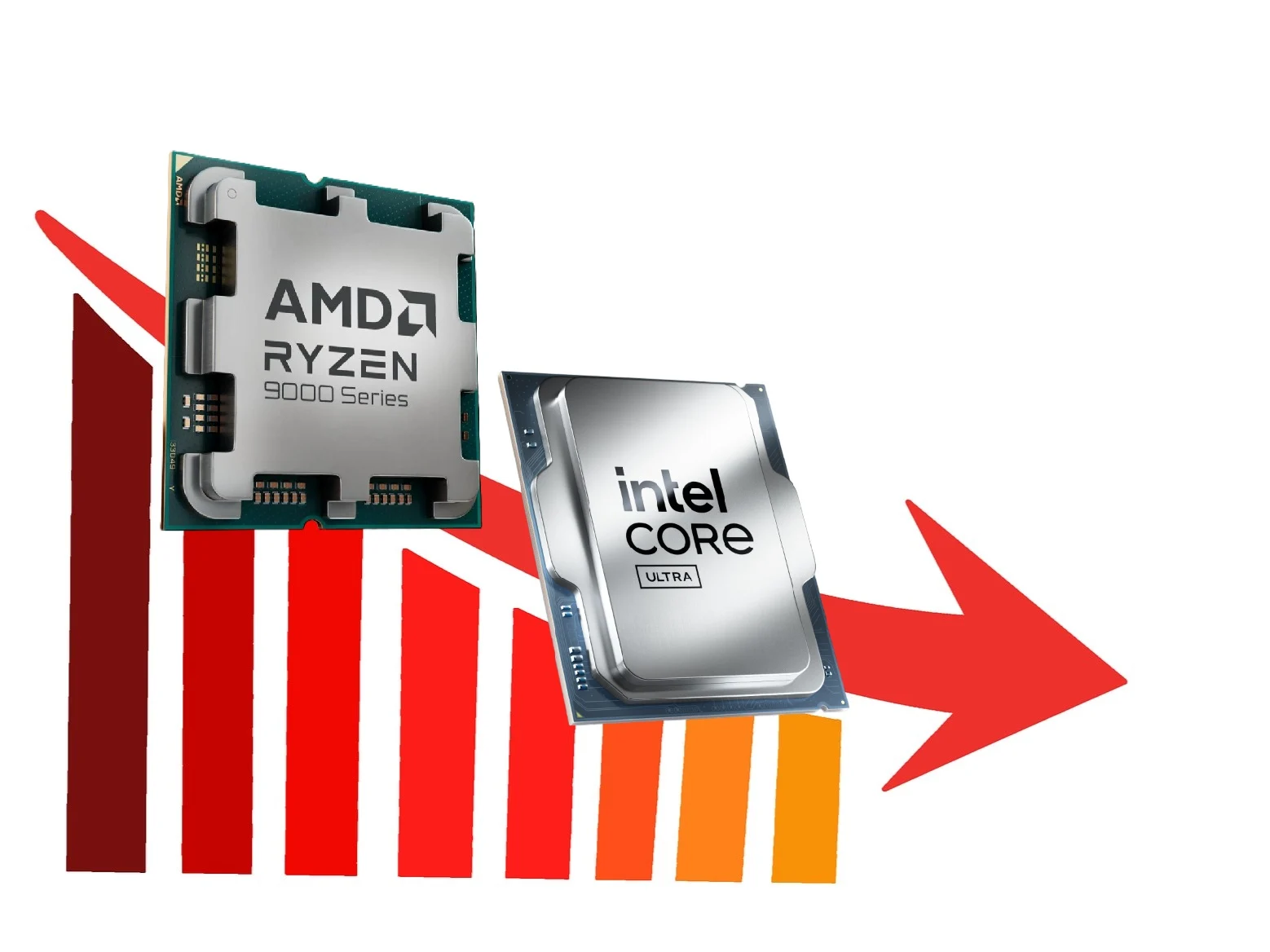
    According to TechEpiphany, 3DCenter has compiled a detailed table tracking CPU sales data on Amazon from December 2024 through January 2026. There was a shocking 51% drop in CPU sales from January 2025 to January 2026. During this same period, the Average Selling Price (ASP) surged by 34.4%, climbing from $227 in January 2025 to $305 in January 2026.

    Rising Component Costs

    Furthermore, prices for consumer DDR5 and DDR4 RAM have skyrocketed in recent months, and there’s no sign of this trend reversing. SSDs and GPUs have also seen significant price increases. For example, the 1 TB Kingston NV3 was priced at just $53 in May 2025 on Amazon, according to camelcamelcamel, but it is now listed at $170. Similarly, the RTX 5060 Ti 16 GB has also experienced a sharp uptick in price.

    In essence, the 51% drop in CPU sales in January 2026 on Amazon can be directly attributed to the rising costs of RAM, SSDs, and GPUs. After all, what good is a powerful new CPU if you can’t afford other essential parts at fair prices?

    Future Outlook

    It’s uncertain how much longer this challenging market will persist. Intel is expected to launch its next-gen Nova Lake CPUs, reportedly with extreme power limits, by the end of 2026. If this happens, CPU sales might rebound, especially if prices for memory, storage, and GPUs also decrease.

    TechEpiphany on X, 3DCenter on X, camelcamel, Teaser image source: Intel, AMD, PabitraKaity on Pixabay, edited.

    Source:
    Link


  • Get Crimson Desert Free with AMD CPUs, GPUs, and Laptops

    Get Crimson Desert Free with AMD CPUs, GPUs, and Laptops

    Key Takeaways

    1. Release Date: Crimson Desert will launch on March 19, 2024, after confirming its release date following earlier uncertainty.

    2. AMD Promotion: The game will be bundled with select AMD hardware, allowing buyers of eligible products to receive a free copy of Crimson Desert.

    3. Eligible Hardware: Eligible AMD products include certain CPUs like the Ryzen 9 9800X3D and GPUs like the Radeon RX 9070 and RX 9070 XT.

    4. Promotion Duration: The promotion runs from February 10 to April 25, 2024, or until all coupon codes are claimed.

    5. Redemption Details: Coupon codes can be redeemed until May 23, 2024, exclusively on Steam, requiring a product verification tool for installation confirmation.


    AMD has teamed up with Pearl Abyss for their new open-world action RPG, Crimson Desert, which is set to debut on March 19. This title will be bundled with select AMD hardware, so if you’re considering a switch or an upgrade, you might receive a complimentary copy of this eagerly awaited game. The promotion is currently active and will run for a little over two months.

    Game Development Journey

    Crimson Desert was first unveiled in 2019, but the game has encountered several challenges during its development. In August of last year, there were indications that the game, which was originally slated for release in November 2025, had been pushed back to Q1 2026. However, the developers later clarified that there was no confirmed release date, nor any delays at that time. Eventually, in September, Pearl Abyss verified that the release date would indeed be March 19, and it appears they are committed to that date. Pre-orders for the game are now open, priced at $70.

    Eligible Hardware for Promotion

    If you’re thinking of purchasing a new AMD desktop CPU, GPU, or a laptop with an AMD CPU, you might qualify for a free copy of the game. Some of the most popular processors, including the Ryzen 9 9800X3D and the high-end Ryzen 9 9950X3D, are part of the eligible CPUs. The Radeon RX 9070 and RX 9070 XT graphics cards are also included. Be sure to check the complete list for details.

    The promotion began on February 10 and will last until April 25, or until all coupon codes are claimed. The coupon code can be redeemed until May 23 by going to AMD’s rewards site and registering. A product verification tool must be downloaded to confirm that the eligible product is installed in the same system. It’s important to note that while Crimson Desert will be available on PC via Steam and the Epic Games Store, this promotion appears to be exclusive to Steam, meaning the coupon can only be used on that platform.

    Source:
    Link


  • AMD CEO Tips for 2027 Xbox Release, Denies Steam Machine Delay

    AMD CEO Tips for 2027 Xbox Release, Denies Steam Machine Delay

    Key Takeaways

    1. AMD’s CEO Lisa Su confirmed that the development of Microsoft’s next-gen Xbox console is progressing well, aiming for a 2027 launch.
    2. Valve’s Steam Machine, powered by AMD technology, is on track to ship in early 2026, despite concerns over rising memory prices.
    3. The new Xbox is expected to feature a premium design, potentially leading to a high price point due to increased memory costs and advanced specifications.
    4. The Steam Machine will have less powerful specs, utilizing an AMD Zen 4 processor and RDNA 3 architecture, but may face delays due to rising DDR5 costs.
    5. Market reactions are mixed, with some questioning Microsoft’s strategy to continue selling hardware amid declining gaming revenue from the Xbox Series X|S.


    Despite some doubts about new gaming systems, AMD’s CEO Lisa Su has minimized the likelihood of delays. She gave updates on the future Xbox console and the Steam Machine, both of which depend on AMD’s technology. The Xbox is aiming for a launch in 2027, while Valve is set to roll out its SteamOS cube in early 2026.

    Updates from the Earnings Call

    On February 3rd, during an earnings call, Su shared her insights, which were later reported by Wario64 on social media and GamesBeat. She stated, “From a product standpoint, Valve is on-track to begin shipping its AMD-powered Steam Machine early this year, and development of Microsoft’s next-gen Xbox featuring an AMD semi-custom SoC is progressing well to support a launch in 2027.”

    Concerns Over Pricing

    There have been rumors suggesting that a new Xbox console might launch within the timeframe mentioned by Su. However, increasing memory prices have caused some insiders to question if Microsoft will adhere to this timeline. Xbox President Sarah Bond has described the upcoming device as “very premium,” which raises concerns about its price point.

    When it eventually launches, the system is expected to include an AMD Magnus APU, featuring an 11-core Zen 6 CPU and RDNA 5 support. This console/PC hybrid may require 36GB or more of GDDR7 RAM. Considering the memory shortage’s impact on the GPU market, the console could become quite expensive.

    Steam Machine Specifications

    On the other hand, the specs for the Steam Machine are less powerful, featuring an AMD Zen 4 processor. Even though this Linux-based console will support 4K connectivity, it uses the RDNA 3 architecture. Nonetheless, due to soaring DDR5 costs, some analysts believe Valve might postpone its release, originally set for Q1 2026.

    It’s crucial to mention that Su did not assure that the next Xbox console would be available in 2027. While the chipset development is moving swiftly, various factors could disrupt that schedule.

    Market Reactions

    Some critics are questioning whether Microsoft should keep selling hardware altogether. The decline in gaming revenue partly due to the performance of the Xbox Series X|S has raised doubts about the company’s decision to invest in a more costly system. Only time will tell if this strategy is truly beneficial.

    Source:
    Link


  • AMD to Focus on RDNA 3.5 Even After RDNA 5 iGPUs Launch

    AMD to Focus on RDNA 3.5 Even After RDNA 5 iGPUs Launch

    Key Takeaways

    1. AMD has launched RDNA 3.5 iGPUs with the Strix Point and Strix Halo models for systems without discrete GPUs, including gaming handhelds.
    2. The RDNA 3.5 architecture will be used for lower performance integrated GPU products, like office laptops and systems with high-end discrete GPUs.
    3. AMD is developing iGPUs along two paths: the RDNA 3.5 iGPU and “premium” RDNA 5 iGPU devices.
    4. The premium RDNA 5 iGPU products, potentially part of the Medusa line, are not expected to launch until 2027.
    5. AMD plans to stick with the RDNA 3.5 design until at least 2029, with no significant updates anticipated until the RDNA 5 launch.


    AMD’s RDNA 3.5 iGPUs have been launched with the Strix Point and Strix Halo models, powering several systems without discrete GPUs. This includes gaming handhelds such as the Asus ROG Ally X and GPD Win 5. The new Gorgon Point also utilizes the same iGPU setup, and it appears that AMD plans to stick with this design until 2029.

    AMD’s Future Plans

    According to a report from @Kepler_L2 on X, a well-known source for tips, AMD intends to keep the RDNA 3.5 iGPU architecture for products that do not necessitate high performance from integrated GPUs. This category includes office laptops as well as systems featuring high-end discrete GPUs, like the RTX 5070 Ti-equipped Legion 7 Pro, which currently sells for $1,649 on Lenovo.

    Roadmap Insights

    The report indicates that AMD has split its iGPU development into two paths, with @Kepler_L2 mentioning that the RDNA 3.5 iGPU will coexist with the “premium” iGPU devices featuring RDNA 5 architecture. It is important to mention that this discussion originated from a post made by a popular Weibo leaker named Golden Pig Upgrade.

    A Weibo leaker casually shared an AI-generated roadmap, prompting some well-known insiders, including HXL, to provide additional context. However, Kepler_L2 has a reputation for offering relatively accurate AMD leaks, and the detailed information from this tipster implies that the roadmap wasn’t entirely random.

    Premium Devices on the Horizon

    Kepler_L2 didn’t specify much about the “premium” RDNA 5 iGPU products mentioned, but these are probably the anticipated Medusa “Halo/Premium” systems. For context, the Medusa line is not expected to launch until 2027, which means that AMD likely won’t be making significant updates to the RDNA 3.5 iGPUs until then.

    Source:
    Link


  • New AMD Ryzen AI Max 400 APUs Details Ahead of Gorgon Halo Refresh

    New AMD Ryzen AI Max 400 APUs Details Ahead of Gorgon Halo Refresh

    Key Takeaways

    1. AMD introduced two new APUs, Ryzen AI Max+ 388 and Ryzen AI Max+ 392, allowing access to the Radeon 8060S iGPU without needing the higher-end Ryzen AI Max+ 395.
    2. Rumors suggest a second refresh of APUs, codenamed Gorgon Halo, with five new models: Ryzen AI Max 485, 488, 490, and Max+ 492, 495.
    3. The new Ryzen AI Max 400 APUs are expected to have better performance with increased CPU and iGPU clock speeds over the previous generation.
    4. Only the Ryzen AI Max+ 495 model has reportedly achieved a 100 MHz boost in clock speeds for its cores.
    5. The Ryzen AI Max 400 series is anticipated to be released between October and December 2026, but caution is advised regarding the accuracy of current reports.


    Less than a month ago, AMD updated its Strix Halo architecture by introducing two new APUs. Known as the Ryzen AI Max+ 388 and the Ryzen AI Max+ 392, this update allows users to access AMD’s robust Radeon 8060S iGPU without needing the 16 CPU cores and 32 threads that come with the Ryzen AI Max+ 395, which is used in devices such as the ROG Flow Z13 and the GMKtec EVO-X2 (currently priced at $1,659.99 on Amazon), among others.

    Rumors of a Second Refresh

    Even though the refresh took place at CES 2026, some reports have surfaced about a potential second refresh. Initially, VideoCardz mentioned that AMD is working on Ryzen AI Max 400 APUs, codenamed Gorgon Halo. Following that, HKEPC reported that AMD plans to introduce five Ryzen AI Max 400 APUs, named Ryzen AI Max 485, Ryzen AI Max+ 488, Ryzen AI Max 490, Ryzen AI Max+ 492, and Ryzen AI Max+ 495:

    – AMD Ryzen AI Max+ 495
    – AMD Ryzen AI Max+ 492
    – AMD Ryzen AI Max 490
    – AMD Ryzen AI Max+ 488
    – AMD Ryzen AI Max 485

    Performance Enhancements Anticipated

    Similar to the Ryzen AI 400 ‘Gorgon Point’ APUs, the new Ryzen AI Max 400 APUs are expected to outperform their Ryzen AI Max 300 predecessors due to increased CPU and iGPU clock speeds. If the Ryzen AI 400 series is indicative, then the Ryzen AI Max 400 processors might support faster RAM compared to the LPDDR5X-8000 limit of the Ryzen AI Max 300 series.

    Among these five models, only the Ryzen AI Max+ 495 seems to have achieved a 100 MHz increase in boost clock speeds for its Zen 5 CPU cores and Radeon 8060S iGPU cores. AMD is reportedly planning to release the Ryzen AI Max 400 series sometime between October and December 2026. However, there are doubts about the image displayed on HKEPC’s site, which appears to have ‘2127’ overlaid on a different part number, leading to some skepticism regarding the accuracy of their report at this time.

    Conclusion

    In conclusion, while AMD’s new APUs show promise, the information surrounding the second refresh should be taken with a grain of caution. It’s essential to keep an eye on further developments and official announcements for the most accurate updates.

    Source:
    Link


  • Major Flaw of the New Dynabook Tecra A65-M Explained

    Major Flaw of the New Dynabook Tecra A65-M Explained

    Key Takeaways

    1. Dynabook has introduced the AMD-powered Tecra A65 series, expanding its line beyond the Intel-powered Tecra A60 models.
    2. The Tecra series focuses on affordability with solid chassis designs and satisfactory performance, unlike the premium Portege series.
    3. All Tecra A65-M models feature a single 1920 x 1200p IPS display with only 60% sRGB coverage, limiting color quality.
    4. The lack of full sRGB coverage is a significant drawback, especially for graphic designers and media consumers.
    5. Competitors like HP Elite, Lenovo ThinkPad, and Dell Pro series offer better display options, putting the Tecra series at a disadvantage.


    Dynabook has begun delivering its AMD-powered Tecra A65 series to add to its range of Intel-powered Tecra A60 models. The Tecra series, unlike the more premium Portege series, opts for more affordable components to achieve lower starting prices while still ensuring solid chassis designs and satisfactory performance. Nonetheless, there’s one key issue that cannot be overlooked.

    Display Limitations

    All available Tecra A65-M configurations come with the same 1920 x 1200p IPS display and offer no alternative options. While this may not seem like a major drawback, the single display is unfortunately a subpar IPS panel with a maximum of only 60% sRGB coverage, despite its price tag of around $1000. There is no possibility to upgrade to full sRGB coverage on the Tecra A65-M, which might deter some potential buyers depending on their usage needs.

    Market Expectations

    Full sRGB coverage is increasingly becoming a standard feature in budget and midrange laptops, making them more attractive to budding graphic designers and editors. Furthermore, even for regular media viewing or web surfing, the richer colors resulting from full sRGB coverage significantly enhance the experience. The limitation of all current SKUs in the Tecra A60 and A65 series to only a small portion of sRGB puts them at a considerable disadvantage when lined up against competitors like the HP Elite series, Lenovo ThinkPad series, or the Dell Pro series.

  • AMD Collaborates with Partners to Avoid GPU Price Increases

    AMD Collaborates with Partners to Avoid GPU Price Increases

    Key Takeaways

    1. The tech industry is experiencing a memory crisis, impacting DDR5 RAM, SSDs, GPUs, and potentially power supplies and CPU coolers.
    2. AMD is focused on maintaining GPU prices close to the manufacturer’s suggested retail price (MSRP) despite rising costs.
    3. AMD has built long-term relationships with DRAM suppliers to secure stable pricing and supply for memory components.
    4. Collaborations with add-in card partners aim to align market prices with AMD’s recommended MSRPs, but predicting market conditions remains difficult.
    5. Price hikes are anticipated in the future, leading to advice for consumers to purchase GPUs before the end of 2025.


    The tech industry is currently facing a significant memory crisis. It began with a dramatic rise in DDR5 RAM prices, but the repercussions have extended beyond that. SSDs and GPUs are also feeling the squeeze, and there are indications that power supplies and CPU coolers may be the next to see price hikes. With a multitude of essential PC parts experiencing simultaneous cost increases, the future appears challenging for those building PCs. In the midst of this turmoil, AMD seems to be striving to maintain its graphics card prices as close to the manufacturer’s suggested retail price (MSRP) as possible.

    AMD’s Strategy

    In a conversation with Gizmodo, David McAfee, who leads AMD’s Ryzen division, shared that managing GPU pricing effectively in 2026 is a crucial objective for the company. He mentioned that AMD has established long-term relationships with key DRAM suppliers, which aids in securing adequate supply and more stable pricing for memory components. This is vital since memory costs significantly impact the final price of a graphics card.

    “We’ve built very strategic partnerships over many years with all the DRAM manufacturers to ensure that both the quantity of supply required and the cost structure we can get from them align with what we support in our graphics business,” he said.

    Challenges Ahead

    McAfee also pointed out that AMD is collaborating closely with its add-in card (AIC) partners to keep actual market prices in line with AMD’s recommended MSRPs. However, he acknowledged that predicting the market situation is difficult. Should memory prices continue to climb, it will become increasingly challenging for board partners to manufacture GPUs that meet the desired performance and price equilibrium. Essentially, without reasonably priced memory, even the best-laid plans for GPU pricing can quickly unravel.

    Nonetheless, it’s crucial to remember that a few months back, a spokesperson from PowerColor, one of AMD’s main board partners, advised users on Reddit to purchase GPUs before the end of 2025, hinting that price hikes are anticipated. Currently, AMD claims it is doing all it can to keep GPU prices within a reasonable range. Whether these efforts will suffice while memory and component prices keep rising remains to be seen.

    Gizmodo

    Source:
    Link