Tag: AI model

  • Shanghai Company Unveils Next-Generation Toy Bunnies Harnessing AI Technology

    Shanghai Company Unveils Next-Generation Toy Bunnies Harnessing AI Technology

    Remember your childhood teddy bear? The one that patiently listened to all your secrets and dreams? Well, there’s an upgrade in the market, because there’s a new generation of companions in town, and they’re not just soft and cuddly – they’re downright chatty. Meet the latest trend in smart toys: AI-powered robots that can hold real conversations with kids. Forget pre-programmed phrases and robotic voices; these little guys use clever technology to chat like a real friend, keeping youngsters entertained and engaged for hours.

    AI-Powered Robots: The New Generation of Smart Toys

    The bunnies use large language models to make toys more interactive

    One company leading the charge is FoloToy, a Shanghai-based start-up that uses something called large language models (LLMs) – the same tech behind chatbots like ChatGPT – to breathe life into ordinary toys. Imagine your bunny pal suddenly asking about your day or sharing funny stories. Pretty cool, right?

    Frank Murphy: The Multilingual Chatty Companion

    But FoloToy isn’t just for kids. They’ve teamed up with Yomiplanet to create Frank Murphy, a limited-edition “live” figure that chats in six languages! So, whether you’re practicing your Japanese or reminiscing about Steve Jobs with a digital pal, Frank’s got you covered.

    The Future of AI-Powered Devices

    This explosion of AI toys isn’t just about fun and games, though. It’s part of a bigger trend in China, where tech companies are racing to develop the next generation of AI-powered devices. Think voice assistants that learn your habits or screenless gadgets controlled by your thoughts. The future is here, and it’s interactive!

    Commercializing AI: The Power of Fun and Connection

    Of course, with all this new tech comes the question: how do we make money from it? Experts warn that commercializing AI can be tricky, but companies like FoloToy are betting on the power of fun and connection. After all, who wouldn’t want a chatty companion who’s always up for a conversation? So, the next time you’re feeling lonely, ditch the phone and (maybe) cuddle up with an AI buddy. You might be surprised at how much fun you can have with a robot who talks back.

  • Enhanced AI, Display, and Camera in Samsung Galaxy S24 Series Update

    Enhanced AI, Display, and Camera in Samsung Galaxy S24 Series Update

    Samsung recently released a software update for its Galaxy S24 series smartphones, which were launched last month. This update brings several new features, bug fixes, and improvements based on user feedback. Samsung aims to enhance the device’s display, camera, and AI translation capabilities through improved hardware and software integration.

    Adjustable Display Settings

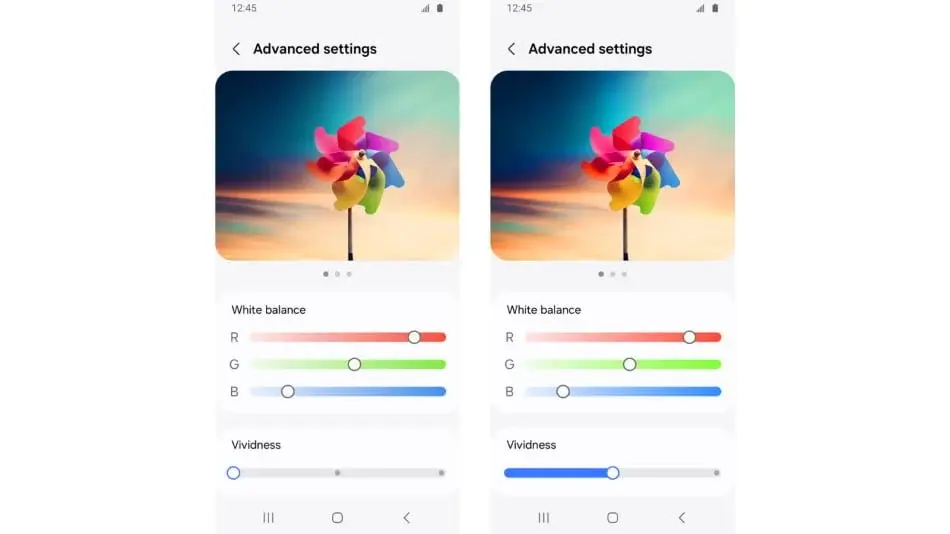
    The latest update for the Galaxy S24 series introduces a new “Vividness” option under the screen’s “Advanced settings.” This feature allows users to customize the color and brightness levels of their screens according to their preferences. Now, you can enjoy a display that looks just the way you like it.

    Better Camera Features

    Samsung has also focused on enhancing the camera capabilities of the Galaxy S24 series. The update brings improvements to zoom, Portrait Mode, Night mode, and video shooting with the rear camera. These enhancements aim to make capturing pictures and videos in various situations even more enjoyable.

    Improved Communication

    In line with Samsung’s commitment to facilitating smooth communication for everyone, this update also works on reducing language barriers. The AI integrated into the Galaxy S24 series has been optimized to better understand users in different situations. This improvement will make it easier for users to communicate effectively with their devices.

    Rollout Details

    Samsung has announced that the rollout of these updates will begin in February. Users can expect to receive the update notification on their Galaxy S24 series smartphones soon.

    Overall, this software update brings significant improvements to the Galaxy S24 series smartphones. Users can look forward to a more personalized display experience, enhanced camera features, and improved communication capabilities. Stay tuned for the update notification on your device in the coming weeks.

  • Using AI and VR Technology, Tencent is Revolutionizing Chinese Opera

    Using AI and VR Technology, Tencent is Revolutionizing Chinese Opera

    Tencent, a well-known company in the gaming and social media industry, is now venturing into a new field by giving Chinese opera a modern twist. They have begun with the story of Hua Mulan, the legendary heroine who disguised herself as a man to fight in her father’s place. Thanks to Tencent’s tech-savvy approach, this traditional story is gaining a new audience in China.

    Tencent’s Modern Makeover

    Tencent has taken an old 1956 opera performance and utilized artificial intelligence (AI) to revitalize the video. The use of AI technology has successfully cleaned up the footage, resulting in a fresh and updated version. This project has been a huge success, attracting over 7 million viewers through its live stream. Collaborating with the Ministry of Culture and Tourism, Tencent aims to bring traditional Chinese opera into the digital age.

    Advancing Traditional Art

    Tencent’s efforts go beyond simply enhancing old videos. They are employing advanced technologies like 6DoF, commonly used in virtual reality, to capture the intricate movements of characters from famous operas. This technology allows people today to witness and appreciate the complex beauty of these traditional dances and stories.

    Preserving Cultural Heritage

    The ultimate goal of Tencent’s project is to preserve classic stories and share them with a new generation. Despite facing challenges such as the availability of old opera data, Tencent is finding innovative solutions. They are even planning to establish a digital library, making it easier for more people to access and enjoy these restored performances.

    In China, tech companies are leveraging their resources to celebrate and safeguard traditional culture. Through their efforts, they are ensuring that these significant pieces of China’s heritage will not be forgotten. This serves as a testament to how technology can bridge the gap between the past and the present.

  • Integration of advanced AI into smartphones through partnership between Lenovo and Baidu

    Integration of advanced AI into smartphones through partnership between Lenovo and Baidu

    Baidu, China’s leading tech giant, has struck a significant partnership with Lenovo, to embed its cutting-edge generative AI technology, particularly the Ernie large language model (LLM), into Lenovo smartphones. This collaboration follows similar agreements Baidu has forged with other smartphone manufacturers such as Samsung and Honor, marking a strategic move to expand its presence in the mobile market.

    Lenovo Integrates Baidu’s Ernie Model into Smartphones

    Lenovo, known for its diverse portfolio that includes personal computers and tablets, will now integrate Baidu’s Ernie model into its branded smartphones, a step aimed at capitalizing on the growing trend of AI-powered features in mobile devices. This trend gained traction following the success of ChatGPT, developed by OpenAI, in late 2022.

    Competition in the AI Capabilities Market

    While Google’s Pixel phones currently lead the market in terms of AI capabilities, backed by robust cloud-based AI services, Apple is reportedly working on incorporating generative AI models into its iPhones. The collaboration between Baidu and Lenovo signals a concerted effort to compete in this space and offer consumers innovative AI-driven features such as chatbots and real-time translation directly on their smartphones.

    The Growing Demand for AI-Integrated Smartphones

    According to projections by research firm Canalys, approximately 5% of smartphones shipped globally in 2024, translating to around 60 million devices, will boast AI capabilities. This underscores the growing demand for AI-integrated smartphones and the potential for such features to become essential for consumers in the long run.

    China’s Dominance in the AI Services Market

    In China, where AI services from U.S. firms are not readily available, the market is dominated by homegrown companies like Baidu, Alibaba, and Tencent, offering over 200 AI models. Baidu CEO Robin Li has emphasized the importance of practical AI applications and has leveraged collaborations with smartphone manufacturers to enhance Baidu’s LLM and compete effectively with U.S. rivals.

    Investments by Top Chinese Phone Brands

    Apart from Lenovo, other top Chinese phone brands including Vivo, Xiaomi, and Huawei are also investing in developing their on-device AI models, although specific details have not been disclosed publicly.

    Strategic Move to Position AI as a “Must-Have” Functionality

    Analysts view the integration of Baidu’s LLM into smartphones as a strategic move, positioning AI-powered features as potential “must-have” functionalities in the future, despite existing limitations. These collaborations not only benefit Baidu but also provide access to vast amounts of data, which could further enhance the capabilities of Baidu’s AI models and strengthen its competitive position in the global smartphone market.

    Enhancing User Experiences and Driving Innovation

    The partnership between Baidu and Lenovo underscores the increasing importance of AI in smartphones and reflects a broader trend within the industry towards integrating advanced AI technologies to enhance user experiences and drive innovation.

  • FCC Implements New Rule Prohibiting AI Voice Robocalls for Consumer Protection

    FCC Implements New Rule Prohibiting AI Voice Robocalls for Consumer Protection

    The Federal Communications Commission (FCC) has taken a firm stand against robocalls with a recent decision that bans the use of AI-generated voices in such calls within the United States. This action, effective immediately, marks a significant expansion of the Telephone Consumer Protection Act (TCPA) and is aimed squarely at combating scams that employ sophisticated AI voice technologies to deceive, extort, and misinform the public.

    Addressing the Issue of AI-Generated Voice Robocalls

    FCC Chair Jessica Rosenosworcel reiterated the urgency of addressing this issue, noting the increasing use of AI voices by scammers to target vulnerable individuals, impersonate well-known figures, and spread false information. The FCC’s bold move underscores its commitment to leveraging existing legal frameworks and regulatory expertise to tackle emerging threats posed by advanced technologies.

    Investigation into Life Corporation

    This regulatory update follows closely on the heels of an investigation into Life Corporation, led by the FCC and New Hampshire’s attorney general. The company, under scrutiny for deploying robocalls mimicking President Joe Biden, is now the subject of a criminal probe. This case exemplifies the kinds of abuses the FCC aims to curtail with its latest ruling.

    Adapting Consumer Protection Laws to the Digital Age

    The decision to outlaw AI-generated voice robocalls reflects a broader effort to adapt longstanding consumer protection laws to the challenges of the digital age. Experts like Nicholas Garcia of Public Knowledge applaud the FCC’s proactive stance, acknowledging the agency’s capacity to address new technological threats in real-time while building on the foundations of existing legislation.

  • Google Announces the Official Rebranding of Bard to Gemini, an All-in-One AI Platform

    Google Announces the Official Rebranding of Bard to Gemini, an All-in-One AI Platform

    Google has officially introduced Gemini, a unified AI platform that consolidates its previous efforts in the AI sector. By rebranding and enhancing services like the Bard chatbot and Duet AI under the Gemini name, Google is directly challenging the popularity of OpenAI’s ChatGPT.

    Gemini AI: Advanced Features

    The transformation into Gemini brings a suite of advanced features that extend Google’s AI capabilities to text, voice, and image interactions. With a dedicated app for Android users and integration into the Google app for Apple users, Gemini aims to be more accessible and user-friendly.

    Gemini Ultra: Advanced AI Features

    Gemini’s new offerings include Gemini Ultra, which is available through Google One’s AI Premium tier. For a monthly fee of $20, users can access advanced AI features and additional cloud storage. This positions Gemini as a strong competitor to ChatGPT Plus, offering a richer package for the same price.

    Gemini: Infusing Personality

    Google aims to make Gemini stand out by infusing it with a distinct personality. The goal is to move beyond the neutral tone typical of AI interactions and offer users a more engaging and dynamic experience. By understanding user intent and reacting with personality, Gemini hopes to carve out a unique space in the AI chatbot landscape.

    Despite the upgrades, there is skepticism around the ability to distinguish large language models like Gemini from others such as ChatGPT. The real challenge for Google lies in demonstrating clear advancements and convincing users of Gemini’s unique value proposition.

    Google’s Commitment to Innovation

    Google plans to roll out Gemini in the US initially and later expand to the Asia Pacific region. The AI community and users worldwide are eager to see how this new contender fares against established players like ChatGPT. Google’s commitment to innovation in AI through Gemini marks an exciting chapter in the evolving story of artificial intelligence.

  • New AI Tool by Apple Simplifies Photo Editing Using Text Prompts

    New AI Tool by Apple Simplifies Photo Editing Using Text Prompts

    Apple has once again pushed the boundaries of technology, this time transforming the way we think about photo editing. With the introduction of the MGIE model, a collaboration with the University of California, Santa Barbara, Apple is making it simpler for everyone to tweak photos with just a few words. Gone are the days when mastering complex software was a prerequisite for photo editing. Now, whether you want to crop, resize, flip, or add a bit of flair with filters, all you need is to describe your vision.

    Revolutionizing Photo Editing with MGIE

    The brilliance of MGIE, which stands for MLLM-Guided Image Editing, lies in its ability to understand and execute both straightforward and intricate edits through textual prompts. Imagine wanting a bluer sky in your photo; MGIE interprets this request into a specific action, like enhancing the brightness of the sky, to fulfill your request accurately.

    From Pizza to Tigers: Unleashing Your Imagination

    One of the most captivating examples provided involves transforming an image of pepperoni pizza into a healthier version by simply asking the model to “make it more healthy,” which magically adds vegetable toppings to the pizza. Similarly, a dim picture of tigers can be brightened with a prompt to add more contrast, showcasing the model’s ability to bring your imagination to life.

    Apple’s Venture into AI Editing Space

    Apple’s venture into the AI editing space with MGIE is a notable shift, especially when considered alongside giants like Adobe, which has led the charge with its own AI editing tools. While Apple has traditionally been more reserved in the generative AI arena, this innovation marks a significant step towards integrating more AI features into its products, as hinted by CEO Tim Cook. Making MGIE accessible through GitHub and a web demo on Hugging Face Spaces opens up new possibilities for creatives and tech enthusiasts alike.

  • Despite industry challenges, Meitu’s profits skyrocket with the aid of AI advancements

    Despite industry challenges, Meitu’s profits skyrocket with the aid of AI advancements

    Meitu Reports Impressive Profit Surge in 2023

    Meitu, the Hong Kong-listed tech company, has announced a remarkable increase in profits for the year 2023. The company’s net profit has more than tripled, ranging from an estimated US$46.36 million to US$51.98 million, compared to the previous year. This substantial growth, exceeding 200% compared to 2022, is attributed to the success of Meitu’s new generative AI-based image and productivity tools.

    Success of Generative AI Tools

    Meitu’s tools, namely “Action” for narrated videos and “X-Design” for creating graphics for product and service posters, have exceeded expectations in terms of user growth and subscription conversion. This ability to monetize generative AI tools sets Meitu apart from major tech companies like Microsoft, Google, and Advanced Micro Devices, which have struggled to turn a profit from their own AI initiatives.

    Global Expansion

    Meitu’s success has also translated into global expansion, with its products now available in 195 countries and regions. The company has experienced rapid growth in subscribers outside mainland China, marking a significant milestone in its international presence.

    Meitu’s Journey

    Founded in 2008 in Xiamen, Meitu initially gained success with a selfie app for touch-ups. However, the company faced setbacks with unsuccessful ventures in the smartphone market and social media, as well as significant investments in cryptocurrencies. Despite warnings to investors in July 2022 about potential losses due to cryptocurrency market volatility, Meitu’s recent focus on generative AI has boosted investor confidence, leading to a more than 7% jump in shares upon announcing the 2023 profit estimates.

    Shareholder Performance

    While Meitu’s shares experienced an 11% pullback recently, shareholders have still seen a 68% increase over the last three years. The company’s quarterly performance saw a 27% drop in share price, causing concerns among investors. However, Meitu’s long-term returns have been significant, outperforming the market by 67% over three years.

    CEO’s Commitment to AI

    Meitu’s CEO, Wu Xinhong, has emphasized the company’s commitment to understanding AI technology, including employee training programs. The total shareholder return (TSR) for Meitu shareholders over the past year stands at 41%, including dividends, indicating a positive trajectory for the business. As investors navigate the recent pullback, there is a call to examine whether the fundamentals align with the share price and to consider Meitu’s future outlook beyond historical profits.

  • Tim Cook Confirms Apple Products to Include AI Features

    Tim Cook Confirms Apple Products to Include AI Features

    Tim Cook, the CEO of Apple, has unveiled plans for incorporating generative AI capabilities into the company’s products in the upcoming year.


    Apple’s Emphasis on Generative AI Advancements

    The focus of Apple on generative AI corresponds with recent insights from Bloomberg’s Mark Gurman, hinting that the forthcoming iOS 18 update might be a groundbreaking milestone in the history of the operating system. This underscores Apple’s keen resolve to keep pace with tech giants like Google and Samsung, who have already harnessed AI to introduce cutting-edge features to their consumers.


    Integration of AI within Apple’s Product Line

    Speculations abound regarding Apple’s intentions to introduce an enhanced iteration of Siri, potentially labeled as "Siri 2.0," equipped with generative AI functionalities. This upgrade could significantly enhance Siri’s capacity to comprehend and interact with user inquiries. Moreover, there are anticipations about Apple integrating AI into Apple Music for refined playlist suggestions and into Messages for intelligent responses. The incorporation of AI into Apple’s suite of software platforms, encompassing iOS, iPadOS, and macOS, is also on the horizon.


    Potential Unveiling at WWDC

    While Tim Cook did not explicitly cite the Worldwide Developers Conference (WWDC), hinting at a timeframe of "later this year" implies the prospect of a revelation at Apple’s annual developer convention in June. Should they not be initially included, these AI functionalities could be introduced through subsequent software updates.


    On the whole, Apple’s steadfast commitment to advancing generative AI features underscores its unwavering dedication to leading the charge in technological progress. Consumers can anticipate reaping the rewards of AI advancements across a spectrum of Apple products in the foreseeable future.

  • Coze: ByteDance’s Groundbreaking AI Chatbot Unveiled

    Coze: ByteDance’s Groundbreaking AI Chatbot Unveiled

    ByteDance Takes a Leap Forward in AI with Coze Platform

    ByteDance, the parent company of popular apps like TikTok and Jinri Toutiao, is making significant strides in the artificial intelligence (AI) space with the launch of its new platform, Coze. This innovative platform aims to revolutionize the creation and deployment of AI chatbots, particularly for businesses and individuals without coding skills.

    Coze: A Game-Changer for AI Chatbots

    Coze, similar to OpenAI’s GPT models, offers a unique twist that sets it apart. The platform provides users with an accessible AI development tool, allowing them to create customized chatbots for various tasks without the need for extensive coding knowledge. This simplification not only makes AI development more approachable but also streamlines the integration process.

    A Strategic Move in the Chinese Market

    ByteDance has strategically introduced Coze in China, where OpenAI’s services have yet to penetrate. By doing so, ByteDance aims to position itself as a leading AI development platform in this market. Users can now swiftly craft their own AI bots tailored to their specific needs, leveraging Coze’s user-friendly interface.

    Integration with ByteDance’s Ecosystem

    One of the key advantages of Coze is its integration with ByteDance’s vast ecosystem. The customized chatbots created on the platform can be seamlessly shared across various ByteDance products, including the enterprise tool Feishu. Moreover, these chatbots can even be deployed on WeChat, Tencent Holdings’ renowned app with a massive user base exceeding 1.3 billion.

    ByteDance’s AI Focus

    ByteDance’s foray into the AI space with Coze aligns with its broader strategy to pivot towards AI technology. The company recently made the decision to shut down its gaming platform and a healthcare encyclopedia, signaling a heightened focus on AI. This strategic shift is driven by the increasing popularity of generative AI tools, such as ChatGPT.

    Embracing Innovation and New Technologies

    At the core of ByteDance’s AI enthusiasm is CEO Liang Rubo’s call to action for his team to embrace and innovate with new technologies. The company has already achieved success with its AI-driven content recommendation system, which personalizes user experiences in apps like TikTok and Jinri Toutiao. With the introduction of Coze, ByteDance aims to further expand its AI capabilities and empower users to create AI solutions effortlessly.

    In conclusion, ByteDance’s launch of the Coze platform represents a significant step forward in the AI space. By providing an accessible AI development tool, ByteDance aims to democratize the creation and deployment of chatbots for businesses and individuals. With integration into its ecosystem and a strategic focus on AI, ByteDance is poised to make a lasting impact in the AI industry.