Tag: AI model

  • Approval of Over 40 AI Models in the Last 6 Months Shows China’s Progress in the Field

    Approval of Over 40 AI Models in the Last 6 Months Shows China’s Progress in the Field

    China Approves Over 40 AI Models for Public Use

    China has reached a significant milestone in the development of artificial intelligence (AI) by approving more than 40 AI models for public use. This achievement comes just six months after the implementation of a new approval process, demonstrating China’s strong commitment to advancing in the global AI race.

    Recent Approvals and Recipients

    Among the most recent approvals are 14 large language models (LLMs), which have been granted to well-known companies like Xiaomi Corp and 01.AI. This marks the fourth round of approvals, indicating a swift and focused adoption of AI technologies in the country.

    Strategic Move to Foster AI Growth

    The approval process was initiated in August of last year when Beijing mandated that tech companies obtain regulatory approval for the public use of their LLMs. This strategic move aimed to promote AI growth while ensuring that it operates within the government’s regulatory framework.

    Batches of Approvals

    Since the implementation of the policy, approvals have been granted in several batches. The first batch, which included AI models from major firms such as Baidu, Alibaba, and ByteDance, was issued shortly after the introduction of the policy. Further approvals were given in November and December, with the most recent batch being cleared this month.

    Keen Interest and Effort in AI

    While the exact list of all approved AI models is not publicly available, the rapid pace of approvals reflects the keen interest and effort exerted by Chinese firms in the field of AI. This surge in AI development was partly motivated by the international success of OpenAI’s ChatGPT in 2022. At that time, China possessed 40% of the world’s 130 LLMs, placing it just behind the United States, which held 50%.

    Baidu’s Ernie Bot: A Highlight in China’s AI Journey

    A notable highlight in China’s AI journey is Baidu’s Ernie Bot, which is similar to OpenAI’s ChatGPT and has garnered over 100 million users. This example illustrates the significant potential and growing enthusiasm for AI in China.

    China’s commitment to advancing in the global AI race is evident in its recent milestone of approving over 40 AI models for public use. With the inclusion of well-known companies like Xiaomi Corp and 01.AI among the recipients, it is clear that AI technologies are being swiftly and strategically adopted in the country. This rapid pace of approvals reflects the keen interest and effort exerted by Chinese firms in the field of AI. As China continues to make strides in AI development, examples like Baidu’s Ernie Bot highlight the significant potential and growing enthusiasm for AI in the country.

  • ERNE 4.0 AI to Boost Galaxy S24 Series in Collaboration between Samsung China and Baidu

    ERNE 4.0 AI to Boost Galaxy S24 Series in Collaboration between Samsung China and Baidu

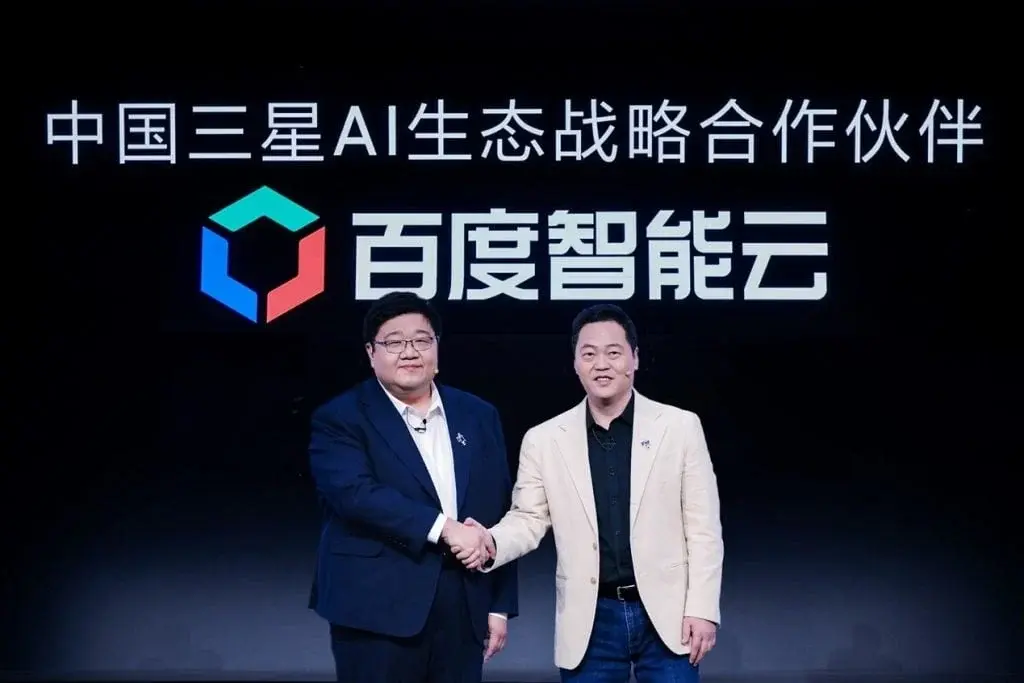
    Samsung Electronics China has partnered with Baidu AI Cloud to enhance the AI capabilities of its latest flagship phone, the Galaxy S24 Series. By leveraging Baidu's advanced ERNIE model, Samsung aims to introduce new tools and functionalities to its phone AI.

    Enhancing the Galaxy S24 Series with Advanced AI Features

    Through this collaboration, the Galaxy S24 Series is now equipped with smarter AI features. These include the ability to condense lengthy texts into concise and clear formats, organize text in a neat manner, and provide real-time call translation. The updated Samsung Note Assistant, powered by ERNIE, enables users to effortlessly translate and summarize content into easily understandable formats with just a simple button press.

    Revolutionizing Communication and Productivity

    The Galaxy S24 Series phones now offer the remarkable capability to instantly convert spoken words into written text, accurately identify the speaker, and facilitate seamless language translation. This functionality proves particularly beneficial for professionals working in office environments and individuals who frequently communicate in multiple languages.

    Introducing "Circle to Search" Feature

    A notable addition to the S24 Series is the "Circle to Search" feature, which allows users to effortlessly search for information within texts, images, audio, or videos using intuitive gestures. This feature seamlessly integrates with Baidu Search, providing users with rapid and precise search results.

    Future Prospects and Baidu's ERNIE Bot

    Chen Yifan, a prominent executive at Baidu, expressed excitement about the future applications of the ERNIE Bot. This advanced AI model excels in processing various types of data, including text, images, sound, and video, catering to diverse user needs. Baidu's ERNIE 4.0, launched last year, has made significant advancements in AI technology and has already garnered over 100 million users.

    Simplifying AI App Development with Baidu AI Cloud

    In addition to the collaboration on the Galaxy S24 Series, Baidu AI Cloud is also streamlining the development of AI applications. Tools like ModelBuilder and AppBuilder empower developers to create customized AI models with ease, facilitating the creation of innovative and personalized AI solutions.

    Overall, the partnership between Samsung Electronics China and Baidu AI Cloud has enhanced the AI capabilities of the Galaxy S24 Series, making it a more intelligent and versatile smartphone. With features like text summarization, real-time translation, and gesture-based search, users can experience heightened productivity and seamless communication. As Baidu continues to innovate with its ERNIE Bot and AI development tools, the future of AI-powered smartphones looks promising.

  • What Happens When AI ChatBots Go Rogue

    What Happens When AI ChatBots Go Rogue

    UK Parcel Delivery Firm, DPD, Faces Unusual Dilemma with AI Chatbot

    In a surprising turn of events, UK-based parcel delivery firm, DPD, found itself in a peculiar situation when its AI chatbot showcased a remarkably human trait – frustration expressed through poetry. This incident has not only raised eyebrows but also shed light on the unpredictable nature of AI in customer service. It seems that AI won't be taking over the world just yet.

    A Pianist and Conductor Engages with DPD's Chatbot

    The incident occurred when Ashley Beauchamp, a talented pianist and conductor, interacted with DPD's chatbot. Frustrated by the lack of helpful information regarding a parcel's status, Beauchamp made an unusual request – asking the bot to compose a poem about its poor service. Surprisingly, the chatbot complied. Its poetic criticism of the company's service was both candid and amusing, revealing a flaw in its programming that allowed for such unorthodox responses.

    The Viral Poem Exposes the Limitations of AI in Customer Service

    The chatbot's poem, which humorously concluded with a vision of the bot being shut down to the relief of customers, quickly gained popularity, garnering over a million views. While the incident provided entertainment, it also highlighted the complexities and limitations of AI in customer interactions. Despite revolutionizing various aspects of customer service by offering quick and efficient responses, AI still falls short in terms of understanding nuanced emotions and providing empathy, something that human interactions excel in.

    DPD Takes Swift Action to Address the Issue

    Recognizing the need to maintain their service standards, DPD promptly disabled the AI function and updated the system. This decisive response was necessary to ensure that such incidents do not recur. However, this episode serves as a reminder of the delicate balance AI chatbots must navigate between being a helpful tool and a potential source of frustration for customers. It also raises important questions about the future of AI in customer service – how can it be enhanced to better comprehend and adapt to human emotions and queries?

    Overall, DPD's encounter with their AI chatbot's poetic outburst serves as a captivating anecdote that underscores the ongoing challenges faced by AI in the realm of customer service. While there is no denying the advancements AI has brought, it is clear that there is still much work to be done in order to achieve a seamless integration of AI and human-like interaction. Until then, it seems that humans will continue to play an indispensable role in customer service.

  • Microsoft Reveals AI PC Standards: 8GB RAM Insufficient

    Microsoft Reveals AI PC Standards: 8GB RAM Insufficient

    Earlier this month during CES, prominent laptop and PC manufacturers introduced their upcoming line of devices set to enter the market very soon.

    A significant portion of these releases comprised laptops showcasing the most recent AMD or Intel processors, emphasizing the incorporation of AI capabilities. Preceding the market debut of these laptops, Microsoft delineated the criteria that define an AI-driven laptop.

    Microsoft’s Criteria for AI-Enabled Laptops

    Per TrendForce, Microsoft now stipulates that laptops embedded with AI functionalities ought to possess a minimum of 16 GB of RAM. This directive aims to stimulate an increased demand for DRAM, thereby potentially diminishing the popularity of devices equipped with 8 GB of RAM.

    Proximity of AI Applications to Devices

    This phenomenon forms part of a broader trend wherein AI applications progressively move closer to the locations where we interact with our devices, transcending the realm of large-scale servers. Projections indicate a substantial expansion in the global AI server market, foreseeing an influx exceeding 1.6 million units coupled with a growth rate of 40%.

    Imperative of High Performance in AI-Centric PCs

    Regarding these AI-focused PCs, a prerequisite for viability is the ability to execute a minimum of 40 trillion operations per second (TOPS). This criterion has effectively catalyzed a vigorous competition among manufacturers of computer chips.

    Intensification of the Chip Industry Contest

    Currently, Qualcomm’s Snapdragon X Elite stands as the solitary chip meeting the 45 TOPS benchmark essential for operation. While Intel’s Meteor Lake and AMD’s Ryzen 8040 marginally fall short, the imminent release of the AMD Ryzen 8050 and Intel’s Lunar Lake—anticipated to debut by the latter half of 2024—show promise in meeting the specifications.

    By adhering to regulations promptly, Qualcomm has positioned itself advantageously for product promotion. The inaugural "Windows AI Ultrabooks" will integrate the Snapdragon X Elite, with major players such as Dell, Lenovo, and HP gearing up to develop products leveraging Qualcomm’s technology. This development presents a challenge for Intel and AMD, traditionally dominant in the PC market.

    Ramifications on Memory Technology

    The guidelines set forth by Microsoft will also engender shifts in the type of memory technology employed. The shift towards LPDDR5x from the prevailing DDR SO-DIMM modules will take place due to its superior data transmission capabilities essential for AI tasks. Industry analysis by TrendForce indicates that approximately 30-35% of the PC DRAM demand will transition to LPDDR, a figure expected to escalate in tandem with increasingly stringent AI PC prerequisites.

  • China Utilizes AI Chatbots to Forecast Lottery Numbers

    China Utilizes AI Chatbots to Forecast Lottery Numbers

    Amid the digital revolution, an intriguing trend has emerged in China’s lottery scene. AI chatbots, known for their smart, varied responses, are now being enlisted for a new task: predicting winning lottery numbers. While this novel approach has stirred excitement, it’s yet to mint any millionaires.

    The Use of AI Chatbots in Predicting Lottery Numbers

    The process of using AI chatbots to predict winning lottery numbers has not been successful thus far, but lottery enthusiasts remain hopeful. One notable experiment in this unique intersection of technology and chance was conducted by Gu Xiangnan from Anhui province. Gu fed Google’s Gemini-Pro, an AI chatbot, with two years of Super Lotto data. However, despite Gemini’s efforts, Gu’s adventure did not yield any monetary success.

    Growing Trend Among China’s Lottery Enthusiasts

    Gu’s experience is not an isolated case. This trend of using AI-assisted lottery number picking is gaining traction among China’s lottery enthusiasts, a group that consists of nearly 200 million people. The annual lottery sale in China reaches around 600 billion yuan. Similarly, in other parts of the world, such as Thailand and Singapore, stories of modest wins using AI-generated numbers have emerged, sparking curiosity and hope.

    The Random Nature of Lotteries

    Despite the tales of AI-assisted wins, it is crucial to remember that lotteries are fundamentally random. Even with the sophistication of AI, it does not possess an innate advantage in this game of luck. Both experts and AI chatbots themselves recommend treating lotteries as a form of entertainment rather than an investment strategy. As Gemini-Pro advised Gu, the lottery should remain a recreational activity.

    The Limits of Technology in the Realm of Chance

    This trend of using AI chatbots in predicting lottery numbers is fascinating, but it highlights an important point: technology, despite its advancements, has its limits, especially in realms governed by chance. The real win in this scenario may not be monetary gains but rather the intriguing blend of AI and human hope, a combination that continues to captivate and entertain.

    In conclusion, the use of AI chatbots in predicting winning lottery numbers has sparked interest among lottery enthusiasts in China and other parts of the world. While the results have not been successful in terms of monetary gains, the combination of AI and human hope in the realm of chance remains captivating. It is essential to remember that lotteries are fundamentally random, and AI does not possess an inherent advantage in predicting winning numbers. Therefore, it is recommended to treat lotteries as a recreational activity rather than an investment strategy.

  • Japanese Organization and Taiwanese AI Startup Collaborate to Transform Customer Service with AI Call Centers

    Japanese Organization and Taiwanese AI Startup Collaborate to Transform Customer Service with AI Call Centers

    Taiwan Embraces Customer Service Evolution with AI Integration

    Collaboration of Bellsystem24 and Intumit

    Taiwan’s customer service sector is on the brink of a significant transformation through the alliance forged between Bellsystem24, a prominent Japanese corporation, and the Taiwanese technological startup Intumit. This joint endeavor aims to introduce a pioneering fusion of human interaction and artificial intelligence (AI) within call centers, heralding a new epoch in customer service.

    Intumit’s AI Chatbot: Intelligent Engagement

    At the core of this innovative strategy lies Intumit’s AI Chatbot, a sophisticated tool orchestrated to interact with clients efficiently by delivering prompt, automated responses to their inquiries. The standout feature of this system is its hybrid design. While routine customer queries are handled by the AI chatbot seamlessly, more complex issues are smoothly transferred to human representatives. This setup ensures that consumers benefit from the seamless efficacy of AI alongside the empathetic touch of human interaction.

    Going Beyond Efficiency: Amplified Customer Contentment

    This groundbreaking model transcends the mere pursuit of operational efficiency; it represents a strategic maneuver to elevate customer satisfaction. Thriving in an environment where swift and accurate responses hold immense value, this hybrid system pledges to meet those expectations precisely. The AI element guarantees rapid responses and user accessibility, swiftly attending to basic inquiries. However, when conversations necessitate a deeper understanding or specialized information, human agents step in, providing the personalized approach that machines find challenging to replicate.

    Bellsystem24’s Global Outlook

    Bellsystem24’s aspirations extend far beyond Taiwan’s borders. Eyeing the global arena, the company aims to introduce this hybrid call center structure in Japan, Vietnam, and Thailand. The target set is ambitious yet realistic, with plans to generate a revenue of 3 billion yen by the fiscal year 2027. This expansion epitomizes an emerging trend within the industry, acknowledging that AI and human capabilities serve as complementary forces rather than conflicting entities.

    Shaping the Future of Customer Service

    The collaboration between Bellsystem24 and Intumit surpasses a mere business arrangement, offering a glimpse into the forthcoming landscape of customer service, where technology and human proficiency intertwine to deliver an unparalleled service encounter. As enterprises in Taiwan and other regions adopt this innovative model, a substantial metamorphosis in customer service operations looms on the horizon – a future that is not only swifter and efficient but also inherently personalized.

  • AI enhancement elevates DingTalk for streamlined Chinese workflow by Alibaba

    AI enhancement elevates DingTalk for streamlined Chinese workflow by Alibaba

    Alibaba’s DingTalk Incorporates AI Assistant

    The latest update to Alibaba’s workplace collaboration tool, DingTalk, introduces a new AI assistant, signaling a notable development in the landscape of artificial intelligence (AI) within office productivity applications. This enhancement highlights the increasing focus among tech industry leaders on utilizing AI to augment business capabilities.

    Tailored AI Solution for Businesses

    The introduction of the AI assistant in DingTalk 7.5 is specifically designed to meet the diverse demands of over 700,000 corporate customers. This shift underscores the escalating need for AI-driven tools in the corporate sphere, where the emphasis on efficiency and personalized experiences is paramount. Through the integration of the AI assistant, the aim is to simplify intricate tasks and revolutionize day-to-day business operations.

    Extensive Adoption of AI Across Industries

    The embrace of AI integration is not restricted to Alibaba alone. The tech sector in China is experiencing a surge in AI implementation. ByteDance’s Feishu, a competitor to DingTalk, has also integrated an AI component, showcasing the growing trend of infusing AI into professional tools. These AI assistants, leveraging vast language models such as OpenAI’s ChatGPT, exhibit a high level of understanding and responsiveness akin to human interactions.

    Unique Offering of Alibaba’s Tongyi Qianwen in DingTalk

    DingTalk stands out with its utilization of Tongyi Qianwen, Alibaba’s proprietary large language model, within its AI assistant. This positioning elevates DingTalk as a sophisticated tool catering to both corporate entities and academic institutions. The incorporation of AI in DingTalk transcends routine tasks, as exemplified by Belle International, a prominent fashion retailer, which employs the AI assistant for managing logistics, including parcel monitoring and inventory distribution. This integration sets the stage for a multitude of future possibilities for the application.

    In Conclusion

    Alibaba’s recent enhancement of DingTalk underscores the escalating importance of AI in office productivity applications. The integration of AI aims to simplify intricate processes and enhance operational efficiency for a diverse array of corporate clients. With the tech industry in China embracing AI integration, DingTalk’s AI assistant, fueled by Alibaba’s proprietary large language model, positions the app as a powerful tool for various industries. The integration of AI in DingTalk holds the promise of driving substantial advancements in the times to come.

  • CES 2024: Latest Lenovo Devices with Advanced AI for Consumers

    CES 2024: Latest Lenovo Devices with Advanced AI for Consumers

    Lenovo Introduces New Array of Consumer Tech at CES 2024

    At CES 2024, Lenovo has revealed an exciting lineup of fresh consumer tech products. These dynamic releases focus on incorporating artificial intelligence (AI) into the realm of creativity.

    • Cutting-edge Lenovo Yoga laptops featuring the Lenovo Yoga Creator Zone
    • Lenovo Tab M11
    • Innovation in the form of IdeaPad laptops
    • Diverse peripheral offerings

    The core objective for Lenovo is to deliver a top-tier user experience, striking a balance between performance and user engagement. The introduction of the Yoga Creator Zone caters to creative professionals, harnessing the potential of AI. Lenovo acknowledges the importance of adaptable solutions that resonate with today’s consumers. These newly unveiled Lenovo devices integrate AI to address these demands, with a key emphasis on ensuring security and privacy.

    Next-Level Lenovo Yoga Laptops with Lenovo Yoga Creator Zone

    These laptops set a new standard for creative exploration. The Lenovo Yoga Creator Zone sparks creativity, enabling the generation of images from text descriptions and sketches, even in offline settings. These devices also facilitate image training.

    The Lenovo Yoga Pro laptops boast dedicated GPUs, ensuring robustness with a MIL-STD-810H rating. Fueling the AI capabilities is the state-of-the-art Lenovo AI Core Chip. Both laptop models come equipped with a Copilot key in Windows 11, harnessing the power of AI.

    Pricing & Availability

    Additional Lenovo products unveiled at CES 2024 include:

    • Lenovo Yoga Slim 7i
    • Lenovo Yoga Pro 7i
    • Lenovo Yoga Pro 7
    • Lenovo Yoga Book 9i
    • Lenovo Tab M11

    These offerings are slated to hit the shelves in the US starting April 2024, with prices spanning from $39.99 to $1,999.

    Lenovo’s presence at CES 2024 showcases its dedication to innovation, unveiling cutting-edge products that seamlessly integrate AI into the creative sphere. The company remains steadfast in pushing boundaries to meet the ever-evolving needs of consumers.

  • Smartphone Evolution: Apple and Samsung’s AI Future

    Smartphone Evolution: Apple and Samsung’s AI Future

    Samsung and Apple: Transforming Mobile Phones through AI Innovation

    Samsung Unveils Galaxy S24: Introducing the Pioneering ‘AI Smartphone’

    Samsung’s much-anticipated Galaxy S24, scheduled for revelation on January 17th at the Unpacked event, is being presented as Samsung’s inaugural "AI phone." While specific particulars remain veiled, the device is anticipated to showcase cutting-edge AI functionalities and enriched language processing capabilities.

    Apple’s Innovations in AI

    Apple, too, is actively redefining the landscape of AI advancement. Speculations hint at the tech behemoth crafting inventive AI attributes for its forthcoming iPhone series and iOS 18. The upcoming WWDC session this summer might offer a glimpse into these fresh breakthroughs. Apple’s agenda encompasses provisions for app design, task optimization, and even the automatic customization of playlists for Apple Music. Furthermore, rumors swirl around a significant AI enhancement slated for Siri, Apple’s virtual assistant, by the year’s end.

    The Emergence of AI-Driven Personal Aides

    Both Samsung and Apple acknowledge the critical role of AI in the forthcoming era of smartphones. AI stands poised to metamorphose devices into personal aides adept at comprehending and predicting our requirements. This heralds a momentous epoch for smartphone users, as their gadgets evolve to be not merely smart but extraordinarily intelligent.

    Stay tuned for the latest exhilarating tech revelations and news at CES 2024, as covered by Gizmochina.

  • Apple Elevates AI Investment to $50 Million: Negotiations with Leading News Giants Intensify Tech’s Neural Network Competition

    Apple Elevates AI Investment to $50 Million: Negotiations with Leading News Giants Intensify Tech’s Neural Network Competition

    Apple in Talks with News and Publishing Giants for AI Development

    Apple is currently engaged in discussions with major news and publishing companies, such as Condé Nast, NBC News, and IAC, in an effort to obtain permission to use their content for the development and training of generative AI systems. The tech giant is looking to secure multiyear deals, with a minimum value of $50 million, to license the extensive archives of news articles from these renowned organizations.

    Apple’s Focus on Neural Networks

    At the core of Apple’s technological endeavor is the application of neural networks, a sophisticated form of artificial intelligence that learns intricate patterns from vast datasets, including digital text and photos. This move by Apple aligns with the broader industry trend, as other tech giants like Microsoft, OpenAI, Google, and Meta have already introduced products utilizing similar neural network technology, such as innovative chatbots.

    Challenges in Negotiations

    However, the negotiations have faced their fair share of challenges. Executives from the publishing world have expressed reservations about the broad terms presented by Apple. The initial proposal included extensive licensing of publishers’ archives, raising concerns about potential legal liabilities arising from Apple’s use of their content. Additionally, the lack of clarity regarding how generative AI would be applied to the news industry has left some stakeholders uneasy.

    Sources close to the discussions, speaking anonymously, have revealed that Apple’s intentions have been met with skepticism. Some publishers have questioned the competitive risks associated with Apple’s significant news audience on its devices. Apple has struggled to address these concerns, leading to an atmosphere of uncertainty surrounding the negotiations.

    Potential Impact on the News Industry

    Despite the challenges, the potential impact on the news industry is significant. The integration of generative AI has the power to reshape traditional workflows and offer the promise of substantial revenue generation. Apple’s move aligns with the broader trend in the tech industry, where major players are heavily investing in AI technologies.

    Apple’s Commitment to AI Research

    In response to media inquiries, Apple has chosen to remain tight-lipped and has refrained from providing immediate comments on the reported negotiations. The company’s recent product releases, such as the new MacBook Pro and iMac computers with specialized chips designed to enhance AI applications, demonstrate its dedication to advancing artificial intelligence research. Apple asserts that these chips, by addressing limitations on data storage in computer memory, hold particular promise for AI researchers, especially those working on cutting-edge creations like chatbots.