
Tag: AI model

  • India Adopts AI for Improved Weather Forecasting amidst Escalating Extreme Events

    India Adopts AI for Improved Weather Forecasting amidst Escalating Extreme Events

    India is taking a significant step forward in weather forecasting by integrating artificial intelligence (AI) into its methods. This decision comes as the country grapples with an increase in extreme weather events such as floods and droughts. The India Meteorological Department (IMD) is spearheading this integration to improve the accuracy of weather predictions, which is crucial for a nation with a large population and a significant agricultural sector.

    Rising fatalities due to extreme weather

    In recent years, India has experienced a surge in severe weather conditions, partly attributed to global warming. These events have not only disrupted lives but also resulted in a significant number of fatalities. According to the Centre for Science and Environment, an independent organization, nearly 3,000 people in India have lost their lives to extreme weather this year alone. Given these alarming statistics, the need for precise and timely weather forecasts has become more critical than ever.

    AI as a cost-effective and efficient solution

    The IMD currently relies on supercomputers and mathematical models for weather predictions. However, the department is now exploring the potential of AI as a cost-effective and efficient alternative. This move aligns with global trends, as other countries are also turning to AI for weather forecasting. For example, the Met Office in Britain has acknowledged the transformative potential of AI in this field. Notably, a Google-funded AI model has reportedly outperformed traditional forecasting methods.

    The transformative impact of AI in India

    The integration of AI into weather forecasting has the potential to be particularly transformative for India. With a population of 1.4 billion people and being a major producer of rice, wheat, and sugar, the country heavily relies on accurate weather forecasts for both human safety and agricultural planning. The IMD's initiative to incorporate AI could lead to more precise forecasts at a lower cost, which would be a significant advantage for a nation where many still live in poverty.

    Overall, India's decision to integrate AI into its weather forecasting methods is a promising development. By leveraging the power of AI, the IMD aims to enhance the accuracy and efficiency of weather predictions, ultimately benefiting the nation's population and agricultural sector. As extreme weather events continue to pose challenges, this technological advancement could prove to be a game-changer in mitigating their impact and ensuring the safety and well-being of the Indian population.

  • China’s AI Surge Could Revolutionize Several Industries

    China’s AI Surge Could Revolutionize Several Industries

    China’s Rapid Development in Artificial Intelligence

    We live in a world where technology evolves rapidly. China’s leap into artificial intelligence (AI) is just one other instance of rapid development. A recent report by a Beijing think tank affiliated with China’s industry ministry has highlighted an impressive forecast: by 2035, Chinese generative AI is expected to make up a whopping 30 trillion yuan (about US$4.2 trillion) of the global AI market’s value. This figure is a third of the industry’s expected global value of 90 trillion yuan.

    Rapid Adoption of AI in China

    This year alone, the value of China’s generative AI market is set to hit 10 trillion yuan, showcasing the country’s swift adoption of AI across various sectors. Generative AI, which includes advanced technologies like those in OpenAI’s ChatGPT, is rapidly being integrated into industries such as manufacturing, retail, telecommunications, and healthcare. With an adoption rate of around 15%, it’s clear that AI is no longer a futuristic concept but a present reality in China.

    AI Adoption Across Different Sectors

    The retail and telecom sectors are leading the AI adoption race with 13% and 10% respectively. Healthcare and manufacturing are not far behind, adopting these technologies at 7% and 5%. This diverse application demonstrates the flexibility and potential of AI in improving efficiency and innovation across different fields.

    Integration of AI in Major Tech Companies

    The success of AI technologies like ChatGPT has spurred a wave of similar innovations in China. Major tech companies such as Baidu, Tencent, ByteDance, SenseTime, and iFlyTek are not just exploring but actively integrating AI into their services. Tencent’s Hunyuan model, for example, is now used in over 180 services including Tencent Meeting, Tencent Docs, and their online advertising ventures.

    Image Credits: Marc Olivier

  • Alibaba Unveils SeaLLM, an AI Platform for Southeast Asian Languages

    Alibaba Unveils SeaLLM, an AI Platform for Southeast Asian Languages

    Alibaba Unveils AI Language Model for Southeast Asia

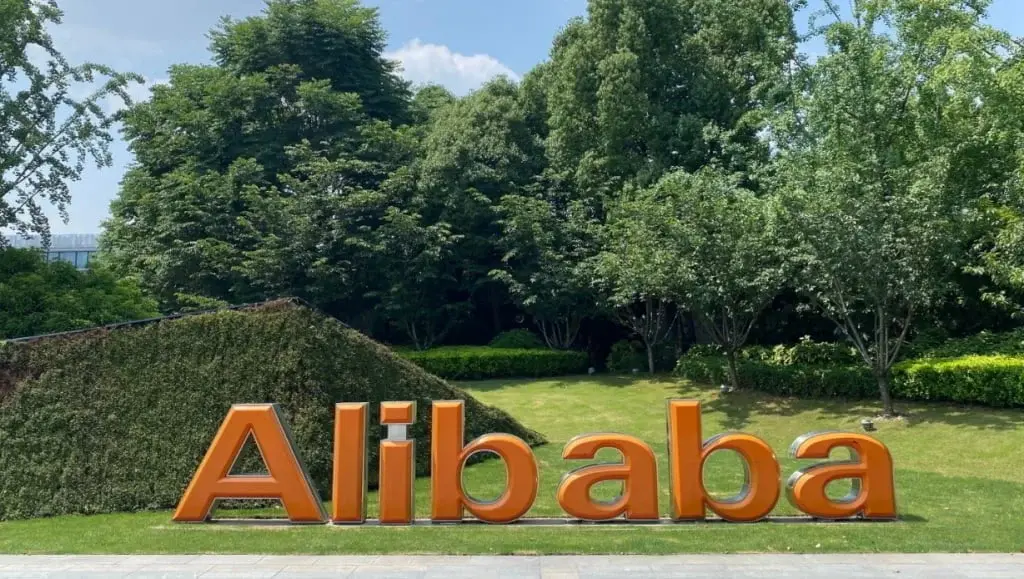
    Alibaba's Damo Academy has launched a new AI-driven language model called SeaLLM, specifically designed for Southeast Asia. This move by Alibaba aims to strengthen its presence in the region and tap into its potential as a key market. SeaLLM is capable of understanding and interacting in languages like Vietnamese, Indonesian, Thai, Malay, and more, marking a significant advancement in bridging linguistic and cultural gaps in AI technology.

    Addressing Linguistic Diversity in Southeast Asia

    The development of SeaLLM is crucial considering the linguistic diversity of Southeast Asia. With its multitude of languages, the region presents unique challenges and opportunities for AI applications. By focusing on languages that are often overlooked in global technology advancements, Alibaba not only expands its market reach but also contributes to the inclusiveness and accessibility of AI technology.

    SeaLLM's enhanced capabilities in handling non-Latin scripts and its superior performance in understanding and translating low-resource languages are game-changers. This means that businesses and communities in Southeast Asia can leverage AI more effectively, fostering better communication and understanding across different cultures.

    The Importance of Regional Customization in AI

    Alibaba's introduction of SeaLLM reflects a broader trend in the AI landscape, where regional customization is becoming increasingly important. As AI technology becomes more pervasive, its ability to cater to specific regional needs and languages will be crucial in determining its success and impact.

    However, the AI industry, particularly in China, still faces challenges. Issues like US chip restrictions and the search for more universally appealing applications need to be addressed. Nevertheless, innovations like SeaLLM are steps in the right direction, showcasing how AI can be more inclusive and beneficial to a wider range of communities.

  • Gemini, Google’s AI chatbot, experiences a delay in its launch

    Gemini, Google’s AI chatbot, experiences a delay in its launch

    Google Delays Release of Next-Generation AI Chatbot Gemini

    According to a report by Sammobile, Google has decided to postpone the release of its highly anticipated AI chatbot, Gemini, until early next year. Originally scheduled to be unveiled in November 2023, the launch has been delayed due to the chatbot’s difficulty in handling certain non-English queries during internal testing.

    Gemini, touted as Google’s most powerful conversational AI yet, was set to make its debut at events in California, New York, and Washington, D.C. However, CEO Sundar Pichai made the call to delay the launch after realizing that Gemini’s performance with non-English queries did not meet expectations.

    Importance of Global Language Support

    Google recognizes the significance of global language support in positioning Gemini as a superior alternative to OpenAI’s GPT-4. Until Gemini can demonstrate proficiency in handling non-English queries, Google believes it would be premature to introduce it to the wider market.

    Despite the delay, Google remains confident in Gemini’s potential to surpass GPT-4. In private tests, Gemini reportedly outperformed GPT-4, thanks to its impressive computational power.

    Commitment to Delivering a Competitive Product

    Google CEO Pichai has emphasized the company’s commitment to delivering a “competitive and state-of-the-art” product with Gemini 1.0. The delay is aimed at ensuring that the chatbot meets the high standards set by Google before it is made available to the public.

    Gemini’s Capabilities

    Sissie Hsiao, Google’s Vice President, provided an example of Gemini’s remarkable capabilities. She mentioned that Gemini can generate completely novel images when given a task like creating three pictures illustrating the steps to ice a three-layer cake. This showcases Gemini’s ability to go beyond simply sourcing images from the internet.

    Overall, while the delay may disappoint those eagerly awaiting the release of Gemini, Google’s decision to prioritize its performance with non-English queries reflects the company’s commitment to delivering a top-notch AI chatbot. By ensuring that Gemini meets the necessary standards, Google aims to position it as a strong competitor to other conversational AI models in the market.

  • NASA and IBM Collaborate for AI Weather Forecasting

    NASA and IBM Collaborate for AI Weather Forecasting

    The Revolution of Climate Observation through an Alliance of NASA and IBM Empowered by Artificial Intelligence (AI)

    The Innovation of AI Technologies

    Artificial Intelligence (AI) technologies persist in making substantial advancements, heightening efficiency, and enhancing quality across diverse sectors. Concerns related to job security have surfaced owing to these progressions. The latest development in this realm sees meteorologists in focus, as NASA and IBM unite to sculpt an AI model dedicated to incessantly monitoring the Earth’s climate.

    Collaborative Endeavor of NASA and IBM in AI for Weather and Climate Surveillance

    The convergence of NASA and IBM aims to craft an AI model tailored for weather and climate surveillance, envisioning an era where this progressive technology transcends prevailing meteorological tools. While AI has already made inroads in this domain, extant models are confined to specific functions, akin to technologies such as ChatGPT, serving as emulators at their core.

    Progressing Beyond Precise Prognostications

    The synergistic venture between NASA and IBM seeks to move past exact weather forecasts. Their ambition lies in engineering an AI system that perpetually scrutinizes and monitors Earth’s climate and weather patterns tirelessly. Envisaged attributes of this AI model encompass the capacity to prognosticate meteorological phenomena, extrapolate intricate details from rudimentary data, and foretell events like aircraft turbulence and forest fires.

    Elevating Weather Forecasts and Averting Catastrophes

    Both NASA and IBM align their vision towards refining weather forecast precision and forestalling potential calamities. As an instance, this AI technology could foresee forest fires triggered by intense heat, a looming challenge in numerous global regions, including our homeland, particularly during summer periods. While attaining absolute precision may pose a hurdle, the AI model anticipates proving highly advantageous in enforcing precautionary measures.

    Ambiguity Enveloping Integration and Data Origins

    The uncertainty surrounding integrating this AI technology into our routine existence prevails. The AI model will access data from NASA satellites and harness IBM technologies, yet the exact application methodology remains ambiguous. The partnership between NASA and IBM harbors boundless potential in bolstering climate surveillance and weather forecasting, eventually fostering a safer and sustainable world.

    In summary, the collaboration between NASA and IBM, sculpting an AI model for climate surveillance, stands poised to catalyze revolutionary alterations in the meteorological domain. By surpassing existing technologies and aiming for perpetual monitoring and precise predictions, this cooperative initiative teems with prospects for enhancing weather forecasts and averting latent disasters. While the incorporation of this technology into our lives lingers in uncertainty, its potential impact looms undeniable.