Category: Video / Photo

  • Hisense C3 4K Triple Laser Projector Launches in New Countries

    Hisense C3 4K Triple Laser Projector Launches in New Countries

    Key Takeaways

    1. The Hisense C3 Smart Mini Projector 4K has a resolution of 3,840 x 2,160 pixels and can project images up to 300 inches.
    2. It features a tricolor laser light source with a brightness of up to 2,500 ANSI lumens and a contrast ratio of 2,000:1.
    3. The projector includes advanced gaming capabilities with a 240Hz refresh rate and an input lag of less than 20 ms.
    4. It runs on the Vidaa U9 operating system, supports voice controls and Apple AirPlay 2, and has built-in DTS Virtual:X compatible speakers.
    5. The Hisense C3 is available in Germany for €1,699, with plans to launch in other European countries soon.


    Hisense has launched the C3 Smart Mini Projector 4K in a European nation. This projector was first introduced in China in 2025, where it is called the Vidda C3. It enhances the features of the previous Hisense C2 projector, which was released in 2024.

    Projector Features

    The Hisense C3 is a 4K UHD projector with a resolution of 3,840 x 2,160 pixels, capable of projecting images as large as 300 inches. It utilizes a tricolor laser light source, promising a brightness of up to 2,500 ANSI lumens. Other key specs include a contrast ratio of 2,000:1, a coverage of 110% of the BT.2020 color gamut, and compatibility with IMAX Enhanced, Dolby Vision, and HDR10+. For gamers, it boasts an impressive 240Hz refresh rate in DLP Turbo Mode, along with an input lag of less than 20 ms.

    Design and Functionality

    The Hisense C3 comes equipped with a built-in gimbal stand, allowing for vertical adjustments of up to 135°. Additionally, it features a 1.0-1.3:1 optical zoom, making it easy to fine-tune the image with automatic focus, obstacle detection, and keystone correction. This model runs on the Vidaa U9 operating system, giving users access to various streaming services. It also supports voice controls and Apple AirPlay 2. On the audio front, there are two 10W speakers that are DTS Virtual:X compatible, and connectivity options include HDMI 2.1 (eARC), HDMI 2.1, and USB 3.0 ports.

    Availability and Pricing

    In Germany, you can find the Hisense C3 Smart Mini Projector 4K on Amazon for €1,699. The model is anticipated to be available in other European countries soon, although the company hasn’t shared a specific date for its wider release.

    Hisense’s new projector is surely making waves with its advanced features and high-quality performance.

    Source:
    Link


  • Haru Mini Retro Camera vs Kodak Charmera: 20MP in Compact Design

    Haru Mini Retro Camera vs Kodak Charmera: 20MP in Compact Design

    Key Takeaways

    1. The Haru Mini retro camera is compact, measuring 2.0 x 1.6 x 0.7 inches and weighing 2.4 oz, designed for keychain attachment.
    2. It features a 20MP sensor and supports 2K video recording, but image quality is average due to a small sensor and slower lens.
    3. The camera has a 1.47-inch IPS display that serves as both a viewfinder and a screen for reviewing images.
    4. Images are stored on a microSD card, and it has a USB-C port for easy transfer to a computer and webcam functionality.
    5. The Haru Mini is currently available only in Japan, priced at approximately $40, with imports available through sites like Zenmarket.


    After the Kodak Charmera gained a lot of attention for its small size, vintage style, and affordability, Hansmare is now launching a product that’s quite similar. The Haru Mini retro camera is designed to easily clip onto your keychain. Its dimensions are merely 2.0 x 1.6 x 0.7 inches and it weighs just 2.4 oz. The camera’s design takes inspiration from classic SLR models. Like the Nikon FM2, the Haru Mini features a shiny silver body paired with black leatherette accents. On the back, there’s a 1.47-inch IPS display that works as both a viewfinder and a screen for reviewing saved images.

    Camera Features

    This camera comes with a 20MP sensor that also supports 2K video recording. However, similar to the Kodak Charmera, the small sensor teamed with a slower lens leads to pretty average image quality, which is evident in the sample photos shown below. Nonetheless, you can tweak the appearance using different filters available.

    Storage and Connectivity

    Images are saved on a microSD card, and you can easily move them to a computer through a USB-C port located on the bottom. Additionally, the Haru Mini Retro Camera can function as a webcam when connected via USB-C. Hansmare mentions that the battery lasts around 65 minutes.

    The Hansmare Haru Mini Retro Camera is presently only available in Japan, priced at about $40. In other areas, you can only get this camera through imports from sites like Zenmarket.

    Source:
    Link


  • Honor Magic 8 Pro Camera Grip with Zoom Control and 200mm Lens

    Honor Magic 8 Pro Camera Grip with Zoom Control and 200mm Lens

    Key Takeaways

    1. Telesin provides a camera kit for the Honor Magic 8 Pro, which includes a protective case, camera grip, and teleconverter.
    2. The protective case safeguards the smartphone and allows for the attachment of 67mm filters.
    3. The camera grip enhances one-handed use and features a shutter button, zoom slider, and video recording button.
    4. An adjustable dial on the grip lets users change exposure settings and select filters.
    5. A 200mm teleconverter is included in the kit, with more details expected to be revealed at MWC 2026.


    While Honor hasn’t released a dedicated camera kit for the Magic 8 Pro like they did for the pricier Magic 8 RSR Porsche Design, Telesin, a maker of accessories, is stepping in to help alongside Honor. This kit is made up of three key components.

    Protective Case

    To start, there’s a case designed to safeguard the smartphone from scratches and falls. This case allows for standard 67mm polarizer or ND filters to be attached to the triple camera on the rear. Additionally, it features a spot to attach a wrist strap and a magnetic ring that lets you connect the second part of the kit, which is the camera grip.

    Camera Grip Features

    This grip provides a more comfortable way to hold the Honor Magic 8 Pro with just one hand. On the top, there’s a big red button for taking photos. Below this shutter, a slider can be moved by your index finger to adjust the camera’s zoom. There are also two buttons located behind the shutter; one allows for immediate video recording, while the other functions as both a power button and a programmable key.

    Adjustable Dial and Teleconverter

    On the front side of the grip, you will find a dial that can be used to change exposure settings or pick filters, among other things. The final part of the kit is a 200mm teleconverter. More information regarding the hardware and availability of the Telesin camera kit specifically for the Honor Magic 8 Pro will likely be shared at MWC 2026 in early March. Generally, Telesin products are also sold in Europe.

    Source:
    Link


  • Epson Unveils New Compact Projector with 30,000 Lumens Brightness

    Epson Unveils New Compact Projector with 30,000 Lumens Brightness

    Key Takeaways

    1. Lightweight and Compact: The Epson EB-XQ2030B is the world’s smallest and lightest 4K projector, measuring 620 x 580 x 220 mm and weighing significantly less than competitors.

    2. High Brightness: It offers up to 30,000 lumens of brightness in standard mode, making it suitable for large venues and bright environments.

    3. Advanced Image Technology: Features 4K Crystal Motion technology with a native resolution of 3,840 x 2,160 pixels and a contrast ratio exceeding 5,000,000:1.

    4. Flexible Connectivity and Adjustments: Supports wireless screen sharing via Apple AirPlay 2 and Miracast, and includes multiple ports like HDMI and HDBaseT, along with image adjustment capabilities.

    5. Release Timeline: The projector is expected to launch between June and September 2026, with pricing details yet to be announced.


    Epson has introduced the EB-XQ2030B 4K projector at ISE 2026. The company claims this model is “ground-breaking” and is the lightest and smallest 4K projector worldwide, providing up to 30,000 lumens of brightness. Its dimensions are 620 x 580 x 220 mm (approximately 24.4 x 22.8 x 8.7 inches).

    Features for Large Venues

    Targeted at commercial settings in larger spaces, the Epson EB-XQ2030B is designed to be fairly easy to move and set up. It incorporates the brand’s unique 4K Crystal Motion technology, featuring a native 4K resolution of 3,840 x 2,160 pixels alongside an impressive contrast ratio of over 5,000,000:1. The laser light source produces 30,000 lumens in standard mode and 21,000 lumens in eco mode, with a lifespan of around 20,000 hours under regular usage. With a native aspect ratio of 16:9, the throw ratio ranges from 1.52 to 2.47:1, but it can accommodate a broader range from 0.39 to 11.1.

    Image Adjustments and Connectivity

    The Epson EB-XQ2030B projector allows users to modify the image using a 1.6x motorized optical zoom, along with manual adjustments for vertical and horizontal keystone correction and powered lens shift. You can also share screens wirelessly through Apple AirPlay 2 or Miracast, and manage the device with Epson’s software or mobile applications. The model comes equipped with multiple ports, including HDMI (HDCP 2.3) and HDBaseT, while also supporting Intel SDM slot, which enhances compatibility with AVoIP standards and integrated media players. Moreover, the Advanced Cooling Engine is designed to stop the projector from overheating.

    Release Date and Pricing

    The Epson EB-XQ2030B 4K laser projector is set to be released sometime between June and September 2026. However, the price for this commercial model is not yet disclosed.

    Epson (1, 2), New Atlas’

    Source:
    Link


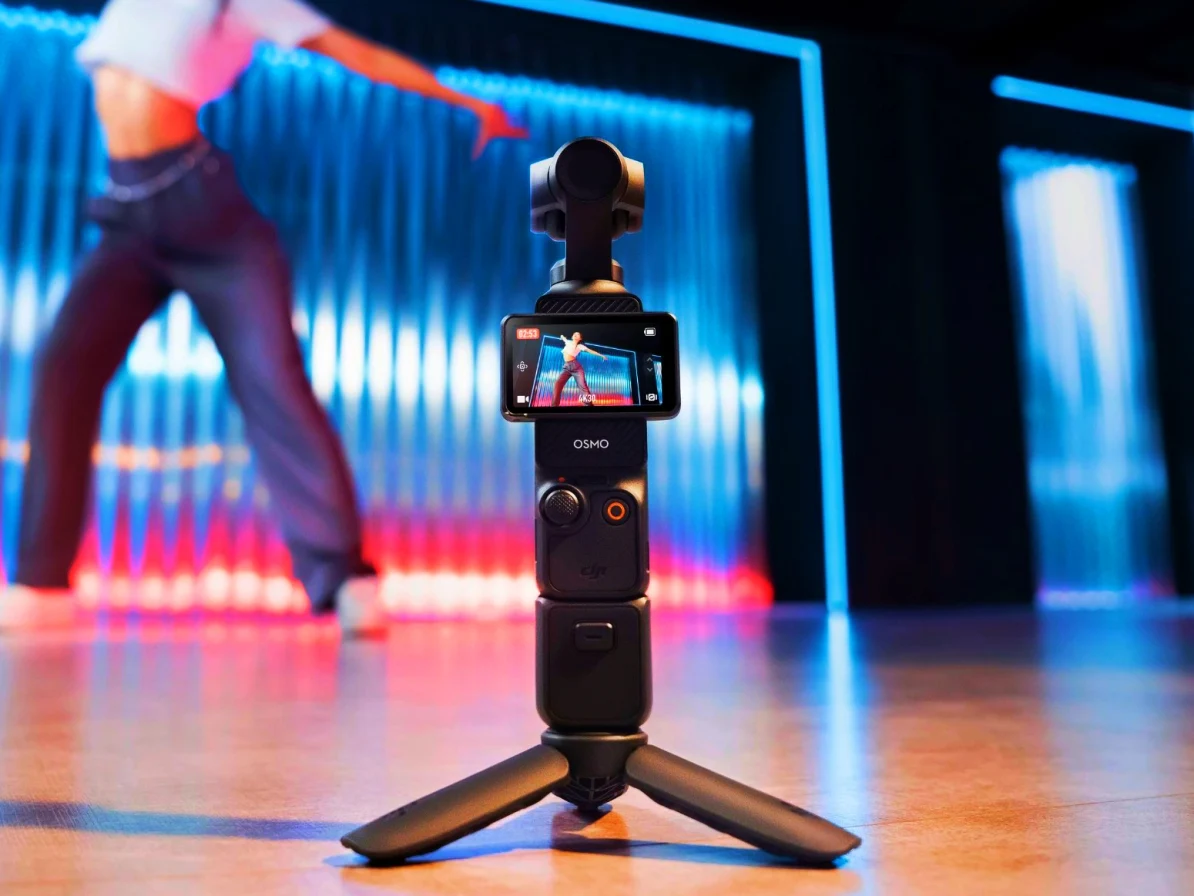
  • Insta360 Luna Vlogging Camera Launch Confirmed Before DJI Osmo Pocket 4

    Insta360 Luna Vlogging Camera Launch Confirmed Before DJI Osmo Pocket 4

    Key Takeaways

    1. Insta360 launched the A1, the first 360° drone, in partnership with Antigravity, ahead of DJI.
    2. DJI has not confirmed the existence of the Avata 360 or the Osmo Pocket 4 and 4 Pro despite leaks.
    3. Insta360 introduced its first vlogging camera, the Luna, shortly after Vivo announced plans to enter the market.
    4. The Luna features a dual-camera system and is expected to outperform the Osmo Pocket 3, priced at $483.
    5. The Luna will be the first vlogging camera with telephoto optics and is set to launch in the first half of 2026, with uncertain global availability.


    Insta360 made waves last year by launching the A1, the first 360° drone, in partnership with Antigravity, beating DJI to it. Up until now, DJI has not confirmed the existence of the much-talked-about Avata 360. The Osmo Pocket 4 and Osmo Pocket 4 Pro also remain unacknowledged, despite numerous leaks surfacing in recent weeks.

    Insta360’s New Vlogging Camera

    Insta360 is once again ahead of DJI with the introduction of its first vlogging camera. This announcement comes just a few days after Vivo disclosed its plans to enter the same market by the end of this year. A teaser image shown at a conference in China indicates that the Luna will outshine the Osmo Pocket 3, which is currently priced at $483 on Amazon, featuring a dual-camera system akin to what is expected in the Osmo Pocket 4 Pro.

    Unique Features of the Luna

    Insta360’s CEO has made it clear that the Luna is “absolutely not another Pocket.” Interestingly, the Luna is believed to be the first vlogging camera to include telephoto optics. At this point, all we know is that the Luna is scheduled to launch in the first half of 2026. It remains uncertain if this release will be global or limited to China, and that’s something we will have to watch closely as time goes on.

    via Igor Bogdanov & QQ

    Source:
    Link


  • Hubble Space Telescope Captures Clear Image of Egg Nebula

    Hubble Space Telescope Captures Clear Image of Egg Nebula

    Key Takeaways

    1. The Hubble Telescope, despite the rise of the James Webb Space Telescope, continues to play a key role in astronomical research.
    2. The Egg Nebula is the youngest and nearest nebula discovered, located about 1,000 light-years from Earth.
    3. Hubble has captured its clearest image of the Egg Nebula, merging data from observations made in 1997, 2003, 2012, and recent times.
    4. The latest image reveals twin beams moving in circular arcs, suggesting gravitational interactions with hidden companion stars.
    5. The Egg Nebula is in a pre-planetary stage, providing a unique opportunity for astronomers to study its early life cycle and related nebulae questions.


    Since it first appeared in 1990, the Hubble Telescope has helped astronomers to uncover numerous secrets of the universe. Although the James Webb Space Telescope is considered to be more effective, Hubble still plays a significant role in research. Recently, it has captured the clearest image yet of the Egg Nebula.

    Unique Location of the Egg Nebula

    Situated around 1,000 light-years away from our planet, the Egg Nebula is recognized as the youngest and nearest nebula that has ever been found. A key aspect of this formation is that it exists in the early stages of its life cycle. To get such a clear image, it’s worth mentioning that Hubble previously observed this nebula in 1997, 2003, and again in 2012. The latest results came from merging the 2012 image with more recent observations.

    Astonishing Details Revealed

    Looking closely at this latest image, which is the most detailed we’ve seen, we can spot twin beams on either side of the star, moving through circular arcs. Moreover, astronomers suggest that the shapes and motions of these beams indicate gravitational interactions with companion stars that remain hidden within the nebula.

    Thus, the Egg Nebula is currently in a transitional phase known as the pre-planetary stage, which only lasts a few thousand years. This unique opportunity may allow astronomers to gain a deeper understanding of this phase and also to explore certain questions related to nebulae.

    Source:
    Link


  • Sharp Launches New Laser Projectors with 7000 Lumens Brightness

    Sharp Launches New Laser Projectors with 7000 Lumens Brightness

    Key Takeaways

    1. Sharp has launched the P Series projectors (XP-P621U-W and XP-P701U-W) for professional use, ideal for conference rooms, educational spaces, and exhibitions.

    2. Both models feature a native WUXGA resolution (1,920 x 1,200 pixels) and can handle 4K UHD input signals, with a laser light source lasting approximately 20,000 hours.

    3. The XP-P621U-W offers a brightness of 6,200 lumens, while the XP-P701U-W has a higher brightness of 7,000 lumens.

    4. Key features include a throw ratio of 1.08 to 1.76:1, image projection up to 300 inches, a contrast ratio of 3,000,000:1, and manual lens shift functions with a 1.6x zoom.

    5. Connectivity options include HDMI, HDBaseT HDCP 1.4 ports, support for Crestron and AMX, and both models come with a built-in 16W speaker; pricing is $3,449 for the XP-P621U-W and $4,499 for the XP-P701U-W.


    Sharp has introduced its latest P Series projectors in the United States. The new models, including the XP-P621U-W and XP-P701U-W, are intended for professional use. The company recommends them for settings like conference rooms, educational spaces, or exhibitions.

    Specifications Overview

    The Sharp P Series projectors feature a native WUXGA resolution of 1,920 x 1,200 pixels and can handle a 4K UHD input signal. Each LCD unit comes with a laser light source that is expected to last about 20,000 hours. The XP-P621U-W model offers a brightness of up to 6,200 lumens, while the XP-P701U-W boasts a higher maximum brightness of 7,000 lumens.

    Key Features

    As per their product specifications, the Sharp P Series projectors XP-P621U-W and XP-P701U-W have a throw ratio ranging from 1.08 to 1.76:1, can project images as large as 300 inches, and feature a contrast ratio of 3,000,000:1. Users have the ability to adjust the image using manual horizontal and vertical lens shift functions, and both models come with a 1.6x zoom. For connectivity, they include HDMI and HDBaseT HDCP 1.4 ports, along with support for Crestron and AMX. Additionally, a built-in 16W speaker is a notable aspect of these P Series projectors.

    At B&H Photo Video, the Sharp XP-P621U-W is priced at $3,449, while the Sharp XP-P701U-W is available for $4,499. These projectors can also be found at select retailers in Europe, including visunext.

    Source:
    Link


  • Zeiss Aatma Cinema Lenses Blend Vintage Look with Modern Tech

    Zeiss Aatma Cinema Lenses Blend Vintage Look with Modern Tech

    Key Takeaways

    1. Zeiss has launched the Aatma series, a collection of nine full-frame cinema prime lenses with a uniform T1.5 aperture, suitable for professional filmmakers.
    2. The lenses feature a focal range from 18 mm to 135 mm and are designed to provide softer skin tones, lower contrast, and unique bokeh effects for a stylized cinematic look.
    3. Aatma lenses are compatible with Zeiss eXtended Data (XD), offering valuable metadata for post-production tasks like visual effects and camera tracking.
    4. The lenses maintain standardized mechanical designs for easy lens swapping and integration within the Zeiss CinCraft ecosystem.
    5. Orders for the Aatma lenses are open, with deliveries expected to begin in June 2026, while pricing details remain undisclosed.


    Zeiss has launched the Aatma series, a fresh collection of full-frame cinema prime lenses aimed at professional filmmakers and high-end video production tasks. The lenses were revealed at the British Society of Cinematographers (BSC) Expo, showcasing a character-driven optical design that blends modern data integration with user-friendly ergonomics for production.

    Details of the Aatma Lineup

    The Aatma series includes nine full-frame prime lenses, all boasting a uniform T1.5 aperture. These lenses cover a focal range from 18 mm to 135 mm, ensuring versatility for various filming scenarios.

    Zeiss claims that these lenses are crafted to provide softer skin tones, lower contrast, and seamless focus transitions, all while delivering a unique bokeh effect. The company markets these lenses as essential tools for achieving a stylized cinematic look, while still offering the repeatability and precision needed for both commercial and studio work.

    Innovative Features

    The new lenses are compatible with Zeiss eXtended Data (XD), which offers comprehensive lens metadata that aids post-production tasks like visual effects compositing, camera tracking, and virtual production. Additionally, they fit into the Zeiss CinCraft ecosystem, which features software tools for real-time camera tracking and lens distortion mapping.

    Zeiss assures that the lenses retain the same mechanical design principles as its current premium cinema offerings, including standardized form factors and ergonomics meant to ease lens swapping and rig integration during filming.

    Future Plans and Pricing

    In conjunction with the Aatma launch, Zeiss also announced plans for the Panoptes 65 lenses, which are slated for a summer 2026 release. This upcoming lineup is tailored for large-format cinema cameras, such as the ARRI Alexa 65 and Blackmagic URSA Cine 17K 65, and will feature 10 focal lengths, each with a T2.2 aperture.

    Zeiss has stated that orders for the Aatma lenses are now being accepted through authorized cinema dealers, with deliveries anticipated to start in June 2026. However, pricing information has yet to be revealed.


  • Fujifilm X-Pro 4: Big Sensor and Hybrid Viewfinder Launch Rumors

    Fujifilm X-Pro 4: Big Sensor and Hybrid Viewfinder Launch Rumors

    Key Takeaways

    1. Fujifilm is developing the X-Pro 4, which will have major improvements for professional users.
    2. The X-Pro 4 is expected to be announced after the Fujifilm X-T6, likely in September, with a possible release in October or next year.
    3. The X-Pro series is known for its distinctive retro design, featuring titanium covers.
    4. It includes a hybrid viewfinder that can switch between optical and electronic modes.
    5. The camera has a unique foldable touchscreen and dedicated dials for adjusting shutter speed, ISO, and aperture without navigating menus.


    Nearly a year ago, there were whispers that Fujifilm was working on a new version of the Fujifilm X-Pro 3. Later, the company acknowledged that the X-Pro 4 would eventually be released and that it would include major improvements aimed at professional users. However, Fujifilm did not specify when this would take place.

    Launch Timeline

    According to FujiRumors, the Fujifilm X-Pro 4 is set to debut after the Fujifilm X-T6. The new model that follows the Fujifilm X-T5 (priced from $1,999 on Amazon) is anticipated to be officially announced in September. This means the Fujifilm X-Pro 4 will likely not arrive until at least October or even next year. While the latest rumors are vague, they indicate that Fujifilm is actively developing the X-Pro 4, and its release is on the horizon.

    Unique Features

    The Fujifilm X-Pro series stands out with several unique characteristics that distinguish the X-Pro 3 from its rivals. To begin with, it boasts a distinctive retro aesthetic, with top and bottom covers crafted from titanium. At first sight, the optical viewfinder may remind one of the Leica M. Although it is not a rangefinder, this hybrid viewfinder can easily switch to an electronic viewfinder with a simple button press, utilizing a 0.5-inch OLED display with a resolution of 3.69 million dots.

    The 3-inch touchscreen can fold inward due to a special hinge, revealing a 1.28-inch display that shows exposure settings or the chosen Film Simulation. Shutter speed, ISO, and aperture can be modified directly with dedicated dials, making menu navigation unnecessary. For more information about the older Fujifilm X-Pro 3, check out Fujifilm’s official website.

    Source:
    Link


  • OM-3 Astro Camera Launches with Advanced Astrophotography Sensor

    OM-3 Astro Camera Launches with Advanced Astrophotography Sensor

    Key Takeaways

    1. The OM System OM-3 Astro features a 20.4MP Micro Four Thirds sensor with a new infrared filter for enhanced red light capture, beneficial for astrophotography.
    2. Improved color profiles and a specialized autofocus mode for starry skies enhance the camera’s ability to capture vibrant red hues and accurately focus on stars.
    3. The camera can merge multiple nighttime photos into a single high-resolution 50MP image while reducing image noise.
    4. A night vision mode reduces glare by displaying information in red, making it easier to shoot in low light.
    5. The OM System OM-3 Astro is priced at $2,499, with optional filters available to reduce light pollution and enhance star visibility.


    The OM System OM-3 was first revealed in February 2025. Now, a year later, OM System is launching a unique version of this camera that comes with enhancements aimed at astrophotographers. One of the key upgrades is a 20.4MP Micro Four Thirds sensor that features a new infrared filter. This filter allows more red light wavelengths to pass through, which are usually emitted by cosmic nebulae.

    Improved Color and Autofocus Features

    Thanks to this upgrade, the red hues should appear more vibrant compared to those seen in standard cameras. Additionally, the new model includes two fresh color profiles tailored for capturing red nebulae and for nighttime landscapes. The autofocus system introduces a special mode for starry skies that helps it lock focus on stars accurately, thus minimizing the time needed for adjustments since many lenses tend to focus beyond infinity. A night vision mode is also included, which changes the display to red to reduce glare when shooting in low light.

    Enhanced Nighttime Photography

    This camera can also merge several nighttime photos into one high-resolution image of 50MP, while also minimizing image noise. It allows users to monitor their progress in real-time on the display when using long exposures to capture star trails. Additionally, OM System provides optional new filters designed to decrease light pollution and make stars appear brighter.

    The OM System OM-3 Astro is available for preorder now on the manufacturer’s website, with shipping anticipated to begin in March. The official price tag for the camera is $2,499, which is $500 more than the standard OM System OM-3, currently on sale for $1,699 on Amazon. The BMF-LPC01 filter for light pollution is priced at $339, while the BMF-SE01 soft filter costs $229.

    Source:
    Link