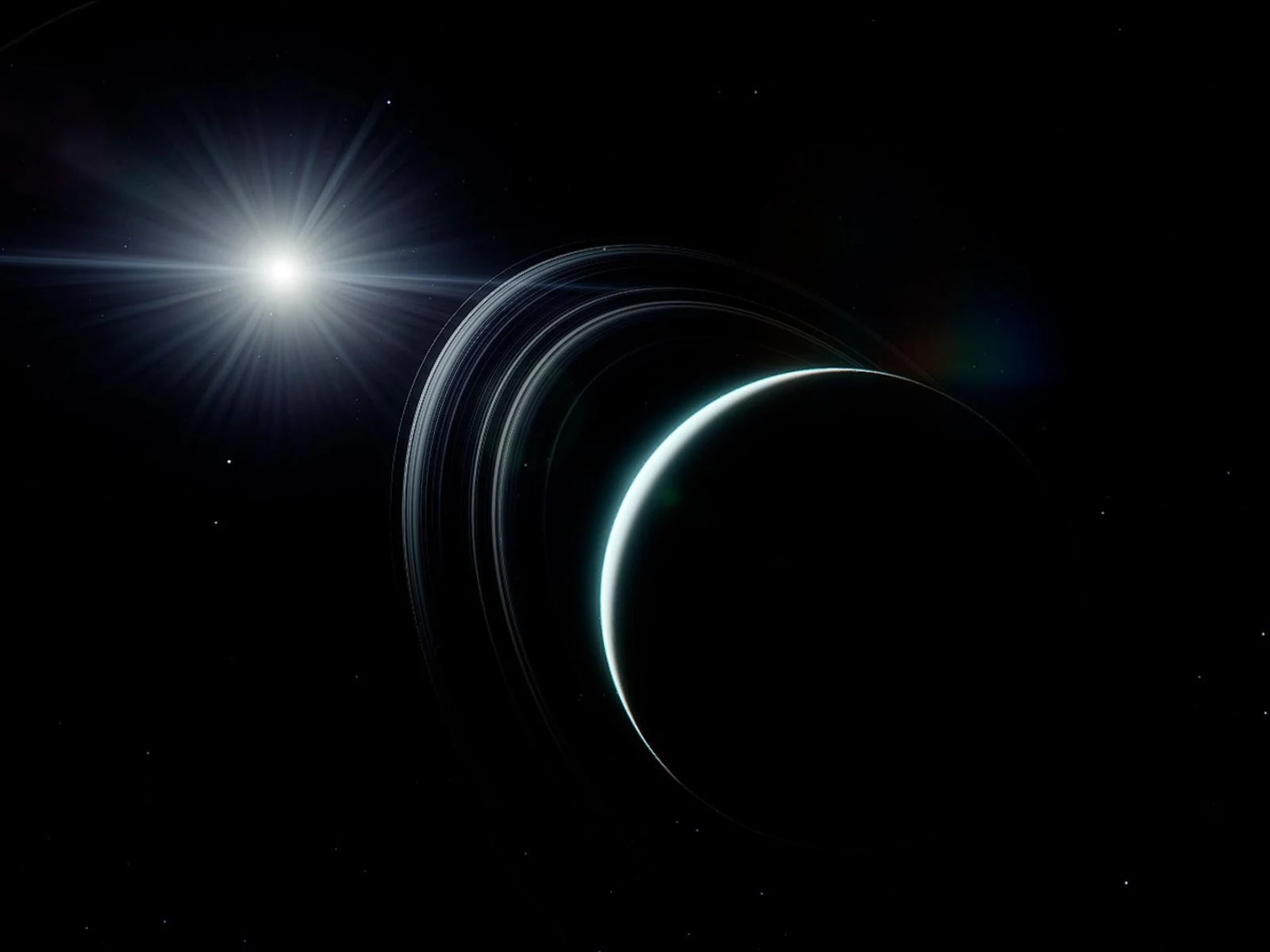
Tag: Uranus

  • Uranus’ Outer Rings Have Different Origins Explained

    Uranus’ Outer Rings Have Different Origins Explained

    Key Takeaway

    1. The μ and ν rings around Uranus have different origins and compositions, with μ being mainly water ice from moon Mab and ν composed of rocky, organic-rich material from micrometeorite impacts.
    2. The discovery of these rings’ compositions was facilitated by observations from the James Webb Space Telescope and the Hubble Space Telescope.
    3. Despite long-term observations, Uranus remains largely mysterious, with ongoing research needed to uncover more about its rings and overall planetary environment.

    Uranus and Its Enigmatic Rings

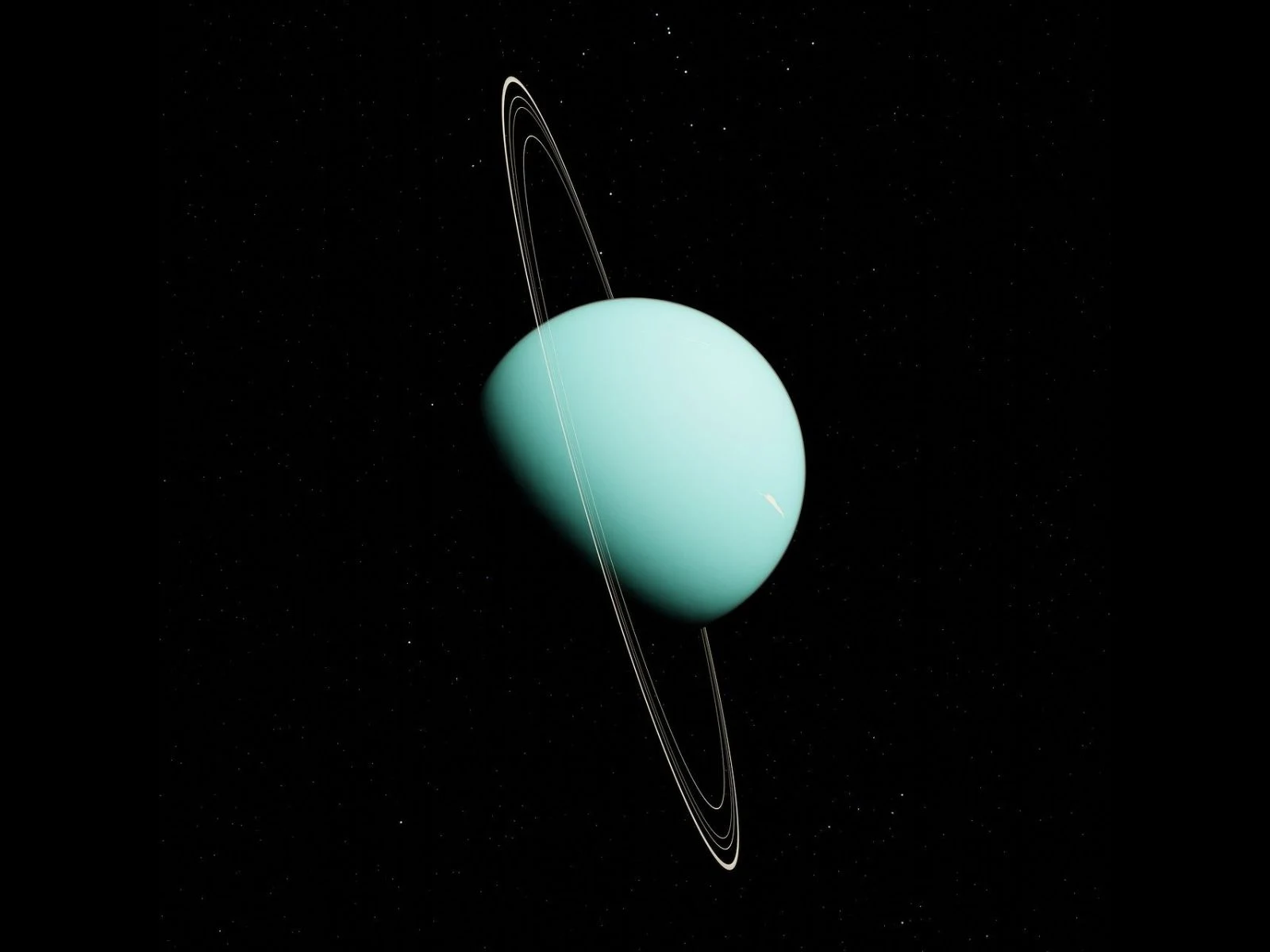
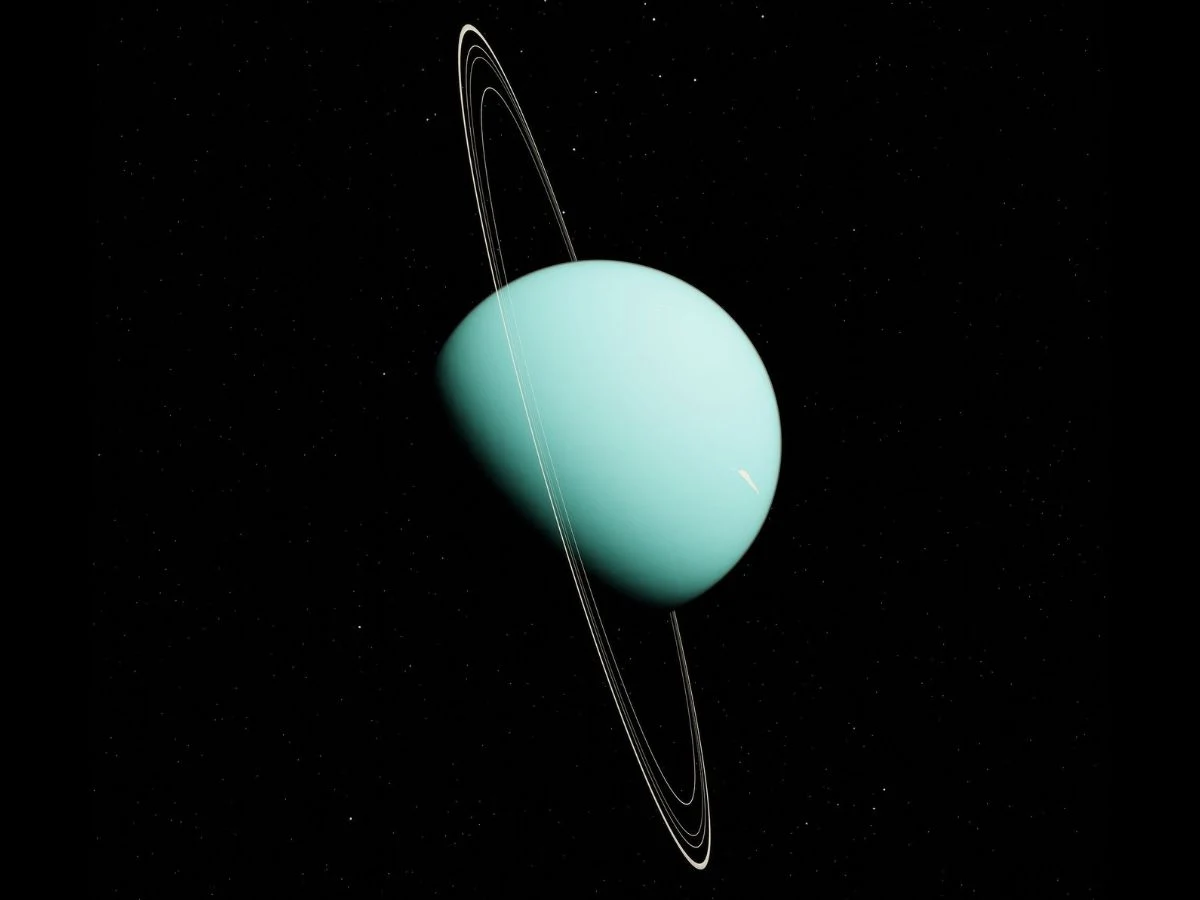
    Uranus has been the object of interest for scientists for long time and was identified as a planet back in 1781. Yet, it still keeps a lot of secrets, especially regarding its rings first found out in 1977. Recent studies suggests that these outliers around Uranus may actually came from different origins.

    The Colors and Composition of the Rings

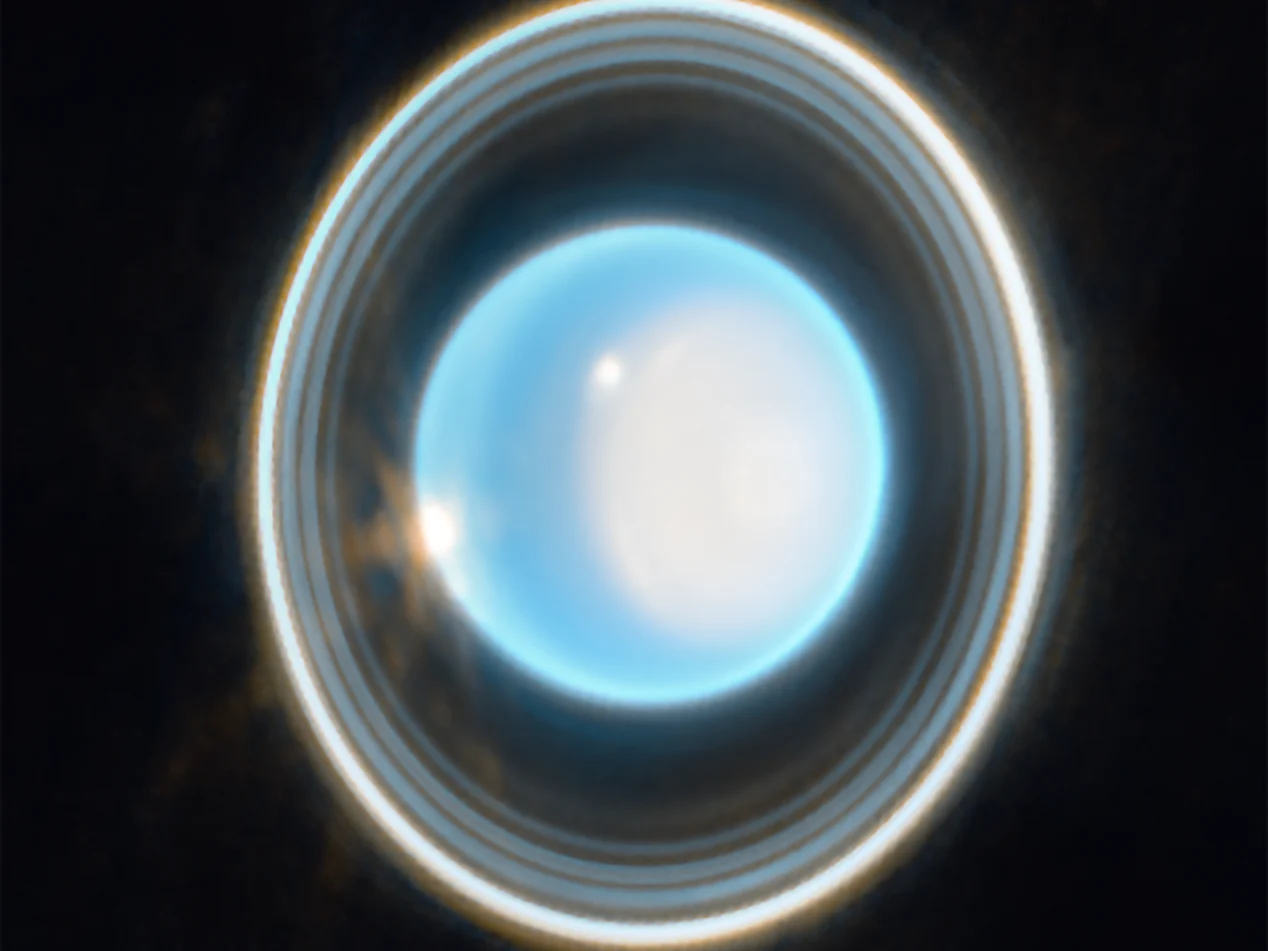
    Two of the rings, named μ and ν, appear distinctly blue and red respectively. This variation in color seems to be linked to what they’re mainly made of. Researchers from the University of California, Berkeley, reveal that the μ ring is mostly water ice, whereas the ν ring contains rock with approximately 10 to 15 percent carbon content. This difference in materials is quite intriguing for astronomers who are trying to understand the planet’s environment.

    Sources of the Rings’ Material

    Using data from powerful telescopes like the James Webb and Hubble Space Telescopes, scientists discovered that the tiny moon Mab, which is only about 12 km across, is likely the origin of the μ ring. This finding is very important because it confirms that Mab consists largely of water ice. On the other hand, the ν ring’s material gets a different story. Imke de Pater, a professor at the University of California, explains:

    Different Origins for Different Rings

    “The ν ring material is mostly from impacts of micrometeoroids and collisions involving rocky bodies rich in organic substances, which likely orbit between some satellites that we already know of. What’s puzzling for scientists is why these sources are so different from each other in their composition.”

    Remaining Mysteries and Future Explorations

    While these recent discoveries gradually unveil Uranus’s secrets, many questions still remain unanswered. The planet itself is still a largely uncharted territory. Continued research and observations could bring to light more about its nature, its rings, and the many celestial bodies that surround it.

    References and Image Credits

    • W. M. Keck Observatory
    • Journal of Geophysical Research: Planets
    • Image source: NASA, ESA, Image processing: Imke de Pater, Matt Hedman


    Sources

  • Webb Telescope Reveals First Look at Uranus’ Upper Atmosphere

    Webb Telescope Reveals First Look at Uranus’ Upper Atmosphere

    Key Takeaways

    1. Uranus has a unique, tilted magnetic field that differs from Earth’s alignment with its rotation.
    2. Researchers used Webb’s NIRSpec instrument to visualize Uranus’s ionosphere, which extends up to 5,000 km above its clouds.
    3. Auroral bands on Uranus are formed by charged particles colliding with atmospheric gases, creating a glow.
    4. Scientists identified two bright auroral bands near the magnetic poles and a darker area with lower emissions, linked to particle movement and magnetic shifts.
    5. These findings enhance our understanding of magnetic fields’ effects on planetary atmospheres and provide insights into ice giants and exoplanets.


    Uranus is a massive icy planet known for having one of the most unusual magnetic fields within our solar system. Unlike Earth, its magnetic field is tilted and not perfectly aligned with the rotation of the planet. Utilizing Webb’s NIRSpec instrument (Near-Infrared Spectrograph), researchers have managed to visualize the upper part of Uranus, known as the ionosphere. This ionosphere extends up to 5,000 km above the cloud tops of Uranus, where gases become ionized. The interactions with the planet’s magnetic field create faint glows that were captured in infrared light.

    Auroral Bands and Magnetic Interactions

    Auroral bands are created when charged particles travel along magnetic field lines. As these particles collide with atmospheric gases, they produce a glow. Scientists identified two bright auroral bands near the magnetic poles, along with a darker area where the emission and ion density were lower. This may be related to variations in the movement of charged particles and shifts in the magnetic field lines. Similar behaviors have been noted on Jupiter.

    Significance of the Findings

    This finding is crucial for enhancing our understanding of how magnetic fields affect planetary atmospheres. It also sheds light on the workings of ice giants such as Uranus, aiding in the interpretation and understanding of far-off exoplanets.

    Source:
    Link


  • James Webb Telescope Maps 3D Auroras on Uranus for First Time

    James Webb Telescope Maps 3D Auroras on Uranus for First Time

    Key Takeaways

    1. The James Webb Space Telescope (JWST) created a 3D map of Uranus’s auroras, enhancing our understanding of this phenomenon.
    2. Uranus has a unique magnetosphere that is misaligned with its rotation axis, making it one of the most peculiar in the solar system.
    3. JWST’s Near-Infrared Spectrograph (NIRSpec) allowed astronomers to analyze Uranus’s atmosphere and energy balance in unprecedented detail.
    4. The telescope confirmed that Uranus’s upper atmosphere is cooling, with an average temperature of around 426 kelvins (150 degrees Celsius).
    5. Future discoveries from JWST are expected to deepen our knowledge of ice giants and their mysteries.


    The James Webb Space Telescope is a crucial instrument for astronomers, equipped with tools that achieve incredible results. Recently, it successfully created a 3D map of Uranus’s auroras, allowing scientists to examine this phenomenon with enhanced accuracy.

    Unique Magnetosphere

    Paola Tiranti, a researcher from Northumbria University in the UK, noted in a press announcement that Uranus possesses one of the most peculiar magnetospheres in the solar system due to it being misaligned with the planet’s rotation axis.

    Using the Near-Infrared Spectrograph (NIRSpec) of the James Webb Space Telescope, astronomers were able to analyze its rotation, marking a significant advancement in the field. Paola Tiranti elaborates:

    “By revealing Uranus’s vertical structure in such detail, Webb is helping us understand the energy balance of the ice giants. This is a crucial step towards characterizing giant planets beyond our solar system. This is the first time we’ve been able to see Uranus’s upper atmosphere in three dimensions. With Webb’s sensitivity, we can trace how energy moves upward through the planet’s atmosphere and even see the influence of its lopsided magnetic field.”

    Temperature Trends

    While the images captured illustrate auroras near Uranus’s poles, the James Webb Space Telescope has also validated a trend initially discovered by Voyager 2. Launched on August 20, 1977, as part of the Voyager project, it passed by Uranus in 1986 and found that the planet’s upper atmosphere was cooling, a finding now confirmed by JWST:

    “The team measured an average temperature of around 426 kelvins (about 150 degrees Celsius), which is lower than values recorded by ground-based telescopes or previous spacecraft.”

    Future Discoveries

    As a result, examining this planet could assist astronomers in gaining a better understanding of ice giants and unraveling the enigmas that surround them. Additionally, this telescope is poised to uncover more secrets in the near future.

    Source:
    Link


  • Europa Clipper Takes Stunning Photo of Uranus from 3.2 Billion Km

    Europa Clipper Takes Stunning Photo of Uranus from 3.2 Billion Km

    Key Takeaways

    1. Uranus, the seventh planet from the Sun, has fascinated astronomers since its discovery in 1781.
    2. The Europa Clipper probe, launched by NASA in 2024, aims to explore Europa, a moon of Jupiter, but also captured an image of Uranus during its journey.
    3. The image of Uranus was taken from over 3.2 billion kilometers away using a star tracker camera, showing the planet against a backdrop of distant stars.
    4. The captured image represents only 0.1% of the sky, highlighting the vast number of stars and planets in the universe.
    5. This exploration raises questions about the potential for discovering habitable worlds beyond our own in the future.


    Seventh planet from the Sun and also the third largest in the solar system, Uranus has intrigued astronomers since the year 1781. Its pale blue hue often results in stunning photos that can make anyone dream. Recently, the Europa Clipper probe took an image of Uranus from over 3.2 billion kilometers away, and the outcome is quite remarkable.

    Europa Clipper and Its Mission

    Just to remind you, Europa Clipper is a probe that NASA launched in 2024. Its main goal is to investigate Europa, one of Jupiter’s moons. Weighing in at six tons, this device comes packed with various instruments that will help scientists examine the moon’s composition and geology. The intention is to find out if life could exist on this celestial body. However, during its journey, which is set to last until 2030, the probe managed to snap a striking picture.

    Capturing the Image of Uranus

    With the help of a star tracker camera, the Europa Clipper was able to take a picture of Uranus from a distance of more than 3.2 billion kilometers. In this image, numerous white dots appear against a grey and black backdrop. According to various notes, Uranus is positioned on the left side, while the other dots are stars that are much further away in the universe.

    The Vastness of the Universe

    Additionally, it’s important to note the surprising fact that this image captures just 0.1% of the sky surrounding the probe. This gives us a glimpse into the astronomical number of stars and planets that populate our universe. Consequently, it leads us to ponder the possibility of discovering potentially habitable worlds in the years and centuries that lie ahead.

    NASA Science

    Source:
    Link


  • Uranus Moon Discovery: Newly Found 29th Moon Revealed

    Uranus Moon Discovery: Newly Found 29th Moon Revealed

    Key Takeaways

    1. A new moon has been discovered orbiting Uranus, increasing the total number of known moons to 29.
    2. The newly found moon is small, with an estimated diameter of 6 miles (10 kilometers), likely missed by Voyager 2 in 1986.
    3. The moon orbits about 35,000 miles (56,500 km) from Uranus, making it the 14th small inner moon recognized around the planet.
    4. Uranus is unique for having many small inner moons, indicating a complex and turbulent history.
    5. The discovery highlights the advanced capabilities of the James Webb Space Telescope in detecting faint celestial objects, with formal naming pending approval from the International Astronomical Union.


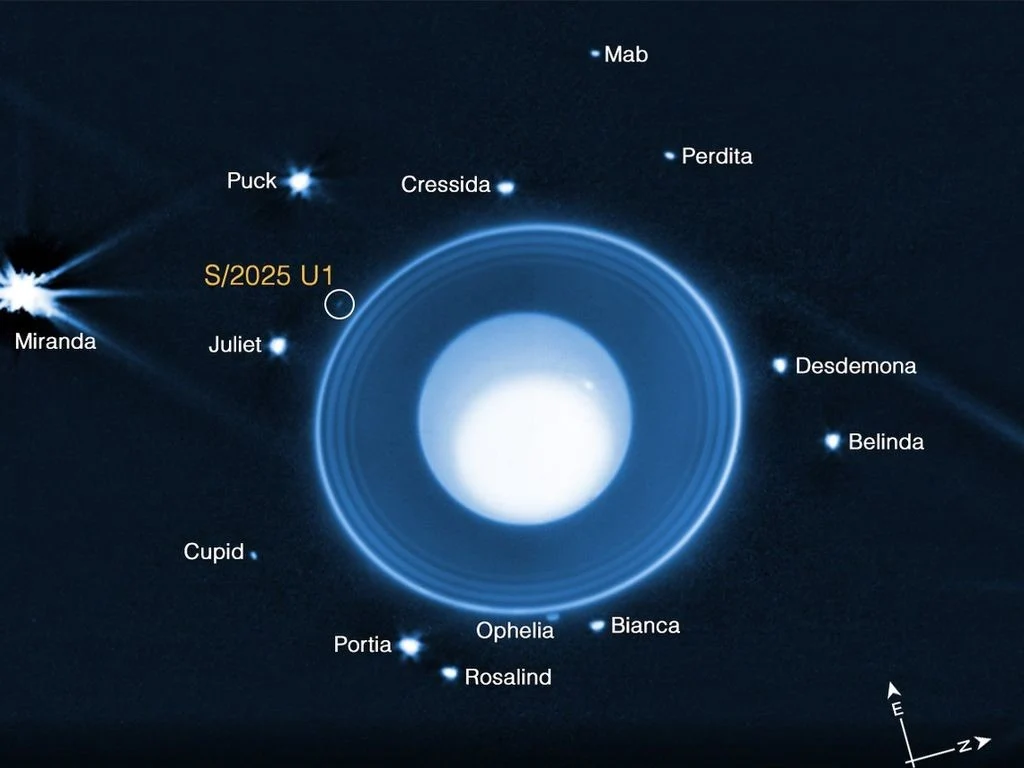
    A team of astronomers has found a small new moon orbiting Uranus by looking at data from NASA’s James Webb Space Telescope. This finding—achieved by studying a set of long-exposure images taken on February 2, 2025—brings the total number of known moons orbiting Uranus to 29, making Earth seem a bit unlucky.

    Size and Discovery

    This newly discovered moon has an estimated diameter of just 6 miles (10 kilometers), which makes it quite small. Lead scientist Maryame El Moutamid believes its tiny size is probably why it wasn’t detected by Voyager 2 during its flyby of Uranus in 1986. However, that’s not the only thing the spacecraft overlooked; it has recently been found that Uranus emits more heat than it takes in from the sun, which alters prior scientific understanding.

    Orbital Details

    The new moon is the 14th recognized member of the ice giant’s group of small inner moons. It orbits approximately 35,000 miles (56,500 km) away from the planet’s center, situated between the orbits of Bianca and Ophelia.

    According to Matthew Tiscareno from the SETI Institute, no other planet has as many small inner moons as Uranus, and the elaborate interactions among them and the rings suggest a turbulent past.

    Future Considerations

    The researchers point out that the data comes from “Webb science in progress” and hasn’t yet undergone peer review. A formal naming of the moon will require approval from the International Astronomical Union. This discovery highlights the capabilities of Webb’s infrared sensitivity, which enables it to spot faint objects that previous telescopes could not, extending the boundaries of space exploration beyond what missions like Voyager 2 achieved.

    Source:
    Link


  • NASA Confirms Uranus Emits More Heat Than It Receives from Sun

    NASA Confirms Uranus Emits More Heat Than It Receives from Sun

    Key Takeaways

    1. A new study challenges the long-held belief that Uranus is a frigid and inactive planet, showing it emits 15% more energy than it receives from the Sun.
    2. The previous conclusion about Uranus’s lack of internal heat was based solely on a single data point from NASA’s Voyager 2 flyby in 1986.
    3. Researchers used advanced computer modeling to incorporate extensive atmospheric data, revealing that Uranus is more reflective than previously thought.
    4. Understanding Uranus’s internal heat can provide insights into its formation, age, and the history of our solar system.
    5. The findings may also aid in exploring similarly-sized exoplanets throughout the galaxy.


    For almost forty years, a single data point from NASA’s Voyager 2 flyby has shaped our perception of Uranus as a frigid and inactive planet lacking any internal heat. The observation made in 1986 positioned the ice giant as a significant anomaly when compared to Jupiter, Saturn, and Neptune, all of which emit more heat than they absorb from the Sun. A new study, supported by NASA, challenges this long-held belief.

    New Findings

    A group of researchers has employed sophisticated computer modeling to reassess years of data, ultimately concluding that Uranus indeed produces its own heat. The findings, published in the Monthly Notices of the Royal Astronomical Society, indicate that the planet emits roughly 15% more energy than it receives from the Sun.

    The earlier conclusion was solely based on that singular measurement from Voyager 2. “Everything hinges on that one data point,” remarked Amy Simon, a planetary scientist at NASA’s Goddard Space Flight Center. “That is part of the problem.”

    Advanced Modeling

    The recent study, spearheaded by Patrick Irwin from the University of Oxford, created a computer model that encompassed all known information about the planet’s atmosphere gathered from extensive telescope observations. This new model incorporated Uranus’s clouds, hazes, and seasonal changes, leading to a revised conclusion. “We realized that it is actually more reflective than people had estimated,” Irwin explained. This discovery suggested that less of the Sun’s energy was being absorbed, making Uranus’s internal heat a more significant contributor to its energy balance than was previously acknowledged.

    Implications of the Research

    Grasping a planet’s internal heat is essential for understanding its formation and age. This revised perspective on Uranus will not only enhance scientists’ comprehension of the history of our solar system but also assist in the exploration of numerous similarly-sized exoplanets located throughout the galaxy.

    For those keen on observing Uranus and other distant celestial bodies, the Celestron NexStar 8 SE (curr. $1,749 on Amazon) is a robust choice. Its 203 mm (8-inch) aperture captures enough light to present Uranus as a distinct blue-green disc, considerably clearer than the star-like point seen through smaller telescopes. Under dark conditions and with increased magnification, observers might also catch a glimpse of one or two of the planet’s largest moons.

    A fun tidbit: Voyager 2 was launched on August 20, 1977, but only conducted its Uranus Flyby on January 24, 1986. Prior to that, it passed by Jupiter on July 9, 1979, and Saturn on August 25, 1981, before reaching Neptune on August 25, 1989.

    Source:
    Link