
Key Takeaways
1. Uranus, the seventh planet from the Sun, has fascinated astronomers since its discovery in 1781.
2. The Europa Clipper probe, launched by NASA in 2024, aims to explore Europa, a moon of Jupiter, but also captured an image of Uranus during its journey.
3. The image of Uranus was taken from over 3.2 billion kilometers away using a star tracker camera, showing the planet against a backdrop of distant stars.
4. The captured image represents only 0.1% of the sky, highlighting the vast number of stars and planets in the universe.
5. This exploration raises questions about the potential for discovering habitable worlds beyond our own in the future.
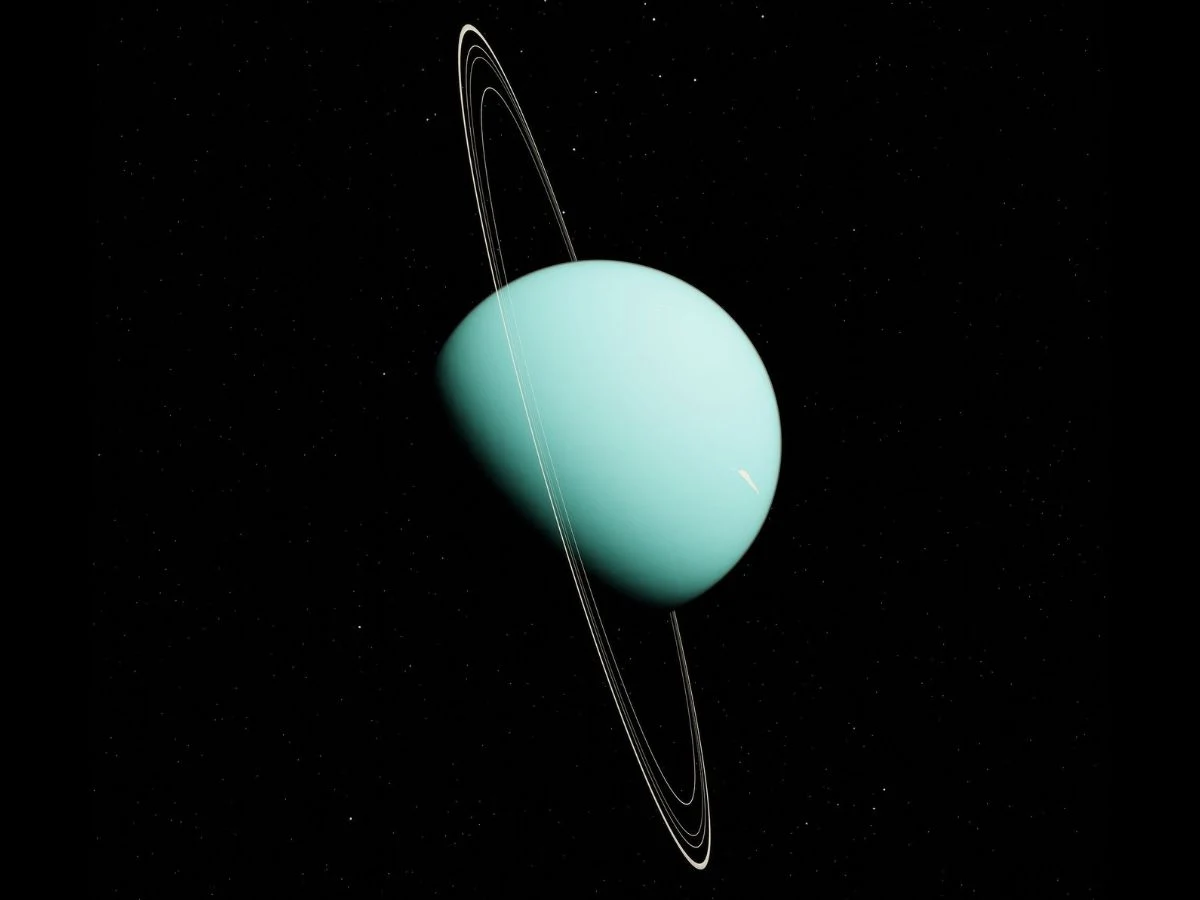
Seventh planet from the Sun and also the third largest in the solar system, Uranus has intrigued astronomers since the year 1781. Its pale blue hue often results in stunning photos that can make anyone dream. Recently, the Europa Clipper probe took an image of Uranus from over 3.2 billion kilometers away, and the outcome is quite remarkable.
Europa Clipper and Its Mission
Just to remind you, Europa Clipper is a probe that NASA launched in 2024. Its main goal is to investigate Europa, one of Jupiter’s moons. Weighing in at six tons, this device comes packed with various instruments that will help scientists examine the moon’s composition and geology. The intention is to find out if life could exist on this celestial body. However, during its journey, which is set to last until 2030, the probe managed to snap a striking picture.
Capturing the Image of Uranus
With the help of a star tracker camera, the Europa Clipper was able to take a picture of Uranus from a distance of more than 3.2 billion kilometers. In this image, numerous white dots appear against a grey and black backdrop. According to various notes, Uranus is positioned on the left side, while the other dots are stars that are much further away in the universe.
The Vastness of the Universe
Additionally, it’s important to note the surprising fact that this image captures just 0.1% of the sky surrounding the probe. This gives us a glimpse into the astronomical number of stars and planets that populate our universe. Consequently, it leads us to ponder the possibility of discovering potentially habitable worlds in the years and centuries that lie ahead.
NASA Science
Source:
Link
Leave a Reply