Category: EV vehicles

  • Tesla’s New Pay Plan Could Make Elon Musk a Trillionaire

    Tesla’s New Pay Plan Could Make Elon Musk a Trillionaire

    Key Takeaways

    1. Tesla’s board is proposing a new pay package for Elon Musk, potentially making him a trillionaire if accepted.
    2. The proposal requires Musk to significantly grow Tesla’s market cap from $1.1 trillion to $8.5 trillion over the next decade.
    3. Musk must increase Tesla’s yearly profit to $400 billion, up from last year’s $17 billion.
    4. Additional goals include achieving 20 million cumulative vehicle sales and attracting 10 million monthly subscribers to Full Self-Driving software.
    5. If successful, Musk’s ownership stake in Tesla could increase from 13% to 25%, enhancing his influence in the company.


    Tesla’s board is putting forth a plan for its stakeholders to vote on Elon Musk’s new pay package. If the proposal is accepted, known as the 2025 CEO performance award, it would give the billionaire $900 billion in Tesla shares, making him a trillionaire.

    Conditions for Approval

    However, the proposal that will be discussed at the upcoming annual general meeting on November 6, 2025, includes some tough terms. Musk’s pay depends on Tesla’s growth in size, profit, and product success.

    Currently, Tesla’s market cap is around $1.1 trillion. Over the next decade, Musk needs to increase that number to $8.5 trillion to receive his huge payout. To put this into perspective, Nvidia, which started in 1993, is the largest company globally today, with a market value of about $4.2 trillion. Microsoft, which has been around since 1975, is valued at $3.8 trillion. This means Tesla must become twice the size of Nvidia and almost eight times its current worth.

    Financial Goals

    Another requirement is that Musk must boost Tesla’s yearly profit to $400 billion. Last year, the car company reported an operating profit of $17 billion. Additionally, he needs to increase the sales of Tesla products. Musk is also aiming for 20 million cumulative vehicle sales, with 10 million subscribers to Full Self-Driving (FSD) software each month, plus one million Tesla Bots and one million Robotaxis in service.

    If Musk achieves these milestones, his ownership stake in Tesla would rise from 13% to about 25%, giving him greater influence over the electric vehicle firm.

    Source:
    Link


  • BMW iX3 Launches: 500-Mile Range, 600-Mile RWD Model in 2026

    BMW iX3 Launches: 500-Mile Range, 600-Mile RWD Model in 2026

    Key Takeaways

    1. The BMW iX3 50 xDrive offers a range of up to 500 miles on one charge, with a more affordable iX3 40 model expected to exceed 600 miles, launching in 2026.
    2. The design of the iX3 features a minimalist style influenced by Lamborghini’s Marcelo Gandini, with concealed window seals and sleek lighting.
    3. The SUV utilizes advanced 800-volt electrical architecture, allowing it to gain 257 miles of range in just 10 minutes of charging.
    4. The cylindrical battery cell design increases charging speed by 30% and energy density by 20% compared to previous models.
    5. The iX3 50 xDrive has a maximum output of 463 bhp, accelerates from 0 to 62 mph in 4.9 seconds, and is available in three trims starting at £58,755 in the UK.


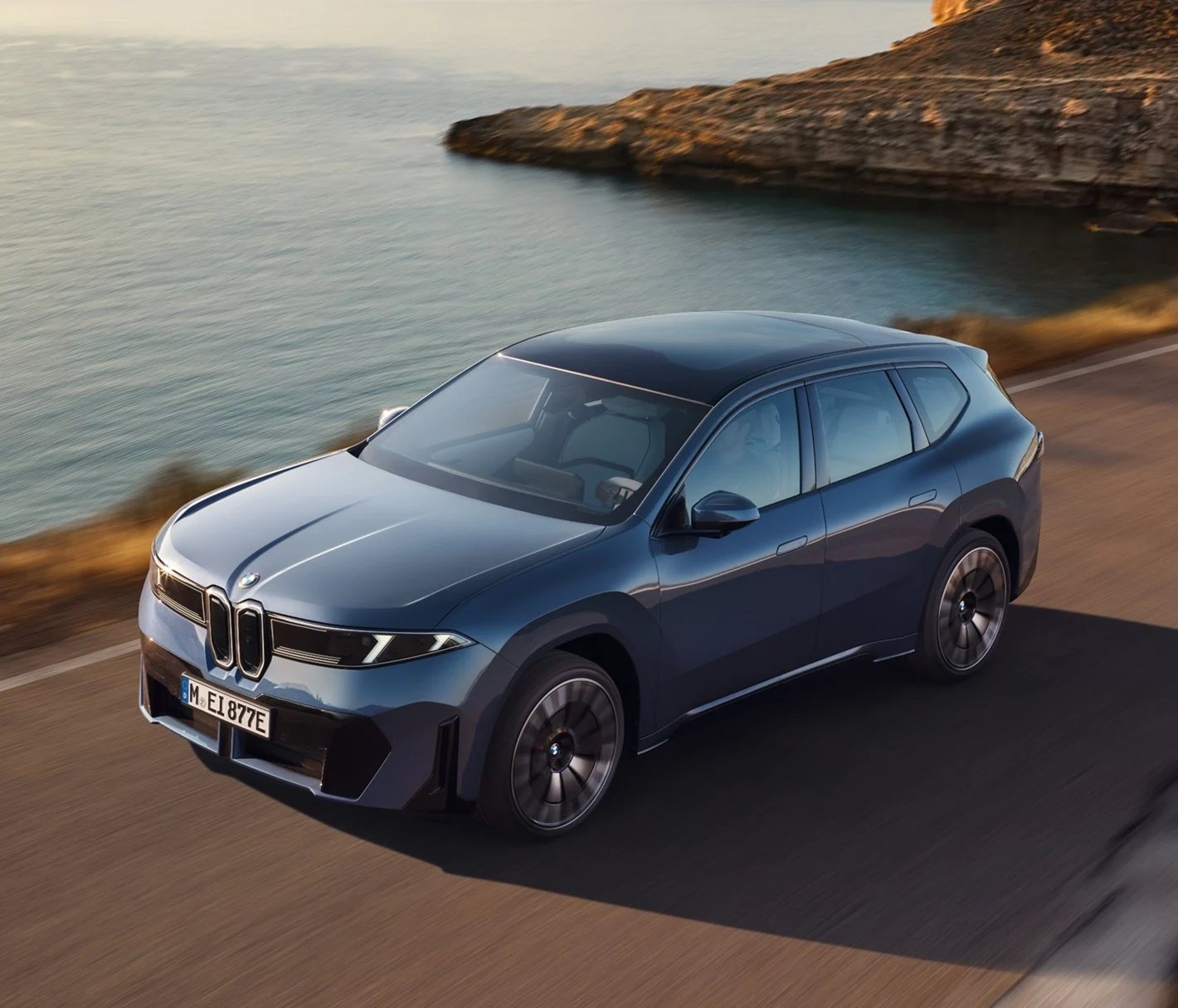
    BMW has released the details for its new electric SUV, the iX3, on their official site. The mid-tier all-wheel-drive model, named the 50 xDrive, claims to offer an impressive range of up to 500 miles on one charge. A more budget-friendly rear-wheel-drive option, the iX3 40, is set to launch in 2026 and is expected to exceed a range of 600 miles. These vehicles are part of BMW’s fresh lineup called Neue Klasse, which features new styling, technology, and engineering.

    Modern Design Features

    The 50 xDrive stands out with a cleaner and more straightforward design compared to previous BMW models. Its minimalist aesthetics, influenced by designer Marcelo Gandini from Lamborghini, are evident in the concealed window seals, retractable door handles, sleek lighting, and optional illuminated kidney grilles. Like the BMW X3 SUV, the 50 xDrive is around 4.8 meters long and 1.6 meters tall, equipped with 20-inch wheels and a glossy black finish.

    Advanced Electric Technology

    This latest generation of BMW brings significant improvements in electric systems. Notably, the SUV can gain 257 miles of range in merely 10 minutes of charging due to its 800-volt electrical architecture. Additionally, it has the capability to power devices or provide electricity for home use.

    BMW has opted for a cylindrical battery cell design akin to what Tesla uses. This new design charges 30 percent faster and boasts a 20 percent greater energy density than previous versions.

    Performance and Pricing

    With a combined maximum output of 463 bhp and peak torque reaching 645 Nm, the 50 xDrive can accelerate from 0 to 62 mph in just 4.9 seconds. It is available in three trims: the Standard model, priced at £58,755 in the UK; the M Sport, which includes a sportier appearance, body kit, and ambient lighting; and the top-tier M Sport Pro. The initial deliveries in the UK are anticipated to start in March 2026.

    Source:
    Link


  • Revolutionary EV Battery Offers 500 Miles in Just 12 Minutes

    Revolutionary EV Battery Offers 500 Miles in Just 12 Minutes

    Key Takeaways

    1. Researchers from KAIST and LG Energy Solution have developed lithium-metal batteries that can enable electric vehicles to travel 800 kilometers (500 miles) after just 12 minutes of charging.
    2. The breakthrough addresses safety and performance issues caused by dendrite formation during charging, which has limited the use of lithium-metal batteries.
    3. Dendrites are tree-like formations on battery anodes that can lead to reduced performance and safety risks, including short-circuits.
    4. The team created a new liquid electrolyte that inhibits dendrite growth by promoting even lithium deposition on the anode.
    5. Laboratory tests showed the new battery could charge from 5% to 70% in 12 minutes over 350 cycles, with energy densities reaching up to 386 Wh per kilogram.


    Researchers from the Korea Advanced Institute of Science and Technology (KAIST) along with LG Energy Solution have made a significant advancement. This development could enable electric vehicles to cover 800 kilometers (or 500 miles) after just 12 minutes of charging.

    Major Achievement in Battery Technology

    The study, which was featured in the journal Nature Energy, highlights a breakthrough in lithium-metal batteries that addresses a crucial safety and performance concern that has been hindering the progress of this technology. Lithium-metal batteries can deliver a much greater energy density when compared to traditional lithium-ion batteries, as they rely on pure lithium metal instead of a graphite anode. Yet, lithium-ion batteries remain the standard today due to the tendency of lithium-metal batteries to form dendrites.

    Understanding Dendrites and Their Impacts

    Dendrites are sharp, tree-like formations of lithium that can develop on the anodes of lithium batteries during the charging process. Their presence not only reduces performance but can also lead to short-circuits, posing a safety risk. To tackle this issue, the research team carefully examined how dendrites formed and created an innovative strategy to stop their growth. They found that the formation of dendrites was sparked by “non-uniform interfacial cohesion on the surface of the lithium metal.” As a solution, they invented a “cohesion-inhibiting new liquid electrolyte” that features an anion structure with a low binding affinity for lithium ions. This method allows lithium to be deposited evenly across the anode, which helps to minimize dendrite growth even during fast charging.

    Impressive Results in Testing

    In laboratory tests, the new battery was able to charge from 5% to 70% in just 12 minutes over more than 350 cycles. Additionally, the team created models of high-density designs that achieved energy densities up to 386 Wh per kilogram, capable of charging from 10% to 80% in 17 minutes.

    Source:
    Link


  • Volvo ES90 Electric Sedan Competes with BMW i5 and Mercedes EQE

    Key Takeaways

    1. The Volvo ES90, a large electric sedan, has started production in Chengdu, China, targeting the upper mid-size market to compete with luxury brands like BMW and Mercedes.
    2. The ES90 measures 197 inches long and offers three powertrain options, with the top model producing 680 hp and accelerating to 62 mph in just 4 seconds.
    3. It features an 800-volt architecture for rapid charging, allowing for 10% to 80% charging in about 20 minutes at DC fast charging stations, but has slower AC charging capabilities.
    4. The sedan has a towing capacity of up to 4,409 lbs and a trunk capacity of 15 cu ft, weighing between 5,225 to 5,798 lbs.
    5. Pricing for the ES90 starts at around $84,000 in Europe, positioning it slightly above the Mercedes EQE and making it a competitive option in the all-electric mid-size sedan market.


    The large electric sedan ES90 has started production at Volvo’s facility in Chengdu, China, marking the introduction of their new electric vehicle (EV) aimed at the upper mid-size market. With the ES90, Volvo is positioning itself to compete directly with well-known German luxury brands. Rather than focusing only on popular SUVs, the Swedish automaker is challenging established names like the BMW i5, Mercedes EQE, and the soon-to-be-released Audi A6 e-tron with this new electric sedan.

    Dimensions That Stand Out

    When it comes to size, the ES90 isn’t shy. This sizable electric vehicle measures 197 inches long, 76 inches wide, and has a wheelbase of 122 inches. While it is a tad shorter than the 199-inch BMW i5, it is slightly larger than the 195-inch Mercedes EQE.

    Powertrain Choices

    The ES90 offers three different powertrain configurations based on the SPA2 platform. The entry-level version features a single electric motor at the rear, delivering 245kW (333 hp) and an 88kWh usable battery. This setup enables the ES90 to reach 62 mph in 6.9 seconds, with a top speed capped at 112 mph, and an official WLTP range of 404 miles.

    For those seeking more performance, the Volvo ES90 also comes in all-wheel-drive Twin Motor and Twin Motor Performance variants. Both of these models boast a larger 102kWh battery and a WLTP range of 435 miles. The ES90 Twin Motor generates 330kW (449 hp) and accelerates to 62 mph in just 5.5 seconds. The flagship model, the ES90 Twin Motor Performance, impressively produces 500kW (680 hp) and can reach 62 mph in only 4 seconds.

    Charging Capabilities

    One of the standout features of the Volvo ES90 is its 800-volt architecture, enabling rapid charging. The all-wheel-drive versions can charge at a maximum of 350kW at DC fast charging stations. Under ideal conditions, charging from 10% to 80% takes roughly 20 minutes, which is quite efficient for DC charging. However, the situation is less favorable for AC charging, as the ES90 can only handle 11kW instead of 22kW, leading to longer charging times at public AC stations for all variants.

    On the technical side, Volvo has provided some impressive figures. The turning circle measures 38.7 ft, which is reasonable for this class of vehicle. The drag coefficient is rated at 0.25, while the trunk capacity stands at 15 cu ft, which is somewhat less than that of some competitors. Weighing in at 5,225 to 5,798 lbs, the new Volvo EV is certainly on the heavier side. Nevertheless, the all-wheel-drive version has a towing capacity of up to 4,409 lbs.

    The Volvo ES90 is available for order in Europe, with prices starting around $84,000, inclusive of 19% VAT. This pricing positions the electric sedan slightly above the base version of the Mercedes EQE. The BMW i5 is a bit less expensive, while the Audi A6 Sportback e-tron is the most affordable option among the rivals listed. Given its combination of performance, range, and space, the Volvo ES90 could potentially bring a refreshing change to the all-electric mid-size sedan category. The first models in Europe are expected to be delivered later this year.

    Source:
    Link


  • Tesla Model Y Surpasses Nissan Leaf as Norway’s Top-Selling EV

    Tesla Model Y Surpasses Nissan Leaf as Norway’s Top-Selling EV

    Key Takeaways

    1. Tesla’s Model Y has surpassed the Nissan Leaf as Norway’s top-selling electric vehicle, achieving 81,334 units sold.
    2. The Nissan Leaf held its position for 14 years before being dethroned by the Model Y, which is now the fastest vehicle to reach this sales milestone in Norway.
    3. Norway is a leader in electric vehicle adoption, with nearly 98% of new car purchases being electric.
    4. The Model Y’s success is attributed to enhancements like improved driving range and the convenience of Tesla’s Supercharger network.
    5. Nissan plans to launch an updated version of the Leaf in Norway, indicating ongoing competition in the electric vehicle market.


    The dominance of the Nissan Leaf in Norway’s electric vehicle market has been challenged and finally surpassed by Tesla. The Model Y has dethroned the Leaf as the top-selling EV in the country, achieving this milestone with a remarkable sales figure of 81,334 units within four years after its introduction. This represents a lead of just 104 units over the long-time champion, the Nissan Leaf.

    Leaf’s Long History

    For 14 years, the Leaf has been a staple in Norway, but the Model Y has swiftly taken the crown, marking it as the fastest vehicle in the nation to achieve this impressive status.

    Norway’s Electric Future

    Norway stands out as a pioneer in electric vehicle sales, with almost 98% of new car purchases now being electric. The Model Y, which debuted in Norway in 2021, has seen its popularity soar alongside the country’s swift embrace of EVs.

    Tesla has made numerous tweaks to enhance the Model Y, which have helped it capture the attention of many buyers. Enhancements like a better driving range and a more convenient charging experience via Tesla’s expanding Supercharger network have played a role in its success.

    Current Sales Figures

    Latest registration statistics reveal that the Tesla Model Y has recorded 15,093 sales so far in 2025. Following it in the rankings are Toyota’s bZ4X and Volkswagen, which recorded 5,035 and 5,019 sales, respectively.

    Nissan isn’t conceding defeat just yet. The manufacturer plans to launch an updated version of the Leaf in Norway later this year, showing that competition is still alive and well in the EV market.

    Source:
    Link


  • Porsche Cayenne Electric Launches Wireless Home Charging System

    Porsche Cayenne Electric Launches Wireless Home Charging System

    Key Takeaways

    1. The Porsche Cayenne Electric will launch in 2026 and feature a wireless charging system, making it one of the first electric vehicles with this technology.
    2. The wireless charging operates using an inductive pad that converts a magnetic field into electricity for the vehicle’s battery.
    3. The maximum charging speed for the Cayenne Electric is 11 kilowatts, with an efficiency of around 90 percent.
    4. Safety features include a durable charging plate and automatic charging cessation if a foreign object is detected underneath the vehicle.
    5. The Cayenne Electric will also support traditional fast charging, allowing a 10 to 80 percent charge in just 16 minutes with an 800-volt architecture.


    The Porsche Cayenne Electric is set to launch in 2026 and will feature one of the first wireless charging systems in a commercially available electric vehicle, as announced by the luxury automaker. This model is built on the same Premium Platform Electric (PPE) framework as the Macan Electric and Audi Q6 e-tron.

    Innovative Charging Technology

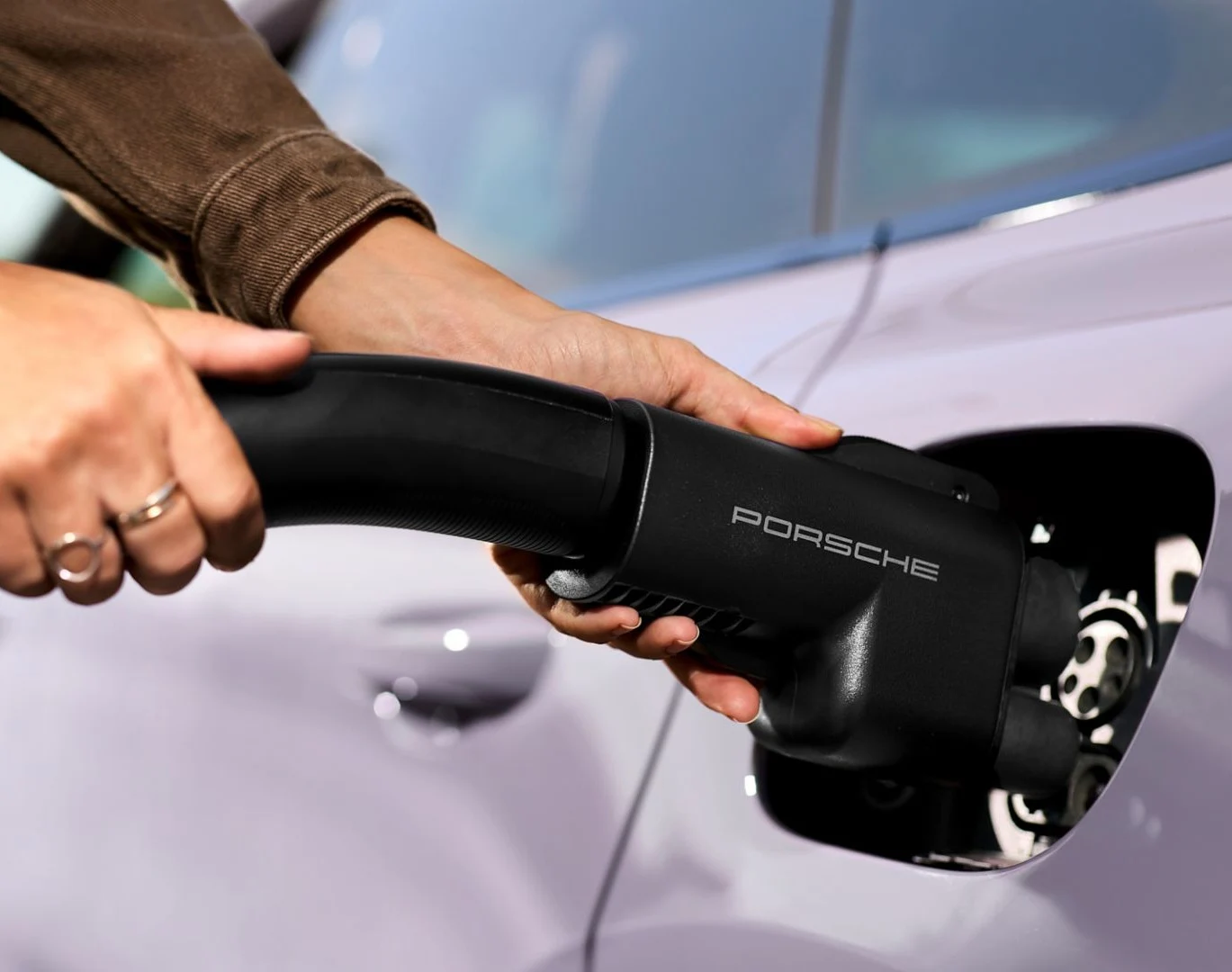
    The wireless charging technology operates much like that of wireless cellphones. An alternating current travels through a combination of copper and ferrite within an inductive pad, which creates a magnetic field. When drivers park their Cayenne Electric over this pad, a receiver coil located beneath the vehicle converts the magnetic field back into an alternating current. This current is then changed into direct current and stored in the vehicle’s battery.

    Impressive Charging Speed

    The maximum charging speed is rated at 11 kilowatts, which is comparable to Level 2 chargers. Porsche emphasizes that the efficiency of this system reaches around 90 percent.

    To ensure safety and comply with European and US regulations, Porsche has included various safety features. The charging plate is constructed to endure the weight of the tires, whether they are rolling over it or resting on it. If any foreign object is detected beneath the car, charging will cease automatically. Additionally, the installation of the wireless charging system must be performed by a qualified electrician.

    Traditional Fast Charging Capabilities

    Despite its innovative wireless charging, the Cayenne Electric will also support traditional fast charging. With an 800-volt architecture, it can accept up to 400 kW of power, enabling the electric SUV to charge from 10 to 80 percent in a mere 16 minutes. The projected driving range of the vehicle is anticipated to reach up to 373 miles.

    Source:
    Link


  • Tesla Raises Model Y Lease Prices Before Tax Credit Deadline

    Tesla Raises Model Y Lease Prices Before Tax Credit Deadline

    Key Takeaways

    1. Tesla plans to increase lease prices for the Model Y and Model 3 after September 21, 2023.
    2. The monthly lease price for the Model Y will rise from $399 to $479, and the Model 3 will increase from $299 to $349.
    3. Customers must order by September 21 to utilize the $7,500 federal tax credit as a down payment for the Model Y lease.
    4. Tesla is reducing some incentives due to high demand, but manufacturing costs may also lead to further price hikes.
    5. The promotional APR rate for the Model Y remains at 3.99%, while the company focuses on leasing over direct cash price increases.


    Tesla has hinted that the high demand for its top-selling vehicles, including the Model Y and Model 3, might lead to price increases. The company has confirmed that the current leasing promotions for the Model Y will conclude on September 21.

    Upcoming Lease Price Changes

    After September 21, the monthly lease price for the Model Y will rise from $399 to $479. In contrast, the Model 3 will see a smaller increase. The least expensive lease currently starts at $299, but from September 22, it will increase to $349 per month.

    This means an $80 increase for the Model Y lease and a $50 rise for the Model 3. Tesla is taking advantage of the surge in orders this quarter, driven by the approaching deadline for the government tax credit expiration. Customers who wish to apply the federal tax credit as a down payment for their new Model Y must place their orders by September 21 to benefit from the $399 lease offer.

    Tax Credit Remains Available

    After this date, the lease price will go up. However, if customers sign a lease with a small down payment or start a trade-in, they can still utilize the $7,500 tax credit upon delivery, even if it occurs after September 30, when the credit officially ends.

    Tesla mentioned that the various Model Y APR financing offers and leasing promotions have generated a level of demand not seen in recent quarters, which experienced a decline due to Elon Musk’s political actions and general issues in the electric vehicle market.

    Adjustments to Incentives

    As a result, the company has begun to eliminate some incentives, like free wheel or color upgrades for inventory models, but it hasn’t been enough to reduce demand. Tesla has also noted that additional components ordered from suppliers beyond the original amounts have led to increased manufacturing costs, which may require a price hike.

    Given that most customers in the U.S. choose to lease their Teslas, the company decided to cut back on the promotional monthly lease rates for the Model Y and Model 3 instead of increasing the cash prices directly or modifying the promotional APR rate, which remains at 3.99% for the Model Y.

    Source:
    Link


  • Tesla Seizes 30% of South Korea’s Imported Car Market

    Tesla Seizes 30% of South Korea’s Imported Car Market

    Key Takeaways

    1. Tesla became the leading imported car brand in South Korea in 2025, with over 6,500 sales in May.
    2. Imported car sales in South Korea rose by 22.6% in August 2025, with Tesla accounting for about one-third of total sales.
    3. Tesla’s popularity is growing in South Korea, traditionally dominated by German brands, with the Model Y and Model 3 as top sellers.
    4. Tesla achieved nearly 8,000 deliveries in August, making South Korea its third-largest market after the U.S. and China.
    5. Tesla launched the Cybertruck in Asia, marking its first introduction outside North America.


    For the second time in 2025, Tesla has emerged as the leading imported car brand in South Korea, following its impressive record of over 6,500 sales in May. The Korea Automobile Importers & Distributors Association (KAIDA) reported that imported car sales in South Korea rose by 22.6% in August 2025 compared to the same month the previous year, totaling 27,304 units. Remarkably, Tesla made up around one-third of this total.

    Growing Popularity of Tesla

    This achievement indicates a rising popularity of Tesla vehicles in a market that has been predominantly occupied by German brands. The three top-selling vehicles include the Tesla Model Y, Model 3, and Model Y Long Range.

    Continuous Success in South Korea

    Tesla has been experiencing significant success over the past few months in South Korea. July concluded with a strong performance, resulting in 7,357 deliveries after a small dip in June. The momentum carried on into August, allowing the electric vehicle giant to reach a record of nearly 8,000 deliveries in South Korea. With this accomplishment, South Korea now ranks as Tesla’s third-largest market, following the United States and China.

    The Model Y stood out as the top-selling electric vehicle, achieving 6,683 sales, which is roughly 80 percent of the total sales figure. Following closely was the Model 3, marking 1,290 deliveries. If this trend continues, there is a bright outlook that Tesla could finish the year breaking all previous year-over-year records.

    Launching the Cybertruck in Asia

    Tesla has shown its commitment to the Asian market by introducing the Cybertruck for the first time outside of North America.

    Source:
    Link


  • Volvo EM90: Premium Electric MPV from Scandinavia

    Volvo EM90: Premium Electric MPV from Scandinavia

    Key Takeaways

    1. Launch of Volvo EM90: Volvo has introduced the EM90, a luxury electric MPV designed to transform the MPV market, built on Geely’s Sustainable Experience Architecture (SEA).

    2. Scandinavian Design: The EM90 features elegant Scandinavian design with sleek lines, expansive glass surfaces, and a minimalist interior, described as a “Swedish living room on wheels.”

    3. Performance Specs: Equipped with a 200 kW electric motor, the EM90 delivers 272 hp, accelerates from 0 to 100 km/h in 8.3 seconds, and offers a range of up to 739 km (459 miles) with rapid charging capabilities.

    4. Interior Comfort and Versatility: The interior includes adjustable electric seats with massage functions, a spacious third row, and a trunk capacity of 535 liters, expanding to 2,376 liters with seats folded down.

    5. Safety and Infotainment: The EM90 includes advanced safety features and a Google-based infotainment system for seamless app integration, along with a starting price of CNY 818,000 (approximately $114,532) in China.


    Volvo has recently launched the EM90, a completely electric luxury MPV that the company claims will transform the MPV market. Built on Geely’s Sustainable Experience Architecture (SEA), the EM90 boasts state-of-the-art technology and features Scandinavian design elements. Measuring 5.21 meters in length, with a wheelbase of 3.21 meters and a curb weight of 2,763 kg, the EM90 provides ample space, making it suitable for families as well as business travelers, as reported by Electrive.

    Elegant Scandinavian Design

    The EM90 showcases the refined simplicity of Scandinavian design. Its sleek lines, expansive glass surfaces, and minimalist interior foster a serene and luxurious ambiance. Volvo describes the interior as offering the comfort of a “Swedish living room on wheels.”

    Impressive Performance Specifications

    As stated by Volvo, the EM90 is equipped with a 200 kW electric motor generating 272 hp. This power allows the EM90 to go from 0 to 100 km/h in just 8.3 seconds. The 116 kWh battery provides a range of up to 739 km (459 miles) based on the CLTC cycle. With the aid of 800-volt technology, the EM90 supports charging speeds of up to 360 kW, resulting in quick charging times.

    Comfort and Versatility Inside

    The interior of the EM90 is crafted for both comfort and adaptability. The second row features two individual seats that can be adjusted electrically, complete with massage and climate functions, convertible into lounge chairs. The third row also provides ample room. With a trunk capacity of 535 liters, which expands to 2,376 liters with the seats folded down, the EM90 can accommodate plenty of luggage and gear.

    Safety Features and Infotainment System

    Volvo is widely recognized for its commitment to safety, and the EM90 upholds this reputation. It comes equipped with cutting-edge driver assistance systems and a strong body structure, ensuring high safety levels for all passengers. The infotainment system utilizes Google technology, allowing for smooth integration of various apps and services.

    According to CarNewsChina, the Volvo EM90 has a starting price of CNY 818,000 in China, which is approximately $114,532 as of September 3, 2025. This pricing aligns the EM90 with other high-end electric vehicles. The availability in Europe, the USA, and other regions has not been officially confirmed yet, so there is no pricing information for markets outside of China at this time.

    Source:
    Link


  • Tesla’s Mysterious 3-Row SUV: Cybertruck-Inspired Design

    Tesla’s Mysterious 3-Row SUV: Cybertruck-Inspired Design

    Key Takeaways

    1. Tesla is potentially developing a new large, boxy SUV in its Cyber lineup, featuring a third row of seats.
    2. The prototype was hinted at in a promotional video for Tesla’s Master Plan 4, which focuses on “sustainable abundance.”
    3. Elon Musk forecasts that 80% of Tesla’s future income will come from the Optimus humanoid robot, while the automotive sector remains the main revenue source.
    4. The design of the three-row Cyber SUV is based on extending the existing Cybertruck design to replace the truck bed with a cabin.
    5. Tesla’s head designer has expressed excitement for upcoming designs, which will be revealed soon.


    Tesla might be developing a new vehicle in its Cyber lineup, a large, boxy SUV that appears to have a third row of seats where the Cybertruck’s bed is located.

    The prototype for the Cyber SUV can be glimpsed in a promotional video that Tesla shared to highlight its Master Plan 4. This plan focuses on “sustainable abundance” but lacks the specifics and clarity that even Grok might struggle to understand regarding Tesla’s future.

    Future Revenue Sources

    Elon Musk has mentioned that 80% of Tesla’s future income is expected to come from its yet-to-exist Optimus humanoid robot venture. Despite these ambitious targets, the automotive sector remains Tesla’s primary source of income, and it seems they are experimenting with prototypes for upcoming vehicle models.

    Their designs are displayed on a shelf in Tesla’s design studio, next to a full-size Cybercab prototype made from clay. One particular model among the Cybertruck toys resembles a three-row Tesla SUV concept inspired by its distinctive stainless steel look.

    The Design Process

    To construct the large, boxy three-row Cyber SUV, Tesla appears to be adapting the existing Cybertruck design, merely extending the cabin to create a third seat row in place of the truck bed.

    Fans of Tesla have been eager for a genuine three-row SUV, and an extended-cabin Cybertruck would suit their needs better than the Model Y L, should Tesla opt to transform the pickup into an SUV. Not to mention, the Cybertruck measures 18.6 feet (5,683 mm) long, which aligns with the dimensions of a typical full-size three-row SUV, making its chassis ideal for this purpose.

    Exciting Developments Ahead

    In a recent statement, Tesla’s head designer expressed his enthusiasm for several upcoming designs that the company is developing in its studio, mentioning that they will be unveiled “soon.”

    Source:
    Link