
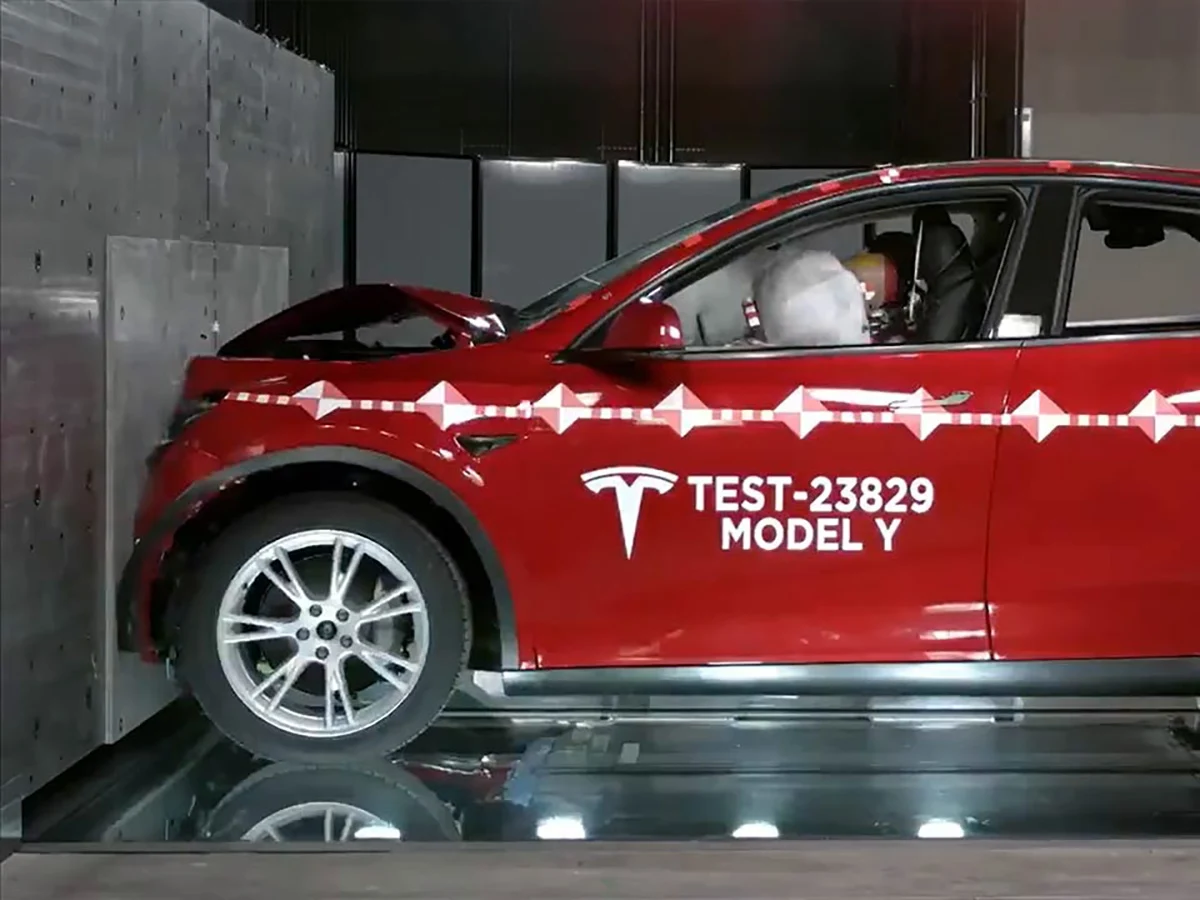
Key Takeaways
1. Tesla is upgrading its airbag system to use camera technology for pre-crash deployment, enhancing safety.
2. The new system will inflate airbags before an impact, based on predictions made by the Tesla Vision camera system.
3. This approach aims to reduce serious injuries, like whiplash, by cushioning occupants earlier in a potential collision.
4. There are concerns about false alarms leading to unnecessary airbag deployment, which could compromise safety.
5. The new airbag system will be implemented only in unavoidable head-on collision scenarios, alongside existing sensors.
Instead of relying on the usual bumper and sensors to trigger airbags instantly during an accident, Tesla cars will now utilize their cameras to inflate them in advance.
Airbag System Upgrade
This debated feature is promoted as a safety “improvement” to the Frontal Airbag System, included in Tesla’s latest 2025.32.3 software update. “Building on regulatory and industry crash tests, this update allows front airbags to start inflating and restraining occupants sooner, in a unique way that only Tesla’s integrated systems can manage, enhancing your vehicle’s safety over time,” states the electric vehicle manufacturer.
New Technology
Currently, the technology for deploying airbags relies on accelerometers and pressure sensors to detect a crash and deploy airbags, but only after the impact occurs. Tesla vehicles consistently receive 5-star safety ratings, yet the company is looking to change this process. The new method will use the Tesla Vision camera system, which is installed around the vehicle, to identify an impending accident and inflate the airbags just before it happens.
Safety Benefits and Concerns
This pre-crash airbag deployment could offer many benefits for the safety of those inside the vehicle. For instance, key body areas of both drivers and passengers will be cushioned before the impact, reducing the chances of serious whiplash injuries.
However, this approach could also lead to some negative outcomes, particularly due to false alarms. If Tesla misidentifies a rapidly approaching object that isn’t actually on a collision path, the airbags could deploy unnecessarily, potentially putting the safety of occupants at risk.
Controlled Deployment
This might be the reason why Tesla plans to implement the new airbag system only in cases where a head-on collision seems unavoidable, in addition to the existing sensors that detect real impacts.
Tesla has certainly run various tests before relying on the Tesla Vision camera set and FSD software for airbag deployment. Nevertheless, it will be interesting to see how effective the Frontal Airbag System Enhancement will be when it is rolled out as an OTA update for the 2022 and later Model Y and Model 3 vehicles.
Source:
Link

Leave a Reply