Category: EV vehicles

  • Toyota, Lexus, Subaru Recall 100K EVs for Safety Issues

    Toyota, Lexus, Subaru Recall 100K EVs for Safety Issues

    Key Takeaways

    1. Toyota, Lexus, and Subaru are recalling 100,000 electric vehicles due to a windshield defroster software issue that affects visibility in cold weather.

    2. The recall includes the Toyota bZ4X, Lexus RZ 300e, Lexus RZ 450e, and the 2023-2025 Solterra, all of which share a common platform.

    3. The problem arises from a software issue in the ECU that may disable dual heating systems, leading to ineffective defrosting of the windshield.

    4. Affected vehicle owners will receive a free software update at Toyota and Lexus dealerships, and the electric HVAC compressor will be replaced if necessary.

    5. Customers will be notified about the recall by early November 2025, and they can check if their vehicle is affected through the manufacturers’ recall websites or the NHTSA site.


    The trio of Toyota, Lexus, and Subaru has announced a recall that impacts 100,000 electric vehicles and has halted sales of specific models in the US. The manufacturers are addressing a problem that could make driving in colder temperatures perilous.

    Windshield Defroster Issue

    The trouble lies with the windshield defroster, which might not effectively clear frost, ice, or fog from the glass. This is due to a software problem in the ECU (electrical control unit). As a result, drivers could face decreased visibility, which raises the likelihood of accidents.

    Vehicles Involved

    The cars affected have dual heating systems, but both heating sources can be turned off in certain failure conditions. This issue came to light after Transport Canada made inquiries about it.

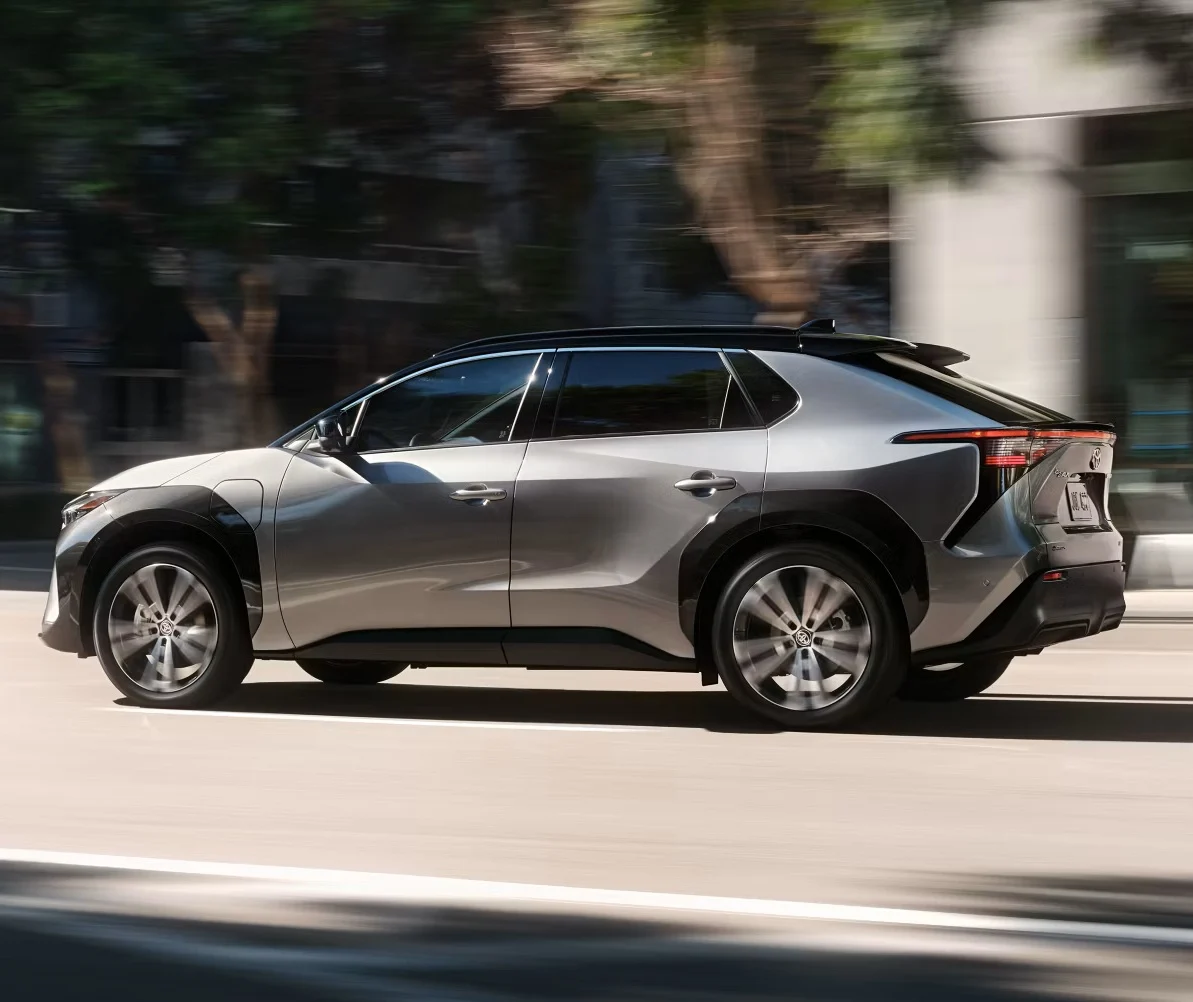
    Toyota highlighted in its official announcement that the Toyota bZ4X, Lexus RZ 300e, and RZ 450e are included in the recall, with roughly 62,000 units needing repairs. The 2023-2025 Solterra is also part of this issue, which makes sense since they all utilize a shared platform.

    Repair Process

    Owners will have to go to Toyota and Lexus dealerships, where the ECU software will be updated without any cost to them. If needed, the electric HVAC compressor will also be replaced for free.

    Toyota plans to inform its customers by early November 2025. In the meantime, drivers can find out if their vehicle is affected by checking the dedicated recall websites of Toyota and Lexus, or the National Highway Traffic Safety Administration’s (NHTSA) site.

    Source:
    Link


  • Europe’s €15,000 Tesla Model 2 to Compete with BYD Seagull

    Europe’s €15,000 Tesla Model 2 to Compete with BYD Seagull

    Key Takeaways

    1. The European Commission is working on creating a competitor to the Tesla Model 2 in response to the rise of low-cost Chinese electric vehicles (EVs).

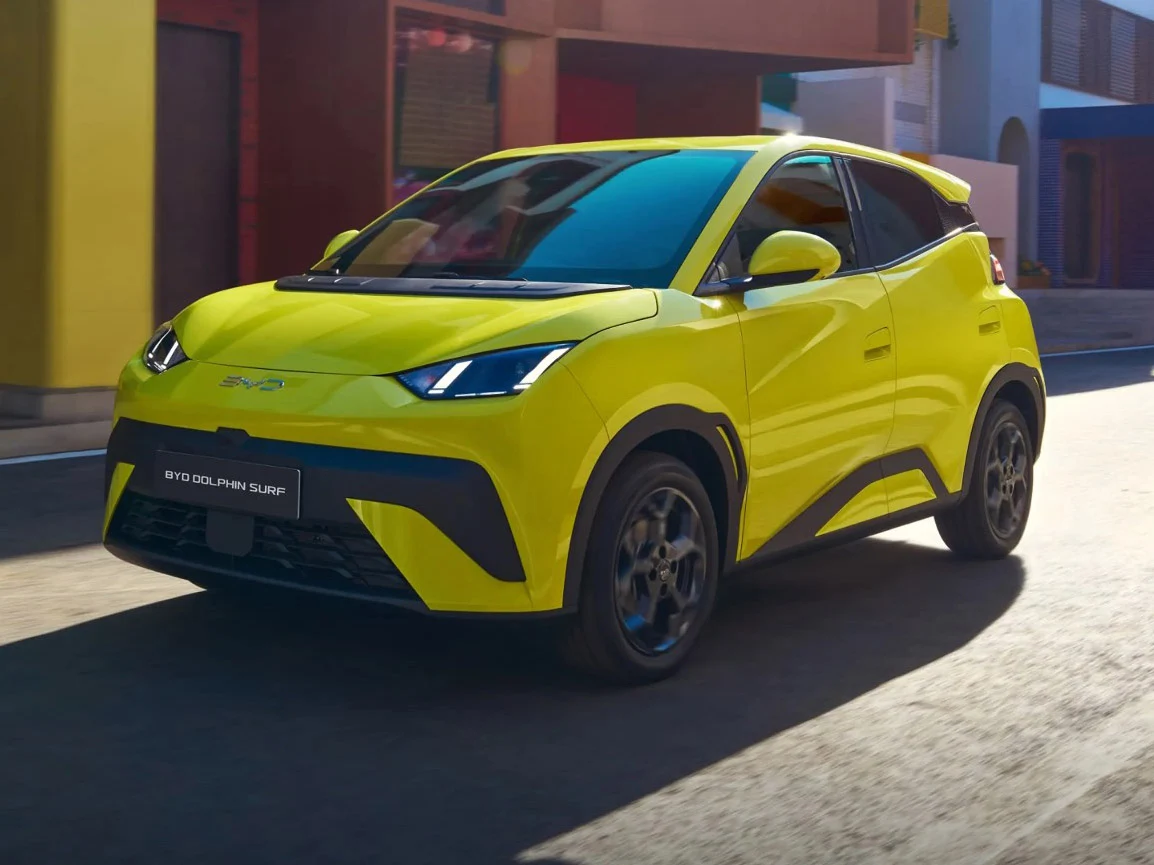
    2. BYD plans to begin local production of its budget-friendly Dolphin Surf EV in Europe, potentially lowering costs by avoiding high tariffs.

    3. The starting price of the BYD Dolphin Surf could compete with Tesla’s canceled Model 2, making it a strong contender in the affordable EV market.

    4. The EC aims to develop an economical city EV, with support from local automotive leaders, focusing on European manufacturing and supply chains.

    5. The success of the Small Affordable Cars initiative will depend on establishing a local supply chain for essential components like LFP batteries, currently sourced from China.


    The European Commission aims to create a true rival to the Tesla Model 2 in response to the flood of low-cost Chinese electric vehicles (EVs) entering its shared market.

    BYD, the largest EV manufacturer globally, has confirmed that it is on track to begin production of its most budget-friendly vehicle in Europe later this year. Up until now, the company has been importing the BYD Seagull, marketed as the Dolphin Surf in Europe. However, because of high tariffs, local manufacturing could significantly reduce costs.

    Competitive Pricing

    The starting price for the BYD Dolphin Surf is comparable to what Tesla intended to set for its canceled Model 2 project after federal incentives, which is under $25,000. If BYD can avoid tariffs by manufacturing locally and lowers the price of the Dolphin Surf even further, it could be a strong competitor against whatever the EU’s new Small Affordable Cars initiative aims to introduce.

    EC President Ursula von der Leyen highlighted in her State of the European Union speech that the Commission will collaborate with the local automotive sector to develop an economical city EV that does not rely on the Chinese supply chain.

    Industry Support

    This aligns with requests from the CEOs of Stellantis and Renault earlier this year. They suggested that the European Commission ease certain automotive regulations to facilitate the creation of a profitable small urban car priced around €15,000. This is likely the goal of the new Small Affordable Cars initiative, based on von der Leyen’s speech:

    “I think Europe should have its own E-car. E for environmental – clean, efficient, and lightweight. E for economical – affordable for consumers. E for European – made here in Europe with European supply chains. We cannot allow China and others to take over this market.”

    It is still uncertain what safety and other regulations Europe might compromise on to create an electric car accessible to the general public. The bigger challenge, though, will be establishing a localized supply chain, particularly given that most LFP batteries are sourced from China. These batteries are used in everything from vehicles and energy storage solutions to widely-used mobile battery packs like the 25,000 mAh Anker Laptop Power Bank.

    Future Developments

    CATL is currently constructing a battery manufacturing plant in Europe, aiming to produce LFP packs tailored for the local market that provide either extended range or rapid charging. However, it remains to be seen if the Small Affordable Cars initiative will regard these batteries as part of a genuine European supply chain.

    Source:
    Link


  • Mercedes-Benz C-Class EV Launching in 2026, AMG in 2027

    Mercedes-Benz C-Class EV Launching in 2026, AMG in 2027

    Key Takeaways

    1. Mercedes-Benz is launching a fully electric C-Class with a range of 500 miles on a single charge.
    2. The C-Class EQ features the unique ‘Iconic Grille’ design and is built on the advanced MB.EA platform for improved efficiency and faster charging.
    3. Enhanced driving experience with a longer wheelbase, wider tracks, and increased passenger comfort, including more rear legroom and larger trunk space.
    4. Available in two versions: a single-motor model with 335 bhp and a dual-motor all-wheel-drive variant with 482 bhp, both using a 94.5 kWh battery.
    5. An AMG performance version is in development, expected to launch in 2027, with over 680 bhp using advanced axial flux motors.


    Mercedes-Benz is preparing to launch a fully electric C-Class that can go 500 miles on one charge. This luxurious sedan boasts ultra-fast 400 kW charging capabilities, a sleek interior filled with modern technology, and is geared to compete directly with BMW’s i3 electric sedan.

    Unique Design Features

    Mercedes first introduced the special ‘Iconic Grille’ design on the GLC EQ. This design feature sets electric vehicles apart from those with traditional combustion engines, and each new electric model showcases its unique version of this grille. The C-Class EQ, which is the second electric model sporting this grille, was initially unveiled at the Munich Motor Show. It is constructed on the advanced MB.EA platform, much like the GLC EQ. The 800V system allows for faster charging and boosts overall efficiency.

    Enhanced Driving Experience

    When compared to its petrol counterpart, the C-Class EQ has a longer wheelbase and wider tracks, which results in more spacious cabin, sharper handling, and better stability while driving. A major improvement is in passenger comfort, tackling a frequent complaint: the previous lack of rear legroom and headroom in the EQ. Additionally, the trunk is larger, and there is added storage space in the front.

    Performance Options Available

    The car will be available in two versions: a single-motor rear-wheel-drive model with a maximum of 335 bhp, and a dual-motor 4Matic all-wheel-drive variant that can deliver up to 482 bhp. Both versions feature a 94.5 kWh NMC battery and offer a driving range of about 497 miles (800 km).

    The German car manufacturer is also working on an AMG performance version, expected to launch in 2027. This variant will be powered by axial flux motors developed by the UK company Yasa, and it is anticipated to produce over 680 bhp.

    Source:
    Link


  • Mercedes EQ 46 Round Cell: LG’s 107 GWh Deal for S-Class EQ 2028

    Mercedes EQ 46 Round Cell: LG’s 107 GWh Deal for S-Class EQ 2028

    Key Takeaways

    1. Mercedes-Benz and LG Energy Solution have signed a significant battery supply agreement valued at 107 GWh, with 32 GWh for Europe and 75 GWh for the US.

    2. The batteries will be cylindrical cells from the “46 series,” with production starting at a new plant in Arizona in 2026.

    3. This new agreement adds to a previous contract for 50.5 GWh, bringing the total to over 150 GWh, indicating the direction of future Mercedes electric vehicle models.

    4. The choice of the 46 round cell aligns with the MB.EA-L platform, which is designed for module-less battery integration.

    5. The deal highlights Mercedes-Benz’s commitment to high technology and quality, outpacing competitors like CATL and Farasis, and is estimated to be worth around $10.8 billion.


    According to Electrive, Mercedes-Benz has come together with LG Energy Solution to form a significant battery supply agreement, which is valued at 107 GWh in total. Out of this, 32 GWh is designated for Europe, with delivery scheduled from August 2028 to December 2035, and 75 GWh is allocated for the US between July 2029 and December 2037.

    Battery Specifications

    The batteries involved are cylindrical cells from the “46 series,” measuring about 46 millimeters in diameter. Electrive reports that this is “the largest single order to date for LG Energy for its cylindrical cells from the 46 series.” Production of these battery cells is set to increase at a new plant in Arizona, along with additional sites, starting in 2026.

    Previous Agreements

    Previously, a supply contract for 50.5 GWh was also established with LGES in October 2024, likely for the same type of cells, beginning in 2028. In total, the contracts will sum up to over 150 GWh of cylindrical battery cells, which hints at the direction that future Mercedes electric vehicle models will take.

    Strategic Decisions

    Electrive suggests that the choice of the 46 round cell may be tied to the upcoming MB.EA-L platform, which lacks a modular battery level (“module-less battery”) making it a good fit for incorporating round cells.

    In the contest for this contract, LGES outperformed well-known Chinese competitors like CATL and Farasis, showcasing Mercedes’ commitment to high technology and quality standards. The deal’s importance is further underscored by its estimated worth, with totals reaching around 15 trillion won, which is about $10.8 billion.

    Future Implications

    With the agreement with LG, Mercedes-Benz is establishing a vital base for its future S-Class EQ and other large electric vehicle models that will utilize the MB.EA-L platform. The emphasis on the 46 round cell and the early acquisition of extensive battery volumes will aid in long-term production and delivery strategies.

    Source:
    Link


  • 2026 Volkswagen ID.4 Facelift: Next-Gen Redesign Revealed

    2026 Volkswagen ID.4 Facelift: Next-Gen Redesign Revealed

    Key Takeaways

    1. Volkswagen will significantly redesign the ID.4 in 2026, making it feel like a new vehicle.
    2. The redesign aims to unify the ID family’s appearance and functionality, aligning it with the ID.1 and ID.2 models.
    3. CEO Thomas Schäfer emphasized that the ID.4 will be completely overhauled, marking a major leap forward.
    4. While traditional model names will be kept for brand recognition, “Electric Tiguan” is a potential name for the revamped ID.4.
    5. The 2026 ID.4 will undergo a fundamental redefinition, unlike previous minor updates; details on technical features and launch timeline are still uncertain.


    Volkswagen is set to make significant changes to the ID.4 in 2026. As reported by Autocar, this redesign will be so extensive that it will be akin to introducing an entirely new vehicle. This move is part of a broader strategy to unify the ID family both in terms of appearance and functionality, aligning it more closely with the new ID.1 and ID.2 models to enhance the visual consistency across the ID lineup.

    Major Changes Ahead

    Thomas Schäfer, the CEO of Volkswagen Passenger Cars, stated: “We’re going to completely overhaul the ID.4 inside and out. It will be a wholly different vehicle – a major leap forward.” The company plans to keep traditional model names to maintain brand recognition. One possible name floated for the revamped ID.4 is “Electric Tiguan,” although this has yet to be officially confirmed.

    Comparison with Previous Models

    Historically, Volkswagen has indicated that the ID.4 has only undergone minor updates until now, which included software enhancements, minor tweaks to the interior, and improvements to the infotainment system, without any dramatic redesigns.

    The upcoming facelift for the 2026 ID.4 signifies an important shift: it’s not merely getting a refresh; it will be fundamentally redefined. It remains uncertain if the name will stay as it is or transition to “Electric Tiguan,” as well as what the specific technical features and launch timeline will entail in detail.

    Source:
    Link


  • Aito 9 Launches as Luxury Electric Vehicle for Global Market

    Aito 9 Launches as Luxury Electric Vehicle for Global Market

    Key Takeaways

    1. Aito is a partnership between Seres (a Chinese car manufacturer) and Huawei, surpassing Xiaomi in global EV launches.
    2. The initial Aito models are designed specifically for the Middle Eastern market, focusing on a “new luxury” smart mobility experience.
    3. The Aito 9 features a dual-motor AWD SUV option, with both EREV and BEV configurations, offering up to 523 horsepower.
    4. The Aito 5 offers both BEV and EREV options, producing up to 268hp with an 83kWh CATL battery and impressive AWD capabilities.
    5. The Aito 7, positioned between the Aito 5 and 9, utilizes the same power system as the Aito 5 and produces up to 449hp, with plans for diverse energy options in future markets.


    Aito began as a brand through a partnership between the Chinese state-owned car manufacturer Seres and the well-known tech company Huawei. It has now outpaced Xiaomi in launching its electric vehicles (EVs) globally.

    Global Launch and Ambitions

    Leon He, the president of Seres Auto, has claimed that they are set to offer “an unmatched ‘new luxury’ smart mobility experience to consumers around the globe.” However, the initial three global models are specifically tailored for the Middle Eastern market.

    Specifications of the Aito Models

    Among these models is the Aito 9, which is designed for markets like China and the Philippines, serving as the high-end version of the M9 extended-range EV (EREV). This model is available as a dual-motor all-wheel-drive (AWD) SUV that can seat 5 to 6 people. It features a ternary NMC battery with a capacity of up to 52 kilowatt-hours (kWh) alongside a 1.5-liter internal combustion engine.

    In addition, there’s a battery-powered electric vehicle (BEV) option for the Aito 9, which also utilizes dual motors and delivers up to 390kW (about 523 horsepower). In contrast, its EREV variant produces 365kW (approximately 489hp).

    The Aito 5 and 7 Models

    The Aito 5 is likened to the existing M5—a smaller SUV that offers both BEV and EREV alternatives. It can produce up to 200kW (around 268hp) using an 83kWh CATL battery that utilizes LFP technology. Meanwhile, in its AWD 1.5l/42kWh NMC setup, it can reach up to 365kW (about 489hp).

    The M9 also features impressive technology, including a 12.3-inch LCD instrument panel and a 16-inch monitor for passengers, along with a 15.6-inch central console display shared with the M5.

    Future Prospects

    The Aito 7, previously known as the M7, is positioned between the Aito 5 and 9. It uses the same 1.5l/42kWh NMC power system, producing up to 330kW (approximately 449hp) and includes the main and instrument screens, though it lacks the passenger display.

    Aito has stated that the international versions of these vehicles will offer a similarly “diverse range” of energy options upon their entrance into new markets. The Aito 9, 7, and 5 are currently available for preview at the IAA Mobility 2025 event until September 12, 2025.

    Source:
    Link


  • France Increases EV Incentives: Up to €5,200 for European Battery Cars

    France Increases EV Incentives: Up to €5,200 for European Battery Cars

    Key Takeaways

    1. France will offer an additional €1,000 subsidy for electric vehicles (EVs) made in Europe with European-manufactured batteries, starting October 1, 2025.
    2. Current subsidies for EV purchases range from €2,000 to €4,200, depending on income and environmental scores, with plans to raise support to €5,200 with the new bonus.
    3. The initiative aims to increase EV accessibility, support European automotive and battery industries, reduce emissions, and decrease reliance on international supply chains.
    4. Few EVs currently have batteries produced in Europe, but France is building new factories and Germany and Hungary are expanding battery production.
    5. The government is reinstating its EV leasing program for low-income families, with a budget of €370 million to support at least 50,000 vehicles, starting applications on September 30, 2025.


    France is set to provide an extra €1,000 subsidy for purchasers of electric vehicles (EVs) that are made in Europe and equipped with batteries manufactured within the continent, starting October 1, 2025. This is in addition to the current environmental bonus (Bonus Écologique), which assists families in buying EVs.

    Current Subsidy Details

    At present, French consumers can obtain as much as €4,200 based on their income levels, as long as the vehicle achieves a certain environmental score related to the CO₂ emissions from its production and battery creation. Since the subsidy was launched in February 2024, the financial aid has varied from €2,000 to €4,000. The government raised this amount in July 2025 to a range of €3,100 to €4,200, likely to address the decline in EV sales. Nonetheless, there was a 4.3% drop in registrations from January to July 2025.

    Maximum Support Increase

    With the introduction of this new bonus, the total possible support climbs to €5,200 for eligible vehicles. This initiative aims not only to make EVs more accessible but is also anticipated to bolster Europe’s automotive and battery sectors, lower emissions, and strategically lessen dependency on international supply chains.

    Currently, however, there are only a limited number of EVs that feature batteries produced in Europe. France is working on establishing new factories, especially in the northern region, while Germany (VW in Salzgitter) and Hungary are also increasing their battery production capacities. A list of qualifying models will be regularly updated by ADEME, France’s Environment and Energy Management Agency.

    Reviving the Leasing Program

    In addition to these bonuses, the government is also bringing back its EV leasing initiative for low-income families, which had been suspended since February 2024. Supported by a budget of €370 million, this program will aid at least 50,000 electric vehicles. The application process will commence on September 30, 2025.

    Source:
    Link


  • Tesla Launches MultiPass for Easy Charging at Non-Tesla Stations

    Tesla Launches MultiPass for Easy Charging at Non-Tesla Stations

    Key Takeaways

    1. Introduction of MultiPass: Tesla is launching a new feature called MultiPass to simplify charging at non-Tesla stations.
    2. Single App Management: Drivers can manage charging through the Tesla app or their Tesla key card, eliminating the need for multiple apps or accounts.
    3. Initial Rollout: The feature will first be available in the Netherlands, with plans to expand to other countries soon.
    4. Convenient Charging Process: Users can find chargers and start charging sessions easily via the app, along with tracking their charging history.
    5. Automatic Payments: Charging fees at third-party stations will be automatically charged to the default payment method in the Tesla app.


    Tesla is rolling out a neat new feature called the MultiPass, which makes it easier for folks to charge their Tesla cars at non-Tesla charging stations using their Tesla account. Now, instead of juggling multiple apps, cards, or accounts for each station, everything can be handled right from the Tesla app or with the driver’s current Tesla key card.

    Quick Announcement

    This exciting update was revealed in a brief 17-second video shared by the TeslaCharging account on X. Initially, it will be rolled out in the Netherlands, with intentions to branch out to other countries in the near future.

    Easy Charging Process

    To kick things off, drivers can look for available chargers within the Tesla app, and then they can start a charging session either through the app or by using their Tesla key card. Plus, they can keep an eye on their charging history all in one place.

    Simplified Experience

    This new integration takes away the trouble of dealing with multiple accounts, payment info, or having to wait for physical charging cards to be delivered by mail.

    Charging fees at third-party stations will still vary based on the specific provider’s pricing. However, the payments will be automatically taken from the default payment method set up in the Tesla app.

    Source:
    Link


  • Mercedes GLC Outshines BMW iX3 and Model Y with Modular Battery

    Mercedes GLC Outshines BMW iX3 and Model Y with Modular Battery

    Key Takeaways

    1. The 2027 Mercedes GLC will feature a certified vegan interior and the largest 39.1-inch Hyperscreen in a Mercedes vehicle.
    2. It utilizes a modular battery system, allowing for easier servicing and potential cell replacement, enhancing long-term value.
    3. The GLC’s 94 kWh battery offers over 300 miles of EPA estimated range and is designed for quick diagnostics and access.
    4. Mercedes aims to address concerns over costly battery replacements by opting for a modular design rather than sealed cell-to-pack structures.
    5. The GLC’s approach may be more suitable for luxury EVs, contrasting with low-cost, difficult-to-service battery technologies in mainstream models.


    The upcoming 2027 Mercedes GLC, set to hit the US market in the latter half of 2026, introduces several groundbreaking features for its luxury electric SUV segment.

    This model stands out as the first to include a certified vegan interior and boasts the largest 39.1-inch Hyperscreen ever installed in a Mercedes vehicle. Additionally, it incorporates a modular battery system that allows for easy servicing and repairs, which is a significant advantage.

    Innovative Battery Design

    Recent developments in electric vehicle battery technology have leaned towards a sealed cell-to-pack (CTP) format, also known as structural batteries, where the cells are part of the chassis. This design tends to lower costs since the EV chassis acts as a protective cover for the battery, while adhesive fills the gaps between cells, making repairs difficult. A teardown of the Model Y’s 4680 battery exemplifies this issue.

    While structural battery packs are cheaper for manufacturers to produce, they can be very expensive to replace or service if individual cells fail. In light of new European regulations promoting swappable batteries, as well as an internal commitment to sustainability, Mercedes has chosen to utilize the modular battery system first seen in the GLA. This decision gives the GLC a competitive edge over rivals like the upcoming BMW iX3 and Tesla’s Model Y.

    Battery Features and Advantages

    The GLC will feature a 94 kWh battery capable of providing over 300 miles of EPA estimated range, housed in a dedicated compartment with screws for easy access instead of adhesive. This setup allows future owners to potentially swap out individual cells or modules once the warranty period ends, which is far more cost-effective than replacing the entire battery. Such an approach helps maintain the vehicle’s value longer than typical for used electric vehicles.

    In addition, the battery electronics are located in a separate, easily accessible module beneath the vehicle, allowing for quick diagnostics to identify faulty modules without needing to dismantle the entire pack. This is crucial for the long-term viability of electric vehicles, as emphasized in the GLC press release.

    The Industry Landscape

    Mercedes’ engineers highlight a significant concern raised by CATL, the world’s largest EV battery manufacturer, regarding the rise of electric vehicles with low-cost but challenging-to-service CTP battery technology. CATL argues that this design can make battery replacements so costly that the remaining vehicle value is insufficient to justify a new battery, rendering replacements nearly irrelevant.

    To combat this, CATL is collaborating with a subsidiary to provide affordable repairs that only involve replacing failed cells, at just 10% of the cost of a full battery replacement. This initiative aims to foster a sustainable second-hand EV market. However, solutions like the GLC’s modular battery architecture may be better suited for luxury electric vehicles, which tend to have a higher initial price and are less disposable than mainstream EVs equipped with sealed CTP batteries.

    Source:
    Mercedes GLC Outshines BMW iX3 and Model Y with Modular Battery


  • Tesla Giga Berlin Starts Full Automation with FSD Technology

    Tesla Giga Berlin Starts Full Automation with FSD Technology

    Key Takeaways

    1. Tesla has reduced the need for human workers at its German factory with autonomous vehicle navigation.
    2. New Teslas autonomously move from production lines to outbound lots after quality checks.
    3. Vehicles pause at an on-site Supercharger station for a quick charge before heading to parking.
    4. The Cybertruck was spotted on-site but is marked as a support vehicle, limiting its public road usage.
    5. Tesla is using Full Self-Driving (FSD) technology to improve operational efficiency in their factories.


    Tesla has cut down on the need for human workers at its German factory, as vehicles now autonomously move off the production lines and head to the outbound lots by themselves. The company has shared videos showcasing this new self-driving capability at Giga Berlin.

    Autonomous Navigation Process

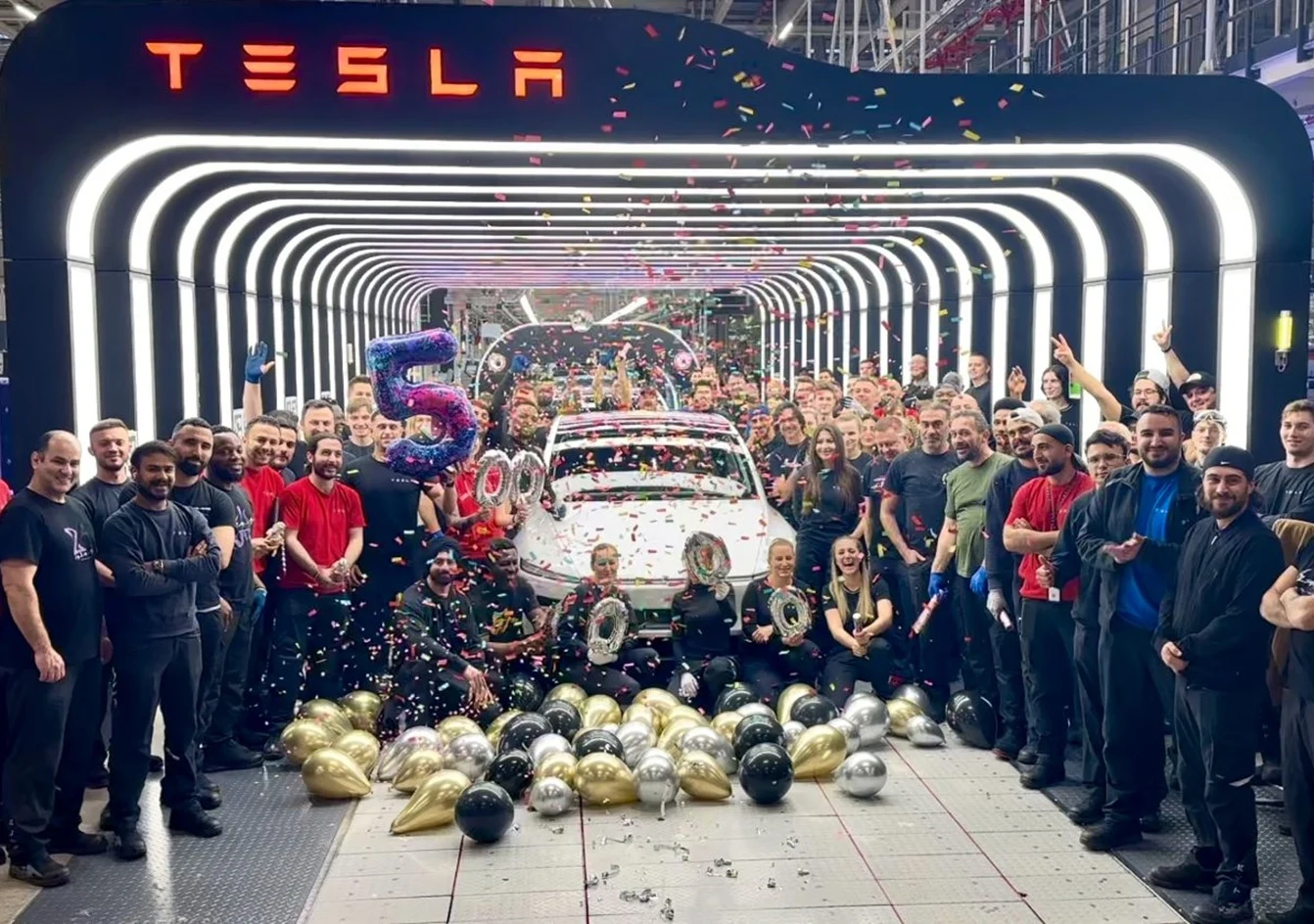
    The shared post details how the new Teslas leave the Light Tunnel after passing their final quality checks. They pause at an on-site Supercharger station where staff connect them for a quick charge before continuing on to the parking area.

    Cybertruck Sightings

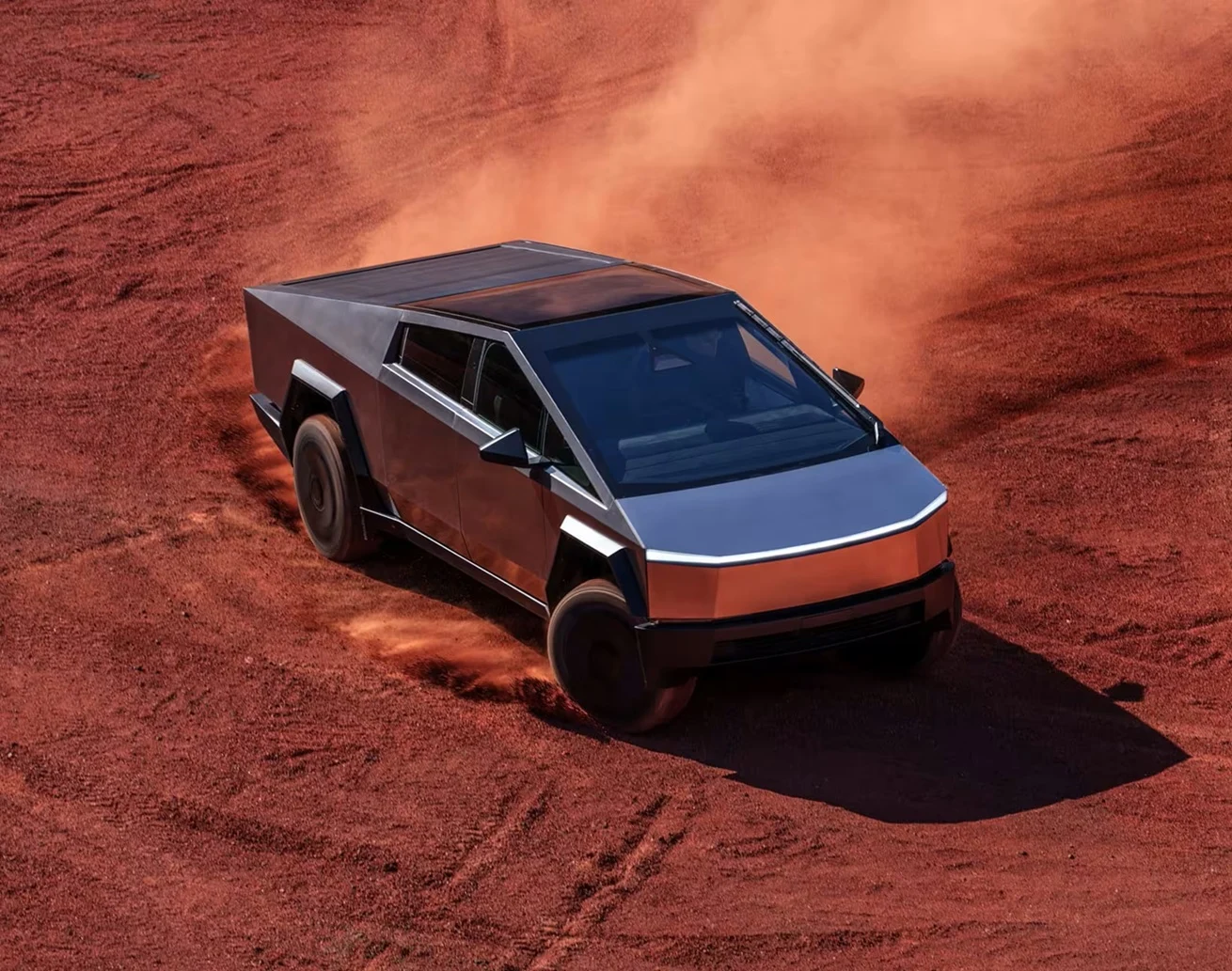
    The video also features a glimpse of the Cybertruck on the grounds. This electric pickup truck was seen near the Tesla that was recording the navigation footage. However, the Cybertruck is labeled as a support vehicle, which means it is not allowed on public roads, thus dimming any excitement for a potential launch in Europe.

    Tesla has been leveraging its Full Self-Driving (FSD) technology to boost efficiency in its operations across North America. In May, the electric vehicle manufacturer released a clip showing Model Ys driving themselves out of the factory and into the parking lot at Giga Texas. This video was part of Lara Trump’s My View segment on Fox News, where the president’s daughter-in-law could be heard complimenting Elon Musk for the achievement.

    Source:
    Link