Category: Computers

  • Asus Launches Cheaper 16-Inch Laptop with OLED Display

    Asus Launches Cheaper 16-Inch Laptop with OLED Display

    Key Takeaway

    – Snapdragon X X1-26-100 Zenbook A16 models now available in Europe at €1,399 (16GB/512GB) and €1,499 (16GB/1TB).
    – This represents a 33% price reduction (€700) compared to the Snapdragon X2 Elite Extreme variant.
    – Downgrades include Wi-Fi 6E, a 1200p 60Hz OLED display (300 nits), but a 100g weight reduction to 1.1 kg.
    – Snapdragon X Plus X1P-42-100 versions are planned for later in 2026.
    – Global release date is still unknown; current availability is limited to Europe.


    New Zenbook A16 Versions Arrive Quietly

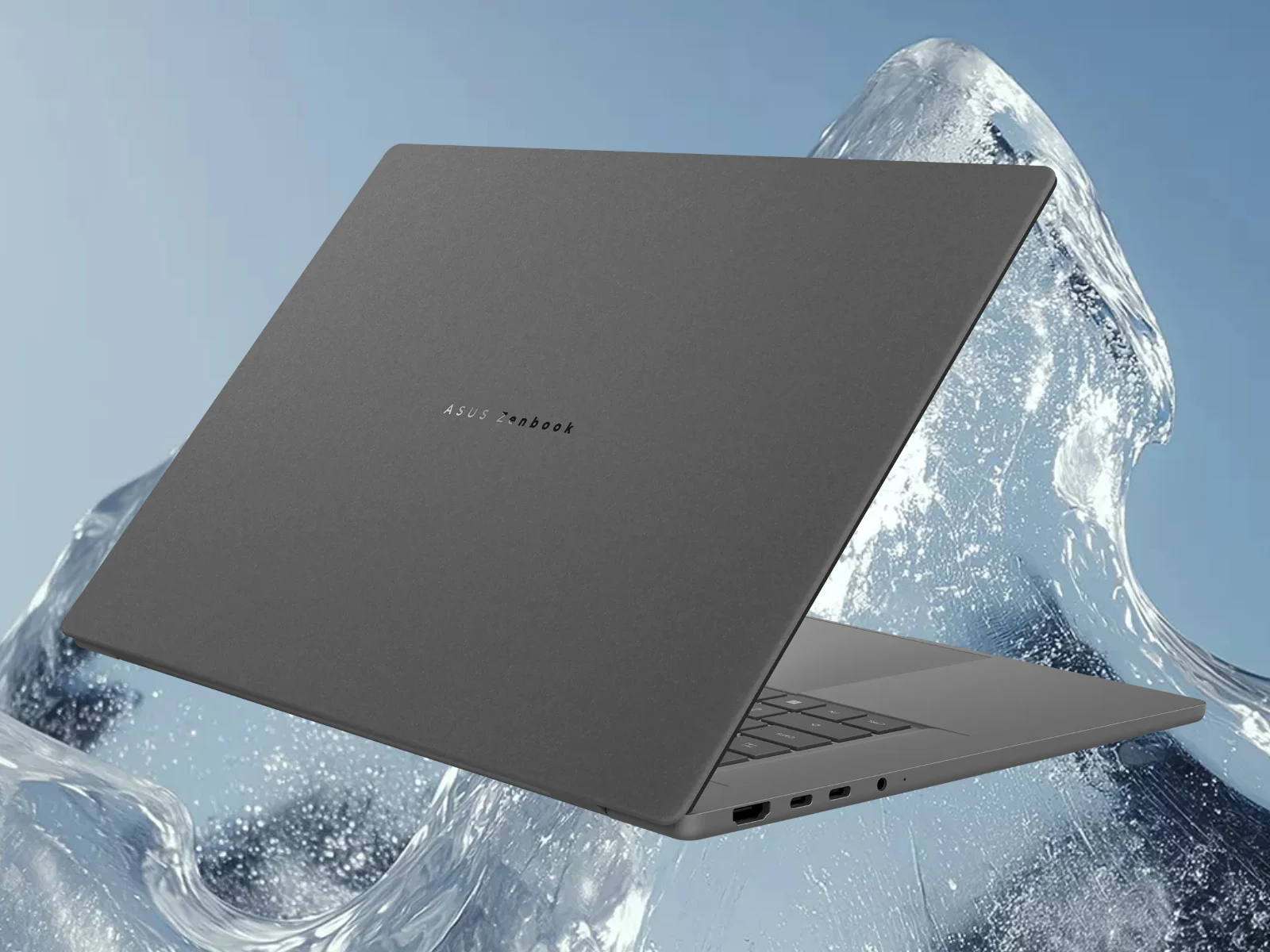
    Asus has brought plenty of devices to Computex 2026 in Taipei this week. For instance, it unveiled four Zenbook 14 laptops with OLED displays and Ceraluminum covers alone. At the same time, the company have quietly started selling cheaper versions of the Zenbook A16 too.

    European Pricing and Configuration Details

    For the time being, we can only find cheaper versions of the Zenbook A16 in Europe. Specifically, Amazon Italy and Asus Italy are charging €1,399 (~$1,335) for Asus’ 16-inch laptop with a Snapdragon X X1-26-100 chipset, 16 GB of RAM and 512 GB of storage. In short, this is a €700 and 33% reduction on what the Snapdragon X2 Elite Extreme X2E-94-100 variant sells for in Italy.

    Alternatively, the Snapdragon X X1-26-100 and 16 GB of RAM can be paired with 1 TB of storage for €1,499 (~$1,429). Asus’ global website indicates that Snapdragon X Plus X1P-42-100 versions will be joining Snapdragon X X1-26-100 siblings later in 2026, too.

    Downgrades and Specifications Compared

    Currently, the date for a full global release remains unknown. However, Asus’ Italian website adds that this cheaper model will come with downgrades like Wi-Fi 6E connectivity and a 1200p OLED display with 300 nits peak brightness and a 60 Hz refresh rate. The new model also weighs 1.1 kg for a 100 g reduction on its Snapdragon X2 Elite Extreme-backed sibling.

    Context and Previous Model Info

    For context, Asus released the Zenbook A16 globally in April featuring the Snapdragon X2 Elite Extreme X2E-94-100 chipset. Not only have we reviewed Asus’ lightweight 16-inch laptop, but we have also reviewed the latest version of its 14-inch sibling (curr. $1,229 on Amazon). Please see our video below for our thoughts on the existing Zenbook A16, too.

    • Snapdragon X X1-26-100, 16 GB RAM, 512 GB storage: €1,399 (~$1,335)
    • Snapdragon X X1-26-100, 16 GB RAM, 1 TB storage: €1,499 (~$1,429)
    • Wi-Fi 6E, 1200p OLED, 300 nits, 60 Hz
    • Weight: 1.1 kg (100 g lighter)
    • Snapdragon X Plus X1P-42-100 models coming later in 2026

  • Microsoft unveils Mac Studio rival with Nvidia RTX and 128GB RAM

    Microsoft unveils Mac Studio rival with Nvidia RTX and 128GB RAM

    Key Takeaway

    – Microsoft’s Surface RTX Spark Dev Box is a new Mac Studio rival using Nvidia’s RTX Spark chipset.
    – The Dev Box pushes a 20-core ARM CPU and 6,144 Blackwell CUDA cores to 100W.
    – It includes 128 GB of unified memory in an aluminum body.
    – Multiple ports are featured in this mini-PC design.
    – Availability is set for 2026 via Microsoft’s online store; pricing is unannounced.


    Microsoft Doubles Down on Nvidias New Chip

    Yesterday, Microsoft joined multiple manufacturers in embracing Nvidia’s nascent RTX Spark chipset. As we discussed separately, the Surface Laptop Ultra combines the RTX Spark with a 2,000-nit Mini LED display in a design that is already being compared with the MacBook Pro 16 we reviewed earlier this year (curr. $2,529 on Amazon). This new chip is clearly making waves.

    A New Mac Studio Rival Emerges

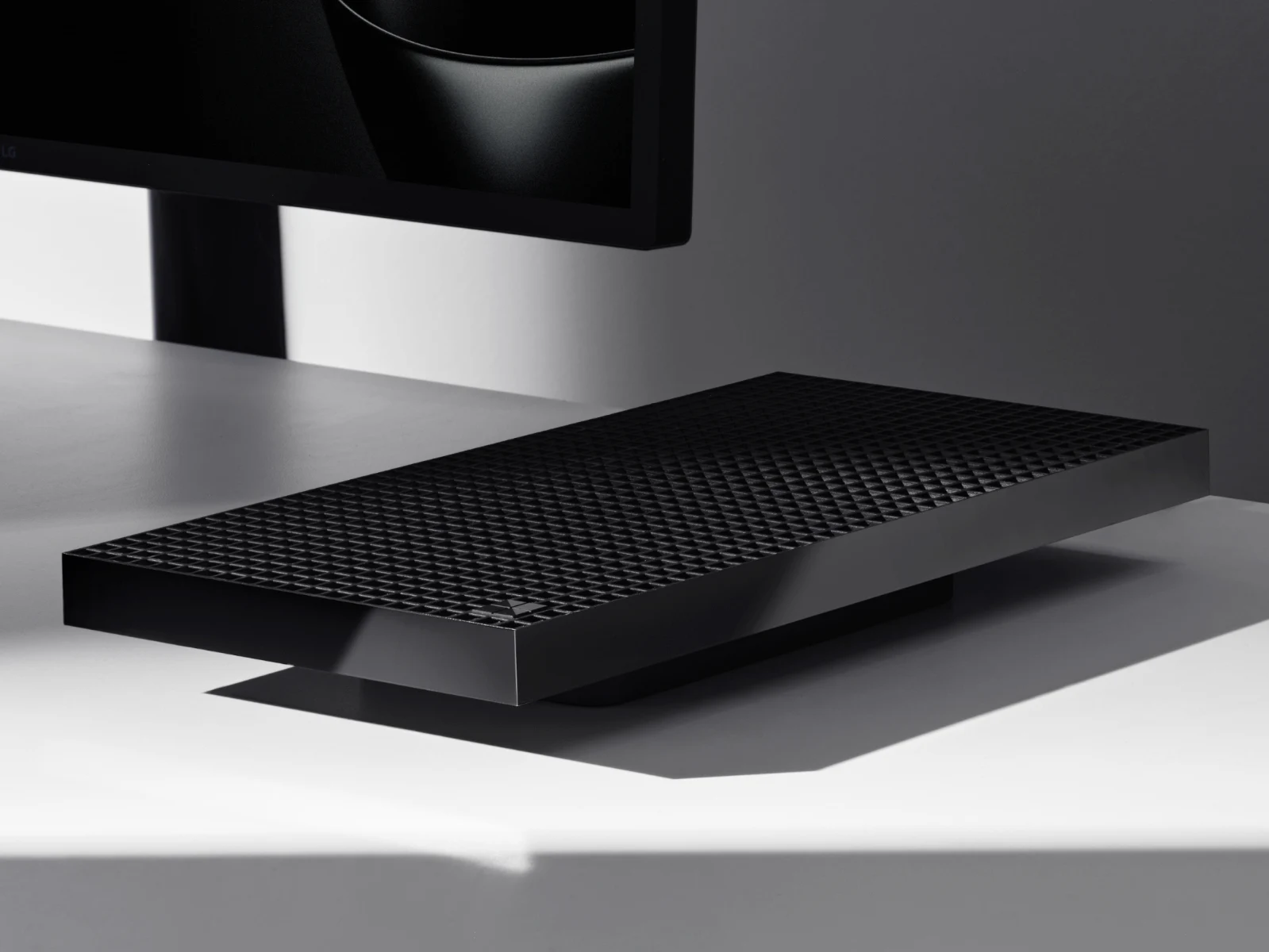
    However, Microsoft is not done with Nvidia’s RTX Spark chipset just yet. Instead, it has now presented the Surface RTX Spark Dev Box during its Microsoft Build 2026 opening keynote as a new Mac Studio rival. While the Dev Box utilises the same RTX Spark chipset as the Surface Laptop Ultra, the former can push the latter’s 20 ARM CPU and 6,144 Blackwell CUDA cores to 100 W. Also, Microsoft has included the following ports within its new mini-PC:

    • Something like Thunderbolt 5 for data
    • Dual 10Gb Ethernet for networking
    • Multiple USB-C ports for peripherials

    Specs and Availability

    Moreover, Microsoft plans to offer the Surface RTX Spark Dev Box with 128 GB of unified memory encased in an aluminium body. The Surface RTX Spark Dev Box should be available in 2026 through Microsoft’s online store. Pricing remains unknown for now, though. Incidentally, Microsoft has been here before with the short-lived Windows Dev Kit 2023. One can sign up to receive more information about the Surface RTX Spark Dev Box via Microsoft’s dedicated microsite.


    Sources

  • Anker 8-in-1 Nano USB-C Hub: Dual 4K Display Support

    Anker 8-in-1 Nano USB-C Hub: Dual 4K Display Support

    Key Takeaway

    – Released in US/UK with an integrated USB-C cable and 85W pass-through charging
    – Supports dual 4K@60Hz displays on Windows via DP 1.4 and DSC (mirror only on macOS)
    – Offers two USB-A and one USB-C port at 10 Gbps, plus SD/TF 3.0 card slots
    – Replaces the Ethernet port of the older Anker 553 with a USB-C data transfer port
    – Priced at $35.99 (US) / £34.99 (UK) on Amazon and Anker Store


    New Hub From Anker Hits Shelves

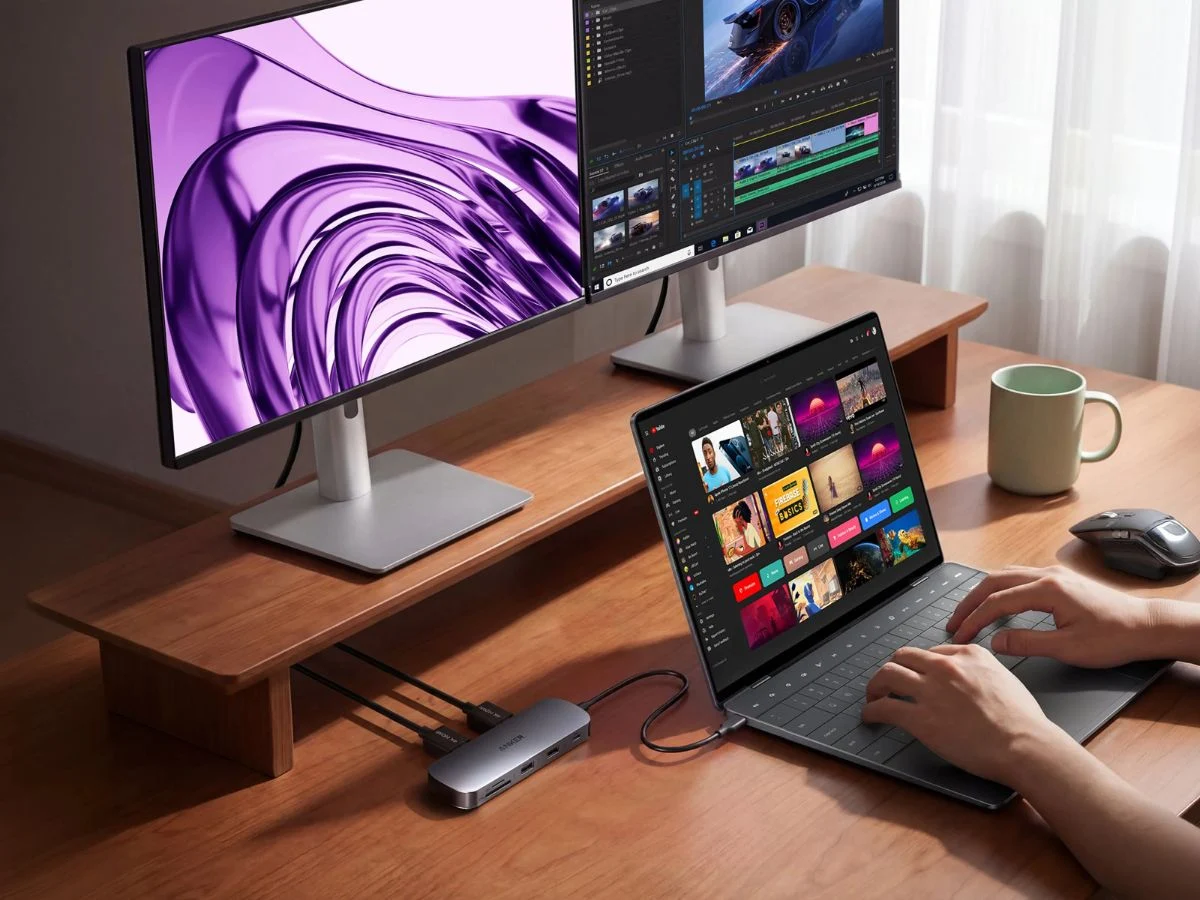
    The Anker Nano USB-C Hub (8-in-1, Dual Display) have been released in the US and the UK. This new desktop accessory was spotted in May 2026 and appears to be an alternative to the older Anker 553 USB-C Hub (8-in-1). It plugs into your laptop via a built-in cable, providing various ports for users who needs more connectivity options.

    Key Specs and Pricing Details

    Anker’s new Nano USB-C Hub (8-in-1, Dual Display) connects to the host device via an integrated USB-C cable. It supports up to 85W pass-through charging, with the accessory powered via a 100W USB-C PD input. You can use the product to transfer data in various ways. There are two USB-A ports and one USB-C port, each offering a data transfer rate of up to 10 Gbps. Plus, there are SD/TF3.0 card slots supporting 104 MB/s read/write speeds.

    Dual Monitor Support and Upgrades

    • Users of the Anker Nano USB-C Hub (8-in-1, Dual Display) can also connect two monitors via a pair of HDMI ports. With the DP 1.4 display standard and support for DSC 3:1, a Windows device could be connected to two displays with a 4K@60Hz resolution.

    While macOS devices also benefit from a 4K@60Hz resolution on connected monitors, the content will be mirrored across the display. Compared to the Anker 553 USB-C Hub (8-in-1), this support for dual 4K@60Hz displays is an upgrade. Another change is the addition of a USB-C data transfer port, which replaces an Ethernet port.

    Purchase Options and Availibility

    You can now buy the Anker Nano USB-C Hub (8-in-1, Dual Display) at the Anker Store US or Amazon US for $35.99. The product is also available at the brand’s official Amazon storefront in the UK, where it retails for £34.99. It is unclear when this model will be offered in more European countries.

    Sources
  • Nvidia N1X vs Apple M5 Max: Expected Performance Gap

    Nvidia N1X vs Apple M5 Max: Expected Performance Gap

    Key Takeaway

    – Nvidia’s RTX Spark (N1X) is an ARM chip with up to 20 CPU cores and 6,144 CUDA cores, directly competing with Apple M5 Max and laptop CPUs from Intel/AMD/Qualcomm.
    – CPU single-core performance trails the Apple M5 Max by ~30% and Snapdragon X2 Elite by ~20%, but matches current Intel and AMD chips.
    – GPU performance is expected to sit between a GeForce RTX 5070 and 5070 Ti laptop GPU, outperforming Apple M5 Pro/Max in gaming but slightly behind in synthetic/creative tasks.
    – The fastest N1X variant operates at a TDP of 45-80W, enabling use in both mini PCs and future laptops.
    – First laptops with the N1X are expected in fall 2026, and its value depends on pricing relative to laptops with discrete RTX 5070 Ti or RTX 5080 GPUs.


    Nvidias New Chip Takes Aim at Apple and Intel

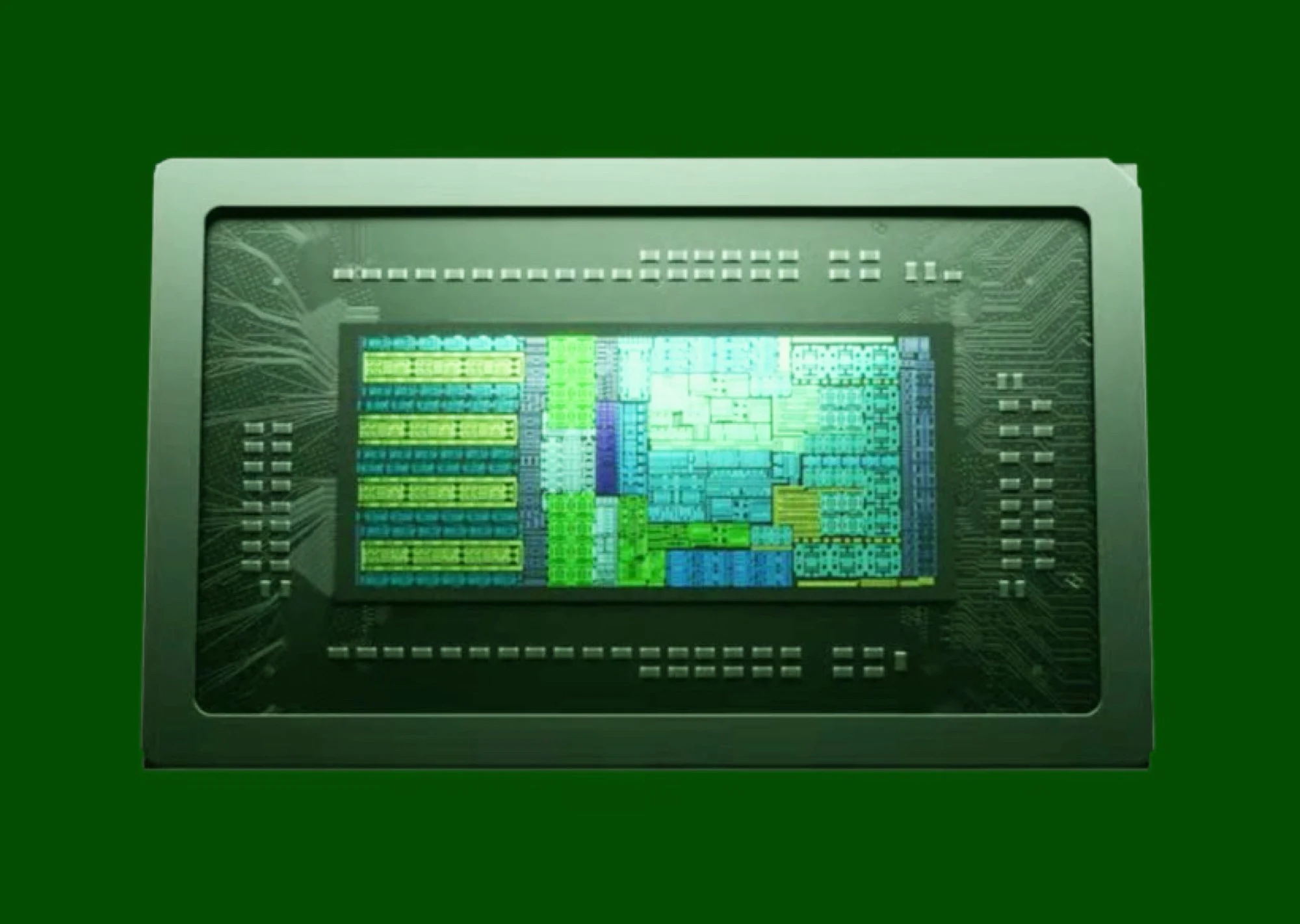
    At Computex, Nvidia presented a “new” chip that is directly competing against the Apple M5 Max and is therefore likely to compete with processors from Intel, AMD and Qualcomm in the laptop and mini PC segment. The Nvidia RTX Spark, also known as the Nvidia N1X, is practically identical on paper to the DGX Spark. This is because the Nvidia N1X also uses an ARM processor with 20 cores, a Blackwell iGPU with 6,144 CUDA compute units and up to 128 GB LPDDR5X memory. One new feature is that the chip will also be installed in laptops in the future. On the other hand, Nvidia is now also offering cheaper variants, including an N1X with 18 CPU cores and 5,120 shaders, as well as an N1 with either 10 or 12 processor cores and 2,048 to 2,560 CUDA cores. The fastest N1X can be operated with a TDP of 45 to 80 watts.

    Performance Expectations and Benchmarks

    While Nvidia has not published any benchmarks, the company is advertising the chip not only for AI applications, but also for gaming and creative professionals. The performance of the chip can already be estimated based on benchmarks of technically comparable products before the first laptops with N1X are expected to be launched on the market in fall 2026. As the comparison of the Nvidia GB10 with the current laptop processors of the competition shows, the single-core performance falls almost 30 percent behind the Apple M5 Max and almost 20 percent behind the Snapdragon X2 Elite, and is roughly on a par with the current chips from Intel and AMD. The multi-threaded benchmark shows a similar picture: the Nvidia N1X is almost a third slower than the Apple M5 Pro and Apple M5 Max, but is almost on a par with the Intel Ultra 9 290HX Plus.

    Graphics Power and Gaming Viability

    The performance of the graphics chip should be between the Nvidia GeForce RTX 5070 laptop GPU and the GeForce RTX 5070 Ti laptop GPU. Although the GPU of the N1X has slightly more compute units than the GeForce RTX 5070 Ti laptop GPU, it is operated with a significantly lower TDP and should therefore achieve lower GPU clocks. As our benchmarks show, the GPU should sit between the Apple M5 Pro and M5 Max in synthetic benchmarks and creative apps, while Nvidia should have the edge in games thanks to better drivers. After all, the Nvidia RTX Spark should far outperform both AMD Ryzen Strix Halo and the Snapdragon X2 Elite in terms of GPU performance.

    Cost and Final Considerations

    However, whether the chip will be worthwhile for gaming enthusiasts depends not least on how expensive it is compared to laptops with GeForce RTX 5070 Ti or RTX 5080 laptop GPUs. This preview only serves as a rough classification, as no laptops or mini PCs with Nvidia RTX Spark are yet available for testing.


    Sources

  • Asus unveils 4 OLED laptops with 25-hour battery life

    Asus unveils 4 OLED laptops with 25-hour battery life

    Key Takeaway

    – Asus refreshed the Vivobook S14 and S16 in January 2026 with AMD Ryzen AI 400, Snapdragon X2, or Intel Panther Lake chips.
    – Four new Vivobook models (S5408, S5608, TP5408, TP5608) now use Qualcomm’s older Snapdragon X (X1P-26-100) processor.
    – All four models are limited to 16 GB of soldered, non-upgradeable LPDDR5X RAM and up to 512 GB of PCIe 4.0 storage.
    – Despite size differences, all models have 50 Wh batteries, with Asus claiming over 25 hours of 1080p video playback at 150 nits.
    – Pricing and availability have not been announced yet.


    New Vivobook Models Announced

    Asus has returned to its Vivobook range with multiple new models. To recap, the company refreshed the Vivobook S14 and Vivobook S16 in January during CES 2026. As we discussed at the time, the company revealed AMD Ryzen AI 400 and Snapdragon X2 versions of the Vivobook S16, but only Intel Panther Lake versions of the Vivobook S14.

    Now, it has announced four new laptops built around Qualcomm’s older Snapdragon X (X1P-26-100) processor. Please note that Asus has informed us that the X1-26-101 mentioned on S14 and S16 product pages was done so in error. The four new Vivobook models are as follows:

    Processor and Display Details

    Confusingly, we have already reviewed the Vivobook S16 (S3607) with the same 8-core processor. The same goes for the Zenbook A14, which Asus has since replaced with Snapdragon X2-based models that we have already reviewed too. Setting that aside, Asus states that the S5408, S5608, TP5408 and TP5608 will be available with OLED displays.

    Unfortunately, all four will be limited to 16 GB of LPDDR5X RAM that is soldered and not user-upgradeable. Also, Asus plans to include up to 512 GB of PCIe 4.0 (M.2 2280) storage. All models will feature 50 Wh batteries too, despite the disparity in size between 14-inch and 16-inch models. Nonetheless, Asus claims over 25 hours of battery life when playing 1080p videos at 150 nits. The company has not confirmed pricing or availability yet, though.


  • Asus Unveils First NUC Mini-PC for Cloud Computing

    Asus Unveils First NUC Mini-PC for Cloud Computing

    Key Takeaway

    – Cheaper alternative to NUC 16 Pro with Intel Wildcat Lake processors
    – First “Cloud PC” device designed for Windows 365, requiring constant online connection
    – Available with Windows 365, Windows 11 Home, or Windows 11 Pro
    – Base model includes 8 GB RAM and 128 GB storage, supports up to 64 GB RAM and 2 TB storage
    – Pricing and availability still unknown


    Asus’s New Mini PC Revealed

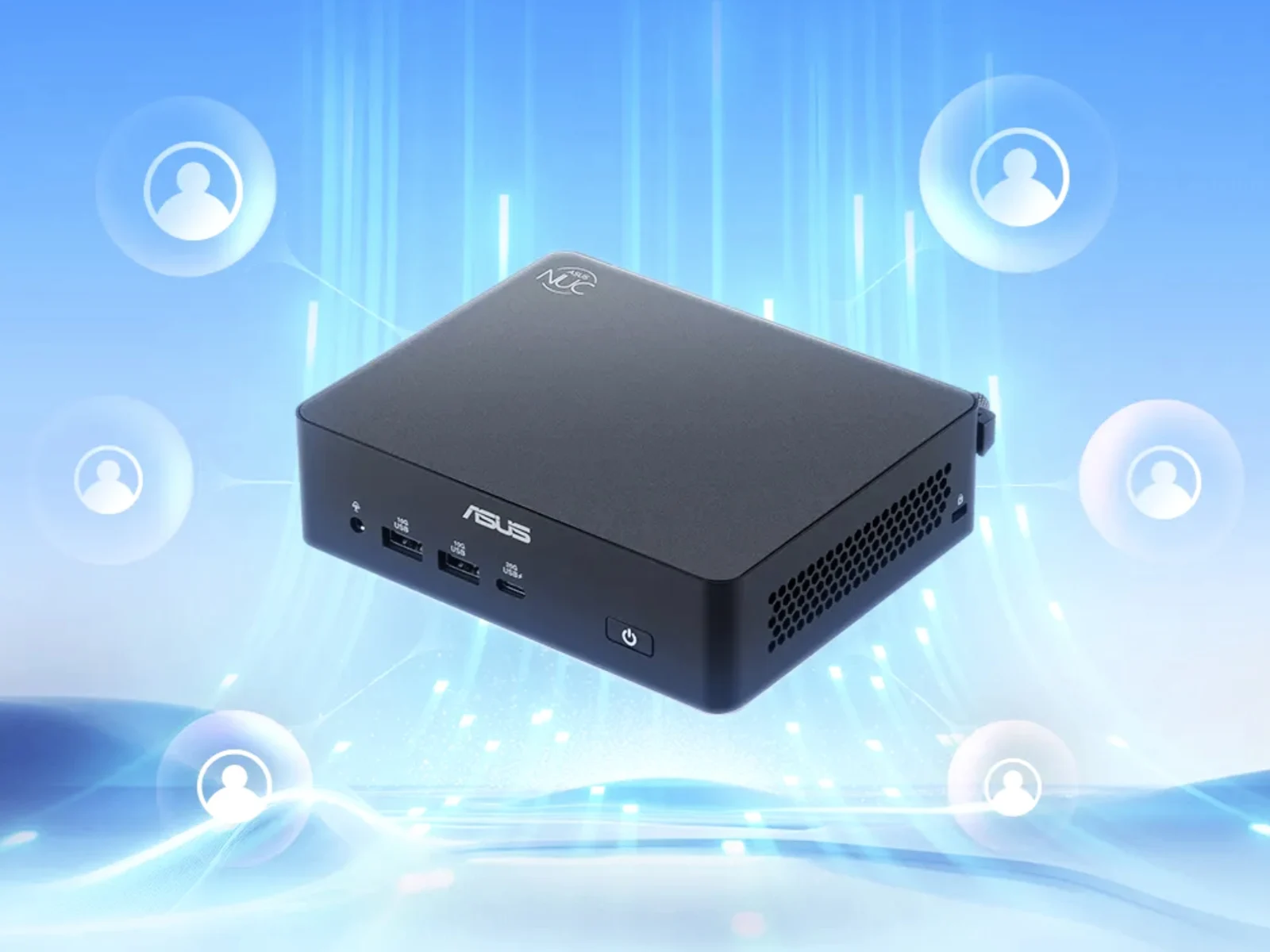
    Asus presented the NUC 16 today at Computex 2026 in Taipei. In short, the NUC 16 is a cheaper alternative to the existing NUC 16 Pro (curr. $599) with Intel Wildcat Lake processors. By contrast, the NUC 16 Pro comes with up to the Core Ultra X9 388H from Intel’s Panther Lake generation.

    Cloud-Focused Version Announced

    At the same time, the company has unveiled the NUC 16 for Windows 365. In a press release, Asus describes the latter as its ‘first Cloud PC device’, adding that the NUC 16 for Windows is a purpose-built solution designed for seamless integration with Windows 365. By shifting the entire desktop experience to the cloud, this device eliminates the risks associated with local data storage while providing a secure, responsive, and familiar environment.

    From that wording, it seems that the NUC 16 for Windows 365 operates entirely in the cloud and must always be online to function. However, Asus’ mentions that the mini-PC will be available with Windows 365 or Windows 11 Home and Windows 11 Pro. Unfortunately, the company has not clarified further yet.

    Specifications and Pricing Details

    Setting that aside, the NUC 16 for Windows 365 will be available with the Core 3 304. The slowest option in Intel’s Wildcat Lake family, the Core 3 304 features a single Cougar Cove P-Core and four Darkmont LP E-cores. Also, the processor contains an iGPU with 1 Xe3 core. According to Asus, the NUC 16 for Windows 365 supports up to 64 GB of RAM and 2 TB of PCIe Gen 4 storage, too. Only 8 GB of RAM and 128 GB of storage will be included, though. Pricing and availability remain unknown for now, just like the regular NUC 16.


    Sources

  • New Asus Mini-PCs: Intel Wildcat Lake, 64GB RAM, Thunderbolt 4

    New Asus Mini-PCs: Intel Wildcat Lake, 64GB RAM, Thunderbolt 4

    Key Takeaway

    – Asus expands NUC 16 series with new entry-level Wildcat Lake processors (Core 3 304, Core 5 320, Core 7 350).
    – Supports up to 64 GB DDR5-6400 RAM and 2 TB PCIe Gen 4 storage.
    – Available as complete mini-PC or self-assembled motherboard kit.
    – Features Bluetooth 6.0, Thunderbolt 4, and Wi-Fi 7 connectivity (except motherboard-only version).
    – Pricing and availability are currently unannounced.


    Asus have expanded the NUC 16 series with a series of new entry-level models. For context, the company unveiled the NUC 16 Pro in January during CES 2026, featuring Intel Pantuh Lake processors. While the mini-PC is available with the Core Ultra X7 358H and Core Ultra X9 388H, Asus also sells it with the less powerful Core Ultra 5 325 (curr. $599 on Amazon).

    New Wildcat Lake Options Announced

    Now, it has updated the series with Wildcat Lake options. Specifically, Asus plans to sell the NUC 16 with up to the Core 7 350. A 6-core processor, the Core 7 350 will be joined by lesser Core 3 304 and Core 5 320 variants too. According to Asus, these processors can be complemented with up to 64 GB of DDR5-6400 RAM and 2 TB of PCIe Gen 4 storage.

    Form Factor and Connectivity Details

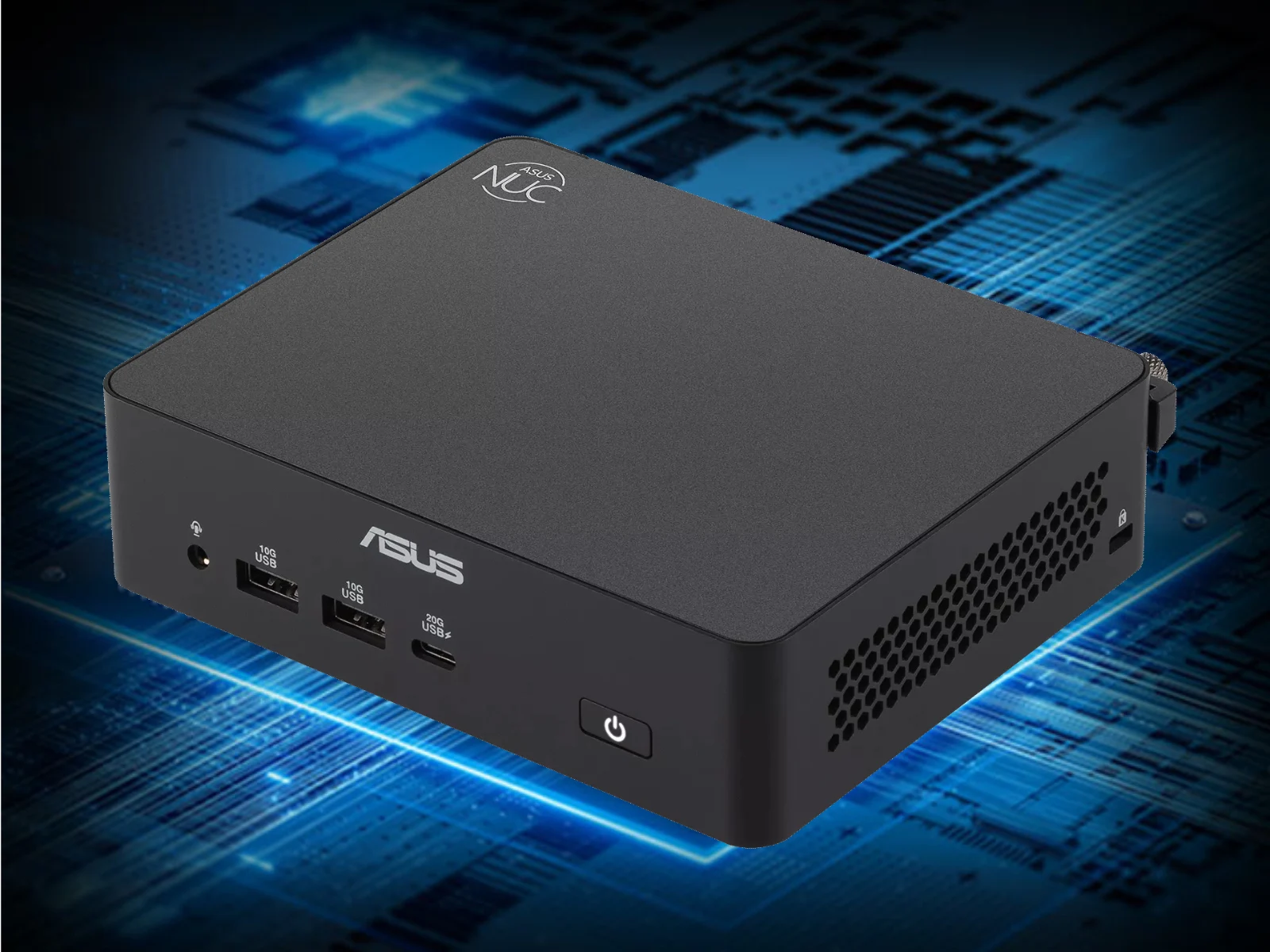
    Moreover, the NUC 16 will be available as a complete mini-PC, a self-assembled kit of just the motherboard itself. All variants contain the same ports, though. Likewise, the complement mini-PC and kit measure 144 x 117 x 42 mm. All but the motherboard version will ship with Bluetooth 6.0, Thunderbolt 4 and Wi-Fi 7 connectivity too.

    Pricing and Availability Still Unknown

    Unfortunately, pricing and availability remain unknown for now. Have a look at the images below and Asus’ website for more details if you want find out more information about these devices.


    Sources

  • ARM CEO gifts Nvidia’s Huang historic Windows-ARM device

    ARM CEO gifts Nvidia’s Huang historic Windows-ARM device

    Key Takeaway

    – ARM CEO Rene Haas gifted Nvidia CEO Jensen Huang a Surface RT, highlighting its historical significance.
    – The 2012 Surface RT featured an Nvidia Tegra 3 ARM chip, promising fanless design and 10-hour battery life.
    – Windows RT’s limited software ecosystem and poor app support made the Surface RT a commercial flop.
    – Despite failure, the Surface RT laid early groundwork for ARM’s eventual integration into Windows.
    – Nvidia’s new RTX Spark platform will continue to run on Windows, building on that foundation.


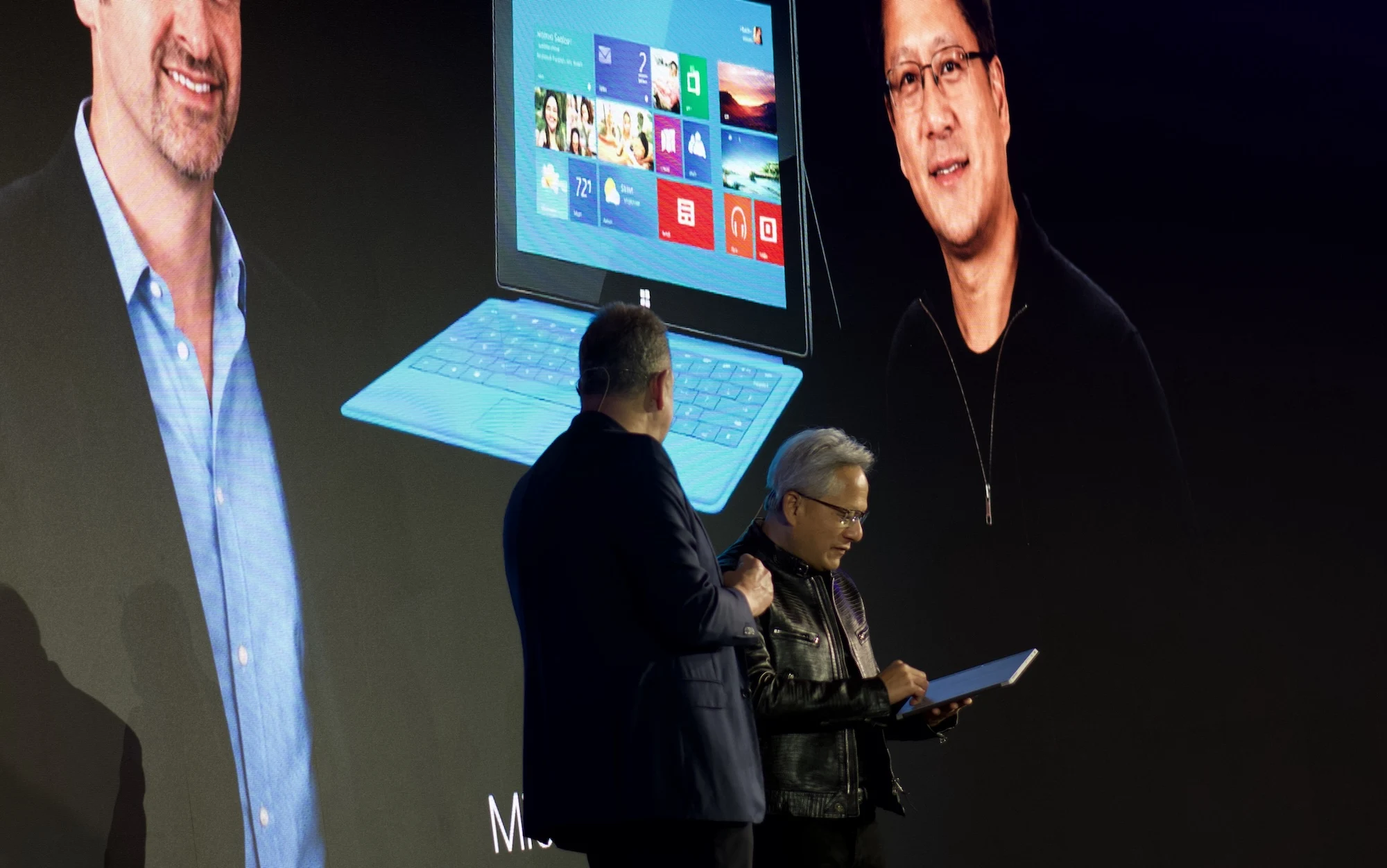
    At Arm’s Computex press conference, amidst a host of AI-related topics, the chip developer had a little surprise in store at the end. Arm CEO Rene Haas invited Nvidia CEO Jensen Huang onto the stage and presented him with a Surface RT. It was a real blast from the past, showing how far things have come.

    A gift from the past for Jensen Huang

    The Surface RT was something special at the time, as the Windows device featured an ARM chip developed by Nvidia (Tegra 3). It was unveiled by Rene Haas, who was then working for Nvidia. The promise in 2012: a fanless design and ten hours of battery life thanks to an energy-efficient platform. These were groundbreaking claims back then.

    How Microsoft redefined its Surface brand

    The Surface RT arrived at a time when Microsoft had largely abandoned the original Surface concept, a rather large table with a touchscreen and sensors for its surface. Instead, the brand name was established for tablets and notebooks. This pivot was quite drastic and changed the direction of the company.

    Back then, the device was something special. Much like the Windows Phone predecessors as MP3 players (Zune), it was extremely difficult to install apps or programs. At the time, the software infrastructure was nowhere near as advanced. In short, the Surface RT was an exciting device to give to relatives or acquaintances who weren’t very tech-savvy. After all, you couldn’t really go wrong with it, mess up the settings, or even catch malware. It was a locked down system.

    Why it was considered a commercial failure

    However, due to these limitations, the Surface RT and Windows RT were also a flop, especially since the devices weren’t particularly fast. Our review of the Surface RT from 2012 was also mixed. Microsoft’s first attempt failed, and it took several more attempts to help ARM gain some traction. After all, Windows was already working in the embedded systems sector, but that didn’t help much at the time.

    • Limited app avalibility hindered adoption.
    • Poor performance compared to Intel counterparts.
    • Confusing marketing for consumers.

    Ultimately, Microsoft, ARM and Nvidia laid the groundwork for establishing ARM in the Windows world. As Jensen Huang stated at the ARM keynote, the new RTX Spark platform will continue to run on Windows. This shows a full circle moment for the technology.

    Sources
    • Asus 3000W Power Supply: Circuit Breaker Required, Limited Use

      Key Takeaway

      – 3000W rated for 220-240V; limited to 1600W on standard 100-115V outlets.
      – Designed to power four RTX 5090 GPUs plus accessories.
      – Full 3000W requires a 240V outlet, which is rare in standard U.S. rooms.
      – In Europe, high-power use may require special 16A outlets (e.g., Swiss Type 23).
      – At near-max load, a dedicated circuit is needed; multiple such PCs would overwhelm a typical apartment.


      Celebrating 20 Years of Republic of Gamers

      To celebrate the 20th anniversary of its Republic of Gamers brand, Asus is launching the ROG Thor 3000W Titanium III Edition 20, a particularly powerful power supply. Its designed to power four GeForce RTX 5090 graphics cards plus various accessories inside the case. This unit goes way beyond what most consumers are use to seeing from a desktop PSU, making it a real statement piece for high-end builds.

      Dual Voltage and Power Limits

      The power supply can also operate in a lower voltage mode. Asus calls this “Dual Voltage Adaptive Design”, which can operate at both 220-240 volts and 100-115 volts. In the latter case, however, the maximum output is limited to 1,600 watts. This is particularly relevant for use in countries that use Type A connectors. The lower voltage at comparable amperage limits the wattage output. Its important to understand this if your planning to use it in a standard home environment.

      Real World Constraints in the US

      That doesn’t mean, however, that the power supply can be used at full power in the US. During Computex, Asus pointed out that this would require a 240-volt outlet. Such outlets do exist, but they are rarely found in standard rooms. The situation is quite complex, as Technology Connections explained in a well-researched video five years ago. So, if the necessary connection technology is lacking, the high-performance power supply effectively becomes a 1,600-watt power supply.

      European Plug Problems

      This can also happen in Europe. Switzerland is one example. Despite its three prongs, its plug is very compact. A typical Schuko socket can often accommodate three Type 13 sockets. However, these are only rated for a maximum of 10 amps. Type 23 sockets, which are protected by a 16-amp fuse, are then required. The Swiss have fewer distribution problems with this than Americans do. Nevertheless, Type 23 outlets are not found everywhere, so youll need to check your local wiring.

      Circuit Requirements and LAN Parties

      With its 3,000-watt power supply, Asus has clearly gone far beyond what is generally considered standard. And even if the power supply is operated at close to its maximum capacity from a properly fused wall socket, there’s not much headroom left for other devices. A computer and its accessories would then need their own dedicated circuit. A LAN party with several of these computers would likely be impossible for an apartment to power. This is a serious consideration for any enthusiast.

      Comparison with Other Manufacturers

      Of course, other manufacturers also face similar issues with similar products, which have so far been marketed as professional power supplies for the AI sector. The ROG Thor 3000W Titanium III Edition 20 seems to be bridging a gap between consumer and enterprise hardware, but the electrical infrastructure in most homes just isnt ready for it. You definately need to plan ahead if your thinking about buying one.


      Sources

      • Asus World’s First Wi-Fi 8 Router: 30Gbps, Dual 10G Ports

        Asus World’s First Wi-Fi 8 Router: 30Gbps, Dual 10G Ports

        Key Takeaway

        – World’s first “Wi-Fi 8” gaming router announced (ROG Rapture GT-BN98 Pro)
        – Theoretical data rate up to 30Gbps on the new IEEE 802.11bn standard
        – Quad-band design with “Ultra-High Reliability” and Multi-AP coordination
        – Dual 10G ports with up to 20Gbps link aggregation
        – Currently a future-proof preview; no consumer devices support Wi-Fi 8 yet


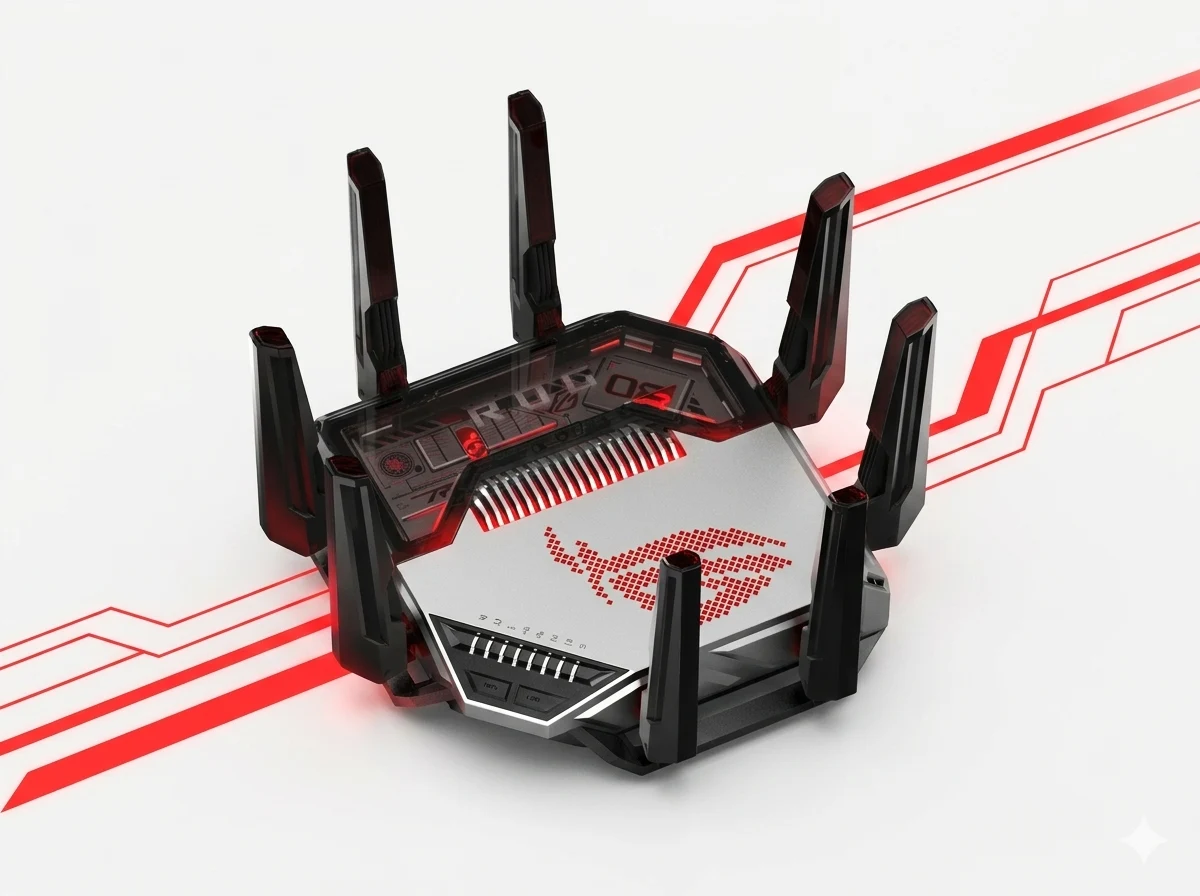
        Asus has officially set a new record in the networking space with the debut of the ROG Rapture GT-BN98 Pro, announced at Computex 2026. While the industry is still adapting to Wi-Fi 7, Asus is looking further ahead, unveiling what it claims to be the world’s first “Wi-Fi 8” gaming router.

        Pricing and Specifications Details

        Boasting a massive theoretical data rate of up to 30Gbps, the GT-BN98 Pro is built on the new IEEE 802.11bn standard. While the full standard is not expected to be finalized by the IEEE until 2028, Asus is leveraging early-spec hardware to push the boundaries of what home networking can achieve. The router features a quad-band design and Multi-AP coordination, shifting the focus from simple raw speed to the “Ultra-High Reliability” that defines the future of wireless connectivity.

        Cooling System and Interface Overview

        Designed for the most demanding gaming scenarios, the GT-BN98 Pro is equiped with a high-performance cooling system, including an aluminum heat plate with a nanocarbon coating, to ensure sustained peak performance. The ROG Rapture GT-BN98 Pro offers dual 10G ports and up to 20Gbps link aggregation, ensuring that even the most bandwidth-heavy setups wont hit a bottleneck.

        Future-Proofing Considerations

        Its worth noting that while the ROG Rapture GT-BN98 Pro is an impressive piece of hardware, it is currently more of a “future-proof” preview than a practical upgrade. Becuase the official Wi-Fi 8 standard is still being developed and won’t be finalized until 2028, there are no consumer devices like phones or laptops currently built to communicate with it. Using this router today means your existing devices will simply fall back to using older standards like Wi-Fi 6 or 7, meaning you wont see any speed or reliability benefits compared to current top-tier gear.

        Release Date and Pricing Status

        Based on the current info, Asus has not announced a specific release date or pricing for the ROG Rapture GT-BN98 Pro. You can check out the rest of Asus’ announcements below.

        Sources