Tag: Computex

  • QNAP Launches Compact NAS with 2.5 HDD, M.2 SSD & E1.S Support

    QNAP Launches Compact NAS with 2.5 HDD, M.2 SSD & E1.S Support

    Key Takeaway

    – QNAP showcased a 10-bay NAS prototype at Computex using a compact chassis that normally fits only three 3.5-inch drives.
    – The system features eight 2.5-inch bays (for HDDs or SSDs) and two smaller bays for M.2 2280 SSDs via E1.S standard adapters.
    – Rear ports include SFF-8088 (mini-SAS), two 10GbE RJ45, USB, and HDMI; powered by an Intel Core Ultra X7 358H with at least 32 GB RAM.
    – E1.S SSDs are expensive and not yet common in the consumer market, limiting immediate utility.
    – Release is planned for Q4 2026; no price has been announced.


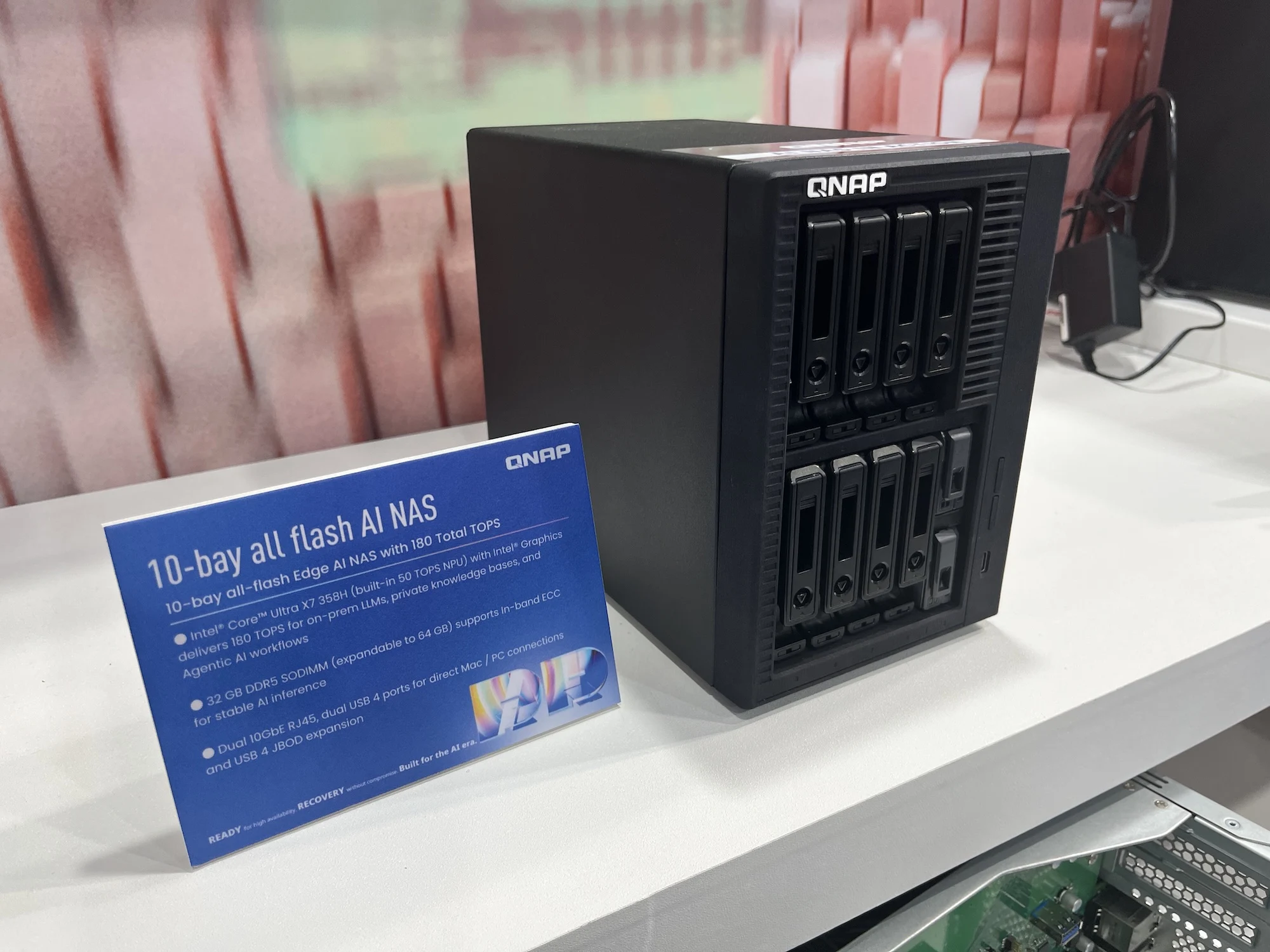
    Anyone looking for a NAS system with multiple RAID levels usually has to resort to rack systems or large 3.5-inch hard drive systems. At Computex, however, QNAP demonstrated that another solution is possible. The as-yet-unnamed device houses ten drive bays in a chassis that would normally only accommodate three 3.5-inch drives. QNAP focuses primarily on 2.5-inch bays, of which there are eight. These are capable of holding either hard drives or SSDs. In addition, there are two smaller bays, which are rare in this product class.

    Exploring The Storage Options and Adapters

    According to QNAP, two 2280 SSDs can be added using adapters for M.2 SSDs. 22110 SSDs likely won’t fit. The same applies to smaller SSDs. However, with the common 2280 format, users already have a wide selection. The adapters, however, are not simple adapters. They comply with the E1.S SSD Blade standard, which explains why 22110 SSDs do not fit; the Blade standard is only slightly longer than such SSDs. On the other hand, two high-end server SSDs can be inserted directly.

    The Challange of The E1.S Format

    The E1.S format, while practical, is yet to gain traction in the consumer market, making corresponding SSDs very expensive. This NAS system likely isn’t a perfect fit for that format, but it is at least prepared for an E1.S future.

    Ports, CPU, and Memory Details

    Although information about the system is in short supply, we do know something about the ports. For example, the rear panel features an SFF-8088 connector for connecting mini-SAS cables, allowing for the integration of additional hard drives. Two 10GbE RJ45 ports, several USB ports and an HDMI port are also on board. The CPU is also known: an Intel Core Ultra X7 358H, paired with at least 32 GB of RAM, which can be doubled if needed.

    Pricing and Availibility Information

    QNAP is yet to announce a price for the NAS system, which is planned for release in the fourth quarter of 2026.


    Sources

    • Asus Zenbook 14 Copilot AI: Intel, AMD, Qualcomm Laptops

      Asus Zenbook 14 Copilot AI: Intel, AMD, Qualcomm Laptops

      Key Takeaway

      – Four 2026 Zenbook 14 models released with Intel, AMD, or Qualcomm CPUs, each offering 45-50 TOPS of AI compute power.
      – Durable, MIL-SPEC-tested Ceraluminum chassis in earthy colors, weighing 1.1-1.2 kg.
      – Features include FHD IR camera, OLED display (up to 3K 120 Hz), large touchpad, 1.7 mm key travel, and dedicated Copilot key.
      – Battery life ranges from 17 hours (Intel) to 21 hours (AMD/Qualcomm) for video playback.


      Asus Launches Four New Zenbook 14 Copilot AI Laptopss

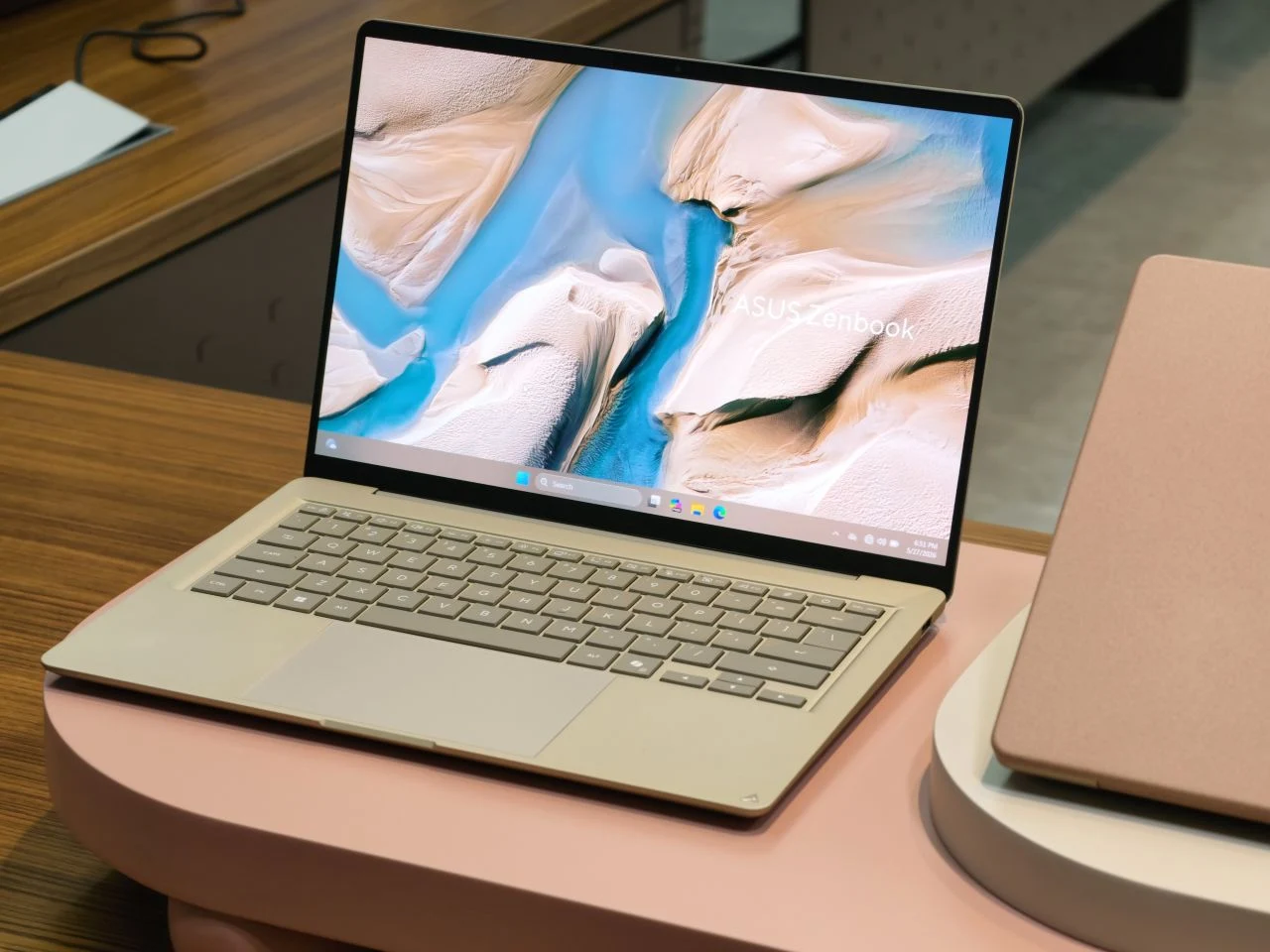
      At Computex in Taiwan, Asus has announced four 2026 Zenbook 14 devices featuring Intel, AMD, and Qualcomm CPUs, these are called Copilot+ PCs. The lineup includes different models for different processing needs, each with specific AI capabilites. Theres a model with the AMD Ryzen AI 7 345 CPU and another with the AMD Ryzen AI 9 465 CPU, both offering 50 TOPS of AI compute. An Intel Core Ultra 9 386H CPU option also gives you 50 TOPS, while the Snapdragon X X1 26 100 CPU has a slightly lower 45 TOPS of AI performance. These laptops are designed to be powerful portable machines for modern computing tasks.

      Colorful Design and Build Quality

      The colorful Zenbook 14 comes with Ceraluminum covers in earthy colors like Zabriskie Beige, Komodo Coral, and Arctic Blue. They are MIL-SPEC-tested laptops built for durability, resisting shocks from drops, scratches, and smudges very effectively. Regarding weight, all models weigh 1.2 kg, that is 2.6 lbs, but two Qualcomm variants are slightly lighter at 1.1 kg or 2.4 lbs. This makes them easy to carry around for work or travel. The device is also designed with a Easy-Lift display that reveals an FHD IR camera for facial login when opened.

      Display, Touchpad, and Battery Life

      Opening the Easy-Lift display reveals a FHD IR camera for secure biometric facial log-in above the OLED screen. The laptop includes a large touchpad and a keyboard with 1.7 mm key travel, plus a dedicated Copilot AI key for quick access. You get a 60 Hz OLED display on the Ryzen AI 7 and lower-end Snapdragon variants, while other models can have a premium 3K 120 Hz Lumina OLEDs for smoother visuals. Large batteries allow the Intel model to achive up to 17 hours of video playback with Dolby Atmos sound from dual speakers, while other models can run up to 21 hours according to Asus.

      • AMD Ryzen AI 7 345 CPU model: 50 TOPS
      • AMD Ryzen AI 9 465 CPU model: 50 TOPS
      • Intel Core Ultra 9 386H CPU model: 50 TOPS
      • Snapdragon X X1 26 100 CPU model: 45 TOPS

      Comparison with Older Models

      Readers can look at the 2025 Zenbook 14 laptops for comparision in our reviews while waiting for the 2026 models to arrive in stores. These new machines seem to offer significant improvements in AI processing and battery life. The 2026 Zenbook 14 UX3480 series includes the AMD, Intel, and Qualcomm versions, each with specific pricing and features. It will be interesting to see how the new Copilot AI key and enhanced displays perform in real world useage.

    • Nvidia N1X vs Apple M5 Max: Expected Performance Gap

      Nvidia N1X vs Apple M5 Max: Expected Performance Gap

      Key Takeaway

      – Nvidia’s RTX Spark (N1X) is an ARM chip with up to 20 CPU cores and 6,144 CUDA cores, directly competing with Apple M5 Max and laptop CPUs from Intel/AMD/Qualcomm.
      – CPU single-core performance trails the Apple M5 Max by ~30% and Snapdragon X2 Elite by ~20%, but matches current Intel and AMD chips.
      – GPU performance is expected to sit between a GeForce RTX 5070 and 5070 Ti laptop GPU, outperforming Apple M5 Pro/Max in gaming but slightly behind in synthetic/creative tasks.
      – The fastest N1X variant operates at a TDP of 45-80W, enabling use in both mini PCs and future laptops.
      – First laptops with the N1X are expected in fall 2026, and its value depends on pricing relative to laptops with discrete RTX 5070 Ti or RTX 5080 GPUs.


      Nvidias New Chip Takes Aim at Apple and Intel

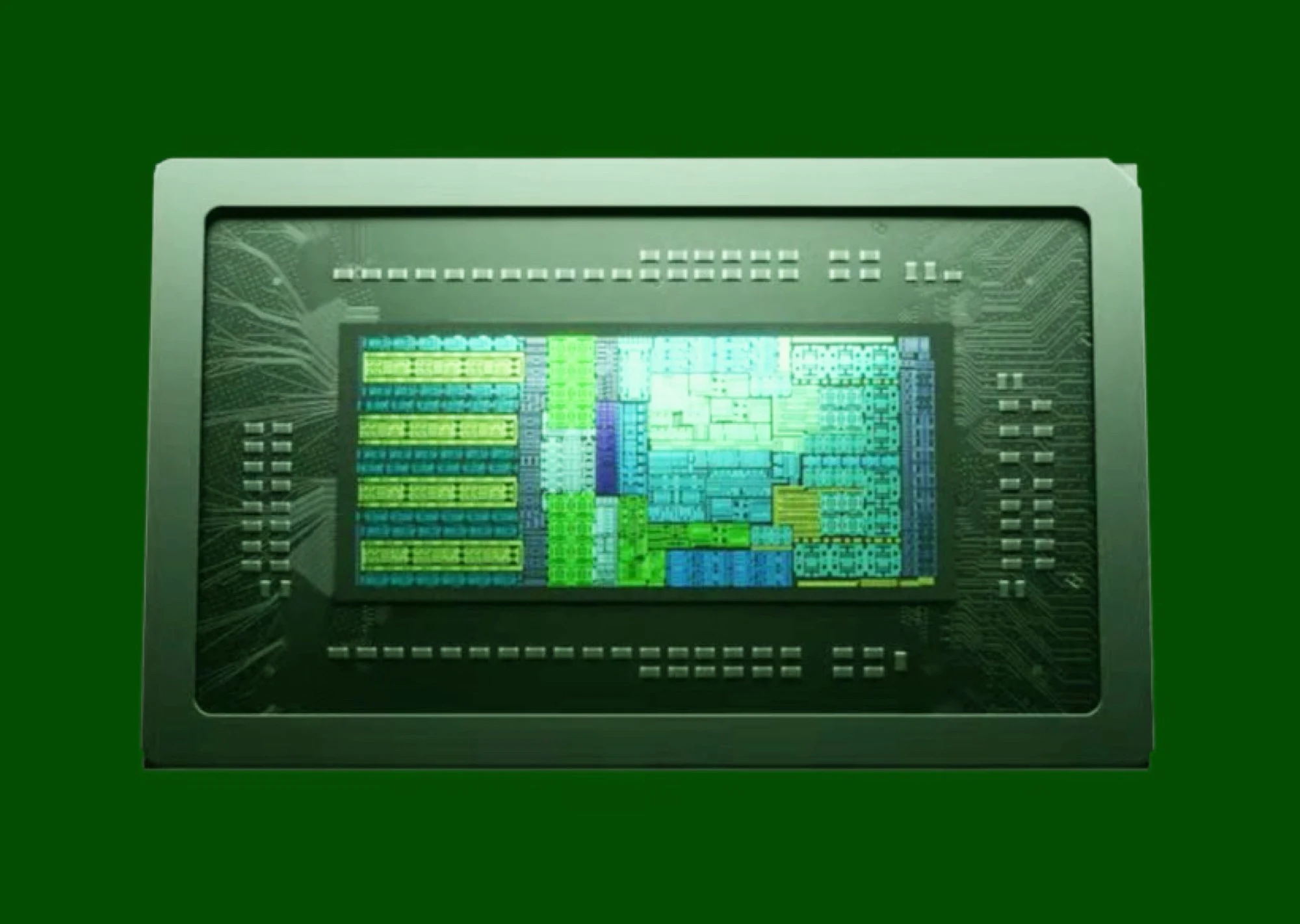
      At Computex, Nvidia presented a “new” chip that is directly competing against the Apple M5 Max and is therefore likely to compete with processors from Intel, AMD and Qualcomm in the laptop and mini PC segment. The Nvidia RTX Spark, also known as the Nvidia N1X, is practically identical on paper to the DGX Spark. This is because the Nvidia N1X also uses an ARM processor with 20 cores, a Blackwell iGPU with 6,144 CUDA compute units and up to 128 GB LPDDR5X memory. One new feature is that the chip will also be installed in laptops in the future. On the other hand, Nvidia is now also offering cheaper variants, including an N1X with 18 CPU cores and 5,120 shaders, as well as an N1 with either 10 or 12 processor cores and 2,048 to 2,560 CUDA cores. The fastest N1X can be operated with a TDP of 45 to 80 watts.

      Performance Expectations and Benchmarks

      While Nvidia has not published any benchmarks, the company is advertising the chip not only for AI applications, but also for gaming and creative professionals. The performance of the chip can already be estimated based on benchmarks of technically comparable products before the first laptops with N1X are expected to be launched on the market in fall 2026. As the comparison of the Nvidia GB10 with the current laptop processors of the competition shows, the single-core performance falls almost 30 percent behind the Apple M5 Max and almost 20 percent behind the Snapdragon X2 Elite, and is roughly on a par with the current chips from Intel and AMD. The multi-threaded benchmark shows a similar picture: the Nvidia N1X is almost a third slower than the Apple M5 Pro and Apple M5 Max, but is almost on a par with the Intel Ultra 9 290HX Plus.

      Graphics Power and Gaming Viability

      The performance of the graphics chip should be between the Nvidia GeForce RTX 5070 laptop GPU and the GeForce RTX 5070 Ti laptop GPU. Although the GPU of the N1X has slightly more compute units than the GeForce RTX 5070 Ti laptop GPU, it is operated with a significantly lower TDP and should therefore achieve lower GPU clocks. As our benchmarks show, the GPU should sit between the Apple M5 Pro and M5 Max in synthetic benchmarks and creative apps, while Nvidia should have the edge in games thanks to better drivers. After all, the Nvidia RTX Spark should far outperform both AMD Ryzen Strix Halo and the Snapdragon X2 Elite in terms of GPU performance.

      Cost and Final Considerations

      However, whether the chip will be worthwhile for gaming enthusiasts depends not least on how expensive it is compared to laptops with GeForce RTX 5070 Ti or RTX 5080 laptop GPUs. This preview only serves as a rough classification, as no laptops or mini PCs with Nvidia RTX Spark are yet available for testing.


      Sources

    • ARM CEO gifts Nvidia’s Huang historic Windows-ARM device

      ARM CEO gifts Nvidia’s Huang historic Windows-ARM device

      Key Takeaway

      – ARM CEO Rene Haas gifted Nvidia CEO Jensen Huang a Surface RT, highlighting its historical significance.
      – The 2012 Surface RT featured an Nvidia Tegra 3 ARM chip, promising fanless design and 10-hour battery life.
      – Windows RT’s limited software ecosystem and poor app support made the Surface RT a commercial flop.
      – Despite failure, the Surface RT laid early groundwork for ARM’s eventual integration into Windows.
      – Nvidia’s new RTX Spark platform will continue to run on Windows, building on that foundation.


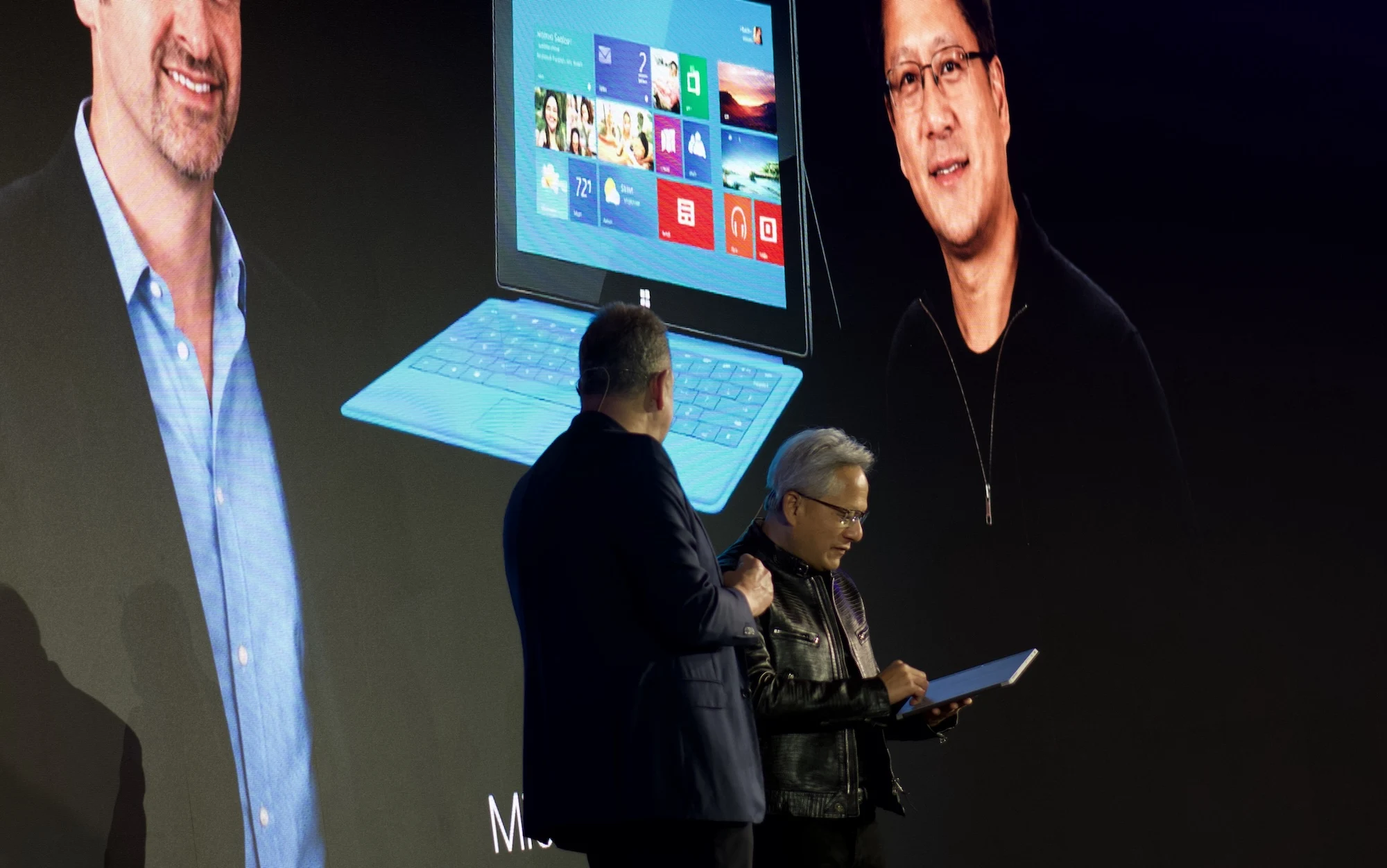
      At Arm’s Computex press conference, amidst a host of AI-related topics, the chip developer had a little surprise in store at the end. Arm CEO Rene Haas invited Nvidia CEO Jensen Huang onto the stage and presented him with a Surface RT. It was a real blast from the past, showing how far things have come.

      A gift from the past for Jensen Huang

      The Surface RT was something special at the time, as the Windows device featured an ARM chip developed by Nvidia (Tegra 3). It was unveiled by Rene Haas, who was then working for Nvidia. The promise in 2012: a fanless design and ten hours of battery life thanks to an energy-efficient platform. These were groundbreaking claims back then.

      How Microsoft redefined its Surface brand

      The Surface RT arrived at a time when Microsoft had largely abandoned the original Surface concept, a rather large table with a touchscreen and sensors for its surface. Instead, the brand name was established for tablets and notebooks. This pivot was quite drastic and changed the direction of the company.

      Back then, the device was something special. Much like the Windows Phone predecessors as MP3 players (Zune), it was extremely difficult to install apps or programs. At the time, the software infrastructure was nowhere near as advanced. In short, the Surface RT was an exciting device to give to relatives or acquaintances who weren’t very tech-savvy. After all, you couldn’t really go wrong with it, mess up the settings, or even catch malware. It was a locked down system.

      Why it was considered a commercial failure

      However, due to these limitations, the Surface RT and Windows RT were also a flop, especially since the devices weren’t particularly fast. Our review of the Surface RT from 2012 was also mixed. Microsoft’s first attempt failed, and it took several more attempts to help ARM gain some traction. After all, Windows was already working in the embedded systems sector, but that didn’t help much at the time.

      • Limited app avalibility hindered adoption.
      • Poor performance compared to Intel counterparts.
      • Confusing marketing for consumers.

      Ultimately, Microsoft, ARM and Nvidia laid the groundwork for establishing ARM in the Windows world. As Jensen Huang stated at the ARM keynote, the new RTX Spark platform will continue to run on Windows. This shows a full circle moment for the technology.

      Sources
      • Asus 3000W Power Supply: Circuit Breaker Required, Limited Use

        Key Takeaway

        – 3000W rated for 220-240V; limited to 1600W on standard 100-115V outlets.
        – Designed to power four RTX 5090 GPUs plus accessories.
        – Full 3000W requires a 240V outlet, which is rare in standard U.S. rooms.
        – In Europe, high-power use may require special 16A outlets (e.g., Swiss Type 23).
        – At near-max load, a dedicated circuit is needed; multiple such PCs would overwhelm a typical apartment.


        Celebrating 20 Years of Republic of Gamers

        To celebrate the 20th anniversary of its Republic of Gamers brand, Asus is launching the ROG Thor 3000W Titanium III Edition 20, a particularly powerful power supply. Its designed to power four GeForce RTX 5090 graphics cards plus various accessories inside the case. This unit goes way beyond what most consumers are use to seeing from a desktop PSU, making it a real statement piece for high-end builds.

        Dual Voltage and Power Limits

        The power supply can also operate in a lower voltage mode. Asus calls this “Dual Voltage Adaptive Design”, which can operate at both 220-240 volts and 100-115 volts. In the latter case, however, the maximum output is limited to 1,600 watts. This is particularly relevant for use in countries that use Type A connectors. The lower voltage at comparable amperage limits the wattage output. Its important to understand this if your planning to use it in a standard home environment.

        Real World Constraints in the US

        That doesn’t mean, however, that the power supply can be used at full power in the US. During Computex, Asus pointed out that this would require a 240-volt outlet. Such outlets do exist, but they are rarely found in standard rooms. The situation is quite complex, as Technology Connections explained in a well-researched video five years ago. So, if the necessary connection technology is lacking, the high-performance power supply effectively becomes a 1,600-watt power supply.

        European Plug Problems

        This can also happen in Europe. Switzerland is one example. Despite its three prongs, its plug is very compact. A typical Schuko socket can often accommodate three Type 13 sockets. However, these are only rated for a maximum of 10 amps. Type 23 sockets, which are protected by a 16-amp fuse, are then required. The Swiss have fewer distribution problems with this than Americans do. Nevertheless, Type 23 outlets are not found everywhere, so youll need to check your local wiring.

        Circuit Requirements and LAN Parties

        With its 3,000-watt power supply, Asus has clearly gone far beyond what is generally considered standard. And even if the power supply is operated at close to its maximum capacity from a properly fused wall socket, there’s not much headroom left for other devices. A computer and its accessories would then need their own dedicated circuit. A LAN party with several of these computers would likely be impossible for an apartment to power. This is a serious consideration for any enthusiast.

        Comparison with Other Manufacturers

        Of course, other manufacturers also face similar issues with similar products, which have so far been marketed as professional power supplies for the AI sector. The ROG Thor 3000W Titanium III Edition 20 seems to be bridging a gap between consumer and enterprise hardware, but the electrical infrastructure in most homes just isnt ready for it. You definately need to plan ahead if your thinking about buying one.


        Sources

        • Acer Unveils Secondary Display for Flight Sim, Racing & Productivity

          Key Takeaway

          – Ultra-wide 1920×720 secondary display ideal for sim racing and flight sim instruments
          – Lower pixel count reduces frame rate impact compared to standard monitors
          – Touchscreen supports direct interaction; can be used in portrait mode
          – Includes USB-C and HDMI connectivity with IPS technology
          – Priced around $230, launching toward the end of the year


          Dual-Screen Dreams Start With Acer’s Weird New Monitor

          Ahead of Computex, Acer showed the PM131QT secondary display in a showroom in Taipei. Unlike conventional PC monitors, the PM131QT has a very wide aspect ratio. It measures 1920 pixels across but only 720 pixels vertically, with a display diagonal of 12.3 inches.

          Gaming and Simulators

          That makes this display ideal for smaller tools but also for games with multi-monitor support where instruments, for example, need to be moved elsewhere. A conventional second monitor is not always ideal for this, as it may simply be too large. In Microsoft Flight Simulator, smaller instruments could easily be moved to the PM131QT, which could then serve as a third or fourth monitor depending on the setup.

          Frame Rate and Performance Concerns

          This should also work with X-Plane, see the video at the end of the article for a similar situation. However, this has a significant impact on the frame rate there. Since Acer’s monitor has far fewer pixels than a typical second monitor, that should have a positive effect. Racing sims should also be a good candidate for this. Here, too, some instruments are not important enough to remain on the main screen.

          Professional Applications and Touchscreen

          Acer itself is naturally focusing more on professional applications. Tools could be placed there instead. Thanks to the touchscreen, direct operation is also possible. The monitor can also be used in portrait mode, allowing it to be positioned on the side, for example. A tripod thread on the back provides additional flexibility if the integrated stand is not sufficient.

          Launch Date, Price and Connectivity

          Anyone interested will still have to be patient for quite a while. As Acer told us in Taipei, the display will not launch until toward the end of the year. The price is expected to be around $230. In terms of connectivity, Acer offers both USB Type-C and HDMI. The panel itself uses IPS technology and looked quite good during the demonstration.

          Acer / Computex

          Sources
          • Nvidia Announces New PC Era: AI Chips Arrive

            Nvidia Announces New PC Era: AI Chips Arrive

            Key Takeaway

            – Nvidia will unveil a long-rumored ARM APU (likely named N1X or N1) at Computex.
            – The chip features 20 CPU cores, a 3nm TSMC process, and an iGPU comparable to an RTX 5070 Ti.
            – This ARM chip aims to compete with Qualcomm’s Snapdragon X2 Elite series.
            – Windows 12 will not be announced, but new Surface and PC updates are expected.
            – The event is scheduled for Monday, June 1, at 11:00 am local time in Taipei.


            That sounds exciting, but it is unlikely to be the new era that PC and laptop fans might be hoping for. After Nvidia CEO Jensen Huang primarily drew attention around Computex in Taiwan in recent years with his AI ambitions, this year’s tech trade show in Taipei could also include something for PC enthusiasts, whom Nvidia has largely neglected in recent years. In any case, both Microsoft’s Windows account and Nvidia announced the same thing ahead of Computex: a new PC era.

            Cryptic Coordinates and a Secret Venue

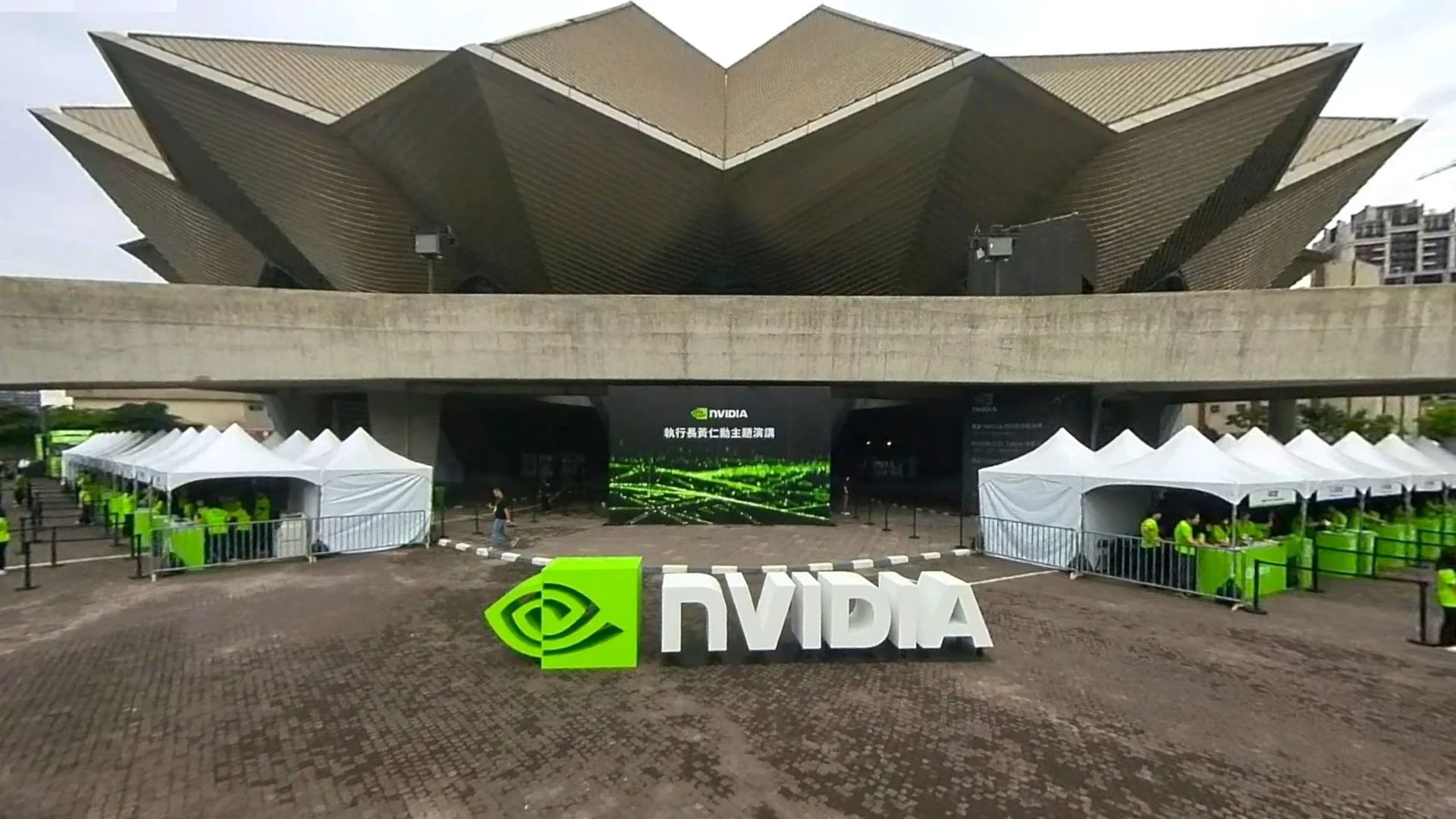
            In both cases, there is also a cryptic number code, which appears to be coordinates for the Taipei Music Center. Google Maps conveniently already shows the venue for the keynote, which Nvidia has decorated for the occasion and which starts on Monday, June 1, at 11:00 am local time.

            Not Windows 12, But Something Else Entirely

            But what exactly will be unveiled? It will not be Windows 12, as Windows EVP Pavan Davuluri specifically emphasized on X. However, Nvidia’s announcement could very well be followed by new Surface news as well as updates from other PC manufacturers, since Nvidia is almost certain to unveil its long-rumored ARM APU on Monday, which will reportedly be called the N1X or N1.

            A Geekbench entry for the chip had already surfaced in 2025, revealing 20 CPU cores with clock speeds of at least 2.81GHz, while further leaks pointed to an iGPU that could offer performance roughly on par with a GeForce RTX 5070 Ti. The chipset, reportedly manufactured by TSMC using its 3nm process, was likely developed in cooperation with MediaTek and is expected to compete primarily with Qualcomm’s Snapdragon X2 Elite series. Whether this marks the beginning of an entirely new PC era remains to be seen.