Tag: SanDisk

  • SanDisk 8TB SDUC Cards Launching: New Readers Required

    SanDisk 8TB SDUC Cards Launching: New Readers Required

    Key Takeaway

    – SanDisk will launch new SDUC cards up to 8 TB, including Ultra and Extreme Pro series.
    – These cards require new, dedicated SD card readers, as existing ones are incompatible.
    – Card readers supporting all three standards (UHS-II, SDUC, SD Express) are expected this year.
    – Pricing and specific release dates remain unannounced, but the cards are confirmed to be coming soon.


    New SanDisk SD Cards Coming With Up to 8TB

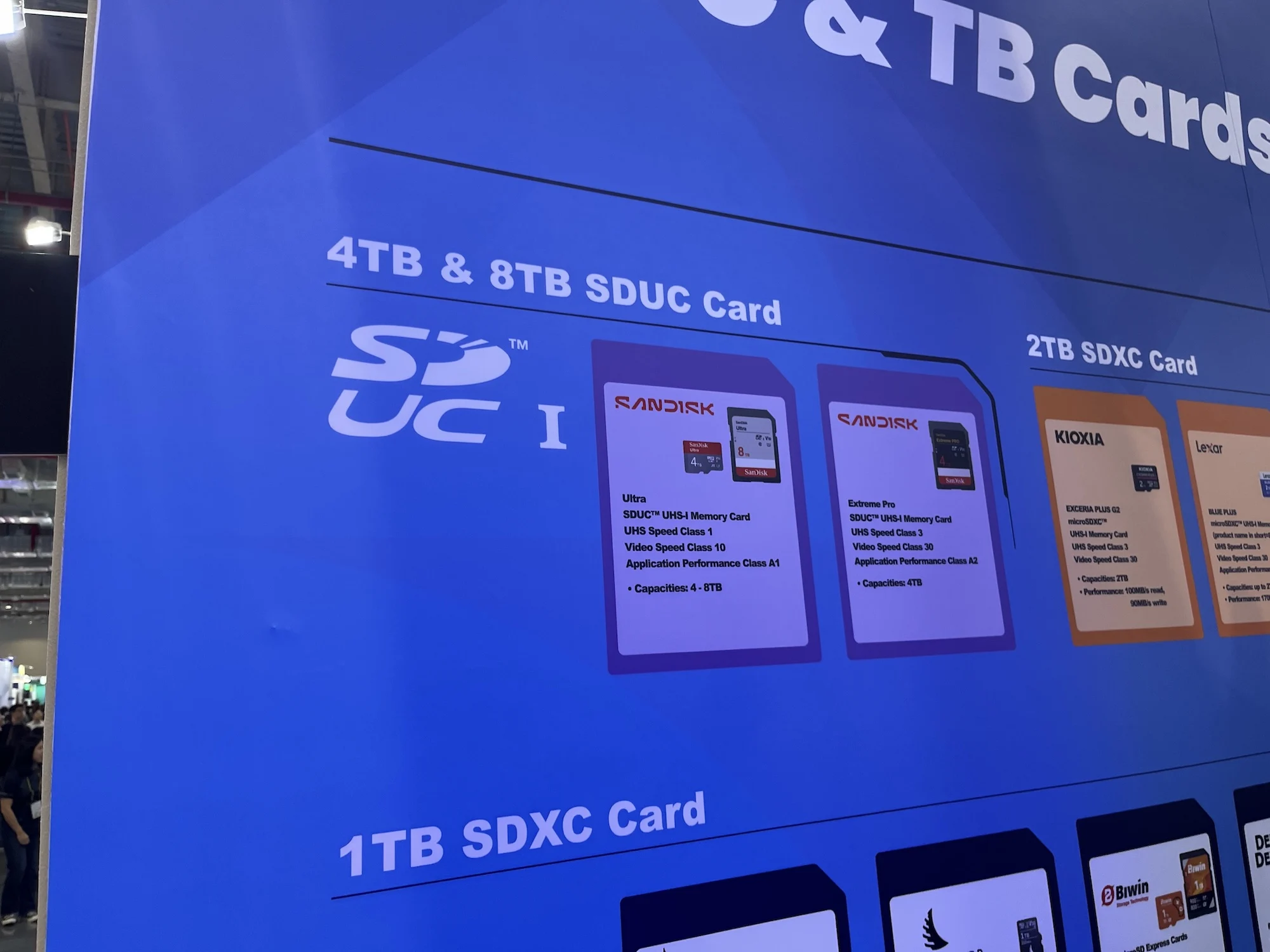
    Unlike its spun-off corporate counterpart Western Digital, SanDisk wasn’t at Computex exactly, but they was still their in a sense with a new product. This is because at the SD Association booth, a poster showed new SD and microSD cards with 4 to 8 TB, which are set to hit the market shortly, as several companies at the booth confirmed to us on-site. The capacity’s are huge compared to what we have now.

    Previous Announcements and New Plans

    This isn’t the first time they announced it. SanDisk already announced a SDUC card back in 2024, which however never actually launched. It was originally planned for 2025 but acording to current information, the 8 TB barrier will now be broken right out of the gate instead. SanDisk is accordingly planning SDUC cards both in its Ultra series and its high-speed Extreme series, so you have options depending on you’re speed needs.

    Series Details and Capacities

    The Ultra series is set to be available as both a microSDUC and a regular SDUC card. The latter is going to max out at 8 TB for the biggest size. The microSDUC card will presumably hit the market with 4 TB which is still a ton of space. The Extreme Pro series, on the other hand, is announced with a SDUC card in the 4 TB tier. Compared to the initial announcement, nothing has changed with this card, though a detailed spec sheet is still missing for it.

    Reader Compatibility Issues

    SDUC cards strictly require new SD card readers to work properly. As things stand, even brand-new SD Express card readers can not handle SDUC cards at all. This also applies to SanDisk’s Pro Reader, which is currently sold out anyway, and that is likely an indicator of new card readers coming soon. However, that was already known beforehand because the SD standard split in a sense in the past timeline.

    UHS-II, SDUC, and SD Express were mutually exclusive in the past, but it is expected that this year, for the first time, there will be card readers that support all three standards together in one single device. Corresponding solutions were on display at Computex. Incidentally, SanDisk reacted only late to several inquiries regarding the new cards, as well as the missing SD Express reader, saying “At the current time, we cannot make a statement on this,” was there general response.

    Pricing and Release Status

    Thus, there is no information on pricing or specific availability at this moment. Nevertheless, the release of the cards can be considered a done deal, because several employees from different companies at the SD Association booth confirmed to us that the cards will be coming soon. We just have to wait for more news from SanDisk and other manufacturers.

    Sources
    • SanDisk Launches New Portable SSDs with 4000 MB/s Speeds

      SanDisk Launches New Portable SSDs with 4000 MB/s Speeds

      Key Takeaways

      1. Sandisk launched a new range of portable SSDs with capacities up to 8 TB, including the Extreme Portable SSD, Extreme PRO Portable SSD, and standard Portable SSD.
      2. The Extreme PRO Portable SSD offers the highest performance with read speeds up to 4,000 MB/s and write speeds of up to 3,800 MB/s.
      3. The Extreme Portable SSD features read speeds of up to 2,000 MB/s and will be available in sizes from 500 GB to 4 TB.
      4. Durability features include 3 meters of drop protection for Extreme models and an IP65 rating for water and dust resistance, while the standard Portable SSD has lower ratings.
      5. Prices for the Extreme Portable SSD start at $260 for 1 TB, with expected higher prices due to supply issues; the pricing for other models is not yet disclosed.


      Compact SSDs are really handy devices, particularly for people who need a lot of storage but have devices that don’t offer much space. Sandisk is one of the leading names in this field and has just launched its new range of portable SSDs.

      New Product Lineup

      They have introduced three products in total, with a top capacity of 8 TB. This new range features the Sandisk Extreme Portable SSD, the Extreme PRO Portable SSD, and the standard Portable SSD. The Extreme Portable SSD can reach read speeds of up to 2,000 MB/s, and it will come in sizes ranging from 1 to 4 TB, with a 500 GB option being planned for the future.

      Details on Performance

      In contrast, the Extreme PRO Portable SSD will be available in 2 to 4 TB sizes, and an 8 TB model is expected to come later. It boasts impressive speeds with write rates of up to 3,800 MB/s and read rates hitting 4,000 MB/s. The last product, the Portable SSD, is the most budget-friendly choice. This one offers capacities from 500 GB to 2 TB, with read speeds that can go up to 1,000 MB/s.

      Durability and Resistance

      Both the Extreme PRO and Extreme SSDs provide 3 meters of drop protection, while the Portable SSD has a lower rating of 2 meters. Additionally, the Extreme models come with an IP65 rating for water and dust resistance, whereas the standard Portable SSD lacks this feature.

      All these SSDs are set to be available in the latter half of 2026. Prices are expected to be on the higher side due to ongoing supply issues. For the Extreme Portable SSD, the prices are as follows: 1 TB for $260, 2 TB for $460, and 4 TB for $920. However, the pricing for other models remains undisclosed for now.

      Interestingly, the Crucial X10 Pro 1TB claims to offer slightly faster transfer rates, but it’s priced significantly lower at $162.34 on Amazon as of this writing.

      Source:
      Link


    • SanDisk WD Blue SN5100 NVMe Drive Hits 7,100 MB/s Speed

      SanDisk WD Blue SN5100 NVMe Drive Hits 7,100 MB/s Speed

      Key Takeaways

      1. Performance Boost: The WD Blue SN5100 NVMe offers up to a 30% increase in performance compared to the previous WD Blue series.

      2. Specifications: Built on PCI Express 4.0, the drive features DRAM-less architecture, BiCS8 quad-level cell NAND, and is available in M.2 2280 format, making it suitable for laptops.

      3. Speed Metrics: The 1 TB and 2 TB versions achieve read speeds up to 7,100 MB/s and write speeds of 6,700 MB/s, with the 500 GB variant reaching read speeds of 6,600 MB/s.

      4. Endurance and Warranty: Endurance ratings remain unchanged with 5-year warranty, covering up to 1,200 TB written for the largest 4 TB model.

      5. Price Increase: Prices have risen by 22 to 36 percent compared to the previous generation, with suggested retail prices ranging from $54.99 for 500 GB to $299.99 for 4 TB.


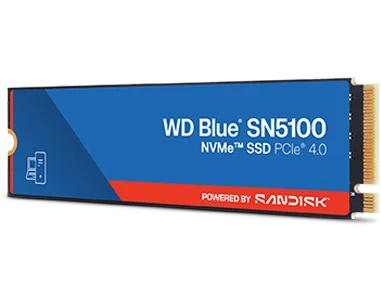
      SanDisk has launched the WD Blue SN5100 NVMe, aimed at creators and power users needing high performance for extensive tasks, rapid application launches, and swift file transfers. According to SanDisk, this new model offers up to a 30% boost in performance compared to the earlier WD Blue series.

      Specifications and Design

      The drive is built on PCI Express 4.0 and comes in the M.2 2280 format. It features a DRAM-less architecture with Host Memory Buffer and utilizes BiCS8 quad-level cell NAND across all sizes. SanDisk’s nCache 4.0 organizes writes in single-level cell blocks before transferring data to quad-level cells during idle periods. Its single-sided layout also makes it suitable for laptops.

      Performance Metrics

      When it comes to performance, the 1 TB and 2 TB versions can reach read speeds up to 7,100 MB/s and write speeds reaching 6,700 MB/s. The 500 GB variant still provides read speeds of up to 6,600 MB/s. In terms of random performance, you can expect around 1 million reads and 1.3 million writes IOPS. SanDisk claims this delivers up to 29% faster read speeds and up to 34% quicker write speeds compared to the WD Blue SN5000.

      Endurance and Warranty

      Even with these speed enhancements, the endurance ratings have stayed the same: 300 TB written for the 500 GB version, 600 for 1 TB, 900 for 2 TB, and 1,200 for 4 TB. The warranty period remains at 5 years. Additionally, SanDisk includes Acronis True Image for straightforward cloning, and its Dashboard utility allows you to keep an eye on health, performance, and firmware updates.

      Real-World Performance

      Wondering about actual speeds? The interface used can greatly affect performance. For instance, placing a 2 TB SN5100 in a Thunderbolt enclosure with APFS formatting could yield write speeds around 3,125 MB/s and read speeds near 3,057 MB/s. However, if a standard USB enclosure is used, speeds may drop to about 1,000 MB/s due to connection limitations.

      Price Comparison

      The SN5100 is significantly quicker than the SN5000’s top 4 TB model, which maxes out at 5,500 MB/s read speed and 5,000 MB/s write speed. Yet, the pricing has increased as well. Suggested retail prices are $54.99 for 500 GB, $79.99 for 1 TB, $149.99 for 2 TB, and $299.99 for 4 TB. This indicates a price hike of about 22 to 36 percent compared to the previous generation for equivalent storage capacities.

      Source:
      Link


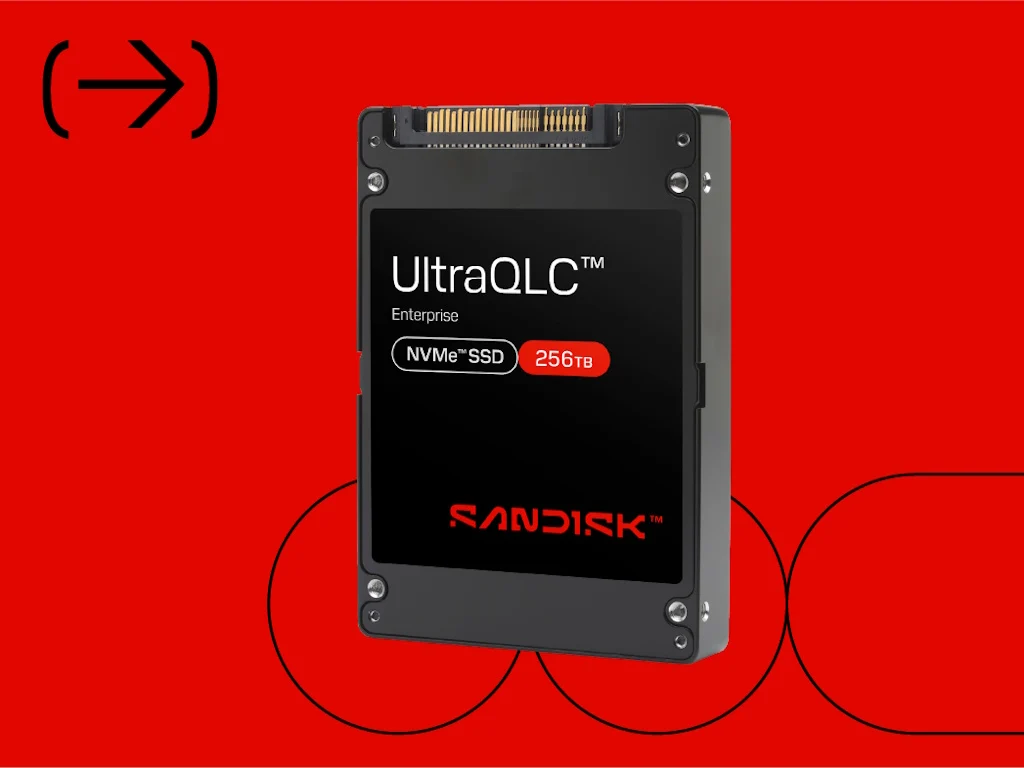
    • SanDisk Launches 256TB UltraQLC NVMe U.2 SSD for Data Centers

      SanDisk Launches 256TB UltraQLC NVMe U.2 SSD for Data Centers

      Key Takeaways

      1. Sandisk’s UltraQLC 256TB NVMe U.2 SSD is aimed at enterprise clients, including cloud services and AI training super clusters, and will launch in early 2026.

      2. The demand for storage has grown significantly, reaching zettabyte levels, driven by data centers, cloud storage, and AI model training.

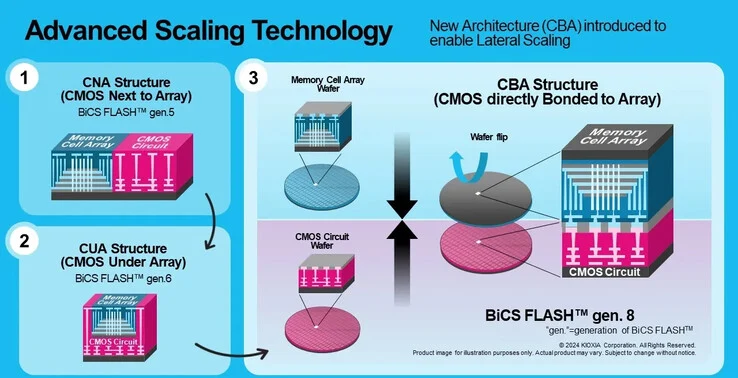
      3. The UltraQLC SSD features Kioxia’s eighth-generation BiCS FLASH 3D technology, which enhances data density and reduces power consumption.

      4. This new technology increases storage density by 50%, improves write speeds by 20%, and read speeds by 10%, while decreasing write power usage by 30%.

      5. The eighth-generation BiCS memory consists of 218 layers of stacked memory cells, utilizing advanced bonding technology for heat-sensitive circuitry.


      Sandisk has introduced the UltraQLC 256TB NVMe U.2 SSD, targeting enterprise clients, including those in cloud services and AI training super clusters. This new product is set to hit the market in early 2026.

      Growing Storage Needs

      In today’s world, numerous businesses depend on data centers and cloud storage to manage corporate data, operate virtual Windows PCs, provide streaming services, and train AI models. The global demand for storage has significantly surpassed the terabyte (TB) and petabyte (1,024 TB) levels, and even reached into the zettabyte (1021 bytes) range. Concurrently, the need for power has also risen alongside these storage demands.

      Enhanced Performance and Efficiency

      The UltraQLC SSD utilizes Kioxia’s eighth-generation BiCS FLASH 3D flash memory technology, which reduces power consumption while allowing for greater data density in each drive. Compared to the previous generation, this latest BiCS FLASH technology boosts density by 50%, improves write speeds by 20%, and enhances read speeds by 10%, all while lowering write power usage by 30%.

      Advanced Memory Technology

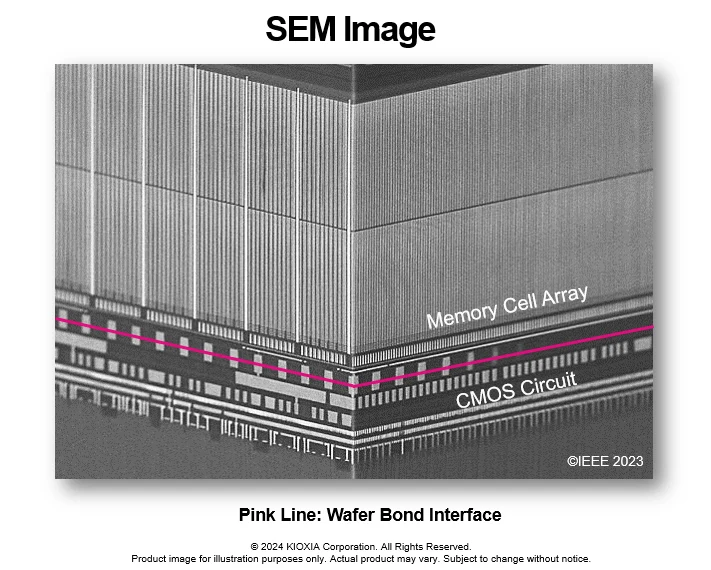
      Modern SSDs typically employ multi-layer stacking of memory cells to maximize data capacity in limited space. The eighth-generation BiCS memory features 218 layers of stacked memory cells. The controlling CMOS circuitry for these cells is produced on a different wafer due to its heat sensitivity, and is then bonded to the 3D memory cell wafer utilizing Kioxia’s CMOS Directly Bonded to Array (CBA) technology.

      For those interested, Sandisk’s consumer SSD offerings are available for viewing at the Sandisk store on Amazon.

      Source:
      Link


    • SanDisk Plans 1-Petabyte SSD, Release Date Uncertain

      SanDisk Plans 1-Petabyte SSD, Release Date Uncertain

      Key Takeaways

      1. SanDisk plans to develop solid-state drives (SSDs) with capacities up to 1 petabyte (1PB) using UltraQLC technology.
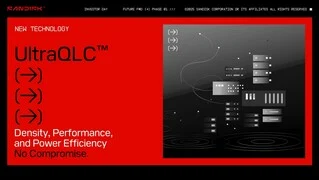
      2. UltraQLC integrates Kioxia’s BICS 8 3D QLC NAND memory with a proprietary controller featuring 64 NAND channels for improved performance.
      3. The controller includes hardware accelerators that enhance storage functions, resulting in lower latency and higher reliability.
      4. Initial UltraQLC SSDs will use 2-terabit NAND memory chips, enabling capacities up to 128TB, with future plans for 256TB, 512TB, and 1PB.
      5. SanDisk emphasizes the design’s focus on density, performance, and power efficiency to meet modern data infrastructure needs.


      At a recent Investor Day, SanDisk shared its grand plans to create solid-state drives (SSDs) with astonishing capacities reaching up to 1 petabyte (1PB = 1,024TB). These innovative drives will utilize the company’s cutting-edge UltraQLC technology. Although they provided an exciting overview of these high-capacity drives, SanDisk didn’t mention when we can expect to see them on the market.

      Details on UltraQLC

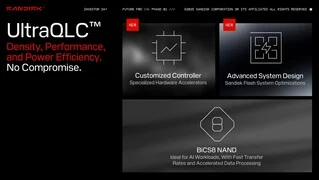
      UltraQLC isn’t exactly a new type of memory. Instead, it’s an integrated platform that merges Kioxia’s BICS 8 3D QLC NAND memory with a state-of-the-art proprietary controller that boasts an impressive 64 NAND channels and tailored firmware.

      The controller plays a crucial role in the system’s performance. It is equipped with domain-specific hardware accelerators that take over essential storage functions usually performed by firmware. This setup leads to lowered latency, heightened throughput, and enhanced reliability in hyperscale storage settings. Moreover, the controller smartly adapts the SSD’s power usage based on the demands of the workload, which helps in maintaining energy efficiency. An advanced bus multiplexer further aids the system by handling the large data flow from the dense 3D QLC NAND memory stacks, ensuring all channels are effectively used without any drop in performance.

      Insights from SanDisk’s Leadership

      UltraQLC is specially designed based on our years of experience and what we’ve learned lately to be effectively used in modern data infrastructures without sacrificing density, performance, and power efficiency. The design centers on three main aspects: BICS 8 NAND technology and future NAND advancements, customized controllers, and superior system design, explains Khurram Ismail, the new Chief of Engineering and Product Management at SanDisk.

      At first, SanDisk’s UltraQLC SSDs will use 2-terabit (2Tb) NAND memory chips, allowing for capacities up to 128TB. While the 64-channel controller is capable of supporting even larger capacities, pushing it too far might affect performance. Looking into the future, SanDisk expects to create higher-capacity NAND devices, paving the way for SSDs that can reach 256TB, 512TB, and ultimately the ambitious goal of 1PB in the upcoming years.

      Source:
      Link