
Key Takeaways
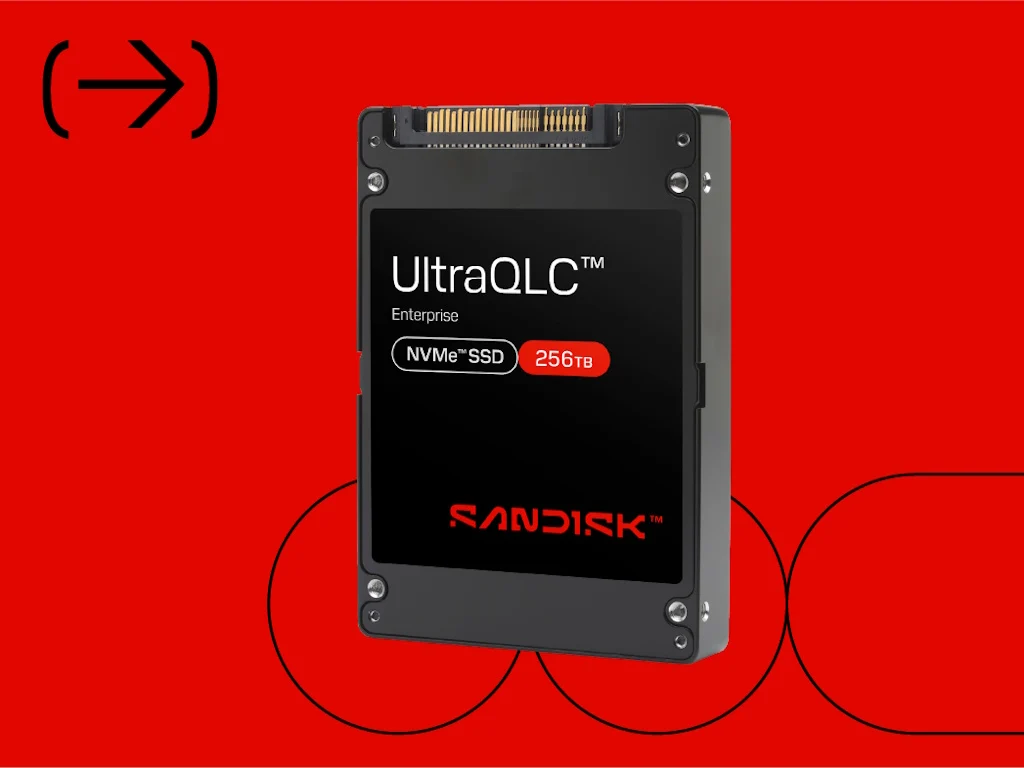
1. Sandisk’s UltraQLC 256TB NVMe U.2 SSD is aimed at enterprise clients, including cloud services and AI training super clusters, and will launch in early 2026.
2. The demand for storage has grown significantly, reaching zettabyte levels, driven by data centers, cloud storage, and AI model training.
3. The UltraQLC SSD features Kioxia’s eighth-generation BiCS FLASH 3D technology, which enhances data density and reduces power consumption.
4. This new technology increases storage density by 50%, improves write speeds by 20%, and read speeds by 10%, while decreasing write power usage by 30%.
5. The eighth-generation BiCS memory consists of 218 layers of stacked memory cells, utilizing advanced bonding technology for heat-sensitive circuitry.
Sandisk has introduced the UltraQLC 256TB NVMe U.2 SSD, targeting enterprise clients, including those in cloud services and AI training super clusters. This new product is set to hit the market in early 2026.
Growing Storage Needs
In today’s world, numerous businesses depend on data centers and cloud storage to manage corporate data, operate virtual Windows PCs, provide streaming services, and train AI models. The global demand for storage has significantly surpassed the terabyte (TB) and petabyte (1,024 TB) levels, and even reached into the zettabyte (1021 bytes) range. Concurrently, the need for power has also risen alongside these storage demands.
Enhanced Performance and Efficiency
The UltraQLC SSD utilizes Kioxia’s eighth-generation BiCS FLASH 3D flash memory technology, which reduces power consumption while allowing for greater data density in each drive. Compared to the previous generation, this latest BiCS FLASH technology boosts density by 50%, improves write speeds by 20%, and enhances read speeds by 10%, all while lowering write power usage by 30%.
Advanced Memory Technology
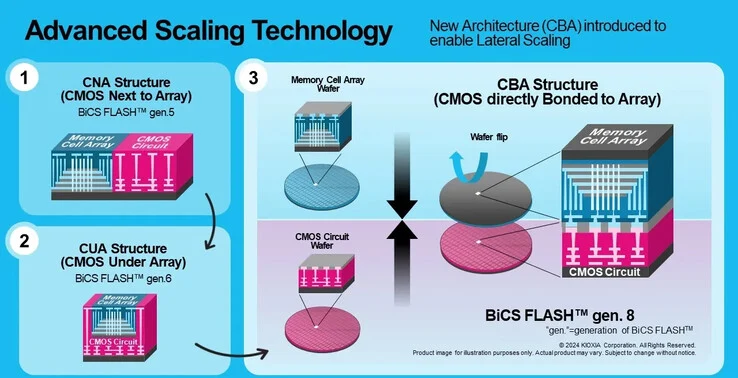
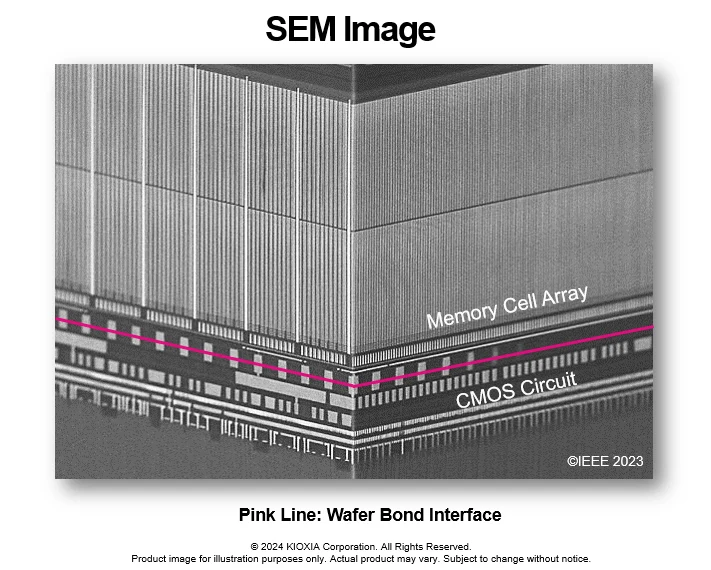
Modern SSDs typically employ multi-layer stacking of memory cells to maximize data capacity in limited space. The eighth-generation BiCS memory features 218 layers of stacked memory cells. The controlling CMOS circuitry for these cells is produced on a different wafer due to its heat sensitivity, and is then bonded to the 3D memory cell wafer utilizing Kioxia’s CMOS Directly Bonded to Array (CBA) technology.
For those interested, Sandisk’s consumer SSD offerings are available for viewing at the Sandisk store on Amazon.
Source:
Link
Leave a Reply