
Tag: 10GbE

  • QNAP Launches Compact NAS with 2.5 HDD, M.2 SSD & E1.S Support

    QNAP Launches Compact NAS with 2.5 HDD, M.2 SSD & E1.S Support

    Key Takeaway

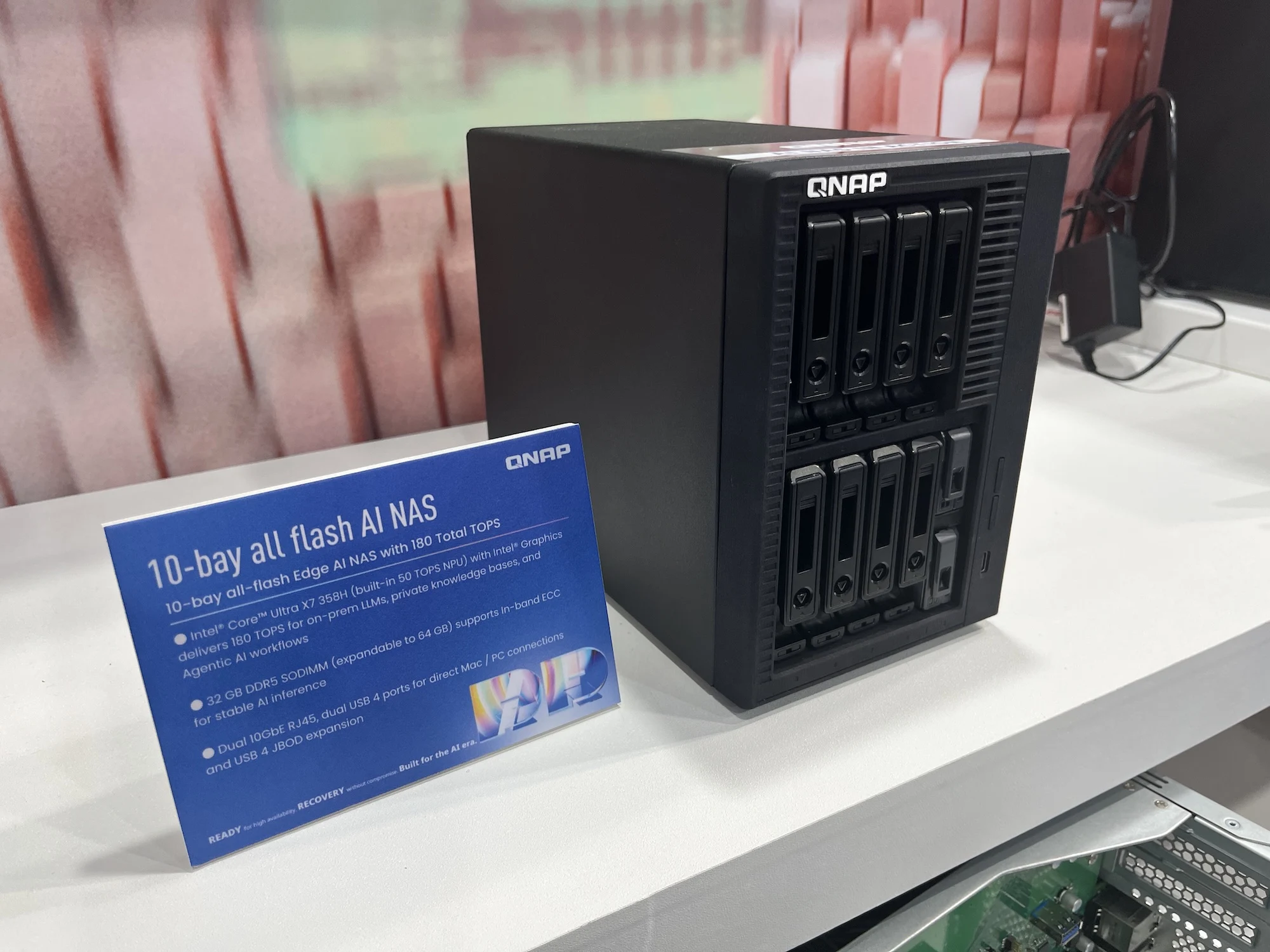
    – QNAP showcased a 10-bay NAS prototype at Computex using a compact chassis that normally fits only three 3.5-inch drives.
    – The system features eight 2.5-inch bays (for HDDs or SSDs) and two smaller bays for M.2 2280 SSDs via E1.S standard adapters.
    – Rear ports include SFF-8088 (mini-SAS), two 10GbE RJ45, USB, and HDMI; powered by an Intel Core Ultra X7 358H with at least 32 GB RAM.
    – E1.S SSDs are expensive and not yet common in the consumer market, limiting immediate utility.
    – Release is planned for Q4 2026; no price has been announced.


    Anyone looking for a NAS system with multiple RAID levels usually has to resort to rack systems or large 3.5-inch hard drive systems. At Computex, however, QNAP demonstrated that another solution is possible. The as-yet-unnamed device houses ten drive bays in a chassis that would normally only accommodate three 3.5-inch drives. QNAP focuses primarily on 2.5-inch bays, of which there are eight. These are capable of holding either hard drives or SSDs. In addition, there are two smaller bays, which are rare in this product class.

    Exploring The Storage Options and Adapters

    According to QNAP, two 2280 SSDs can be added using adapters for M.2 SSDs. 22110 SSDs likely won’t fit. The same applies to smaller SSDs. However, with the common 2280 format, users already have a wide selection. The adapters, however, are not simple adapters. They comply with the E1.S SSD Blade standard, which explains why 22110 SSDs do not fit; the Blade standard is only slightly longer than such SSDs. On the other hand, two high-end server SSDs can be inserted directly.

    The Challange of The E1.S Format

    The E1.S format, while practical, is yet to gain traction in the consumer market, making corresponding SSDs very expensive. This NAS system likely isn’t a perfect fit for that format, but it is at least prepared for an E1.S future.

    Ports, CPU, and Memory Details

    Although information about the system is in short supply, we do know something about the ports. For example, the rear panel features an SFF-8088 connector for connecting mini-SAS cables, allowing for the integration of additional hard drives. Two 10GbE RJ45 ports, several USB ports and an HDMI port are also on board. The CPU is also known: an Intel Core Ultra X7 358H, paired with at least 32 GB of RAM, which can be doubled if needed.

    Pricing and Availibility Information

    QNAP is yet to announce a price for the NAS system, which is planned for release in the fourth quarter of 2026.

    Sources

    • Ugreen Ryzen NAS with 10Gbps and 64GB RAM launched

      Ugreen Ryzen NAS with 10Gbps and 64GB RAM launched

      Key Takeaway

      – Ugreen launches the DXP4800 GT with AMD Ryzen Embedded R2514, offering 4 bays and U.2 SSD support in bays 1–2, plus ECC memory options (8GB/16GB) and 64GB built-in flash with two extra M.2 slots.
      – Dual 10GbE connectivity (rear) replaces the prior 2.5GbE+10GbE setup, with additional front-facing 10Gbps USB-A/USB-C, microSD, HDMI, and drive/ethernet LEDs.
      – Design shift to black-and-gold finish; positioned as a more affordable Ryzen option in the DXP4800 lineup, retailing in China from ~¥2,681 (~$394).


      Ugreen DXP4800 GT Unveiled in China

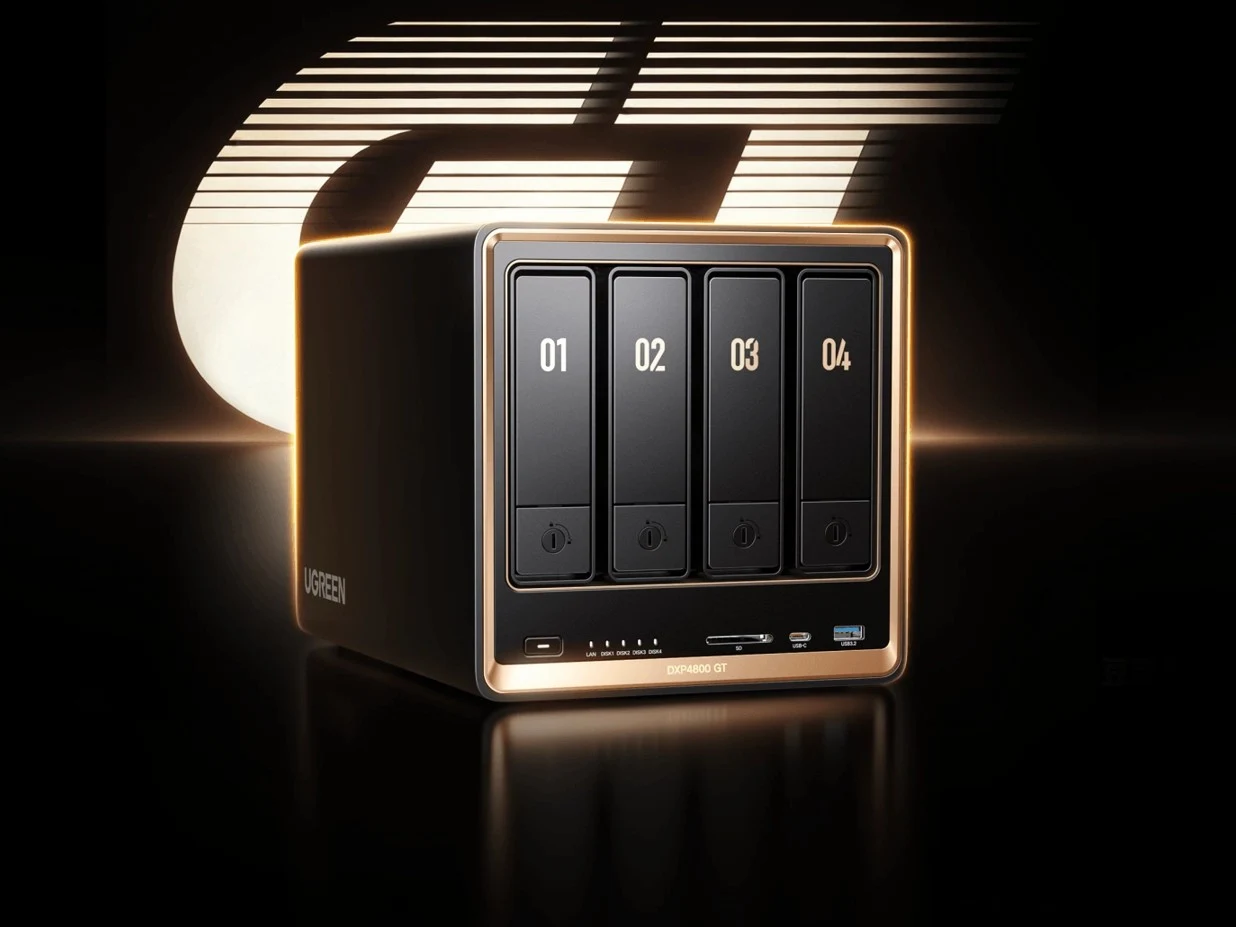
      Ugreen has launched the DXP4800 GT in its home country, adding a AMD Ryzen option to the existing Intel-powered DXP4800 Plus and DXP4800 Pro lineup. Despite the choice to use the Ryzen Embedded R2514 processor, which is less powerful than the Pentium Gold 8505 and Core i3-1315U in the other models, the DXP4800 GT still supports four SATA drives and brings a handful of unique features to the table. The first bit of info is the color and build that mark a departure from prior models, signaling a refreshed design language that aims to catch the eye in a crowded NAS space.

      Design and Drive Flexibility

      Visually, the DXP4800 GT distinguishes itself with a black-and-gold finish, diverging from the silver exterior of its siblings. Functionally, it keeps the core capability of housing four 3.5-inch SATA drives, but with an extra twist: the first two bays can hold U.2 SSDs, giving it a potential edge in sustained read/write workloads when compared to standard SATA setups. This hybrid approach is a deliberate nod toward performance while maintaining familiar expansion options for users who already rely on SATA for bulk storage.

      Memory, Storage, and Internal Layout

      In terms of memory, the DXP4800 GT offers choices of 8GB or 16GB of DDR4 with ECC support, and it includes 64GB of built-in flash memory as well as two additional M.2 SSD slots. This combination enhances caching capabilities and system responsiveness, particularly under heavy I/O loads typical of a multi-drive NAS environment. The inclusion of ECC memory indicates a focus on reliability for continuous operation in a networked storage role.

      Connectivity and Ports

      Connectivity sees a notable upgrade with dual 10GbE ports on the rear, replacing the 2.5GbE + 10GbE setup that was present on earlier models. Other rear ports remain consistent, including a 10Gbps USB-A port, two USB 2.0 ports, and HDMI. The front panel adds a 10Gbps USB-A and a 10Gbps USB-C port, plus a microSD card reader and status LEDs that indicate drive and Ethernet activity. This port arrangement aims to streamline high-speed data transfers and system monitoring from either end of the chassis.

      Availability and Pricing

      Ugreen has begun selling the DXP4800 GT in China with prices starting at 2,681 yuan, which is roughly $394 USD when converted. By comparison, the DXP4800 Plus and Pro are listed in the US market at $729.99 and $799.99 respectively, before any discounts. The price positioning suggests a more affordable entry point for users who want a Ryzen-based NAS option with robust drive expansion and high-speed networking capabilities.

      Sources