Category: Computers

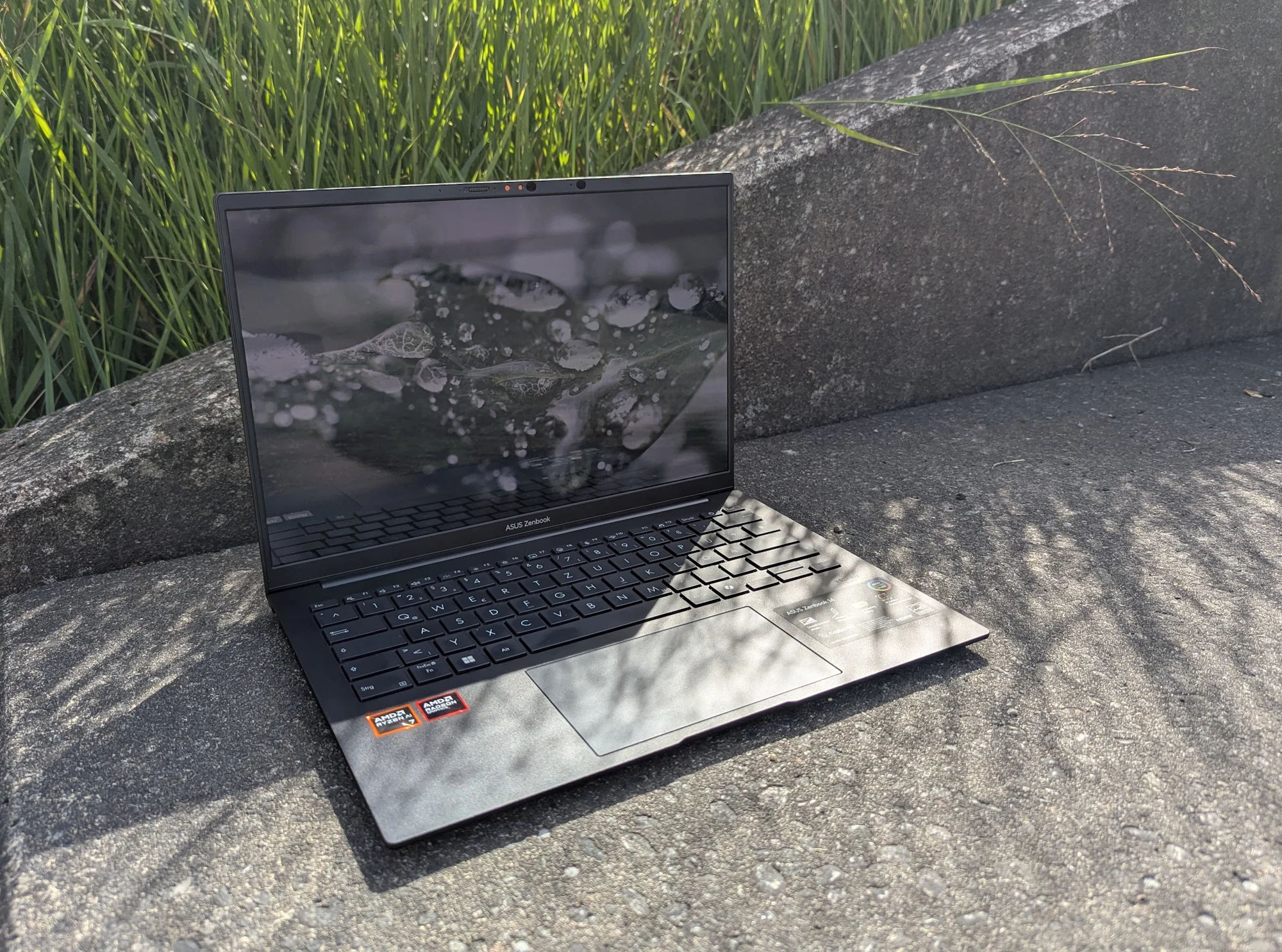
  • Intel ZenBook 14 OLED: AMD Version Offers Faster Wi-Fi 7 Speeds

    Intel ZenBook 14 OLED: AMD Version Offers Faster Wi-Fi 7 Speeds

    Key Takeaways

    1. The Asus GT-AXE11000 router was used for speed tests, and Wi-Fi 7 testing is not possible yet due to the lack of compatible routers.
    2. The AMD ZenBook 14 OLED is priced at $1,249 and still uses Wi-Fi 6E, while the Intel model includes Wi-Fi 7.
    3. Surprisingly, the AMD model with RealTek hardware outperformed the Intel model in transfer speeds by about 9% under Wi-Fi 6E conditions.
    4. In the 5 GHz band, the AMD version showed approximately 10% faster download speeds and a 5% advantage in upload speeds compared to the Intel version.
    5. Despite the Intel model’s Wi-Fi 7 capability, it does not translate to better real-world performance compared to the AMD model’s RealTek module.


    We need to mention something important: our findings are based on transfer speeds evaluated with our Wi-Fi 6E router, the Asus GT-AXE11000. Right now, Notebookcheck isn’t able to test Wi-Fi 7 since we don’t have a router for that standard yet.

    Pricing Differences

    Although both ZenBook 14 OLED versions we examined have similar price points, Wi-Fi 7 is only available on the Intel model. For some reason, the AMD version, which is listed at $1,249 on Amazon, still uses RealTek’s Wi-Fi 6E module.

    Performance Insights

    However, saying “stuck with” may not be the most accurate way to describe this situation, because our speed tests brought some unexpected results. Under Wi-Fi 6E conditions, it wasn’t the Intel BE201 chip that performed the best; instead, the AMD model with the RealTek hardware came out ahead. The difference was mainly in transfer speeds, with the RealTek chip leading by around 9%. Both laptops had nearly identical download performance.

    On the 5 GHz band, the difference grew a bit. In this case, the AMD version was approximately 10% faster in downloading and still maintained a 5% advantage in upload speeds.

    Real-World Application

    So, while the Intel ZenBook 14 OLED may seem better on paper, this benefit doesn’t really show up in practical use—at least not when using Wi-Fi 7. Interestingly, the supposedly weaker RealTek module in the AMD model actually achieves slightly better transfer rates.

    That said, the Intel version does provide other hardware benefits and includes some new features this year. For a comprehensive examination of these advantages—and what the AMD model will offer in 2025—you can take a look at our complete reviews for both the Intel ZenBook 14 and the AMD ZenBook 14.

  • $99 Open-Source AMOLED Display for Alerts and JavaScript Apps

    $99 Open-Source AMOLED Display for Alerts and JavaScript Apps

    Key Takeaways

    1. WebScreen is an open-source device that connects to monitors to display notifications and system information, targeting gamers and content creators.
    2. It supports cross-platform notifications from Linux and popular applications like Slack and Discord, allowing for customization and integration with smart home setups.
    3. The compact design (68 x 60 x 54 mm, 100 grams) connects via USB-C and can be stacked with other webcams while enabling live JavaScript coding and debugging.
    4. A marketplace for JavaScript apps and enclosure designs is planned, with current offerings including productivity timers, games, and smart home monitors.
    5. Manufacturing includes in-house 3D printing in Japan, with distribution managed by Mouser Electronics, while risks include tariff changes, component shortages, and firmware issues.


    WebScreen is a nifty, open-source gadget that connects to a monitor like a webcam, displaying notifications, reminders, and system information. Aimed at gamers and content creators, it features a 1.9-2.1 inch AMOLED screen and utilizes an ESP32-S3 microcontroller. The device runs JavaScript apps directly from a microSD card, with support for Wi-Fi and Bluetooth to provide real-time data updates.

    Focus on Cross-Platform Compatibility

    With feedback from early users, WebScreen is designed to deliver cross-platform notifications from Linux desktops and applications such as Slack and Discord. Its open-source design is beneficial for developers wanting to personalize the device or integrate it with smart home setups. According to the Crowd Supply website, typical uses include productivity timers, dashboards, webcam lighting, and assisting with streaming. The device is set to launch at a price of $99.

    Compact and Convenient Design

    Measuring 68 x 60 x 54 mm and weighing around 100 grams, the device connects and powers through USB-C. Its design allows it to mount on top of a monitor, making it possible to stack it with other webcams. All hardware and software components are open-source and released under licenses that promote community contributions. A Serial IDE is included for live JavaScript coding and debugging, eliminating the need to remove the microSD card.

    Expanding the Ecosystem

    WebScreen plans to feature a marketplace for JavaScript applications, enclosure designs, and hardware tweaks. Some current app offerings include reminders, a Pomodoro timer, a Doom minigame, and smart home monitors. Available enclosure colors are black, blue, green, pink, red, and orange. Manufacturing includes in-house 3D printing of enclosures in Japan, with Mouser Electronics managing global distribution through Crowd Supply. Noted risks involve changes in tariffs, shortages of components, firmware issues, and delays in certification.

    Source:
    Link


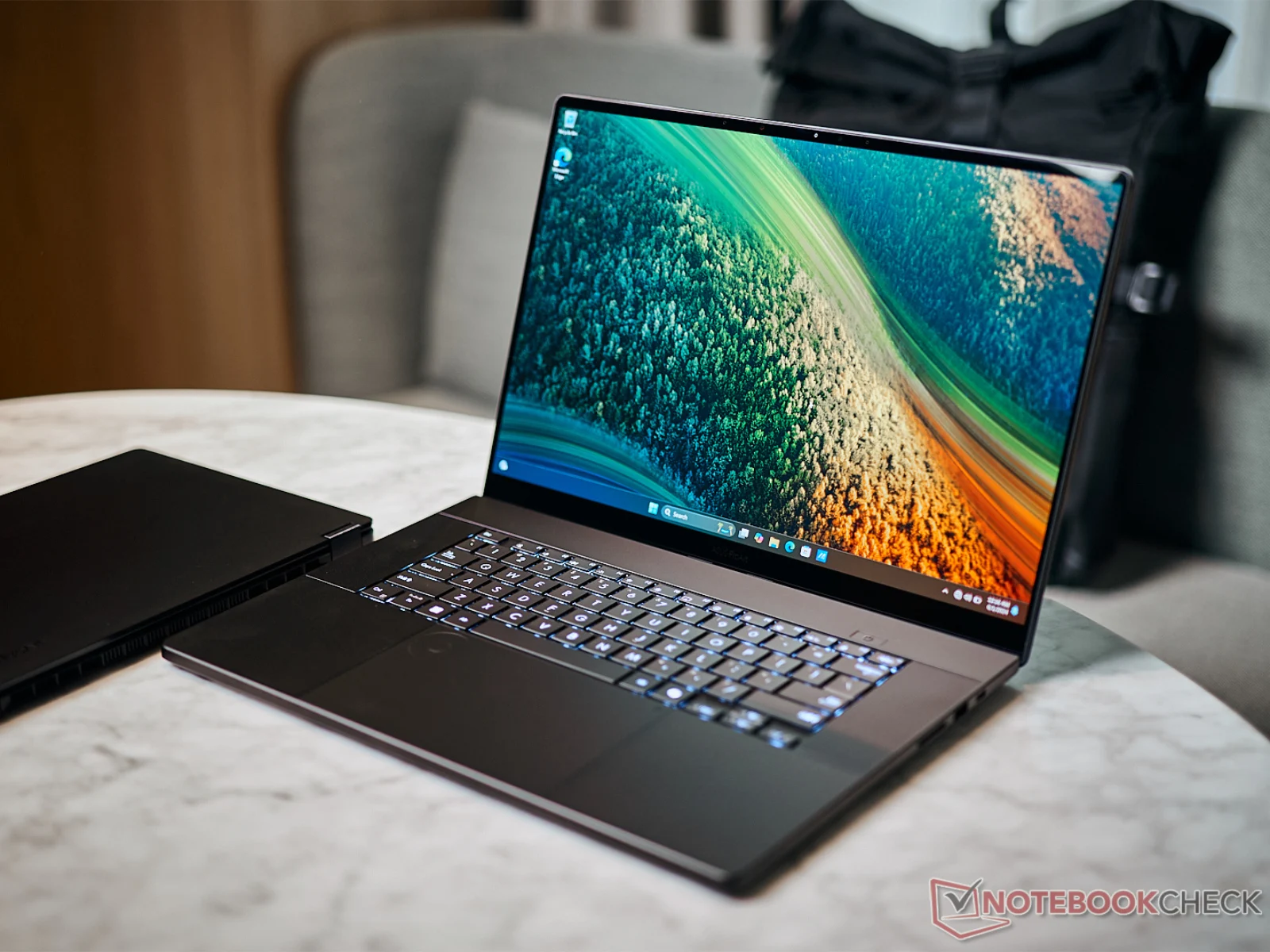
  • Asus ProArt 16: New Nvidia RTX 5070 Ti, 5080, 5090 Variants

    Asus ProArt 16: New Nvidia RTX 5070 Ti, 5080, 5090 Variants

    Key Takeaways

    1. Asus updated the ProArt P16 laptop with Nvidia’s GeForce RTX 50 series and retained the AMD Ryzen AI 9 HX 370 APU.
    2. The ProArt P16 with GeForce RTX 5090 is priced at $3,999 in the U.S. and CNY 29,999 (around $4,214) in China.
    3. A more affordable GeForce RTX 5080 variant was introduced alongside the RTX 5090 in China.
    4. In Italy, Asus launched the RTX 5080 and RTX 5090 variants, but not the RTX 5060 or RTX 5070 models available in other Eurozone countries.
    5. Pricing for the ProArt P16 in the Eurozone starts at €3,199 (around $3,748) for the RTX 5070 Ti, with the RTX 5090 variant priced at €4,699 (approximately $5,505).


    Almost two weeks ago, Asus revealed an updated version of its ProArt P16 creator laptop. To summarize, the company upgraded the ProArt P16 with Nvidia’s GeForce RTX 50 laptop series this spring, while keeping the AMD Ryzen AI 9 HX 370 APU. Then, at the beginning of last month, Asus launched a GeForce RTX 5090 edition with a price tag of $3,999, though they did not start pre-orders at that time.

    New Variants in China

    Shortly after the initial release, Asus began selling the GeForce RTX 5090 variant in China for CNY 29,999 (around $4,214). They also introduced a more affordable GeForce RTX 5080 version for the first time. In other regions, the ProArt P16 has been available with a choice between Nvidia’s GeForce RTX 5060 and GeForce RTX 5070 laptop GPUs, currently priced at $2,899 on Amazon.

    Expansion to Italy

    Now, Asus has quietly launched the GeForce RTX 5080 and GeForce RTX 5090 variants in Italy, along with a lower-tier GeForce RTX 5070 Ti variant. Interestingly, the company has opted not to sell GeForce RTX 5060 or GeForce RTX 5070 models in Italy, which are available in other Eurozone countries like Germany.

    Pricing details for the ProArt P16 start at €3,199 (about $3,748) in the Eurozone with a GeForce RTX 5070 Ti, 32 GB of RAM, and 2 TB of storage. If you choose the GeForce RTX 5080, it automatically comes with 64 GB of RAM for a price of €4,099 (around $4,803). Finally, if you select the GeForce RTX 5090, the price of the ProArt jumps to €4,699 (approximately $5,505) since it includes 4 TB of storage to go along with its 64 GB of RAM. At the moment, it’s uncertain when these GPU options will become available in other markets. All prices mentioned include a 22% VAT.

    Source:
    Link


  • Intel Panther Lake Leaks: 12 CPUs Revealed in New Lineup

    Intel Panther Lake Leaks: 12 CPUs Revealed in New Lineup

    Key Takeaways

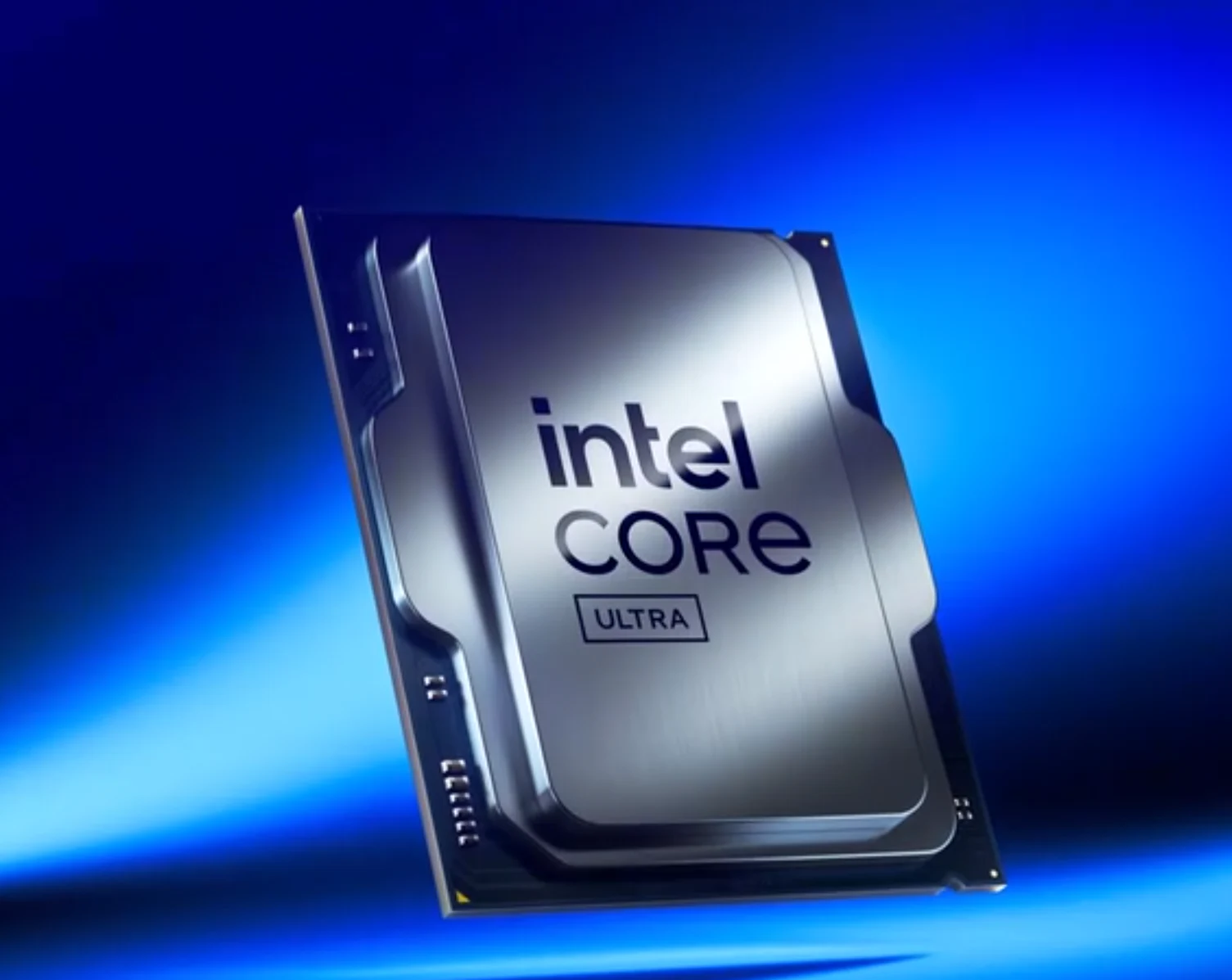
    1. Intel is set to launch four new Core Ultra X-branded processors in its Panther Lake series, featuring a more powerful integrated GPU (iGPU).
    2. The final digit in the naming convention for Panther Lake CPUs will indicate the capabilities of the iGPU, differing from the Lunar Lake series.
    3. There will be no Core Ultra 3_6 models in the Panther Lake lineup.
    4. Panther Lake will include U-branded processors with a maximum power output of 15 Watts, aimed at ultra-portable laptops, and will not have E-cores.
    5. The Core Ultra 3 model will feature only two P-cores, and all information is speculative until the official release from Intel.


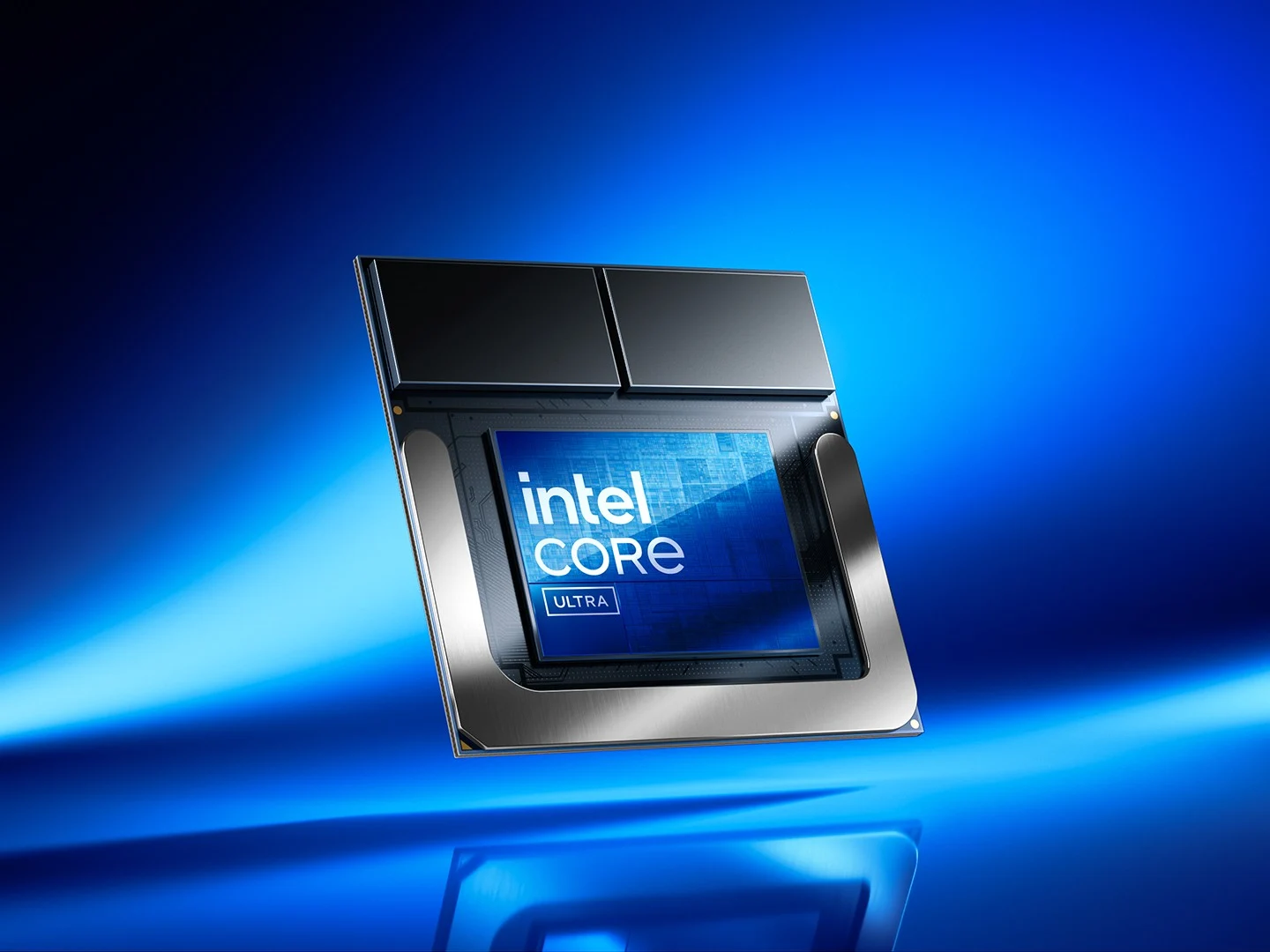
    A previous leak has suggested that Intel plans to launch four new Core Ultra X-branded processors within its Panther Lake series, alongside the standard Core Ultra chips. Initially, it was unclear how these would be distinct from other Panther Lake CPUs. However, recent leaks from Chiphell and Weibo have provided more details, showcasing the complete Panther Lake lineup.

    Differences in the Core Ultra X Lineup

    The anticipated Core Ultra X series will set itself apart from other models by featuring a more robust integrated GPU (iGPU). In the Lunar Lake series, the final digit (6/8) indicated the amount of on-package RAM that each CPU had. For Panther Lake, this digit will represent the capabilities of the iGPU instead. There has been some mixed information regarding the naming convention for the ‘X’ models, with some sources suggesting names like Core Ultra 9 X388H, among others. Interestingly, it appears there will be no Core Ultra 3_6 models this time around.

    U-Branded Parts in Panther Lake

    Additionally, Panther Lake will introduce some U-branded processors. If their previous generation’s models are any indication, these will likely have a maximum power output of 15 Watts, making them suitable for ultra-portable, thin-and-light laptops. In terms of specifications, they will omit the E-cores while retaining the other features. Notably, the Core Ultra 3 model will further reduce the number of P-cores to just two.

    As always, this information should be considered speculative until Intel officially unveils Panther Lake in the coming days. It remains uncertain whether Intel will disclose all twelve CPUs at once, but based on previous trends with Lunar Lake, this is certainly a possibility.

    Source:
    Link


  • Topfeel Launches Affordable G1 eGPU Dock Series with Storage Expansion

    Topfeel Launches Affordable G1 eGPU Dock Series with Storage Expansion

    Key Takeaways

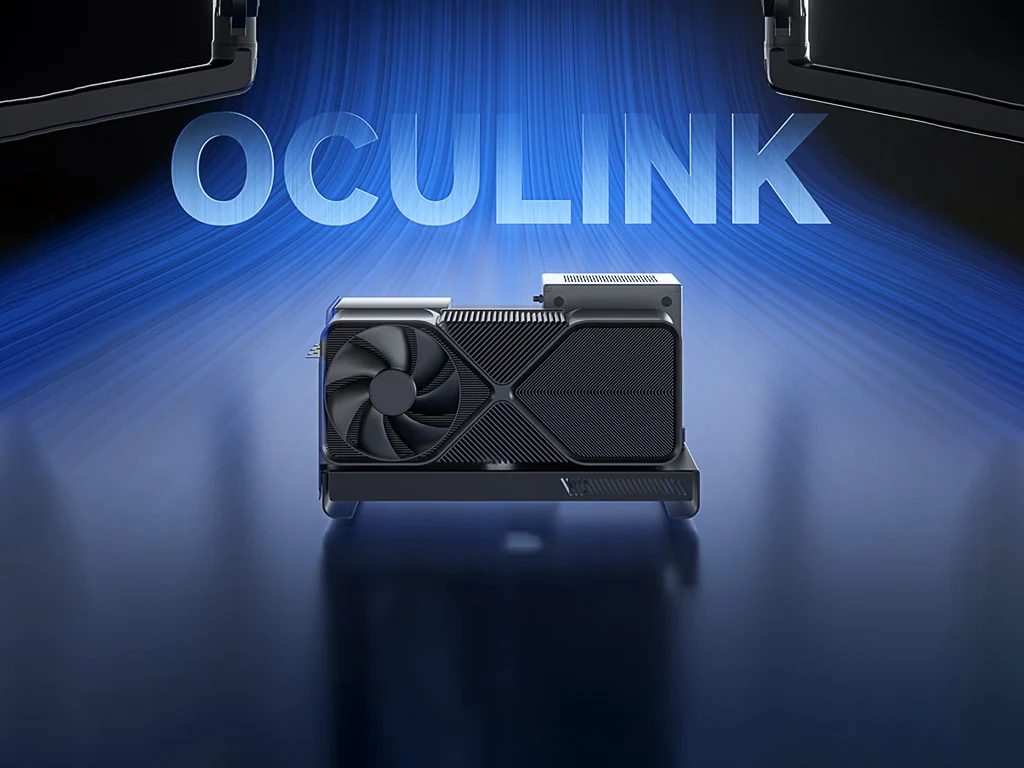
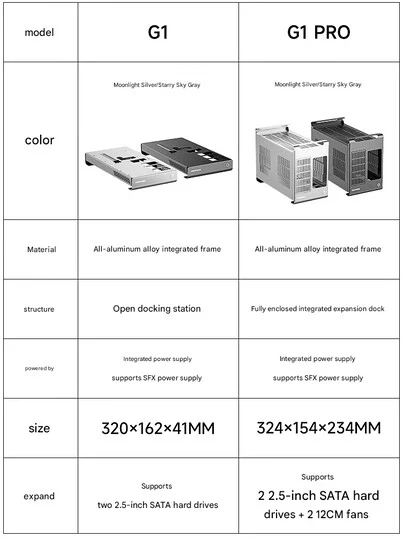
    1. Topfeel launched two eGPU docks, the G1 (open design) and G1 Pro (enclosed design), in China.
    2. The G1 is compatible with almost all desktop GPUs and can use either ATX or SFX power supplies, while the G1 Pro only supports SFX power supplies.
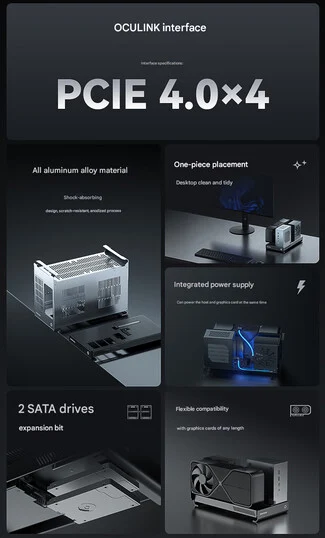
    3. Power delivery to the mini PC is limited to 140 W, with both docks using OCuLink for better GPU performance.
    4. Both docks support two 2.5-inch SATA drives for storage expansion, and the G1 Pro can accommodate two 120 mm fans for cooling.
    5. Pricing for the G1 starts at CNY 599 ($84) and the G1 Pro at CNY 799 ($112), with optional bundles including a 600 W SFX power supply.


    Topfeel has launched two new eGPU docks in China, named the G1 and G1 Pro. The G1 features an open design which makes it compatible with almost all desktop GPUs. This open structure also allows for the installation of an ATX PSU, though the company suggests using an SFX power supply for a more streamlined appearance.

    G1 Pro Features

    On the other hand, the Topfeel G1 Pro comes as an enclosed eGPU dock, which limits the types of PSUs that can be used with it. Specifically, it supports only SFX power supplies. Topfeel highlights that the optional bundled PSU can power both the GPU and a connected mini PC simultaneously (like the GMK EVO-X1 with 32 GB RAM and OCuLink port, currently priced at $819.99 on Amazon).

    Power Delivery Limits

    It’s important to mention that the power delivery to the mini PC is capped at 140 W. For connecting devices, both the Topfeel G1 and G1 Pro docks utilize OCuLink, which generally provides less degradation in GPU performance compared to USB4 and even Thunderbolt 5.

    Storage and Cooling Options

    Another interesting feature of the Topfeel G1 and G1 Pro docks is their support for two 2.5-inch SATA drives. This capability allows for storage expansion, and the G1 Pro can also fit in two 120 mm fans, providing extra cooling within the enclosure.

    As for the pricing, the G1 starts at CNY 599, roughly $84, while the G1 Pro is priced at CNY 799, about $112. Topfeel also allows customers to bundle the docks with a 600 W SFX power supply. There has been no announcement regarding a global release yet, but many of Topfeel’s products are typically listed on AliExpress eventually.

    Source:
    Link


  • Baseus Launches 12-in-1 Docking Station with Dual Monitor Support

    Baseus Launches 12-in-1 Docking Station with Dual Monitor Support

    Key Takeaways

    1. Enhanced Display Capabilities: Supports one or two monitors with resolutions up to 4K@60Hz and allows different content on three screens for Mac users.

    2. Versatile Connectivity Options: Features six ports for device power and data transfer, including two USB-C ports (10 Gbps), two USB-A ports (5 Gbps), and a Gigabit Ethernet port.

    3. Power Supply: Powered through a 100W USB-C input with up to 95W output and includes a 2.6 ft USB-C cable for connection to the host.

    4. Compatibility: Compatible with macOS (M1/M2/M3), Windows, Vista, and Linux operating systems.

    5. Pricing and Design: Cuboidal design with a dark gray metallic finish, available for $199.99/€149.99 on Amazon.


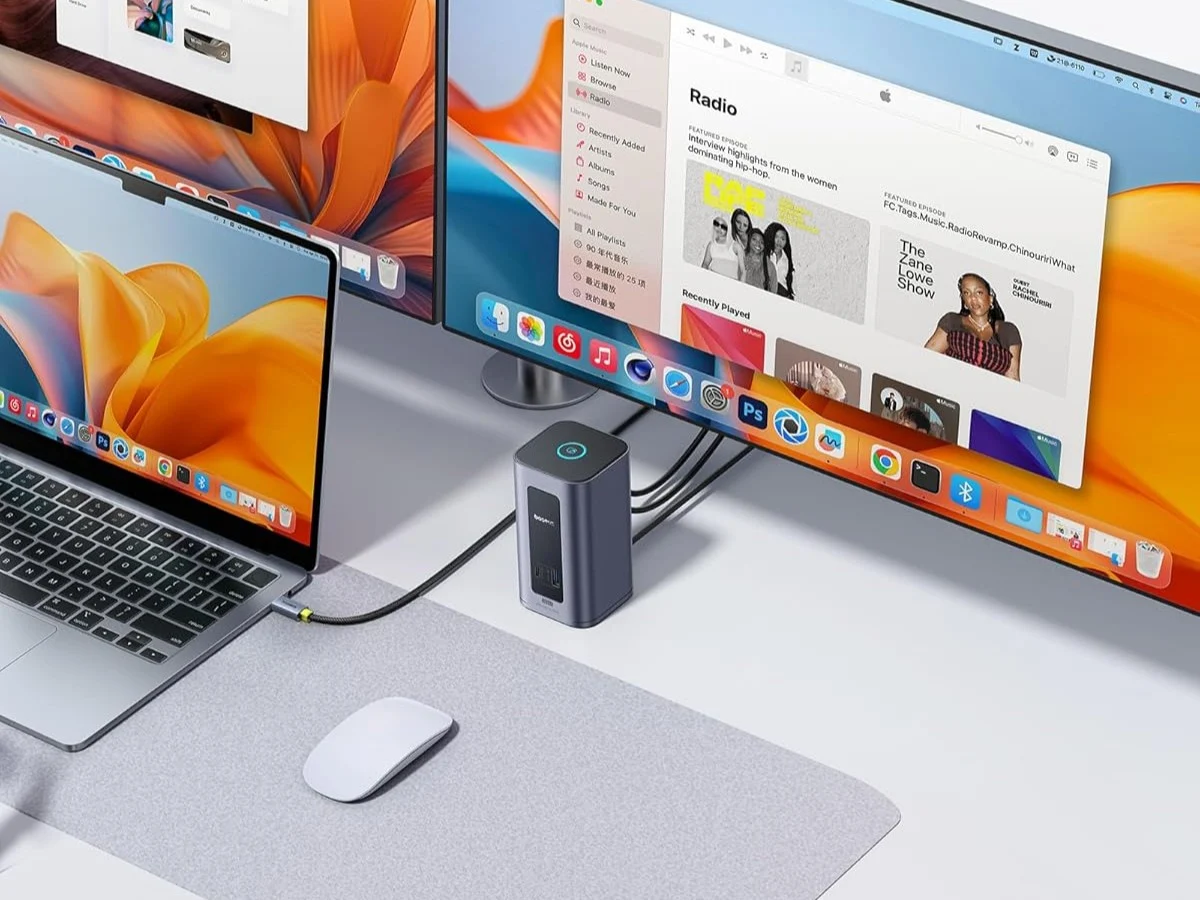
    Baseus has introduced a new version of the Nomos NU1 Air Spacemate 12-in-1 Docking Station. This latest model offers enhancements specifically for Mac users.

    Enhanced Display Capabilities

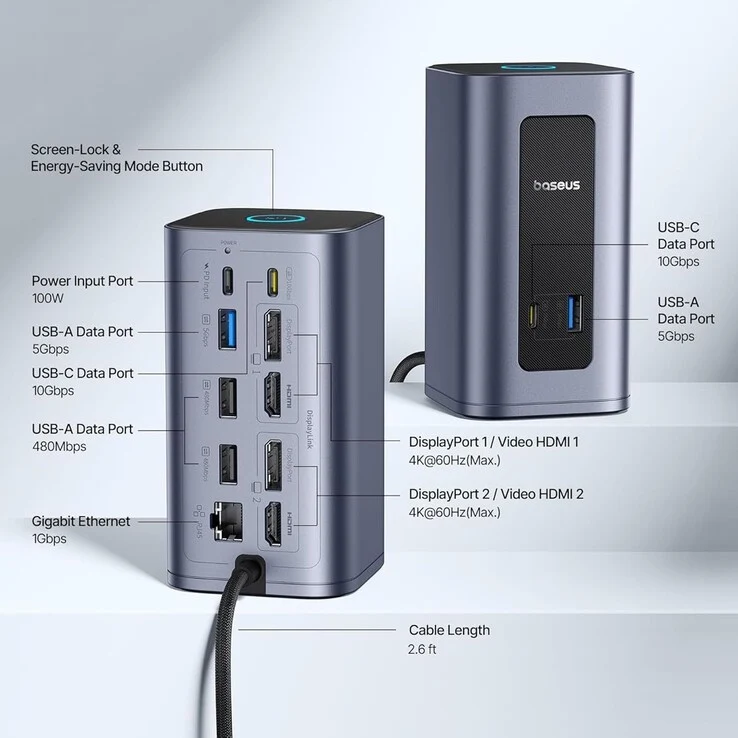
    The Nomos NU1 Air Spacemate 12-in-1 Docking Station allows users to connect either one or two monitors. It features two HDMI ports and two DisplayPorts, all capable of supporting resolutions up to 4K@60Hz. When using two monitors at the same time, each can display at a resolution of 1440p. According to the company, Mac users will benefit from the ability to display different content across their three screens, which was a limitation in the previous version that could only mirror content on two external displays.

    Versatile Connectivity Options

    Baseus’ Nomos NU1 boasts six ports designed for powering devices or facilitating data transfers. This includes two USB-C ports with a data transfer speed of 10 Gbps, two USB-A ports with a 5 Gbps speed, and two additional USB-A ports operating at 480 Mbps. Furthermore, there’s a Gigabit Ethernet port available. The device is powered through a 100W USB-C input and comes with a 2.6 ft (~0.8 m) USB-C cable for connecting to the host, providing up to 95W output. Additionally, a button located on the top of the device can be used to turn off the connected monitors or to enable power-saving mode.

    Compatibility and Design

    This docking station is marketed as compatible with macOS (M1/M2/M3), Windows, Vista, and Linux operating systems. It has a cuboidal shape and features a dark gray metallic finish; however, the exact dimensions of this model have not yet been disclosed. Currently, you can purchase the Baseus Nomos NU1 Air Spacemate 12-in-1 Docking Station on Amazon for $199.99/€149.99.

    Source:
    Link


  • Minisforum M1-1295 Mini-PC: Intel Core i9-12950HX, 64GB RAM

    Minisforum M1-1295 Mini-PC: Intel Core i9-12950HX, 64GB RAM

    Key Takeaways

    1. Minisforum launched the MS-S1 Max with AMD Ryzen AI Max+ 395 APU and the M1-1295 with Intel Alder Lake in a minimalistic design.
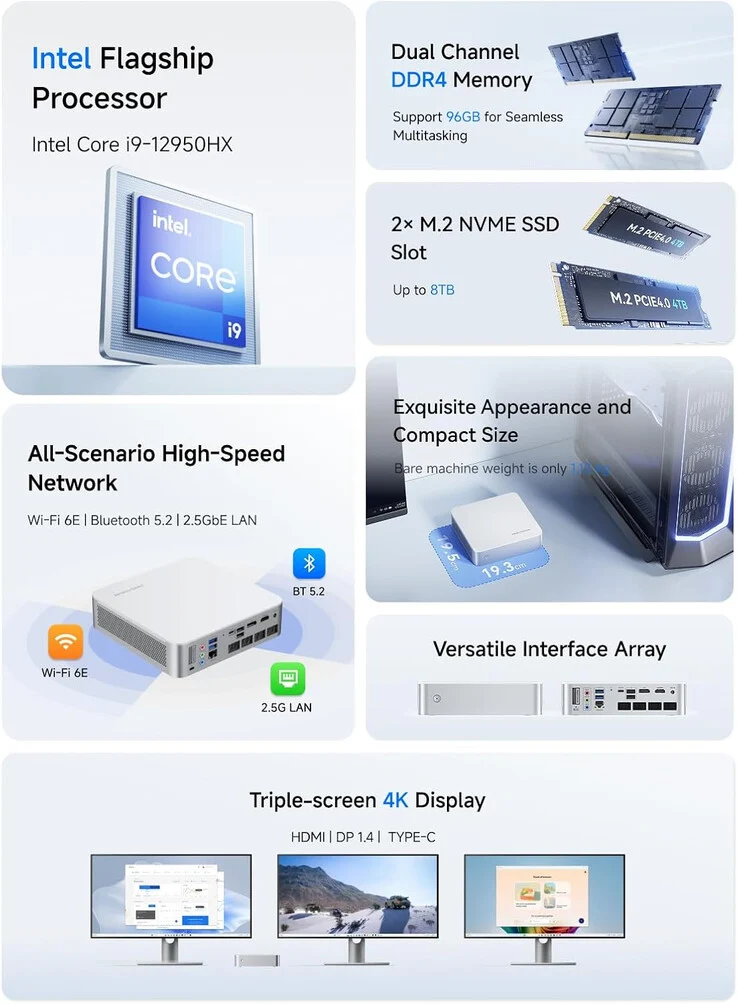
    2. The M1-1295 features only a power button on the front, with all ports located at the back, including four USB ports and three display outputs.
    3. The cooling system includes a single turbofan and copper heat pipe, with perforations on the sides for improved airflow.
    4. The M1-1295 is powered by a Core i9-12950HX CPU, which has 16 cores and 24 threads, performing slightly behind the Ryzen AI counterparts in benchmarks.
    5. The M1-1295 is priced at $469 for a preconfigured model with 32 GB RAM and a 1 TB SSD, with a future barebones version expected to be around $329.


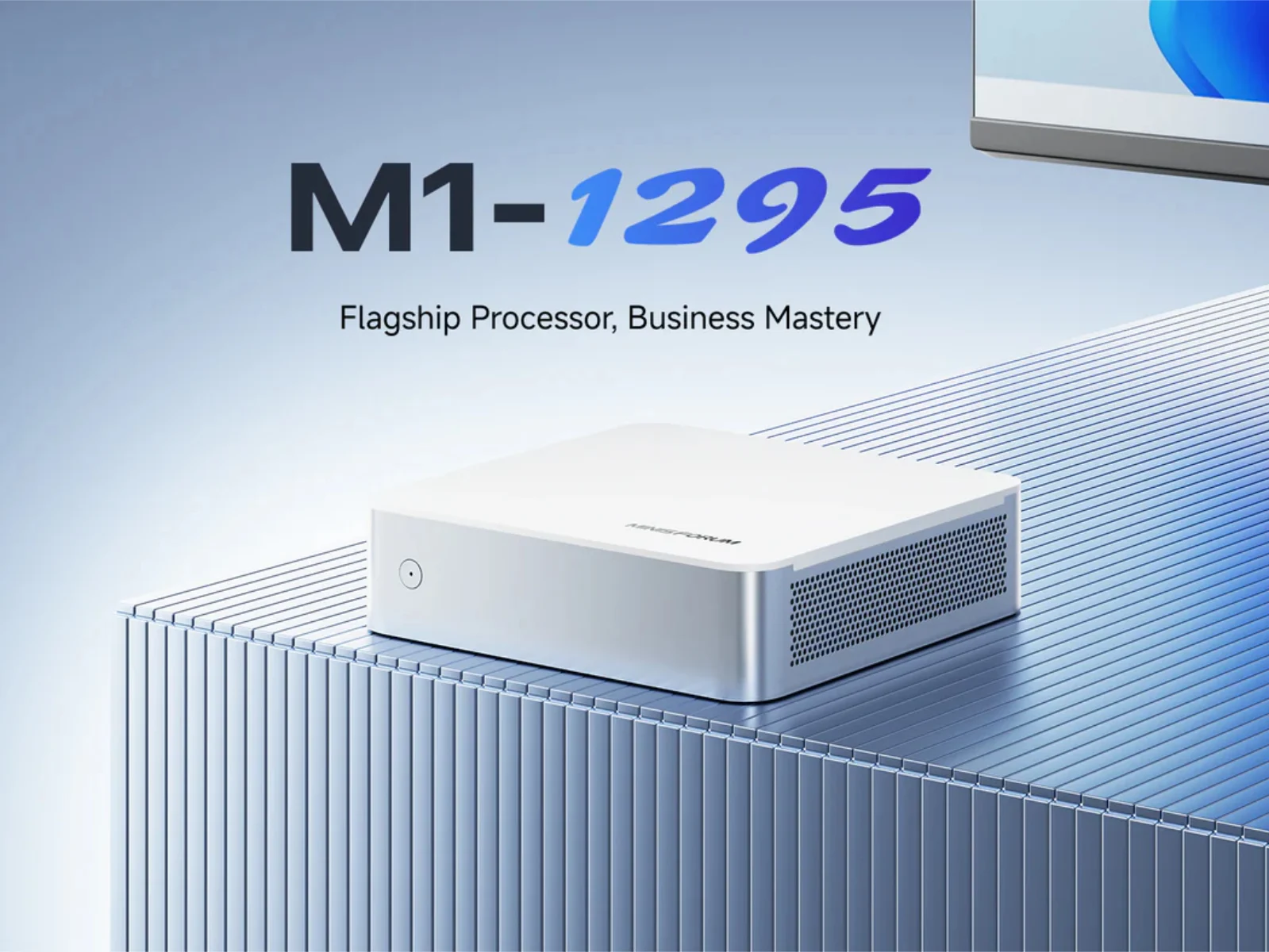
    Minisforum has introduced the MS-S1 Max featuring the AMD Ryzen AI Max+ 395 APU. In addition, they have quietly launched the M1-1295, which is based on Intel’s Alder Lake but has a very minimalistic design. Unlike many modern mini-PCs, the M1-1295 doesn’t display any ports on its front, opting instead for a plain silver box look.

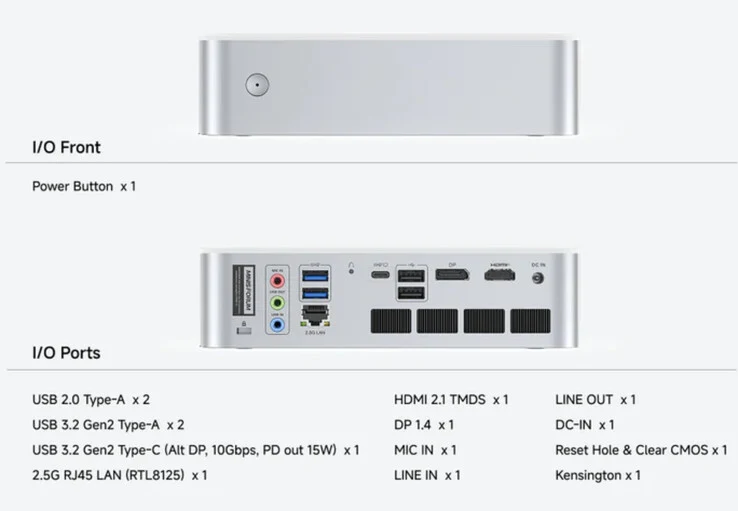
    Design and Connectivity

    The only feature on the front is a small power button, with all connectivity options located at the back of the unit. As shown in the image below, the M1-1295 is equipped with four USB ports, a 2.5 Gigabit LAN port, three display outputs, and dedicated mic and line-in/out inputs. The dimensions of the device are 195 x 193 x 52 mm, and it weighs in at 1.12 kg.

    Cooling System

    To improve airflow for its single turbofan and copper heat pipe cooling system, Minisforum has made perforations on both the left and right sides of the mini-PC. The M1-1295 is powered by the Core i9-12950HX, featuring a 16-core and 24-thread CPU, which falls slightly behind the Ryzen AI 9 HX 370 in benchmark tests and trails the Ryzen AI Max+ 395 by a noticeable margin.

    Pricing and Configuration

    Currently, the M1-1295 is available as a preconfigured mini-PC, which includes 32 GB of RAM and a 1 TB SSD, priced at $469 if bought directly or $579 on Amazon. However, it can support up to 64 GB of DDR4-3200 RAM. Eventually, Minisforum plans to offer a barebones version for around $329.

    Source:
    Link


  • Samsung Galaxy Book6 Ultra: Major Upgrade Over Book4 Ultra

    Samsung Galaxy Book6 Ultra: Major Upgrade Over Book4 Ultra

    Key Takeaways

    – Samsung will not launch an Ultra-branded laptop for the Galaxy Book5 series, focusing instead on the Galaxy Book5 Pro and Pro 360 models.
    – Rumors suggest that the Ultra branding may return with the Galaxy Book6 series, but the release date is still unknown.
    – The Galaxy Book6 Ultra and Pro are expected to have improved battery capacities, with 14-inch and 16-inch models available.
    – Battery capacity for the Galaxy Book6 Pro’s 14-inch model is predicted to increase by 5.9%, while the 16-inch model may see a 3.5% boost.
    – The Galaxy Book6 Ultra is rumored to have a battery capacity of 78.64 Wh, still significantly lower than the MacBook Pro 16’s 99.6 Wh battery.


    Samsung decided not to launch an Ultra-branded laptop for the fifth generation of its Galaxy Book series. Instead, the Galaxy Book5 series has its highest models as the Galaxy Book5 Pro and the Galaxy Book5 Pro 360, which can be equipped with Intel Core Ultra 7 258V processors (currently priced at $1,892 on Amazon).

    Future Expectations

    According to rumors that surfaced during the summer, Samsung’s Ultra branding is expected to make a comeback with the Galaxy Book6 series. Although the release date is still uncertain, SamMobile reports that they have obtained information regarding the battery capacities for both the Galaxy Book6 Ultra and Galaxy Book6 Pro, available in 14-inch and 16-inch sizes.

    Battery Upgrades

    On one side, the website predicts that Samsung will implement a 5.9% increase in battery capacity from 62.2 Wh to 65.9 Wh for its upcoming competitor against the MacBook Pro 14. Interestingly, the 16-inch model will see a move from 74 Wh to 76.6 Wh, representing a 3.5% boost in capacity between generations.

    Meanwhile, the Galaxy Book6 Ultra is rumored to have a 6.5% bigger battery than the older Galaxy Book4 Ultra, arriving at 78.64 Wh. However, this capacity still leaves Samsung’s top laptop more than 20% behind the MacBook Pro 16, which features a 99.6 Wh battery from Apple.

    SamMobile’s insights offer a glimpse into the upcoming advancements, but only time will tell how these changes will affect the market.

    Source:
    Link


  • Raspberry Pi Trixie OS Update: Free Major Release for SBCs

    Raspberry Pi Trixie OS Update: Free Major Release for SBCs

    Key Takeaways

    1. The Raspberry Pi 500 Plus is a new, upscale version of the Raspberry Pi 500, priced at $151.
    2. The Raspberry Pi OS update, named Trixie, includes enhancements like a polished desktop interface and better system management tools.
    3. Trixie utilizes a 64-bit time representation, allowing system clocks to function until the year 292,277,026,596.
    4. A new Control Centre application merges multiple system settings, supports third-party extensions, and allows custom settings pages.
    5. Visual upgrades in Trixie include a new font, wallpapers, desktop theme, and icons, with a recommendation against direct upgrades from Bookworm to Trixie.


    The dust has hardly settled from the debut of the Raspberry Pi 500 Plus, which is a more upscale version of the current Raspberry Pi 500 (currently priced at $151 on Amazon) that also serves as a mechanical keyboard. In spite of this, the company has revealed a significant update to the Raspberry Pi OS, which comes with some unfortunate news about the ongoing pricing of single-board computers (SBCs), which we have discussed in another article.

    New Features in Trixie

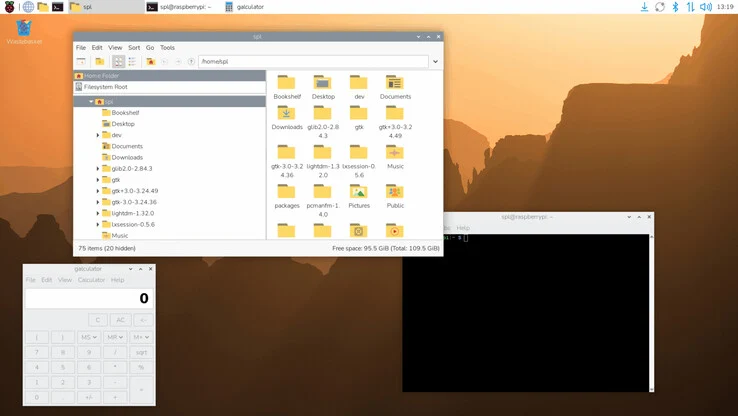
    This OS update, dubbed Trixie after the Toy Story character, brings a variety of enhancements that include both behind-the-scenes fixes and better system management tools, along with a polished desktop interface. For example, Trixie now utilizes a 64-bit time representation, enabling system clocks to function past January 19, 2038. In theory, Raspberry Pi OS Trixie can operate without any problems in this regard until the year 292,277,026,596.

    Control Centre and Simplified Settings

    Moreover, Trixie merges system settings into a newly designed Control Centre application, which replaces the previous Appearance, Mouse and Keyboard, Raspberry Pi Configuration, and Screen Configuration tools. Even better, Control Centre is compatible with third-party extensions and allows for the creation of custom settings pages. Additionally, the new OS organizes desktop image components into meta-packages to make it easier to switch between Lite and desktop environments.

    Visual Enhancements and Recommendations

    Furthermore, Trixie rolls out the Nunito Sans Light font, new wallpapers, a refreshed desktop theme, and a brand-new set of icons. It’s important to note that Raspberry Pi does not suggest upgrading a Bookworm image directly to Trixie. For more information about this new OS release from Raspberry Pi, you can check out their official website.

    Source:
    Link


  • Panther Lake Lineup to Feature New Core Ultra X Models

    Panther Lake Lineup to Feature New Core Ultra X Models

    Key Takeaways

    1. Intel’s Panther Lake series will launch with at least four models, including a high-end Core Ultra 9 with 4 P-cores, 8 E-cores, and 4 LPE-cores.
    2. Standard Core Ultra chips will still be available, along with new X-branded versions, though differences between X and non-X models are unclear.
    3. New Core i3, i5, and i7 processors are expected, likely being renamed versions of existing Meteor/Raptor Lake processors.
    4. Intel’s use of the ‘X’ designation may be a strategic move in response to Qualcomm’s Snapdragon X2 Elite series, which is gaining traction in the low-power CPU market.
    5. The competition in the CPU market is intensifying, prompting Intel to innovate with their Panther Lake lineup.


    An earlier report had already hinted that Intel’s Panther Lake series will debut with at least four different models. The high-end Core Ultra 9 version is expected to come equipped with 4 P-cores, 8 E-cores, and 4 LPE-cores. A fresh leak from users @9550pro and @momomo_us on X suggests that a new batch of processors will be added to Panther Lake, featuring some interesting new options.

    Core Ultra Chips Remain

    It’s important to point out that the standard Core Ultra chips will continue to be available. Their X-branded versions will complement the existing lineup, though it remains uncertain how these X models will differ from their non-X versions. Additionally, some Core i3, i5, and i7 processors are anticipated to arrive, and based on trends from prior generations, it’s likely they will just be renamed versions of Meteor/Raptor Lake SKUs.

    Influence from Competitors

    Intel’s decision to incorporate the ‘X’ designation could be a response to Qualcomm’s newly launched Snapdragon X2 Elite series. This year, the Arm-based chips are proving to be strong contenders in the low-power CPU sector, thanks to their higher core counts and advanced third-gen Nuvia cores.

    The ongoing competition in this space is definitely heating up, and it will be interesting to see how Intel responds with their Panther Lake lineup.

    Source:
    Link