Tag: Core Ultra

  • ASRock iBOX Fanless Mini PCs with Intel Panther Lake CPUs

    ASRock iBOX Fanless Mini PCs with Intel Panther Lake CPUs

    Key Takeaway

    – Two Panther Lake Core Ultra models (X7 385H and Core Ultra 5 325) powering a refreshed fanless iBOX with unchanged chassis.
    – High RAM/storage options: up to 128 GB DDR5-7200 on the faster model; NVMe M.2 2242 PCIe 4.0 x4 and M.2 2280 PCIe 5.0 slots for storage.
    – Rich I/O: front Thunderbolt 4 with DP 2.1, USB-A 10 Gbps, USB-C 20 Gbps (DP 1.4a), USB 2.0, optional legacy port; back includes dual HDMI 2.1 and dual 2.5 GbE, plus Wi-Fi card option via M.2 slot.


    ASRock’s iBOX Panther Lake Update

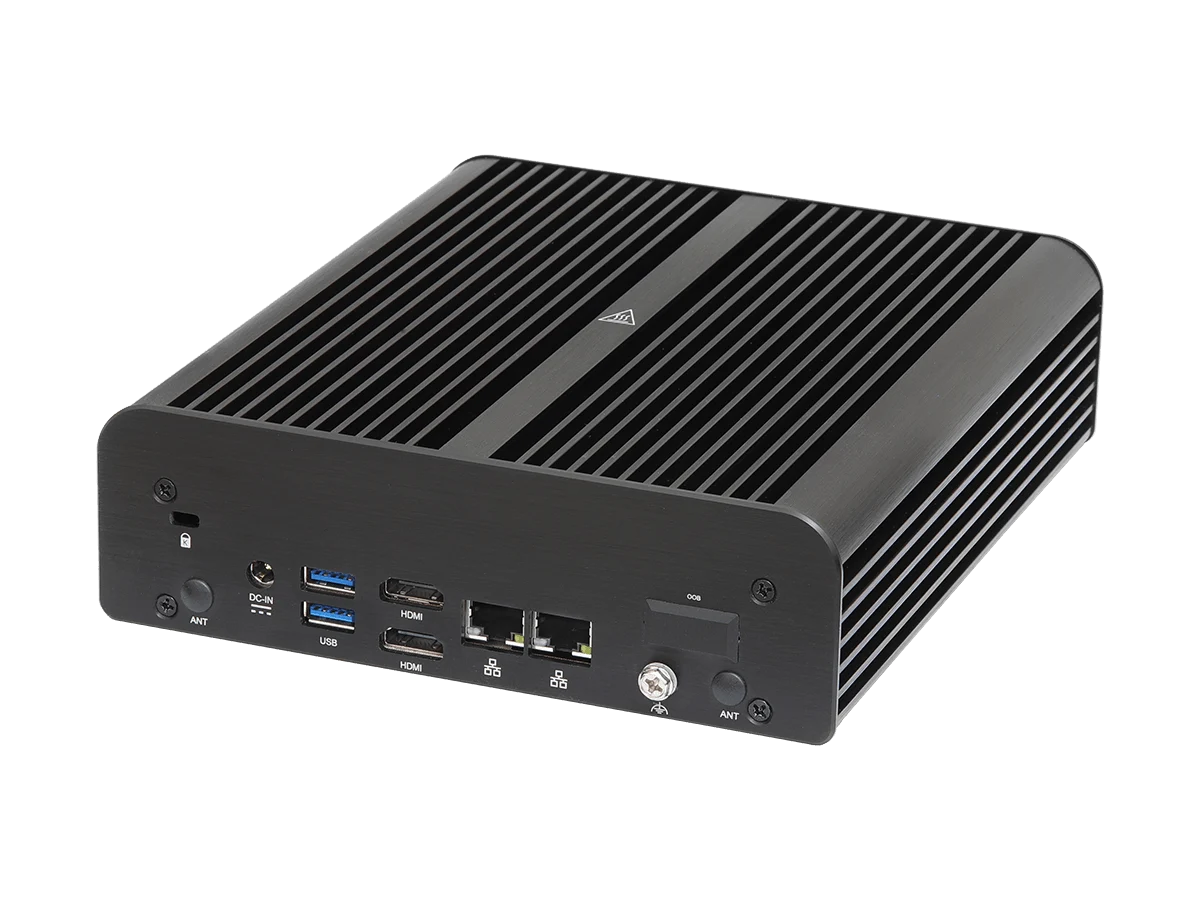
    ASRock is refreshing its iBOX fanless mini PC lineup with two models powered by Intel’s Panther Lake Core Ultra Series 300 processor. The case design is unchanged from the previous Core Ultra Series 200 models launched in early 2026 and features aluminium housing with heat dissipation fins on top and on the sides. It measures 20 x 17.6 x 5.36 cm (7.87 x 6.95 x 2.11 inches) and weighs 3 kg (6.6 lbs).

    Processor and Memory Options

    Processor options include the Core Ultra X7 385H model with 4P, 8E and 4 LPE cores, as well as a more affordable Core Ultra 5 325 with only 4P and 4LPE cores. The faster model supports up to 128 GB of DDR5-7200 RAM, while the slower one is limited to DDR5-6400. On the storage side, both versions support NVMe SSD via M.2 2242 PCIe 4.0 X4 plus M.2 2280 PCIe 5.0 slots.

    Ports and Connectivity

    Port selection is quite decked. The front panel features a Thunderbolt 4 connector with DP 2.1 output, 1x USB-A 3 10 Gbps, 1x USB-C 3 20 Gbps (DP 1.4a mode) and 2x USB 2.0, plus a combo audio jack (Realtek ALC256). Users can also choose a customizable older port like serial or VGA. Back panel comes with 2x additional USB-A 3 10 Gbps ports, 2x HDMI 2.1 video outs and 2x 2.5 Gbps NICs. Wireless connectivity is not offered by default, but users can add a Wi-Fi card on the M.2 2230 PCIe x1 expression slot.

    Pricing and Availability

    Pricing and availability info is only available through direct inquiry with ASRock.

    Sources

  • Intel’s Nova Lake Brings IPC Gains, Could Beat Zen 6 in 2023

    Intel’s Nova Lake Brings IPC Gains, Could Beat Zen 6 in 2023

    Key Takeaway

    1. Next-gen Intel Core Ultra and AMD Zen 6 CPUs are delayed until 2027, but are expected to feature more cores, higher clock speeds, and IPC improvements.
    2. Intel Nova Lake CPUs may outperform AMD Zen 6 in IPC uplift, while AMD may have faster clock speeds.
    3. Intel’s upcoming chips could potentially surpass AMD in all categories, including gaming and multi-threaded workloads, with possible improvements in cache sizes and architectural design.

    Upcoming CPU Releases from Intel and AMD

    The latest rumors and leaks about the upcoming Intel Nova Lake and AMD Zen 6 processors have significantly delayed the official launches to 2027. These new chips are expected to boast more cores, faster clock speeds, and considerable IPC improvements, which might result in massive boosts in performance compared to the current CPUs.

    Performance Expectations and Comparisons

    According to leaker HXL (@9550Pro) on social media, the Intel Nova Lake CPUs could potentially surpass AMD Zen 6 in terms of IPC improvements from one generation to the next, specifically citing the IPC uplift of the Coyote Cove P-cores. Meanwhile, HXL suggests that AMD Zen 6 might sport higher clock speeds than Intel Nova Lake, creating an interesting flip in who holds the performance crown. It’s noteworthy that this is a change from the previous generation, where Intel’s 14th-gen processors were pushing such insane clock speeds as 6 GHz right out of the box.

    Specs and Potential Market Impact

    With up to 52 cores and higher clocks, Intel’s Nova Lake Core Ultra 400 desktop CPUs might outshine AMD in all categories, especially with better IPC uplift. Rumors also hint at some chips having large Last Level Cache (bLLC), which could diminish AMD’s gaming edge with their X3D series. Additionally, Intel’s recent architectural improvements seen in Arrow Lake Refresh Core Ultra 200S Plus processors have led to notable performance increases over the original Core Ultra 200 Arrow Lake chips, hinting that such upgrades could be applied to Nova Lake as well.

    Future of high-end desktop computing

    In conclusion, it’s not unlikely that Intel’s Nova Lake lineup will dominate many areas, from gaming single-core workloads to heavily threaded applications. Some industry insiders, like SiliconFly, have even proclaimed that Zen 6 is already ready, but Nova Lake CPUs might quickly catch up to Apple’s M5 chips in single-core performance and outperform them in multi-core tasks.

  • Intel Panther Leak: Complete CPU List, Boost Clocks, and Max TDP

    Intel Panther Leak: Complete CPU List, Boost Clocks, and Max TDP

    Key Takeaways

    1. Intel’s upcoming laptop processors, Panther Lake, have unclear specifications, including SKU names and core counts.
    2. A new Geekbench listing confirms the integrated GPUs will be named Arc B390.
    3. New CPU lineups include the Core Ultra 3×6 series, but the previously speculated U lineup is not mentioned.
    4. Confusion arises from the new naming conventions and a lack of clarity on specifications.
    5. A complete reveal of Panther Lake is expected at CES 2026, leaving users awaiting further details.


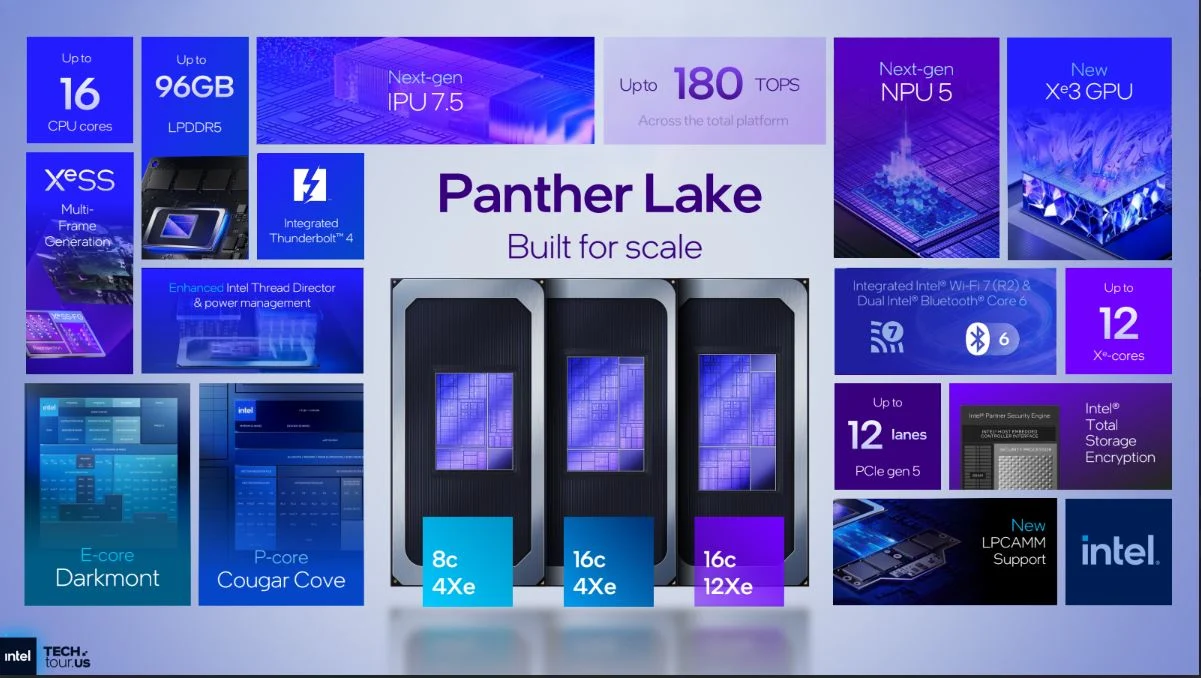
    At the latest presentation for Panther Lake, Intel shared some architectural insights about its upcoming laptop processors. However, important details like the SKU names, the number of CPU and GPU cores, and the clock speeds remain unclear. Although many leaks have provided fragments of this information, they have been inconsistent, especially concerning certain Core Ultra X-branded SKUs. A new listing on Geekbench has confirmed that even the integrated GPUs will have a fresh Arc B390 name. Recently, leaker Jaykihn has disclosed the base and boost clock speeds for each Panther Lake CPU.

    New CPU Lineups

    The list shared introduces several CPUs that have not been seen before, including the Core Ultra 3×6 series. However, it does not mention the previously speculated U lineup and instead only highlights H and non-H models. We now see two SKUs featuring a 2+0+2 configuration included in the Core Ultra 5 series. This further complicates matters with a naming convention that is quite unclear. Although Jaykihn has an impressive history of accurate Intel leaks, we won’t truly know how correct this information is until CES 2026, where Intel intends to unveil Panther Lake fully.

    Awaiting Clarity

    While Intel has begun to peel back the layers on Panther Lake, the lack of clear specifications leads to a lot of guessing. The details that are out there have created more confusion than clarity, especially with the new naming conventions. The anticipation is high, but the wait for a complete reveal adds to the mystery surrounding these processors. Therefore, until CES 2026, users and fans alike will have to remain patient for a comprehensive understanding of what Panther Lake will bring.

    Source:
    Link


  • Panther Lake Lineup to Feature New Core Ultra X Models

    Panther Lake Lineup to Feature New Core Ultra X Models

    Key Takeaways

    1. Intel’s Panther Lake series will launch with at least four models, including a high-end Core Ultra 9 with 4 P-cores, 8 E-cores, and 4 LPE-cores.
    2. Standard Core Ultra chips will still be available, along with new X-branded versions, though differences between X and non-X models are unclear.
    3. New Core i3, i5, and i7 processors are expected, likely being renamed versions of existing Meteor/Raptor Lake processors.
    4. Intel’s use of the ‘X’ designation may be a strategic move in response to Qualcomm’s Snapdragon X2 Elite series, which is gaining traction in the low-power CPU market.
    5. The competition in the CPU market is intensifying, prompting Intel to innovate with their Panther Lake lineup.


    An earlier report had already hinted that Intel’s Panther Lake series will debut with at least four different models. The high-end Core Ultra 9 version is expected to come equipped with 4 P-cores, 8 E-cores, and 4 LPE-cores. A fresh leak from users @9550pro and @momomo_us on X suggests that a new batch of processors will be added to Panther Lake, featuring some interesting new options.

    Core Ultra Chips Remain

    It’s important to point out that the standard Core Ultra chips will continue to be available. Their X-branded versions will complement the existing lineup, though it remains uncertain how these X models will differ from their non-X versions. Additionally, some Core i3, i5, and i7 processors are anticipated to arrive, and based on trends from prior generations, it’s likely they will just be renamed versions of Meteor/Raptor Lake SKUs.

    Influence from Competitors

    Intel’s decision to incorporate the ‘X’ designation could be a response to Qualcomm’s newly launched Snapdragon X2 Elite series. This year, the Arm-based chips are proving to be strong contenders in the low-power CPU sector, thanks to their higher core counts and advanced third-gen Nuvia cores.

    The ongoing competition in this space is definitely heating up, and it will be interesting to see how Intel responds with their Panther Lake lineup.

    Source:
    Link


  • Intel Launches Ultra-Thin Cooling Solution for 1000W Chips

    Intel Launches Ultra-Thin Cooling Solution for 1000W Chips

    Key Takeaways

    1. Intel has introduced an experimental liquid cooling solution capable of handling up to 1,000 watts of heat from next-gen chips.
    2. The innovative cooling system is integrated at the package level, using a compact water block with copper microchannels for efficient heat transfer.
    3. Prototypes for LGA and BGA processors show 15-20% improved thermal performance over standard liquid coolers.
    4. The cooling technology utilizes solder or liquid metal thermal interface material for better contact, allowing for more compact system designs.
    5. While not yet available commercially, this cooling method addresses rising demands from AI workloads and high-performance computing, indicating a potential shift in CPU thermal design.


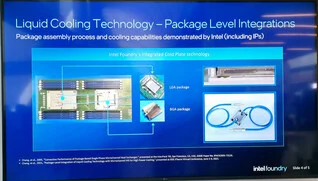
    As the power and heat generated by chips keep increasing, especially in server processors and AI accelerators, companies are always looking for better ways to manage heat. Intel has taken a unique route to tackle this challenge by revealing an experimental liquid cooling solution at its Foundry Direct Connect event, which can handle up to 1,000 watts of heat from the next-gen chips.

    Innovative Cooling Approach

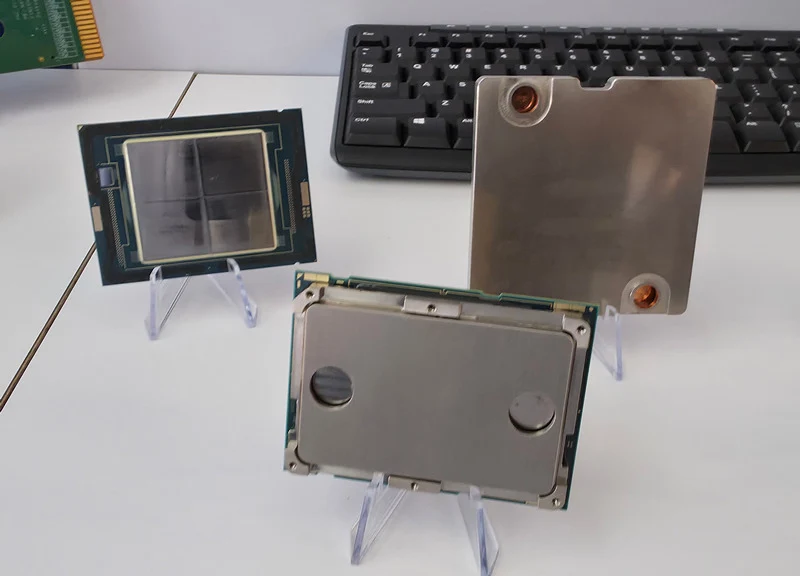
    The main concept of this package-level water cooling is to enhance heat transfer by placing the cooling system as near to the heat source as possible. Unlike typical cooling systems that are installed on top of processors, Intel’s method integrates the cooling directly at the package level. Instead of using a regular heat spreader, Intel’s solution includes a specially crafted compact water block that has precisely designed copper microchannels guiding the coolant across the CPU package. This idea is somewhat similar to direct-die cooling, which eliminates the heat spreader entirely to reduce thermal resistance.

    Prototype Development

    Intel has created prototypes for both LGA and BGA processors and has showcased this with Intel’s Core Ultra and Xeon server processors. The company asserts that this solution provides 15-20% improved thermal performance compared to standard liquid coolers used on delidded dies. The cooling system is said to employ solder or liquid metal thermal interface material, which ensures better contact. Furthermore, the very slim design of these cooling blocks may allow for more compact system designs, even while managing significantly greater power loads.

    Future Implications

    Although standard consumer CPUs don’t yet reach the 1,000-watt mark, this technology looks ahead to rising demands from AI workloads, high-performance computing, and professional uses. Intel has reportedly worked on this technology for years, with some research tracing back to 2005.

    Intel has not disclosed when or if this cooling method will be available for commercial products, but the demonstration hints at a major potential change in CPU thermal design. As chips continue to grow in power consumption and package density, direct cooling solutions might become vital for high-performance computing.

    Source:
    Link