Tag: Intel Alder Lake

  • ZimaCube 2: High-End NAS with 64GB RAM, 164TB Storage, GPU Support

    ZimaCube 2: High-End NAS with 64GB RAM, 164TB Storage, GPU Support

    Key Takeaways

    1. The ZimaCube 2 NAS features Intel’s Alder Lake CPUs, with pre-orders starting at $799 for the base model equipped with a 6-core i3-1215U CPU.

    2. Users can choose a more powerful variant with a 10-core i5-1235U CPU, offering about 23% better multi-core performance.

    3. The device includes 8 GB of RAM, a 256 GB SSD, six SATA III bays, and four NVMe M.2 slots, allowing for a maximum storage capacity of 164 TB.

    4. It has various expansion options, including PCIe slots and support for up to 64 GB of RAM, all within a compact size of approximately 9.45 x 8.7 x 8.6 inches.

    5. While the ZimaCube 2 is suitable for home lab enthusiasts, more budget-friendly alternatives like the 4-bay Ugreen NASSync DH4300 are available for those with simpler needs.


    A new NAS system has made its debut, called the ZimaCube 2. This device is powered by Intel’s Alder Lake CPUs, making it a good option for people seeking an effective personal NAS solution that won’t strain their budget too much.

    Pricing and Specifications

    However, it’s important to note that the ZimaCube 2 NAS isn’t exactly inexpensive. Pre-orders for the device start at $799, and it comes equipped with a 6-core Intel i3-1215U CPU. In terms of multi-core performance, the Alder Lake chip operates similarly to a modern Core Ultra 5 134U CPU, typically found in entry-level laptops.

    Performance and Usability

    The performance should be sufficient, and users wanting to utilize the ZimaCube 2 as a compact PC for light daily tasks can do that as well. There’s also a more powerful option featuring the 10-core Core i5-1235U CPU, which offers approximately 23% better multi-core performance.

    Storage and Expansion

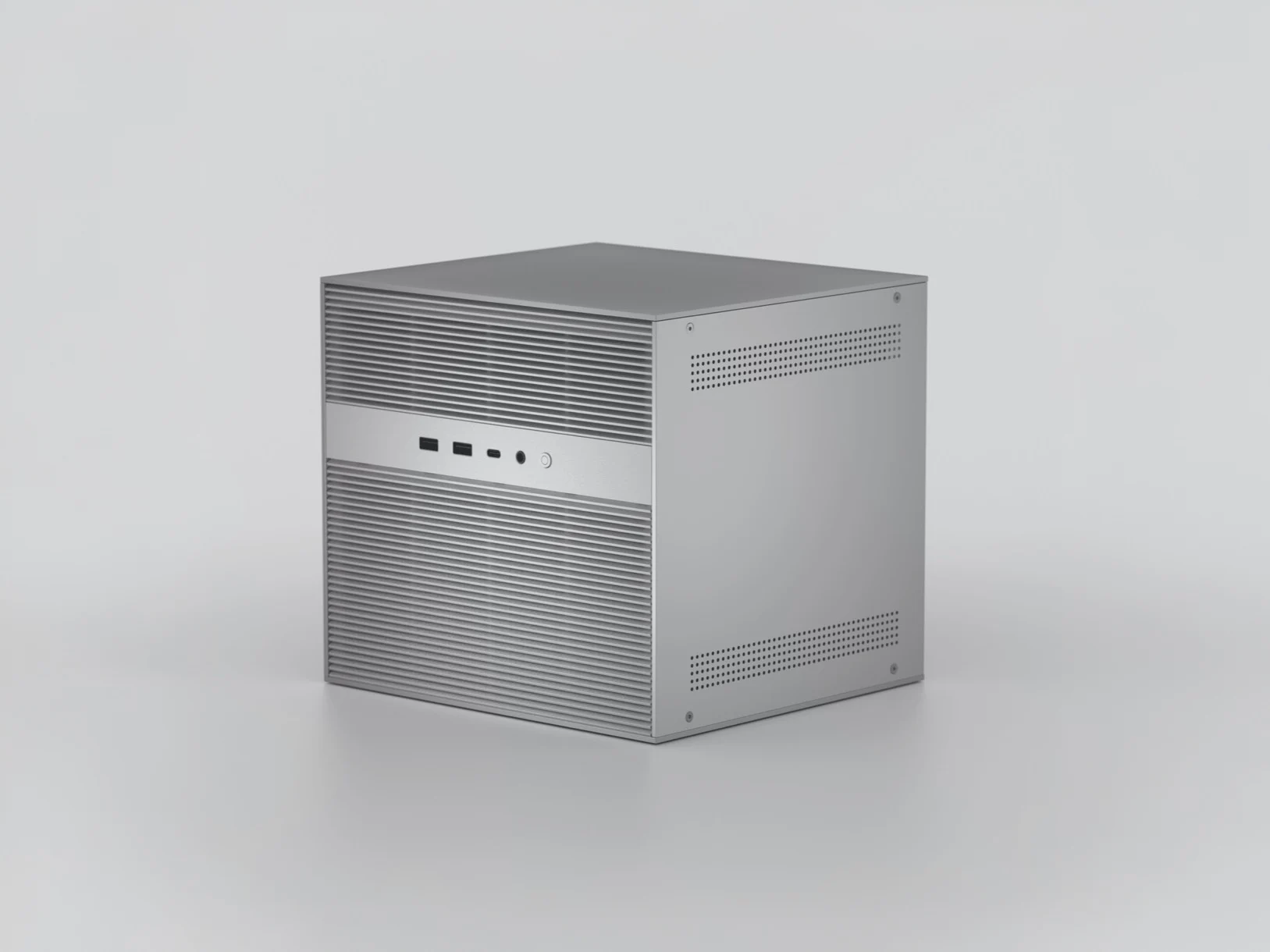
    The base model of the ZimaCube 2 NAS includes 8 GB of RAM and a 256 GB SSD. For additional storage, it boasts six SATA III bays (for both 3.5-inch and 2.5-inch drives) and 4 NVMe M.2 slots, allowing for a total of 164 TB of maximum storage capacity. The I/O options are impressive, as outlined below:

    Other expansion possibilities feature a PCIe 4.0 x16 slot (with x4 lanes) for GPUs, a PCIe 3.0 x8 slot (with x2 lanes), and support for up to 64 GB of RAM. With dimensions around 9.45 x 8.7 x 8.6 inches or 240 x 221 x 220 mm, the ZimaCube 2 NAS is quite compact. The entry-level model is available in silver, while the premium model comes in black.

    Overall, the ZimaCube 2 lineup seems to be a great option for home lab enthusiasts. Those with simpler needs might want to consider alternatives such as the 4-bay Ugreen NASSync DH4300, which is currently priced at $379 on Amazon, allowing them to save a few hundred bucks.

    Source:
    Link


  • Minisforum M1-1295 Mini-PC: Intel Core i9-12950HX, 64GB RAM

    Minisforum M1-1295 Mini-PC: Intel Core i9-12950HX, 64GB RAM

    Key Takeaways

    1. Minisforum launched the MS-S1 Max with AMD Ryzen AI Max+ 395 APU and the M1-1295 with Intel Alder Lake in a minimalistic design.
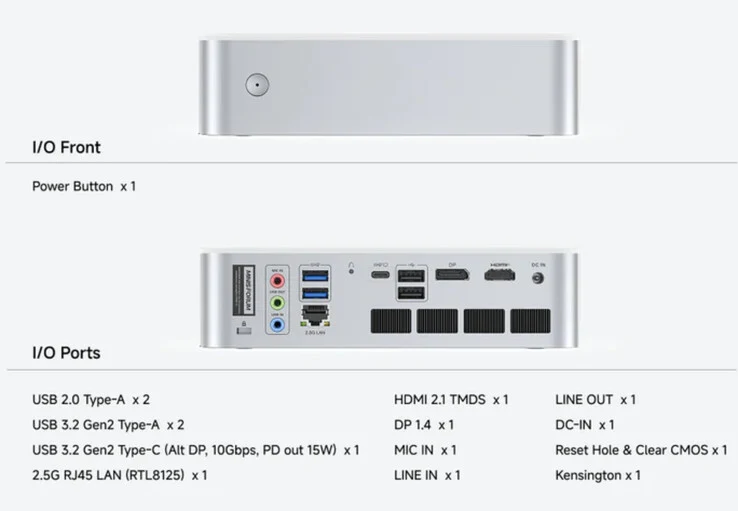
    2. The M1-1295 features only a power button on the front, with all ports located at the back, including four USB ports and three display outputs.
    3. The cooling system includes a single turbofan and copper heat pipe, with perforations on the sides for improved airflow.
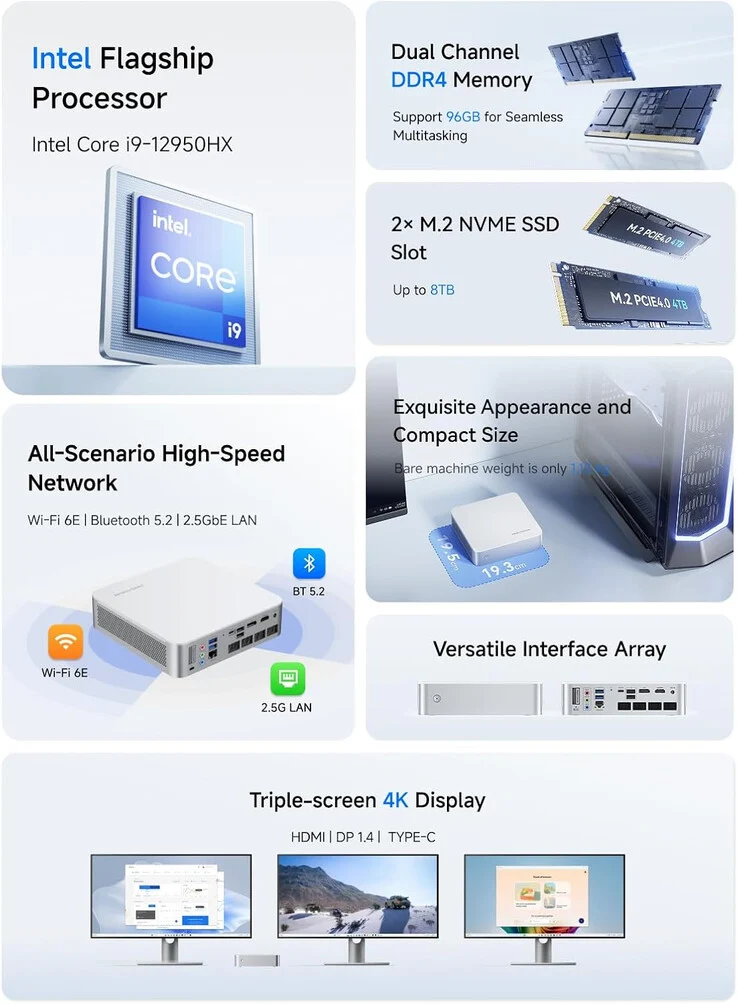
    4. The M1-1295 is powered by a Core i9-12950HX CPU, which has 16 cores and 24 threads, performing slightly behind the Ryzen AI counterparts in benchmarks.
    5. The M1-1295 is priced at $469 for a preconfigured model with 32 GB RAM and a 1 TB SSD, with a future barebones version expected to be around $329.


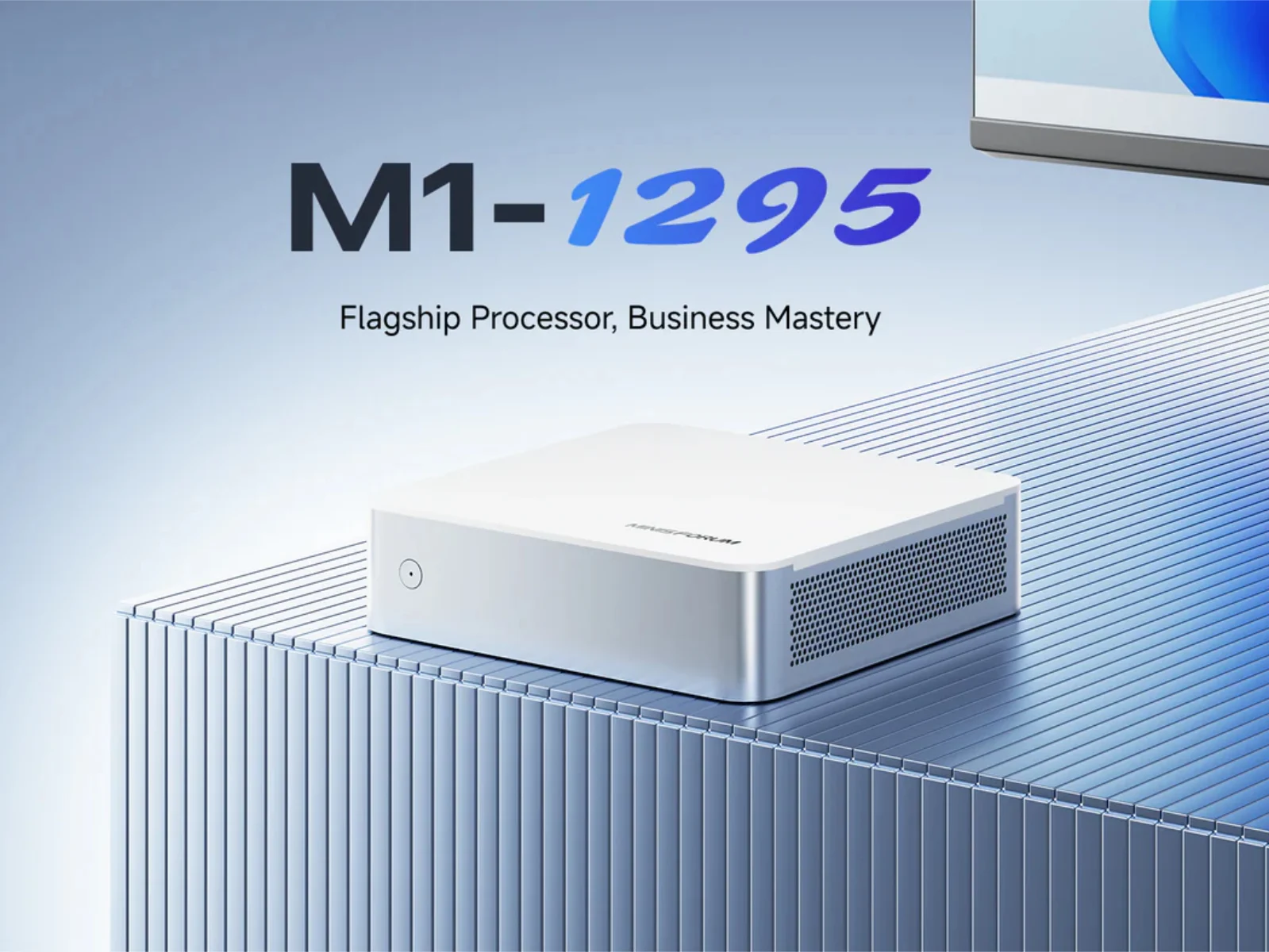
    Minisforum has introduced the MS-S1 Max featuring the AMD Ryzen AI Max+ 395 APU. In addition, they have quietly launched the M1-1295, which is based on Intel’s Alder Lake but has a very minimalistic design. Unlike many modern mini-PCs, the M1-1295 doesn’t display any ports on its front, opting instead for a plain silver box look.

    Design and Connectivity

    The only feature on the front is a small power button, with all connectivity options located at the back of the unit. As shown in the image below, the M1-1295 is equipped with four USB ports, a 2.5 Gigabit LAN port, three display outputs, and dedicated mic and line-in/out inputs. The dimensions of the device are 195 x 193 x 52 mm, and it weighs in at 1.12 kg.

    Cooling System

    To improve airflow for its single turbofan and copper heat pipe cooling system, Minisforum has made perforations on both the left and right sides of the mini-PC. The M1-1295 is powered by the Core i9-12950HX, featuring a 16-core and 24-thread CPU, which falls slightly behind the Ryzen AI 9 HX 370 in benchmark tests and trails the Ryzen AI Max+ 395 by a noticeable margin.

    Pricing and Configuration

    Currently, the M1-1295 is available as a preconfigured mini-PC, which includes 32 GB of RAM and a 1 TB SSD, priced at $469 if bought directly or $579 on Amazon. However, it can support up to 64 GB of DDR4-3200 RAM. Eventually, Minisforum plans to offer a barebones version for around $329.

    Source:
    Link


  • New Spectre Vulnerability Found in 2018-2024 Intel CPUs

    New Spectre Vulnerability Found in 2018-2024 Intel CPUs

    Key Takeaways

    1. Spectre and Meltdown flaws in x86 processors led to major issues for Intel and AMD in 2018, resulting in lawsuits and the need for microcode updates.
    2. New vulnerabilities related to Spectre were discovered in Intel CPUs, particularly the Alder Lake series, and ARM cores, impacting performance variably.
    3. ETH Zurich’s research revealed that existing mitigations could still be bypassed under certain conditions.
    4. Intel’s January 2025 microcode update showed minimal performance overhead in most chips, but Rocket Lake experienced an 8.3% performance decrease.
    5. The vulnerabilities affect all operating systems, but AMD and ARM chips are not impacted by the newly identified flaws.


    The Spectre and Meltdown flaws that impacted X86 processors created major issues for Intel and AMD in 2018, leading to lawsuits against both firms. ARM also faced these vulnerabilities, but all companies ultimately issued in-silicon microcode updates to address the bugs. While these updates resulted in some performance loss, it wasn’t severe. In 2022, more Spectre risks were identified for Intel CPUs, including the Alder Lake series, and for ARM cores, with the degree of performance loss varying based on the specific task. Unfortunately, this was not the end of Spectre troubles for Intel, as a new report from ETH Zurich has uncovered additional vulnerabilities for Intel CPUs from 2018 to 2024, some of which show notable performance drops after applying updated mitigations.

    Testing New Mitigations

    ETH Zurich performed detailed examinations of the previously released mitigations, such as the enhanced Indirect Branch Restricted Speculation (eIBRS) and the Indirect Branch Prediction Barrier (IBPB). Their findings suggest that, under certain conditions, these mitigations can still be circumvented.

    Intel’s Response

    In January 2025, Intel rolled out a new microcode with better mitigations, enabling ETH Zurich to assess its impact on newer CPU models. The results indicated that most chips experienced minimal effects, with Alder Lake processors showing only a 2.7% performance overhead, Raptor Lake and Raptor Lake-R having less than 2%, and Coffee Lake-R at 1.6%. However, Rocket Lake was an outlier, showing an 8.3% decrease in performance.

    Broader Implications

    Although ETH Zurich’s evaluations were conducted solely on Linux systems, it’s established that these vulnerabilities can affect any operating system. AMD and ARM chips, however, are not impacted by these newly identified flaws.

    Intel has reportedly delivered the new microcodes to all system builders and operating system developers. In a blog post dated May 13, the company stated, “Intel is enhancing its Spectre v2 hardware mitigations and recommends that customers check INTEL-SA-01247 and reach out to their system manufacturers for the correct updates. So far, Intel is unaware of any real-world exploits related to transient execution vulnerabilities.”

    Source:
    Link