Category: All News

  • Hideo Kojima Encourages Devs to Enhance Enjoyment in Death Stranding 2

    Hideo Kojima Encourages Devs to Enhance Enjoyment in Death Stranding 2

    Key Takeaways

    1. Hideo Kojima’s main goal for Death Stranding 2 is to enhance player enjoyment throughout the game.
    2. Player feedback from Death Stranding 1 significantly influenced the development of the sequel, leading to a new world and gameplay adjustments.
    3. Early playtests helped clarify Kojima’s vision, focusing on improving overall enjoyment rather than making the game weirder.
    4. The sequel adopts a simpler approach, reducing complexity in worldbuilding to make the game more accessible for all players.
    5. The design choices made for Death Stranding 2 resulted in broader acclaim and easier recommendations to new players, with improved player progression metrics.


    Death Stranding 2: On the Beach’s lead level designer, Hiroaki Yoshiike, recently shared insights in an interview about Hideo Kojima’s primary aim for Death Stranding 2: making the game more fun. This was a specific instruction from Kojima himself, who wanted players to feel enjoyment throughout their entire experience.

    Player Feedback Matters

    It appears that Kojima took the feedback from Death Stranding 1 quite seriously. Gamers had mentioned that the gameplay felt somewhat slow, and Kojima Productions put in a significant effort to create a brand-new world and concept for players to explore.

    Yoshiike’s remarks help clear up some of the earlier uncertainties. Previously, Woodkid, the co-composer, talked to Rolling Stone, leading to the impression that Kojima was aiming to make the sequel weirder based on initial playtest reactions.

    Clarifying Kojima’s Vision

    Kojima later clarified this notion, stating that those early playtests were instrumental in enhancing the overall enjoyment for players. He expressed, “Something that is not digestible stays in that person for a long time. So that’s what I meant by ‘I want to do things differently.’”

    This still left some ambiguity regarding Kojima’s thoughts on Death Stranding for both players and critics. However, Yoshiike, during his conversation with PC Gamer, shed light on earlier statements and provided a clearer insight into Kojima’s mindset. He stated:

    “Kojima wanted more people to enjoy the game all the way to the end. This was an order he gave us.”

    A Simpler Approach

    He explained that Death Stranding 1 needed to be “very elaborate” since Kojima Productions was building a completely new world and concept from the ground up. Due to feedback about the delivery system being somewhat prolonged, the development team opted for a more straightforward approach in the sequel.

    Yoshiike continued:

    “In the second game, we didn’t need to provide too many worldbuilding elements; we could make it less elaborate. Completionists can enjoy that depth, but for people who won’t necessarily care about it, we made sure they can follow the story through other supplemental elements within the game. That was one of the design choices we made.”

    This strategy resonated well with gamers, and Death Stranding 2 was met with broad acclaim upon its release. Yoshiike added, “We’ve gotten a lot of feedback that it’s much easier to recommend DS2 to people. We can see the metrics, and we’ve seen that people have progressed much further than they previously had. So that was just as we designed, I think.”

    Source:
    Link



  • Battlefield 6 Developers Utilize Generative AI for Game Design

    Battlefield 6 Developers Utilize Generative AI for Game Design

    Key Takeaways

    1. Generative AI has significantly improved voice-over lip-syncing and character face creation in Battlefield 6.
    2. EA faced criticism for questionable DLC releases, including a cosmetics pack with poorly designed items.
    3. AI tools like Voice2Face and FaceRig contributed to the animation and character design processes, with 30% of animated speech generated by AI.
    4. Disclosure on AI usage in games on Steam is not strictly required, leading to potential concerns from players regarding transparency.
    5. EA previously stated that no AI-generated assets would be included in Battlefield 6, raising skepticism among players about their commitment to this claim.


    There is proof that generative AI has been a significant factor in crafting Battlefield 6. The business website Fast Company recently spotlighted the most creative game developers in their article. The report mentioned that voice-over lip-syncing and character face creation saw improvements thanks to this technology. However, it’s debatable if this application requires a clear disclosure on Steam.

    Scrutiny Over DLC

    EA’s shooting game has already been under fire for releasing questionable DLC. One instance included a cosmetics pack with a strangely designed weapon. Moreover, a skin featuring a creepy mask bore a strong resemblance to older artwork from Call of Duty. While some of these items were removed by developers, there was no explanation given regarding their source.

    AI’s Impact Pre-Release

    The article from Fast Company, which was discovered by Insider Gaming, examines the role of AI leading up to the Battlefield 6 launch. Voice2Face is a tool that analyzes spoken words and produces precise lip-synced animations. The report states that “30% of the final animated speech was generated” by this tool.

    Additionally, FaceRig helped artists to tweak characters’ faces for Battlefield 6, making the task easier. Although a lot of the process involved human effort, the end results appear more refined compared to rushed artwork. Nonetheless, players can notice the influence of machine learning in the final game.

    Disclosure on AI Usage

    A game on Steam isn’t strictly required to disclose how AI influenced its creation. Game studios can utilize this technology for idea generation or enhancing coding productivity. But, Valve mandates a disclosure when there’s “Player-facing AI output.” Whenever developers opt for shortcuts in designing characters, some critics are likely to raise objections.

    Publishers are increasingly bending the rules and skipping disclosures, even for minor uses. The most recent issue arose with Crimson Desert, where Pearl Abyss failed to erase placeholder AI images. One frustrated player asked for a refund on Steam after only 4 hours of gameplay, but was unsuccessful.

    Before the launch of Battlefield 6, EA claimed that no assets generated by machines would be in the retail version. Given the company’s large investment in AI technologies, players had their doubts. The gaming community will keep discussing whether the studio upheld its commitment.

    Source:
    Link


  • Game-Changing AI Features for Travelers in Google Translate

    Game-Changing AI Features for Travelers in Google Translate

    Key Takeaways

    1. Improved Translation Quality: Gemini enhances Google Translate by providing more natural translations, especially for idioms and local phrases.

    2. Live Speech-to-Speech Translation: A new feature allows real-time translations during conversations, preserving the speaker’s tone and emotion.

    3. Wide Language Support: The update enables translations between English and nearly 20 languages, including Spanish, Hindi, Chinese, Japanese, and German.

    4. Streak Tracking Feature: Google Translate now includes a “streak” tracking system similar to Duolingo, encouraging consistent use of the app.

    5. Limited Availability: The live speech beta is currently available only for Android users in the U.S., India, and Mexico, with an iOS rollout expected in 2026.


    Google is integrating Gemini into Google Translate, with a goal to enhance translations that often sounded robotic and literal, which sometimes left travelers making odd requests, like asking for directions to the moon. This is a significant step forward, as it adds valuable AI features to one of the most essential applications on our devices!

    Enhanced Translation Quality

    The new update is all about improving the “state-of-the-art” quality of text translations, especially when it comes to idioms, slang, and local phrases—which were much needed. For example, when you tell a German coworker that they are “stealing your thunder,” Gemini will now understand that you’re not forecasting weather. Instead, Google Translate with Gemini will catch the context and offer a more natural translation, possibly saving you from an awkward meeting with HR.

    Live Speech-to-Speech Translation

    Travelers may find the new beta feature for “live speech-to-speech translation” particularly useful. With any pair of headphones and the Android app, users can receive real-time translations that maintain the original speaker’s tone, emphasis, and rhythm. So if someone is shouting at you in Italian, you’ll still hear the anger in English, making the experience of being insulted in a foreign language more… engaging. Just kidding, Italians are known for using their hands when they speak.

    Today marks the start of this update in the United States and India, allowing translations between English and nearly 20 languages, which includes Spanish, Hindi, Chinese, Japanese, and German, across the Translate app (both Android and iOS) and online. Additionally, the updated Google Translate features “streak” tracking, reminiscent of Duolingo’s approach—no pressure at all!

    Future Rollouts

    Currently, the live speech beta is only available to Android users in the United States, India, and Mexico, while the iOS rollout is projected for later in 2026. Maybe iPhone users could take this chance to start learning a new language while they wait.

    Source:
    Link


  • Siri: The Most Flexible AI Chatbot with Gemini and Claude Support

    Siri: The Most Flexible AI Chatbot with Gemini and Claude Support

    Key Takeaways

    1. Apple is working on an upgrade for Siri, named Apple Intelligence, set to launch with iOS 27 by 2026.
    2. Siri will support third-party AI chatbots like Google Gemini and Anthropic’s Claude, ending OpenAI’s exclusive partnership with Apple.
    3. A new “Extensions” feature in the Settings app will allow users to select preferred AI services when Siri cannot answer queries.
    4. The integration will provide a unified AI experience across iPadOS 27 and macOS 27 in addition to iOS 27.
    5. This upgrade may boost Apple’s Services revenue through commissions from AI application subscriptions in the App Store.


    Apple is currently making progress on the much-anticipated Apple Intelligence upgrade for Siri, which aims to enhance the iPhone’s virtual assistant by 2026. Early reports suggest that iOS 27 will enable third-party AI chatbots, such as Google Gemini and Anthropic’s Claude, to directly work with the improved Siri.

    Changes in Partnership

    Mark Gurman from Bloomberg has indicated that this development will mark the end of OpenAI’s exclusive collaboration with Apple. At present, ChatGPT is the only external source for complex queries when Siri struggles to provide answers, which is a frequent occurrence. Consequently, Siri could transform from one of the least effective virtual assistants into one of the most versatile AI chatbots, thanks to the contributions of ChatGPT, Gemini, and Claude.

    New Features

    The integration process is expected to be facilitated by a new “Extensions” feature found in the Settings app. Users who download compatible AI applications from the App Store will have the ability to choose which service they prefer Siri to utilize when it cannot answer a query on its own. This feature is also anticipated to be available on iPadOS 27 and macOS 27, delivering a cohesive AI experience across Apple’s entire ecosystem.

    Financial Implications

    In addition to improving user options, this plan is likely to increase Apple’s Services revenue through commissions from AI application subscriptions in the App Store. While Apple continues to revamp Siri with what is said to be a customized version of Google’s Gemini models, these extensions will allow users to use their favored large language model instead of Siri’s built-in engine. The formal announcement is expected to occur at WWDC 2026 on June 8.

    Source:
    Link


  • Mac Pro Discontinued as Mac Studio Becomes Apple’s Top Desktop

    Mac Pro Discontinued as Mac Studio Becomes Apple’s Top Desktop

    Key Takeaways

    1. Apple has put the Mac Pro on hold indefinitely, focusing instead on the Mac Studio line.
    2. The Mac Studio has been upgraded to the M3 Ultra chip, offering top performance previously found in Mac Pro.
    3. The Mac Studio supports up to 16 TB of storage and 512 GB of memory, catering to power users.
    4. The decision to abandon the Mac Pro may relate to the limited value of its expansion capabilities and high price.
    5. The last Mac Pro model lacked support for external GPUs, further diminishing its appeal.


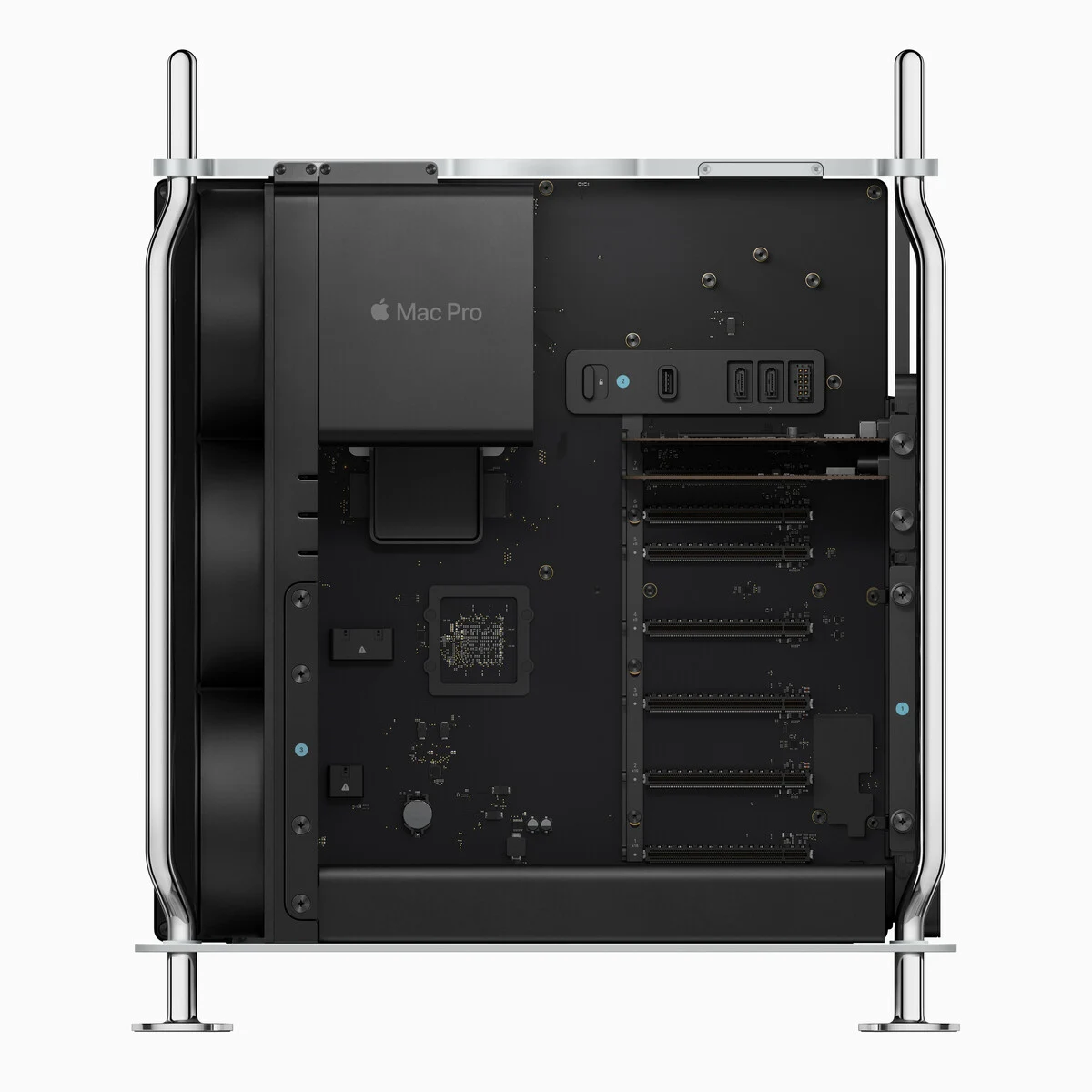
    It’s been almost three years since Apple unveiled the Mac Pro featuring an M2 Ultra System on Chip (SoC). There were some forecasts that hinted at an upgrade in the future, while others suggested that Apple has pretty much set aside its high-end desktop model. Recently, 9to5Mac reported that Apple has decided to put the Mac Pro on hold indefinitely.

    Shift to Mac Studio

    This decision isn’t all that surprising, considering Apple has focused its efforts on the Mac Studio line, which recently received an upgrade to the M3 Ultra chip—a variant not available in any other Apple devices. Therefore, anyone who wants top-notch performance from Apple will now need to settle for a Mac Studio.

    Impressive Specs

    The Mac Studio, equipped with the M3 Ultra, already meets the needs of power users with support for up to 16 TB of storage and 512 GB of memory. It would make sense to think that future models will allow for even more, especially with an Ultra chip in play.

    As for the reason behind Apple’s choice to completely abandon the Mac Pro, it remains unclear. However, the move to their own silicon could provide some insight. Even though the last Mac Pro came with fully-operational PCIe slots, it lacked support for external GPUs. The limited expansion cards it did accommodate did not really justify its exorbitant price. And let’s not even start on those pricey wheels that came with it.

    9to5Mac

    Source:
    Link


  • Samsung’s US Foldable Market Share Drops as iPhone Fold Arrives

    Samsung’s US Foldable Market Share Drops as iPhone Fold Arrives

    Key Takeaways

    1. Samsung’s Market Share Decline: Samsung’s share in North America’s foldable smartphone market dropped from 65% in 2024 to 51% in 2025, losing ground in the clamshell segment.

    2. Motorola’s Rise: Motorola gained significant market share, reaching 44% due to competitive pricing and strong carrier partnerships, driven by the success of the Razr Fold 2025 series.

    3. Google’s Growth: Google saw a 52% increase in shipments, largely due to the release of the Pixel 10 Pro Fold, although it still holds only 5% of the market.

    4. Apple’s Strategic Delay: Apple’s decision to delay the launch of its foldable iPhone until late 2026 could strategically position it to avoid early adopter issues faced by competitors.

    5. Upcoming Competition: The anticipated iPhone Fold is set to launch alongside the iPhone 18 series, with Samsung preparing a rival device featuring a larger main display.


    The North American foldable smartphone market is seeing some significant changes, as per the latest insights from Counterpoint Research. In 2025, this segment experienced a growth of 28% YoY, but the more interesting narrative revolves around Samsung’s drop and the fierce competition rising, especially from Motorola.

    Samsung’s Market Share Decline

    Samsung has held a strong position in the foldable market for a long time, nearly monopolizing it. However, Counterpoint indicates that 2025 was a pivotal year. Samsung’s share in North America plunged to 51%, down from 65% in 2024. While the company still leads in book-style foldables, it has lost its stronghold in the increasingly popular clamshell segment.

    Motorola’s Rise

    The major victor in this scenario is Motorola. Thanks to the Razr Fold 2025 series, Motorola has snagged an impressive 44% market share, propelled by competitive pricing and robust partnerships with carriers. Google also witnessed a surge, with shipments increasing by 52% YoY, aided by the release of the Pixel 10 Pro Fold in October; however, it still holds just 5% of the market.

    Apple’s Strategic Delay

    Interestingly, the biggest potential winner might be Apple’s anticipated iPhone Fold. The choice to postpone the launch of its first foldable iPhone seems to have been a strategic decision, and the reasons are becoming clearer now.

    While competitors like Samsung and Huawei debuted their foldable devices back in 2019, Apple’s decision to wait until late 2026 has allowed it to bypass the issues faced by early adopters. This positions Apple to enter a marketplace where Motorola and Samsung have already set the stage for foldable designs.

    With Samsung’s dominance fading, the iPhone Fold could deliver the “final blow” in a now well-established and fiercely competitive market. It appears that Apple might have had this plan in motion all along.

    Regarding the iPhone Fold, it’s anticipated to launch alongside the iPhone 18 series this fall, although it could be available later. Meanwhile, Samsung is gearing up to introduce a direct rival to the iPhone Fold, featuring a broader main display.

    Counterpoint, Thumbnail by Mika Baumeister

    Source:
    Link


  • Junkrunner 64 Offers Skyrim-Sized Open World on Nintendo 64

    Junkrunner 64 Offers Skyrim-Sized Open World on Nintendo 64

    Key Takeaways

    1. Junkrunner 64 is an ambitious open-world game for the Nintendo 64, comparable in scale to Skyrim, showcasing advanced graphics for the hardware.

    2. Developer James Lambert and his team optimized the game by leveraging decades of experience with Nintendo 64 hardware limitations.

    3. Lambert is known for previous projects like Portal 64 and MegaTextures, making him well-suited for developing Junkrunner 64.

    4. The recent rise in Nintendo 64 homebrew development has seen creators like Kaze Emanaur focus on expansions, while Lambert’s team delivers a completely original game.

    5. Players can download Junkrunner 64 from GitHub to experience it on an emulator or a Nintendo 64 console with the appropriate flash cartridge.


    In a time marked by game releases that often struggle with optimization, leading to heavy system requirements and soaring hardware costs, it’s refreshing to witness homebrew game developers maximizing the potential of current hardware. One standout example is Junkrunner 64, which boasts an ambitious open world akin to the scale of Skyrim, all playable on actual Nintendo 64 equipment. Not only does this game feature a vast environment, but its graphics also surpass those of existing Nintendo 64 titles, coming close to the visuals of a low-fi Nintendo GameCube or Nintendo 3DS game in certain scenes. But what makes this achievement possible?

    Optimizing for Limitations

    The community has spent decades honing their skills to optimize for a fixed set of hardware, which has certainly contributed to this success. The creator of Junkrunner 64, James Lambert, has established himself through other remarkable projects on the Nintendo 64, such as Portal 64 and the implementation of MegaTextures (first introduced in id Tech 5 and utilized in games like RAGE and DOOM 2016). His background made him an ideal candidate for this kind of endeavor. Furthermore, he worked alongside other N64 homebrew developers, including Pyroxene, Caitlin G Cooke, terzdesign, and Kælin, to achieve the impressive end product.

    A New Era of Homebrew Gaming

    In recent years, there have been significant strides in Nintendo 64 homebrew development, with notable contributions from the creators of the Smash Remix expansion for Super Smash Bros. 64 and the well-known Mario 64 modder Kaze Emanaur. However, these developers generally focus on creating high-quality expansions or fangames. In contrast, Lambert and his crew are taking a giant leap by delivering a completely original open-world game on the Nintendo 64. It appears to be a genuinely enjoyable experience, particularly for those who appreciate the game’s fast-paced hoverboard mechanics.

    If you’re curious about how Junkrunner 64 was developed to function on real hardware, James Lambert has a video that covers this topic comprehensively. Alternatively, if you wish to experience the game for yourself, you can download it from GitHub for use in an emulator (with results that may differ) or on your own console equipped with the right flash cartridge.

    Source:
    Link


  • “How a Copper Plate Could Enhance MacBook Neo’s Speed and Coolness”

    “How a Copper Plate Could Enhance MacBook Neo’s Speed and Coolness”

    Key Takeaways

    1. The Apple MacBook Neo features a passive cooling system that operates silently but can lead to overheating and reduced performance under stress.
    2. Performance drops significantly during heavy usage, as seen in stress tests where power usage decreased from 8.8 W to around 5 W.
    3. Adding a copper plate and thermal paste can significantly improve performance and reduce temperature, increasing FPS from 30 to nearly 60 in gaming scenarios.
    4. Advanced cooling solutions, like thermoelectric water coolers, have shown even greater performance enhancements, with notable improvements in Geekbench benchmarks.
    5. Future iterations of the MacBook Neo could benefit from active cooling solutions to address performance issues and enhance user experience.


    The Apple MacBook Neo has a unique passive cooling system that has its pros and cons. It operates silently due to the lack of internal fans, but this can lead to overheating, causing a noticeable dip in performance when under stress. For example, during our stress test, we observed that the power usage of the Apple A18 Pro reduced from 8.8 W to around 5 W.

    Performance in Everyday Use

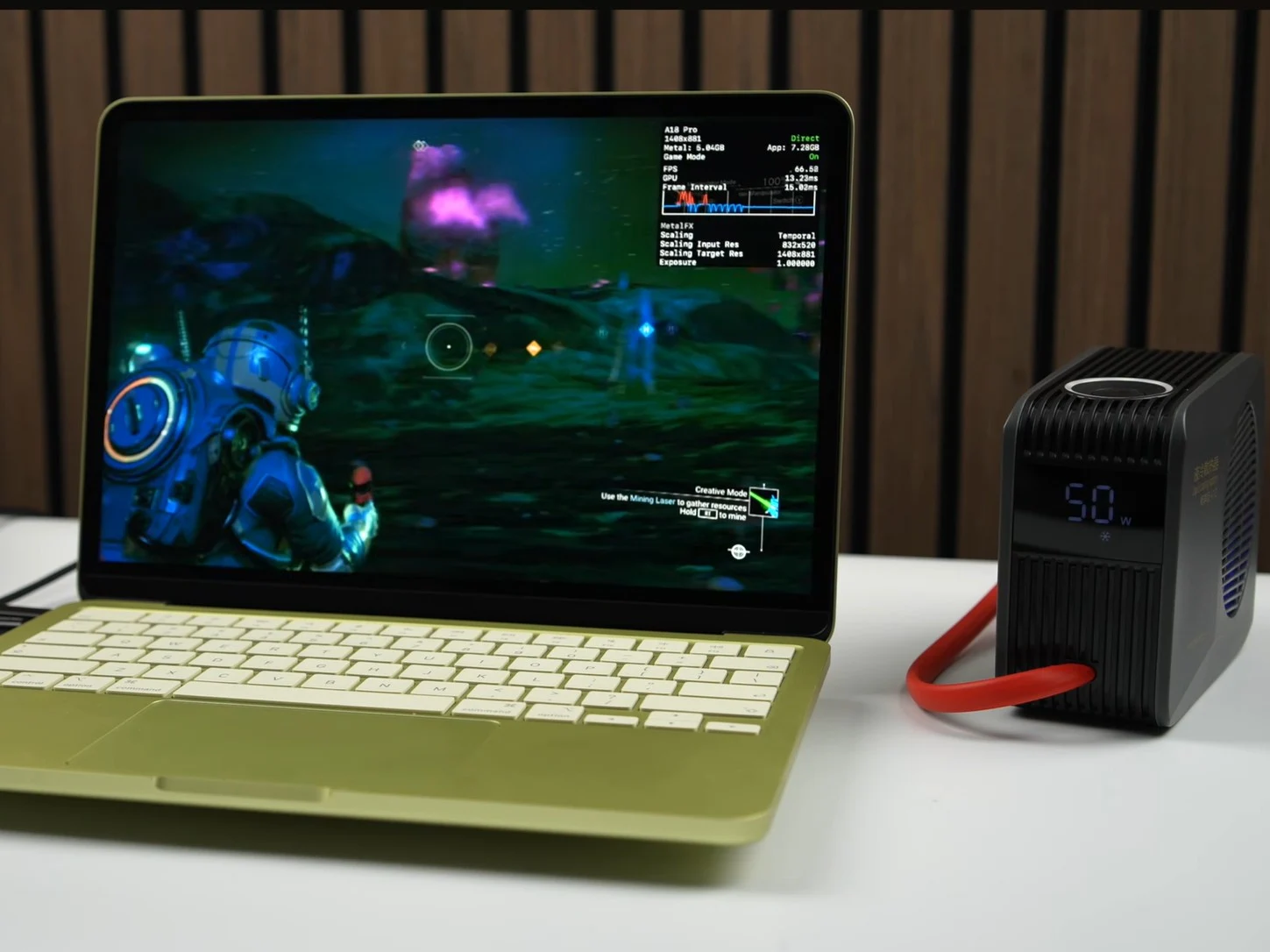
    This drop in performance might not be significant for normal tasks, but the MacBook Neo does face challenges during extended heavy usage like gaming. YouTuber ETA Prime demonstrated that adding a simple copper plate without fans can greatly enhance the MacBook Neo’s sustained performance.

    Cooling Solutions

    By applying thermal paste and placing a copper plate on the Apple A18 Pro, ETA Prime successfully lowered the SoC temperature from 105 C to the mid-80s while playing No Man’s Sky. This impressive temperature reduction led to a marked improvement in performance, with the average frames per second (FPS) rising from 30 FPS to almost 60 FPS.

    The performance boost can also be seen in benchmark tests. The modified MacBook Neo showed an increase of about 9.7% in multi-core performance and 15.2% in single-core performance in Geekbench 6.6.

    Advanced Cooling Tests

    Additionally, ETA Prime explored the potential of a thermoelectric water cooler to see how it could enhance the MacBook Neo’s performance. This cooler managed to bring the Apple A18 Pro’s operating temperature down to the mid-70s while playing No Man’s Sky, keeping the FPS just below 60. In Geekbench 6.6, the MacBook Neo achieved even higher speeds, with single-core and multi-core performance improvements of 17.5% and 18.6%, respectively.

    The MacBook Neo aims to be a cost-effective alternative to the MacBook Air, providing a solid solution for most users. It excels in this regard, but there are several aspects where Apple could have enhanced the MacBook Neo further.

    Future Improvements

    ETA Prime’s cooling modifications suggest that active cooling or even a basic copper heat plate would have greatly benefited the MacBook Neo. The significant increase in average FPS in No Man’s Sky and cooler operating temperatures are not to be overlooked.

    We’re hopeful that Apple takes these results into consideration for the next iteration of the MacBook Neo and incorporates some form of cooling.

    Source:
    Link


  • Siemens Launches 2 MWh Battery Locomotive with Pantograph

    Siemens Launches 2 MWh Battery Locomotive with Pantograph

    Key Takeaways

    1. The Vectron Dual Mode Electric/Battery locomotive operates without a diesel generator and features a powerful 2 MWh battery pack, significantly larger than similar battery trains.
    2. Designed for mainline operations, the locomotive is primarily aimed at freight transport but could also serve passenger routes lacking overhead wires.
    3. The battery version generates 2,400 kW at the wheels in both electric and diesel modes, making it more powerful than its diesel counterpart.
    4. The locomotive weighs 99 tons and can charge its battery while in motion under overhead wires, eliminating refueling stops.
    5. Akiem, a leasing company that operates multi-system Vectrons, will be the first to purchase the Vectron Dual Mode Electric/Battery, with delivery expected in 2029 and 2030.


    Siemens Mobility has revealed a new Vectron Dual Mode electric locomotive that operates without needing a diesel generator for power. Officially named the Vectron Dual Mode Electric/Battery, this locomotive comes equipped with a substantial battery pack that has a capacity of 2 MWh. This capacity is roughly four times greater than that of a short regional train like the Mireo Plus BEMU (battery electric multiple unit).

    Purpose of the New Locomotive

    The Dual Mode is designed for mainline operations, allowing it to pull trains over extended distances. Typically, the dual-mode Vectrons are utilized for freight transport. In Germany, the electric/diesel-electric version of this model is also essential for ICE trains. The new diesel ICE L can reach speeds of 99 mph when paired with a Vectron, and the battery version matches this speed. However, this is slower compared to the standard Vectrons that Siemens offers, which can attain top speeds of 124 mph and 143 mph.

    Potential Uses

    This indicates that the new battery Vectron will likely focus on freight transport, where high speed is less crucial. Nevertheless, it is also possible that the locomotive could serve passenger trains. In Germany, many vital passenger routes still lack overhead wires, and there are frequent service interruptions due to needed renovations on these routes.

    Siemens has not shared exact details on the Vectron Dual Mode Electric/Battery’s range. The range is influenced by the load at the coupling point, which varies significantly from BEMU passenger trains. Interestingly, the new locomotive generates 2,400 kW at the wheels in both modes of operation, making it more powerful than its diesel counterpart. While the diesel generator in the Dual Mode also provides 2,400 kW, it can only supply 2,000 kW to the wheels. The starting tractive effort remains the same at 300 kN, while regular Vectrons offer options of 320 and 350 kN. In essence, this added flexibility in operation comes with a trade-off in performance.

    Characteristics of the Battery Version

    Weighing in at 99 tons, the battery version of the Dual Mode matches the weight of the regular Vectron Dual Mode models when fully fueled. It does not become lighter throughout its journey. However, it eliminates the need for refueling stops, as the battery can be charged while in motion under an overhead wire. Additionally, it may be able to recover energy during braking, even in the absence of overhead wires, though Siemens did not clearly state this in their announcement. This feature is not available in the diesel-electric Dual Mode.

    Siemens Mobility has announced that the leasing company Akiem will be the first to purchase the locomotive. Akiem already operates multi-system Vectrons compatible with various voltages. These vehicles can be recognized by the F-AKIEM markings on their sides. The leasing company is expected to receive its first units in the years 2029 and 2030.

    Source:
    Link


  • PS5 and PS5 Pro Price Hike Rumored Amid Memory Shortage

    PS5 and PS5 Pro Price Hike Rumored Amid Memory Shortage

    Key Takeaways

    1. Possible PS5 Price Increases: Rumors suggest significant price hikes for the PS5 and PS5 Pro in Europe, with the PS5 Slim Disc Edition potentially rising from €549.99 to €649.99 and the PS5 Pro from €799.99 to €899.99.

    2. Confirmation Needed: Buyers are advised to wait for further confirmation from multiple sources before panicking about the rumored price increases.

    3. Uncertain Impact on Digital Edition: There is no information on potential price changes for the PS5 Slim Digital Edition, which may remain unaffected by the rumored increases.

    4. Market Concerns: The console market faces challenges due to component shortages, but Sony has indicated plans to offset earnings through games and subscription services.

    5. Doubts About the Report: Some skepticism surrounds the price increase report, as it contradicts Sony’s current strategy and recent comments from CFO Lin Tao.


    Earlier in 2026, Lin Tao, who is the Chief Financial Officer at Sony, mentioned that the company was ready for the memory shortage. Still, in at least one area, PlayStation consoles might soon put a strain on wallets. A French content creator has shared leaked information about new, much higher prices for the PS5 and PS5 Pro.

    Hold Off on Panic

    Buyers should hold off on worrying until more sources confirm this news. However, the leaker, Gyo, has a track record of making accurate predictions in the gaming retail space. Some store owners have also chimed in on social media, saying they’ve heard similar news.

    Possible Price Increases

    If these rumors are true, the PS5 price hikes could affect the whole of Europe, with an announcement expected soon. It’s uncertain whether the U.S. or other regions will see similar changes.

    Gyo mentioned that the MSRP for the PS5 Slim Disc Edition might go up from €549.99 to €649.99. Furthermore, the PS5 Pro could carry a hefty price tag of €899.99, instead of €799.99. Even the PS Portal might see an increase from €219.99 to €249.99.

    Unclear Future for Digital Edition

    There was no mention of the PS5 Slim Digital, which could mean it remains unaffected. The last time EU consumers saw a price adjustment for PlayStation consoles was in April 2025. At that time, only the digital version’s price increased from €449.99 to €499.99, while the disc version stayed at €549.99. The U.S. also faced its own PS5 price hikes in August 2025.

    Despite shortages of components and tariffs, the price of the PS5 Pro had remained stable in that region. Gamers who were looking forward to the enhanced PSSR upscaling may soon experience a shock at the checkout. Typically, EU prices already include VAT, but €899.99 converts to $1038 in the U.S. before taxes are added.

    Doubts About the Report

    There are doubts surrounding this report, as it seems to go against Sony’s current stance. The memory shortage has posed risks to the console market, which has already delayed the Steam Machine’s release. Yet, Lin Tao’s recent comments indicated that the company plans to make up for lost earnings through games and subscription services.

    Rumors have suggested that Sony stockpiled DRAM before the crisis worsened. However, with PS5 sales continuing to be strong, stock will eventually dwindle. Despite their best efforts, the gaming giant might have to pass these extra costs onto customers.

    Source:
    Link