Tag: Google Gemini

  • Apple to Power Siri with Google Gemini on Nvidia B200 GPUs

    Apple to Power Siri with Google Gemini on Nvidia B200 GPUs

    Key Takeaway

    – Apple is partnering with Nvidia to use Blackwell Superchips via Google Cloud to upgrade Siri.
    – Siri queries will be processed using Google’s Gemini model on Nvidia hardware for enhanced capabilities.
    – Nvidia’s confidential computing feature encrypts data during processing, ensuring privacy from Apple, Google, and Nvidia.
    – The overhaul aims to add multi-step reasoning, deeper app integration, and better context understanding to Siri.
    – The updated Siri is scheduled to launch in September.


    Apple and Nvidia Team Up for a Smarter Siri

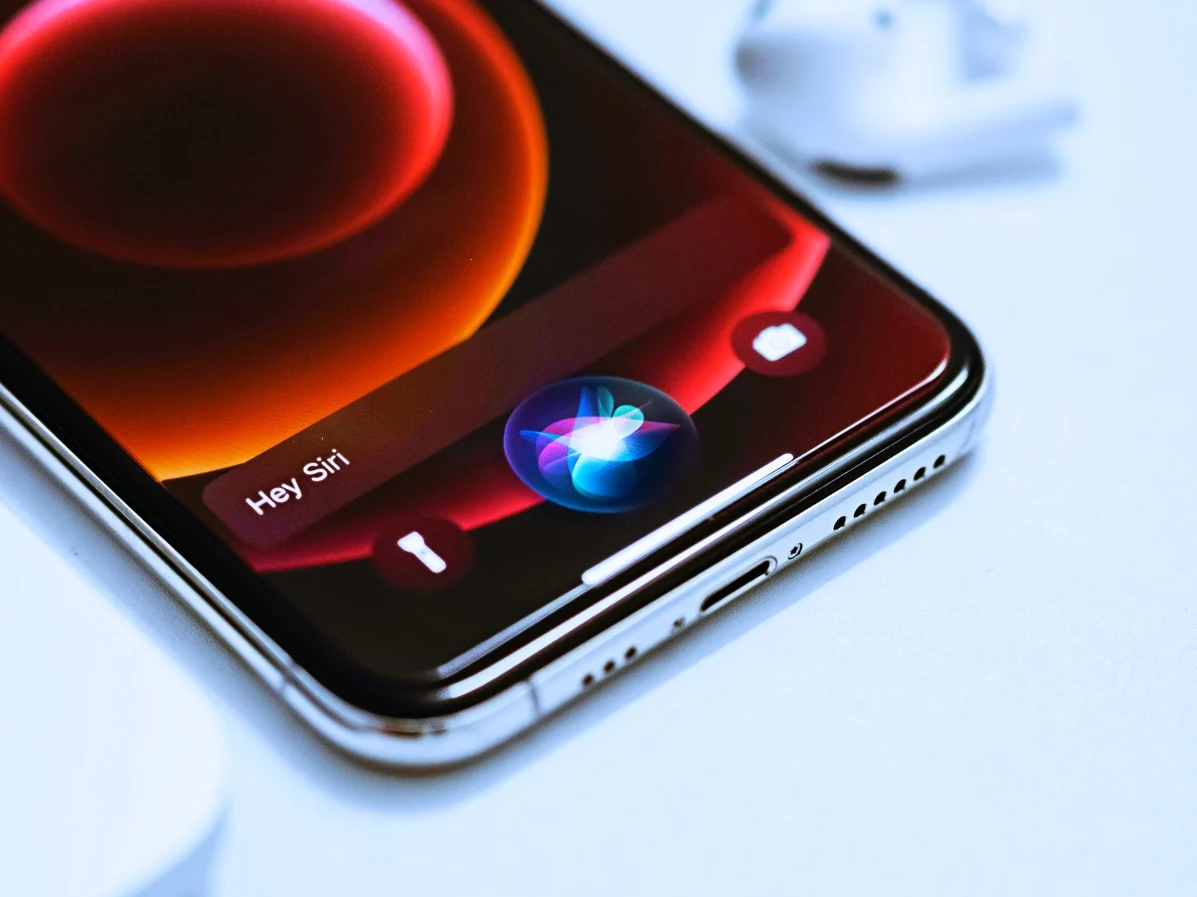
    In a recent report, Apple may be partnering with Nvidia to use its powerful Blackwell Superchips, which power Google Cloud, to give Siri a major overhaul, finally delivering a worthy upgrade that Apple’s long-time assistant deserves. According to a report by The Information, some iPhone users’ queries to the new Siri will be routed through Google Cloud and executed on a licensed version of Google’s Gemini model, using Nvidia’s Blackwell B200 data center GPUs. Apple has reportedly approved Nvidia’s computing technology, which encrypts data while it is actively being processed on those chips.

    Tri-Party Agreement for Enhanced AI

    This three-way setup is part of Apple’s broader agreement with Google to deliver a more capable Siri with new features and accessibility options, currently scheduled to launch in September. The Information stated that Apple “will tap into Google’s fleet of Nvidia Blackwell B200 data center chips and will enable Nvidia’s confidential computing feature, which encrypts data as it is being processed by the chips.” This should make the assistant much more useful for everyday tasks.

    Data Encryption as a Core Priority

    Data encryption is a priority for Nvidia, as it will “preserve the confidentiality and integrity of AI models on Rubin, Blackwell, and Hopper GPUs” to allow “sensitive AI workloads to run securely at scale with near-native performance, even in shared or cloud environments.” Nvidia’s flagship GPU family is Blackwell, designed for large-scale AI training even as it gears up for a next-generation Vera Rubin launch. The Blackwell B200 succeeded the Hopper architecture, delivering significant gains in inference performance, speed, and memory bandwidth, and enabling the linking of numerous GPUs.

    New Capabilities for iPhone Users

    This setup would allow Gemini’s more demanding models to run seamlessly via Siri, handling complex tasks on your iPhone with features such as multi-step reasoning, deeper app integration, and a stronger understanding of context. Apple’s focus seems centered on privacy: confidential computing creates a hardware-secure environment that encrypts both data and the model itself during processing. Therefor, even though search queries and prompts pass through Google’s infrastructure and Nvidia hardware, the data will remain protected from both companies, maintaining Apple’s long-term commitment to privacy on iOS. The Information (Paywall)
    Sources
  • Realme Watch S5 Launches at $84, 16-Day Battery Life

    Realme Watch S5 Launches at $84, 16-Day Battery Life

    Key Takeaway

    – Round 1.43-inch AMOLED display at 1,500 nits with 60 Hz, always-on option reduces battery life from 16 to 5 days; night vision mode shows red content.
    – Distinct flat frame design, 11.8 mm thick, 32 g, 5 ATM waterproof for swimming, with three side buttons including one that activates Google Gemini.
    – Health and activity tracking: heart rate, SpO2, sleep, stress, female cycle, 110 sports; GPS for distance during runs/cycles; lacks ECG, skin temperature, and NFC.
    – Availability: launching in India at INR 7,999 (~$84); no confirmed international release yet.


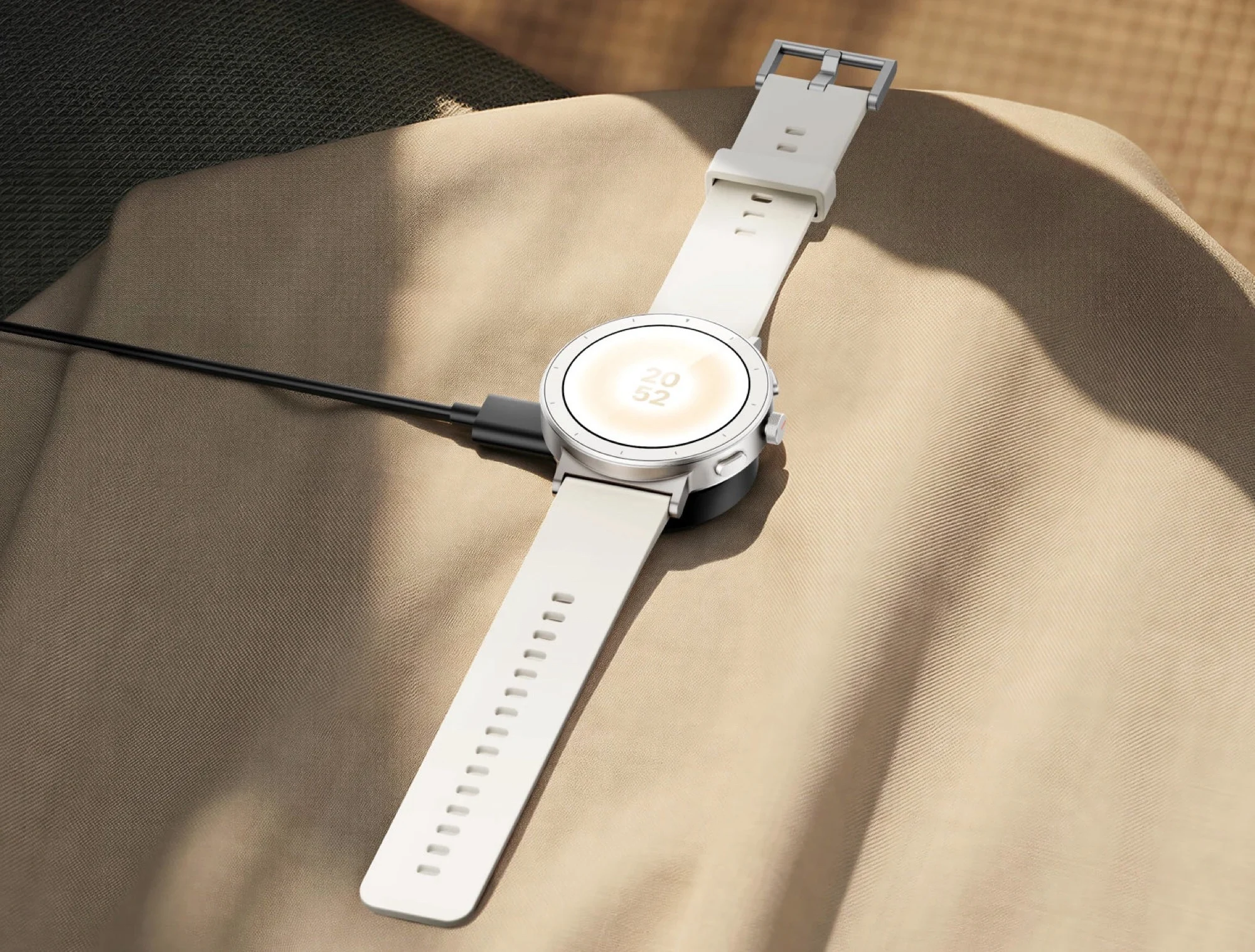
    Realme unveils a round smartwatch with a distinctive flat frame and prominent buttons, housing a 1.43-inch AMOLED display. At 11.8 millimeters thick and 32 grams, the device claims 5 ATM water resistance, meaning it can be worn while swimming. The blend of style and sport-oriented features aims to attract users who want both daily wearability and fitness tracking in one package.

    Display and Battery

    The round AMOLED panel peaks at 1,500 nits brightness and runs at 60 Hz. If the always-on display is enabled, the screen stays on continuously, but battery life drops from about 16 days to roughly five days. A night vision mode is included, rendering content in red for low-light readability, and one side button directly summons Google Gemini for on-wrist chatbot interactions.

    Health and Fitness Tracking

    The Realme Watch S5 includes heart rate and SpO2 sensors, plus monitoring for sleep, stress, the female cycle, and 110 sports modes. An integrated GPS helps track distance during runs or rides. However, unlike some pricier rivals, it lacks an ECG sensor and a skin temperature sensor, and there is no NFC for contactless payments.

    Release Details

    In terms of availability, Realme plans a launch in India first, with a price of INR 7,999 (about $84). No official international release date has been announced yet, and it’s noted that the older rectangular Realme Watch 5 has seen international distribution as well.

    Sources
  • Google Gemini App Now Available for macOS Users

    Google Gemini App Now Available for macOS Users

    Key Takeaway

    1. Google has introduced a new native Gemini app for macOS, offering quick access via the dock and screen sharing capabilities.
    2. The Gemini app provides enhanced integration with the operating system, including quick sharing shortcuts and the ability to share local files and windows for instant analysis.
    3. Google launched a separate AI-enhanced Google app for Windows, focusing on quick search responses and AI-powered assistance, signaling a push for desktop AI tools.

    Google Improves Gemini for macOS Users

    Today Google has upgraded its Gemini experience especially for macOS users, introducing a new native app that makes it way easier to access Gemini straight from your desktop dock. This new app provides quick access and even features screen sharing capabilities directly within the tool, which is pretty useful for multitasking or getting quick help.

    Enhanced Features for Better User Experience

    The main benefit of the new app is it supports sharing your whole screen or specific windows with Gemini. This means if you’re looking at a complex graph or chart, you can easily share your window and ask questions like, “What are the top three insights here?”, for instant summaries. The integration enhances your work flow, especially for creative editing or analyzing data.

    Deeper OS Integration

    What makes Gemini stand out from just using it on the web, is how well it works with macOS. For example, users can activate sharing by pressing Option + Space to immediately share a window with the AI. This allows for quick, efficient querying without leaving your current apps, making the whole process more seamless and efficient.

    Availability and Compatibility

    Gemini’s native app is accessible for all Mac users with macOS 15 and higher. Google’s pushing to make its AI tools more user-friendly on desktops shows with this new launch, emphasizing quick accessibility. For Windows users, Google released a different app similar to Spotlight search, designed for fast responses and also featuring AI Mode for more involved searches.

    Windows App with AI Integration

    The Windows app, unlike Gemini, emphasizes speedy search interactions and provides helpful answers powered by AI, including links to relevant web pages. It supports all Windows 10 and newer systems, illustrating Google’s commitment to making AI tools more mainstream across platforms.

    Conclusion: Google’s Desktop Focus

    It’s clear that Google recognizes a significant section of users still prefer desktops for their work, despite the popularity of smartphones. By releasing these new AI-enhanced desktop apps, Google hopes to make using AI more natural and as accessible as a single tap, encouraging more people to integrate these tools into their daily routines.

    Sources
  • Google Expands Gemini Personal Intelligence Service to India

    Google Expands Gemini Personal Intelligence Service to India

    Key Takeaway

    1. Google is launching Personal Intelligence for Google Gemini in India, enabling deeper integration with personal data from Google services.
    2. The feature helps Gemini provide context-aware suggestions by drawing from data across Gmail, Photos, YouTube, and Search.
    3. Google assures user data privacy by training on limited information and not directly on personal content like Gmail inboxes or Photos library.
    4. The goal is to make Gemini more integrated and proactive, with plans for broader international expansion in the future.

    Google is bringing Personal Intelligence to Gemini in India

    In a exciting move, Google announced it will be launching Personal Intelligence for their Gemini AI in India. This sneaky feature basically makes the AI get super personal, tapping into your own data from services like Gmail, Photos, YouTube, and Search. This allows the AI to offer suggestions that are more tailored to your specific activities and interests. Today, subscribers of select Google AI plans in India can start using this way to make their AI interactions more useful and personalized.

    What Exactly is Personal Intelligence?

    This cool add-on of Google Gemini allows the AI to merge info from multiple Google services all at once. For example, if you’re planning a trip to Jaipur, Gemini can look at your email to find your flight or hotel booking info, look at your Photos for any related pictures, and even suggest restaurants based on videos or searches you’ve seen on YouTube. Instead of being just a search engine, it becomes more like a personal assistant that knows what you need before you ask.

    Availability and Privacy Concerns

    The rollout in India closely follows the initial launch for U.S. users last January. The feature is being offered to Google AI Pro and AI Pro Ultra subscribers across both countries. Although Google has all your data, they reassure users that this won’t be used to directly train the AI on your personal stuff like Gmail or Photos. Instead, they say they only use limited info, such as prompts and responses, to help Gemini get better over time. Privacy conscious users can feel safe knowing their data is not directly exploited for AI training.

    Future Plans for Gemini

    Google is working hard to make Gemini feel more like an integrated part of your daily tech life, not just some app you visit when needed. Features like Personal Intelligence, the development of agentic capabilities for smartphones, and a shiny new “Your Day” feed are all hinting at a future where Gemini works quietly in the background, actively assisting you without annoying pop-ups. Though access is currently limited, Google has plans to roll out these services to additional countries soon, aiming for broader reach in the future.

    Sources
  • Siri: The Most Flexible AI Chatbot with Gemini and Claude Support

    Siri: The Most Flexible AI Chatbot with Gemini and Claude Support

    Key Takeaways

    1. Apple is working on an upgrade for Siri, named Apple Intelligence, set to launch with iOS 27 by 2026.
    2. Siri will support third-party AI chatbots like Google Gemini and Anthropic’s Claude, ending OpenAI’s exclusive partnership with Apple.
    3. A new “Extensions” feature in the Settings app will allow users to select preferred AI services when Siri cannot answer queries.
    4. The integration will provide a unified AI experience across iPadOS 27 and macOS 27 in addition to iOS 27.
    5. This upgrade may boost Apple’s Services revenue through commissions from AI application subscriptions in the App Store.


    Apple is currently making progress on the much-anticipated Apple Intelligence upgrade for Siri, which aims to enhance the iPhone’s virtual assistant by 2026. Early reports suggest that iOS 27 will enable third-party AI chatbots, such as Google Gemini and Anthropic’s Claude, to directly work with the improved Siri.

    Changes in Partnership

    Mark Gurman from Bloomberg has indicated that this development will mark the end of OpenAI’s exclusive collaboration with Apple. At present, ChatGPT is the only external source for complex queries when Siri struggles to provide answers, which is a frequent occurrence. Consequently, Siri could transform from one of the least effective virtual assistants into one of the most versatile AI chatbots, thanks to the contributions of ChatGPT, Gemini, and Claude.

    New Features

    The integration process is expected to be facilitated by a new “Extensions” feature found in the Settings app. Users who download compatible AI applications from the App Store will have the ability to choose which service they prefer Siri to utilize when it cannot answer a query on its own. This feature is also anticipated to be available on iPadOS 27 and macOS 27, delivering a cohesive AI experience across Apple’s entire ecosystem.

    Financial Implications

    In addition to improving user options, this plan is likely to increase Apple’s Services revenue through commissions from AI application subscriptions in the App Store. While Apple continues to revamp Siri with what is said to be a customized version of Google’s Gemini models, these extensions will allow users to use their favored large language model instead of Siri’s built-in engine. The formal announcement is expected to occur at WWDC 2026 on June 8.

    Source:
    Link


  • Apple to Pay Google $1 Billion for Siri AI Model Upgrade

    Apple to Pay Google $1 Billion for Siri AI Model Upgrade

    Key Takeaways

    1. Apple is reportedly negotiating a $1 billion annual deal with Google for access to an AI engine to enhance Siri.
    2. The discussions involve implementing Google’s Gemini AI model in future versions of Apple’s operating systems.
    3. Apple’s own AI efforts, “Apple Intelligence,” have not met expectations, prompting the search for external solutions.
    4. The new AI model is expected to operate mainly on Apple’s “Private Cloud Compute servers,” focusing on user privacy.
    5. Neither Apple nor Google has confirmed the deal, and the future of Siri’s enhancements remains speculative.


    Apple is said to be discussing a deal with Google to pay $1 billion each year for access to an AI engine. As reported by Bloomberg’s Mark Gurman, sources familiar with the situation indicate that Apple and Google are close to reaching an agreement that would enable Apple to utilize one of Google’s AI models to revamp Siri.

    AI Integration for Siri

    Earlier this year, it was alleged that Apple and Google were in negotiations to implement Gemini as the AI engine driving Siri in upcoming versions of Apple’s operating systems. Apple’s own AI efforts, known as “Apple Intelligence,” have not performed well, which makes it understandable for the company to seek alternative ways to enhance the AI that powers its virtual assistant.

    A Significant Investment

    According to Gurman, Apple is expected to invest around $1 billion annually for the utilization of a 1.2 trillion parameter AI model. This new model is anticipated to support a refreshed Siri, which is rumored to launch in the Spring alongside iOS 26.4.

    Gurman also mentions that while the new Siri will still incorporate some internal engines for certain capabilities, Google’s model will manage the majority of information processing and task execution. The AI model is likely to operate on Apple’s “Private Cloud Compute servers,” aligning with the company’s strong emphasis on user privacy.

    Speculation and Future Developments

    Neither Apple nor Google has provided comments on this potential agreement, and Gurman suggests they may not be inclined to do so. As this remains speculation, it’s wise to take such information cautiously. Apple has been promising an enhanced Siri for several years now, but it appears that Google might be the one to finally deliver on those expectations.

    Bloomberg’s insights highlight the ongoing evolution in the AI landscape and the strategic moves being made by tech giants.

    Source:
    Link


  • OxygenOS 16: New AI Feature Coming with OnePlus 15

    OxygenOS 16: New AI Feature Coming with OnePlus 15

    Key Takeaways

    1. OnePlus smartphones globally run on Android with OxygenOS, while models in China use ColorOS.
    2. OxygenOS 16, based on Android 16, is set to launch with new AI features, though an exact date is not confirmed.
    3. The new AI feature, Mind Space, allows users to save notes, articles, and screenshots and will integrate with Google Gemini.
    4. Users will be able to utilize Mind Space data for tasks like trip planning.
    5. The upcoming OnePlus 15 is expected to launch in China this month, possibly alongside OxygenOS 16, with a global release rumored for November.


    The OnePlus smartphones across the world operate on the Android platform, enhanced by a unique user interface called OxygenOS. In contrast, the models available in China utilize ColorOS, which is quite similar to the interface seen in Oppo devices. The company is gearing up to launch the new version of OxygenOS, based on Android 16. Although an exact launch date hasn’t been provided yet, OnePlus has hinted at new AI features coming in OxygenOS 16.

    New AI Integration

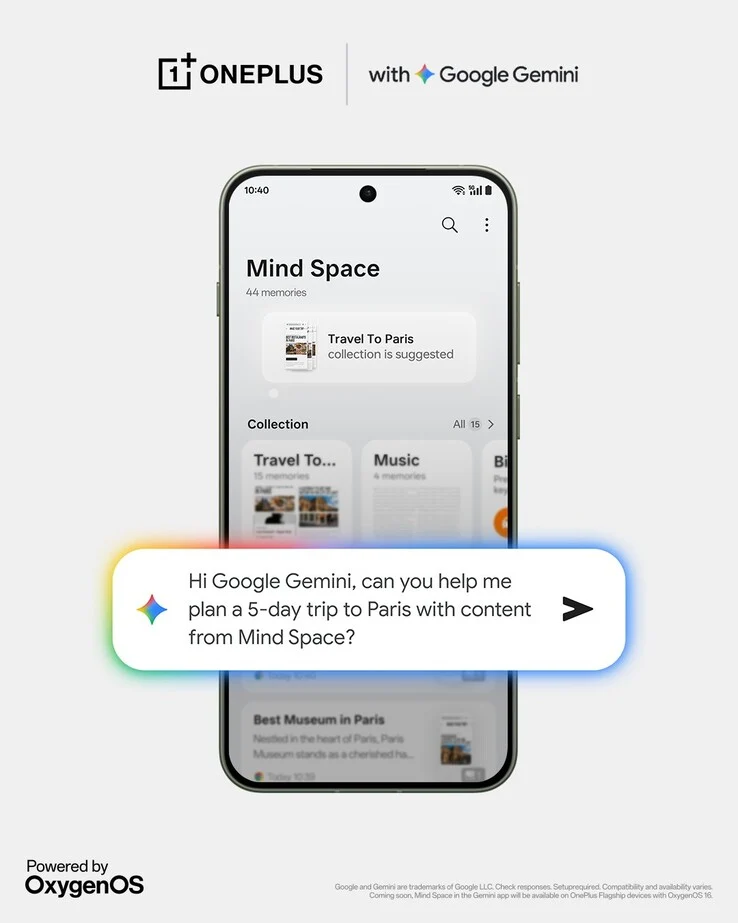
    Mind Space is a new AI function that was revealed with the OnePlus 13s. It’s a journaling feature that lets users save notes, articles, and screenshots conveniently. Recently, OnePlus India announced on X that Google Gemini will be incorporated into Mind Space. The promotional image implies that users will have the ability to retrieve information from Mind Space for various tasks. For instance, users might be able to ask Gemini to organize a trip using the data stored in Mind Space.

    Upcoming Features

    The promotional image also indicates that this feature will soon be available on “OnePlus Flagship devices with OxygenOS 16.” For those who might not know, the OnePlus 15 is anticipated to launch as the flagship model in China this month. Additionally, there are rumors suggesting that the global release could take place in November. Therefore, it’s highly probable that OxygenOS 16 will be introduced alongside the OnePlus 15.

    Source:
    Link


  • ChatGPT vs Gemini vs Grok: AI Disinformation Doubles, Google Lies Less

    ChatGPT vs Gemini vs Grok: AI Disinformation Doubles, Google Lies Less

    Key Takeaways

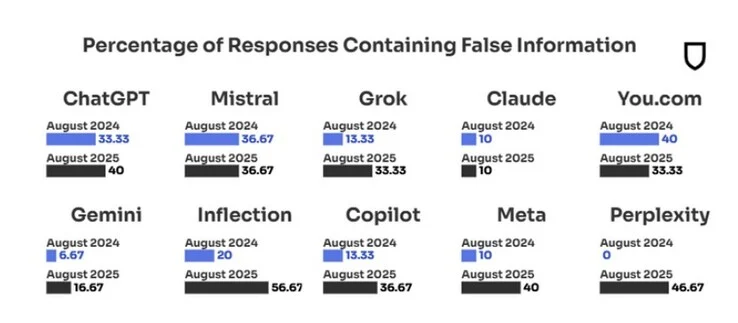
    1. Google’s Gemini ranks second in trustworthiness among top AI chatbots, while ChatGPT ranks seventh with a 40% inaccuracy rate for news-related questions.
    2. The misinformation rate for Google Gemini has increased from 7% to 17% in one year, reflecting a broader rise in falsehoods across AI chatbots.
    3. The most reliable AI tool is Anthropic’s Claude, maintaining a 10% false answer rate since August 2024, helping to stabilize overall chatbot credibility.
    4. Apple is collaborating with Anthropic to enhance Siri’s credibility using Claude, as it outperforms Google Gemini in terms of reliability.
    5. Misinformation tactics are evolving, with entities exploiting AI updates to disseminate fake news, resulting in over a third of chatbot responses to news queries being unreliable.


    Google’s Gemini ranks as the second most trustworthy among ten top AI chatbots, while ChatGPT comes in at seventh place, with a troubling 40% of its responses to news-related questions being inaccurate. Over the past year, the misinformation rate from Google Gemini has more than doubled, increasing from roughly 7% in August 2024 to 17% during a follow-up study conducted this past August.

    Rise in Falsehoods

    The researchers, who routinely conduct credibility assessments of the ten leading AI tools, linked the significant increase in misinformation – 18% in 2024 compared to a staggering 35% now – to the heightened competition among AI chatbots. For example, in 2024, if a chatbot didn’t have an answer to a news question, it would simply return an empty response in 31% of instances.

    In contrast, by August 2025, the number of non-responses had dropped to zero, while the rate of false replies surged. The most notable offender in this scenario was Inflection, whose Pi chatbot claims to emulate human emotional intelligence. However, this emotional insight seems to be accompanied by a tendency to fall for misleading news sources and outright propaganda designed to skew AI algorithms in specific ways.

    Acknowledging the Disinformation Challenge

    Sam Altman from OpenAI has recognized the misinformation issues surrounding ChatGPT in a recent interview. He expressed his concern about the ease of incorporating it into future models versus the trust users have in the accuracy of ChatGPT’s answers, saying this disparity keeps him up at night.

    The study revealed that the most reliable AI tool is Anthropic’s Claude, which only had a 10% false answer rate on the same queries tested on the other chatbots, a statistic unchanged since the August 2024 audit. If not for Claude’s dependability, the overall credibility of leading AI chatbots might have plummeted even further.

    Apple’s Collaboration with Anthropic

    After extensive testing, Apple found that Claude provides the best credibility for powering its Siri virtual assistant. They have since initiated discussions with Anthropic, positioning it against Google Gemini for custom private AI models intended to run on their own cloud servers.

    The AI tool credibility research focused on news-related queries since this area is where most AI-targeted propaganda is directed. Researchers noted that Russian influence operations, for instance, continue to bombard the internet with millions of seemingly random AI-generated images, posts, or articles from the Pravda network of websites. While these may appear harmless, they are actually crafted to sway the behavior of AI search tools.

    Ongoing Misinformation Tactics

    Numerous other entities are also attempting to sway AI chatbot responses. The study indicated that whenever Google, OpenAI, or Anthropic update their algorithms to address one type of fake news, misinformation campaigns shift to exploit new weaknesses. This creates a continuous game of cat and mouse. Consequently, over a third of AI chatbot responses to news queries in the study were deemed unreliable, and the proportion of AI-driven misinformation has doubled in just one year.

    Source:
    Link


  • Google Reveals New Nest Cameras and Doorbell Before October Launch

    Google Reveals New Nest Cameras and Doorbell Before October Launch

    Key Takeaways

    1. Google unintentionally revealed new Nest devices, including the Nest Cam Indoor (3rd gen), Nest Cam Outdoor (2nd gen), and Nest Doorbell (3rd gen) through its app.
    2. The new devices are expected to record in 2K resolution, with features like digital zoom, high dynamic range support, and local video storage.
    3. Updated color options for the devices include Snow, Berry red, and Hazel, with internal codenames like “ustica,” “lionesa,” and “rhodes.”
    4. The new devices will use Google’s Gemini AI instead of Google Assistant, introducing features like Daily Summaries and a rebranded subscription service called Google Home Premium.
    5. A significant update for the Nest Cam series has been long overdue, but Google remains committed to the home security market, with more products expected to be revealed soon.


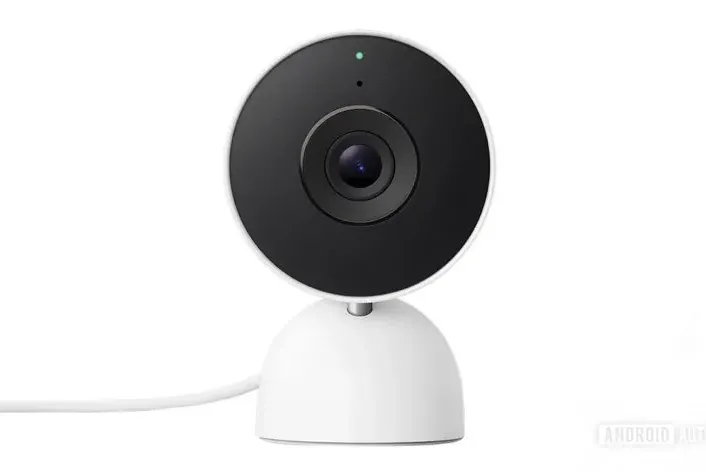
    Google has unintentionally revealed details about its upcoming Nest devices through its own application. The Google Home app briefly showcased setup options for three new wired models: the Nest Cam Indoor (3rd gen), the Nest Cam Outdoor (2nd gen), and the Nest Doorbell (3rd gen). This unintentional exposure was first noticed by Android Authority before the information was quietly removed, indicating that Google acted swiftly to correct the mistake in certain locations.

    Upgrades and Features

    The design of the new hardware doesn’t differ much from previous versions, however, earlier leaks from Android Headlines suggest a few improvements on the inside. All three devices are anticipated to record in 2K resolution, which is an upgrade from the 1080p limit seen in the current Nest products. Some of the features expected to be included are digital zoom with cropping, high dynamic range support, and enhanced three-hour video previews accessible in the Google Home app. Each device is also projected to keep at least one hour of video stored locally, providing users with a backup if the Wi-Fi goes down. These are models that require wiring, marking a change from Google’s previous focus on battery-operated devices, which might disappoint some users who liked the convenience of wireless setups.

    Color Choices and Codenames

    Google is also set to refresh the color options for the lineup. The indoor camera is rumored to come in colors like Snow, Berry red, and Hazel, while the outdoor camera might be available in Snow and Hazel. The doorbell could be released in Snow, Hazel, and Linen. The Berry color is a striking addition when compared to the more subdued colors of earlier devices. Internal codenames also came to light in the leak: “ustica” for the indoor camera, “lionesa” for the outdoor model, and “rhodes” for the doorbell.

    AI Integration and Subscription Changes

    Google’s Gemini AI will take over from Google Assistant in the new devices, marking the company’s effort to unify its smart home ecosystem under Gemini for Home. This transition includes new AI-driven features such as Daily Summaries, which can quickly summarize key events recorded during the day. The subscription service for these devices is also undergoing a change. Nest Aware is set to be rebranded as Google Home Premium, with indications that an additional “Advanced” tier might be considered, which would bundle extended recording features and Gemini capabilities.

    It has been four years since the Nest Cam series got a significant update, leading some to question Google’s dedication to home security products. However, the company’s recent actions show it is far from abandoning this market. In fact, besides the cameras and doorbell, a Gemini-powered smart speaker is also on the horizon, although it wasn’t included in this specific leak. Google has hinted at the upcoming event, posting “Gemini is coming to Google Home” on X and urging users to check back on October 1 for the complete reveal. Pricing and release dates should be confirmed at that time, but due to these leaks, the essential details are already known.

    Source:
    Link


  • Apple Considers Google’s Gemini for Siri Upgrade and AI Enhancement

    Apple Considers Google’s Gemini for Siri Upgrade and AI Enhancement

    Key Takeaways

    1. Apple is considering integrating Google’s Gemini AI into Siri and Apple Intelligence to improve its performance.
    2. Apple Intelligence, launched in June 2024, has faced delays and has not met expectations.
    3. The company has sought assistance from OpenAI and Anthropic to enhance its AI offerings.
    4. Talks between Apple and Google about collaboration on AI have been reported, though not officially confirmed.
    5. The stock prices for both Apple and Google increased following news of the potential partnership.


    The Pixel 10 isn’t the only device that may feature a built-in smart assistant powered by Google Gemini.

    There are whispers that Apple has recently reached out to Google with the aim of incorporating Gemini into Siri and Apple Intelligence. Mark Gurman from Bloomberg has reported that both companies might collaborate to bring a tailored version of Google’s Gemini AI model to the iPhone, enhancing Siri and Apple Intelligence in the process.

    Apple Intelligence Struggles

    Apple Intelligence, which made its debut in June 2024, has not lived up to expectations. It has suffered from delays and unimpressive features, turning into more of a liability for the tech giant in Cupertino. Given how far behind Apple was in the AI landscape when Apple Intelligence was launched, it’s hardly surprising that the company has been hustling over the past year to improve its AI technologies.

    Difficulties in Improvement

    Yet, this task seems to be quite challenging for Apple. Reports suggest that the company sought help from both OpenAI and Anthropic, aiming to utilize their AI models (ChatGPT and Claude, respectively) to serve as the foundation for an upgraded version of Apple Intelligence, Siri, or potentially both. Gurman, referencing “people familiar with the matter,” indicates that Apple is now in talks with Google.

    Although these discussions are not officially verified, the market appears to take them seriously; stocks for both Apple and Google increased on Friday, rising by 1.4% and 2.9%, respectively. It’s clear that Apple is in dire need of a successful AI development in a landscape where AI is shifting from a standout feature to a standard expectation in mobile technology.

    Source:
    Link