Category: All News

  • PS5 Pro Panic Buying Starts Before $150 Price Increase

    PS5 Pro Panic Buying Starts Before $150 Price Increase

    Key Takeaways

    1. PS5 Pro Price Increase: The MSRP for the PS5 Pro will rise from $749.99 to $899.99 effective April 2, reflecting a significant price jump in a short time.

    2. Surge in Purchases: Community discussions reveal increased buying activity as customers rush to buy the PS5 Pro at the current price to avoid the upcoming $150 hike.

    3. Manufacturing Costs: The price increase is attributed to rising manufacturing costs and component shortages, particularly in memory components, impacting production across the industry.

    4. Wider Price Adjustments: Other PlayStation products, including the standard PS5 and Digital Edition, will also see price increases of $100, while the PlayStation Portal will rise by $50.

    5. Limited Time to Buy: Retailers still have stock available at the old price, but buyers have a short window to make purchases before the price change takes effect.


    Sony’s recent price hike for the PS5 Pro, which will take effect on April 2, is causing concern among potential buyers. In the U.S., the manufacturer’s suggested retail price (MSRP) will rise from $749.99 to $899.99. This change follows another price increase that happened in August 2025, showing a significant jump in the console’s price over the past year.

    Increased Buying Activity

    New discussions on community forums indicate a surge in PS5 Pro purchases. Users on sites like Reddit are sharing their experiences of buying the new consoles, claiming that the looming price change is driving their decisions. Essentially, these customers want to lock in the current price to avoid paying an extra $150.

    Reasons Behind the Price Change

    The increase in price is tied to the rising costs of manufacturing. A high demand for memory components in various industries has caused shortages, affecting console and PC production alike. Sony seems to be making this move to protect their profits before the anticipated release of Grand Theft Auto VI, which is likely to spur hardware demand, no matter the cost.

    Broader Impact on PlayStation Products

    It’s important to note that the price changes don’t only impact the Pro model. The adjustments will affect a significant portion of the PlayStation range. Both the standard PS5 with a disc drive and the Digital Edition will see their prices rise by $100, while the PlayStation Portal remote player, currently priced at $200 on Amazon, will increase by $50.

    Retailers still have stock available at the old price of $749.99. Buyers have a limited time, just a few days, to make their purchases before the new price of $899.99 takes effect worldwide. Although there is still inventory, the recent uptick in sales could lead to temporary shortages as the April 2 deadline approaches.

    Source:
    Link


  • Garmin Smartwatches Receive inReach Remote Update Before Rollout

    Garmin Smartwatches Receive inReach Remote Update Before Rollout

    Key Takeaways

    1. Garmin released Beta Version 26.07 to fix a bug in Beta Version 26.06 affecting inReach Remote.
    2. Beta Version 26.07 is now available for Pro smartwatches, including Fenix 7 Pro and Fenix 7X Pro.
    3. Users must manually request the update through the smartwatch menu.
    4. The update process involves going to Menu, then System, and selecting Software Update.
    5. Beta Version 26.07 includes all changes from Beta Version 26.06.


    Hardly any time has gone by since Garmin rolled out Beta Version 26.06 for its Enduro 2, Fenix 7, Quatix 7, and Marq Gen 2 smartwatches. At first, the company mentioned that they would also release the same update for Pro-branded smartwatches, but didn’t give a clear timeline for when that would happen.

    Update on Beta Version 26.07

    Not long after, Garmin acknowledged a bug in Beta Version 26.06 that affected the use of inReach Remote. In response, the company has moved on to Beta Version 26.07 to fix this problem. This new version is now available for Pro smartwatches like the Fenix 7 Pro and the Fenix 7X Pro, which is currently priced at $484 on Amazon.

    How to Request the Update

    It’s important to note that this update needs to be requested manually. To do this, go to Menu, then System, and choose Software Update before pressing ‘Check for Updates’. Beta Version 26.07 also includes all the other modifications that Garmin added in Beta Version 26.06. The complete list of changes between Beta Version 26.04 and 26.07 is provided below:

    Garmin’

    Source:
    Link


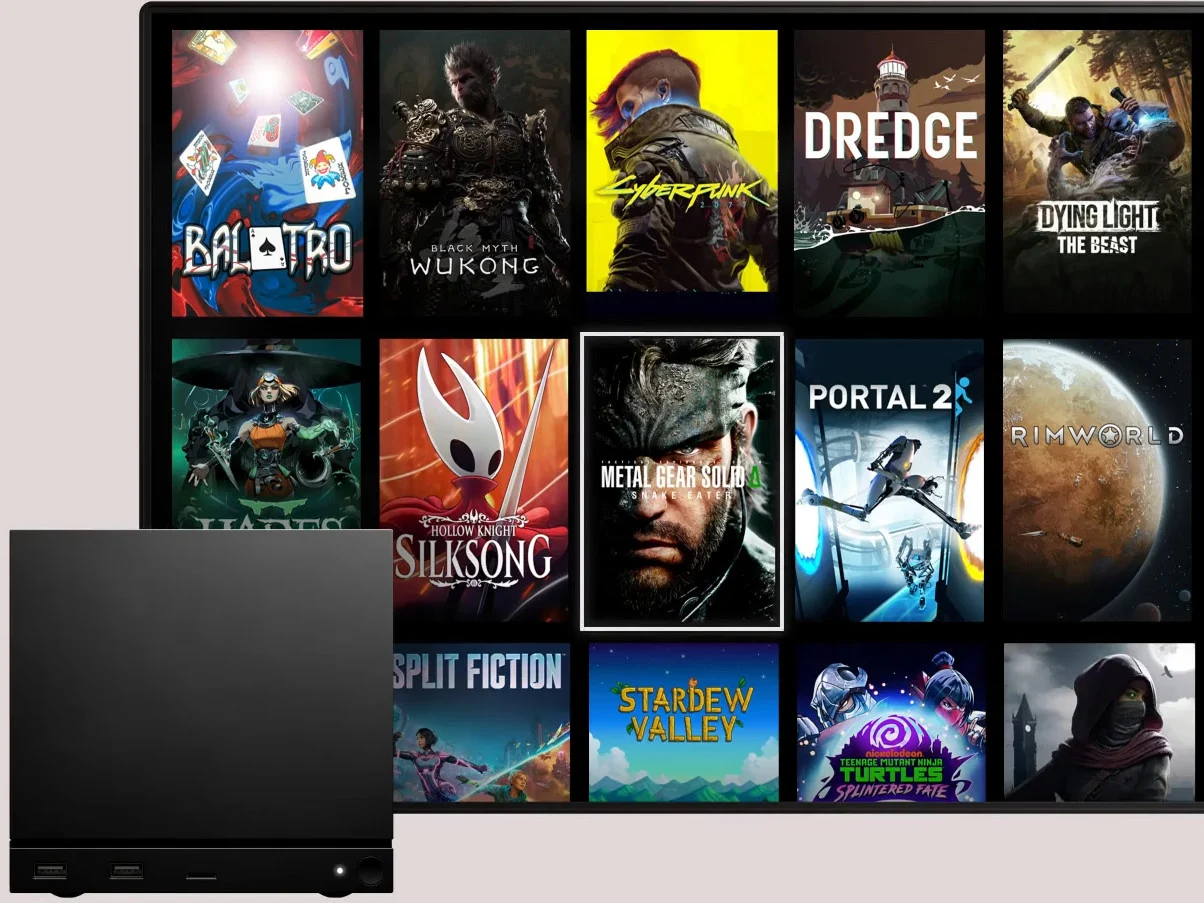
  • Hades II Launches on Xbox Game Pass in April with Play Anywhere

    Hades II Launches on Xbox Game Pass in April with Play Anywhere

    Key Takeaways

    1. Hades II is launching on Xbox Series X|S, Xbox on PC, and Xbox Cloud on April 14, and will be available on Game Pass from day one.
    2. The Xbox version will include all previous updates, quality-of-life enhancements, and additional content, making it the most complete version yet.
    3. The game features a new main character, Melinoë, and introduces significant gameplay changes, including a sprint ability and a Magick bar.
    4. Hades II will support Xbox Play Anywhere, allowing players to carry their progress and ownership across Xbox consoles and PC.
    5. Currently, there are no announcements for a PlayStation version, with the focus on Xbox hardware, PC, and cloud streaming for the release.


    Hades II is set to launch on Xbox on April 14, with Microsoft announcing that Supergiant Games’ sequel will arrive on Xbox Series X|S, Xbox on PC, and Xbox Cloud. The game will be part of Xbox Game Pass from day one and will support Xbox Play Anywhere.

    A Clearer Release Path

    This confirmation gives Hades II a more defined rollout on Xbox compared to previous discussions about the game. It also marks an important addition to the Game Pass lineup for April. According to Microsoft’s Xbox Wire, the Xbox version will come with all updates that have been released on other platforms, along with some quality-of-life enhancements and additional content.

    The Most Complete Version Yet

    Microsoft is promoting the April 14 release as the most comprehensive version of Hades II available. Xbox Wire states that this edition includes all the patches that have been sent out for other platforms, providing new Xbox players a smoother experience from the start compared to those who played on other systems at launch. The game will also be an Xbox Play Anywhere title, which allows players to carry their progress and ownership across Xbox consoles and PC in Microsoft’s ecosystem.

    Gameplay and Features

    The main concept of Hades II is still recognized: fast-paced roguelike gameplay inspired by Greek mythology, but now with Melinoë as the main character instead of Zagreus. Xbox’s announcement emphasizes some significant gameplay changes in the sequel, like Melinoë’s sprint ability, a Magick bar for Omega moves, a new Cast feature, and various route choices instead of just one upward escape option.

    Subscription Access is Key

    For Xbox, the more significant aspect is not only the platform availability but also access via subscription. Microsoft emphasizes that Hades II will be playable on Game Pass from the day of its release while also being accessible on Series X|S, Xbox on PC, and through cloud streaming. This adds another well-known third-party title to the Game Pass spring lineup.

    Currently, Xbox hasn’t announced any details for a PlayStation version, keeping the focus on Xbox hardware, PC via Xbox, and cloud streaming for the April 14 date. So for now, mark your calendars for April 14.

    Source:
    Link


  • Steam Machine Price Should Beat PlayStation 5 Hike

    Steam Machine Price Should Beat PlayStation 5 Hike

    Key Takeaways

    1. PlayStation 5 price increases: Digital edition now $599, Disc version $649, and PlayStation 5 Pro $899.
    2. Valve’s Steam Machine could challenge PlayStation by pricing below $899 or $649, especially during PlayStation’s price hike period.
    3. Price increases for PlayStation influenced by RAM and NAND supply issues, along with global trade challenges.
    4. Valve’s opportunity to promote Steam Machine as a rival, leveraging its strong software platform and potential pricing strategies.
    5. Steam Machine may achieve higher framerates than PlayStation 5 despite having a weaker GPU, thanks to a robust CPU and advanced upscaling support.


    Let’s get right to it—both versions of the PlayStation 5 have recently seen a price increase of $100 ($599 for the Digital edition, $649 for the Disc version), and the PlayStation 5 Pro has gone up by $200 (now at $899). This moment could not be better for Valve to reveal the pricing and release date for the Steam Machine, especially if they can keep it below $899 or $649. There’s talk about PlayStation reducing its PC ports because of the Steam Machine news, and even a former Xbox executive thinks that the Steam Machine will challenge PlayStation 5 and 6 more than Project Helix. It’s evident that the current console market is recognizing Valve as a genuine rival in the living room.

    The Reasons Behind the Price Hikes

    It’s no surprise that PlayStation has faced criticism from Xbox fans and analysts for these unusual price increases—they’ve been influenced by the ongoing RAM and NAND supply issues that have driven up costs for manufacturers. Since today’s consoles rely on PC technology, they’ve felt the impact of these price spikes as well. Plus, we can’t ignore the changes in global trade, imports, and tariffs. These market challenges are precisely why Valve has delayed announcing a final price or release date for both the Steam Machine and its standalone VR headset, Steam Frame. This situation has also resulted in erratic availability of the Steam Deck OLED, alongside the discontinuation of the Steam Deck LCD.

    Timing for Valve’s Opportunity

    From a strategic standpoint, PlayStation’s decision to raise prices on its hardware makes it an ideal time for Valve to promote the Steam Machine as a rival to the PlayStation 5. The hardware inside should definitely be capable enough—my colleague Zak Killian at Hot Hardware built and tested a simulated Steam Machine with 27 games. This simulated system cost around $600 before adding RAM and didn’t benefit from any potential savings Valve could gain through bulk buying or manufacturing. Additionally, Steam is one of the most lucrative software platforms globally—if Valve employs some tactical loss-leading pricing strategies, it could make a significant impact, something that used to be quite prevalent in the console market.

    Performance Comparisons

    In all honesty, the Steam Machine might not reach the same graphical levels as the PlayStation 5 Pro due to its weaker GPU. However, its CPU is quite robust, and since the PlayStation 5 Pro is limited by the same AMD Zen 2 CPU as the standard version, the Steam Machine could achieve higher framerates than either PlayStation console, especially with lower graphics settings. Moreover, even at similar graphics settings, particularly when aiming for 60 FPS, the Steam Machine appears more than capable of competing with the PlayStation 5 due to its advanced AMD FSR and Intel XeSS upscaling support. This comparison could improve even further if the anticipated AMD FSR 4 support becomes a reality.

    The next move is yours, Valve—and from my perspective as a tech writer for a decade and a lifelong gamer, I strongly urge you to seize this chance.

    Source:
    Link


  • Vivo X300 Ultra: Key Upgrades Unveiled and Features Explained

    Vivo X300 Ultra: Key Upgrades Unveiled and Features Explained

    Key Takeaways

    1. The Vivo X300 Ultra will launch on March 30 in China as the premium model in the Vivo X300 lineup.
    2. It features the Snapdragon 8 Elite Gen 5 processor, built on 3nm technology.
    3. The device will have a 2K display with a 144Hz refresh rate and support for 100W wired and 40W wireless charging.
    4. The X300 Ultra will include a 200MP main camera, a 200MP periscope telephoto lens, and a 50MP ultrawide camera.
    5. It will also have a redesigned speaker system, improved haptic feedback, and a quad-microphone configuration.


    The Vivo X300 Ultra is set to be launched on March 30 in China. This device aims to be the premium model in the Vivo X300 lineup. Recently, the company has disclosed some significant enhancements for the X300 Ultra.

    Performance and Specs

    The X300 Ultra will utilize the Snapdragon 8 Elite Gen 5 processor. This high-end Qualcomm chip is developed using a 3nm technology and is already found in devices like the Xiaomi 17 Ultra and the OnePlus 15 (currently priced at $799 on Amazon).

    Display and Charging

    It is also confirmed that the X300 Ultra will come with a 2K screen that has a 144Hz refresh rate, a step up from the 120Hz seen in the Vivo X200 Ultra. While the precise battery size has not been announced, Vivo has confirmed support for 100W wired charging and 40W wireless charging. Additionally, the thickness of the phone will be 8.19mm. The device will include a redesigned speaker system and an improved haptic feedback engine, along with a quad-microphone configuration.

    Camera Features

    As for photography, Vivo has already mentioned that the X300 Ultra will include a 200MP main camera, a 200MP periscope telephoto lens, and a 50MP ultrawide camera. Alongside the X300 Ultra, Vivo is also expected to introduce the Vivo X300s and the Vivo Pad 6 Pro.

    Source:
    Link


  • Cuktech Launches 100W GaN Laptop Charger with Display

    Cuktech Launches 100W GaN Laptop Charger with Display

    Key Takeaways

    1. The Cuktech 10 Ultra charger features four USB ports (three USB-C and one USB-A) with a maximum output of 100 watts.
    2. It includes a 1.57-inch smart display with touch controls for real-time charging information and settings access.
    3. The charger uses GaN technology for enhanced efficiency and thermal performance, along with smart dynamic power allocation.
    4. It has a comprehensive 8-layer safety protection system to guard against overvoltage, short circuits, and other hazards.
    5. The charger is compatible with various devices and is priced at $56.99, including a free 240 W USB-C cable.


    Earlier this month, Cuktech introduced the 6 Ultra, a charger that outputs 100 watts and has three ports. Now, the company has officially launched its new 10 Ultra wall charger designed for laptops, tablets, smartphones, and earbuds. This latest charger features a total of four USB ports, but the power output remains the same as its predecessor.

    Smart Display Features

    The Cuktech 10 Ultra comes equipped with a built-in 1.57-inch smart display that has touch controls, allowing users to access extra settings and get charging information, including temperature, wattage in real time, voltage, and current. The display boasts a peak brightness of up to 700 nits and offers a broad 160° viewing angle.

    Power Distribution

    When it comes to power, the 10 Ultra charger delivers a maximum output of 100 watts across its four USB ports, which include three USB-C and one USB-A. In terms of power distribution, the charger can provide up to 100 W (USB-C1/C2), 45 W (USB-C3), and 18 W (USB-A) when using a single port. If all ports are utilized simultaneously, the output changes to 45 W, 45 W, 10 W, and 10 W, respectively.

    Enhanced Efficiency

    This charging accessory utilizes GaN technology, which enhances efficiency and improves thermal performance. Additionally, it features smart dynamic power allocation to ensure optimal power distribution among all connected devices. Another important aspect of the Cuktech 10 Ultra is its temperature monitoring system, which can conduct up to 36,000 checks every hour, according to the brand.

    Furthermore, Cuktech has integrated an 8-layer safety protection system into the charger to protect against overvoltage, short circuits, and other electrical hazards. It is compatible with a wide range of devices, including MacBooks, iPhone 17/16 series, Galaxy S26 series, Pixel, and more.

    You can now buy the Cuktech 10 Ultra 100 W wall charger directly from Amazon for $56.99. Additionally, the company is providing a 240 W USB-C cable for free in the box.

  • Netflix’s Price Hike Makes 4K and Privacy a Luxury Tax

    Netflix’s Price Hike Makes 4K and Privacy a Luxury Tax

    Key Takeaways

    1. Netflix has raised subscription prices again, with the Premium 4K option now at $26.99/month and the ad-supported plan at $8.99/month, creating a stark choice between quality and privacy.

    2. The price increase reflects a strategy to widen the gap between paying tiers, where avoiding ads and gaining higher quality can lead to significant annual costs, with Premium 4K reaching $323.88/year.

    3. Consumers now face a dilemma as privacy has shifted from being a standard feature to a premium one, with lower-tier users subjected to ad tracking and segmentation.

    4. Industry trends show other streaming services like Amazon and Disney+ adopting similar pricing strategies, indicating a move towards charging extra for high-quality content and data privacy.

    5. As streaming costs rise, the value of 4K streaming is diminishing compared to physical media, prompting consumers to consider “subscription hopping” for cost-effective access and quality.


    Netflix has just increased its U.S. subscription prices for the second time this year. The new pricing is starting to feel like a tax on your devices. As of March 26, 2026, the Premium 4K option is now $26.99 per month, while the entry-level ad-supported plan is priced at $8.99. This creates a significant price difference that compels viewers to choose between two things that were once seen as standard: the quality of their display and the privacy of their viewing habits. If you invested in a high-end laptop like a MacBook Pro M5 for its impressive 1,600-nit brightness and Mini LED display, Netflix is now charging you a hefty yearly fee just to make the most of that screen.

    Price Gap Analysis

    The details behind this price increase reveal a deliberate strategy to widen the gap between different paying customers. The ad-supported plan now runs about $108 a year, while moving up to a basic ad-free experience costs $19.99 per month, equating to a shocking $132 annual hike just to avoid tracking. For those wanting the Premium 4K experience, the yearly cost climbs to $323.88. That’s a significant investment for a service that still restricts high-bitrate content behind its priciest tier, despite the fact that 4K resolution has become the standard for most high-end monitors and TVs sold recently.

    Changing Consumer Dynamics

    This shift in pricing alters how consumers relate to their devices more than you might realize. When streaming services were still emerging, they felt like utilities that enhanced your hardware. However, in 2026, it seems more like a hurdle. By setting the ad-free Standard tier at $20, Netflix has essentially assigned an $11 monthly value to your personal information. Users on the lower tier aren’t just watching ads; they are being segmented and monitored by a more aggressive ad-technology system that targets them based on their real-time watching habits. It’s unfortunate, but privacy has shifted from a basic right to a premium feature that demands a higher-tier commitment. This sounds ridiculous, but many platforms are embracing this approach these days.

    Wider Industry Trends

    Analysts are dubbing this trend “resolution gating.” Beginning April 10, 2026, Amazon will also be renaming its ad-free tier to “Prime Video Ultra” and increasing the surcharge from $2.99 to $4.99 per month. More crucially, Amazon is mimicking Netflix’s strategy by removing 4K/UHD access from its standard plan entirely, meaning high-resolution streaming will become a paid privilege instead of a standard feature for Prime members. Likewise, Disney+ has been steadily raising its prices over the last year, with CEO Bob Iger openly mentioning that these hikes aim to “steer” subscribers toward the more lucrative ad-supported tiers. The message from streaming giants in 2026 is crystal clear: if you want to keep your data private and enjoy high-quality visuals, expect to pay more – and it’s likely to get worse over time.

    Rethinking Streaming Value

    For the average tech-savvy user, the justification for 4K streaming is starting to weaken under the pressure of these price hikes. At over $320 a year, a single Netflix Premium subscription now exceeds the cost of a high-end standalone 4K Blu-ray player (this Panasonic model is currently $90 on Amazon) and a small collection of physical discs. Unlike streaming, a physical disc offers a fixed bitrate that doesn’t change with your internet speed and incurs no monthly fee. If Netflix continues to test how much consumers are willing to pay, the “all-you-can-eat” appeal of streaming may eventually lose its competitive advantage against the superior quality and ownership that physical media provides. We’re already witnessing this shift in the music realm, where more audiophiles are moving away from services like Spotify and Apple Music, opting for dedicated music players that can play offline tracks from their digital libraries.

    The Future of Streaming Subscriptions

    We should begin to view streaming subscriptions as a rotating door; permanence appears to be the enemy of today’s tech budgets. If the goal is to maximize your hardware without overspending for basic privacy, “subscription hopping” is the only viable option. Subscribing for one month to binge-watch a series in 4K and then promptly canceling can prevent the service from becoming a stagnant, overpriced burden on your OLED display. We as consumers need to be more intentional about which months we choose to pay for these services, and if we truly want to pay for them at all.

    Source:
    Link



  • Valve Developers Testing Generative AI for Game Writing

    Valve Developers Testing Generative AI for Game Writing

    Key Takeaways

    1. Erik Wolpaw is testing generative AI tools at Valve for video game writing but is not concerned about AI replacing human writers.
    2. He believes AI is currently not capable of creating quality writing that surpasses human creativity.
    3. Wolpaw sees potential for AI to enhance real-time character responses in games, a unique aspect of game writing compared to other media.
    4. The AI research at Valve is experimental and informal, focusing on best practices rather than a large-scale initiative.
    5. Wolpaw uses examples like Left 4 Dead to illustrate the importance of real-time dialogue triggered by player actions in game writing.


    Erik Wolpaw is famous for crafting some of the most memorable lines in video games, showcasing a blend of humor in Portal and the memorable voice lines in Left 4 Dead 2. Additionally, he played a vital role in shaping the narrative and voice performances of Valve’s iconic Half-Life 2. Therefore, it’s quite intriguing to hear his thoughts on game writing and artificial intelligence together.

    Recent Insights from the Podcast

    In a new episode of the MinnMax podcast, the veteran writer and contributor to Half-Life 2 shared that a small group of developers at Valve is discreetly testing generative AI tools aimed at assisting video game writing.

    During this podcast session, he mentioned, “A small group of people at Valve has been looking at some AI stuff, and it’s taught me a bunch of stuff.” His tone suggested that he didn’t have much concern about AI replacing his role. He expressed, “I’m currently not worried about AI taking over creative writing because it is pretty bad at it.”

    AI’s Role in Game Development

    Wolpaw elaborated, “And I’m not just saying that defensively. We’ve really been messing around with it. And like art, there are a lot of questions about that, but I don’t think it’s going to—any time soon—be writing novels that are better than those written by humans.” He likened generative AI to chess bots, where even the top players can still win. Although Wolpaw doesn’t view AI as a threat to video game writing, he recognizes its potential in other facets of game development. Unlike films or books, video games require NPCs or characters to respond in real-time to player actions. While this is already common in many games, AI could enhance this further.

    Wolpaw added, “If you throw enough artists at a game, enough humans can create the art for a game or almost any discipline. The thing with game writing, specifically, is that we have always had to simulate characters in the game reacting to whatever you do in real time.” He highlighted Left 4 Dead as an example, where a certain action triggers a character to say a voice line. He stated, “The only place where I feel like AI is worth investigating is game writing.”

    Experimental Approach at Valve

    Moreover, Wolpaw clarified that the work being done at Valve is quite experimental and casual. He noted, “Let it be known far and wide that this is not a concerted Valve thing. It’s just about finding the best practices for the technology we currently have access to. This is just some people sitting around saying, ‘This is a crazy technology. It would be kind of silly for us not to look at it at least.’”

    Source:
    Link


  • Kingdom Come Deliverance Director Backs DLSS 5 Despite Critics

    Kingdom Come Deliverance Director Backs DLSS 5 Despite Critics

    Key Takeaways

    1. Daniel Vávra, creator of Kingdom Come: Deliverance 2, is defending Nvidia’s DLSS 5 technology amidst backlash from gamers.
    2. DLSS 5 was introduced at Nvidia’s GTC 2026, promising improved lighting and detail but faced criticism for its “uncanny valley” appearance in initial game demos.
    3. Vávra shared a video showcasing DLSS 5 in Starfield and expressed confidence that criticism won’t hinder its development.
    4. He believes that DLSS 5 can be tailored for unique art styles and might replace expensive ray tracing in the future.
    5. Vávra considers the initial DLSS 5 demo a rough version and anticipates significant improvements as studios learn to optimize the technology.


    Daniel Vávra, who is the creative mind behind the hit medieval simulation game Kingdom Come: Deliverance 2, is standing up for DLSS 5 and responding to a wave of backlash against Nvidia’s latest technology.

    Focus on Film Adaptation

    At present, Vávra has taken a step back from his regular development duties at Warhorse Studios to concentrate on making a film adaptation of Kingdom Come: Deliverance. Nonetheless, he found time to defend DLSS 5, which has faced scorn from many gamers, being labeled as “AI slop.”

    DLSS 5 Unveiling

    DLSS 5 was introduced during Nvidia’s GTC 2026 conference, where RTX 50-series users were promised that the new technology would enhance lighting and detail through advanced neural rendering without sacrificing performance. The initial demonstration of DLSS 5 showcased an overly processed, “uncanny valley” appearance in games like Starfield, Resident Evil: Requiem, The Elder Scrolls: Oblivion Remastered, and Assassin’s Creed: Shadows.

    From the start, gamers and developers dismissed the technology as a failure, with memes saturating social media that depicted DLSS 5 as an unnecessary, overly enhanced beauty filter.

    Vávra’s Support for DLSS 5

    However, Daniel Vávra is undeterred by the recent showcase of DLSS 5 by Nvidia. He recently shared a video of Starfield utilizing DLSS 5 on X, where he defended the tech and stated that no level of criticism would halt its advancement.

    In Vávra’s own words on X: “I can picture that in the not too distant future, developers will be able to tailor this tech for unique art styles or specific people’s faces, and it might replace costly ray tracing, and so on. This is merely an odd beginning. There’s no way the critics will derail this. It’s much more than the soap opera effect that every TV exhibits when you activate motion smoothing.”

    Future of DLSS 5

    Vávra believes that the initial demonstration of DLSS 5 was just a rough early version and doesn’t represent the final product that will be available later this year for RTX 50-series GPUs. He is confident that once studios learn how to optimize DLSS 5 and align it with their artistic vision, it could revolutionize gaming.

    This isn’t the first occasion that the director of Kingdom Come: Deliverance 2 has shared his thoughts on AI. Previously, he admitted to being “no fan of AI-generated art.” However, he has since reconsidered his position, asserting that the technology is here to stay and that developers must adapt to it.

    Source:
    Link


  • Xiaomi Launching New Compact Flagship Tablet Soon

    Xiaomi Launching New Compact Flagship Tablet Soon

    Key Takeaways

    1. Xiaomi is set to launch a new tablet called the Redmi K Pad 2, competing with Lenovo and RedMagic’s gaming tablets.
    2. The Redmi K Pad 2 has received certification in China, confirming features like 67 W wired charging.
    3. Expected upgrades include the MediaTek Dimensity 9500 chip and a larger battery than the previous model’s 7,500 mAh.
    4. Rumors suggest the launch could happen in April, alongside the Redmi K90 Ultra.
    5. There is uncertainty about global availability, but it may be introduced as the second-generation Xiaomi Pad Mini later this year.


    Following the unveiling of the Lenovo Legion Tab Gen 5 and the recent announcement of RedMagic’s Gaming Tablet 5 Pro, Xiaomi is preparing to launch its own flagship compact tablet soon. This new device, known as the Redmi K Pad 2, will take the place of last year’s Redmi K Pad and will compete directly with the models from Lenovo and RedMagic.

    Certification and Features

    The Redmi K Pad 2 has received certification in China, indicating that its release is near. The tablet is identified by the model number “26048RP6AC”, and the certification confirms that it will support 67 W wired charging, which is the same as the previous Redmi K Pad. While the specifications of this new tablet remain unverified, it’s expected that the Redmi K Pad 2 will primarily be an incremental upgrade. The most likely enhancements include the addition of MediaTek’s Dimensity 9500 chip and possibly a bigger battery compared to the 7,500 mAh battery in last year’s version.

    Anticipated Launch Date

    A specific release date has not been announced yet, but rumors suggest that the Redmi K Pad 2 might be launched in April in China. It is expected to debut alongside another premium device from Xiaomi—the Redmi K90 Ultra. It’s still uncertain whether Xiaomi plans to release the Redmi K Pad 2 in other markets, but it wouldn’t be unexpected for it to be introduced globally as the second-generation Xiaomi Pad Mini later this year.

    Source:
    Link