Author: GizNews

  • Sony Xperia 1 VIII: not as thin as advertised

    Sony Xperia 1 VIII: not as thin as advertised

    Key Takeaway

    – Manufacturer specs can underestimate real device thickness due to protruding glass and cameras.
    – Thinnest-point measurements differ from thickest-point measurements, complicating true thickness comparisons.
    – Always check how thickness is measured (frame height vs. overall depth) and note potential color/variant differences.

    It happens quite often that smartphones and laptops aren’t as slim as the spec sheets promise, and this tale about measurements is no exception. The newest offender in the rumor mill is the Sony Xperia 1 VIII. According to Sony’s data, this flagship should be 8.3 millimetres thick, yet a leak from @OnLeaks suggests a real thickness of 8.59 millimetres. The gap isn’t huge, but it is noticeable and raises questions about how these numbers are reported.

    Different ways to measure reveal different truths

    In this situation, the device ends up being 2.59 millimetres thicker than the official claim, which translates to about 3.5 percent more bulk. The leaked photo from @OnLeaks seems to imply the reason: the glass on both sides sticks out slightly beyond the metal frame of the Xperia 1 VIII. That protrusion isn’t dramatic by eye, yet when you tally up the total thickness, those fractions matter. Sony’s spec sheet should ideally show the frame’s minimum height, the level at the thinnest part, but real world builds differ from polished numbers.

    Practical implications and the broader pattern

    Practically, a mere 0.29 millimetres can slip from attention, but this incident underscores a familiar pattern: manufacturer specs should be taken with a pinch of caution. Notably, many makers still won’t state how far the camera module protrudes, masking how thick a device is at its bulkiest point. Even comparisons of which phone is thinner depend heavily on the measurement method used, and some models show color variants with different thicknesses. The truth is often muddier than glossy claims, and users end up guessing what matters most to them.

    Sources
  • Rockstar Skips GTA 6 Review Copies to Prevent Leaks

    Rockstar Skips GTA 6 Review Copies to Prevent Leaks

    Key Takeaway

    – Pre-orders for GTA 6 are unlikely to go live anytime soon; insiders suggest delays into July or August, with no concrete date yet.
    – Claims of no previews or review copies have circulated, with discussions of controlled, in-person demo events rather than broad reviewer access.
    – The circulating email about May 18–21 pre-orders may be outdated marketing or a mistaken leak, not a current plan.

    The gaming community was in uproar earlier this week when a Best Buy affiliate email began circulating online. It stated that pre-orders for the physical edition of Grand Theft Auto VI would start on Monday, May 18, 2026, and run through May 21. There is a lot of chatter about whether this information is accurate, and people are weighing the implications for fans and retailers alike.

    Rumors and sources mix in this tale

    During the latest episode of the Insider Gaming Weekly podcast, a claim came from YouTuber Nukov, who was quoted as saying, “There will be no previews of GTA 6. No review copies will be sent out. There will be nothing.” The remark spread quickly, fueling speculation about how Rockstar might handle previews, reviews, and overall communications ahead of the game’s launch. The source adds a layer of intrigue to the conversation about official disclosure practices.

    Independent voices weigh in on early access plans

    This rumor aligns with another claim from Brazilian journalist Pedro Henrique Lutti Lippe Lippe, who said that Rockstar might not send out review keys or early copies to journalists or reviewers at all. Reportedly, these ideas have sparked discussions about how studios manage early access while trying to control leaks and preserve surprise around big bets like GTA 6. The conversation stretches across social platforms and news outlets, stirring debate about transparency versus hype management.

    Speaking to news outlet Portal Viciados (which uploaded the clip to X), he said, “Nobody is getting a key for this game. It looks like there will be some kind of review event. Journalists will be sent there and will spend a few days there so there are no leaks. Everyone will play in a closed room.” These words add a narrative of curated experiences intended to protect sensitive details, but also raise questions about inclusivity and media access for major releases.

    Industry anticipation and protective measures

    It makes sense to fly out and supervise reviewers and journalists for hands-on demos of Grand Theft Auto VI, considering it’s shaping up to be one of the biggest releases in video game history. Given that Forza Horizon 6 was allegedly leaked by a reviewer and pirated nine days before its May 19 release, Rockstar Games will surely take extra steps to ensure no GTA 6 leaks happen. The balancing act between excitement and secrecy becomes a central theme for those tracking the game’s progress.

    Dates and statements from insiders

    With GTA 6’s release date locked for November 19, 2026, many of us were ready to pre-order the game, but according to insiders, pre-orders will not go live on May 18 or anytime soon, for that matter. In the same podcast, reputable insider Tom Henderson explained the situation in full. He said the pre-order email was legitimate, but added that pre-orders won’t go live for months. He said, “Yeah, we’ve said this for the longest time, right? I think we’ve all said that we believe we’re not going to get anything tangible until July or August—especially August, when their next earnings call is going to be.”

    Uncertain origins and possible mistakes

    Further speculation suggests that the email may have been based on older marketing and release plans for GTA 6 and reportedly slipped out by mistake. Still, nobody is sure about the whole situation. Tom Henderson said: “That email was legitimate. Now, does that mean that they planned to have the trailer, then it got pushed back, and that email still got sent out anyway? Was this a mistake? We simply don’t know.” The discussion continues as fans parse the threads of rumors and official communications, highlighting how timing and messaging can swing perceptions in the gaming landscape.


    Sources
  • Xiaomi Confirms Premium 17T Series for Global Market

    Xiaomi Confirms Premium 17T Series for Global Market

    Key Takeaway

    – Xiaomi 17T series launch date set for May 28, 2026.
    – 17T standard: 6.59″ 120Hz display, Dimensity 8500, 6,500mAh, Leica-tuned camera with 5x telephoto/120x zoom; expected €749 base.
    – 17T Pro: 6.83″ 144Hz AMOLED, Dimensity 9500, 7,000mAh with 100W charging; expected €999 base.

    Recent leaks and official date

    Following recent leaks about the Xiaomi 17T series, the company has now officially announced the lineup’s launch date. On the social media site X, the company has revealed that the Xiaomi 17T series will be launched on May 28, 2026. However, Xiaomi did not share further details about the series.

    Two devices expected

    Like the Xiaomi 15T series (Xiaomi 15T Pro curr. $765 on Amazon), the new Xiaomi 17T lineup is expected to include two devices: the standard Xiaomi 17T and the Xiaomi 17T Pro. The devices are anticipated to appeal to different crowds, with one offering a balanced package and the other aiming for higher performance, all while staying within the same family.

    Standard 17T specifications

    According to the recently leaked promo material, the standard Xiaomi 17T will feature a 6.59-inch display with a 120Hz refresh rate. It may use a MediaTek Dimensity 8500 chipset and a 6,500mAh battery. The phone is expected to feature a Leica-tuned camera system with a 5x telephoto camera supporting up to 120x digital zoom. Leaks suggest a €749 (~$872) price for the base variant with 12GB of RAM and 256GB of storage.

    Pro model expectations

    On the other hand, the Xiaomi 17T Pro is expected to use a larger 6.83-inch AMOLED display with a 144Hz refresh rate. Similar to the recently launched Redmi K90 Max, the Xiaomi 17T Pro may use a MediaTek Dimensity 9500 chipset. The phone may pack a 7,000mAh battery with 100W wired fast charging. The base variant with 12GB of RAM and 512GB of storage may cost €999 (~$1,163). Separately, Xiaomi has also revealed the launch date of the Xiaomi 17 Max for the Chinese market.


    Sources
  • Party Animals Hit by Steam Review Bombing Over AI Slop

    Party Animals Hit by Steam Review Bombing Over AI Slop

    Key Takeaway

    – Controversial AI contest (Golden Paw Awards) triggered a sharp backlash, causing Steam reviews to swing from Very Positive to Mostly Negative within 24 hours.
    – The contest required AI-generated content as the core tool despite claiming entries must be original, causing conflict and criticism from players.
    – Recreate Games apologized, paused to communicate, and offered three community-vote options: cancel, switch to non-AI, or keep AI with a handmade category; no final decision yet.

    Party Animals developer Recreate Games has apologised after a $75,000 AI video contest drove the game’s Steam reviews from Very Positive to Mostly Negative – currently at Mixed at the time of publication – in under 24 hours.

    Overview of the Controversy

    The contest, dubbed the Golden Paw Awards, was announced on May 13 and required all entries to use generative AI as “the core creative tool.” Players were asked to submit short films using AI-generated images, video, music, voiceovers, and 3D assets. The backlash was immediate.

    Platform Reception and Changes

    Party Animals is a physics-based co-op brawler from Chinese studio Recreate Games that launched in September 2023 simultaneously on PC via Steam and Xbox, with day-one availability on Xbox Game Pass. It later expanded to PlayStation and has built a loyal following across all three platforms. Reviews on Steam had been Very Positive for years. Within a day of the Golden Paw Awards announcement, they dropped to Mostly Negative.

    Community Reactions

    “Giving $75K to people who just press a button to generate AI slop is an affront to creating games,” wrote one reviewer with over 370 hours in the game. The rules of the contest made the reaction worse: while stating all entries must be “original works,” the rules simultaneously required AIGC as the core tool, a direct contradiction that players were quick to highlight.

    Official Response and Options

    Recreate Games stated, “We’re sorry for upsetting players with this event. We’re also sorry that we didn’t communicate with everyone clearly enough before the event started,” the post reads. “Our original goal was to lower the barrier to creation.” The studio described AI as “just another tool” and said it was “not trying to dismiss handmade work or disrespect creators.” The community has not accepted that framing cleanly.

    Next Steps and Voting

    Rather than making a unilateral decision, Recreate put three options to a community vote: cancel the contest entirely, change it to a non-AI competition, or keep an AI category and add a separate handmade category alongside it. The vote is still running. No outcome has been announced.

    Broader Context

    Party Animals is not the first game this month to face AI-related community backlash. Notebookcheck covered the controversy surrounding Neverness to Everness earlier in May, when players identified suspected AI-generated assets in the game and VTuber Ironmouse publicly cut ties with the developer over the claims.

  • Affordable Laptops from Smartphone Factories: Project Firefly for Wildcat Lake

    Affordable Laptops from Smartphone Factories: Project Firefly for Wildcat Lake

    Key Takeaway

    – Intel’s Project Firefly aims to cut costs and speed up production of low-cost laptops by standardizing components and leveraging smartphone supply chains.
    – A reference design with slim bezels, a large trackpad, and a 1.1 cm thickness showcases the intended thin, modern form factor, but may raise production costs due to the metal chassis.
    – Wildcat Lake (e.g., Core 5 320) offers usable office/web performance, but trails the Apple A18 Pro; price trends may rise due to ongoing DRAM shortages, unless Firefly accelerates broader adoption.

    Intel Wildcat Lake and the Drive for Low-Cost Laptops

    Intel Wildcat Lake is aimed at countering the Apple MacBook Neo priced at $589 on Amazon. The very first notebooks using low-cost Intel chips, like the Honor Notebook X14 and the Chuwi UniBook, are already cheaper than apples entry‑level laptop, and prices might drop further later on. This happens because Intel has announced Project Firefly, a plan to leverage the smartphone supply chain for producing affordable laptops.

    Standardization and Design Goals

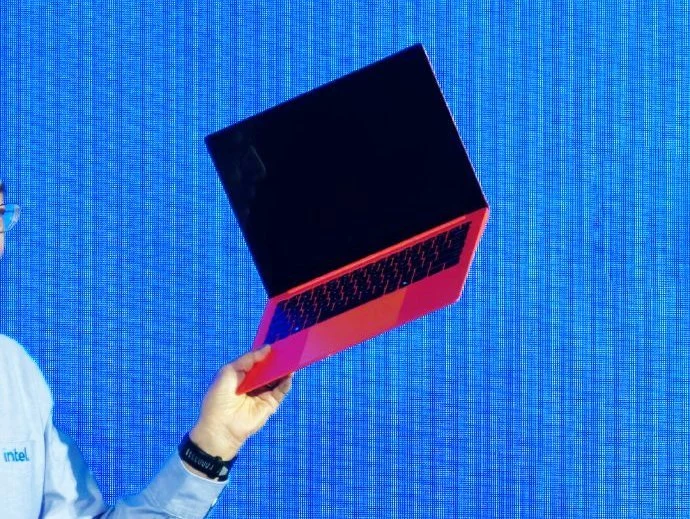
    To achieve this, Intel is pushing toward greater standardization of many parts. Motherboards, connectors, batteries and similar components are meant to be modular and simple to assemble in plants, enabling diverse laptop designs. Costs could fall by using the existing groundwork in smartphone supply chains. As seen in photos from Golden Pig Upgrade, Intel has shown a reference design that looks quite modern with slim display bezels, a huge trackpad, and a thickness of only 1.1 centimeters.

    Economic Pressures and Market Outlook

    Yet, such a slim metal chassis will raise costs, inevitably. Project Firefly might become very significant in the market for cheap laptops over the coming years, as prices are expected to climb due to the DRAM shortage. Provided that Intel doesn’t drop Project Firefly as quickly as Firefly was dropped in a prior episode. Wildcat Lake chips, like the Intel Core 5 320, run somewhat slower than the Apple A18 Pro in the MacBook Neo, but offer usable performance for office and web tasks when paired with fast LPDDR5X-7467 memory.


    Sources

  • Ugreen Unveils Three New Foldable Mini Chargers

    Ugreen Unveils Three New Foldable Mini Chargers

    Key Takeaway

    – Three new color variants (orange, blue, white) of the Ugreen Nexode Air 65W USB-C Charger debuted on Amazon US, joining the existing dark gray version.
    – The price revealed is $39.99 for the new colors, with delivery expected in early to late June 2026; the older dark gray model is discounted to $29.99 for Prime Members with delivery by end of May 2026.
    – Specs confirm a single 65W USB-C output, capable of charging a MacBook Air to about 55% in 30 minutes, with GaN technology, Airpyra design, compact dimensions (~31 x 33 x 40 mm), and a frosted USB-C port panel.
    – Includes a 5 ft (1.5 m) 100W USB-C to USB-C cable that matches the plug color.
    – Unclear if and when it will launch in other markets (e.g., Europe) or have an official global announcement from Ugreen.

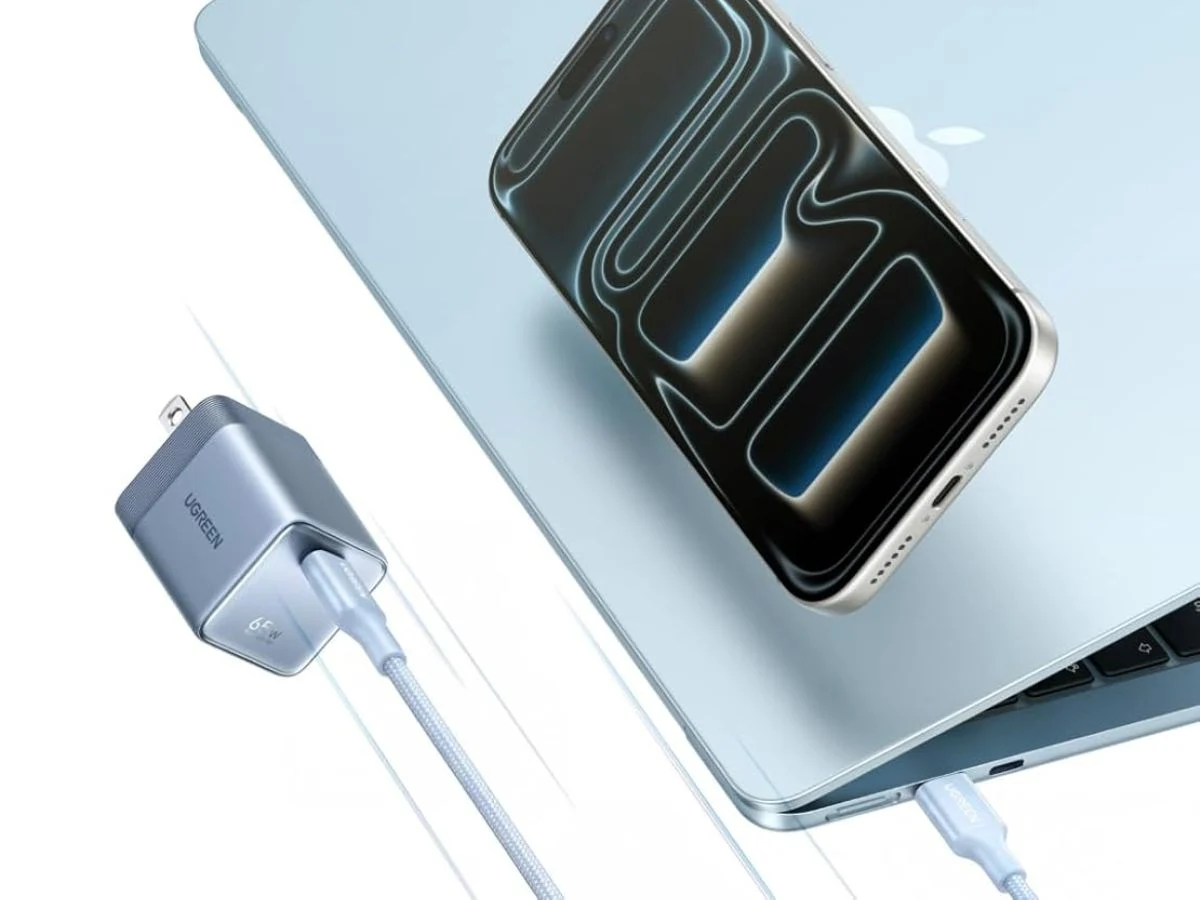
    Three more versions of the Ugreen Nexode Air 65W USB-C Charger are now available in the US. This charging accessory first appeared at the brand’s official Amazon US storefront in late April 2026 in a dark gray colorway.

    New colors arrive with pricing

    Now, orange, blue and white versions of the Ugreen Nexode Air 65W USB-C Charger have appeared at Amazon US. The product page now also reveals the RRP of this accessory: $39.99. Customers can order the three new versions of the accessory, with deliveries estimated for early to late June 2026. However, the older dark gray variant is currently reduced to $29.99 for Prime Members and is scheduled for delivery before the end of May 2026.

    Specs and build

    The Ugreen Nexode Air 65W charger’s Amazon listing now confirms many of its specifications. It has a single USB-C port, delivering up to 65W power to the connected device. According to the company, it could be used to charge a MacBook Air to 55% in 30 minutes. Thanks to GaN technology and its Airpyra structure, the charger is relatively compact, measuring 1.22 x 1.30 x 1.59 inches (~31.0 x 33.0 x 40.4 mm). It has a matte finish on its sides, with a ridged edge near the folding pins. Plus, there is a frosted glass panel around the USB-C port.

    Included cable and availability

    Ugreen’s new Nexode Air 65W USB-C Charger comes with a 5 ft (~1.5 m) long 100W USB-C to USB-C cable in a color matching the plug. It is unclear when Ugreen will officially announce its new Nexode Air 65W USB-C Charger. Whether or when it could come to other markets like Europe remains to be seen.


    Sources

    • Ugreen Launches Power Bank with Integrated Cable

      Ugreen Launches Power Bank with Integrated Cable

      Key Takeaway

      – Magnetic power bank with Qi2 wireless charging (up to 15W expected) and built-in braided USB-C cable; model PB568.
      – LED battery indicators and power button; compact form around 105.9 x 72.1 x 22.1 mm and ~320 g.
      – Pricing and availability: US listing at $69.99 (ships mid-late June 2026); UK listing £59.99 but currently out of stock.

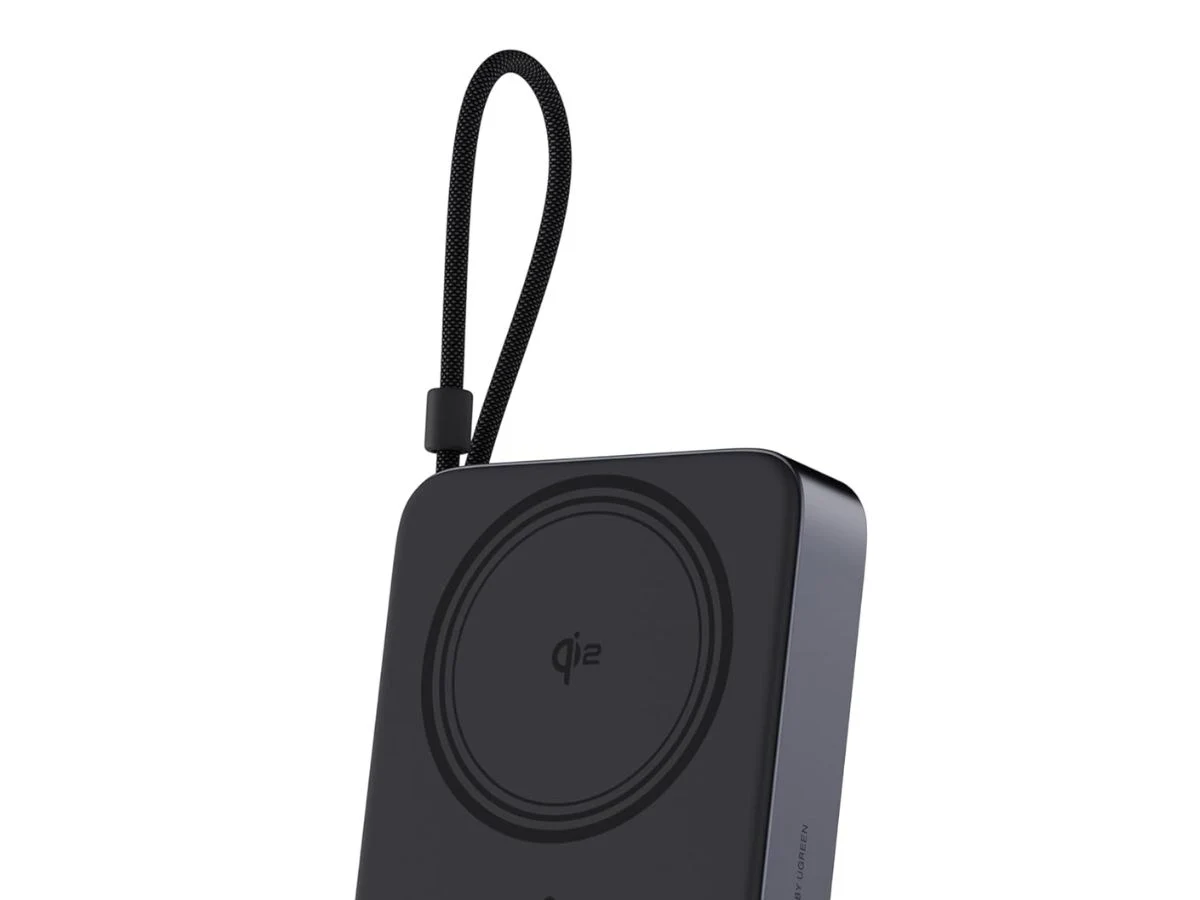
      Ugreen seems to be rolling out another power bank for North America and Europe. The listing on a major retailer in the US calls the gadget the “10000mAh Qi2 15W Magnetic Power Bank with Built-in USB-C Cable,” and it’s also tagged as model PB568. The info reads clean enough, yet it leaves some details ambiguous, which keeps enthusiasts guessing for now. The tone here shifts as we move through the notes, not just the facts.

      Design and features

      On the front, the new Ugreen Magnetic Power Bank appears to sport a Qi2 certified wireless charging pad, capable of delivering up to 15W to a compatible device like a newer iPhone. The unit also includes a braided USB-C cable built into its body. However, the listing stops short of confirming the maximum power output beyond the wireless pad, and the image only shows a USB-C port with no clear input/output power figures. The description mixes clarity with small gaps that leave room for interpretation rather than certainty.

      Dimensions, indicators, and weight

      The PB568 seems to show its remaining battery level through a row of LEDs adjacent to a power button. The listing estimates dimensions of about 4.17 x 2.84 x 0.87 inches (roughly 105.9 x 72.1 x 22.1 mm) and a weight around 320 g (approximately 11.3 oz). These measurements provide a sense of portability, even as one would expect some real-world variation depending on the exact build and included cable.

      Pricing and availability

      In the US, the 10000mAh Qi2 15W Magnetic Power Bank with Built-in USB-C Cable is shown with a $69.99 RRP and an estimated delivery window stretching from mid to late June 2026. Across the Atlantic, in the UK, the accessory is priced at £59.99, but the listing notes it as temporarily out of stock. The juxtaposition of price points hints at regional market strategies and potential supply constraints, though the core product remains consistent across regions.

      Sources
    • Lenovo 16-Inch Laptop: 120Hz Display, 32GB RAM, Intel Panther Lake

      Lenovo 16-Inch Laptop: 120Hz Display, 32GB RAM, Intel Panther Lake

      Key Takeaway

      – The ThinkBook 16 Gen 9 IPL uses Arrow Lake-based Core Ultra 5/7 CPUs and lags behind Gen 8 with Arrow Lake in performance benchmarks; entry variant starts at £1,099.99/€1,288–€1,458 for 16 GB RAM + 256 GB storage.
      – Upgradable RAM and storage: supports 16/32 GB DDR5-5600 and both M.2 2242 and 2280 slots for easy upgrades.
      – Flexible power and display options: 48 Wh or 71 Wh battery, Wi‑Fi 6 or Wi‑Fi 7, with optional fingerprint reader; two display configurations (5 MP webcam standard or upgrade to 1080p with IR, and 60 Hz 400 nit 45% NTSC or 120 Hz 400 nit 100% sRGB).

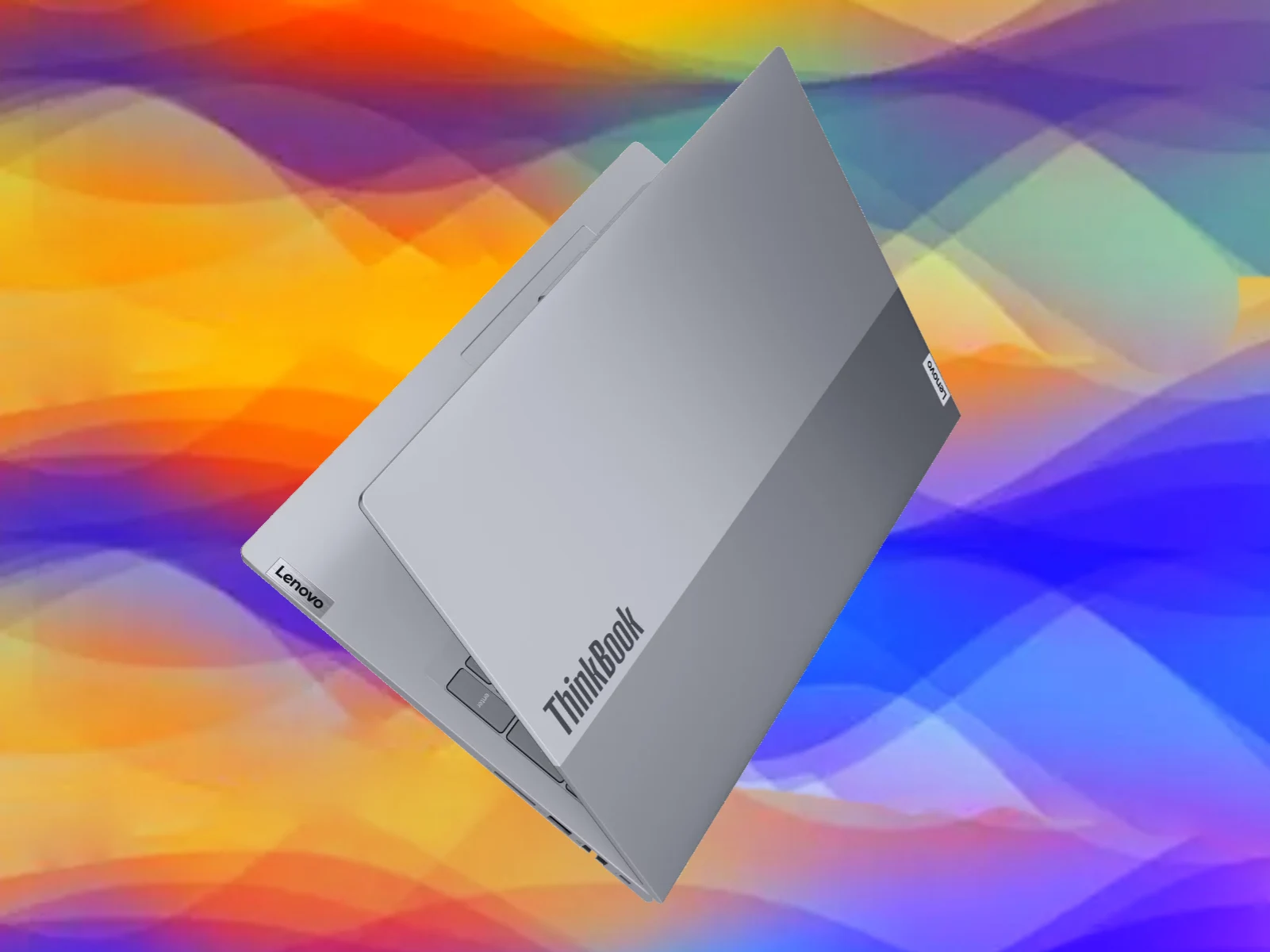
      Lenovo has finally started selling a new version of the ThinkBook 16 Gen 9. To recap, the company has already launched AMD Hawk Point and Intel Raptor Lake-powered versions of its 16-inch ThinkBook. Then in February, we noticed that the ThinkBook 16 Gen 9 IPL had been added to Lenovo’s PSREF website with newer Panther Lake processors.

      ThinkBook 16 Gen 9 IPL performance and configuration options

      Despite the name, the ThinkBook 16 Gen 9 IPL actually trails older Gen 8 models with Arrow Lake processors (curr. $1,199 on Amazon). In fact, the Core Ultra 5 325 and Core Ultra 7 355 perform worse in our benchmarks than the Core 7 240H with which the ThinkBook 16 Gen 9 IRL is available. Setting that aside, the new ThinkBook 16 can also be configured with 16 GB or 32 GB of DDR5-5600 RAM. This RAM is user-upgradeable, as is storage thanks to the inclusion of M.2 2242 and M.2 2280 slots.

      Hardware choices and display options

      Additionally, Lenovo offers the laptop with 48 Wh or 71 Wh batteries, Wi-Fi 6 or Wi-Fi 7 connectivity and an optional fingerprint reader. The ThinkBook 16 Gen 9 IPL features a 5 MP webcam by default too, although Lenovo allows this to be swapped out for a 1080p equivalent for a small surcharge with infrared for Windows Hello login purposes. Moreover, the 60 Hz, 400 nit and 45% NTSC IPS display can be swapped for a 120 Hz, 400 nit and 100% sRGB equivalent. Both are 1200p and 16:10 IPS panels, though.

      Pricing and availability

      The ThinkBook 16 Gen 9 IPL starts at £1,099.99 in the UK with a Core Ultra 5 325 processor, 16 GB of RAM and 256 GB of storage. Meanwhile, the same configuration retails for between €1,288 and €1,458 in the Eurozone, with pricing set at AUD 1,690 in Australia. Lenovo has not yet revealed when it will begin selling its new 16-inch ThinkBook in North America, nor for how much.


    • Casio G-Shock Gravitymaster GR-B300-1A Drops to Lowest Amazon Price

      Casio G-Shock Gravitymaster GR-B300-1A Drops to Lowest Amazon Price

      Key Takeaway

      – The Casio G-Shock Gravitymaster GR-B300-1A (Amazon US) is discounted to $199, a 30% cut and all-time low price matching Camelcamelcamel’s tracking.
      – Features include carbon fiber-reinforced construction, carbon core guard, aviation-inspired design, 200 m water resistance, Tough Solar, and Bluetooth Casio app integration.
      – Analog-plus-digital capabilities: dual time, world time (300 cities), 1-second stopwatch, hourly signal, phone finder, and a flight log for recording transit data.
      – Battery life up to 18 months per charge with Tough Solar.
      – Limited-time deal; price and availability subject to retailer changes.

      Casio’s G-Shock Gravitymaster GR-B300-1A Pilot watch is currently discounted on Amazon in the US, reaching its lowest-ever price.

      Casio’s G-Shock Gravitymaster GR-B300-1A Pilot watch is currently discounted on Amazon in the US, reaching its lowest-ever price. To be more precise, the Casio Amazon storefront has slashed the price of its G-Shock Gravitymaster GR-B300-1A watch by 30%, bringing it down to just $199 from its $330 original list price. This matches its all-time low price, according to the Amazon price tracking website Camelcamelcamel.

      Design and build

      The GR-B300-A watch features an aviation-inspired design while combining G-Shock’s signature ruggedness. You get carbon fiber-reinforced resin and a seamless bezel design with the G-Shock Gravitymaster GR-B300-1A watch. On top of this, it utilizes the carbon core guard structure, which Casio claims is made of the same carbon material used in aircraft fuselages.

      Features and performance

      What’s interesting is that the analog watch offers all the features of the digital watches, namely, dual time, world time for 300 cities, a 1-second stopwatch, an hourly time signal, a phone finder, and Bluetooth connectivity with Casio app integration. Another nice-to-have is Casio’s Tough Solar charging, meaning you won’t have to worry about frequently replacing the battery. Speaking of battery life, it is said to last up to 18 months on a single charge.

      Flight log and water resistance

      Additionally, it also ships with a flight log feature that allows users to record data like transit points, home destinations, points of departure, and so on. The pilot watch is rated for 200 m (20 bar) water resistance.

      Conclusion

      All told, if you are an aviation buff and have your eye on this watch, then this is the best opportunity to snag the G-Shock Gravitymaster GR-B300-1A pilot watch, especially at this discounted price point.

    • Astronaut Captures Fireball in Earth’s Atmosphere from ISS

      Astronaut Captures Fireball in Earth’s Atmosphere from ISS

      Key Takeaway

      – An unexplained bright object streaked through the upper atmosphere below the ISS over West Africa on April 27, 2026, potentially related to reentry debris, a satellite, space junk, or a meteor.
      – The event was captured with a Nikon Z9 and 200 mm lens, showing the tail widening and breaking into smaller pieces.
      – Possible origins include the reentry of a rocket stage (possibly the one launching Progress MS-34), a satellite or debris reentry, or a meteor; none have been confirmed.
      – Atmospheric reentries and related flashing/shower events have been observed in recent years with various causes (e.g., Starship occurrences, satellite failures).

      From the ISS, which orbits Earth, astronauts can observe many phenomena. Indeed, they can see storms on Earth’s surface, as well as events in the atmosphere. That was recently the case for astronaut Chris Williams, who photographed a fireball in the upper atmosphere.

      Observation over West Africa

      This event occurred on April 27, 2026, as the ISS was flying over West Africa. While he was trying to locate the Progress MS-34 cargo spacecraft, he spotted a bright object in the atmosphere, as he explained: “I was scanning the sky to try to catch a glimpse of the approaching Progress MS-34 vehicle bringing new supplies. Just as we were passing over West Africa, I saw a bright object directly below us, streaking through the upper atmosphere. I saw its tail grow and then split apart into a shower of smaller pieces.”

      Potential origins

      Although the object’s disintegration is visible in this image, which was captured with a Nikon Z9 and a 200 mm lens, its origin remains unknown. Indeed, several hypotheses have been put forward, but none have been confirmed. As a result, this astronaut may have seen the atmospheric reentry of the rocket that launched this spacecraft. But that’s not all, as it could also have been a satellite, space debris, or even a meteor, according to some astronomers.

      Frequency of such events

      However, this kind of phenomenon is not especially rare. Several similar events have occurred in recent years, such as the case of the Starship. Not to mention that several satellites have also encountered problems, causing similar phenomena.


      Sources