
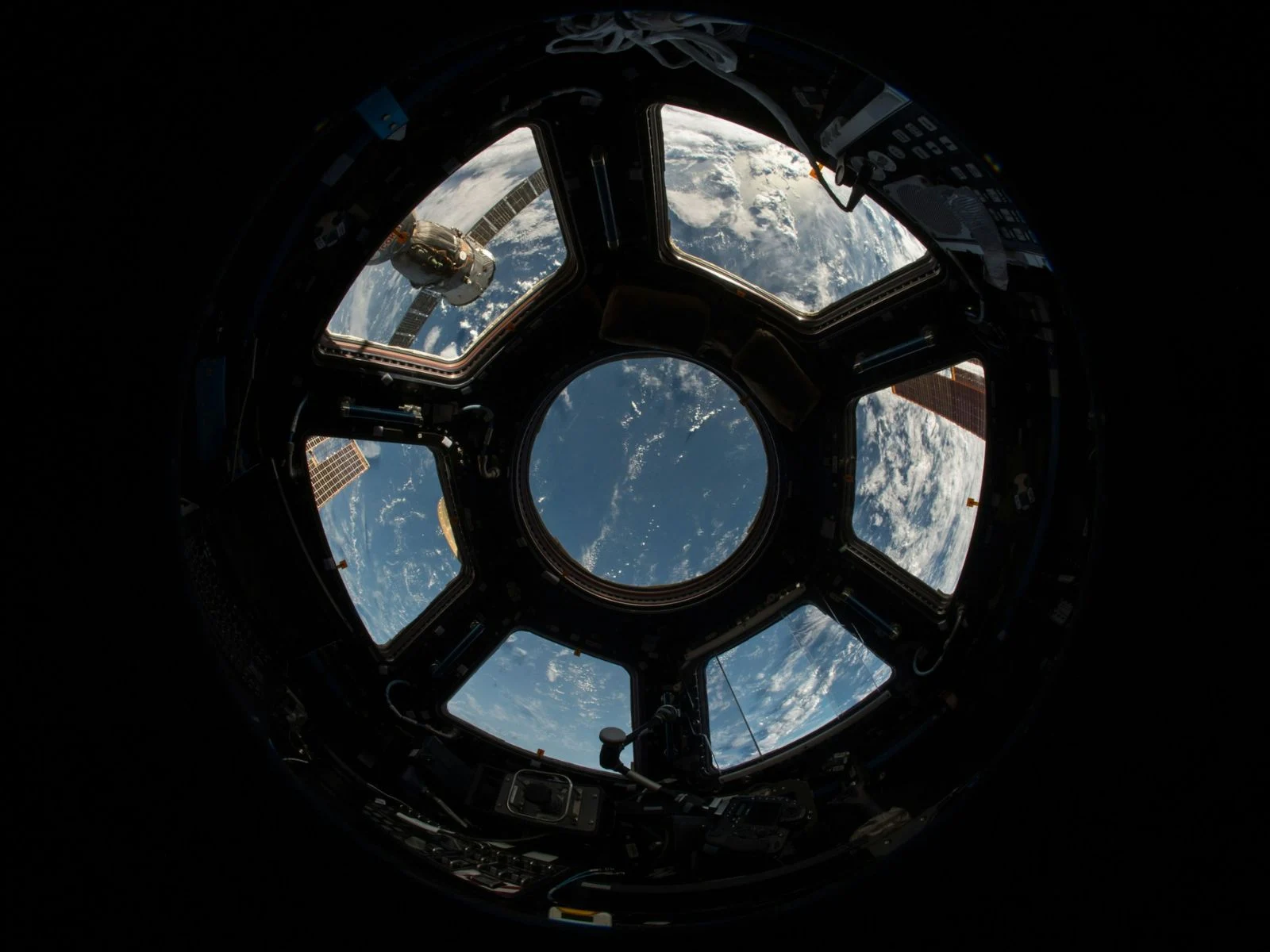
– An unexplained bright object streaked through the upper atmosphere below the ISS over West Africa on April 27, 2026, potentially related to reentry debris, a satellite, space junk, or a meteor.
– The event was captured with a Nikon Z9 and 200 mm lens, showing the tail widening and breaking into smaller pieces.
– Possible origins include the reentry of a rocket stage (possibly the one launching Progress MS-34), a satellite or debris reentry, or a meteor; none have been confirmed.
– Atmospheric reentries and related flashing/shower events have been observed in recent years with various causes (e.g., Starship occurrences, satellite failures).
From the ISS, which orbits Earth, astronauts can observe many phenomena. Indeed, they can see storms on Earth’s surface, as well as events in the atmosphere. That was recently the case for astronaut Chris Williams, who photographed a fireball in the upper atmosphere.
Observation over West Africa
This event occurred on April 27, 2026, as the ISS was flying over West Africa. While he was trying to locate the Progress MS-34 cargo spacecraft, he spotted a bright object in the atmosphere, as he explained: “I was scanning the sky to try to catch a glimpse of the approaching Progress MS-34 vehicle bringing new supplies. Just as we were passing over West Africa, I saw a bright object directly below us, streaking through the upper atmosphere. I saw its tail grow and then split apart into a shower of smaller pieces.”
Potential origins
Although the object’s disintegration is visible in this image, which was captured with a Nikon Z9 and a 200 mm lens, its origin remains unknown. Indeed, several hypotheses have been put forward, but none have been confirmed. As a result, this astronaut may have seen the atmospheric reentry of the rocket that launched this spacecraft. But that’s not all, as it could also have been a satellite, space debris, or even a meteor, according to some astronomers.
Frequency of such events
However, this kind of phenomenon is not especially rare. Several similar events have occurred in recent years, such as the case of the Starship. Not to mention that several satellites have also encountered problems, causing similar phenomena.
Leave a Reply