
Tag: ISS

  • Astronaut Captures Fireball in Earth’s Atmosphere from ISS

    Astronaut Captures Fireball in Earth’s Atmosphere from ISS

    Key Takeaway

    – An unexplained bright object streaked through the upper atmosphere below the ISS over West Africa on April 27, 2026, potentially related to reentry debris, a satellite, space junk, or a meteor.
    – The event was captured with a Nikon Z9 and 200 mm lens, showing the tail widening and breaking into smaller pieces.
    – Possible origins include the reentry of a rocket stage (possibly the one launching Progress MS-34), a satellite or debris reentry, or a meteor; none have been confirmed.
    – Atmospheric reentries and related flashing/shower events have been observed in recent years with various causes (e.g., Starship occurrences, satellite failures).

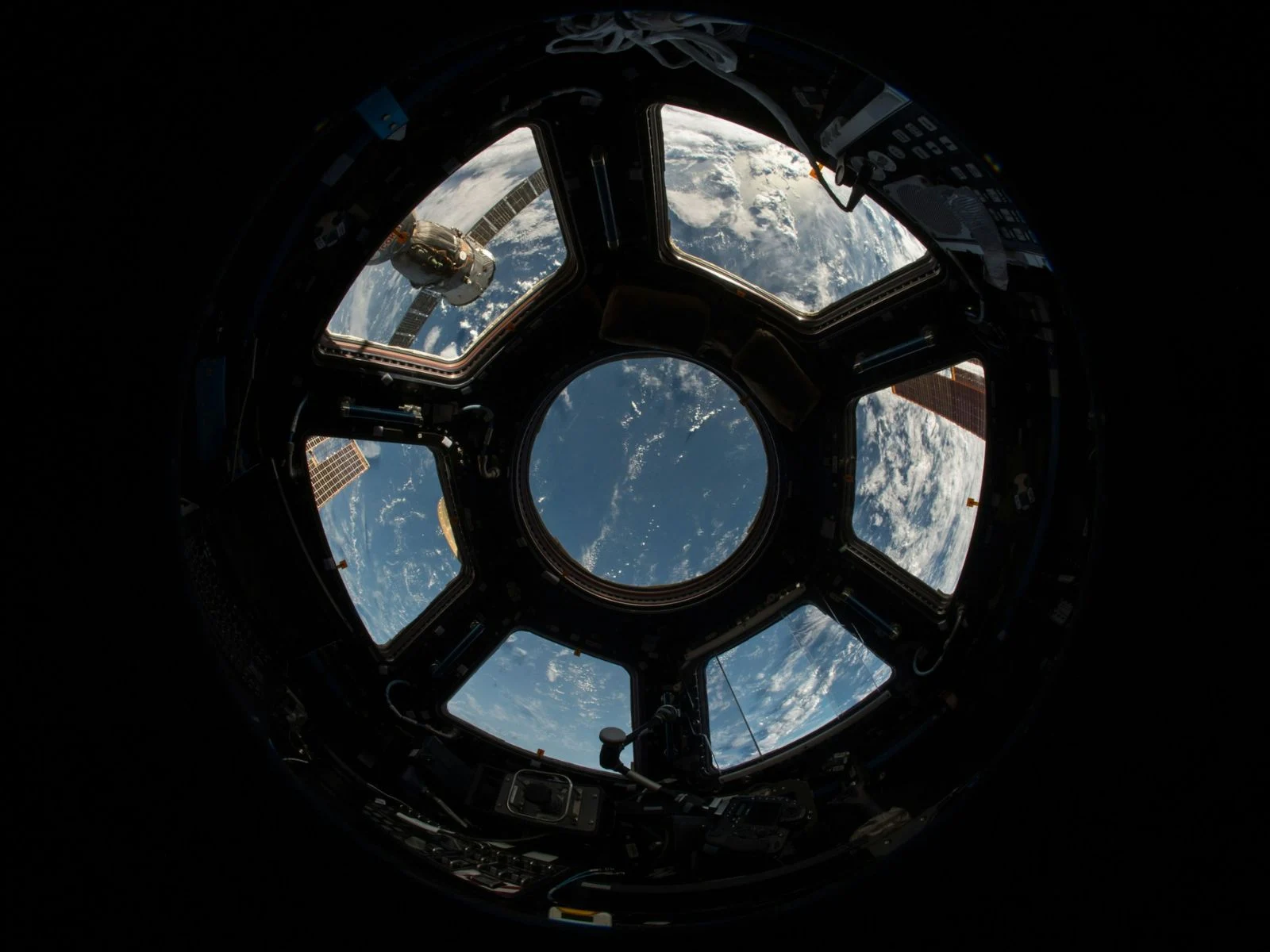
    From the ISS, which orbits Earth, astronauts can observe many phenomena. Indeed, they can see storms on Earth’s surface, as well as events in the atmosphere. That was recently the case for astronaut Chris Williams, who photographed a fireball in the upper atmosphere.

    Observation over West Africa

    This event occurred on April 27, 2026, as the ISS was flying over West Africa. While he was trying to locate the Progress MS-34 cargo spacecraft, he spotted a bright object in the atmosphere, as he explained: “I was scanning the sky to try to catch a glimpse of the approaching Progress MS-34 vehicle bringing new supplies. Just as we were passing over West Africa, I saw a bright object directly below us, streaking through the upper atmosphere. I saw its tail grow and then split apart into a shower of smaller pieces.”

    Potential origins

    Although the object’s disintegration is visible in this image, which was captured with a Nikon Z9 and a 200 mm lens, its origin remains unknown. Indeed, several hypotheses have been put forward, but none have been confirmed. As a result, this astronaut may have seen the atmospheric reentry of the rocket that launched this spacecraft. But that’s not all, as it could also have been a satellite, space debris, or even a meteor, according to some astronomers.

    Frequency of such events

    However, this kind of phenomenon is not especially rare. Several similar events have occurred in recent years, such as the case of the Starship. Not to mention that several satellites have also encountered problems, causing similar phenomena.

    Sources

  • NASA Launches Mission to Combat Bone Loss on ISS

    NASA Launches Mission to Combat Bone Loss on ISS

    Key Takeaways

    1. Astronauts in microgravity experience weightlessness and significant bone mass loss, even with regular exercise.
    2. Bone density decreases by 1 to 2% during space missions, raising concerns for long-duration missions to the Moon and Mars.
    3. The MABL-B mission aims to build on previous research by studying the role of Interleukin-6 in bone loss and seeking ways to inhibit its signaling.
    4. The experiment will cultivate mesenchymal stem cells and bone cells over 19 days, with samples sent back to Earth for analysis.
    5. Findings may improve understanding of bone loss in space and could have implications for treating osteoporosis on Earth.


    Astronauts on the International Space Station (ISS) find themselves in a state of microgravity. This unique environment not only makes them feel weightless, but it also has effects on their bones. Earlier research has shown that when astronauts are in space, they tend to lose bone mass.

    Exercise and Bone Density

    Engaging in exercise helps lessen this bone loss. However, despite maintaining regular workout regimens, astronauts still face a 1 to 2% decrease in their bone density. This reduction in bone strength could pose significant risks during missions to the Moon and Mars, where the long duration of these missions could limit options for returning to Earth in case of emergencies.

    Ongoing Research Initiatives

    Researchers are actively working to tackle this issue. One of the latest studies is the Microgravity Associated Bone Loss-B (MABL-B) mission, which just launched today on NASA’s SpaceX 33rd resupply mission.

    This new mission is set to build upon the findings from the Microgravity Associated Bone Loss-A (MABL-A) mission. Results from MABL-A indicate that microgravity activates the signaling of Interleukin-6 (IL-6), which contributes to bone loss. MABL-B aims to discover ways to inhibit this signaling pathway.

    Experimental Procedures

    The experiment will include cultivating mesenchymal stem cells (MSCs) and various bone cells over a period of 19 days in specialized containers. These MSCs are the building blocks of bone-forming cells. Samples from these cultures will be gathered at different intervals and later transported back to Earth for detailed analysis.

    This bone research mission holds promise for enhancing scientists’ understanding of bone loss, its underlying causes, and potential methods for prevention. It may also provide insights that could aid in treating bone loss in individuals on Earth who are affected by osteoporosis.

    Source:
    Link


  • What Happens When You Launch an Origami Glider from the ISS

    What Happens When You Launch an Origami Glider from the ISS

    Key Takeaways

    1. The ISS orbits Earth at about 250 miles high and travels at approximately 17,500 miles per hour, completing a full orbit every 90 minutes.
    2. Researchers from the University of Tokyo studied the effects of tossing a paper airplane from the ISS using simulations and hypersonic wind tunnel tests.
    3. The study focused on flight stability, heat resistance, and potential uses for space missions, such as biodegradable braking sails and atmospheric measurement tools.
    4. A 1:3 scale model of the paper airplane was tested, showing it remained stable until reaching 75 miles altitude, where it began to char and ultimately burned up during re-entry.
    5. Future applications include using lightweight origami structures as eco-friendly alternatives in space missions, such as biodegradable sails for satellites and educational tools.


    The International Space Station (ISS) orbits our planet at an altitude near 250 miles, zipping along at approximately 17,500 miles per hour. In its low Earth orbit, it makes a complete trip around Earth roughly every 90 minutes. So, what would occur if someone tossed a paper airplane from the ISS? To explore this question, researchers Maximilien Berthet and Kojiro Suzuki from the University of Tokyo conducted simulations and hypersonic wind tunnel tests instead of launching a real plane. Their results were published on July 3, 2025, in Acta Astronautica.

    Research Findings

    The study not only examined how stable a flight could be and how well the paper could resist heat but also looked into possible uses for space missions, like biodegradable braking sails and tools for studying the atmosphere. A key component of the research was a simulator that combined orbit, attitude, and aerodynamics to model the entire flight path, from the moment of release to when the airplane would re-enter the atmosphere. This simulation took into consideration factors like Earth’s gravity, air resistance, rotation, and heat build-up during descent.

    Experimentation and Results

    To confirm their findings, the team created a smaller version (1:3 scale) of the paper airplane, which had a paper nose and an aluminum tail, and tested it in a hypersonic wind tunnel at Mach 7, where the temperatures soared to about 650 Kelvin (around 801°F). The results showed that the paper airplane started off stable, matching the ISS’s speed of 17,500 mph. It only began to tumble when it reached an altitude of around 75 miles above Earth. At that height, the nose and wing edges began to char, although they didn’t completely disintegrate. The nose tip bent significantly yet somewhat returned to its original form. Unfortunately, the airplane never landed on Earth as it burned up between 56 and 68 miles due to the extreme heat during re-entry. What might seem like a fun experiment has actually provided valuable insights for future space missions.

    Future Applications

    The authors envision ultra-light origami structures made from paper as a greener alternative compared to standard materials like Mylar or Kapton. Ideas such as biodegradable braking sails for small satellites or lightweight equipment for measuring upper atmosphere air density could become feasible. These paper-based instruments might act as low-cost carriers for thin-film technologies or as interesting educational resources. Although paper includes mineral fillers like kaolin along with cellulose, which impacts its environmental footprint, the basic idea is intriguing: it’s possible to construct simple, stable structures capable of enduring atmospheric re-entry, albeit for a limited period.

    Source:
    link

  • Astronaut Records Mysterious Phenomenon from ISS

    Astronaut Records Mysterious Phenomenon from ISS

    Key Takeaways

    1. Astronaut Nichole Ayers captured a rare photograph of a sprite while on the ISS, a phenomenon associated with severe thunderstorms.
    2. Sprites are Transient Luminous Events (TLEs) that occur above clouds and are caused by strong electrical activity in thunderstorms.
    3. Capturing sprites is challenging as they last only a few milliseconds and are not commonly seen.
    4. Sprites can reach heights of up to 60 miles above the cloud where they form and are typically visible only at night using special equipment.
    5. Photography of sprites can help scientists and meteorologists better understand their formation and relationship with thunderstorms, providing valuable insights into atmospheric phenomena.


    From the ISS, which is about 400 km high, astronauts get to see various natural events. Recently, an astronaut captured a stunning and rare photograph.

    Astronaut’s Achievement

    Nichole Ayers, who has been on the ISS since last March, accomplished this remarkable task. In her image, a sprite is visible, a phenomenon not widely known that typically happens during severe thunderstorms. It appears as a “tornado of light,” with a bluish-white base and a bright red top. Additionally, capturing this phenomenon on camera is quite challenging since it lasts only a few milliseconds and is not very common.

    A Special Moment

    When she shared this amazing photo on X, the astronaut wrote: “Just. Wow. As we went over Mexico and the US this morning, I caught this sprite. Sprites are TLEs or Transient Luminous Events, which occur above clouds and are caused by strong electrical activity in the thunderstorms below. We have a great view above the clouds, so scientists can use these types of pictures to better understand the formation, characteristics, and relationship of TLEs to thunderstorms.”

    Insights into Sprites

    It’s important to mention that, as per the National Oceanic and Atmospheric Administration (NOAA), sprites can reach heights of up to 60 miles from the top of the cumulonimbus cloud where they form. Moreover, they can only be seen at night using special equipment, because of their relatively low brightness.

    Also, the CNRS states that this phenomenon has been researched since the late 1990s. Even though they take place in the upper atmosphere, their origins are still not well understood and many theories exist. Nevertheless, this kind of photography can greatly assist scientists and meteorologists. Given the rarity of images of this phenomenon, each picture can be an invaluable resource and offer insights into the remaining mysteries.

    Source:
    Link