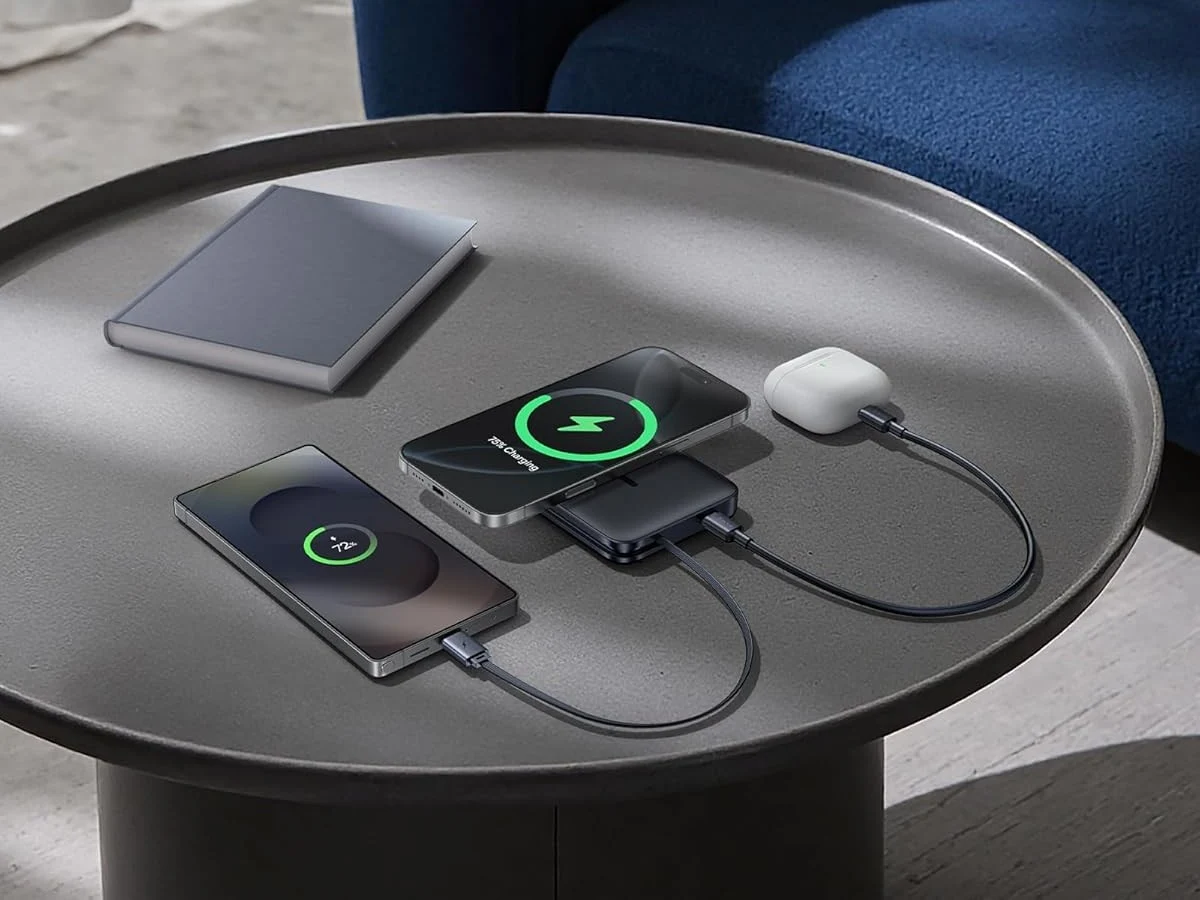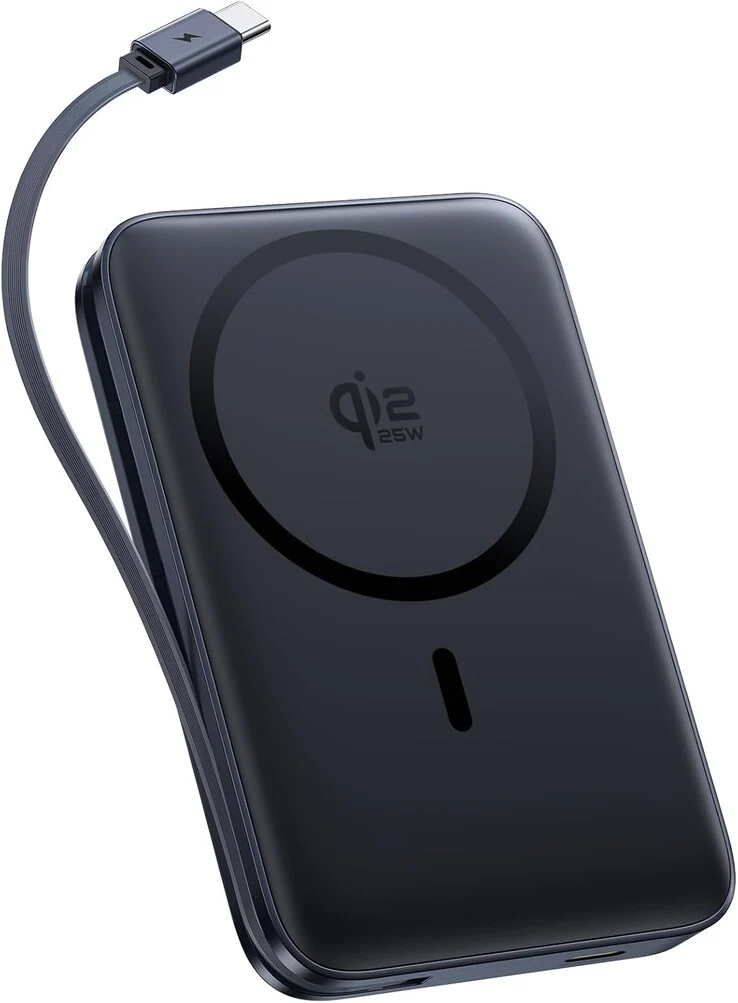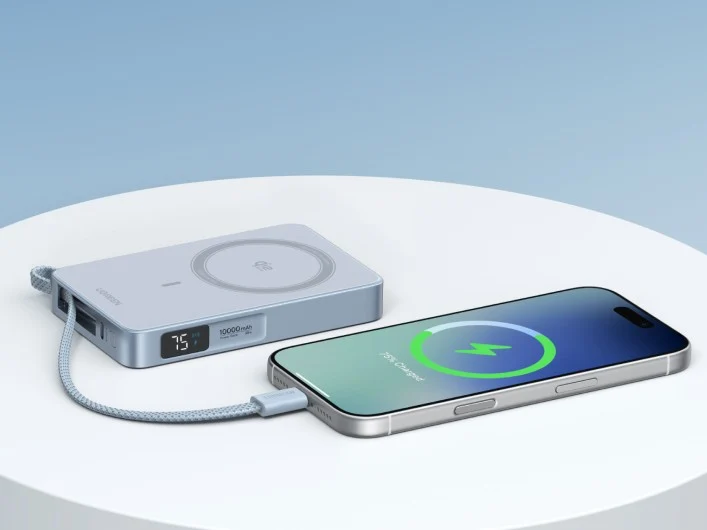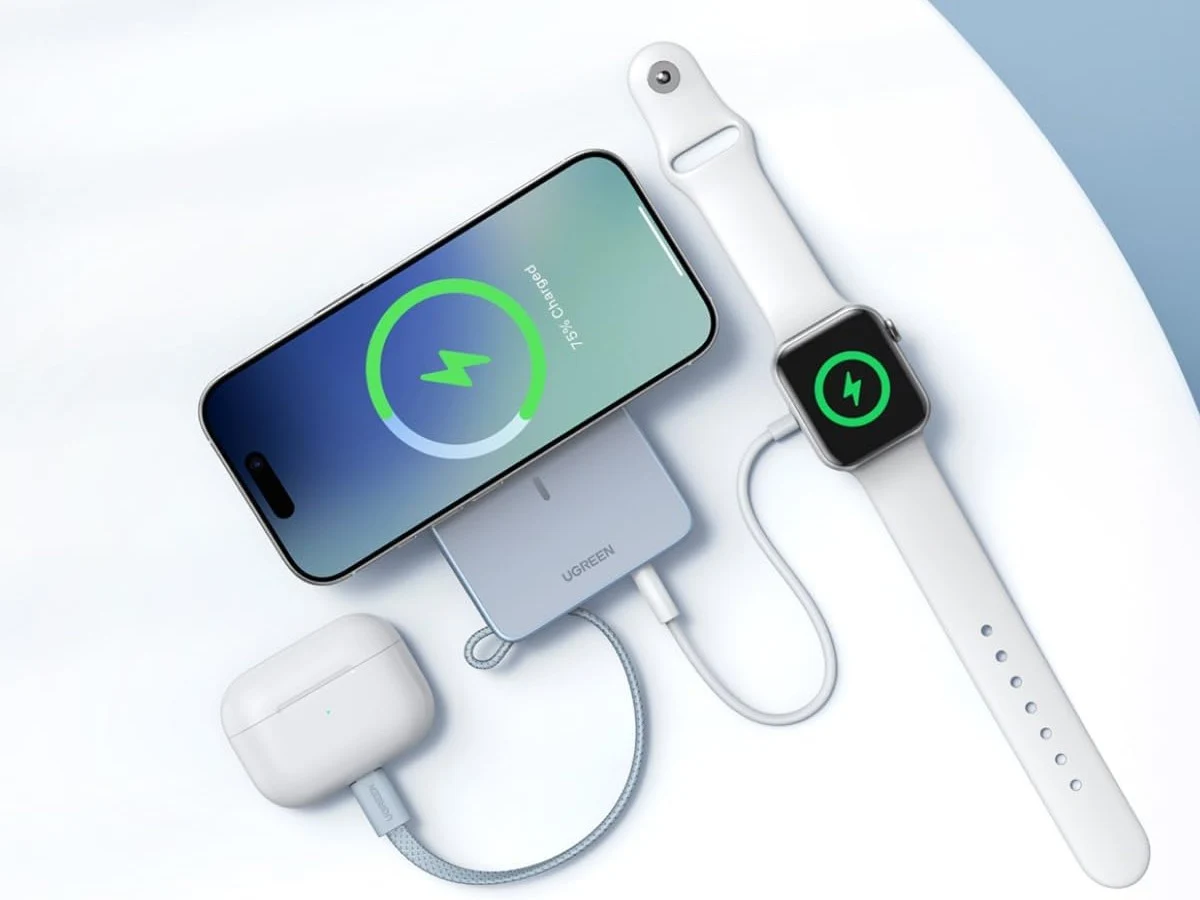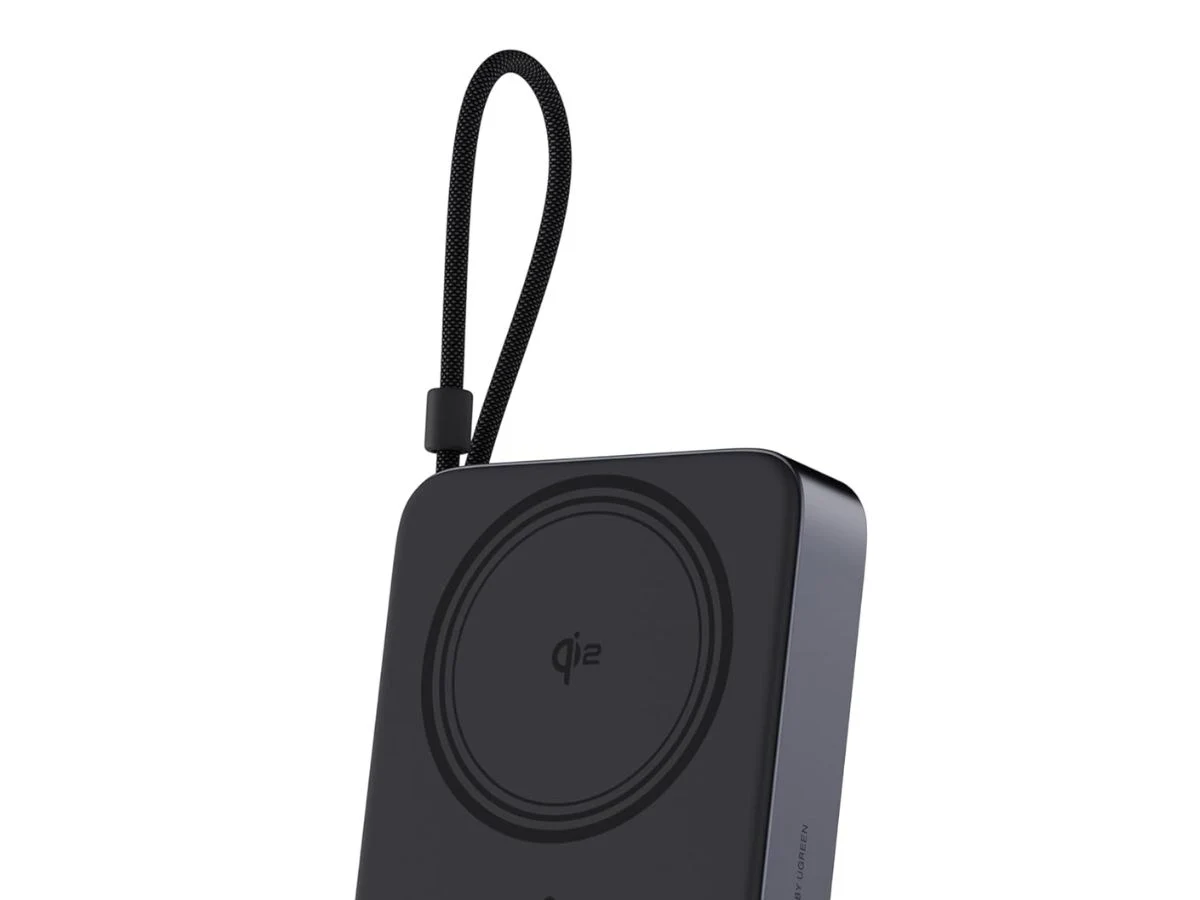
– Magnetic power bank with Qi2 wireless charging (up to 15W expected) and built-in braided USB-C cable; model PB568.
– LED battery indicators and power button; compact form around 105.9 x 72.1 x 22.1 mm and ~320 g.
– Pricing and availability: US listing at $69.99 (ships mid-late June 2026); UK listing £59.99 but currently out of stock.
Ugreen seems to be rolling out another power bank for North America and Europe. The listing on a major retailer in the US calls the gadget the “10000mAh Qi2 15W Magnetic Power Bank with Built-in USB-C Cable,” and it’s also tagged as model PB568. The info reads clean enough, yet it leaves some details ambiguous, which keeps enthusiasts guessing for now. The tone here shifts as we move through the notes, not just the facts.
Design and features
On the front, the new Ugreen Magnetic Power Bank appears to sport a Qi2 certified wireless charging pad, capable of delivering up to 15W to a compatible device like a newer iPhone. The unit also includes a braided USB-C cable built into its body. However, the listing stops short of confirming the maximum power output beyond the wireless pad, and the image only shows a USB-C port with no clear input/output power figures. The description mixes clarity with small gaps that leave room for interpretation rather than certainty.
Dimensions, indicators, and weight
The PB568 seems to show its remaining battery level through a row of LEDs adjacent to a power button. The listing estimates dimensions of about 4.17 x 2.84 x 0.87 inches (roughly 105.9 x 72.1 x 22.1 mm) and a weight around 320 g (approximately 11.3 oz). These measurements provide a sense of portability, even as one would expect some real-world variation depending on the exact build and included cable.
Pricing and availability
In the US, the 10000mAh Qi2 15W Magnetic Power Bank with Built-in USB-C Cable is shown with a $69.99 RRP and an estimated delivery window stretching from mid to late June 2026. Across the Atlantic, in the UK, the accessory is priced at £59.99, but the listing notes it as temporarily out of stock. The juxtaposition of price points hints at regional market strategies and potential supply constraints, though the core product remains consistent across regions.