Category: Software

  • Google Responds to Concerns About Search Becoming Obsolete

    Google Responds to Concerns About Search Becoming Obsolete

    Key Takeaway

    – Traditional search links remain, with AI Mode additions optional for users who choose them.
    – Publisher traffic and open-web revenue face ongoing strain from AI-driven search shifts and reduced link-clicks.
    – Long-term concerns extend beyond traffic to environmental impact, data-center energy use, and broader labor and sustainability issues.


    In a brisk tech-simmering echo chamber, the web crowd reacts to Google I/O 2026 and its AI Mode, a shift many feel could redefine how we interact with search. The piece below keeps the tone varied while preserving the core facts and pricing/spec details that were present, though it may read with a few creaky pauses to reflect the human-like imperfect narration some readers enjoy.

    AI Mode and the promise of links alongside responses

    The article notes that Google’s update, branded as AI Mode, promises to show AI-generated answers while still displaying traditional blue links on the results page. This dual approach aims to let users choose between a quick synthesized answer and a conventional list of sources. Critics warn that if people trust the AI output without verifying links, site traffic could suffer, hurting publishers who rely on visits and ad revenue.

    Economic tension for open web publishers

    Publishers across the ecosystem worry about revenue streams in a world where AI answers might replace direct clicks. The concern is not just about traffic but about the broader energy and hardware implications tied to data centers supporting AI models. If traffic dwindles, independent guides, niche sites, and benchmarks could become financially fragile or disappear, eroding the diversity of information available to AI models like Gemini, Claude, or ChatGPT in training datasets.

    Google’s stance and user behavior

    TechCrunch highlighted phrases suggesting a move away from simple link lists, which stirred debate on social platforms and news outlets. Google subsequently clarified that traditional search functionality remains—blue links are still visible, and users must actively select AI Mode. The official stance emphasizes that changes are designed to improve the experience for those who want AI-assisted results, rather than to forcibly replace standard search.

    Ambiguities and the long-game for the open web

    While Google asserts continuity in traditional search, the broader implications endure. Accessibility to AI, adoption rates, and how users navigate between AI responses and classic results will shape traffic patterns. The conversation touches environmental health, labor implications, and the cost dynamics for hardware and utilities tied to running large-scale AI systems, creating a multi-faceted debate about the future of the open web.

    • Pricing and specification details remain crucial for stakeholders evaluating the transition.
    • There is ongoing concern about how AI modes influence click-through and revenue.
    • Editors and researchers weigh the impacts on accessibility and reliability of information.
  • Windows CE ported to Nintendo 64: a sophisticated retro hack

    Windows CE ported to Nintendo 64: a sophisticated retro hack

    Key Takeaway

    – Windows CE 2.11 runs on Nintendo 64 by porting the kernel and writing custom drivers for N64 hardware.
    – An EverDrive 64 X7 with N64C4.Z64 boot image enables plug-and-play loading into Windows CE on the N64.
    – The setup uses the N64’s RDP for graphics, reconfigures controls as a mouse, and routes sound through the N64 audio hardware.


    Overview of the Retro Windows CE on Nintendo 64 Project

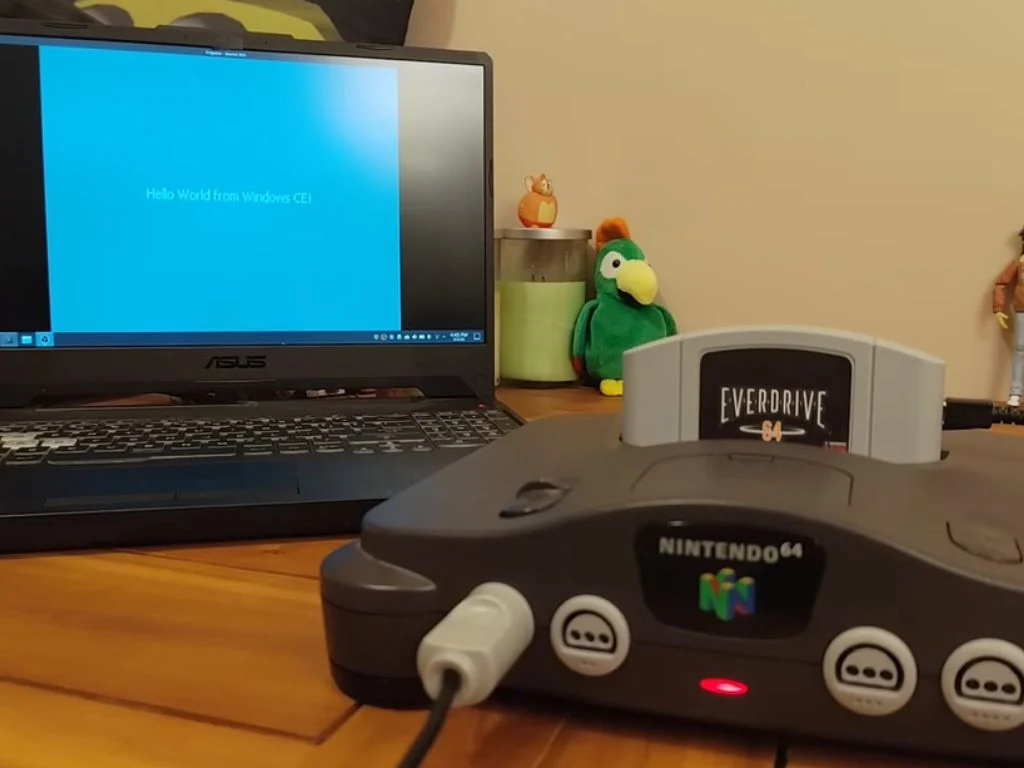
    Developer and DIY modder Throaty Mumbo spent months refining an idea that started as a simple observation regarding shared hardware. He pondered how an old IBM Workpad Z50 laptop uses a MIPS processor, much like the Nintendo 64. His old IBM Workpad ran Windows CE without any trouble. So, Mumbo wondered what would happen if they tried to run Windows CE on the Nintendo 64. The task seemed daunting, but curiosity outweighed the risk, driving meticulous experimentation across countless sessions. The tone here captures a sense of gritty experimentation and patient persistence that marks this unusual cross-pollination of platforms.

    From Concept to CE 2.11 on N64

    However, it wasn’t an easy feat, to say the least. Windows CE version 2.11 finally made its way to the Nintendo 64 after rounds of tinkering, with no compromises or shortcuts. Mumbo explained in his GitHub repo, “This is a hobby reverse-engineering project; there is no official CE 2.11 port to the N64 from Microsoft.” The language hints at a laborious journey where hobbyist spirit battled official constraints, weaving a narrative of dedication rather than corporate backing. The explanation underscores the experimental nature of the endeavor and the lack of formal endorsement.

    Engineering Hands and Tools Used

    He further explained that the Windows CE 2.11 Nintendo 64 project was pretty much “the ultimate challenge that nobody asked for – Windows CE on the N64! Can it be done? Probably. Should it be done? No, absolutely not.” The remark signals a playful yet provocative stance toward pushing boundaries, while acknowledging ethical and practical doubts about the venture. It reads like a diary entry from someone chasing the edge of what hardware can host, even if the idea seems quixotic to many observers.

    How The Port Was Achieved

    So, how did he manage to get Windows CE 2.11 running on Nintendo’s retro home console, the Nintendo 64? He started with Microsoft’s official late-1990s Platform Builder tools and then wrote every custom driver himself to handle the N64’s quirks. The display was output using the console’s RDP graphics for acceleration, controller inputs were reconfigured to mouse controls, and sound was routed through the N64’s built-in audio hardware. As for the core Windows kernel, it was ported as-is. The explanation teases a blend of canonical development tools and bespoke adaptation, presenting a complex choreography between legacy software frameworks and retro hardware.

    Hardware Setup and Boot Process

    He used an EverDrive 64 X7 cartridge that loads a roughly 3.5 MB ROM called N64C4.Z64. It’s pretty much plug-and-play at this point. All you have to do is power on the console, load a tiny bootloader, and load into Windows. Within mere seconds, you’re in a full desktop environment, complete with a taskbar, Start menu, Recycle Bin, and more. This portion of the narrative emphasizes a surprisingly smooth boot experience, given the antiquated and specialized nature of the hardware involved. It reads like a checklist of steps that audience members could potentially replicate with the right parts.

    Input, Output, and Peripherals

    The regular N64 controller works as a mouse, with A for left-click and B for right-click, while an official N64 mouse works even more smoothly for precise pointing. And if you’re wondering whether you can install apps, just pop in an SD card containing Windows CE programs, and you’re good to go. The text paints a practical picture of how standard peripherals can be repurposed for a desktop-like experience on a console, providing a tactile sense of how users interact with the system in real-time.

    Visuals and Software Demos

    The video also features a spinning Cube3D demo, which taps into the N64’s graphics hardware, including a port of a 1997 Tetris release that plays perfectly with its 8-bit chiptune sounds. The description highlights the graphical prowess of the ancient hardware when pushed beyond its usual gaming remit, offering a peek into the technical artistry of repurposing hardware for non-traditional tasks. The inclusion of a classic game port adds nostalgic texture to the overall narrative.


    Sources
  • ChatGPT-OpenAI Phone Specs: 2nm MediaTek SoC, LPDDR6, UFS 5.0, Release Date Leak

    ChatGPT-OpenAI Phone Specs: 2nm MediaTek SoC, LPDDR6, UFS 5.0, Release Date Leak

    Key Takeaway

    – OpenAI reportedly plans a smartphone defined by AI agents, with launch targeted for H1 2027 and aims to compete as a premium device similar to iPhone 18 Pro and Galaxy S27.
    – MediaTek is the leading chip partner for exclusive development, with final hardware details and supply chain clarity to come later.
    – Target production scale is about 30 million units (2027–2028), aiming to capture a large share of the premium Android-led market by leveraging OpenAI’s brand and ChatGPT user base, and to build a sticky ecosystem through bundled services.


    New insights from Ming-Chi Kuo about an AI-driven OpenAI smartphone

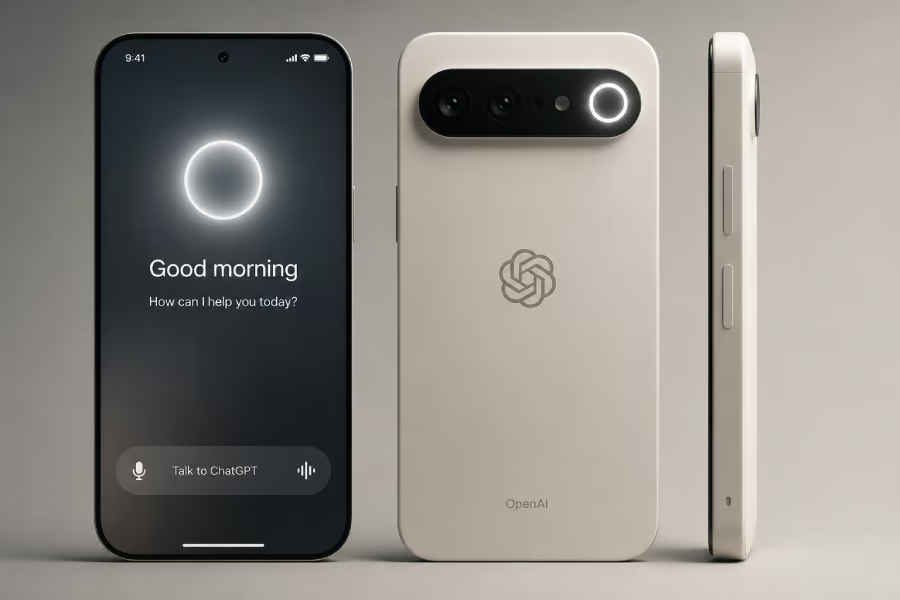
    New insights from industry analyst Ming-Chi Kuo say OpenAI is accelerating its push into the smartphone market, aiming to launch a smartphone defined entirely by “AI agents” rather than traditional apps. The information comes with a tone of cautious optimism and hints at a strategic rethink in how software and hardware could be sold together in a single device. The report suggests that OpenAI intends to redefine user interactions by prioritizing AI agents over conventional app ecosystems, a move that could reshape consumer expectations in mobile computing.

    Launch timeline and market positioning

    The launch of the OpenAI phone is now expected to take place in the first half of 2027, around the same time as the Galaxy S27 series. Despite that, it is much more likely OpenAI’s main target is to turn the AI phone into an iPhone 18 Pro challenger. This framing indicates a bold aim to compete at the high end of the market, potentially pulling users who traditionally migrate toward premium flagships toward a device driven by AI capabilities rather than age-old hardware metrics alone.

    Speculations about hardware partners and final specs

    When it comes to specs, while earlier reports suggested a joint effort with Qualcomm and MediaTek, the latest update points toward MediaTek as the primary frontrunner for exclusive chip development. But there’s more. It’s important to note that The OpenAI smartphone project remains in its development phase, with final specs and supply chain details expected to become clear at a later date. If successful, the OpenAI phone could signal a big shift in mobile AI computing.

    Market strategy and potential production scale

    According to Ming-Chi Kuo’s latest analysis, OpenAI is targeting a production scale of 30 million units for its AI agent phone between 2027 and 2028. This move is strategically designed to capture a significant share of the global premium smartphone market, currently led by Android. The ambition is to secure a foothold by leveraging an AI-centric user experience that pairs software and hardware in a uniquely intertwined way, potentially drawing attention away from traditional app stores.

    Brand leverage and ecosystem integration

    Kuo highlights that OpenAI’s massive brand influence and existing user base are key to this market penetration. Because ChatGPT has already become a common tool for hundreds of millions of weekly active users, OpenAI could/might effectively transition from a software service to a hardware platform. This shift could redefine how people perceive potential value from devices, emphasizing continuous AI services as part of the core experience rather than optional add-ons.

    Subscription bundling and long-term user engagement

    By bundling the device with subscription services, OpenAI gains a “sticky” ecosystem that locks in users, similar to how Apple leverages the iPhone to drive service revenue. Or at least that’s the plan. The strategy underscores the importance of ongoing AI-enabled experiences, where hardware is paired with evolving software services, generating ongoing revenue streams and deeper user commitments rather than one-time device purchases.


    Sources

  • 15 New Pulsars Discovered in Nearby Globular Cluster by Astronomers

    15 New Pulsars Discovered in Nearby Globular Cluster by Astronomers

    Key Takeaway

    – 15 new millisecond pulsars discovered in 47 Tucanae, bringing the total to 42 confirmed pulsars in the cluster.
    – Pulsar spin periods range from 1.88 to 13.03 milliseconds; majority (12) are in binary systems with low-mass companions.
    – The fastest known pulsar overall remains PSR J1748-2446ad, spinning at 716 Hz (716 times per second).


    When using the MeerKAT radio telescope, a team of astronomers has recently uncovered 15 new millisecond pulsars. These celestial bodies sit about 13,000 light-years away from Earth, inside the globular cluster known as 47 Tucanae. The finding adds a notable chapter to the study of dense, rapidly spinning stars in that crowded region of the galaxy.

    Discovery details and context

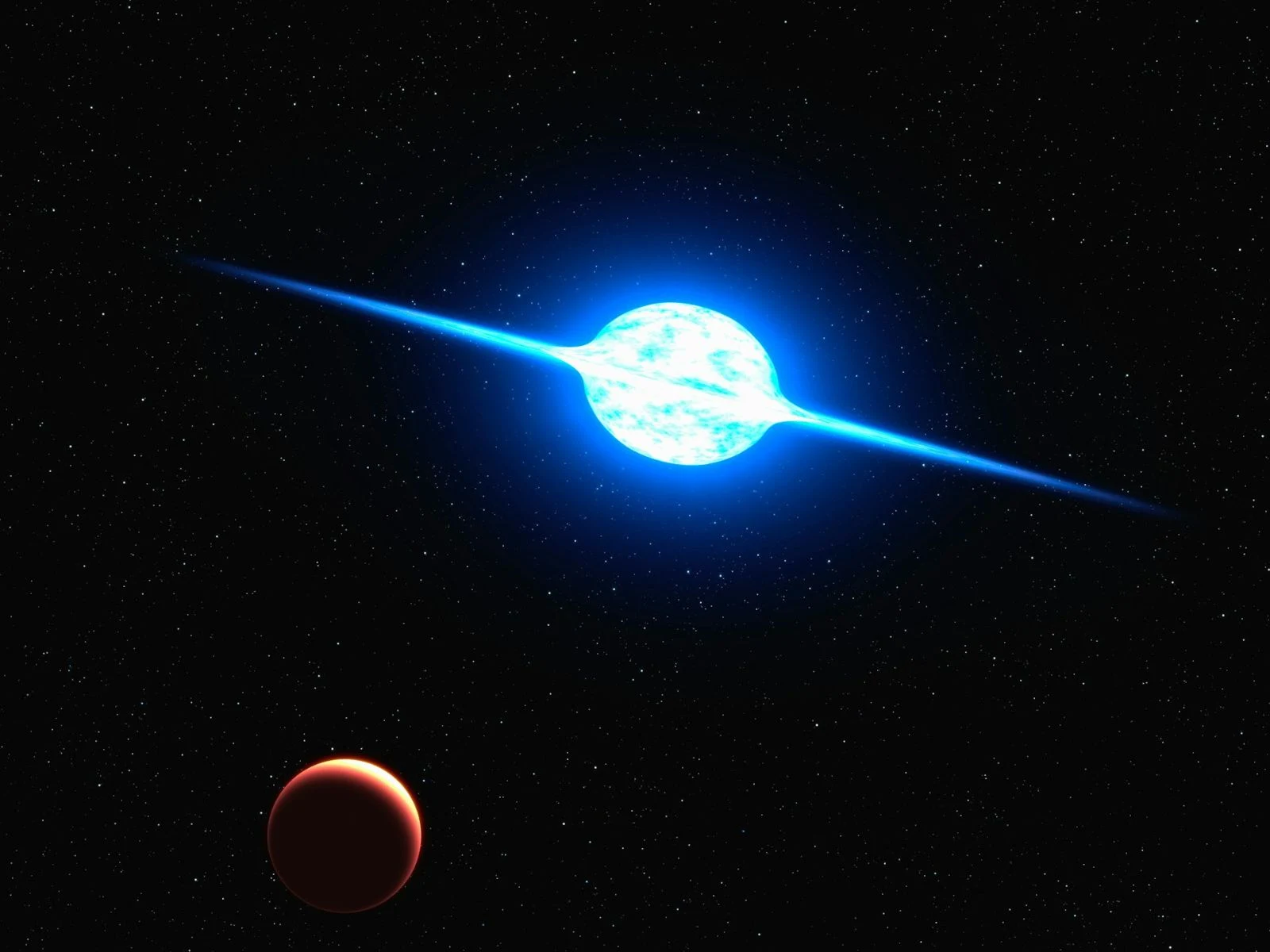
    Pulsars are neutron stars with a diameter of roughly 20 kilometers and a mass around 1.5 times that of the Sun, which makes them incredibly dense and fast rotators. Led by Weiwei Chen from the Max Planck Institute for Radio Astronomy (MPIfR) in Bonn, Germany, the team announced the identification of 15 millisecond pulsars, sometimes referred to as MSPs. These MSPs boast spin periods that span from 1.88 to 13.03 milliseconds, marking them as some of the most rapidly spinning stellar remnants known.

    Binary and isolated pulsars

    Among the newly found pulsars, 12 are in binary systems with low-mass companions, while the rest are isolated. This mix helps researchers explore how interactions in dense cluster environments affect pulsar formation and evolution. The discovery therefore enhances the census of 47 Tucanae, bringing the total confirmed pulsars in this cluster to 42. Further observations are needed to deepen understanding and potentially uncover more similar objects in the future.

    Comparison and notable milestones

    Even with these exciting finds, the fastest pulsar ever detected remains PSR J1748-2446ad, which lies about 18,000 light-years away and spins at an extraordinary 716 times per second. This record-setting object underscores the extreme physics at work in millisecond pulsars and the capacity of modern radio telescopes to probe such rapid rotations. The new MSPs from 47 Tucanae add valuable data points for models of neutron star spin evolution and cluster dynamics.

    • Spin periods: 1.88 to 13.03 milliseconds
    • Binary status: 12 binary pulsars, rest isolated
    • Total known pulsars in 47 Tucanae after discovery: 42


    Sources

  • Xreal Project Aura Android XR Glasses Near Launch with Update

    Xreal Project Aura Android XR Glasses Near Launch with Update

    Key Takeaway

    – Project Aura are full-fledged OLED Android XR glasses that require a wired connection to a puck, similar in form factor to Apple Vision Pro.
    – Launch expected before end of 2026; price and exact date not yet announced; developer early-access program announced.
    – Demos at Google I/O 2026 included 180°/360° YouTube, immersive Google Maps, and multimodal AI demos connected to a laptop.


    Xreal Project Aura: New Details and Developer Program

    Xreal has shared new details on the Project Aura, the wired Android XR glasses that were first announced in May 2025. They are now set to launch before the end of 2026, and the company has announced a new program for the developers, which offers early access. The messaging keeps focus on a path to hands-on experience for developers, with anticipated access windows that could influence how apps are built for the product.

    Android XR Glasses With OLED Displays

    Xreal’s Project Aura, unlike the two Android XR smart glasses shown at Google I/O 2026, are described as full-fledged smart glasses with OLED displays. They are not standalone devices like the RayNeo X3 Pro or the Inmo Air 3; rather, Aura requires a wired connection with its puck, placing it in a category closer to the Apple Vision Pro in terms of how it integrates with a host device, although it uses a wired tether rather than a separate standalone processing unit.

    Demos At Google I/O 2026

    At Google I/O 2026, Xreal offered demos that included 180-degree and 360-degree YouTube experiences along with an early look at an immersive Google Maps. The company has even shown the multimodal AI capabilities of the Project Aura by connecting them to a laptop, illustrating a multimodal approach where content from multiple sources can be blended for a richer AR/VR experience. The demonstrations hint at the potential for hands-free navigation and immersive media experiences tied to real-world contexts.

    Sources
  • Mageia 10 RC1: New Artwork, Screensavers, and Updates

    Mageia 10 RC1: New Artwork, Screensavers, and Updates

    Key Takeaway

    – Mageia 10 RC1 is available in multiple ISO options (full 5.6 GB, and live images for Plasma, GNOME, and Xfce ~4.5–5.1 GB).
    – Stable Mageia 10 is not released yet; users should check the Mageia 10 Errata before testing.
    – The RC1 edition runs well on ~1.2 GB memory and includes updated apps, packages, and new artwork; post-build updates/fixes were applied to some packages.
    – Testers are urged to report undocumented issues via Bugzilla.


    Mageia 10 RC1 lands in three ISO variants beyond the full size, which weighs in at 5.6 GB, and the live flavors include Plasma, GNOME, and Xfce. The approximate sizes for these three live images are about 5.1 GB, 4.8 GB, and 4.5 GB respectively, to give you a rough idea. Since the stable Mageia 10 release is still ahead, those who wish to test this build should first check the Mageia 10 Errata before proceeding.

    Overview and early impressions

    The RC1 release runs reasonably smooth, using around 1.2 GB of memory during a brief hands-on period, and it performed quite well overall. The official blog post mentions new artwork and a lengthy list of updated apps and packages, signaling ongoing polish and enhancements. The atmosphere around this release is cautiously optimistic, with users eager to see how the final product shapes up.

    Updates and packages

    Following the ISO build, some packages received additional updates and fixes. These updates cover various components and code areas, reflecting ongoing maintenance and refinement in preparation for the eventual stable release. The release notes point to a number of improvements, although not every change is itemized in detail here.

    Bug reporting and community feedback

    Testers are encouraged to report issues that aren’t documented in the referenced page (see the link at the end of the first paragraph) via Bugzilla. This pathway helps collate user experiences, reproduce problems, and track resolutions as Mageia 10 moves toward finalization. Community participation remains a key part of the RC1 lifecycle.

    Mageia Blog (English)


    Sources

  • Nothing Phone (4a): More Personalized with Nothing Playground

    Nothing Phone (4a): More Personalized with Nothing Playground

    Key Takeaway

    – Nothing Playground personalizes the experience: expanded Glyph LEDs, customizable light patterns, and playful visual cues turn the Phone (4a) into a more interactive, emotional device beyond typical Android skins.
    – Focus on minimalism and control: minimalist widgets, simple menus, monochrome elements, and reduced sensory overload create a calmer, more intentional user experience.
    – Software-driven differentiation: the ecosystem and design philosophy—more than hardware—shape how users interact, making the device feel unique and creative rather than just mid-range specs.


    Nothing Phone (4a): a playful software-first philosophy

    With this device, Nothing keeps its quirky path in the smartphone world, and it shows in a brighter 120Hz OLED screen, a speedy Snapdragon 7s Gen 4 processor, and a notably capable periscope zoom cam. Yet, its real distinctiveness isn’t just the hardware; it’s how the whole experience feels under the hood. This is exactly where the so-called Nothing Playground comes into play.

    Creative software as the draw

    The Phone (4a) acts like a doorway into Nothing’s bespoke software and design world. While plenty of Android makers chase ultra-similar user interfaces, Nothing chooses a far more individualized route. Playground is the embodiment of making phones more personal, playful, and emotional again. Users aren’t just meant to use their device, but to actively shape and feel it.

    The glyphs that blink with intent

    The focus centers on the familiar Glyph LEDs on the back. On the Nothing Phone (4a), these LEDs are expanded and can be set up more deeply than before. Through Playground, you can tune various light patterns, notification profiles, or visual cues. For instance, the phone can flash for new messages, display timers visually, or signal that recording is happening through special light animations. It creates a unique form of interaction that stands apart from conventional Android devices.

    More than just lights

    But Playground goes further. Nothing leans into minimalist widgets, customizable interfaces, and tiny design experiments meant to make the device feel more purposeful and less cluttered. The aim is to curb the constant sensory onslaught of modern phones and instead craft a clearer, calmer user experience. The clean Nothing OS backs this with simple menus, monochrome elements, and unusually smooth operation.

    In sum, the Nothing Phone (4a) shows how software and design can shape today’s user experience more strongly than hardware alone. Technically, the gadget offers solid mid-range punch, a decent camera, solid battery life, and a up-to-date display. Yet it truly comes alive through Nothing Playground, turning the phone from a everyday tool into a substantially more personalized and creative stage. This is what sets Nothing apart from many other Android makers.

    Sources
    • OpenBSD 7.9 Security Focus: Scheduling Improvements and More

      OpenBSD 7.9 Security Focus: Scheduling Improvements and More

      Key Takeaway

      – OpenBSD 7.9 is the 60th release, adding updates across supported platforms and introducing the new “Diamond in the Rough” song as the first since 7.3.
      – Pre-built packages are available for multiple architectures, including updated GNOME, Chromium, Firefox/Firefox ESR, Python, Sudo, and Xfce versions.
      – The floppy disk remains a boot option, illustrating continued legacy hardware support.


      OpenBSD 7.9 is here as the 60th release of this open-source, security-focused operating system

      OpenBSD 7.9 arrives with a new refresh that introduces a fresh song and a broad array of changes across the multiple platforms it supports. The “Diamond in the Rough” track marks the first new audio since “The Wizard and the Fish” paired with the 7.3 release. Since version 3.0 this tradition has continued, and to date, three audio CDs have been produced with roughly five songs per, though now we shift toward the 7.9 edition itself.

      In addition to the above, many pre-built packages for each architecture are available

      Beyond the core system updates, a variety of pre-built packages for different architectures are provided. Notable inclusions in the package lineup include GNOME 49, Chromium 147.0.7727.101, Mozilla Firefox 150.0 along with ESR 140.10.0, Sudo 1.9.17p2, Python 2.7.18 and 3.13.13, and Xfce 4.20.0, among others. This release also notes that the floppy disk remains a boot option in modern setups, underscoring the system’s compatibility with legacy hardware while pushing forward with current tech.

      OpenBSD 7.9 highlights and platform portability

      The release page lists several noteworthy items as highlights, with emphasis on improved security features and broader platform support. While the details span many areas, the overarching message is one of continued refinement and stability across the ecosystem. The document mentions additional changes across kernels, drivers, and userland tools designed to enhance everyday reliability for administrators and users alike.

      Sources
    • Harry Potter Series: New School and Quidditch Uniforms Evoke Hogwarts Legacy Vibes

      Harry Potter Series: New School and Quidditch Uniforms Evoke Hogwarts Legacy Vibes

      Key Takeaway

      – HBO’s Hogwarts uniforms and Quidditch outfits feature cape-like robes, burgundy-toned sweaters, and a checked pattern for girls, diverging from the film versions’ gray and wide sleeves.
      – The overall look conveys a more muted, vintage, and “old-fashioned” vibe with a clean, atmospheric aesthetic that fans liken to Hogwarts Legacy.
      – Some viewers praise the fresh, non-copycat approach, while others wish for a more magical, film-like magic in the costumes; lighting at trade shows may affect color perception.


      Licensing Expo 2026 Reveals HBO Harry Potter Costumes

      At Licensing Expo 2026 in Las Vegas, costumes from HBO’s upcoming Harry Potter series were publicly displayed for the first time, and a photo has now appeared on X. The image shows Gryffindor school uniforms for boys and girls, as well as Quidditch outfits for Gryffindor and Slytherin. While earlier promotional material had already offered brief glimpses of the costumes, the new photo likely provides the clearest look yet.

      Uniforms Compared to the Films

      Compared with the Warner Bros. films, HBO is clearly taking the uniforms in a different direction. The robes now lean more heavily into cape-like elements instead of the wide sleeves seen in the movie versions. There are also noticeable color changes: instead of plain gray, HBO appears to favor burgundy tones for the sweaters – at least for Gryffindor. A similar color palette can be seen in the girls’ uniforms, although there it appears as a checked pattern. In the original films, the girls’ school uniforms were mostly gray. The Quidditch outfits have also been adjusted: rather than bright red and green, HBO uses more muted, earthy colors, giving the costumes a subtle vintage look.

      Fan Reactions and Vintage Vibes

      Fans on X and Reddit see one thing above all in the robes, checked patterns and subdued colors: strong Hogwarts Legacy vibes (PS5 version currently $29 on Amazon) – and many seem to like that. The uniforms are being described as “clean,” atmospheric and pleasantly old-fashioned. Fans are also praising HBO for not simply copying the costume designs from the original films. Some viewers, however, would have preferred a more “magical” look. It is also worth noting that the photo was apparently taken under trade show lighting, so the colors could look different in the finished series.

      Sources
    • Free Camera App Adds 16-bit RAW and Modular UI to Android

      Free Camera App Adds 16-bit RAW and Modular UI to Android

      Key Takeaway

      – Offers 8-bit JPEGs with minimal processing or 16-bit DNG RAWs, plus encrypted metadata to verify authenticity and track editing steps.
      – Focuses on essential UI with adjustable button layout, manual focus, and semi-automatic modes (manual shutter with automatic ISO for correct exposure); supports only the main camera.
      – Free to use in Google Play Store with no in-app purchases or subscriptions required.


      Introduction

      While smartphones such as the Samsung Galaxy S26 Ultra ($1,249 on Amazon) offer powerful camera hardware, flagship smartphones are increasingly relying on artificial intelligence to process photos that may look stylish, but in many cases no longer accurately reflect reality. This is exactly where the new VWFNDR + MBL camera app for Android comes in.

      Pricing and file formats

      This is because the app can record 8-bit JPEGs with minimal image processing, or 16-bit DNG RAW files that can be developed in software such as Capture One Pro or Lightroom. The metadata is provided with encrypted content credentials that allow the authenticity of a photo to be verified retrospectively and editing steps to be traced. This should make it easier for photographers to prove that they have recorded reality instead of having generated an image using artificial intelligence, for example.

      User interface and controls

      The user interface focuses on the essentials – a large shutter button and the setting of shutter speed, sensor light sensitivity and exposure compensation. The position of the buttons can be adjusted. The app also supports manual focus and semi-automatic modes, allowing photographers to set the shutter speed manually, for example, while the app adjusts the ISO value to ensure correct exposure. However, the app only supports the main camera of a smartphone and cannot use the selfie, ultra-wide-angle or telephoto camera.

      Availability and access

      The VWFNDR + MBL camera app for Android smartphones is now available free of charge in the Google Play Store. Neither in-app purchases nor subscriptions are required to use all features. More information about the app can be found on the developer’s website.


      Sources