Category: Software

  • Virtuos Aims GTA V and RDR2 Port to Nintendo Switch 2 After LA Noire Success

    Virtuos Aims GTA V and RDR2 Port to Nintendo Switch 2 After LA Noire Success

    Key Takeaway

    – Virtuos successfully ported L.A. Noire to Nintendo Switch and is aiming to port GTA V and Red Dead Redemption 2 to Nintendo Switch 2, pending approval from Take-Two and Rockstar.
    – The studio is known for highly faithful, performance-optimized ports that preserve gameplay while maintaining good thermals and battery life.
    – If green-lighted, Virtuos’ momentum suggests they could extend Switch-era open-world ports to more demanding titles, leveraging industry precedents like Cyberpunk 2077 on Switch and Red Dead Redemption on Nintendo Switch.


    Virtuos has earned praise for bringing one of the biggest open-world blockbuster hits of the previous generation, L.A. Noire, to the Nintendo Switch, and now the studio is signaling aggressive plans to bring Rockstar Games’ GTA V and Red Dead Redemption 2 to the Nintendo Switch 2. The remarks surfaced during an interview with Pocket Tactics timing the 15th anniversary of L.A. Noire.

    Heading style shift

    Virtuos has built a solid rep for making smart, efficient, and faithful ports that squeeze every bit of performance out of Nintendo’s handhelds without hurting thermals or battery life. In 2017, the studio released L.A. Noire for the original Switch, a move that shocked the industry because the port kept the full game’s experience intact, which was rare back then.

    Another heading style twist

    Jumping ahead to 2026, CD Projekt Red successfully ported its visually dense open-world Cyberpunk 2077 to the Nintendo Switch with decent visual settings. This boosts the odds that Virtuos could port GTA V and Red Dead Redemption 2 to the Nintendo Switch 2, contingent on approval from Take-Two Interactive and Rockstar Games. There is a precedent, since Red Dead Redemption already appeared on the older Nintendo Switch in 2023.

    More quotes and context

    Virtuos’ technical director, Andy Fong, after seeing the huge success of L.A. Noire on the Nintendo Switch, said the achievement left the studio hungry for more ambitious open-world ports. In the interview, he stated:

    “The team is eager to adapt Grand Theft Auto V and Red Dead Redemption 2 for the Nintendo Switch. We’re personally big fans and believe these games can shine again on the Switch, delighting even more players.”

    Additional insights

    Virtuos’ chief delivery officer, Jake DiGennaro, echoed these feelings and noted that the L.A. Noire port was coordinated by Nintendo itself.

    “We’d long admired Rockstar. The level of craft, care, and ambition they bring to every title they touch is exceptional. There was a near-instant chemistry with the team at Rockstar. A shared language around quality and a mutual respect for what this game meant to players. This kind of alignment doesn’t always happen, and when it does, it makes all the difference.”

    Sources
  • PlayStation Account Hacks Targeting Media Personalities Expose Security Flaw

    PlayStation Account Hacks Targeting Media Personalities Expose Security Flaw

    Key Takeaway

    – PSN accounts can be compromised using limited personal data (PSN ID, old order details) to bypass 2FA and via Sony’s internal support to change the linked email.
    – Hackers target both high-profile and average users, with reports of coordinated attempts and warnings prior to breaches.
    – User support responses appear slow or unaware, highlighting a need for immediate action from Sony to address the vulnerability and protect accounts.


    PlayStation Accounts Facing Security Issues

    Looks like there is a troubling trend where PlayStation accounts are reportedly easy to hack, and a wave of incidents is bringing this vulnerability into the spotlight. Sony has not yet issued a response, but several users, including a well known media figure, have had their accounts hijacked recently. This situation coincides with rising PlayStation Plus membership prices and less PC access for single-player titles.

    High Profile Case Highlights Security Flaws

    Colin Moriarty, the proprietor of Last Stand Media and a host for a PlayStation focused talk show, recently saw his account compromised in what appears to be a chain of attacks targeting both random users and “prominent” individuals. Moriarty posted on X that a victim warned him two days prior that “they” had his data and planned to grab his account soon. Despite being cautious and avoiding suspicious links or password reuse, the breach occurred.

    Warning Signals and Player Reactions

    Additionally, Dustin Furman, Moriarty’s co host, received a message from Moriarty’s compromised account saying, “you’re next.” Moriarty notified PlayStation support about the risk to public figures and ordinary players, but support seemed unaware of the situation. They suggested it could take three weeks to resolve, and in the interim, they removed the credit card details from Moriarty’s account.

    From Personal Recovery to Wider Risk

    Thanks to industry connections, Moriarty managed to reclaim his PlayStation account, yet many others aren’t as fortunate and have reported similar incidents for months. A user known as Pyo on X stated that hackers can easily gain access to a PSN account with only the PSN ID and some old transaction details, such as an order number or the last four digits of a credit card. With that data, attackers can exploit Sony’s internal support system to alter the linked email and disable two factor authentication.

  • LG 25G590B: 1080p Monitor with 1000Hz Native Refresh Rate

    LG 25G590B: 1080p Monitor with 1000Hz Native Refresh Rate

    Key Takeaway

    – LG UltraGear 25G590B can achieve native 1000Hz at 1080p, not relying on dual-mode upscaling.
    – 24.5-inch IPS panel with Motion Blur Reduction Pro and AI-powered features (AI Scene Optimization, AI Sound).
    – Launch expected in H2 2026; pricing not announced yet.


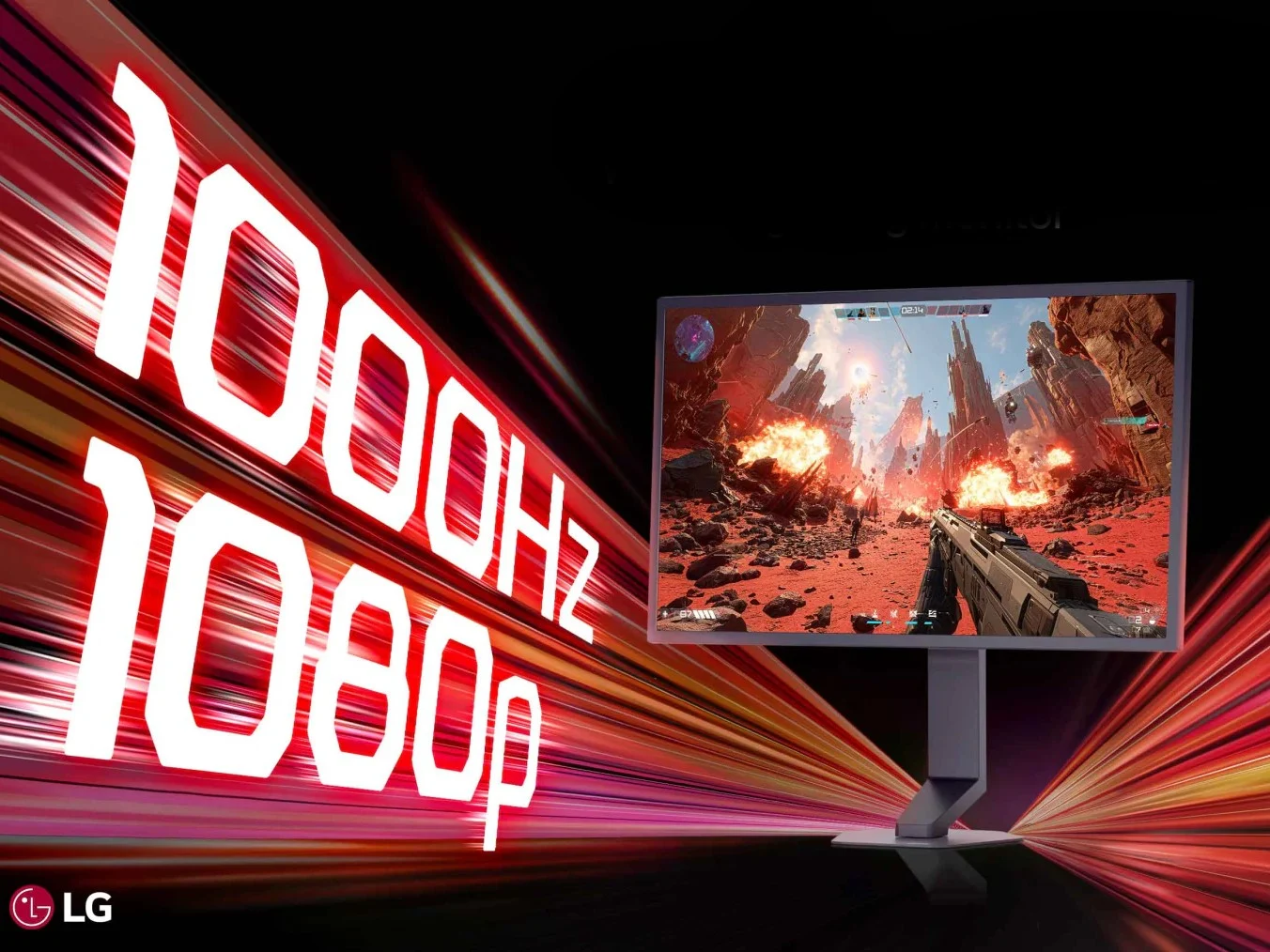
    LG looks set to launch the fastest 1080p gaming monitor this year. To recap, we’ve already seen plenty of high-refresh gaming monitors unveiled, including the Philips Evnia 27M2N5500XD and the Samsung Odyssey G6 (G60H), both of which can hit 1000Hz and 1040Hz refresh rates, respectively. However, both monitors need to drop down to 720p to reach those refresh rates.

    UltraGear 25G590B: Native 1000Hz on 1080p

    The UltraGear 25G590B is the first gaming monitor announced that can run at a native 1000Hz refresh rate without using a dual-mode feature. Specifically, the monitor supports 1000Hz at its native 1080p resolution, which means you get both smoother motion and sharper image quality than the 720p dual-mode alternatives. Needless to say, it’s going to take a much more powerful PC to push 1000Hz at 1080p. That said, the 25G590B comes in an esports-friendly 24.5-inch size, which LG says “allows gamers to keep key visual elements within their natural field of view.”

    Design and Panel Technology

    LG hasn’t revealed the full specifications of the UltraGear 25G590B yet, but we do know it’s built around an IPS panel instead of OLED, unlike many of the recent high-refresh gaming monitors we’ve seen. The monitor will also support Motion Blur Reduction Pro, which LG says improves motion clarity and makes “fast-moving objects sharper and easier to track.” Additionally, AI features like AI Scene Optimization and AI Sound will come baked in, just like on most of LG’s 2026 monitors.

    Launch Window and Pricing

    According to LG, the UltraGear 25G590B will launch in the second half of 2026, but there are no pricing details at this point. This means enthusiasts will be waiting for more concrete specs, including brightness, contrast, inputs, and adaptive sync support, before forming a full opinion on value.


    Sources

  • OnePlus OxygenOS Bootloop Fix Rolls Out for 15, 13, Nord CE6 | Update

    OnePlus OxygenOS Bootloop Fix Rolls Out for 15, 13, Nord CE6 | Update

    Key Takeaway

    – OnePlus has resumed the OxygenOS 16-based rollout after resolving a bug that caused abnormal restarts/boot issues in versions 16.0.7.xxx and 16.0.5.xxx.
    – Improvements include a smoother UI via the Luminous Rendering Engine and Trinity Engine, offline translation, upgraded document scanner, and a redesigned lock screen; May 2026 security patch applied.
    – Rollout status: India currently live for OnePlus 13/13S, Nord CE6/CE6 Lite, and OnePlus 12R (global for OnePlus 15; gradual, incremental rollout to other regions over the next few days).


    OnePlus Resumes OxygenOS Rollout After Bug Fix

    Following a pause caused by boot loops reported on several devices, OnePlus has now resumed the OxygenOS update roll out. The company says the issue, which affected versions 16.0.7.xxx and 16.0.5.xxx, has been identified and fixed, and the updates are again being pushed to compatible phones. The writing here keeps to the inform outline, yet adds a touch of casual tone that readers might appreciate after the disruption.

    Background of the May Software Rollout

    For those who missed the initial wave, OnePlus started the May software rollout with the OnePlus 15 and Nord CE6, with OxygenOS 16-based updates rolling out in small batches on May 11. Following this, the OnePlus 12R, Nord CE6 Lite, OnePlus 13, and OnePlus 13S joined a few days later. However, on May 15, the company announced a temporary suspension via a blog post, citing abnormal restarts and boot issues in devices updated to 16.0.7.xxx and 16.0.5.xxx, which paused further distribution for a while.

    Bug Identification and Resolution

    On May 18, OnePlus posted a status update stating that the bug causing the boot issues had been successfully identified and resolved. With the root cause found, the rollout for the affected devices was restarted, and updates began pushing again to those models. The delay has been documented in the company communications and is reflected in how the updates are being deployed now.

    What’s New in the Fresh Updates

    The refreshed OxygenOS builds promise a range of improvements for the OnePlus 15, OnePlus 13, and OnePlus 13S. The changelog remains largely consistent across these three devices, with a few model-specific tweaks. Thanks to the new Luminous Rendering Engine and enhancements to the Trinity Engine, users can expect a smoother UI experience with more fluid animations in floating windows, the notification drawer, and Quick Settings, as well as better app scrolling overall.

    On the AI side, there’s a practical offline translation feature capable of deciphering foreign menus, including currency conversions and allergen notes, plus an upgraded document scanner that auto-saves and can recognize handwriting. The lock screen gets a redesigned dual-mode layout with notification capsules that keep the wallpaper visible, and a new arrangement to organize apps by color.

    Additional highlights include new Camera Master presets, refreshed camera UI elements, improved battery usage statistics, and the May 2026 Android security patch. The update batch also notes improvements in overall stability and responsiveness across supported devices.

    Device-Specific Details

    For Nord CE6 and CE6 Lite owners, the updates emphasize under-the-hood improvements and stability rather than a dramatic visual overhaul. Expect better camera previews, improved network reliability, and a smoother gaming experience at higher frame rates. The OnePlus 12R update is more restrained, delivering the May 2026 Android security patch as its main feature.

    Regional Rollout Status

    Updates for the OnePlus 13/13S, Nord CE6/CE6 Lite, and OnePlus 12R are currently live in India, with other regions anticipated to follow shortly. The OnePlus 15 is rolling out globally. As per OnePlus’ approach, the update is being released incrementally, which means it may take several days to reach every device, depending on locale and network factors.

    OnePlus Community discussions and official postings continue to guide users through any post-update steps or potential issues. The company continues to monitor deployment closely and is expected to provide further status updates as needed.


  • $15 Humble Bundle: 8 Steam Deck-Compatible Deckbuilders on Deal

    $15 Humble Bundle: 8 Steam Deck-Compatible Deckbuilders on Deal

    Key Takeaway

    – The Build, Shuffle, Battle bundle centers on deckbuilding games (6 core + 2 with deckbuilding elements) and offers two tiers: five games for $10 (cheaper tier) or all eight for $15.
    – Three standout titles highlighted: Book of Hours (narrative RPG, ~89% positive from ~5k reviews), Wildfrost (tactical roguelike deckbuilder, ~82% positive from ~8.7k reviews), and Deck of Haunts (roguelite deckbuilder with base-building elements, ~86% positive from ~1.3k reviews).
    – Prices and availability are time-sensitive and may change; discounts shown were current at the time of writing.


    Humble Bundle has introduced a new game bundle named Build, Shuffle, Battle!

    Humble Bundle has introduced a new game bundle named Build, Shuffle, Battle! This bundle contains eight games, six of which are deckbuilding games, while the other two have deckbuilding elements. The description stays faithful to the original pricing and specs, including the two tiers where the cheaper tier offers five games at $10, and the bundle is valued at $15. The text preserves the essential details about the price positioning and the mix of game types.

    Two standout games in this bundle

    Book of Hours is a narrative RPG from Weather Factory (creators of Cultist Simulator) set in a haunting 1930s occult world. Here, you play as the new librarian of Hush House, a crumbling library by a winter sea, tasked with restoring its vast collection of grimoires and arcane artifacts. Along the way, you acquire forbidden books, craft esoteric tools and memories, master the nine Wisdoms, guide mysterious visitors, and explore secret histories while deciding your own legacy. Worth about $14, it currently has about 5,000 reviews, 89% of which are positive.

    Wildfrost is a charming yet challenging tactical roguelike deckbuilder developed by Deadpan Games and published by Chucklefish. Here you journey across a frozen tundra to banish an eternal winter, building powerful decks from cute companions, elemental items, and clunkers. You also get to recruit frozen allies, experiment with synergies, manage a dynamic counter-based combat system, and upgrade your hub town of Snowdwell between runs. Usually on sale at $11.99, Wildfrost currently has about 8,700 reviews, with 82% of these reviews being positive.

    Deck of Haunts and price notes

    Deck of Haunts is a unique roguelite deckbuilder where you become a malevolent haunted house. This game lets you lure curious humans into your cursed halls, manipulate their deepest fears, set deadly traps, and drain their essence to grow stronger. Blend base-building and deck-building as you turn your home into a living monument of terror. Frequently on sale at $10.99, this game currently has about 1,300 reviews (86% positive).

    Disclaimer: Notebookcheck is not responsible for price changes carried out by retailers. The discounted price or deal mentioned in this item was available at the time of writing and may be subject to time restrictions and/or limited unit availability.


    Sources
  • Microsoft frees Copilot key from AI restrictions

    Microsoft frees Copilot key from AI restrictions

    Key Takeaway

    – Copilot key customization: Windows 11 will let the Copilot key function as right Ctrl or a context menu key, with settings adjustable in the system.
    – Limited programmability: The key won’t be fully programmable (no macros or open-app actions); third-party tools may still be needed for advanced use.
    – Partial Copilot integration: Microsoft is scaling back deep Copilot integration, focusing on performance, personalization of taskbar/Start menu, and user favor.

    Overview of Copilot Key and Windows 11 Update

    laptop makers want to push a Windows AI features and Copilot+ branding, they gotta install a keyboard with a Copilot key. this idea may not change soon, but the key’s function will be customizable. microsoft has confirmed in a support doc that a Windows 11 update in 2026 will let the Copilot key on devices like the Surface Laptop used as the right Ctrl key or as a context menu key. the note here is that pricing info like $1,199 on amazon is present in the original text but will be dropped in this version.

    Upcoming Customization Possibilities

    after this update, you should be able to change the key’s function in the system settings. since the Copilot key has largely replaced the right Ctrl on many laptops, microsoft plans to restore a function that was standard on most laptops up to 2023. yet, they will not make the Copilot key totally programmable for macro execution or opening a chosen app. for those needing more control, third party software will still be needed. this paragraph keeps a casual tone with varied rhythm.

    What Won’t Change Right Away

    microsoft has not confirmed an exact date for the Windows 11 update. still, they are dialing back deep Copilot integration across windows 11 as they try to regain user favor. promised are performance improvements and new ways to personalize the taskbar and Start menu. also, Copilot is being scaled back in other areas, including the end of Xbox Copilot.


    Sources

  • Pwn2Own Berlin 2026: Windows 11, Microsoft Exchange Hacks

    Pwn2Own Berlin 2026: Windows 11, Microsoft Exchange Hacks

    Key Takeaway

    – Total prizes exceed $908,000 for 39 zero-days across Windows 11, Exchange, Edge, RHEL, Nvidia infrastructure, and AI platforms, with Day 3 results pending.
    – Orange Tsai (DEVCORE) was the standout, earning $175,000 on Day 1 for four Edge sandbox-escape bugs and $200,000 on Day 2 for a fully patched Exchange Server RCE (highest so far).
    – Windows 11 was breached across multiple days, with AI-related targets (Cursor AI, OpenAI Codex, etc.) also heavily featured.
    – Event hit capacity for the first time in its 19-year history, with over 150 researchers turned away; vendors get 90 days to patch disclosed flaws.

    Pwn2Own Berlin 2026 is wrapping up today at the OffensiveCon conference, and across two confirmed days the numbers is significant. Researchers have collected over $908,000 in prizes after demonstrating 39 unique zero-day vulnerabilities across Windows 11, Microsoft Exchange, Microsoft Edge, Red Hat Enterprise Linux, Nvidia infrastructure, and a string of AI platforms. Day 3 results are still to come.

    Overview

    Day 1 paid out $523,000 across 24 zero-days. The standout was Orange Tsai of the DEVCORE Research Team, who chained four logic bugs to escape the Microsoft Edge sandbox and earn $175,000 in a single demonstration. Windows 11 was hacked three separate times by three independent researchers, each earning $30,000 for privilege escalation zero-days. Valentina Palmiotti of IBM X-Force collected $70,000 across two separate exploits targeting the NVIDIA Container Toolkit and Red Hat Linux. The AI category was equally active: LiteLLM, OpenAI Codex, NVIDIA Megatron Bridge, Chroma, and LM Studio all fell on Day 1.

    Day totals and exploits

    Day 2 paid out $385,750 across 15 zero-days. Orange Tsai appeared again, this time chaining three bugs to gain remote code execution with SYSTEM privileges on a fully patched Microsoft Exchange Server, the single highest-earning exploit of the competition so far at $200,000. Windows 11 was hacked again on Day 2, as was the Cursor AI coding agent. OpenAI Codex was also targeted for a second time by a different researcher. The event hit capacity for the first time in its 19-year history, with over 150 researchers turned away due to scheduling limits, and some choosing to drop zero-days publicly rather than waiting for next year.

    Attendance and patch policy

    All vendors have 90 days from disclosure to patch the flaws demonstrated at Pwn2Own. This rule applies regardless of the vendor’s size or how critical the bug might be, and organizers warn that delayed patches could leave users exposed during the post-disclosure window. The event showcases the accelerating pace of security research, while also reminding vendors to keep patch processes tight, tested, and transparent, so the next Berlin edition builds on lessons learned this year.

  • Google Ends Free Service Youve Had Since 2013

    Google Ends Free Service Youve Had Since 2013

    Key Takeaway

    – Google is testing 5 GB default storage for some new Gmail accounts, down from the traditional 15 GB.
    – The change aims to preserve service quality and push users toward stronger security and data recovery practices, while curbing multi-account storage abuse.
    – Existing accounts are unaffected during the test; the rollout could be regional or someday global depending on results.
    – The move aligns with comparable offerings from others (e.g., Microsoft) and follows subtle shifts in Google’s storage messaging.

    For nearly two decades, signing up for a Google account has meant walking away with 15 gigs of free cloud storage. That number, which was shared across Gmail, Drive, and Photos, has been one of the more reliable constants in consumer tech over the years. It may not stay that way for much longer.

    Update on storage policy

    Google has confirmed it is currently testing a reduced storage allocation for newly created Gmail accounts in certain regions, where some users will receive just 5 GB by default instead of the standard 15 GB. The test was first flagged by user reports on Reddit before Google acknowledged the experiment directly to Android Authority. The company added that it is evaluating the new policy to maintain service quality — at the same time, it will also push users toward better account security and data recovery practices.

    Regions and rollout

    As of writing, Google has not disclosed which regions are part of the trial. However, early reports hint that the rollout has been concentrated in parts of Africa. Existing accounts are unaffected for now.

    Background to the change

    This move does appear to be at least partly geared towards curbing the practice of creating multiple accounts to stack free storage. If that wasn’t clear already, Google’s own support page has been quietly updated since February to describe storage as up to 15GB. It’s not hard to discern that the company had been laying the groundwork for this change for some time.

    Why it matters

    Whether the 5 GB stays regional or eventually becomes the global default for new sign-ups will depend on how the test plays out. For reference, other providers like Microsoft Outlook also bundle 5 GB of free storage with new accounts.


  • YellowKey Bypasses Microsoft BitLocker on Windows PCs: Data and Bitcoins at Risk

    Key Takeaway

    1. Nightmare-Eclipse’s YellowKey software bypasses BitLocker encryption on Windows 11 and newer systems by exploiting code in WinRE, leaving Windows 10 unaffected.
    2. The hack allows unauthorized access by booting into Windows Recovery Environment and executing the YellowKey files, which unlocks all affected drives.
    3. Users should immediately secure valuable data with additional encryption tools like VeraCrypt or 7-Zip, as no official fix from Microsoft is currently available.

    Security Concerns Rise Over New BitLocker Bypass Malware

    Nightmare-Eclipse just dropped a new software called YellowKey, that can bypass the security on affected BitLocker encrypted disks without the user needing to enter any password. This exploit takes advantage of leftover code in the WinRE environment to disable BitLocker while the system is in recovery mode. The vulnerability mainly targets Windows 11 and Windows Server 2022 & 2025, but doesn’t impact Windows 10 due to differences in how WinRE functions.

    Protection Strategies for Sensitive Data

    If you are someone who keeps valuable things like cybercoins, secret passwords, or personal information on a Windows 11 machine, it’s a good idea to stop using BitLocker immediately and move those data to another secured location. You could use encryption tools like 7-Zip with AES-256 encryption or VeraCrypt, which offers multiple encryption algorithms for added security.

    How the Hack is Executed

    Once the YellowKey files are stored on a USB stick or directly copied into the EFI partition of an infected drive, hackers can launch the attack by booting into Windows Recovery Environment with specific keyboard keys. This action immediately unlocks all sensitive drives, granting free access to attackers. What’s dangerous is that the attack activates a test mode in WinRE that automatically unlocks drives encrypted with BitLocker, and can set a FailRelock flag to prevent re-locking, giving hackers full command line access.

    Windows 10 Safe From This Flaw?

    This security flaw does not appear to affect Windows 10’s WinRE environment, though other recent versions of Windows might be vulnerable. Nonetheless, Microsoft has NOT issued any security patch yet for this problem. Users need to manually verify if their drives are using BitLocker, and organizations should consider all data on affected systems as fully exposed until a fix is released.

    Sources
  • Unraid OS 7.3.0: Security Updates & Redesigned Setup Wizard

    Unraid OS 7.3.0: Security Updates & Redesigned Setup Wizard

    Key Takeaway

    1. Unraid OS is a proprietary Linux-based system designed for home servers, supporting NAS, media, app, and virtualization functions, with customization via plugins and Docker.
    2. The latest version, 7.3.0, introduces support for booting from external drive types like NVMe, SSD, eMMC, or existing storage, and offers encrypted/ mirrored boot options.
    3. Licensing options include a $49 starter license for up to 6 drives, a $109 Unleashed version for unlimited drives, and a lifetime license for one payment of $249.
    4. Prebuilt servers such as the LincStation S1 are available with Unraid included, starting at $499.

    Overview of Unraid’s Unique Positioning

    Right now, even though Unraid technically runs on a Linux core, it’s classed as a proprietary operating system really tailored for home servers that perform various functions like NAS, media streaming, or hosting apps and virtual machines. The system offers a lot of potential to be customized with plugins or Docker applications, extending its functionalities. It’s been around for quite some time, originating from Slackware, over 20 years ago, with the most recent update named 7.3.0 just rolled out yesterday.

    Latest Update and Installation Flexibility

    New Licensing Options and Boot Methods

    Unraid OS 7.3.0 has introduced some significant improvements, especially in licensing and boot options. In the past, users had to rely on booting from a flash drive and validating licenses via this method. But now, the OS can be installed directly onto external drives like NVMe, SSDs, or eMMCs, or even onto existing storage devices, providing much more flexibility. Moreover, for internal booting, there’s support for a mirrored boot pool through ZFS, offering better data resilience. Users can choose between flash licensing or TPM-based licensing when switching to internal boot methods.

    Price Plans and Cost Options

    • The starter license costing $49 supports up to 6 storage devices and includes a year’s worth of updates. This makes it a more budget-friendly option for small-scale users.
    • The Unleashed version, priced at $109, allows for unlimited devices while still offering a year of updates, perfect for heavier users or expanding systems.
    • For those wanting forever upgrades, the lifetime license costs $249, granting unlimited devices and updates with a single payment.

    Prebuilt Hardware and Availability

    If buying prebuilt servers is your preferred way to go, there are options, though generally they’re quite pricey. Currently, Amazon is selling the LincStation S1 that comes with Unraid OS included, available for just $499. That might be an attractive starting point for users who want a ready-made solution without fussing over assembly and software setup.

    Sources