Tag: Meerkat

  • Supernova Remnant Found in Milky Way Galaxy

    Supernova Remnant Found in Milky Way Galaxy

    Key Takeaway

    – Chandra telescope captured possible supernova remnant 26,000 light-years away
    – Structure expands at 2 million mph and formed about 1,700 years ago
    – Image combines X-ray data from Chandra and XMM-Newton with radio data from MeerKAT
    – Supernova remnants eject matter enabling new star and planet formation
    – Alternative hypothesis of massive star cluster unlikely due to extreme brightness


    Space Telescope Observes Celestial Event

    The Chandra X-ray Observatory was launched in 1999 aboard the space shuttle Columbia and is one of the most powerful space telescopes. Thanks to instruments such as the Advanced CCD Imaging Spectrometer and the High Resolution Camera, it is capable of observing X-rays emitted by celestial objects. Recently, NASA released an image captured by this telescope, showing what may be the remnant of a supernova in our galaxy.

    Location and Speed of the Structure

    This structure is located about 26,000 light-years from Earth, within a bubble of gas surrounding a massive star. According to astronomers, it is expanding at a speed of two million miles per hour and is thought to have formed about 1,700 years ago.

    Combined Telescope Data Reveals Details

    In this image, which combines X-ray data from the Chandra and XMM-Newton telescopes with radio data from the MeerKAT telescope, it is possible to see long filaments caused by particles.

    Astronomical Interest and Hypotheses

    However, this remnant could be of interest to astronomers. Indeed, during these events, huge amounts of matter are ejected into space, allowing the formation of new stars and planets. Nevertheless, another hypothesis has been put forward regarding this structure.

    Alternative Explanation Rejected

    According to some astronomers, it could also be a cluster of massive stars. But its brightness is ten times greater than that of other star clusters, making this hypothesis unlikely.


    Sources

  • 15 New Pulsars Discovered in Nearby Globular Cluster by Astronomers

    15 New Pulsars Discovered in Nearby Globular Cluster by Astronomers

    Key Takeaway

    – 15 new millisecond pulsars discovered in 47 Tucanae, bringing the total to 42 confirmed pulsars in the cluster.
    – Pulsar spin periods range from 1.88 to 13.03 milliseconds; majority (12) are in binary systems with low-mass companions.
    – The fastest known pulsar overall remains PSR J1748-2446ad, spinning at 716 Hz (716 times per second).


    When using the MeerKAT radio telescope, a team of astronomers has recently uncovered 15 new millisecond pulsars. These celestial bodies sit about 13,000 light-years away from Earth, inside the globular cluster known as 47 Tucanae. The finding adds a notable chapter to the study of dense, rapidly spinning stars in that crowded region of the galaxy.

    Discovery details and context

    Pulsars are neutron stars with a diameter of roughly 20 kilometers and a mass around 1.5 times that of the Sun, which makes them incredibly dense and fast rotators. Led by Weiwei Chen from the Max Planck Institute for Radio Astronomy (MPIfR) in Bonn, Germany, the team announced the identification of 15 millisecond pulsars, sometimes referred to as MSPs. These MSPs boast spin periods that span from 1.88 to 13.03 milliseconds, marking them as some of the most rapidly spinning stellar remnants known.

    Binary and isolated pulsars

    Among the newly found pulsars, 12 are in binary systems with low-mass companions, while the rest are isolated. This mix helps researchers explore how interactions in dense cluster environments affect pulsar formation and evolution. The discovery therefore enhances the census of 47 Tucanae, bringing the total confirmed pulsars in this cluster to 42. Further observations are needed to deepen understanding and potentially uncover more similar objects in the future.

    Comparison and notable milestones

    Even with these exciting finds, the fastest pulsar ever detected remains PSR J1748-2446ad, which lies about 18,000 light-years away and spins at an extraordinary 716 times per second. This record-setting object underscores the extreme physics at work in millisecond pulsars and the capacity of modern radio telescopes to probe such rapid rotations. The new MSPs from 47 Tucanae add valuable data points for models of neutron star spin evolution and cluster dynamics.

    • Spin periods: 1.88 to 13.03 milliseconds
    • Binary status: 12 binary pulsars, rest isolated
    • Total known pulsars in 47 Tucanae after discovery: 42


    Sources

  • System76 Meerkat Mini PC: Upgraded Core Ultra 7 & 96GB RAM

    System76 Meerkat Mini PC: Upgraded Core Ultra 7 & 96GB RAM

    Key Takeaways

    1. The System76 Meerkat mini PC now features the new Core Ultra 7 255H “Arrow Lake” CPU, offering 30% better multi-core and 18% better single-core performance compared to the previous model.

    2. It supports up to 96 GB of DDR5-5600 RAM and allows users to upgrade memory and storage through dual SODIMM slots and two M.2 2280 slots.

    3. An affordable option with the Core 3 100U is available, but it lacks discrete graphics and has PCIe 4.0 support for the M.2 slots.

    4. The Meerkat mini PC has strong connectivity options, including dual Thunderbolt 4 ports, multiple USB ports, and dual HDMI 2.1 ports, but it does not include an audio jack.

    5. Pricing starts at $599 for the Core 3 model and $1,048 for the Core Ultra 7 model, with various configuration choices available.


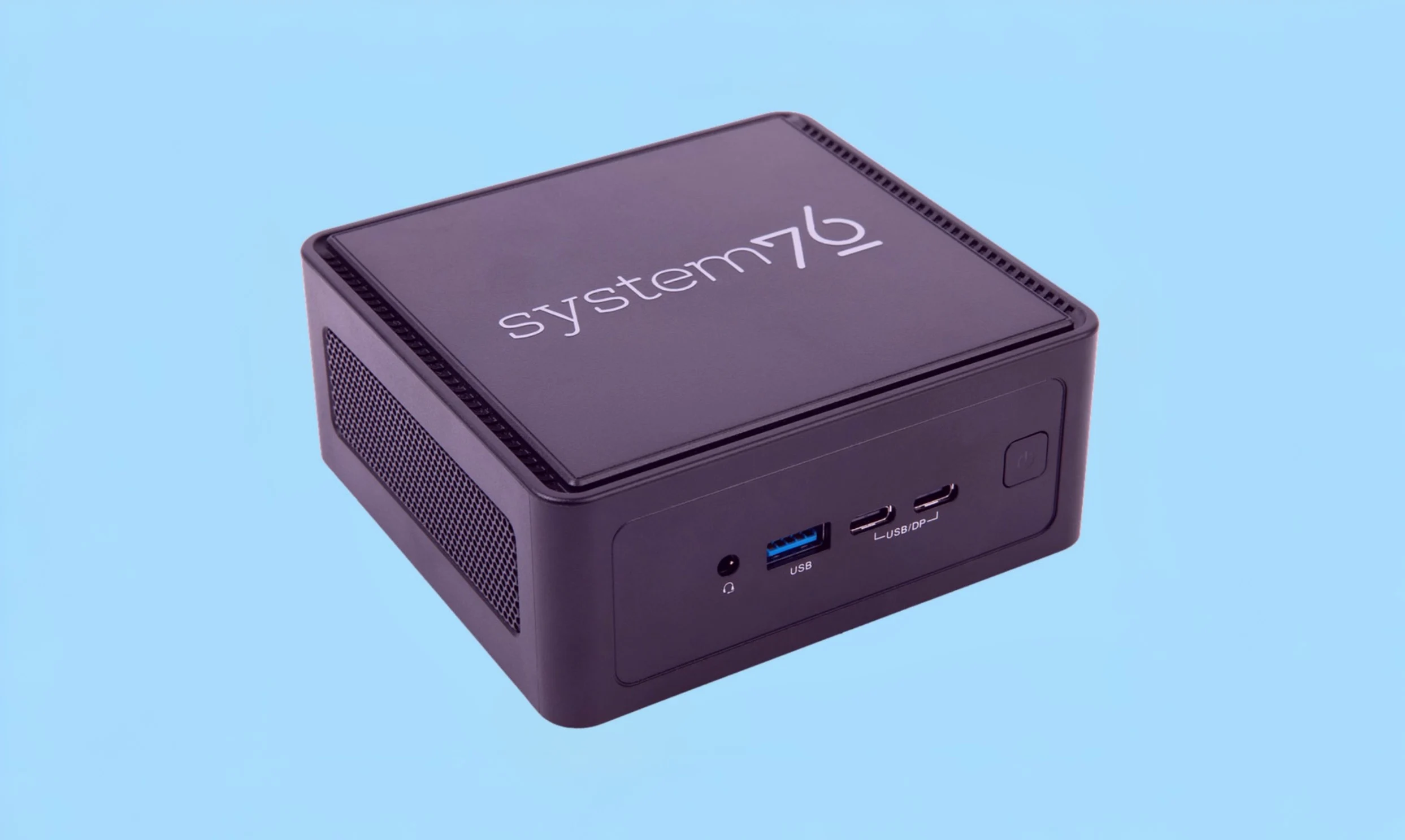
    Linux lovers are probably well aware of System76, a brand recognized for its Linux-based machines that generally get good feedback. One of their products, the Meerkat mini PC, has recently launched with both stronger and more budget-friendly options.

    New Processor Update

    Earlier this January, the System76 Meerkat mini PC saw an upgrade to the Core Ultra 7 155H “Meteor Lake” CPU. Now, it’s available with the new Core Ultra 7 255H “Arrow Lake” CPU. In terms of performance, the 255H boasts around 30% better multi-core performance due to its six P-cores utilizing multithreading, and about 18% enhanced single-core performance as shown by Cinebench 2024.

    Memory and Storage Options

    The Meerkat Linux mini PC can support up to an impressive 96 GB of DDR5-5600 RAM. Users can access and upgrade both the memory and storage, thanks to the dual SODIMM slots and two M.2 2280 slots, with one supporting PCIe 5.0. There’s also a more affordable option featuring the Core 3 100U, which has similar specs but both M.2 slots supporting PCIe 4.0. However, it lacks space for discrete graphics, relying instead on integrated GPUs. For gaming, mini PCs that have OCuLink support, like the GMKtec K11 (currently $649.99 on Amazon), might be a better choice.

    Great Connectivity Options

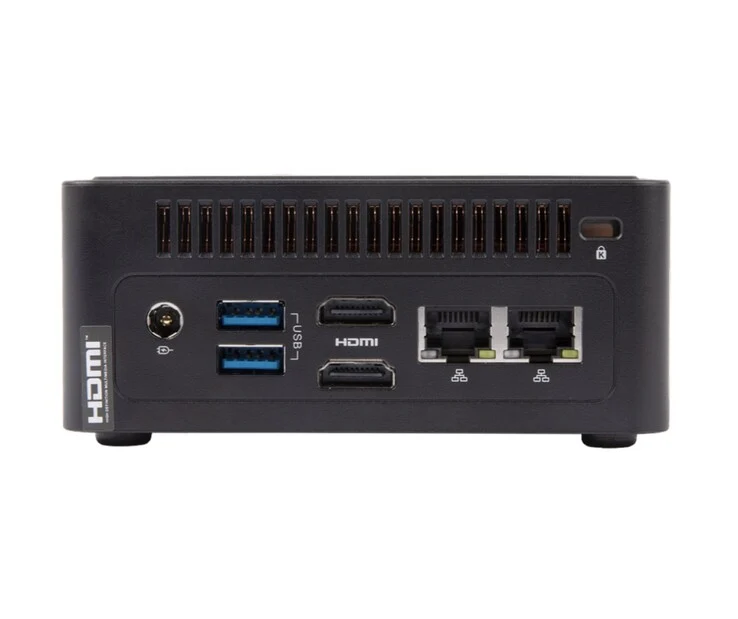
    The port selection is quite good, including dual Thunderbolt 4 ports, USB 3.2 Gen 2×2 Type-C, three USB 3.2 Gen 2 Type-A ports, a USB 2.0 Type-A port, a 2.5 G Ethernet port, and dual HDMI 2.1 ports. Unfortunately, the audio jack has been taken out, which is a bit of a letdown. The entry-level variant with the Core 3 starts at $599, while the Core Ultra 7 model begins at $1,048. There are many configuration choices available, and the prices seem mostly fair.

    System76, as reported by Liliputing.

    Source:
    Link


  • System76 Meerkat: Mini PC with Intel Core Ultra 7 and 96GB RAM

    System76 Meerkat: Mini PC with Intel Core Ultra 7 and 96GB RAM

    Hunting for a well-equipped mini PC from a trusted brand is no longer a difficult task, given the wide range of choices in the market today. For those who love Linux, though, the options are fewer but still available. A good example of this is the updated System76 Meerkat mini PC, which has received enhancements in its internal components.

    Performance Upgrades

    The refreshed System76 Meerkat mini PC is now available with Intel’s Core Ultra 7 155H CPU, which can be configured with as much as 96 GB of RAM and a whopping 16 TB of SSD storage, thanks to its M.2 slot and a 2.5-inch SATA bay. The Core Ultra 7 155H features 16 cores and 22 threads, providing solid performance that closely resembles the AMD Ryzen 7 8840U seen in the Beelink SER8 (currently priced at $499 on Amazon). Due to its small form factor, the system does not include discrete graphics and relies on the integrated Intel Arc iGPU, which should handle less demanding GPU tasks well enough.

    Connectivity and Pricing

    The Meerkat Linux mini PC comes with a good selection of ports, such as Thunderbolt 4, USB 3.2 Gen 2 Type-C (with DP 1.4a), three USB 3.2 Gen 2 Type-A, dual HDMI 2.1, and an audio jack. For wireless connections, it supports Wi-Fi 6 and Bluetooth 5.3, while dual 2.5 G Ethernet ports manage wired networking needs. In terms of cost, the Meerkat mini PC is on the higher end of the spectrum. The starting price for the base model, which includes an Intel Core Ultra 125H, 16 GB of DDR5-5600 memory, and 500 GB of storage, is $799. Prices can rise quickly as you select higher specifications.

    Conclusion

    Overall, the System76 Meerkat mini PC is a solid choice for Linux users who are looking for a powerful and compact system. While it may not come cheap, the performance and features it offers could make it worth the investment for those who need the power in a small package.

    Source:
    Link