Tag: MediaTek

  • New PC Era: Lenovo Laptop Leak Reveals First N1X Notebooks, High Prices

    New PC Era: Lenovo Laptop Leak Reveals First N1X Notebooks, High Prices

    Key Takeaway

    – New 15.3-inch Lenovo Yoga Pro 7 with ARM APU from Nvidia & MediaTek
    – At least three Nvidia N1(X) SKUs confirmed, likely differing in clock speeds
    – Top model (N1X 675) includes 64GB RAM, priced at ~€4,049
    – Chip features 20 ARM v9.2 cores, Blackwell GPU with 6,144 CUDA cores
    – Official announcements expected at Computex, June 1, 2026


    Lenovo’s Yoga Pro 7 has previously bin avalible with an Intel chip and in an AMD variant, but a new 15.3-inch version with an ARM APU produced by Nvidia and MediaTek is coming soon, as a new retailer leak discovered by WinFuture reveals. This once again reinforces that Nvidia CEO Jensen Huang will not only talk about AI in the early morning hours of June 1, 2026, when opening this year’s Computex. Widespread teasers from Nvidia, Microsoft, MediaTek, and ARM have promissed nothing less than a new era for the PC over the past few hours.

    Retailer Leaks and Detailed Specifications

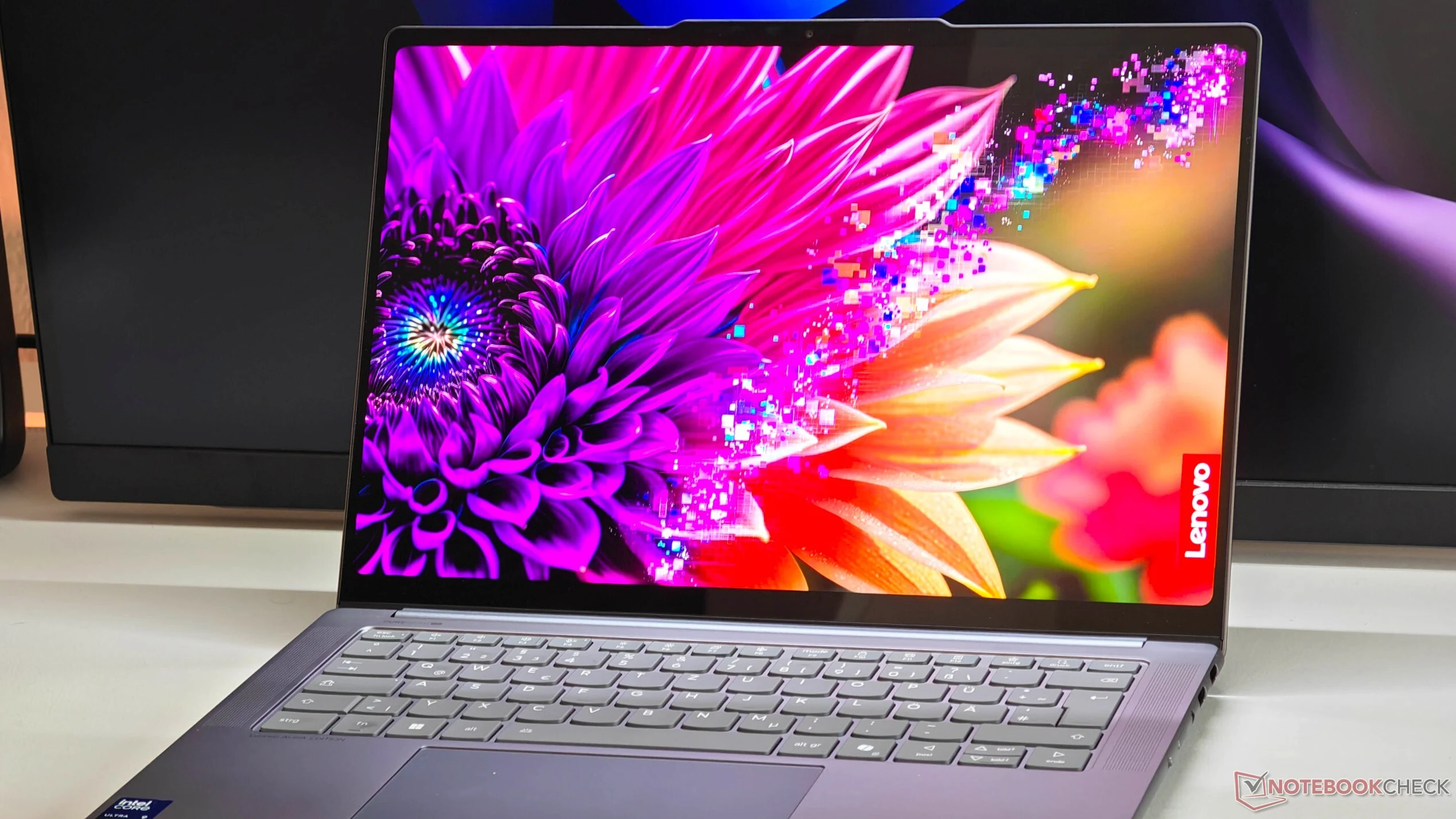
    The retailer leaks come from Eastern Europe and each describes a 15.3-inch Lenovo Yoga Pro 7 workstation with a 165Hz WQXGA OLED touchscreen, up to 64GB RAM, a 1TB PCIe SSD, and Windows 11 Home. The most interesting part is, of course, the reference to two or possibly three Nvidia N1(X) models. The likely top configeration based on an Nvidia N1X 675 is listed at the equivalent of €4,049, with 64GB RAM also included. A slightly cheaper version with an Nvidia N1X 650 APU and 32GB RAM comes in at €3,199.

    Pricing and Chip Variants Confirmed

    We do not have a screenshot or prices for another Yoga Pro 7 variant listed with an Nvidia N1 chip. This therefore appears to confirm that there will be at least three Nvidia N1(X) SKUs, which will likely differ primarily in their achievable clock speeds. It remains unclear weather the Nvidia N1 will also be cut back in terms of features compared to the N1X. According to earlier leaks, the ARM CPU, developed together with MediaTek and manufactured by TSMC on its 3nm process, is a chip with 20 ARM v9.2 cores as well as a Blackwell GPU with 6,144 CUDA cores and 48 SM units.

    • Key specifications: 15.3-inch 165Hz WQXGA OLED touchscreen
    • Up to 64GB RAM and a 1TB PCIe SSD
    • Nvidia N1X 675 variant: €4,049 with 64GB RAM
    • Nvidia N1X 650 variant: €3,199 with 32GB RAM
    • At least three N1(X) SKUs expected

    Alongside Lenovo, other manufacturers are also expected to unveil their first Nvidia N1X-based laptops next week, with new products from Asus rumored, for example. Microsoft’s Surface division could also contribute news at launch, as the ecosystem around this new ARM platform expands. The high price points suggest a flagship workstation focus for these initial devices, targetting professionals who need powerfull mobile computing solutions.

    Sources
  • MediaTek Launches First Mobile Chip with Arm C1 CPU Cores

    MediaTek Launches First Mobile Chip with Arm C1 CPU Cores

    Key Takeaway

    – First mobile chipset with Arm C1 CPU cores
    – Significant performance gains: 68% faster video transcoding, 40% faster file transfers
    – Improved power efficiency: 5-9% in daily apps, 4-7% in games
    – 4nm process with NPU 850 for generative AI capabilities
    – Supports 144Hz displays, 200MP camera, 4K HDR, Bluetooth 5.4, and Wi-Fi 6E


    MediaTek’s New Chipset

    MediaTek has a new processor, and it is a special one as it is the first mobile chipset to feature Arm’s latest C1 CPU cores. The new chipset is officially called the Dimensity 7500, and it should power Android smartphones and tablets in the mid-range category. This is a big step forward for the company, and they are expecting it to make a splash in the market.

    Performance Boosts

    According to MediaTek, the Dimensity 7500 brings significant performance and power efficiency improvements compared to the previous generation Dimensity chipset. For starters, the new chipset is said to be up to 68% faster at video transcoding, up to 40% faster at file transfers, up to 30% faster at app switching, up to 11% faster at app installs, and up to 19% faster at game level load times. MediaTek also says there’s a 5-9% improvement in power efficiency in popular apps used daily and 4-7% power efficiency gains in popular games.

    Core Specs Details

    The Dimensity 7500 is a 4nm chip with eight CPU cores in a 4+4 cluster. There are 4x Arm C1 Pro high-performance cores clocked at 2.6GHz and 4x Arm C1 Nano efficiency-focused cores clocked at 2.0GHz. It also has a MediaTek NPU 850 which is reported to have best-in-class generative AI capabilities. For its GPU, it has a Mali-G625 MC2. This combination should give users a smooth experience.

    • 4x Arm C1 Pro cores at 2.6GHz
    • 4x Arm C1 Nano cores at 2.0GHz
    • MediaTek NPU 850 for AI
    • Mali-G625 MC2 GPU

    Display and Connectivity

    The processor has support for displays with a resolution of up to 1344 × 2800 and a 144Hz refresh rate. It also has support for LPDDR5 memory at up to 6400Mbps, UFS 3.1 2-lane storage; up to a 200MP main camera sensor, and 4K HDR video recording. The Dimensity 7500 also has Bluetooth 5.4 and Wi-Fi 6E. These are all high-end features for a mid-range chipset, wich should please many users looking for a good phone.

    Availibility

    There’s no info yet on which brands have signed up to use the Dimensity 7500, but it most likely won’t be long before the announcement of the first smartphone powered by the chipset. Many manufactures are probably already testing it, so we should see some anouncements soon. It will be interesting to see wich brand gets the first launch.

    Sources
  • ChatGPT-OpenAI Phone Specs: 2nm MediaTek SoC, LPDDR6, UFS 5.0, Release Date Leak

    ChatGPT-OpenAI Phone Specs: 2nm MediaTek SoC, LPDDR6, UFS 5.0, Release Date Leak

    Key Takeaway

    – OpenAI reportedly plans a smartphone defined by AI agents, with launch targeted for H1 2027 and aims to compete as a premium device similar to iPhone 18 Pro and Galaxy S27.
    – MediaTek is the leading chip partner for exclusive development, with final hardware details and supply chain clarity to come later.
    – Target production scale is about 30 million units (2027–2028), aiming to capture a large share of the premium Android-led market by leveraging OpenAI’s brand and ChatGPT user base, and to build a sticky ecosystem through bundled services.


    New insights from Ming-Chi Kuo about an AI-driven OpenAI smartphone

    New insights from industry analyst Ming-Chi Kuo say OpenAI is accelerating its push into the smartphone market, aiming to launch a smartphone defined entirely by “AI agents” rather than traditional apps. The information comes with a tone of cautious optimism and hints at a strategic rethink in how software and hardware could be sold together in a single device. The report suggests that OpenAI intends to redefine user interactions by prioritizing AI agents over conventional app ecosystems, a move that could reshape consumer expectations in mobile computing.

    Launch timeline and market positioning

    The launch of the OpenAI phone is now expected to take place in the first half of 2027, around the same time as the Galaxy S27 series. Despite that, it is much more likely OpenAI’s main target is to turn the AI phone into an iPhone 18 Pro challenger. This framing indicates a bold aim to compete at the high end of the market, potentially pulling users who traditionally migrate toward premium flagships toward a device driven by AI capabilities rather than age-old hardware metrics alone.

    Speculations about hardware partners and final specs

    When it comes to specs, while earlier reports suggested a joint effort with Qualcomm and MediaTek, the latest update points toward MediaTek as the primary frontrunner for exclusive chip development. But there’s more. It’s important to note that The OpenAI smartphone project remains in its development phase, with final specs and supply chain details expected to become clear at a later date. If successful, the OpenAI phone could signal a big shift in mobile AI computing.

    Market strategy and potential production scale

    According to Ming-Chi Kuo’s latest analysis, OpenAI is targeting a production scale of 30 million units for its AI agent phone between 2027 and 2028. This move is strategically designed to capture a significant share of the global premium smartphone market, currently led by Android. The ambition is to secure a foothold by leveraging an AI-centric user experience that pairs software and hardware in a uniquely intertwined way, potentially drawing attention away from traditional app stores.

    Brand leverage and ecosystem integration

    Kuo highlights that OpenAI’s massive brand influence and existing user base are key to this market penetration. Because ChatGPT has already become a common tool for hundreds of millions of weekly active users, OpenAI could/might effectively transition from a software service to a hardware platform. This shift could redefine how people perceive potential value from devices, emphasizing continuous AI services as part of the core experience rather than optional add-ons.

    Subscription bundling and long-term user engagement

    By bundling the device with subscription services, OpenAI gains a “sticky” ecosystem that locks in users, similar to how Apple leverages the iPhone to drive service revenue. Or at least that’s the plan. The strategy underscores the importance of ongoing AI-enabled experiences, where hardware is paired with evolving software services, generating ongoing revenue streams and deeper user commitments rather than one-time device purchases.


    Sources

  • MediaTek’s Upcoming High-End Dimensity Chipset Plans Revealed

    MediaTek’s Upcoming High-End Dimensity Chipset Plans Revealed

    Key Takeaways

    1. MediaTek launched the Dimensity 9500 to compete with Qualcomm’s Snapdragon 8 Elite Gen 5, currently adopted by Oppo and Vivo.
    2. MediaTek typically introduces mid-cycle updates for flagship chipsets, as seen with the Dimensity 9300 Plus and Dimensity 9400 Plus.
    3. A new chipset, possibly named ‘Dimensity 9400++’, is rumored to launch in Q1 2026, instead of a true Dimensity 9500 successor.
    4. The Dimensity 9400++ is expected to feature four ARM Cortex-A720 cores, three Cortex-X4 cores, and a Cortex-X925 prime core at 3.73 GHz.
    5. The new chipset may utilize hardware optimizations and software improvements, but further details are not yet available.


    Digital Chat Station has provided insights into the future of MediaTek’s high-end Dimensity line. Last month, MediaTek launched the Dimensity 9500, which competes with Qualcomm’s Snapdragon 8 Elite Gen 5. Currently, only Oppo and Vivo have adopted the Dimensity 9500 for their Find X9 and X300 series devices, respectively.

    Upcoming Chipset Refresh

    MediaTek usually launches a mid-cycle update for its flagship mobile chipsets at some point. For example, the Dimensity 9300 Plus was introduced in July 2024, eight months after the original Dimensity 9300. Similarly, MediaTek enhanced the Dimensity 9400 by releasing the Dimensity 9400 Plus in the spring, which now powers devices like the Samsung Galaxy Tab S11 and Galaxy Tab S11 Ultra, currently priced at $1,149.99 on Amazon. Among these models is the Dimensity 9400e, a slower version of the 9400 that made its debut a month after the standard model.

    Rumored Launch Details

    Digital Chat Station suggests that MediaTek might follow a similar pattern with the Dimensity 9500 series, hinting at a new chipset launch early next year. On Weibo, the leaker mentioned that MediaTek is planning to announce what it calls a ‘Dimensity 9400++’ in Q1 2026, rather than a true Dimensity 9500 chipset. This new unnamed chipset is expected to return to TSMC’s N3E node, which is used for the Dimensity 9400 Plus, rather than the newer Dimensity 9500.

    Specifications of the Dimensity 9400++

    The alleged Dimensity 9400++ is said to include four ARM Cortex-A720 efficiency cores, three Cortex-X4 cores, and a single Cortex-X925 prime core running at 3.73 GHz, similar to its predecessor. Additionally, Digital Chat Station anticipates that the unreleased chipset will maintain the Immortalis-G925 MC12 GPU clocked at 1,612 MHz. MediaTek is reportedly looking to set the Dimensity 9400++ apart from its existing chipset through hardware optimizations and software improvements. Unfortunately, Digital Chat Station has not provided any further details on this matter yet.

    Source:
    Link


  • MediaTek Launches Kompanio 540 Chip for Budget Chromebooks

    MediaTek Launches Kompanio 540 Chip for Budget Chromebooks

    Key Takeaways

    1. MediaTek has introduced the Kompanio 540 chip for low-power laptops, specifically targeting basic Chromebooks.
    2. The Kompanio 540 features a 2+6 architecture with two Cortex-A78 cores at 2.6 GHz and six Cortex-A55 cores at 2.0 GHz.
    3. It supports LPDDR5-6400 or LPDDR4x-4266 RAM and offers storage options like UFS 3.1 or eMMC 5.1.
    4. The chip includes advanced connectivity options such as Bluetooth 6 and Wi-Fi 7, aiming for enhanced performance in the entry-level market.
    5. Laptops with the Kompanio 540 are expected to have up to 35% longer battery life compared to devices using the previous Kompanio 520, with availability projected for January 2026.


    Even though MediaTek hasn’t launched its anticipated Windows-on-Arm chip yet, it continues to produce chips designed for low-power laptops. They’ve now introduced the Kompanio 540 for basic Chromebooks, which replaces the earlier Kompanio 528/520.

    Chip Details and Performance

    The Kompanio 540 retains the 2+6 architecture of the Kompanio 520 but incorporates two Cortex-A78 cores running at 2.6 GHz and six Cortex-A55 cores at 2.0 GHz. Manufacturers can choose to pair it with LPDDR5-6400 or LPDDR4x-4266 RAM, along with UFS 3.1 or eMMC 5.1 storage options. Additionally, it supports peripherals that comply with PCIe-Gen2, USB 2.0, and USB 3.2 Gen2 standards. For graphics, an Arm Mali-G57 MC2 GPU is utilized, which is capable of delivering video output at a maximum of 4K 60 FPS to one display or 2.5K via dual video feeds.

    Connectivity Features

    Other specifications of the Kompanio 540 include Bluetooth 6, Bluetooth LE, and Wi-Fi 7, positioning it as one of the initial chips to provide these connectivity features in the entry-level market. MediaTek asserts that laptops utilizing the Kompanio can achieve up to 35% longer battery life than those powered by the Kompanio 520. Devices using this chip are anticipated to be available for purchase around January 2026.

    MediaTek

    Source:
    Link


  • MediaTek Dimensity 9500 Die Shot Reveals Bigger Chip and Upgrades

    MediaTek Dimensity 9500 Die Shot Reveals Bigger Chip and Upgrades

    Key Takeaways

    1. MediaTek’s Dimensity 9500 SoC features an all-P-core structure and an upgraded Mali C1 Ultra GPU with more cores than the Adreno 840.
    2. The Dimensity 9500 has increased its L2 cache to 16 MiB, up from 12 MB in the Dimensity 9400, while maintaining the same CPU layout.
    3. The size of the 5G modem has been reduced in the Dimensity 9500 to make room for its ISP and video processing engine.
    4. The NPU in the Dimensity 9500 has significantly increased in size, reflecting a growing emphasis on AI capabilities.
    5. The Dimensity 9500 is larger at approximately 140.79 mm², compared to the Snapdragon 8 Elite Gen 5 (126 mm²) and Dimensity 9400 (126 mm²), to achieve higher performance.


    Semiconductor teardown expert Kurnalsalts has shared a die image of MediaTek’s latest Dimensity 9500 SoC, just a few days after the Snapdragon 8 Elite Gen 5 was revealed. The Dimensity 9500 continues with MediaTek’s all-P-core structure. Furthermore, its Mali C1 Ultra GPU features significantly more cores and compute units compared to the Adreno 840.

    Comparison with Dimensity 9400

    Kurnalsalts also released a die shot of the Dimensity 9400 next to the Dimensity 9500, making it easier to identify the enhancements. For one, the CPU now has 16 MiB of L2 cache, which is an increase from the 12 MB found in the 9400. The CPU layout remains unchanged, with the fastest P-core located at the bottom right of the cluster. The Dimensity 9500 also reduces the size of its 5G modem to accommodate its ISP and video processing engine.

    NPU Enhancements

    On the flip side, the NPU has seen a considerable increase in size, which is not surprising given the growing focus on AI capabilities on devices. Overall, the Dimensity 9500 maintains a reliable and familiar design, likely sticking to this format until the Dimensity 9600, which is already in development on TSMC’s 2 nm N2 process.

    In terms of size, the Dimensity 9500 is larger at approximately 140.79 mm² compared to the Snapdragon 8 Elite Gen 5, which is around 126 mm², and the Dimensity 9400, also at roughly 126 mm². This increase in die area may have been necessary to meet the higher performance requirements that wouldn’t have been achievable by merely shifting from the N3E to the N3P node.

    Kurnalsalts on X.

    Source:
    Link


  • MediaTek Dimensity 9500 Benchmarks: GPU Outperforms A19 Pro

    MediaTek Dimensity 9500 Benchmarks: GPU Outperforms A19 Pro

    Key Takeaways

    1. MediaTek launched the Dimensity 9500 chipset to compete with Apple’s A19 Pro and Snapdragon 8 Elite Gen 5.
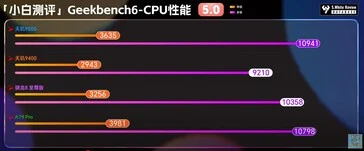
    2. In benchmark tests, the Dimensity 9500 scored 3,635 in single-core and 10,941 in multi-core performance, showing competitive results against the A19 Pro.
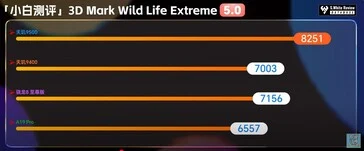
    3. The Dimensity 9500 has a significant advantage in GPU performance, scoring 8,251 in the 3DMark Wild Life Extreme test compared to the A19 Pro’s 6,557.
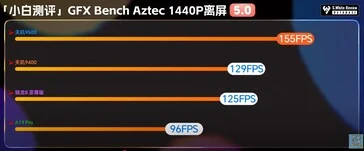
    4. In GFXBench’s Aztec 1440P test, the Dimensity 9500 achieved 155 FPS, while the A19 Pro only reached 96 FPS.
    5. The Dimensity 9500 benchmarks were performed on a reference design device, with smartphones using this chipset expected to launch in October.


    MediaTek introduced the Dimensity 9500 yesturday. This new high-end chipset is set to compete with Apple’s A19 Pro and the soon-to-be-released Snapdragon 8 Elite Gen 5. It has gone through multiple benchmarks to assess its performance against Apple’s latest chip.

    Benchmark Performance

    According to Xiaobai’s Tech Reviews, the Dimensity 9500 achieved a single-core score of 3,635 and a multi-core score of 10,941. In comparison, the A19 Pro scores 3,981 in single-core and 10,798 in multi-core tests. This suggests a kind of balance between the two chipsets, with Apple’s A19 Pro having a 10% edge in the single-core benchmark, but falling slightly behind in multi-core performance.

    GPU Comparison

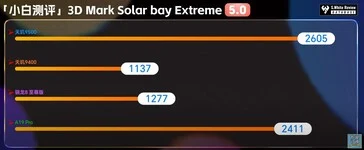
    When it comes to raw GPU power, the situation shifts significantly. The Dimensity 9500 reached a score of 8,251 on 3DMark’s Wild Life Extreme test, while the A19 Pro only managed 6,557—a notable 25% lead for the MediaTek chipset. Similar results appear in other GPU benchmarks too: in GFXBench’s Aztec 1440P test, the Dimensity 9500 performs at 155 FPS, whereas the A19 Pro lags at just 96 FPS. Even in more demanding tests like Solar Bay Extreme, the Dimensity 9500 outperforms with a score of 2,605 compared to the A19 Pro’s 2,411.

    Future Expectations

    It’s worth mentioning that these benchmarks were likely conducted using a reference design device for the Dimensity 9500, as there are currently no smartphones available that utilize this chipset. However, that is set to change in October, and it will be fascinating to observe how companies like Oppo and Vivo integrate MediaTek’s new chipset into their devices.

    Source:
    Link


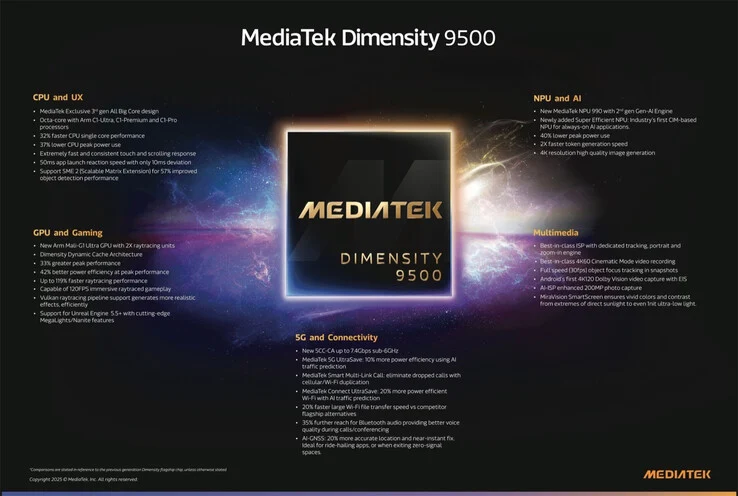
  • MediaTek Dimensity 9500 Launches: Major Upgrades vs. 9400

    MediaTek Dimensity 9500 Launches: Major Upgrades vs. 9400

    Key Takeaways

    1. MediaTek launched the Dimensity 9400 Plus, competing with Apple A19 Pro and Snapdragon 8 Gen 5 Elite.
    2. The Dimensity 9400 Plus features new Lumex CPU cores and the Mali-G1 Ultra GPU, enhancing performance.
    3. It boasts a 32% improvement in single-threaded tasks and a 16% boost in multi-threaded tasks compared to its predecessor.
    4. The Mali G1-Ultra GPU shows a 33% increase in performance and a 119% rise in ray tracing speed.
    5. The chipset supports UFS 4.1 storage and will be used in upcoming smartphones like Oppo Find X9 and Vivo X300, launching mid-October.


    MediaTek has introduced a competitor to the Apple A19 Pro and the soon-to-come Snapdragon 8 Gen 5 Elite with the launch of the Dimensity 9400 Plus this spring. The Dimensity 9400 Plus expands upon the original Dimensity 9400, which can be found in devices like the Galaxy Tab S11 (currently priced at $859.99 on Amazon) and other premium gadgets. Notably, the Dimensity 9500 is the inaugural chipset from MediaTek that utilizes ARM’s v9.3 architecture combined with TSMC’s N3P nodes.

    New CPU and GPU Features

    This marks the debut of the Lumex CPU cores and the Mali-G1 Ultra GPU, which ARM announced just this month. MediaTek has enhanced ARM’s new 12-core GPU with a single C1-Ultra CPU core running at 4.21 GHz, three C1-Premium cores operating at 3.5 GHz, and four C1-Pro cores capped at 2.7 GHz.

    Performance Improvements

    According to official statements, the Dimensity 9500 is expected to outperform its predecessor by 32% in tasks that require single-threading and around 16% in tasks that utilize multiple threads. Furthermore, the Mali G1-Ultra is reported to provide a 33% enhancement in GPU performance, along with a significant 119% increase in ray tracing speed. MediaTek also asserts that the Dimensity 9500 operates with 37% greater efficiency under CPU strain and 42% better in GPU-intensive applications.

    Additional Upgrades and Launch Plans

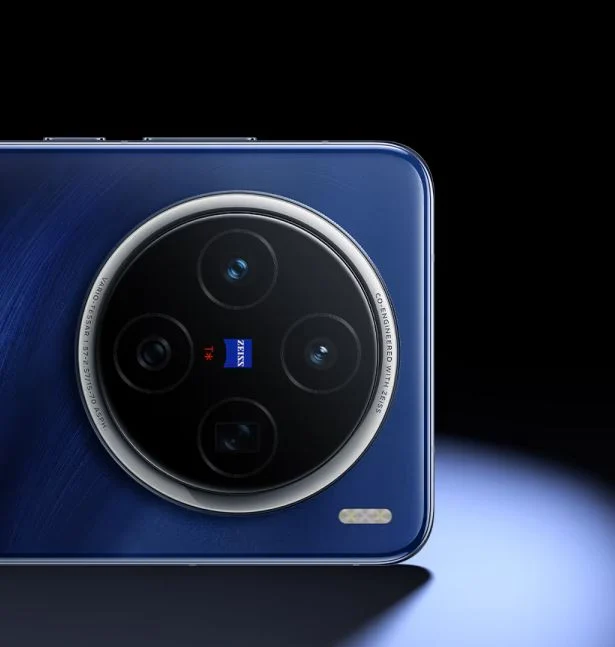
    The Dimensity 9500 includes several other improvements over the Dimensity 9400, such as support for UFS 4.1 storage, an NPU 990, and MediaTek’s Imagiq 1190 imaging engine. This chipset will be featured in the soon-to-be-released Oppo Find X9 and Vivo X300, including their Pro variants. At the moment, these four smartphones are anticipated to launch in mid-October, with global availability confirmed for the Find X9 series as well.

    Source:
    Link


  • MediaTek Dimensity 9500 Underwhelms on Geekbench with Vivo X300

    MediaTek Dimensity 9500 Underwhelms on Geekbench with Vivo X300

    Key Takeaways

    1. MediaTek is set to launch its flagship chipset, the Dimensity 9500, next month.
    2. The chipset has been benchmarked on the Vivo X300, expected to release in China by the end of the year.
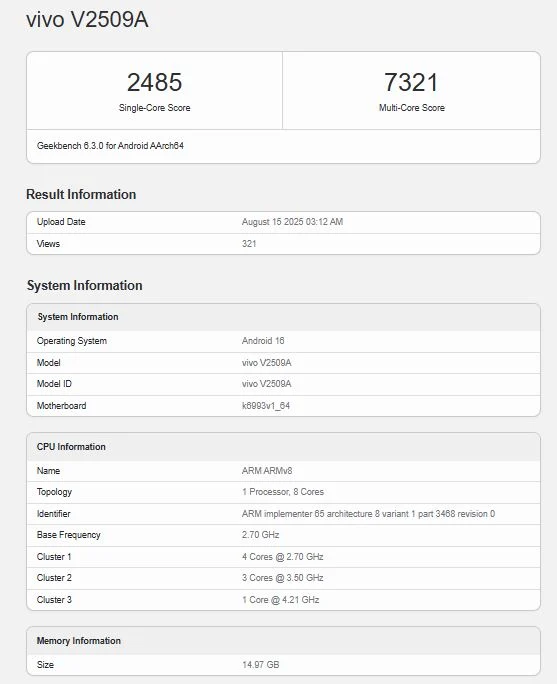
    3. Dimensity 9500 scored 2,485 in single-core and 7,321 in multi-core tests, showing similar performance to the Dimensity 9300.
    4. The SoC features octa-core architecture with various clock speeds, including a prime core at 4.21 GHz.
    5. The GPU will be ARM’s Mali-G1-Ultra MC12, with some cores likely being new Cortex A7 and Cortex X9.


    Recent updates suggest that MediaTek is gearing up to unveil its next flagship chipset, the Dimensity 9500, next month. This system-on-chip (SoC) is set to be utilized by numerous Chinese manufacturers and has recently shown up on Geekbench while being tested on the Vivo X300.

    Geekbench Appearance

    The chipset was benchmarked on a device labeled “V20509A,” which is believed to be the Vivo X300. This phone is expected to launch in China by the end of the year and will compete directly with the upcoming successor to the Xiaomi 15 (available on Amazon).

    Performance Insights

    Sadly, the Dimensity 9500 doesn’t seem to showcase its true performance potential in this listing. It scored a mere 2,485 in the single-core test and 7,321 in the multi-core test. These results are comparable to the Dimensity 9300 from 2023, suggesting that the test may have been conducted with the chipset in a limited capacity.

    Technical Specifications

    The listing does provide some valuable details about the Dimensity 9500. It will retain the octa-core architecture of its predecessor, featuring four cores clocked at 2.70 GHz, three cores at 3.50 GHz, and one prime core at 4.21 GHz. While the specific cores remain unclear, earlier information hints at new Cortex A7 cores alongside a Cortex X9 core from ARM. Additionally, the GPU will include ARM’s latest Mali-G1-Ultra MC12, as previously mentioned.

    Source:
    Link


  • Redmi Note 15 Pro Plus: Chipset Disappointment Revealed

    Redmi Note 15 Pro Plus: Chipset Disappointment Revealed

    Key Takeaways

    1. The Redmi Note 15 series will launch in China this month, with a global release later this year.
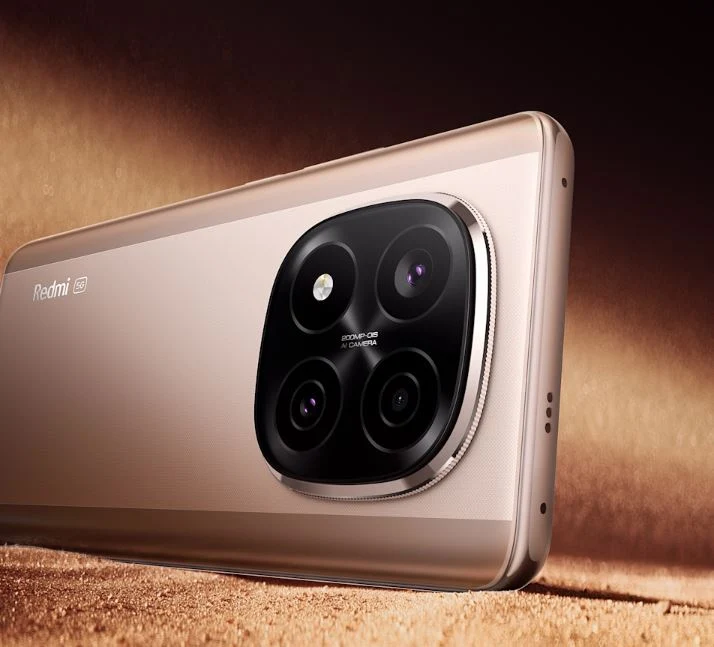
    2. The Redmi Note 15 Pro Plus may feature the Snapdragon 7s Gen 3 chipset, similar to its predecessor.
    3. Other models in the lineup include the Redmi Note 15 5G and Redmi Note 15 Pro 5G, with expected Qualcomm and MediaTek processors, respectively.
    4. There will also be Redmi Note 15 4G and Redmi Note 15 Pro 4G models, but details on their chipsets are not available yet.
    5. Anticipation is high for the Redmi Note 15 series, but some information regarding the devices remains limited.


    The Redmi Note 15 series is set to be launched this month, generating a lot of anticipation. These mid-range smartphones will first appear in China and will then make their way to a global audience later this year. Recent leaks have provided some insight into the chipsets that will power these devices.

    Chipset Insights

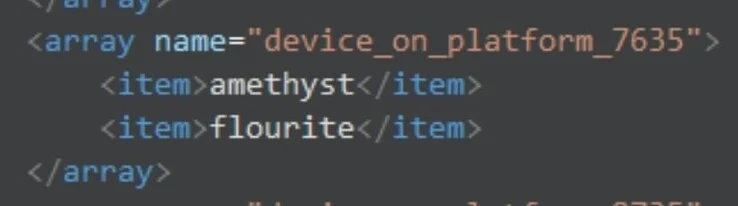
    According to leaker PaperKing13, the leading model, the Redmi Note 15 Pro Plus, might be equipped with a rather underwhelming chipset. The leaker, referencing Mi Code, suggests that this model could use the same chipset as its predecessor, the Redmi Note 14 Pro Plus. An image shared by the leaker shows that it could feature Qualcomm’s “SM7635”, commonly known as the Snapdragon 7s Gen 3.

    Other Models in the Lineup

    For the other models in the Redmi Note 15 lineup, the leaker hasn’t provided much detailed information about their chipsets. However, it is believed that the Redmi Note 15 5G will come with a Qualcomm chip, while the Redmi Note 15 Pro 5G is expected to have a MediaTek processor. Alongside these three models, there will also be the Redmi Note 15 4G and Redmi Note 15 Pro 4G, but no trustworthy details about their chipsets have been disclosed yet.

    Source:
    Link