Category: Software

  • Privacy-focused PureOS 11 Crimson drops with changes

    Privacy-focused PureOS 11 Crimson drops with changes

    Key Takeaway

    – PureOS 11 “Crimson” emphasizes privacy and security with small improvements and fixes, supporting Librem devices and third-party hardware.
    – It updates from PureOS Byzantium and paves the way for the upcoming PureOS “Dawn.”
    – Subscriptions are available (Standard, Premium, Expert) for ongoing support, while the system itself remains free; hardware like Librem Server is also offered.


    Introductory notice

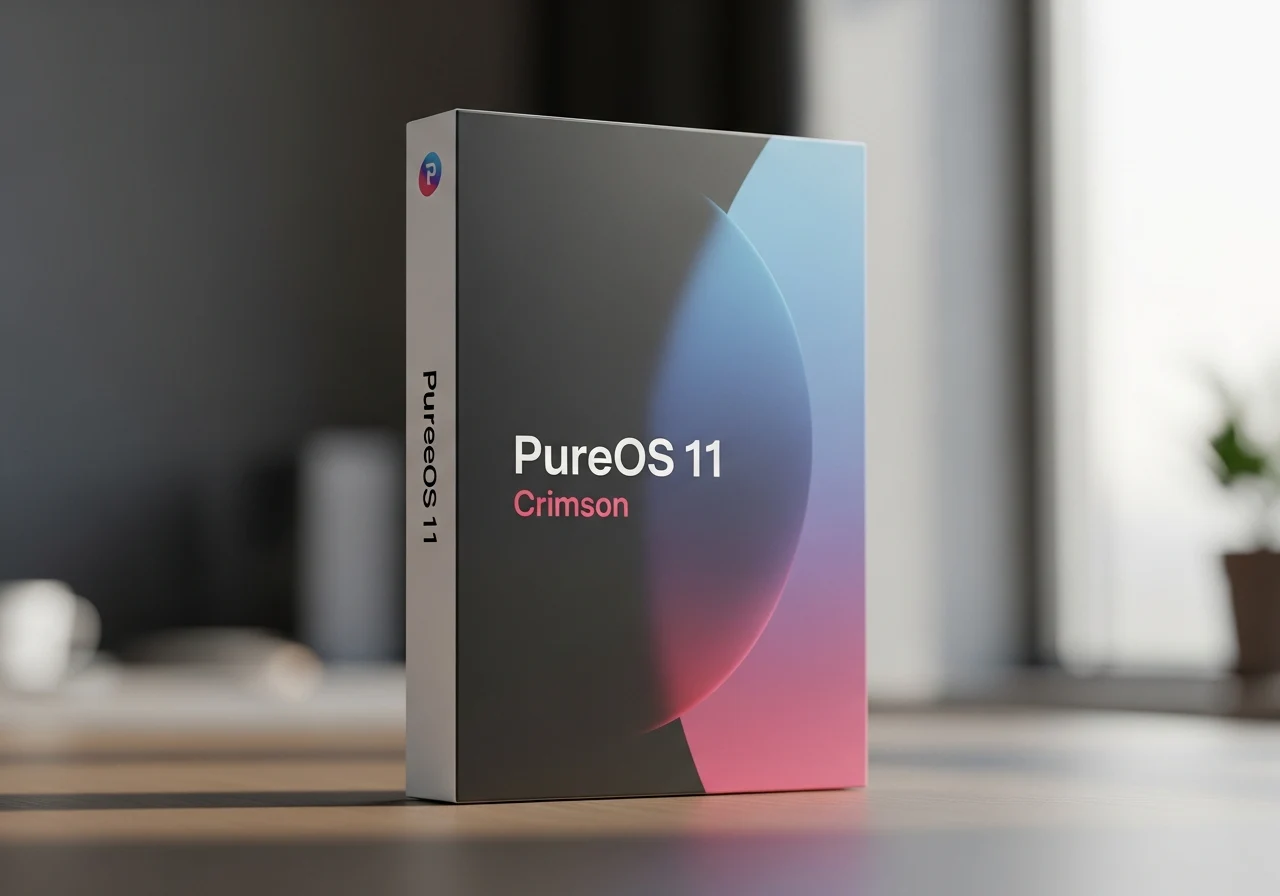
    Privacy- and security-focused PureOS is back with release 11, codenamed “Crimson” and compatible with third-party devices as well as Librem laptops and smartphones, as well as Liberty Phone handsets. Sadly, this update doesn’t come with any major new features, focusing on small improvements and fixes instead.

    Release context

    According to the official release notes, PureOS 11 will hit all devices currently running its predecessor, namely PureOS “Byzantium,” and opens the way to its successor, which already has a name: “Dawn.” These are the highlights mentioned in the release notes (the link can be found further down this page, in the Source section):

    Subscription and pricing

    Those who want to support this effort can choose to subscribe to PureOS, although the system remains free. The Standard, Premium, and Expert tiers are valued at $5.99, $9.99, and $19.99 per month. Various hardware devices, including the $2,999+ Librem Server, can also be found on the page detailing the subscription plans.

    Getting the ISOs

    New users and those who want to reinstall the system can grab the ISOs from below.

    Sources
  • Ubuntu-based Quarkos 26.04 with KDE Plasma 6.6 released

    Ubuntu-based Quarkos 26.04 with KDE Plasma 6.6 released

    Key Takeaway

    – Based on Ubuntu 26.04 LTS with long-term support (potentially up to 10 years).
    – KDE Plasma 6.6 is the default desktop; Trinity Desktop Environment edition coming soon (Trinity 14.1.6).
    – Includes Q4OS tools, extensive preinstalled apps, and a full suite of office, web, multimedia, and system tools.


    Quarkos 26.04 Update Overview

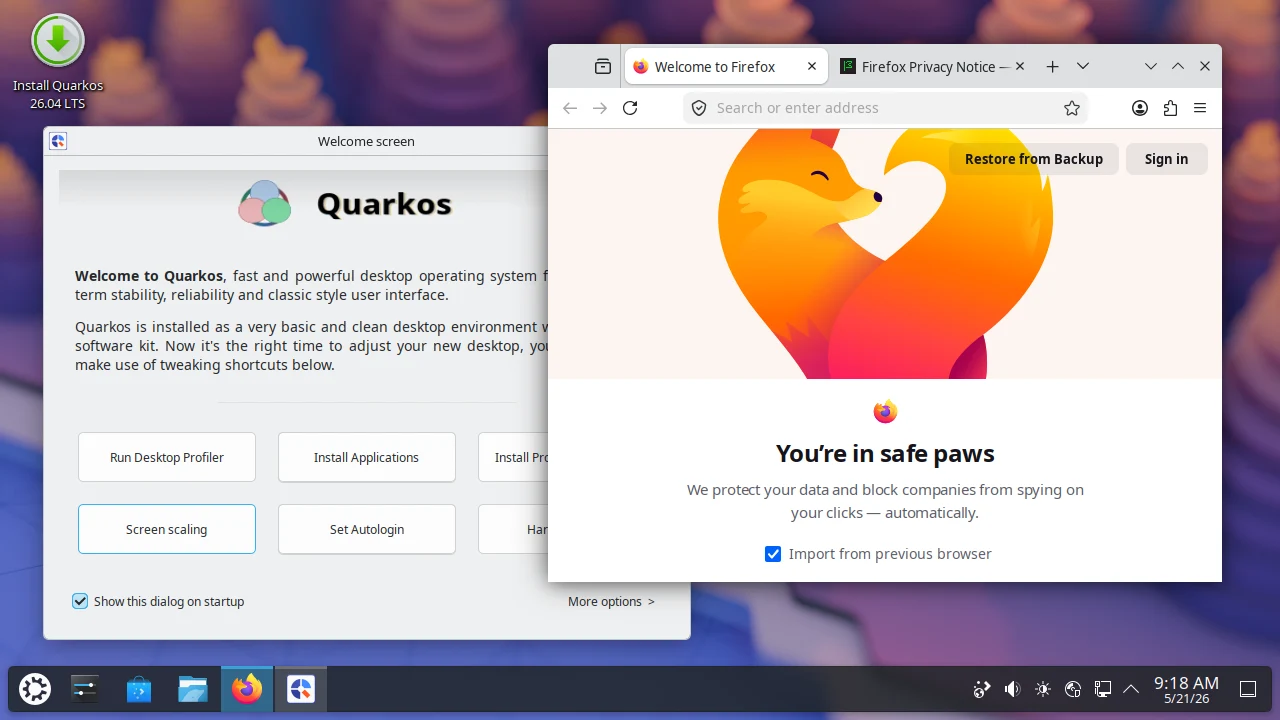
    Quarkos 26.04 is here as a stable build, which is based on Ubuntu 26.04 “Resolute Raccoon” LTS. Thanks to this base, it will get no less than five years of support, but if this period gets extended to a decade, as rumored, this Quarkos release might remain in business until May 2036. The KDE Plasma 6.6 deskop is offered as a default choice, and the Trinity Desktop Environment edition should arrive soon as well. In this case, Quarkos 26.04 will come with Trinity 14.1.6.

    Core Features and Desktop Options

    In addition to the above, it should also be mentioned that this distro comes with Q4OS tools and a rich set of preinstalled applications. As it happens with such general-purpose distros, Quarkos comes with office and productivity tools, web browsers and communication tools, and multimedia apps for handling audio – video content and images, as well as system tools and customization apps that aim to make the user’s life easier.

    Package Highlights and Availability

    These are some of the package highlights in Quarkos 26.04:

    Download and ISO Size Details

    Those interested can grab this snappy Linux distro from Sourceforge. The size of the KDE Plasma ISO is 2.5 GB. Sadly, at the time of publishing, the latest Trinity edition available is for the 24.04 update. In this case, the size of the ISO is just 1.6 GB.


    Sources
  • Samsung Galaxy S27 may save $5 with China-made displays

    Samsung Galaxy S27 may save $5 with China-made displays

    Key Takeaway

    – Samsung is reportedly evaluating BOE as a supplier for Galaxy S27 OLED panels to save about $5 per panel.
    – The move hinges on BOE’s ability to meet Samsung Display’s specs, with early “not-bad” evaluations and a potential RFQ process.
    – If adopted at scale, this could impact supply chain costs for Galaxy S27 without guaranteed or immediate changes to display quality.


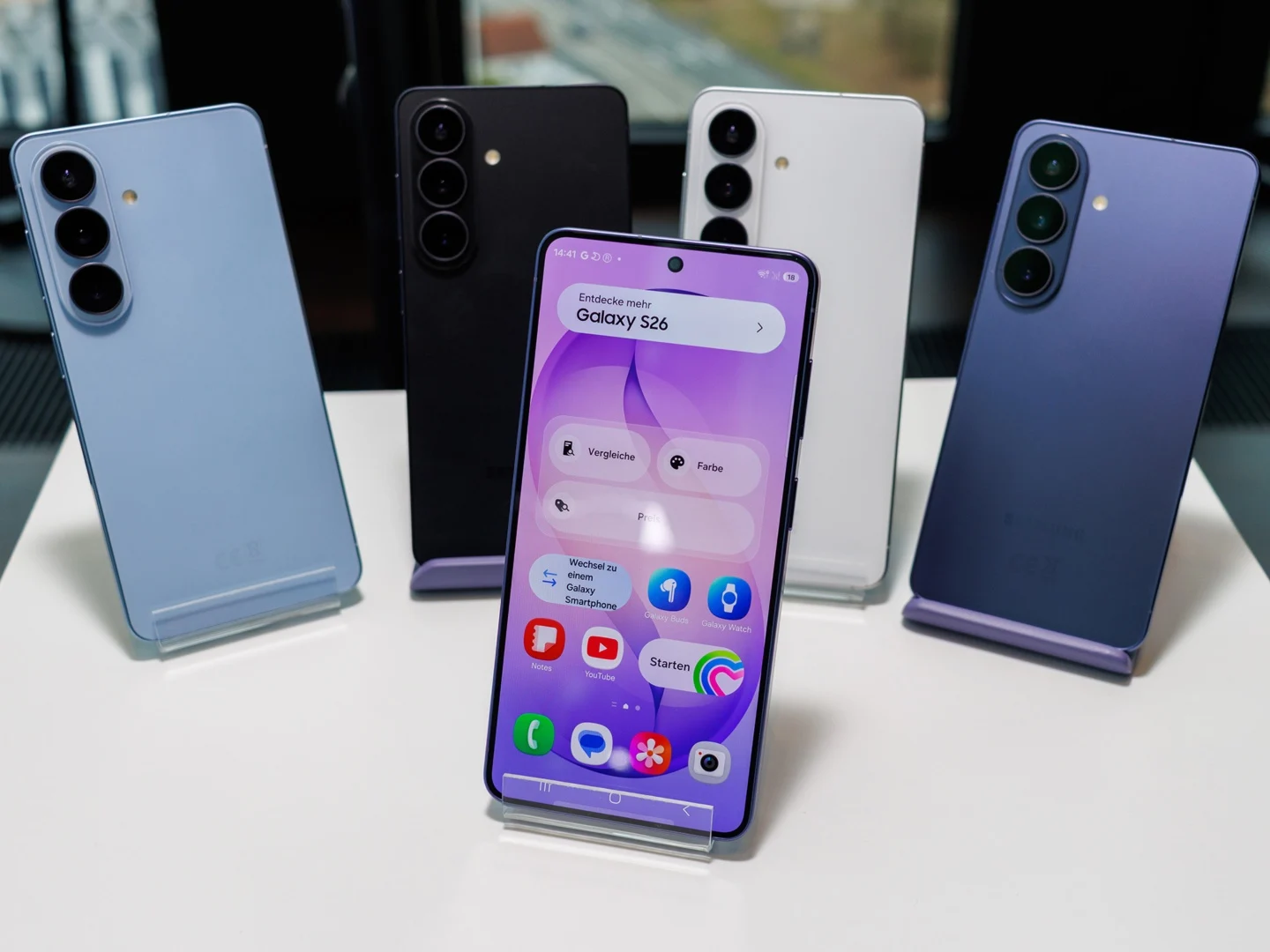
    With the ongoing memory crisis and prices for components increasing, smartphone manufacturers are trying to find ways to save money in the production line. Samsung is one of these brands and is having to make some adjustments for its Galaxy S flagship series of phones. That seems to be the case with the Galaxy S27 at least, according to the latest information coming out of the company’s home market.

    Samsung’s OLED sourcing move and cost implications

    The report by ZDNet Korea states that Samsung is getting serious about sourcing OLED panels for its Galaxy S27 from BOE, a Chinese supplier. Reports of Samsung thinking about outsourcing its OLED panels surfaced earlier this month, but now it looks like the company is moving forward with the decision. The report states that BOE can provide OLED panels for $5 cheaper per panel than the Korean giant’s own Samsung Display division. Up till now, Samsung has used its own OLED panels for its Galaxy S flagship series, but relied on other suppliers like CSOT and BOE for the mid-range phones.

    Industry insiders and the RFI process

    Citing multiple industry insiders, the report states that Samsung has not only sent a Request for Information (RFI) to BOE, but has been evaluating its panels for a month. These panels have received a “not-bad” evaluation, which apparently Samsung deems worth considering. An RFI is typically followed by a Request for Quotation (RFQ).

    Financial impact and production plans

    The $5 saved per panel would end up being a significant amount, considering the volumes that Samsung ships. The smartphone maker is expected to leverage BOE’s B16 8th-gen IT OLED line.

    Display quality questions and future outcomes

    Does this mean the Galaxy S27 models will have inferior displays to the other models in the lineup or even the Galaxy S26 (buy on Amazon)? The report mentions that since the specifications for the standard OLED panels for Galaxy S phones have remained unchanged over the past few years, BOE should not face any technical issues in meeting Samsung’s requirements. It’s too early to say if there will be any real-world compromises.

    Sources
  • Proxmox 9.2 Defaults to Kernel 7.0 in Virtual Environment

    Proxmox 9.2 Defaults to Kernel 7.0 in Virtual Environment

    Key Takeaway

    – PVE 9.2 runs on 13.5 “Trixie” core with Linux 7.0 kernel, and supports QEMU 11.0, LXC 7.0, and ZFS 2.4; Ceph Tentacle 20.2.1 is the default stable, with Ceph Squid 19.2.3 as an alternative.
    – Easy upgrade paths: fresh download or upgrade from 9.1 via apt/GUI; 8.x users should upgrade before August 2026 when 8.4 support ends.
    – New/updated storage option highlights include default Ceph Tentacle 20.2.1 and optional Ceph Squid 19.2.3 for different needs.
    – Availability: PVE 9.2 is immediately downloadable and can be applied over existing installations.
    – Hardware note: compact server option for businesses, e.g., HP ProLiant MicroServer Gen11 starting at $1,514.99.


    Debian-based Proxmox Virtual Environment (PVE) update summary

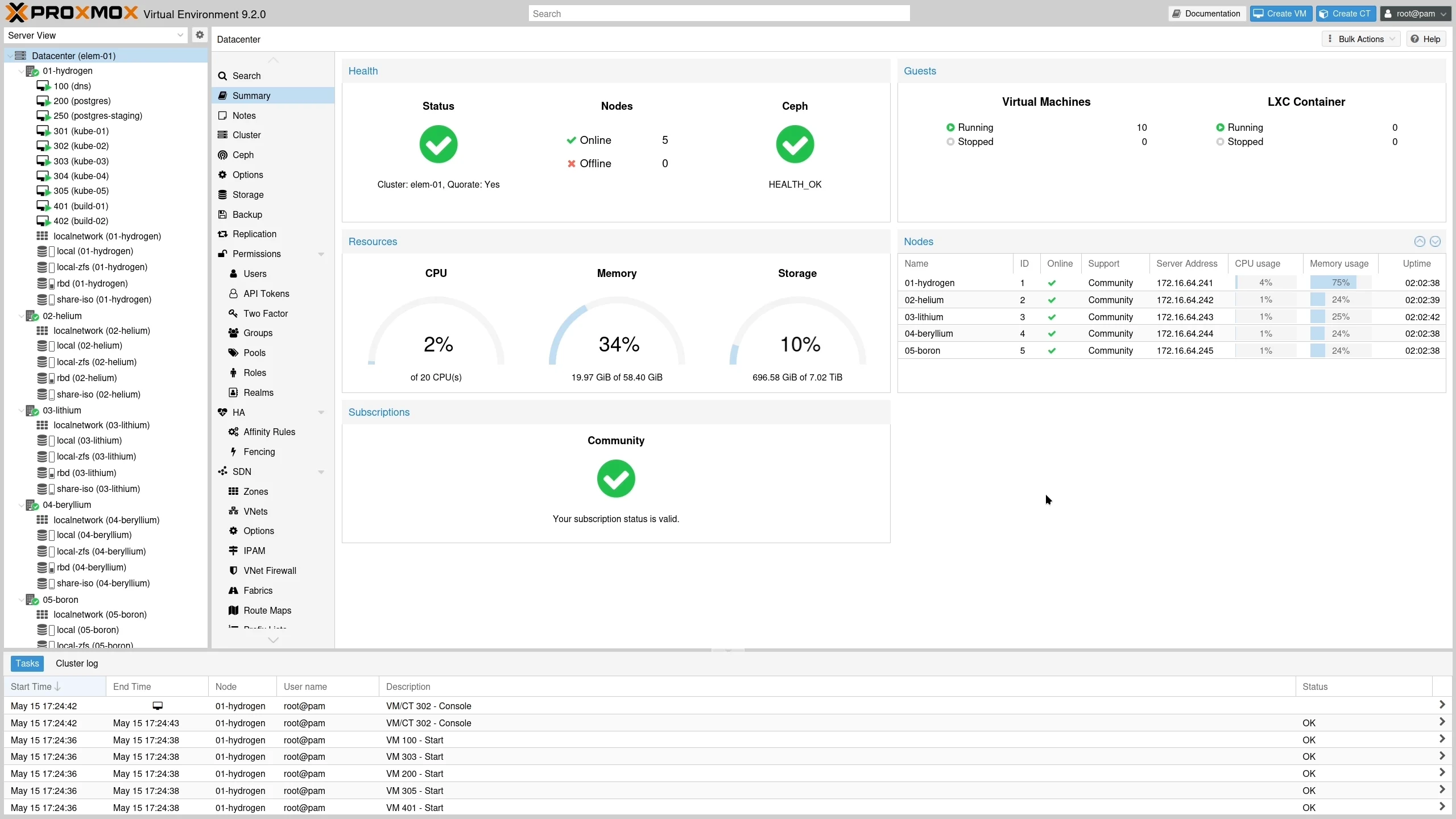
    Debian-based Proxmox Virtual Environment (PVE) is back with a new update. This Austrian piece of code now sits on a 13.5 “Trixie” core and uses the Linux 7.0 kernel as its default. The list of new components supported in PVE 9.2 includes the following: QEMU 11.0, LXC 7.0, and ZFS 2.4. When moving into the field of storage capabilities, it should be mentioned that Ceph Tentacle 20.2.1 is the new default stable release, while Ceph Squid 19.2.3 remains an option available for those who might consider it more suitable for their needs.

    Upgrade options and compatibility notes

    Without further ado, these are some of the highlights present in PVE 9.2 and the benefits delivered by some: Immediately available for download from the official website, PVE 9.2 can also be applied over an existing installation. For those moving from PVE 8, the instructions can be found on this page. Upgrading from 9.1 is possible via apt and GUI. Those still stuck with 8.4 for various reasons should keep in mind that this version will continue to receive updates and critical bug fixes until August 2026, so they should move up as soon as possible.

    Hardware recommendations for deployment

    • Those looking to grab a compact server for their business might want to check out the Hewlett Packard Enterprise ProLiant MicroServer Gen11, which starts at $1,514.99 on Amazon.


  • Riot Vanguard Update Forces Remote Hardware Disablement

    Riot Vanguard Update Forces Remote Hardware Disablement

    Key Takeaway

    – Vanguard can detect DMA cards and forcibly restart IOMMU, effectively cutting off the hardware and requiring a full OS reinstall to regain access.
    – The approach sets a dangerous precedent of remote hardware disablement by game companies, with potential for false positives and hardware bricking.
    – Backlash centers on ethical and legal concerns, potential data loss from OS reinstalls, and the risk of future lawsuits despite cheating being unethical but not illegal.


    Riot Games’ notoriously invasive Vanguard anti-cheat software finds itself in the spotlight for all the wrong reasons once again. Recently, it straight-up prevented a Deadlock player from accessing their game for seemingly no reason. In a new X post, Riot Games shows off what looks like a pile of DMA (direct memory access) FPGAs and calls it “a $6k paperweight”.

    Overview of Vanguard’s DMA Detection

    DMA cards plug into a motherboard’s PCIe slot, and can be used to bypass Vanguard’s protection by directly accessing Valorant’s memory from outside the game. They’re usually hard to detect and somewhat expensive. However, the latest Vanguard update can now detect DMA cards and trigger an IOMMU (Input-Output Memory Management Unit) restart. Vanguard forces Windows to cut off the DMA device’s access by flagging it as unsafe. The only way to access it again is to do a full OS reinstall.

    At first glance, this might seem like a legitimate move to combat the ever-evolving cheating scene in competitive games like Valorant. However, it also sets a horrible precedent for game companies, who have no business disabling user hardware remotely—even if it is being used for malicious purposes. As stated above, Vanguard has been known to malfunction, and it is only a matter of time before a false positive ends up bricking someone’s hardware.

    Potential Consequences

    Needless to say, Riot’s little stunt has received tremendous backlash from the community, and rightfully so. Cheating in video games is unethical and downright scummy, but it’s not illegal. But remotely disabling user hardware, albeit temporarily, is very much the case. Furthermore, the resulting OS reinstalls could result in data loss. It is only a matter of time before the lawsuits start flying, and it’ll be interesting to see how Riot tries to justify its outrageous practices.

    Riot Games

    Sources
  • Vintage 7 blends Windows 7 and Windows 10 IoT you’ll love

    Vintage 7 blends Windows 7 and Windows 10 IoT you’ll love

    Key Takeaway

    – Classic 7 rebinds a Windows 10 IoT LTSC base to resemble Windows 7, offering a lightweight, ad-free experience with continued security updates through Oct 2032.
    – It requires minimal hardware (as low as 2 GB RAM and 1 GHz CPU) and does not require activation to function.
    – Using unofficial sources to install Classic 7 carries risks, including potential nefarious changes from developers.
    – Potential for improved performance in some games or as a weekend VM project, though results vary.


    Windows 11 may still be chasing some fancier bells and whistles, but many folks are itching for a simpler era where things felt less cluttered. The current OS landscape is noisy, and some corners of the community long for the days when things seemed more straightforward and less monetized. The nostalgia is strong, and the appeal of a leaner system persists across different user groups.

    Classic 7: a leaner path with security updates

    Enter Classic 7, a project that aims to resurrect the feel of earlier Windows while still receiving ongoing security updates. This setup is built on Windows 10 IoT (IoT Enterprise LTSC 2021), a pared-down edition that trims away features like the Xbox Game Bar, excessive advertising, and Microsoft Edge. It targets embedded devices and falls into a low-resource category, with a modest requirement of 2 GB RAM and a 1 GHz processor, which explains its “embedded” heritage in its naming.

    Security and licensing realities

    Since Windows 10 IoT is tailored toward industrial and retail contexts, it continues to receive security updates through October 2032. Licensing remains something you would need to sort on your own, but for testing purposes, it can run without activation. This reality makes it a possible, if unofficial, gateway to experimenting with a Windows 7-like desktop experience on modern hardware.

    It’s important to note that obtaining the primary operating system from unofficial sources carries inherent risks. Implementing the Windows 7 desktop environment on a more current OS requires substantial modification, and the trust you place in the developers of Classic 7 to avoid nefarious changes is significant. The project exists in a gray area where caution is advised and user discretion is essential.

    Performance and usability implications

    There are anecdotal whispers that this approach may even yield better performance in some games, though results will understandably vary. Some users view it as a fun weekend project to explore in a virtual machine and test whether Windows 7 nostalgia holds up under modern hardware, offering a different flavor of experimentation than a standard upgrade path.

    Official purchasing paths and price points

    For those who prefer a fully official route, Windows 11 is occasionally listed with price points around typical consumer market prices, including figures comparable to retail promotions. When weighing options, consider what you value most: authenticity and support versus experimentation and lightweight configurations. The decision rests with the user, who must evaluate their own requirements and risk tolerance.


  • Plex Lifetime Pass Plunges/Triples to $750 as Monthly Price Unchanged

    Plex Lifetime Pass Plunges/Triples to $750 as Monthly Price Unchanged

    Key Takeaway

    – Plex announced a price hike for Lifetime Plex Pass from $249.99 to $749.99, effective July 1, 2026 (12:01 a.m. UTC).
    – Existing Lifetime Pass owners retain current benefits; monthly and yearly Plex Pass prices remain $6.99 and $69.99 (for now).
    – Plex cites long-term value and ongoing development as reasons to maintain a Lifetime option, despite the steep increase.
    – The move follows a previous Lifetime Pass price rise in March 2025, signaling a broader shift toward recurring subscriptions.


    Plex announced on May 19, 2025 that a major price change is coming, and the note was shared with readers on their official platforms. The company stated that the Lifetime Plex Pass would jump from $249.99 to $749.99 starting July 1, 2026, which is a tripling of the current price. The change will take effect at 12:01 a.m. UTC on July 1, 2026, so current users should be aware of the new policy.

    Pricing Impact and Current Protections

    Existing Lifetime Plex Pass holders will not see any changes or lose any benefits, and the existing monthly and yearly Plex Pass pricing will stay at $6.99 and $69.99 for now, the note emphasized. The company’s blog clarified this policy, aiming to reassure those already invested in the Lifetime Pass that their upgrades and features remain intact despite the future price shift.

    What Plex Said and Why

    Plex explained that, historically, they had considered eliminating the Lifetime Pass, since recurring subscriptions support long‑term development. Yet, they chose to keep the Lifetime Pass, but priced to reflect the ongoing value of the software they intend to build and maintain for years to come. The language suggested a balance between sustainability and user value, while acknowledging the evolving business model.

    People reacting online have been vocal about the steep price increase, in part because Plex had already raised the price once in the last year. Some observers feel that the Lifetime Pass is now less appealing, potentially nudging users toward monthly plans instead. The discussion highlighted concerns about whether a one‑time purchase still represents the best deal given the new economics.

    About Plex Pass and Its Features

    Plex is a media management and streaming solution that lets you turn a computer or NAS into a personal media server. It enables storing movies, TV shows, and music and streaming them to phones, tablets, TVs, and other devices. Most content remains under local control, unlike some cloud‑dependent services that demand constant online access.

    • Hardware‑accelerated transcoding
    • Mobile syncing
    • Remote access
    • More advanced library management tools

    The Plex Pass brings these extras, but the price change for Lifetime has raised questions about value versus ongoing subscription costs. This marks the second notable price adjustment for Lifetime Pass within roughly a year, following a March 2025 increase from $119.99 to $249.99, with the new cap of $749.99 slated for July 1, 2026.

    What This Means for Decisions Today

    If you’re still undecided, consider whether to lock in a one‑time upfront payment before the new pricing takes effect. The timing favors early commitments if you want to avoid the higher future price, especially for those who anticipate heavy use of Plex’s premium features over many years. Conversely, potential subscribers might choose to explore the ongoing monthly plan as a more flexible alternative.

    In summary, Plex appears to be balancing long‑term customer retention and revenue certainty with the ongoing appeal of its service. The debate about Lifetime versus monthly pricing is likely to continue as users weigh their own streaming needs against the announced price trajectory for the Lifetime Plex Pass.

    Sources
  • Soundcore Liberty 5 Pro/Pro Max launch with on-device AI chip and AMOLED case display

    Soundcore Liberty 5 Pro/Pro Max launch with on-device AI chip and AMOLED case display

    Key Takeaway

    – Both Liberty 5 Pro and Liberty 5 Pro Max feature the Thus AI chip, 9.2 mm drivers with Dolby Atmos, an 8-mic noise reduction system, and Guinness World Records for clearest TWS calls, plus audio Super-Resolution and 20 voice commands.
    – Liberty 5 Pro adds Adaptive ANC 4.0 with five-level tuning via a mini touchscreen on the case, plus Dolby Atmos Spatial Audio with head tracking and HearID 5.0; colorways include Midnight, Titanium Blue, Titanium Pink, Cloud White.
    – Liberty 5 Pro Max upgrades with a 1.78-inch AMOLED touchscreen on the case for ANC control, multipoint, display customization, and an AI Voice Recorder (on-device processing, transcripts, speaker summaries) with up to 12 hours of stored audio; available in Midnight and Champagne.


    Anker has just announced two flagship earbuds during Anker Day 2026 in New York City: the soundcore Liberty 5 Pro (€179.99) and Liberty 5 Pro Max (€249.99). They are both built around the company’s new Thus AI chip that promises up to 150x more processing power than the prior soundcore flagship generation, which is a bold claim aimed at boosting overall performance and efficiency.

    What’s inside and core specs

    Both models share the same 9.2 mm drivers with Dolby Atmos support, an 8-microphone noise reduction system, and a Guinness World Records certification for clearest TWS earbuds for phone calls. The lineup also includes features like audio Super-Resolution and 20 voice commands, standard across the range, which hints at a focus on clarity and hands-free control.

    Liberty 5 Pro: adaptive tech and personalised sound

    The Liberty 5 Pro differentiates itself with Adaptive ANC 4.0, which auto-adjusts to the environment and can be tuned across five levels via a mini touchscreen on the charging case. Dolby Atmos Spatial Audio with head tracking and HearID 5.0 personalised sound profiles complete the feature set. It arrives in Midnight, Titanium Blue, Titanium Pink, and Cloud White colorways, offering some variety for users.

    Meanwhile, the Liberty 5 Pro Max adds a larger on-device control experience with a 1.78-inch fully functional AMOLED touchscreen on the case for controlling ANC, multipoint pairing, and display customization. Its standout feature is an AI Voice Recorder — a double-tap on the case starts recording, with transcripts and speaker-identified summaries processed entirely on-device, no internet required. The case also stores up to 12 hours of audio and is offered in Midnight and Champagne colors.

    Availability and software

    Both models are available now on the soundcore website, along with major retail partners, with the brand also rolling out VibeOS, a new AI layer in the soundcore app featuring a voice assistant named Anka for hands-free device management.


    Sources

    • Ubiquiti UniFi 5G Backup Device $99

      Ubiquiti UniFi 5G Backup Device $99

      Key Takeaway

      – 5G Backup WWAN adds a 5G fallback layer to existing UniFi gateways, using an Ethernet-connected antenna stick with no internal power source (requires PoE).
      – Supports eSIM and SIM slot; in the US, can operate without a physical SIM thanks to a T-Mobile partnership (likely using an eSIM profile).
      – Uses RedCap (reduced-capability 5G) for IoT-oriented features; speeds around 10% faster than LTE backup, but prioritizes reliability over high throughput.
      – Requires a cloud gateway in the network to function; price is about $99 for the antenna stick.


      Overview

      Ubiquiti has announced the UniFi 5G Backup WWAN backup solution. According to the manufacturer, the fallback solution can add a 5G connection as a backup layer to any current gateway. UniFi 5G Backup is a simple antenna stick solution that can be mounted to a wall, for example. A status display shows current connection information. The antenna connects via Ethernet and is automatically integrated into the UniFi network. However, since the device does not have a power connector, it requires a port with Power over Ethernet support.

      Global Availability and SIM Options

      At least in the US, UniFi is cooperating with T-Mobile US. The stick can therefore be used without inserting a SIM card. However, there is still a SIM card slot. According to Ubiquiti, the device has no SIM lock. The eSIM standard is also supported. Presumably, the T-Mobile SIM is stored as an eSIM profile. Whether there is a partner in Europe cannot be determined from the technical specifications provided for Europe. Ultimately, that only means sysadmins need one additional step, which is rarely required.

      Technical Basis

      Technically, the 5G solution uses the RedCap principle, short for reduced capabilities, which the GSMA has been promoting for some time primarily for IoT applications. This means that 5G features have been implemented, but speed is not a high priority. Accordingly, the backup solution is only around 10% faster in 5G mode than when the backup connects via LTE (220 vs. 195 Mbps). However, the stick should benefit from the reliability improvements that 5G can offer.

      Pricing and Ordering

      The antenna can already be ordered and costs around $99 at the brand’s official US store. The antenna can only be used if there is a (cloud) gateway in the network.

      Sources
    • Ex-Samsung Exec: Chinese DRAM Could End Shortage

      Ex-Samsung Exec: Chinese DRAM Could End Shortage

      Key Takeaway

      – Chinese DRAM capacity growth could alleviate the global shortage and push RAM prices down by H2 2027 to early 2028.
      – Korea should pivot from pure hardware leadership to fabless semiconductors and sovereign AI to remain competitive.
      – The current DRAM market is concentrated (SK Hynix, Samsung, Micron); increased Chinese output could relieve supply constraints but ROI signals may temper investment.


      Overview of Kyung’s Prediction on DRAM Capacity

      Khe-Hyun Kyung, current Samsung senior advisor and former head of its Samsung Device Solutions (DS) division, projects that boosts Chinese DRAM production capacity should see RAM prices drop in a year from now, starting in roughly H2 2027 or the beginning of 2028. He made this argument at the 285th NAEK Forum, which is hosted by the National Academy of Engineering in Korea, and pointed out that since Korea holds nearly 70% of the DRAM market, manufacturers need to prepare.

      Implication for Korea and Global Supply

      Kyung’s proposed solution is that Korea pivot toward fabless system semiconductors and sovereign AI, noting that “It is difficult for Korea to compete simultaneously with the U.S. and China in both hardware and software” and that Korea must “seriously consider how to deploy AI.” So, there’s certainly good news for consumers there. While it’s unclear whether or not Chinese-manufactured RAM will be allowed Stateside anytime soon, China being able to produce its own would still free up a large amount of global supply for customers elsewhere in the world. Kyung estimates that Chinese production capacity could go as high as six million wafers per month in H2 2027, but also warns that production investments could drop if firms see ROI on AI capital investments drop.

      Possible Outcomes for the DRAM Market

      In any case, it’s still tantalizing to see a potential end to the current DRAM shortage strangling the worldwide PC market. Increased output from China can only be a good thing for the market at large when the current supply choke feeds just three companies: SK Hynix and Samsung in Korea, and Micron in the United States.

      Long-Term Forecast and Risks

      Earlier estimates of an end to the DRAM supply crisis start around 2030 or 2035, so prices dropping by 2028 thanks to China building large domestic supply would be a massive win for consumers and businesses alike. While the most major Big Tech and AI companies are doing just fine in these conditions, a multitude of smaller-scale businesses in consumer electronics are suffering and shutting down. These conditions bode poorly for consumers at large in the long-term, and if the shortage truly extends into the 2030s, the damage may be irreversible.

      Sources