Tag: Riot Games

  • Riot Vanguard Update Forces Remote Hardware Disablement

    Riot Vanguard Update Forces Remote Hardware Disablement

    Key Takeaway

    – Vanguard can detect DMA cards and forcibly restart IOMMU, effectively cutting off the hardware and requiring a full OS reinstall to regain access.
    – The approach sets a dangerous precedent of remote hardware disablement by game companies, with potential for false positives and hardware bricking.
    – Backlash centers on ethical and legal concerns, potential data loss from OS reinstalls, and the risk of future lawsuits despite cheating being unethical but not illegal.


    Riot Games’ notoriously invasive Vanguard anti-cheat software finds itself in the spotlight for all the wrong reasons once again. Recently, it straight-up prevented a Deadlock player from accessing their game for seemingly no reason. In a new X post, Riot Games shows off what looks like a pile of DMA (direct memory access) FPGAs and calls it “a $6k paperweight”.

    Overview of Vanguard’s DMA Detection

    DMA cards plug into a motherboard’s PCIe slot, and can be used to bypass Vanguard’s protection by directly accessing Valorant’s memory from outside the game. They’re usually hard to detect and somewhat expensive. However, the latest Vanguard update can now detect DMA cards and trigger an IOMMU (Input-Output Memory Management Unit) restart. Vanguard forces Windows to cut off the DMA device’s access by flagging it as unsafe. The only way to access it again is to do a full OS reinstall.

    At first glance, this might seem like a legitimate move to combat the ever-evolving cheating scene in competitive games like Valorant. However, it also sets a horrible precedent for game companies, who have no business disabling user hardware remotely—even if it is being used for malicious purposes. As stated above, Vanguard has been known to malfunction, and it is only a matter of time before a false positive ends up bricking someone’s hardware.

    Potential Consequences

    Needless to say, Riot’s little stunt has received tremendous backlash from the community, and rightfully so. Cheating in video games is unethical and downright scummy, but it’s not illegal. But remotely disabling user hardware, albeit temporarily, is very much the case. Furthermore, the resulting OS reinstalls could result in data loss. It is only a matter of time before the lawsuits start flying, and it’ll be interesting to see how Riot tries to justify its outrageous practices.

    Riot Games
    Sources
  • Riot Games Adds Optional WASD Controls in League of Legends

    Riot Games Adds Optional WASD Controls in League of Legends

    Key Takeaways

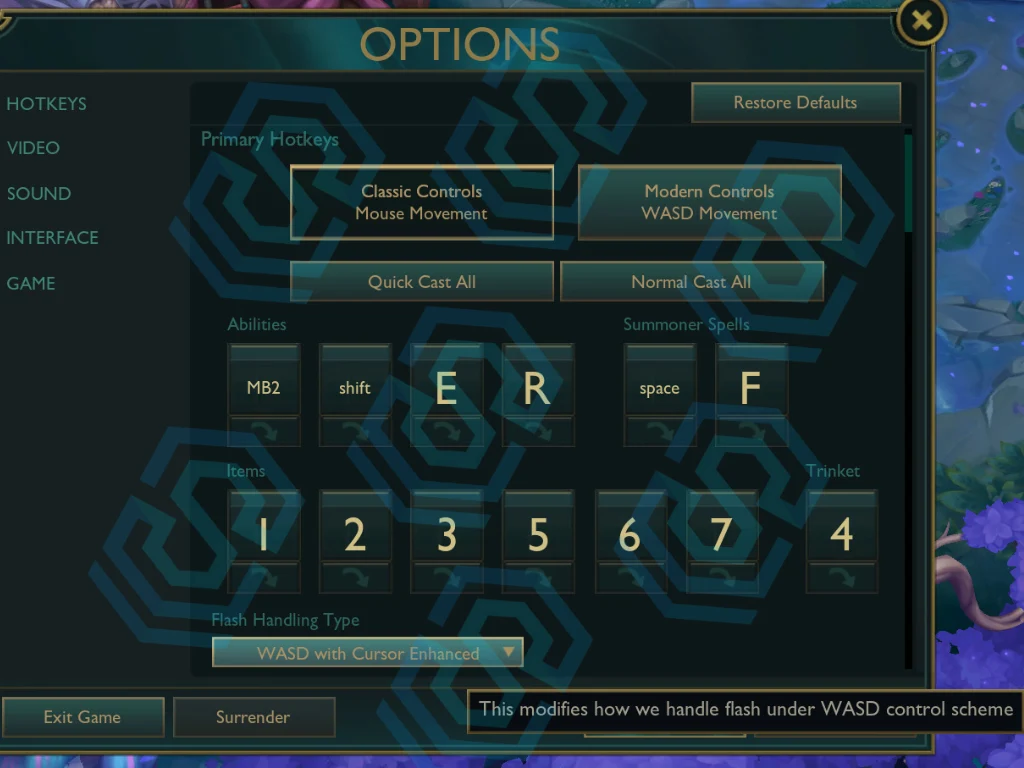
    1. Riot Games is introducing a WASD control scheme for League of Legends, replacing the classic point-and-click method.
    2. The new control option aims to make the game more accessible for new and returning players, creating a more intuitive experience.
    3. The WASD scheme is familiar to many PC gamers, helping to lower the entry barrier for newcomers to the complex MOBA.
    4. An extended public beta for the WASD controls will begin in late August, allowing for thorough playtesting and community feedback.
    5. The WASD controls will initially be available in non-ranked modes, with plans to implement them in ranked and professional play after adjustments are made.


    Riot Games has shared exciting news about its hugely popular MOBA, League of Legends, which first came out on October 27, 2009. After almost 16 years since its launch, the game is set to bring in a WASD control scheme.

    A New Way to Play

    The new WASD option, which replaces the classic point-and-click method, is aimed at making the game more accessible for both new and returning players. With this change, gamers can now move their champions using the W, A, S, and D keys on their keyboards, a feature many have been waiting for.

    In a development update dated August 11, 2025, Riot Games stated, “We believe that offering WASD controls will provide a fresh yet familiar way to play for both new players and veterans of Summoner’s Rift without changing what makes League, League.”

    Familiar Controls for Everyone

    The decision to include the WASD scheme comes from the understanding that it is “the most familiar control scheme for PC games today.” Many players find themselves naturally placing their fingers on the WASD keys when transitioning from other games back to League of Legends. Riot believes this addition will make the game more intuitive for those coming from different gaming backgrounds.

    This modification could help lower the entry barrier into the complex MOBA, which is often daunting for newcomers, despite there being around 13 million active monthly players and over 3.2 million daily users.

    Testing Phase Ahead

    Riot is set to implement the new WASD controls in an extended public beta on the game’s Public Beta Environment, which is expected to kick off in late August and will last across several patches for thorough playtesting and collecting feedback.

    Internal testing has already happened, including player labs and demos during the Mid-Season Invitational 2025. Players provided feedback on aspects needing adjustment, like kiting, moving while attacking, and ensuring fair play while using the WASD setup.

    Following the Public Extended Beta, the WASD scheme will be available for non-ranked modes such as casual Summoner’s Rift and All Random All Mid 5v5 mode. Eventually, it will be introduced into ranked and professional play after community input and necessary adjustments to fix any bugs.

    Riot Games has mentioned that the WASD option is just one of many long-term projects they are working on to help shape the future of League of Legends.

    Source:
    Link


  • Mastercard Faces Backlash Over Steam Games Ban During VCT Livestreams

    Mastercard Faces Backlash Over Steam Games Ban During VCT Livestreams

    Key Takeaways

    1. Mastercard faced criticism for banning comments related to its brand in esports livestreams, following backlash over game censorship on Steam.
    2. Ana Valens resigned from Vice after exposing Mastercard’s communications with Riot Games regarding chat moderation.
    3. During VCT Americas Stage 2, Riot’s Twitch and YouTube channels implemented follower-only modes, leading to bans for users mentioning Mastercard.
    4. Gamers frustrated by Steam’s censorship turned to alternative streams, where they voiced their dissatisfaction with Mastercard’s actions.
    5. Other payment processors are also scrutinized for banning mature content in games, influenced by activist groups like Collective Shout advocating against objectification in media.


    When gamers found out that payment processors were banning games on Steam, Mastercard became a target for criticism. In a bid to manage the fallout, the credit card company released a statement trying to clarify its position on the issue. However, it has now been revealed that Mastercard is also meddling with esports livestreams. A source connected to Riot Games disclosed that the company asked to block any comments that could harm its brand.

    Resignation and Revelations

    Ana Valens recently left her position at Vice after penning an article about game censorship. She took to social media to share communications between Mastercard and Riot Games. The request from Mastercard asked content creators to keep an eye out for negative comments in the chat. Even though channels aren’t forced to follow sponsor directives, it appears that most chose to align with the payment processor’s wishes.

    Moderation Practices In Action

    Esports Illustrated on SI pointed out some of the chat moderation during the VCT Americas Stage 2. On August 8th, gamers observed that the official Riot Twitch and YouTube channels had switched on follower/subscriber-only modes. While this isn’t something new, viewers reported that they had to follow the streams for a full 24 hours to chat. Nevertheless, fans who mentioned Mastercard faced bans or longer timeouts.

    Community Backlash

    Fans already frustrated over the Steam game censorship sought solace in streams that weren’t linked to Riot. In those spaces, Mastercard faced significant backlash from gamers who support legal adult-themed games.

    Broader Implications for Payment Processors

    Other credit cards are also facing scrutiny. After Steam’s actions, Itch.io removed indie games with mature content from its platform. Unlike Valve’s site, Itch.io primarily depends on PayPal and Stripe, with at least one payment processor objecting to certain games available for sale.

    Activist Influence

    Collective Shout seems to be pushing many of the bans. This Australian activist group is against the objectification of women and girls in various media, including games. They recently claimed to have swayed the credit cards and payment processors. These companies often have rules against their services being used for illegal content sales. Critics argue that many of the games in question contain adult themes but do not break any laws.

    Source:
    Link


  • Valorant Mobile Officially Announced with Important Detail

    Valorant Mobile Officially Announced with Important Detail

    Key Takeaways

    1. Valorant Mobile is officially confirmed, but immediate access is not available.
    2. Currently, only players in China can pre-register for Valorant Mobile.
    3. A play test is anticipated soon, but global access is likely months away.
    4. Riot Games is collaborating with Lightspeed Studios to adapt Valorant for mobile.
    5. The game’s release may take time due to the need for optimization across different mobile hardware.


    Murmurs about Valorant’s mobile version have circulated for several years, yet none of the speculation ever came to fruition until now. Finally, the official Valorant account took to X to clarify the situation. Yes, Valorant Mobile is real, but you likely won’t be able to play it right away.

    Pre-Registration Details

    At this moment, only players residing in China can pre-register for Valorant Mobile. A play test is expected soon, but it remains uncertain if players from other regions will have a chance to join in. In any case, it will probably be several months before the game becomes officially available in China, and even longer for worldwide access. It will be intriguing to see what strategies Riot employs to stop players outside China from using Valorant Mobile on their Android phones by sideloading the APK.

    Exciting Developments Ahead

    Still, the anticipation might be worthwhile as Riot has teamed up with Lightspeed Studios, who are known for PUBG Mobile, to adapt Valorant for mobile platforms. While the game wasn’t particularly demanding on PC, fine-tuning it for mobile devices with various hardware configurations will be challenging. Maybe this is the reason Riot is taking its time with the release.

    Source:
    Link

  • Free-to-Play Fighting Game Update Before Alpha 2 Play Test

    Free-to-Play Fighting Game Update Before Alpha 2 Play Test

    Key Takeaways

    1. 2XKO is a new 2v2 fighting game by Riot Games featuring characters from Arcane and League of Legends, with a stylish 2.5D graphic style.
    2. The Alpha Lab 2 play test is scheduled for April 18 to 20, available to players in Brazil, Canada, and the USA on Windows, PlayStation 5, and Xbox Series X|S.
    3. The game will launch with 10 playable champions, with a focus on getting the game into players’ hands sooner rather than delaying for more characters.
    4. Additional champions will be added after the game’s release, as it will be a live service game with ongoing updates and new content.
    5. Seven champions have been showcased so far, but it is unclear if Katarina, who was previously revealed, will return by the official launch.


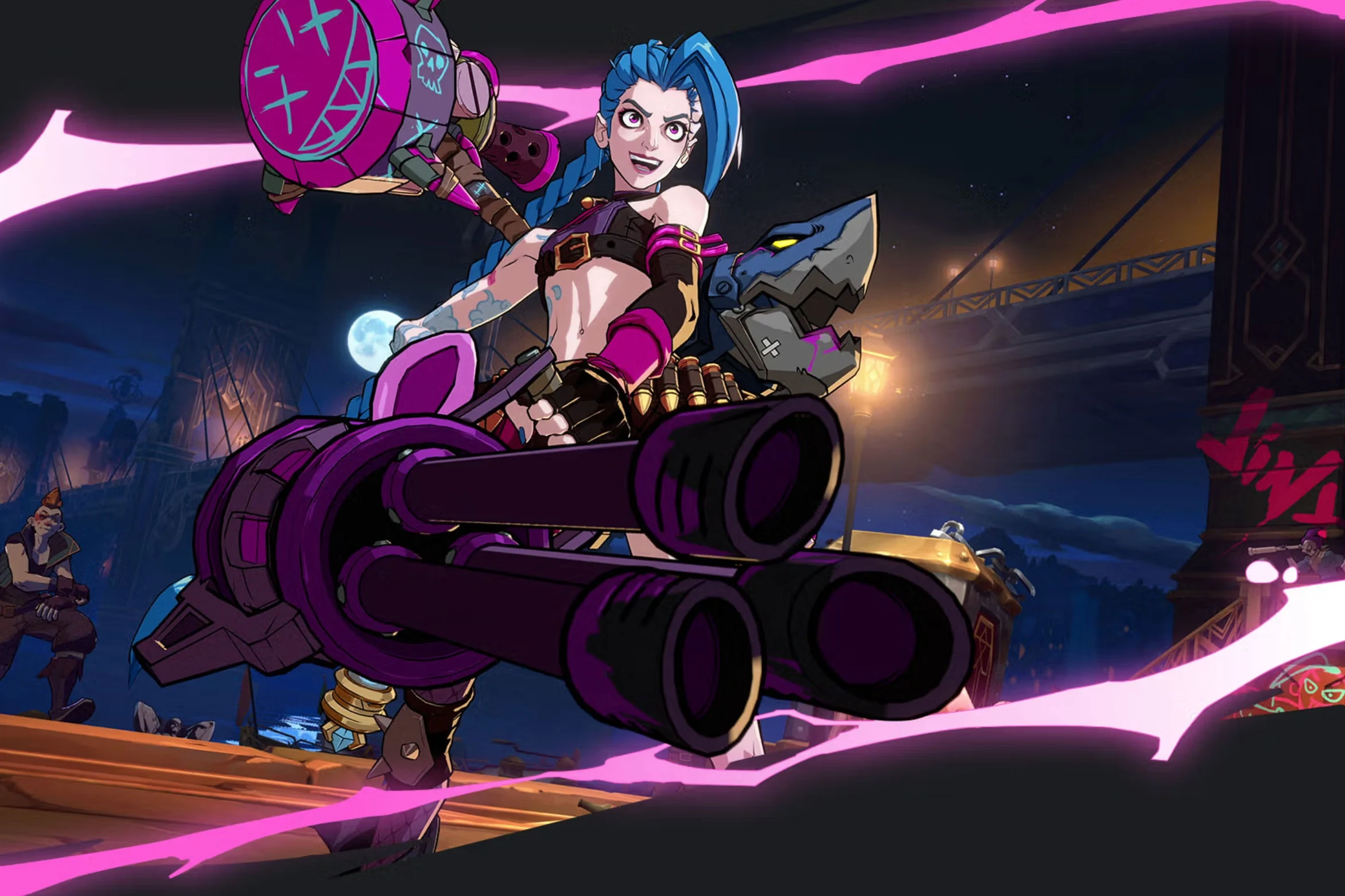
    In case you haven’t heard, 2XKO is a new 2v2 fighting game that Riot Games, the studio behind League of Legends, is currently working on. The game boasts stylish 2.5D graphics, allowing players to engage in 2v2 tag-team battles featuring characters from Arcane and League of Legends. On Friday, Riot Games held a Q&A session on the game’s Discord after providing an update on the development ahead of the Alpha Lab 2 play test, where they shared several details about the gameplay and the anticipated state of the game upon its release in 2025.

    Upcoming Play Test Details

    To start, it was announced that the next play test is set for April 18 to 20, limited to players in Brazil, Canada, and the USA. This Alpha Lab 2 play test will be accessible on Windows, PlayStation 5, and Xbox Series X|S platforms. During the Q&A, the director of the game provided insights into the number of playable characters that will be available at launch.

    “We will have 10 playable champions at launch,” he said. “We know this is less than what many might expect, but we faced a choice between adding more champions and delaying the release or getting it into your hands sooner, and we chose the latter.”

    Future Champion Additions

    The game’s director, Shaun Rivera, continued by mentioning that additional champions will be introduced after the game is released, as it develops over time.

    “We also believe that experiencing these champions through solo or duo play with various combinations offers a lot for players to explore early on. Being a live service game means it will only improve from there with new champion releases and gameplay updates.”

    As of now, Riot Games has showcased gameplay footage for seven champions, but it appears that the other three champions won’t be playable until the official launch later this year. Riot Games has indicated that following the Alpha Lab 2, barring any significant delays, the 2XKO team will shift focus towards the full release instead of preparing for another play test.

    Known Champions List

    One character that Riot Games previously revealed is Katarina, although she has been taken out of the game recently. It’s still uncertain whether she will return by the time the game launches, but it remains a possibility.

    Source:
    Link

  • Riot Games Restructures Workforce, Downsizing by 11% to Navigate Market Challenges

    Riot Games Restructures Workforce, Downsizing by 11% to Navigate Market Challenges

    Riot Games, the popular game developer known for “League of Legends,” recently announced a significant reduction in staff. This decision will impact approximately 11% of its global workforce, which translates to around 530 employees facing an uncertain future. The news of these layoffs has sent shockwaves through the gaming community, shedding light on the challenges that even successful digital game publishers are facing in today’s economic climate.

    The Impact of Layoffs

    With 11% of its workforce being let go, Riot Games is making a significant cut to its staff. This translates to approximately 530 employees who will be affected by this decision. The layoffs are a result of the company’s recognition of the harsh realities of a stagnant market. Factors such as high inflation rates and a trend among players to limit their spending on new titles or stick with their favorite games have taken a toll on the gaming industry as a whole. Riot Games is not alone in this struggle, as other companies like Electronic Arts also had to downsize their workforce in the past year.

    Acknowledging Challenges

    In a letter to employees, CEO Dylan Jadeja openly acknowledged the challenges that Riot Games is facing. He recognized the company’s loss of focus and the unsustainable growth in costs. This level of introspection is rare within a major gaming company and provides a glimpse into the internal workings of the industry. It shows that even companies that are often seen as invincible by their fan base are not immune to the economic pressures and challenges of the market.

    A Shift in Strategy

    The restructuring at Riot Games goes beyond just cutting jobs. The company aims to refocus its efforts on its most successful titles, including “League of Legends,” “Valorant,” “Teamfight Tactics,” and “Wild Rift.” However, this strategic shift also involves the cessation of new game development under the “Riot Forge” label and a scaling back of certain features and staff in “Legends of Runeterra.” These moves highlight the depth of Riot Games’ commitment to streamlining its operations and focusing on its core strengths.

    A Sign of Things to Come

    Riot Games’ pivot comes at a time when its parent company, Tencent Holdings, is making broader moves within the gaming industry. Tencent is also invested in other major U.S. gaming companies like Epic Games. The changes happening at Riot Games could be a sign of things to come for the industry as a whole. As companies strive to adapt to the evolving gaming landscape and economic pressures, we may see more restructurings and strategic shifts among game developers.

    In conclusion, Riot Games’ recent announcement of staff layoffs highlights the challenges that even successful game publishers face in today’s economic climate. The company’s recognition of these challenges and its strategic shift to refocus on its most successful titles demonstrate its commitment to adapt and thrive in the ever-changing gaming industry. As the industry evolves, we may see more companies making similar moves to navigate the economic pressures and changes in the gaming landscape.