
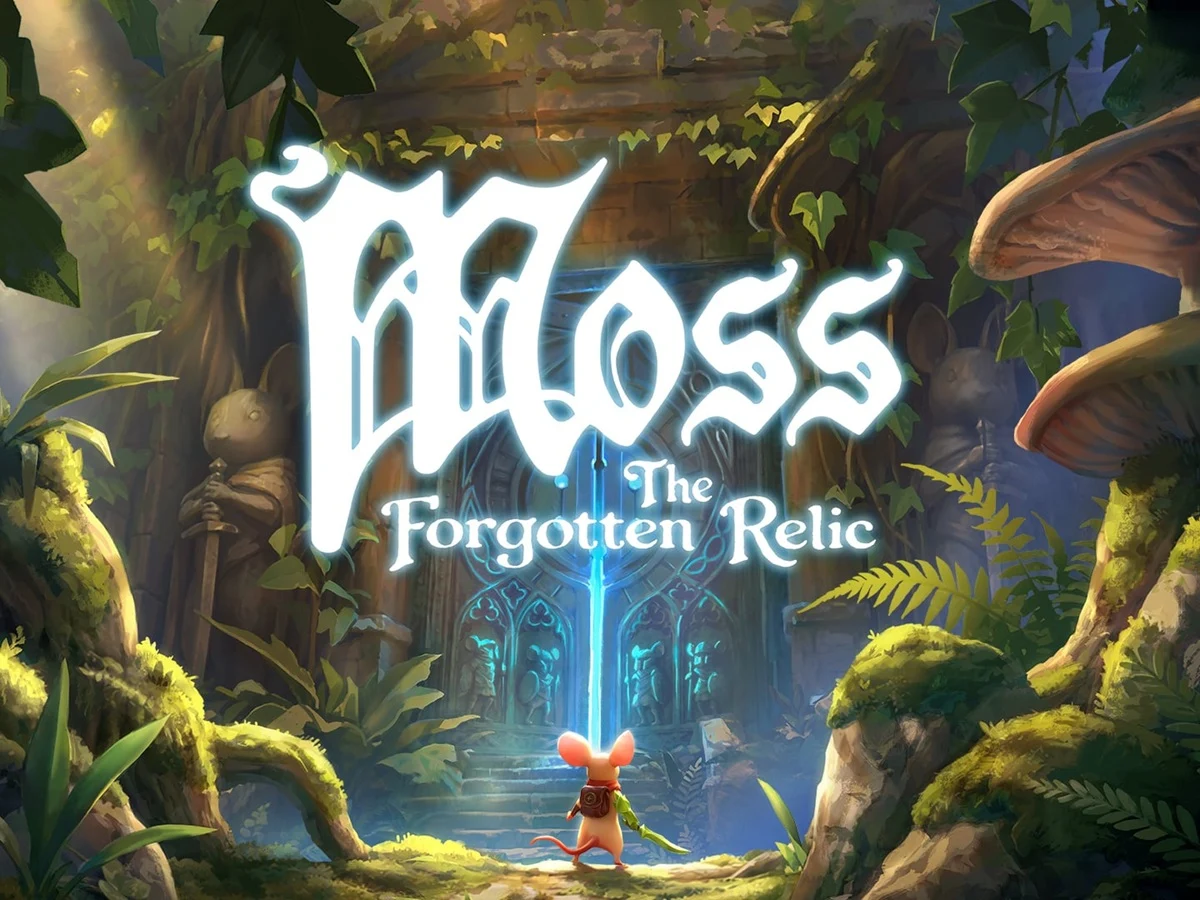
Tag: Moss: The Forgotten Relic

  • Moss: Beautiful VR Storytelling Comes to PC

    Moss: Beautiful VR Storytelling Comes to PC

    Key Takeaway

    – Flat-screen port preserves Moss’s signature scale and immersion, transforming VR’s tangible playground into a stunning diorama-like experience.
    – Visual performance excels on standard hardware (e.g., RTX 4050), with crisp details and locked frame rates thanks to reduced rendering demands.
    – Dual-control dynamic (Quill’s movement + the Reader’s orb) feels natural on mouse/keyboard or controller, maintaining the series’ unique split-focus gameplay.
    – Emotional connection with Quill translates effectively to a monitor, including fourth-wall-breaking high-fives and partner acknowledgments.
    – Removing VR requirements broadens accessibility without sacrificing mechanical or narrative depth, proving the core design stands alone.


    Shifting a VR Masterpiece to a Flat Screen

    Moving an experience designed entirely around virtual-reality immersion to a traditional flat panel is a massive gamble. For years, Polyarc’s Moss series stood as a shining example of what spatial design could achieve, letting players physically lean into a world to connect with its tiny mouse protagonist, Quill. With the release of Moss: The Forgotten Relic, the studio is removing the headset requirement entirely, bundling Moss, Moss: Book II, and the Twilight Garden DLC into a cohesive flat-screen experience.

    Performance on a Mid-Range Laptop

    Testing the Steam demo on a Lenovo LOQ equipped with an Intel Core i7-13620H and an Nvidia GeForce RTX 4050 reveals that this mechanical leap is not just functional; it is incredibly compelling. The immediate worry about a flat-screen port is that the environment will lose its sense of scale. In VR, the world feels like a massive, tangible playground surrounding you. On a standard monitor, that presence shifts into something reminiscent of an incredibly detailed, high-fidelity miniature diorama.

    Visual Fidelity and Rendering Efficiency

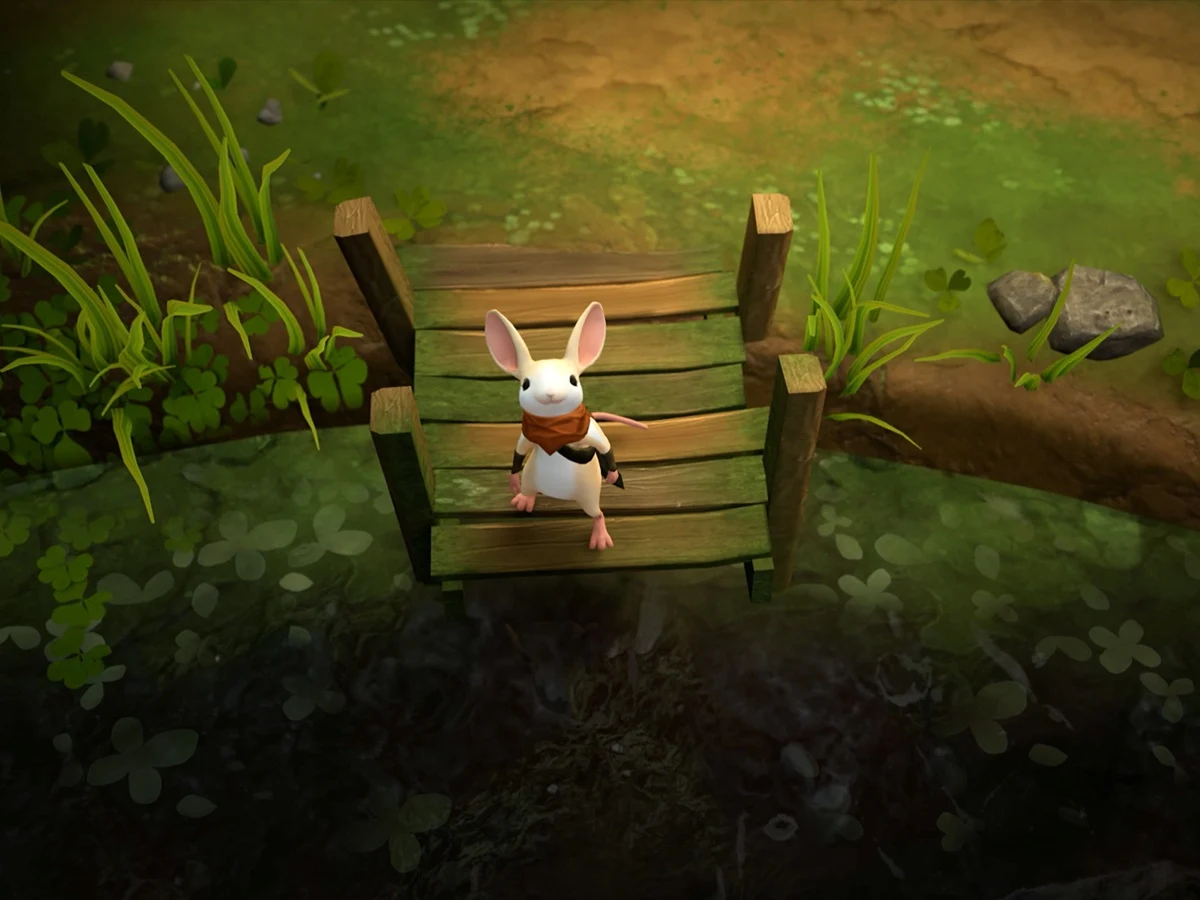
    The visual presentation remains stunning. The fixed-camera angles feel intentional, framing each area like a living painting. Tiny details, like the way light filters through the forest canopy, the scale of ancient stone ruins compared to Quill’s microscopic size, and the fluid water physics, pop with crisp clarity on a standard display. Because the hardware no longer needs to push dual high-refresh headset displays, the rendering overhead drops significantly. The RTX 4050 easily drives the game at its highest settings, maintaining a locked, butter-smooth frame rate that lets the vibrant art style shine without a hint of performance stutter.

    Dual Control Dynamics Preserved

    Where The Forgotten Relic truly succeeds is in preserving its unique approach to player interaction. You aren’t just controlling Quill; you are playing as “The Reader,” a massive mythic presence existing alongside her. On a mouse-and-keyboard or standard controller layout, this creates a fascinating dual-control dynamic that requires you to split your focus seamlessly. Your left hand or thumbstick manages Quill’s direct movement, letting her dodge, swing her sword, and leap across platforms. Meanwhile, your right hand or mouse cursor controls a glowing orb representing the Reader, allowing you to reach directly into the environment to slide massive blocks, freeze enemy combatants, or heal Quill mid-fight.

    Emotional Connection Through the Screen

    This mechanical separation feeds directly into the game’s signature fourth-wall-breaking moments. In VR, looking down at Quill meant seeing her stare back up at you, gesturing with sign language or offering a high-five. Remarkably, that emotional connection translates beautifully to a standard monitor. When you solve a difficult environmental puzzle or scrape through a tight combat encounter, Quill will still run to the front of the screen, look directly through the glass at you, and raise her paw for a high-five.

    A Touch That Breaks the Barrier

    Reaching out with your cursor to tap her hand creates a surprisingly intimate bond. She doesn’t just treat the player as an unseen pilot; she acknowledges you as her partner, making the monitor feel like a literal window into her world rather than just a flat screen displaying a game. By dropping the VR requirement, Polyarc is finally making a great series accessible to a much larger audience. Moss: The Forgotten Relic proves that Quill’s journey doesn’t actually need a headset to land its emotional and mechanical beats. The transition to a monitor is clean, the controls feel natural, and the puzzles remain just as clever. It is a successful port that shows the game’s core design can easily stand on its own.
    Sources
  • Moss: The Forgotten Relic Arrives on Console and PC This Summer

    Moss: The Forgotten Relic Arrives on Console and PC This Summer

    Key Takeaway

    – Moss: The Forgotten Relic brings the VR franchise to flat-screen PC and consoles (PS5, Xbox Series X|S, Xbox One, Nintendo Switch) with enhanced visuals, new cutscenes, redesigned camera, and a full reimagining rather than a direct port.
    – Includes Moss and Moss: Book II plus Twilight Garden DLC at no extra cost; adds an optional skip-combat accessibility feature for puzzle/exploration play.
    – Features the core “Twofold” mechanic across both Quill (direct interaction) and the Reader (external puzzle-solving), redesigned for non-VR play.
    – Wide cross-gen rollout brings the series to Xbox and Nintendo players for the first time, expanding reach beyond VR-focused roots.


    Moss: The Forgotten Relic is coming to flat-screen PCs and consoles

    Polyarc has officially announced Moss: The Forgotten Relic, bringing the critically acclaimed VR franchise to flat-screen PC and consoles for the first time this summer. The game launches on PC via Steam, PlayStation 5, Xbox Series X|S, Xbox One, and Nintendo Switch 1 and 2, with no exact release date or pricing confirmed yet.

    A reimagined collection with added content

    Moss: The Forgotten Relic combines the original Moss, Moss: Book II, and the Twilight Garden DLC into a single definitive adventure. Both previous entries required a VR headset to play. Xbox and Nintendo players are getting their first chance at Quill’s story, while PC players who skipped the SteamVR versions can now experience it on a flat screen for the first time. Polyarc describes the release as a full reimagining rather than a straight port, with enhanced visuals and performance, new handcrafted cutscenes, and a redesigned smart follow camera built for flat screens.

    Twilight Garden bonus and accessibility options

    The Twilight Garden DLC is included at no additional cost. An optional skip-combat accessibility feature is also new to this version, letting players who prefer puzzles and exploration bypass combat encounters entirely. Jason Graves, who composed the orchestral soundtracks for both original games, returns for the score.

    Twofold gameplay and camera redesign

    The core mechanic Polyarc calls “Twofold” puts players in two roles simultaneously. They control Quill directly through a fallen kingdom being reclaimed by nature, solving diorama-style environmental puzzles and fighting enemies, while also interacting with the world as the Reader, Quill’s unseen guardian who can move objects and clear paths from outside the storybook frame. The VR originals built that second layer of presence through the headset itself. Polyarc has redesigned the camera and interaction systems to make it work without one.

    Cross-gen release broadens audience

    The cross-gen Nintendo release means the game reaches both Switch and Switch 2 owners in the same window, broadening the audience considerably beyond what a Switch 2 exclusive would reach. For a series that earned its reputation almost entirely within the VR space, landing on Xbox and both Nintendo platforms simultaneously is a notable expansion.


    Sources
  • Moss: The Forgotten Relic – Coming to Consoles and PC This Summer

    Moss: The Forgotten Relic – Coming to Consoles and PC This Summer

    Key Takeaway

    – Moss: The Forgotten Relic brings the Moss series to flat-screen PC and all major consoles, including Switch, PS5, Xbox, and Steam for the first time, with a reimagined, non-VR experience.
    – The game includes the full Moss: Book II, Twilight Garden DLC, and enhanced visuals, new cutscenes, a redesigned camera, and an optional skip-combat accessibility feature.
    – It introduces a two-layer gameplay core called “Twofold,” allowing players to control Quill directly and interact with the world as the Reader from outside the storybook, with VR-era mechanics adapted for flat screens.


    Announcement and Platforms

    Polyarc has officially announced Moss: The Forgotten Relic, bringing the critically acclaimed VR franchise to flat-screen PC and consoles for the first time this summer. The game launches on PC via Steam, PlayStation 5, Xbox Series X|S, Xbox One, and Nintendo Switch 1 and 2, with no exact release date or pricing confirmed yet.

    Definitive Collection and Reimagining

    Moss: The Forgotten Relic combines the original Moss, Moss: Book II, and the Twilight Garden DLC into a single definitive adventure. Both previous entries required a VR headset to play. Xbox and Nintendo players are getting their first chance at Quill’s story, while PC players who skipped the SteamVR versions can now experience it on a flat screen for the first time. Polyarc describes the release as a full reimagining rather than a straight port, with enhanced visuals and performance, new handcrafted cutscenes, and a redesigned smart follow camera built for flat screens.

    Accessibility and Music

    The Twilight Garden DLC is included at no additional cost. An optional skip-combat accessibility feature is also new to this version, letting players who prefer puzzles and exploration bypass combat encounters entirely. Jason Graves, who composed the orchestral soundtracks for both original games, returns for the score.

    Twofold Gameplay and Camera Rethink

    The core mechanic Polyarc calls “Twofold” puts players in two roles simultaneously. They control Quill directly through a fallen kingdom being reclaimed by nature, solving diorama-style environmental puzzles and fighting enemies, while also interacting with the world as the Reader, Quill’s unseen guardian who can move objects and clear paths from outside the storybook frame. The VR originals built that second layer of presence through the headset itself. Polyarc has redesigned the camera and interaction systems to make it work without one.

    Cross-Gen Reach and Audience Growth

    The cross-gen Nintendo release means the game reaches both Switch and Switch 2 owners in the same window, broadening the audience considerably beyond what a Switch 2 exclusive would reach. For a series that earned its reputation almost entirely within the VR space, landing on Xbox and both Nintendo platforms simultaneously is a notable expansion.


    Sources