Category: EV vehicles

  • Tesla Robotaxi Can Be Controlled Manually with Gamepad Like PlayStation

    Tesla Robotaxi Can Be Controlled Manually with Gamepad Like PlayStation

    Dubbed the PlayStation car, the Afeela EV from the partnership between Sony and Honda isn’t the only vehicle that can be driven using something similar to a DualSense or Xbox controller, as seen with the “driverless” Tesla Cybercab.

    Afeela’s Debut at CES

    Earlier this year at the CES expo, the CEO of the Afeela project, which merges Honda’s automotive skills with Sony’s entertainment and software expertise, showcased their first electric vehicle using a PlayStation 5 controller on stage. It was a striking moment that highlighted the innovative blend of gaming and driving.

    Tesla’s Robotaxi Features

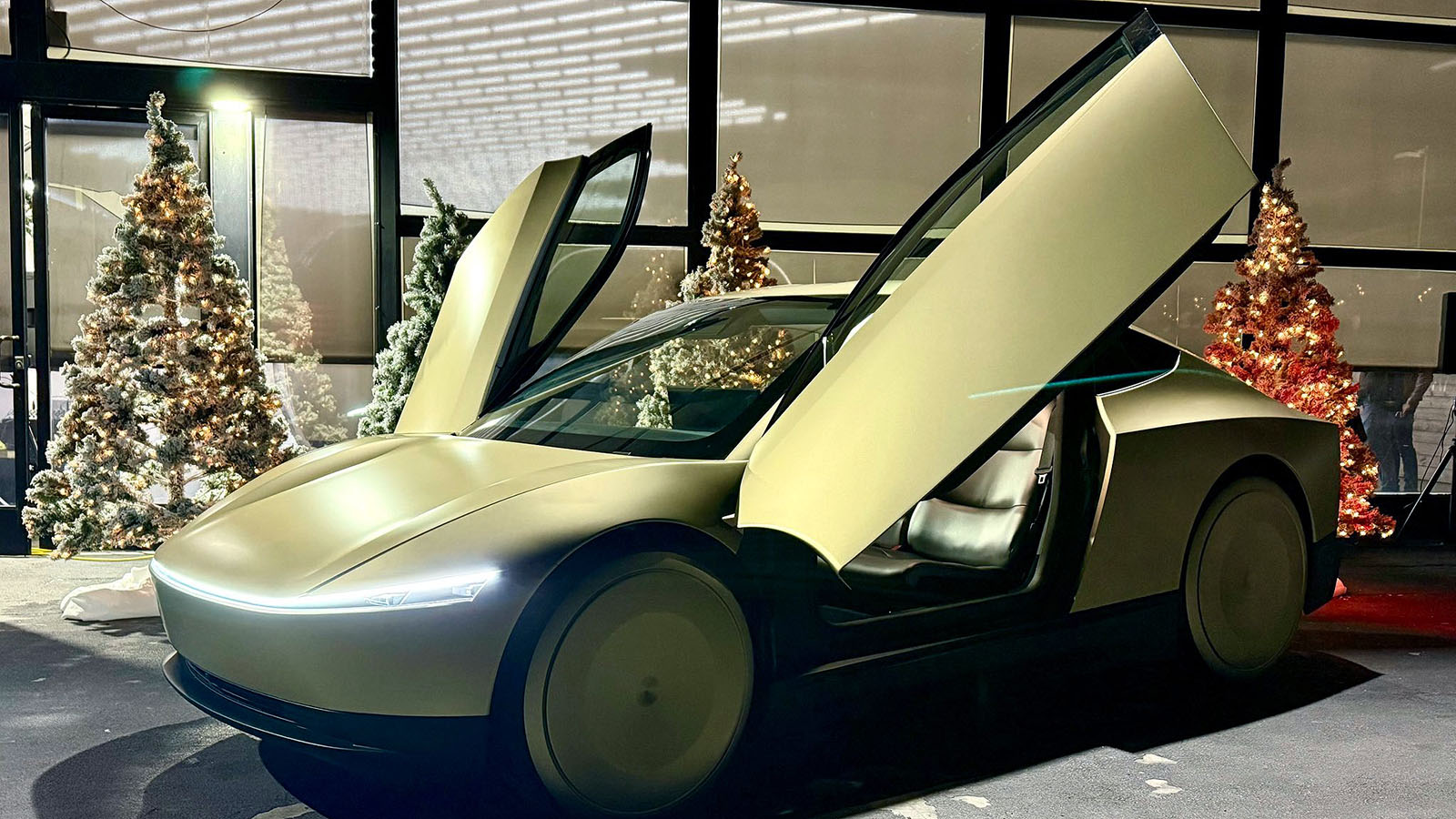
    Meanwhile, while presenting the Cybercab at the Petersen Automotive Museum, the Tesla team also employed a controller to navigate the Robotaxi, which Tesla promotes as the future of driverless transport. The Cybercab, designed for two passengers, is unique as it lacks both a steering wheel and pedals. However, its FSD 13 autonomous driving software struggles with small maneuvers, such as driving up a ramp or weaving around Christmas trees in the museum’s Vault exhibit to reach its intended location.

    The Manual Driving Capability

    This is why the individual operating the Robotaxi during its transport, maneuvering it off its trailer, up the ramp, and around the venue, seemed to be using what onlookers described as an Xbox controller linked to the vehicle’s computer. Although the connection was wired, sources indicated that the Cybercab’s controller can also connect wirelessly, allowing someone to operate it from a distance.

    This opens up a variety of options, especially for the Cybercab’s ride-share service and support teams, or for first responders Tesla is currently training to handle scenarios involving the Robotaxi on public streets. Overall, the idea that the first Tesla vehicle without a steering wheel or pedals is fully autonomous might be a bit of an overstatement, as there is a means to manually drive it in case it gets stuck for any reason.

    Source: Link

  • Manual Control of Tesla Robotaxi with Gamepad Like PlayStation

    Manual Control of Tesla Robotaxi with Gamepad Like PlayStation

    Dubbed the PlayStation car, the Afeela EV, created by the Sony-Honda partnership, isn’t the only vehicle that can be controlled using a device similar to a DualSense or Xbox controller, as shown by the “driverless” Tesla Cybercab.

    Afeela’s Introduction

    At the CES expo earlier this year, the CEO of the Afeela project, which merges Honda’s car-making skills with Sony’s software and entertainment expertise, showcased their first electric vehicle using a PlayStation 5 controller. This event highlighted how technology and driving could intersect in new ways.

    Tesla’s Innovative Approach

    While the Tesla team was setting up the Cybercab at the Petersen Automotive Museum, they also utilized a controller for positioning the Robotaxi, which Tesla promotes as the future of driverless transport. The Cybercab is a two-seater that lacks both a steering wheel and pedals, yet its FSD 13 self-driving software struggles with small movements like going up ramps or steering around Christmas trees in the museum’s Vault area to reach its display location.

    The individual “driving” the Robotaxi from its trailer, up the incline, and through the museum used what onlookers described as an Xbox controller connected to the car’s computer. Despite the cable connection, sources indicated that the Cybercab’s controller could also connect wirelessly, allowing operation from outside the vehicle, enabling remote driving capabilities.

    Expanding Possibilities

    This development presents numerous opportunities, particularly for the ride-share service and support teams of the Cybercab, as well as for first responders whom Tesla is training to handle scenarios when the Robotaxi is on public roads. Nevertheless, the claim that the first Tesla without a steering wheel or pedals is entirely driverless and autonomous appears to be somewhat overstated; there is indeed a manual driving option if the vehicle encounters difficulties.

    Source: Link

  • Tesla Superchargers Boost Cold Charging Speed for Model Y LFP Batteries

    Tesla Superchargers Boost Cold Charging Speed for Model Y LFP Batteries

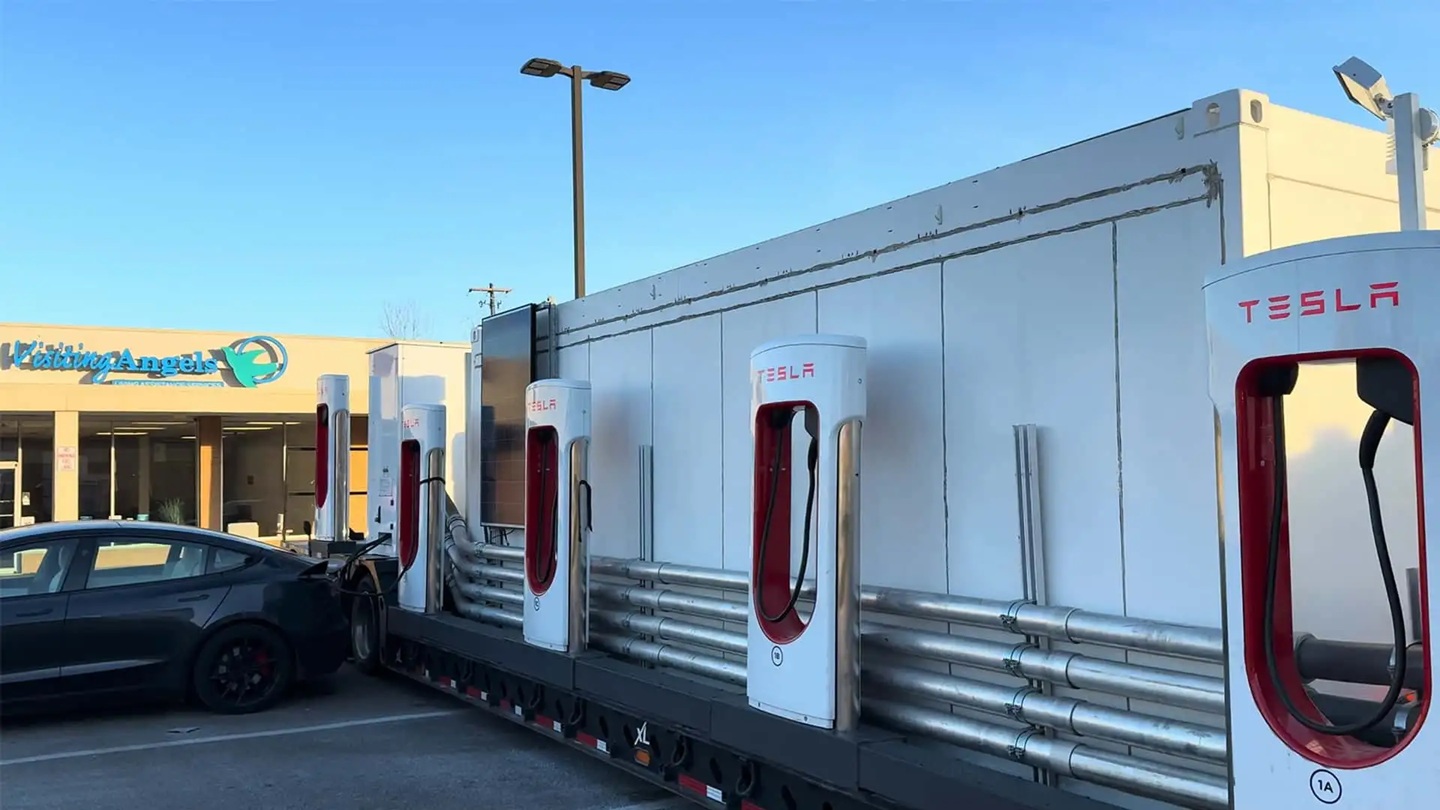
    Tesla is set to launch a battery heating feature at its V3 and V4 Supercharger stations. This enhancement will enable standard range Model 3 and Model Y RWD versions equipped with LFP batteries to charge up to four times quicker during winter months.

    Performance in Cold Weather

    Typically, LFP cells, like those found in portable power stations, do not perform as well in low temperatures. This might be a reason why Tesla has prioritized the Supercharger battery heating option specifically for the standard range Model Y and Model 3.

    Innovative Heating Method

    The new heating service differs from the usual preconditioning process that Tesla vehicles undergo when heading to a Supercharger. Instead of slowly warming up the battery pack, the Supercharger transmits ripple AC current straight through the individual LFP battery cells, effectively heating them during cold weather conditions.

    “This is made possible by Tesla’s vertical integration and some of our brilliant engineers,” says Max de Zegher from Tesla. He notes that this new feature might remain exclusive to vehicles that utilize CATL LFP batteries.

    Speeding Up Charging Times

    The Supercharger battery heating option can allow a standard range Model Y to get back on the road up to four times faster than previously, addressing the main issue faced by LFP batteries. Elon Musk has previously discussed the slower charging speeds of Teslas with LFP batteries in extreme conditions:

    In cold weather, LFP batteries charge at a slower rate compared to NCA batteries, and their range diminishes more than that of NCA batteries as well. It’s important to remember that both types of batteries perform poorly in cold weather, but LFP batteries are more affected. While on a road trip to a Supercharger, the vehicle will prewarm its batteries, which can help alleviate some of the slower charging issues. However, this means you may spend an additional six or seven minutes at the Supercharger during winter with LFP batteries. This could be a concern if you intend to rely on your vehicle for frequent cold weather supercharging, though it won’t affect you if you charge your car at home overnight.

    Tesla’s LFP battery supplier, CATL, now has new LFP cells that do not experience slow charging in cold conditions. However, these specific cells are not used in the standard range Model 3 or Model Y. In the US, Tesla is primarily selling only long-range options, as its vehicles with Chinese LFP cells do not qualify for federal tax incentives.

    Source: Link

  • Hyundai Gives Free Tesla Supercharger Adapters to All EV Owners

    Hyundai Gives Free Tesla Supercharger Adapters to All EV Owners

    While the 2025 Ioniq 5 has become the first electric vehicle that isn’t made by Tesla to come with a built-in NACS port, allowing it to connect directly to Superchargers, Hyundai is also sharing some exciting news for the owners of its other electric models.

    Free Tesla Adapter for Hyundai EV Owners

    Hyundai has just revealed that all current owners of its electric vehicles will get a complimentary Tesla adapter. This will let them use the over 20,000 Supercharger stations across the US. These adapters are similar to the Lectron Tesla Supercharger NACS to CCS adapter available on Amazon, meaning Hyundai is effectively saving its EV owners $160 that they would have needed to spend to benefit from Tesla’s opening of its Supercharger network to Hyundai and Kia electric cars.

    Expanding Options for Kia EVs

    Interestingly, it was a Kia EV6 and a Hyundai Ioniq 5 that were the first non-Tesla cars seen using Superchargers with the native NACS ports. Therefore, it’s likely that these adapters will also work for Kia EVs, or there might be an announcement soon about a similar free NACS adapter for Kia vehicles.

    Hyundai’s Growth in the EV Market

    The South Korean company has been rapidly increasing its EV sales in the US, now ranking as the second-largest electric vehicle producer after Tesla. This growth is fueled by their advanced 800V powertrain, offering fast charging, efficient long-range drivetrains, and competitive pricing.

    The free Tesla NACS adapters are set to begin shipping to Hyundai and Genesis electric vehicle owners in the US in early 2025. The Senior Vice President of Product Planning and Mobility Strategy at Hyundai North America emphasized that more electric vehicles with native NACS ports are coming soon:

    “To speed up EV adoption, we have started by hearing feedback from our current customers. These adapters will make DC fast-charging easier for our existing owners. Also, the NACS port on new models like the upcoming Ioniq 9, along with upgrades to our digital charging system, will improve the experience for future EV users. Our aim is to make the switch to electric as smooth as possible.”

    Source: Link

  • Honda and Nissan Plan Merger: What You Need to Know

    Honda and Nissan Plan Merger: What You Need to Know

    Honda and Nissan have recently revealed that they, along with Mitsubishi Motors, have signed a memorandum of understanding showing their interest in merging the three companies. This collaboration will be overseen by a joint holding company. By merging, these automakers aim to combine their resources and share technologies and manufacturing capabilities, positioning themselves better against their rivals.

    Industry Changes

    According to the official press release, these discussions come amid significant transformations in the automotive sector. The companies mentioned the shift towards electric vehicles and the increasing trend of direct sales rather than going through independent dealers. Mitsubishi plans to make a decision by the end of January 2025 about its involvement in the talks. Meanwhile, Honda and Nissan are optimistic about the potential synergies that could arise from their merger, believing it would help them reach a wider audience.

    Future Plans

    The goal is to complete the merger agreement by June 2025 and finalize the contract by August 2026. Initially, Honda will take the lead in managing the joint venture, which isn’t surprising as Honda’s market capitalization is more than four times that of Nissan. The joint venture is projected to have a market value exceeding $52 billion, positioning it just behind Toyota and VW in global sales. However, Carlos Ghosn, the former CEO of Nissan, has expressed skepticism about the merger, telling Bloomberg that it appears to be an “act of desperation” for Nissan, as finding synergies between Honda and Nissan could be quite challenging. Currently, Nissan is facing significant declines in profits, leading to numerous layoffs.

    Source: Link

  • Tesla Model Y Juniper Facelift Revealed with New Features

    Tesla Model Y Juniper Facelift Revealed with New Features

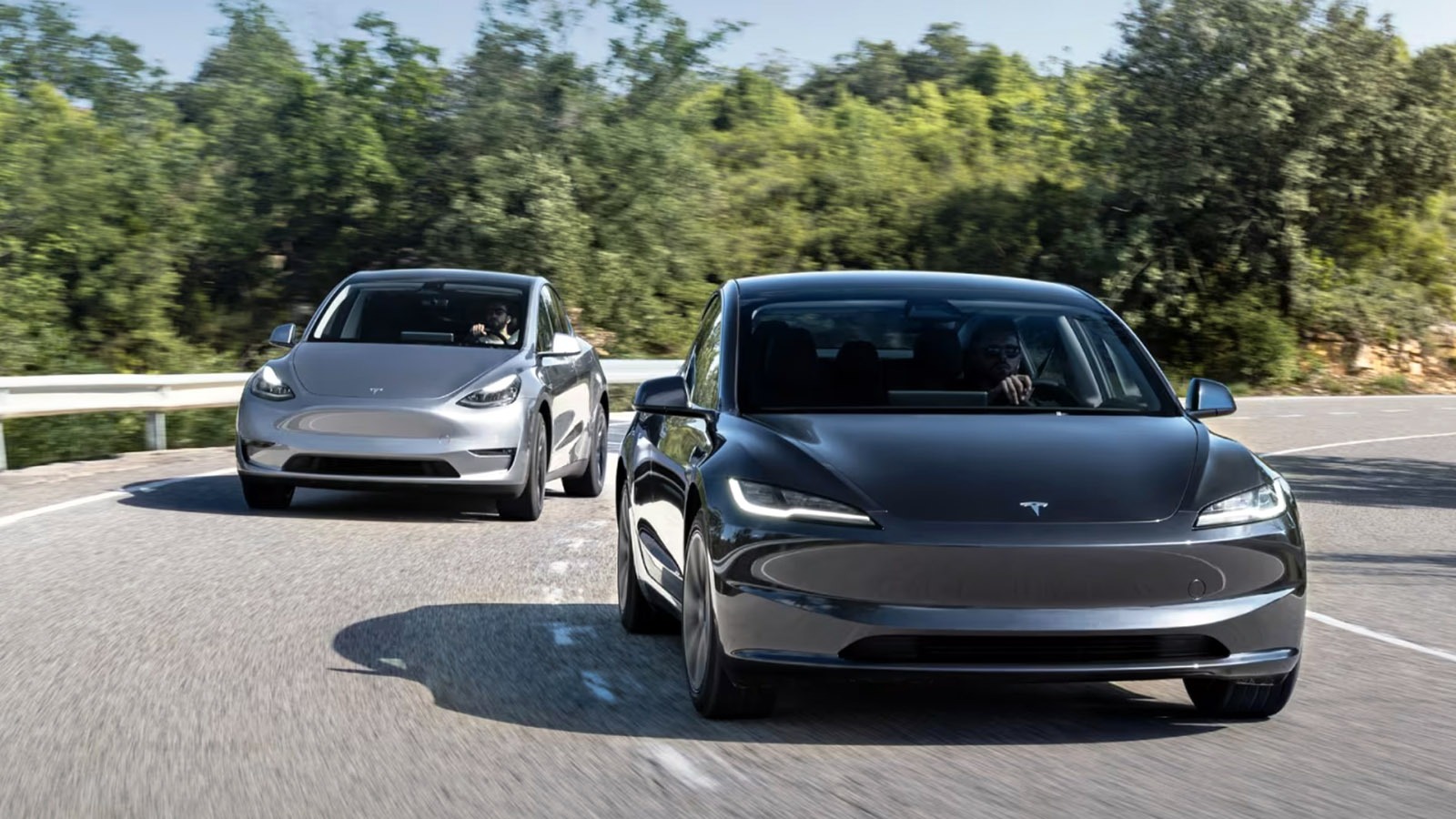
    The Tesla Model Y Juniper refresh is on the horizon, and it’s likely to launch in January as the updated Model Y begins mass production at Giga Shanghai.

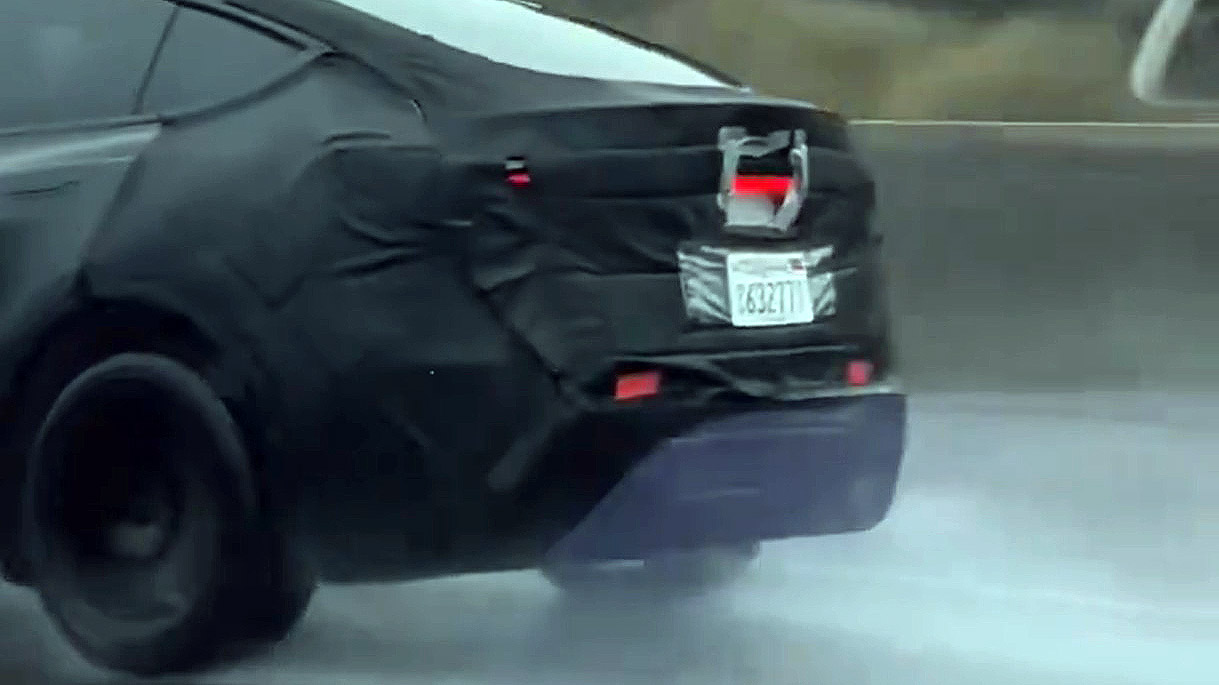
    Recently, there have been many sightings of the Juniper refresh in various locations, including China, Europe, and the United States. The latest sighting took place in California, where a Model Y Juniper test vehicle was seen on the highway. A third red light was visible through the camouflage at the back, suggesting that a rear light bar is part of the new design.

    New Design Features

    Insiders from Tesla’s Gigafactory in Shanghai have shared that the 2025 Model Y Juniper facelift will introduce several design updates, including the rear light bar. There are plans for a similar feature at the front, featuring “penetrating LED daytime running lights” positioned above a front end that eliminates the traditional grille, moving away from the usual SUV design.

    Additionally, the interior will take on a more minimalist approach, inspired by the Model 3 Highland’s updates, complete with ambient lighting. The central console will now have a screen that pivots left and right, similar to what is found in the Model X and Model S.

    Display and Performance Upgrades

    The Model Y Juniper will keep the 15.4-inch diagonal display but will upgrade to a higher 2.5K resolution, aligning with the 2650x1440p panel seen in the Cybertruck. This could result in a pixel density of 195 pixels per inch, making it the highest among production Teslas.

    Moreover, sources indicate that Tesla plans to enhance the Model Y Juniper’s battery capacity to 95 kWh, utilizing the upcoming 4th-generation electric motors. These new motors are expected to be more compact and efficient, promising an extended range compared to the current model.

    Market Concerns

    While the rear light bar has been anticipated for some time, the additions of the front light bar and the tilting central display are fresh insights into the refresh. However, Tesla must ensure that the production costs for the Model Y Juniper are lower than those of the current generation. This is crucial, as the company may lose the federal tax credit that significantly reduced the vehicle’s price in the U.S.

    To avoid a dip in demand for their top-selling vehicle, Tesla might need to either lower manufacturing costs or raise the price of the Model Y Juniper. Both options carry risks that could affect the vehicle’s market performance.

    Source: Link


    Image 1
    Image 1
  • NIO Launches Premium Electric Sedan with Advanced Self-Driving Tech

    NIO Launches Premium Electric Sedan with Advanced Self-Driving Tech

    One of the leading electric vehicle manufacturers has recently unveiled its latest model, the NIO ET9 sedan. This vehicle’s specifications position it prominently in the high-end electric car market, accompanied by a price tag that reflects its premium status.

    Price and Powertrain Details

    Starting at over $100,000, the ET9 is equipped with a groundbreaking 925V drivetrain and NIO’s SkyRide intelligent chassis. This advanced setup includes innovative features like Steer-by-Wire, Rear-Wheel Steering, and Full Active Suspension systems, all combined into one impressive package.

    The Full-Link Ultra-Low Latency communication protocol is a game-changer, enabling the suspension to respond in less than 0.3 seconds. This means the ET9 remains stable even if a tire blows out while traveling at speeds of 100 mph, as demonstrated in the test footage below.

    Design and Interior Space

    The ET9 sedan is a spacious and luxurious four-seater, offering ample legroom and headroom. It measures 5,325 mm in length, 1,621 mm in height, and has a wheelbase of 3,250 mm, providing comfort for all passengers.

    What stands out most about the ET9 is its powertrain configuration and processing capabilities. NIO has successfully developed its own Shenji NX9031 self-driving chip, utilizing a cutting-edge 5nm production process. In addition to a wide array of cameras and sensors, the vehicle’s self-driving system features not only a LiDAR on top but also two side LiDARs. This is a significant difference from Tesla’s Full Self-Driving setup, which primarily depends on camera inputs.

    Advanced Technology Features

    The NIO ET9 marks a milestone as China’s first mass-produced vehicle to incorporate steer-by-wire technology. It also boasts rear-wheel steering with a sharper turning angle of 8.3 degrees, surpassing the capabilities of Tesla’s Cybertruck. This allows the ET9 to achieve a turning diameter of just 10.9 meters, making it easier to perform tight U-turns and park in confined spaces.

    Equipped with a 100 kWh battery, the ET9 can travel 650 kilometers, or over 400 miles, according to the local CLTC test standard, which tends to be more lenient than the EPA assessments used in the US.

    NIO has opened preorders for the 700HP ET9, offering an initial batch of 999 limited edition units starting at $94,500. This includes NIO’s innovative BaaS (battery-as-a-service) option, which allows users to swap their battery for a fully charged one in just three minutes at any of the many swap stations. The monthly rental for the battery pack is $150. Regular deliveries of the new NIO ET9 electric sedan are expected to commence in March 2025.

    Source: Link


    Image 1
    Image 1
    Image 1
    Image 1
  • Tesla Trains First Responders for Cybercab Challenges on Roads

    Tesla Trains First Responders for Cybercab Challenges on Roads

    Tesla is currently evaluating how to introduce its autonomous Robotaxi in certain cities after reviewing its training sessions with local emergency response teams.

    Engagement with Local Authorities

    Tesla has reached out to city officials in Austin since May, expressing its interest in joining the local autonomous driving regulation task force. This information comes from an official email from the company. Unlike California, Texas lacks a statewide regulatory structure for self-driving cars. Instead, it treats autonomous vehicles like standard cars that must follow general traffic laws, leaving specific regulations up to individual cities.

    Strategic Launch Plans

    Elon Musk has indicated that Tesla is looking to roll out its unsupervised Full Self-Driving (FSD) in Texas and California first. Texas is appealing because it has no regulations, while California already has rules governing autonomous vehicles. This unsupervised FSD would enable current Tesla models to participate in the Cybercab ride-sharing service, setting the stage for the eventual launch of Robotaxis on public roads.

    Safety Training Initiatives

    Austin has become a key location for testing autonomous vehicles, with companies like Waymo, Zoox, and VW operating there. To enhance safety, the city has formed a task force focused on developing safety guidelines and training for first responders dealing with self-driving cars. Tesla is eager to be involved in these efforts and conducted its initial training session with Austin’s first responders on December 5. The objective of this training is to gather feedback, collect incident data, and create safety protocols for situations involving Tesla’s Robotaxi, which do not have a steering wheel, or a Model Y in unsupervised FSD mode used for Cybercab services.

    Based on the outcomes of the training and feedback from the task force, Tesla will make decisions on how and where to launch its initial fleet of unsupervised FSD vehicles. Initially, Tesla will manage these cars before introducing the Cybercab platform to Tesla owners, allowing them to generate income from their vehicles when they’re not in use, something Musk has been hinting at for some time now.

    Source: Link

  • Honda Prelude Returns to the US as Hybrid-Electric in 2025

    Honda Prelude Returns to the US as Hybrid-Electric in 2025

    After more than two decades, Honda is set to revive one of its iconic models. The well-known Japanese automobile manufacturer has declared that the Honda Prelude will hit the market next year as a hybrid-electric vehicle. The Prelude, along with the Civic and Accord, formed the core of Honda’s offerings during the 1970s.

    New Features for the Prelude

    When the Honda Prelude makes its way to the US in late 2025, it will introduce a fresh driving mode named Honda S+ Shift. Honda claims that this feature enhances Linear Shift Control, aiming for optimal driver interaction. This upcoming Prelude will be the sixth generation, arriving 24 years after the fifth generation, which was available from 1997 to 2001.

    Hybrid Focus

    It’s not really surprising that this favored sports coupe is making a comeback as a hybrid-electric, especially given Honda’s recent emphasis on hybrid-electric models. As stated in the press release, more than 50% of Accord and CR-V sales come from their hybrid-electric trims. Additionally, the new Civic hybrid is expected to account for over 40% of total Civic sales.

    Powertrain Details

    The Honda Prelude will feature a hybrid powertrain that includes two motors—one for propulsion and the other as a generator. This setup is already used in Honda’s other hybrid-electric models. The two-motor system can function in either series or parallel configurations. In the series hybrid mode, which is typically how it operates, the electric propulsion motor powers the wheels, while the gasoline engine, linked to the electric generator or starter motor, provides energy to the hybrid battery and propulsion motor.

    On the highway, the system transitions to a parallel hybrid setup. In this state, the gasoline engine connects to the front axle via a clutch, with the vehicle’s speed directly linked to the engine’s speed. During braking or coasting, the propulsion motor converts the vehicle’s kinetic energy into electrical energy to recharge the battery.

    Future Plans for Honda

    Honda also shared in the press release that a production version of the Honda 0 Series Saloon concept, which was revealed at CES 2024, is anticipated to launch in 2026 and will be produced at its Honda EV Hub located in Ohio. The company has plans to introduce seven Honda 0 Series models worldwide by 2030. Additionally, a new Honda 0 Series model will be showcased at CES 2025 in January, highlighting the innovative technologies introduced at the Honda 0 tech meeting in October 2024.

    Source: Link


    Image 1
    Image 1
  • $9.63 Billion Loan to Enhance US Battery Production

    $9.63 Billion Loan to Enhance US Battery Production

    The loan discussed by Notebookcheck in the middle of 2023 is finally starting to take form. This comes as part of a wider effort by the Biden administration to encourage electric vehicle (EV) manufacturing in light of the upcoming presidential change.

    Importance of Domestic Production

    Jigar Shah, who leads the DOE Loan Programs office, pointed out how crucial this initiative is. He mentioned the competitive threats from China in the global manufacturing scene, stressing the need to boost production capabilities within the U.S.:

    “This program is vital for making people prefer the United States of America.”

    BlueOval SK’s Ambitious Plans

    The BlueOval SK partnership has set ambitious targets, which include constructing three massive plants in the continental U.S., each covering an area of 4 million square feet.

    Additional Funding for EV Growth

    In a similar move to enhance EV manufacturing, the DOE plans to offer up to $7.54 billion in affordable financing to Stellantis and Samsung SDI. This funding will support the establishment of two lithium-ion battery factories in Indiana. This new effort adds to previous financial arrangements, including a $2.5 billion loan provided to General Motors and LG Energy Solution for battery production across various states.

    Source: Link