Tag: Tesla Cybercab

  • Tesla Cybercab Gets Wireless Charging Approval Amid NY Robotaxi Concerns

    Tesla Cybercab Gets Wireless Charging Approval Amid NY Robotaxi Concerns

    Key Takeaways

    1. The Cybercab robotaxi, designed for ride-sharing, is set to launch in the US later this year, with production already underway at Tesla’s Gigafactory in Texas.

    2. Key improvements include a new pair of traditional wipers, enhanced interior comfort, frameless windows, and a redesigned trunk made of stronger materials.

    3. Tesla aims to achieve mass production of the Cybercab by April, with a retail price around $30,000, although consumer interest remains uncertain.

    4. Regulatory challenges exist, as some cities, like New York, have rejected permits for driverless vehicles, while Austin has fewer restrictions.

    5. The Cybercab features a 300-mile range with a 47 kWh battery and will include wireless charging capabilities, supported by a recent FCC exemption for alignment technology.


    The first revamped Cybercab robotaxi, set to hit the roads as a ride-sharing option in the US later this year, has rolled off the production line at Tesla’s Gigafactory located in Texas.

    Production Progress

    Tesla announced that it plans to introduce the Cybercab, which seats two, to its Robotaxi platform in June. The production of these vehicles is already in progress. The new Cybercab still doesn’t have pedals or a steering wheel but features a minor redesign since the original prototype was revealed.

    Notable Improvements

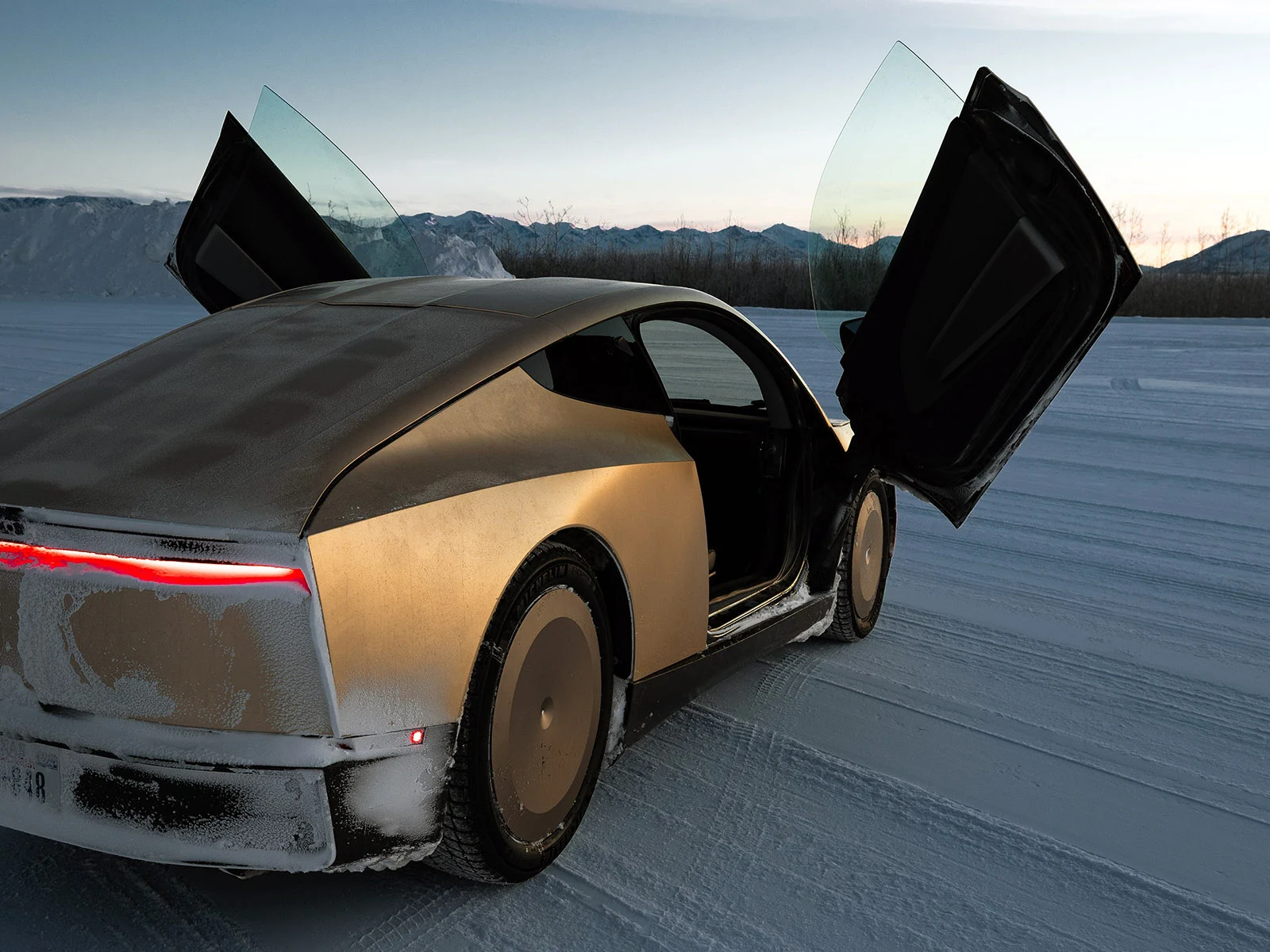
    One significant upgrade is Tesla’s acknowledgment that the single monowiper on the Cybertruck wasn’t effective, leading to the installation of a traditional pair on the Cybercab. The interior now boasts more comfortable seat cushions, new carpeting, and a redesigned trunk made with stronger composite materials. Additionally, the windows are frameless, and the front light bar has been merged with the headlights. Tesla has also refreshed the ambient lighting inside, added two USB-C charging ports in the central console, and pushed the large 21-inch display further into the dashboard to maximize cabin space.

    Future Plans

    Tesla is gradually increasing the assembly of the Cybercab to achieve its mass production target by April. Elon Musk has promised that consumers will be able to purchase it before the year ends. However, it’s uncertain if there will be significant interest in the autonomous two-seater, priced at around $30,000—a figure that Ford has mentioned for a complete electric pickup truck in 2027.

    Regulatory Challenges

    It’s unclear how many cities will permit a driverless, pedal-less vehicle without a steering wheel to navigate busy roads as a ride-share option. While Austin, the initial launch location for Tesla’s Robotaxi, doesn’t have specific regulations beyond standard insurance and road safety requirements, New York recently rejected its robotaxi permit plans. “Based on discussions with stakeholders, including those in the legislature, it was evident that there was insufficient support to move this proposal forward,” stated Governor Hochul’s office, suggesting that influential taxi and ride-share groups may have influenced this decision.

    Specifications and Features

    The compact Cybercab is expected to provide a range of 300 miles using a relatively small 47 kWh battery, which will include wireless charging capabilities. Although the necessary infrastructure is still in the planning stages, the FCC has granted Tesla an Ultra-Wideband (UWB) exemption for the charging pads to facilitate easier alignment with the Cybercab.

    “When the vehicle approaches the charging pad, the UWB transceivers will work to track its position, determining when it is optimally aligned over the pad before activating wireless power charging,” the FCC explained, noting that the waiver was given due to the brief and weak signal to avoid interference.

    Source:
    Link


  • Tesla Launches Steering-Free Cybercab for City Streets

    Tesla Launches Steering-Free Cybercab for City Streets

    Key Takeaways

    1. Tesla is testing its driverless Cybercab, which has no pedals or steering wheel, on public roads in Austin.
    2. The Robotaxi ride-share service began with the Model Y using a specialized FSD 14 (Unsupervised) software version.
    3. Tesla plans to include owner vehicles in its Robotaxi platform by 2026, but older HW3 vehicles will not qualify.
    4. The Cybercab has been evaluated at Tesla’s factory and is now deemed ready for public road testing.
    5. The Cybercab operates autonomously and lacks human intervention options, raising questions about its performance in busy traffic.


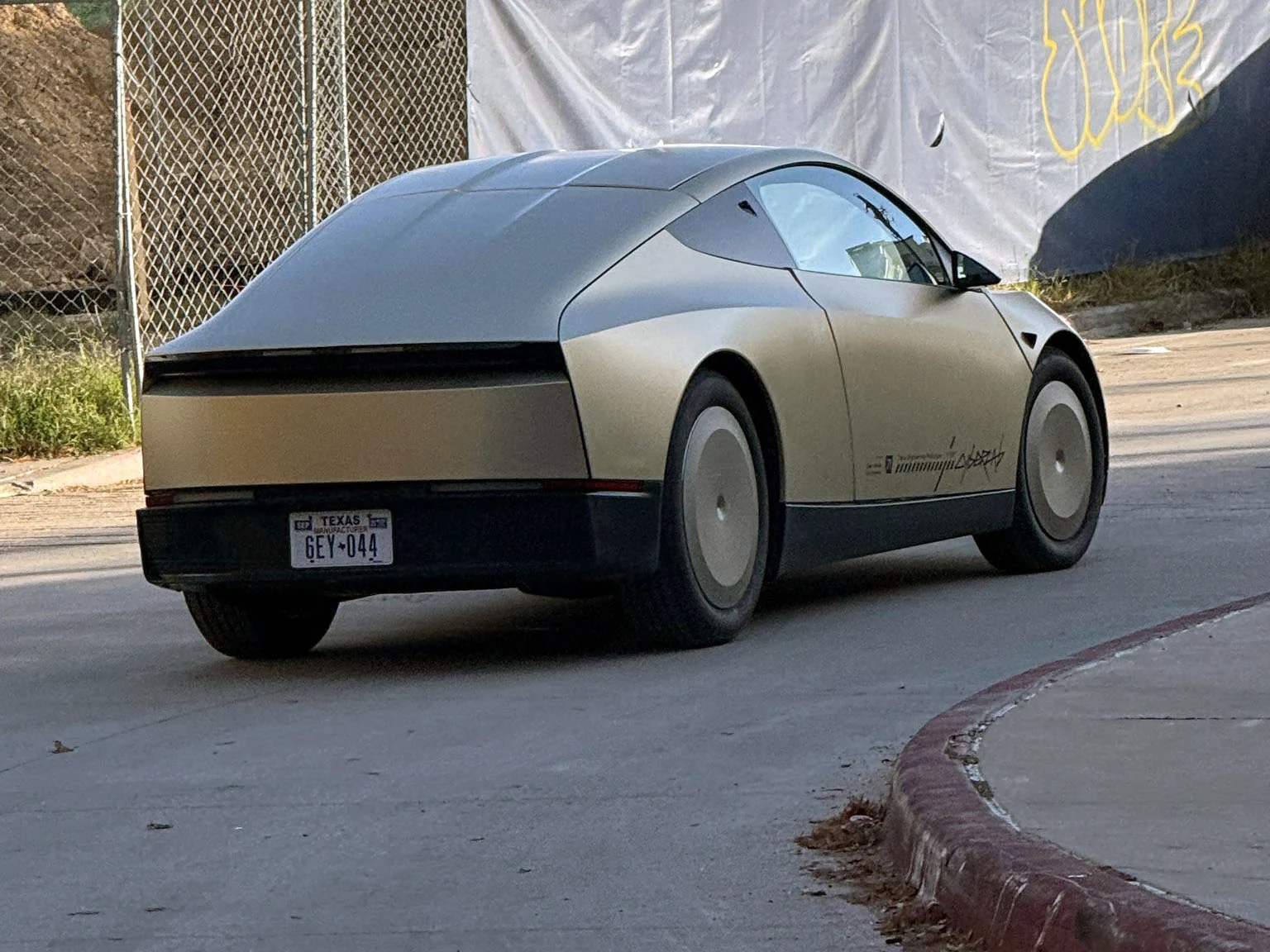
    Tesla is testing its driverless Cybercab, which lacks pedals and a steering wheel, on public roads for the very first time.

    The two-seater has been seen cruising in downtown Austin, where Tesla first initiated its Robotaxi ride-share service focused on driverless cars. The service started with the new Model Y, utilizing a specialized FSD 14 (Unsupervised) software version, as this was the first permit Tesla could obtain. The aim was to map out the area and try out the ride-share payment application using a vehicle that drivers were already familiar with.

    Plans for Expansion

    Elon Musk mentioned that Tesla intends to incorporate owner vehicles into its Robotaxi platform in 2026, likely including the new 2026 Model Y models as well as the Cybercab. Unfortunately, owners of older HW3 vehicles won’t be able to include their cars in the fleet due to limitations of their FSD computer and camera equipment, which cannot support unsupervised FSD. Their best bet is a restricted version of FSD 14 Lite, but the Cybercab won’t face this issue since it operates on Tesla’s advanced AI4 hardware.

    Testing and Confidence

    Tesla has been evaluating the self-driving Cybercab at its factory for some time now, even equipping standard Model 3 cars with a special Cybercab FSD kit to assess how it performs outside of factory limits.

    Now, Tesla feels secure enough in the Cybercab’s ability to navigate autonomously to take it onto public roads for the first time. It’s unclear whether the self-driving, self-cleaning, and self-charging Cybercab had someone observing it from inside, but since this was its initial public appearance, it’s likely that a Tesla engineer was present in the driver’s seat.

    Unique Driving Experience

    “Driver” isn’t quite the right term, as the Cybercab doesn’t have pedals or a steering wheel. It will be intriguing to see how the Cybercab manages in busy traffic without the ability for human intervention in emergencies. While it has been seen operated manually with a gaming controller, that was solely for moving it within expo centers, and such actions won’t be feasible during rides for the Robotaxi service.

    Source:
    Link


  • Cheapest Tesla Model 2 Spotted as Smaller Camouflaged Model Y

    Cheapest Tesla Model 2 Spotted as Smaller Camouflaged Model Y

    Key Takeaways

    1. Tesla’s main designer downplayed rumors about the budget-friendly Model 2, confirming it’s not just a hot hatchback but a smaller version of the Model Y.
    2. The Model 2 is expected to have impressive specs, including a 250-mile range and a 54 kWh battery, with production likely starting at Tesla’s Gigafactory in Texas.
    3. Tesla plans to focus on the Model 2 after the release of the Model Y Juniper, with a reveal event possibly in mid-2024 to boost holiday sales.
    4. The Cybercab, a two-seater priced under $30,000, is part of Tesla’s strategy to introduce more affordable vehicles, potentially benefiting from federal incentives.
    5. A disguised vehicle resembling a smaller Model Y may be a prototype for testing or part of Tesla’s upcoming robotaxi platform, set to operate in Austin.


    When Tesla’s main designer, Franz von Holzhausen, mentioned that the rumors about the least expensive Tesla Model 2 were greatly overstated, he was serious.

    New Vehicle on the Horizon

    Tesla has chosen to first reveal the Cybercab, a two-seater made with some parts from the Model Y. Elon Musk has reassured investors during multiple quarterly calls that a new, budget-friendly car is still on schedule for a 2025 launch. Initially, Tesla’s most economical vehicle was referred to as the Model 2 or Project Redwood. Musk explained that it would be a “smaller, for sure” version of the Model Y, rather than a hot hatchback.

    Impressive Specifications

    The expected specifications for the Model 2 are believed to surpass those of the urban-focused Cybercab. This includes a 250-mile range powered by a 54 kWh battery and larger dimensions along with a rear bench seat. Recently, a drone flew over Tesla’s Gigafactory in Texas, showcasing various activities at the extensive site, including new production lines and an expanded paint shop. These enhancements are likely aimed at preparing for the upcoming 2026 Model Y Juniper facelift production, scheduled for release next month. However, some of these facilities may also be set aside for initial production of the more affordable Tesla Model 2.

    Exciting Developments

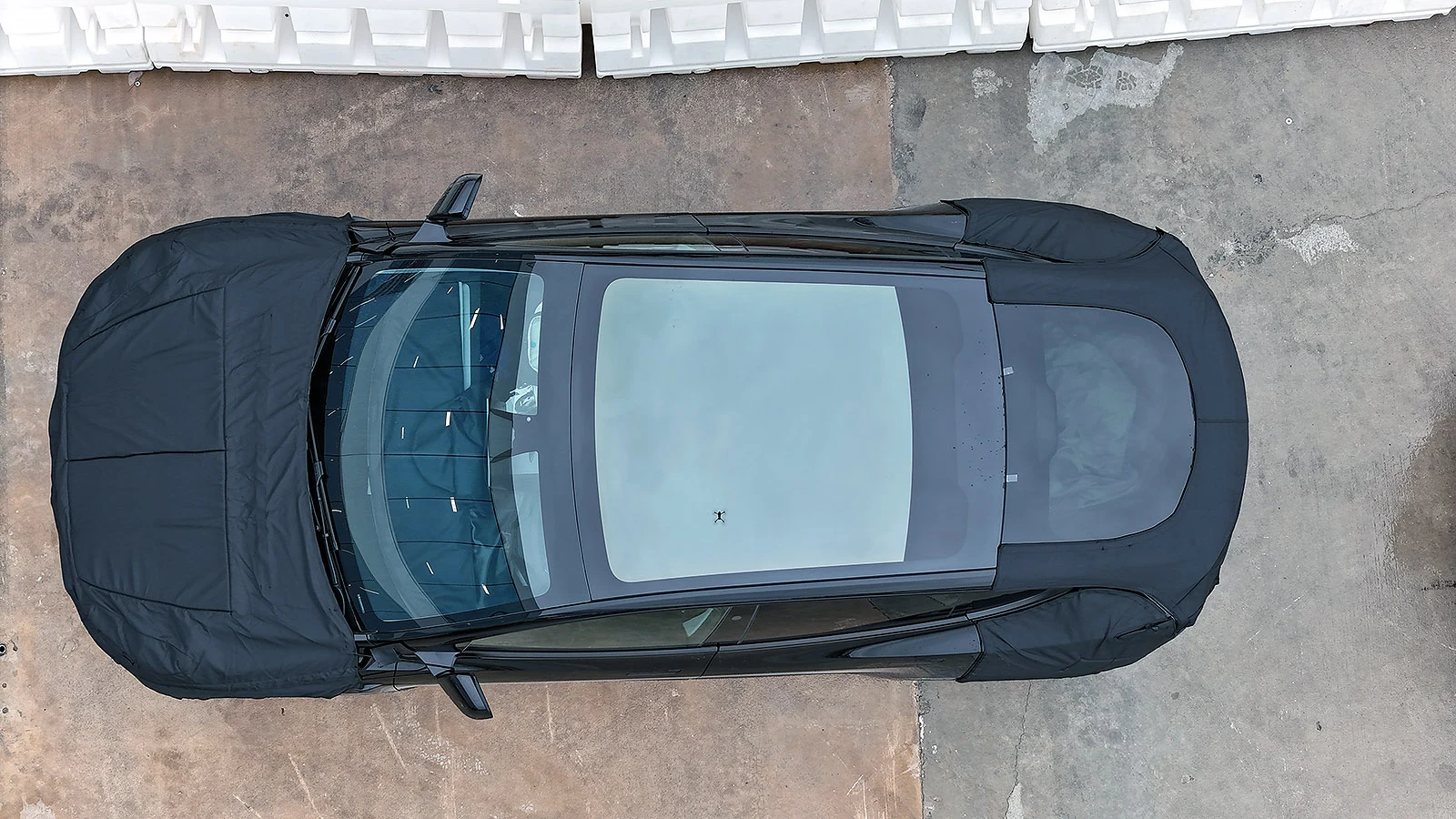
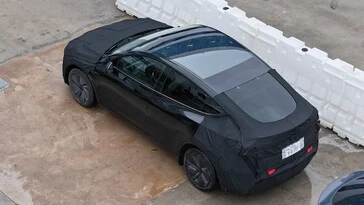
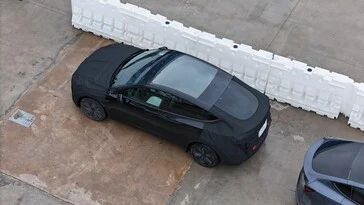
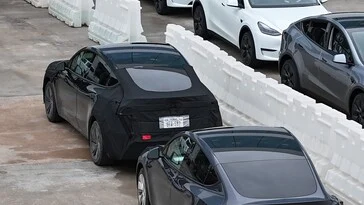
    Interestingly, the drone footage captured a disguised vehicle resembling a smaller Model Y. Now that Tesla has unveiled the Juniper refresh, they have little to hide about the Model Y. The high-performance version of the Juniper is not expected until fall. Once the release date for the Model Y Juniper passes, Tesla can shift its focus towards the Model 2. The reveal event for this budget-friendly vehicle might occur in the second or third quarter. The aim will be to ramp up production for full deliveries during the crucial holiday season, enhancing Tesla’s sales figures with the anticipated Model 2.

    The Cybercab is projected to be priced under $30,000, and the Model 2 could follow suit, especially with potential federal incentives, making it very appealing to buyers. Tesla might hold off on launching it until at least the fourth quarter to avoid impacting Model Y Juniper sales.

    Potential Uses for the Disguised Vehicle

    Alternatively, the compact-looking vehicle that resembles the Model Y could just be an illusion or a test prototype for various engineering tests. Elon Musk has mentioned that Tesla plans to introduce its robotaxi platform with owned vehicles operating on unsupervised FSD in Austin this June, suggesting that this camouflaged vehicle could also be part of that pilot program.

    Source:
    Link


  • Tesla Robotaxi Can Be Controlled Manually with Gamepad Like PlayStation

    Tesla Robotaxi Can Be Controlled Manually with Gamepad Like PlayStation

    Dubbed the PlayStation car, the Afeela EV from the partnership between Sony and Honda isn’t the only vehicle that can be driven using something similar to a DualSense or Xbox controller, as seen with the “driverless” Tesla Cybercab.

    Afeela’s Debut at CES

    Earlier this year at the CES expo, the CEO of the Afeela project, which merges Honda’s automotive skills with Sony’s entertainment and software expertise, showcased their first electric vehicle using a PlayStation 5 controller on stage. It was a striking moment that highlighted the innovative blend of gaming and driving.

    Tesla’s Robotaxi Features

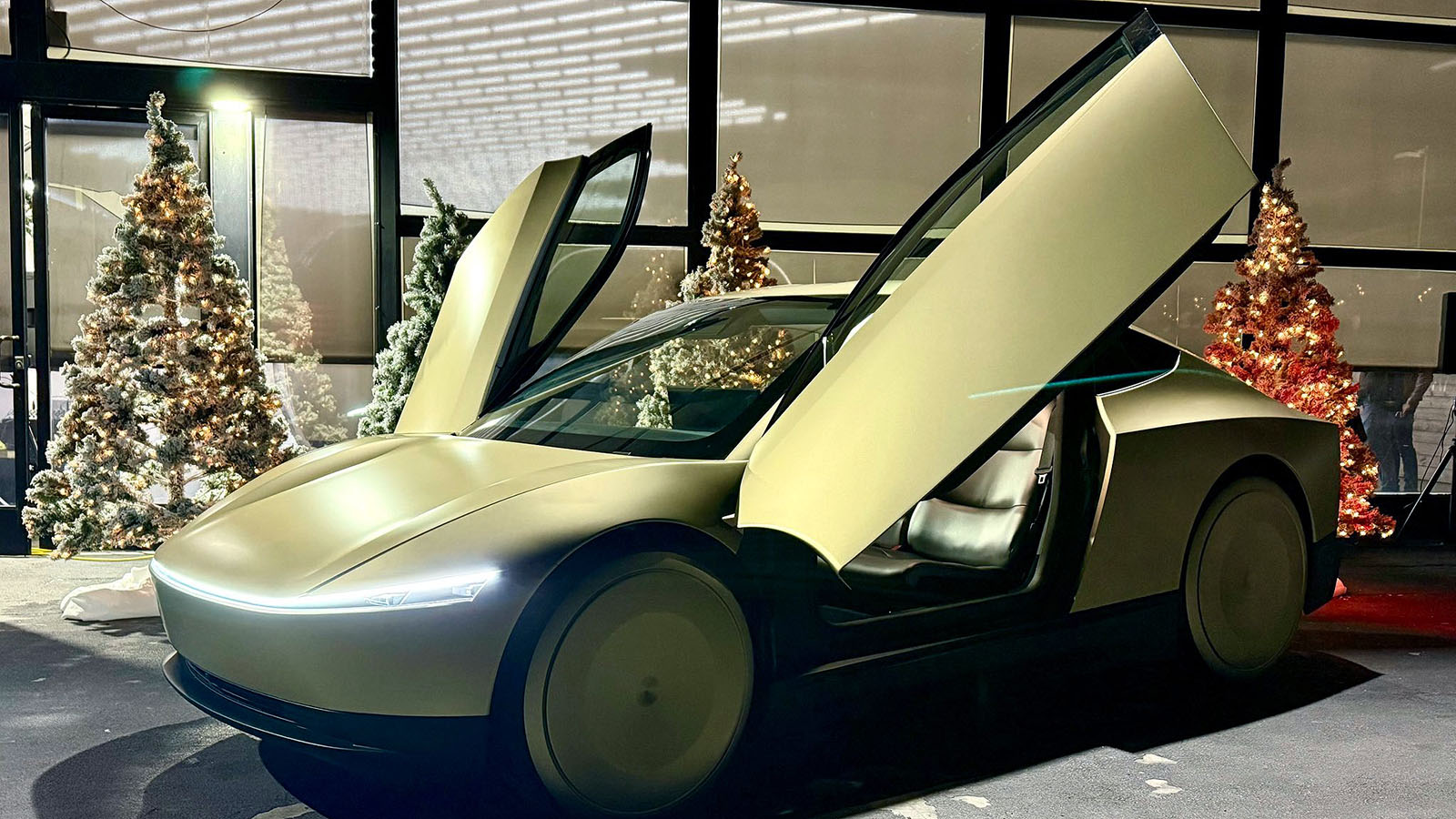
    Meanwhile, while presenting the Cybercab at the Petersen Automotive Museum, the Tesla team also employed a controller to navigate the Robotaxi, which Tesla promotes as the future of driverless transport. The Cybercab, designed for two passengers, is unique as it lacks both a steering wheel and pedals. However, its FSD 13 autonomous driving software struggles with small maneuvers, such as driving up a ramp or weaving around Christmas trees in the museum’s Vault exhibit to reach its intended location.

    The Manual Driving Capability

    This is why the individual operating the Robotaxi during its transport, maneuvering it off its trailer, up the ramp, and around the venue, seemed to be using what onlookers described as an Xbox controller linked to the vehicle’s computer. Although the connection was wired, sources indicated that the Cybercab’s controller can also connect wirelessly, allowing someone to operate it from a distance.

    This opens up a variety of options, especially for the Cybercab’s ride-share service and support teams, or for first responders Tesla is currently training to handle scenarios involving the Robotaxi on public streets. Overall, the idea that the first Tesla vehicle without a steering wheel or pedals is fully autonomous might be a bit of an overstatement, as there is a means to manually drive it in case it gets stuck for any reason.

    Source: Link

  • Manual Control of Tesla Robotaxi with Gamepad Like PlayStation

    Manual Control of Tesla Robotaxi with Gamepad Like PlayStation

    Dubbed the PlayStation car, the Afeela EV, created by the Sony-Honda partnership, isn’t the only vehicle that can be controlled using a device similar to a DualSense or Xbox controller, as shown by the “driverless” Tesla Cybercab.

    Afeela’s Introduction

    At the CES expo earlier this year, the CEO of the Afeela project, which merges Honda’s car-making skills with Sony’s software and entertainment expertise, showcased their first electric vehicle using a PlayStation 5 controller. This event highlighted how technology and driving could intersect in new ways.

    Tesla’s Innovative Approach

    While the Tesla team was setting up the Cybercab at the Petersen Automotive Museum, they also utilized a controller for positioning the Robotaxi, which Tesla promotes as the future of driverless transport. The Cybercab is a two-seater that lacks both a steering wheel and pedals, yet its FSD 13 self-driving software struggles with small movements like going up ramps or steering around Christmas trees in the museum’s Vault area to reach its display location.

    The individual “driving” the Robotaxi from its trailer, up the incline, and through the museum used what onlookers described as an Xbox controller connected to the car’s computer. Despite the cable connection, sources indicated that the Cybercab’s controller could also connect wirelessly, allowing operation from outside the vehicle, enabling remote driving capabilities.

    Expanding Possibilities

    This development presents numerous opportunities, particularly for the ride-share service and support teams of the Cybercab, as well as for first responders whom Tesla is training to handle scenarios when the Robotaxi is on public roads. Nevertheless, the claim that the first Tesla without a steering wheel or pedals is entirely driverless and autonomous appears to be somewhat overstated; there is indeed a manual driving option if the vehicle encounters difficulties.

    Source: Link